This site is supported by our readers. We may earn a commission, at no cost to you, if you purchase through links. This content is for general informational and educational purposes only and is not a substitute for professional medical, dermatological, or nutritional advice.

Most post-shave redness isn’t a skin problem—it’s a blade problem. A dull edge doesn’t cut hair cleanly; it drags across the skin’s surface, creating microscopic abrasions that trigger inflammation within minutes. Add bacteria from a razor left sitting in shower humidity, and you’ve got a recipe for chronic irritation that no aftershave can fully fix.
The solution starts before the blade ever touches your face. Proper blade care—cleaning, storage, and timely replacement—cuts redness at the source.
These practical steps give your skin the clean, sharp, low-friction shave it needs to stay calm.
Table Of Contents
- Key Takeaways
- Why Blades Cause Redness
- Clean Blades After Every Shave
- Store Razors to Prevent Irritation
- Replace Blades Before They Tug
- Shave Gently With Better Technique
- Calm Skin After Blade Contact
- Top 10 Products for Less Redness
- 1. Panasonic Arc5 Wet Dry Electric Razor
- 2. Braun Series 9 Pro Electric Razor
- 3. Gillette SkinGuard Sensitive Skin Razor
- 4. Harrys Original Men Shaving Kit
- 5. Bulldog Sensitive Glass Razor Stand
- 6. Gillette Heated Razor Kit
- 7. Bevel Men’s Complete Shaving Kit
- 8. Merkur Mk34c Double Edge Razor
- 9. Gillette Venus Extra Smooth Sensitive Razor
- 10. Cortizone 10 Aloe Itch Relief Cream
- Frequently Asked Questions (FAQs)
- How to prevent razor burn?
- Should you put cold compresses on a razor burn?
- Do razor blades dull evenly?
- How to immediately reduce facial redness?
- How to remove redness from skin in 5 minutes?
- Can diet affect skin redness after shaving?
- Are electric razors better for redness-prone skin?
- Can water hardness impact blade performance and irritation?
- Conclusion
Key Takeaways
- A dull blade drags instead of cuts, creating micro-abrasions that trigger redness within minutes — replacing it every 5–7 shaves is the single most effective thing you can do for your skin.
- Wet razors left in the shower can harbor up to 5 million microbial cells, so drying your blade fully and storing it head-down in a ventilated area isn’t optional — it’s damage control.
- Rinsing your razor every 1–2 strokes during your shave cuts bacterial load by roughly 40% and keeps glide consistent from the first stroke to the last.
- What you do in the two minutes after shaving matters as much as the shave itself — cool water, a gentle pat dry, and a fragrance‑free aloe balm can stop inflammation before it sets.
Why Blades Cause Redness
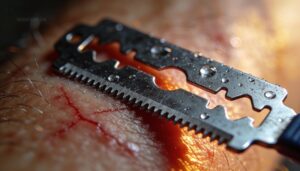
Most people blame technique when shaving leaves their skin red — but the blade itself is often the real problem. A lot goes on between that edge and your skin, and it’s not always obvious.
Getting the correct safety razor angle right makes a bigger difference than most people realize — even a few degrees off can turn a smooth shave into an irritated mess.
Here’s what’s actually causing the irritation.
Dull Edges and Micro-scrapes
dull blade doesn’t just cut poorly — it scrapes. Edge deformation causes the blade to drag across your skin instead of slicing cleanly through hair, triggering micro-scrape accumulation with every pass.
Watch for these warning signs, your blade is past its prime:
- edge rolls or bends, shifting from cutting to scraping
- Corrosion-induced roughness creates micro-pitting that snags skin
- Residue build-up clogs the edge, worsening blade angle effects
- Repeated contact multiplies surface abrasion across the skin barrier
- Dull blades force more strokes, compounding damage
sharp blade protects your skin barrier. Stick to your blade replacement interval.
Friction From Poor Glide
Scraping isn’t always about blade dullness effects. Sometimes the blade is sharp — but poor glide is the real problem.
Insufficient Lubrication, Coating Wear, Angle Misalignment, Residue buildup, and Hard water deposits all kill friction reduction before the blade even touches your hair.
| Glide Killer | What It Does |
|---|---|
| Insufficient Lubrication | Raises skin-to-blade friction dramatically |
| Coating Wear | Strips the blade’s smooth-travel layer |
| Angle Misalignment | Forces scraping instead of slicing |
| Hard water deposits | Leaves chalky buildup that snags skin |
Lubrication strips and a sharp blade help — but only if you’re also managing residue buildup and stroke angle consistently.
Bacteria Buildup on Wet Blades
Poor glide damages your skin — but what lingers on a wet blade can make things worse. A damp blade becomes a microbial reservoir fast. Residue retention from foam, oils, and skin debris feeds biofilm formation, locking bacteria against the cutting edge.
That bacterial load transfers directly to freshly opened skin. Airflow drying, dry storage to prevent microbial growth, and consistent razor blade hygiene break that cycle.
moisture trapped on blades creates an ideal environment for skin‑derived bacteria.
Over-shaving and Repeated Passes
Each extra pass isn’t just redundant — it’s cumulative damage.
Microdamage accumulation builds with every stroke: barrier layer stripping exposes raw skin, and the inflammatory response kicks in fast.
Repeated pressure and angle shifts create embedded hair plugging and heat build-up that intensify redness.
One careful pass beats three careless ones every time. Limit passes. Your skin keeps score.
One deliberate pass protects your skin more than three careless ones ever will
Difference Between Razor Burn and Razor Bumps
Most people use "razor burn" and "razor bumps" interchangeably — but they’re different problems with different fixes.
- Onset Timing: Razor burn appears within minutes. Razor bumps surface days later as hairs curl back inward.
- Visual Appearance: Burn looks like blotchy redness. Bumps look like small pimples clustered around follicles.
- Underlying Causes: Burn stems from blade dullness and friction. Bumps come from ingrown hairs.
- Treatment Strategies and Recurrence Patterns: Burn calms in days with soothing care. Bumps need ongoing blade hygiene and ingrown hair prevention to stop recurring.
Clean Blades After Every Shave

A dirty blade is one of the fastest ways to turn a decent shave into a red, irritated mess. Bacteria, trapped foam, and leftover skin debris build up quicker than you’d think — and your skin pays the price.
Here’s exactly how to clean your blade so it stays sharp, safe, and ready to work.
Rinse After Every 1–2 Strokes
Every 1–2 strokes, hold your razor under warm running water. That single habit drives edge clarity maintenance across your entire shave.
Rinsing this frequently cuts bacterial load by roughly 40% and gives you a real glide consistency boost by flushing debris before it builds up.
Think of it as stroke timing precision — clean blades simply perform better, stroke after stroke.
Remove Hair, Foam, and Skin Debris
Rinsing clears the surface, but it doesn’t get everything. Hair and dried foam pack into blade slots and guard grooves where water alone can’t reach.
- Brush Slot Cleaning removes trapped stubble from cartridge tracks
- Compressed Air Blow dislodges debris from foil components without soaking
- Microfiber Moisture Wipe lifts residue that dries onto blade edges
Clean blades mean less drag and better blade hygiene, and proper storage starts here.
Use Warm Water During Shaving
Warm water does more than feel comfortable — it’s doing real work. brief warm water prep softens hair through improved hair flexibility, so your blade glides instead of dragging.
skin hydration boost loosens keratin, giving you reduced blade drag across every stroke. Consistent lather consistency follows naturally.
Keep your temperature controlled, rinse comfortable, not scalding — excessive heat worsens postshave inflammation before you’ve even finished.
Disinfect With 70% Isopropyl Alcohol
Water rinsing alone doesn’t eliminate microbial contamination — it just moves it around. After rinsing, apply 70% isopropyl alcohol directly to your razor head to cut bacterial load substantially.
- Allow proper alcohol contact time — keep the blade wet for at least 30–60 seconds.
- Confirm full alcohol evaporation rate before storing; residual moisture feeds bacterial growth.
- Check rubber grip compatibility — repeated alcohol exposure can degrade soft-touch grips over time.
Let it air-dry in a ventilated area before your next shave.
Weekly Razor Head Sanitizing Routine
Once a week, give your razor a proper reset.
Start with a brush preclean — use a soft brush under warm running water to clear trapped foam and debris. Follow with a vinegar soak to dissolve mineral buildup, then alcohol disinfection to eliminate microbial contamination. Finish with ventilated drying and a component swap if guards look worn.
That’s complete blade hygiene and proper storage done right.
Store Razors to Prevent Irritation

Where you store your razor matters just as much as how you clean it. Moisture left on the blade doesn’t just cause rust — it feeds bacterial colonies that can push post‑shave redness past the 50% mark.
Here’s what to do instead.
Dry Blades Fully Before Storage
A damp blade is a breeding ground — and that’s not an exaggeration. Properly drying razor blades before storage is one of the simplest ways to protect your skin.
- Shake Drying dislodges trapped droplets between plates without damaging the edge
- Towel Wicking on a lint-free cloth pulls surface moisture fast
- Airflow Drying in an open, ventilated space accelerates evaporation naturally
- Compressed Air clears moisture from tight spaces behind blades
- Protective Oil reduces oxidation risk on metal surfaces during storage
Dry storage to prevent microbial growth keeps bacterial load low — supporting better blade hygiene and proper storage long-term.
Avoid Leaving Razors in The Shower
Drying your blade is step one — but where you store it matters just as much.
Leaving your razor in the shower exposes it to shower steam impact, aerosol contamination from bathroom surfaces, and constant humidity. That combination accelerates blade edge corrosion and moisture-induced dullness fast. Residue reactivation happens too: dried soap films soften and spread across skin during your next shave. Blade storage hygiene starts with keeping it out of that wet zone entirely.
Store in a Ventilated Area
Once it’s out of the shower, give your razor a spot with real airflow. A ventilated shelf or open countertop lets humidity control work naturally — moisture evaporates faster, which cuts corrosion prevention time substantially.
Stagnant air traps skin oils and foam residue, accelerating odor reduction failure and particle contamination. Blade hygiene and proper storage in a dry, aired space reduce bacterial load on razors by limiting the wet conditions microbes need.
Head-down Storage for Faster Drying
One small habit makes a real difference: store your razor head-down. gravity-driven drainage pulls water away from the blade edge and guard, allowing guard moisture to escape through natural vent paths. Blade-edge airflow increases, speeding evaporation.
For electric shavers, foil cavity drying improves considerably in this position.
Less standing water means better rust spot mitigation, stronger blade hygiene, and proper storage overall.
Prevent Moisture-driven Bacterial Growth
Bacteria-laden wet blades can harbor up to 5 million microbial cells — and that number climbs fast without proper control.
Three habits that work:
- Apply Airflow Drying Techniques by storing razors upright or head-down in ventilated Separate Storage Compartments.
- Use Antimicrobial Blade Coatings with weekly 70% isopropyl alcohol.
- Practice Microbial Barrier Control through dry storage to prevent microbial growth.
Reducing bacterial load on razors starts with blade hygiene and proper storage daily.
Replace Blades Before They Tug
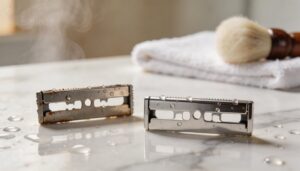
A dull blade is often the first thing to blame when redness flares up after shaving. Most people hold onto blades far too long without realizing it.
Here’s what to watch for and how to build a simple routine around timely replacements.
Change Blades Every 5–7 Shaves
Most people push a blade well past its prime. Change blades every 5–7 shaves — that’s your redness threshold timing.
Beyond that window, edge wear metrics shift quickly: more drag, more friction, more irritation.
Shave count tracking removes the guesswork. Your individualized replacement schedule doesn’t need to be complicated — just consistent.
Sharp blades need less pressure, and less pressure means calmer skin.
Signs a Blade is Too Dull
Your blade is telling you something — are you listening? Microtears visible after shaving, that raw sting, uneven hair cut results leaving patchy stubble — these are clear signals.
Watch for corrosion spotting on the edge, residue buildup that makes strokes feel gummy, and increased friction heat building stroke by stroke.
Razor burn that worsens mid-shave almost always traces back to a blade past its limit.
How Old Blades Increase Redness
An old blade doesn’t just shave poorly — it quietly damages your skin with every stroke. Edge Wear Patterns develop gradually, shifting the blade from gliding to dragging. Microtear Accumulation follows, disrupting your skin barrier repeatedly.
Moisture Retention accelerates Metal Oxidation and Corrosion Damage, compounding razor irritation. The impact of blade dullness on skin health is direct: more redness, more razor burn.
Replace blades. Blade hygiene and proper storage buy time — but not indefinitely.
Why Sharp Blades Need Less Pressure
A sharp razor blade doesn’t need you pushing it through hair — it slices cleanly on its own. That’s Edge Geometry Benefits in action: Cutting Force Distribution spreads across a fine edge, so Pressure Optimization happens naturally.
Less force means Microtrauma Reduction, fewer micro-tears, and true Frictionless Glide.
Blade dullness flips this entirely. It forces pressure, multiplies razor irritation, and punishes your skin.
Replace blades before that happens.
Build a Simple Blade Replacement Schedule
Start with a fresh blade and track every shave on a simple notes app or calendar — that’s your Data Baseline. Reset your Shave Count Tracking to zero with each new blade.
By shave four, start watching for Blade Wear Indicators, like tugging or snagging. Your Replacement Calendar should flex with beard density; Frequency Adjustment keeps sensitive skin protected before dullness does damage.
Shave Gently With Better Technique
Even the sharpest blade won’t save you if your technique is working against your skin. How prep, move, and finish makes a real difference in how much redness shows up afterward.
These six steps give you a practical starting point.
Prep Skin With Warm Water

Warm water is your first line of defense against redness. At 37–40°C, it softens hair shafts so they swell slightly and cut cleanly — that’s Friction Lowering in action.
Timing Precision matters here: rinse for 30 to 90 seconds right before your first stroke. Wait too long, and the Hydration Boost fades.
Temperature Safety applies too — water above 45°C damages your skin barrier before the blade even touches it.
Use Shaving Gel or Cream
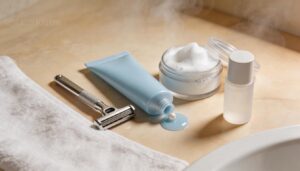
Once your skin is prepped, don’t let the blade meet bare skin. Protective Lubrication is what stands between friction and redness.
Apply shaving cream or gel for Hair Softening and Even Coverage:
- Gel delivers slicker glide — ideal for sensitive skin
- Cream cushions with richer lather
- Fragrance-free formulas reduce Ingredient Sensitivity reactions
- Texture Choice depends on your skin type
- Shaving balm works post-shave to seal hydration
Shave With The Grain

Now that you’ve got the lather on, direction is everything.
Hair Direction Mapping means checking each zone before your first stroke. Your jaw may grow differently than your neck — and that shift matters. Zone-specific Strokes with Angle Optimization and Pass Sequencing reduce redness substantially. Pressure Modulation keeps blade contact gentle.
| Face Zone | Grain Direction | Stroke Tip |
|---|---|---|
| Cheeks | Downward | Long, light passes |
| Jawline | Varies by side | Check both directions |
| Neck | Often upward | Short, careful strokes |
| Upper lip | Downward | Follow hair closely |
| Chin | Outward or down | Adjust mid-stroke |
Shaving with the grain isn’t one-size-fits-all — it’s zone-by-zone awareness.
Keep Strokes Short and Light
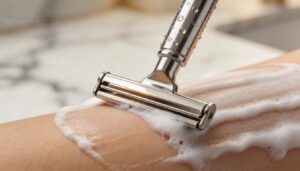
Direction sorted. Now let’s talk force and distance.
Short Strokes do more than you’d think. Each one limits how long the blade stays in contact with one patch of skin. Combined with Light Pressure, you’re letting a sharp edge do the work — not your wrist.
- Keep each stroke under two inches for Consistent Angle control
- Ease up — excess pressure worsens redness, even with a fresh blade
- Use a Controlled Tempo; rushing raises friction
- Let Gentle Glide replace force — good lather makes this possible
- If the blade snags, switch it — dull edges demand pressure, which triggers irritation
Rinse The Blade Frequently

Every stroke deposits hair, foam, and skin debris onto the blade. Mid-shave Rinse Timing matters — flush every one to two strokes. Hold the razor under running water, directing Water Flow Direction toward the blade edge for effective Blade Edge Flushing.
A Gentle Shake Technique removes excess water without damage.
Avoid Towel Scraping — it dulls the edge fast.
Limit Repeated Passes on One Area
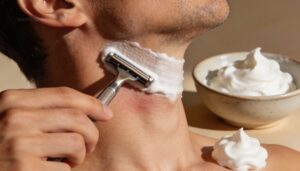
Each area of your face has a tolerance limit — push past it and redness compounds fast. This is cumulative trauma in action.
Your Pass Limiting Strategy should follow three rules:
- One pass per Micro-zone Rest interval
- Lather Refresh Timing resets before a second pass
- Pressure Awareness drops on return strokes
Skin Sensitivity Mapping shows the neck hits its limit first.
Calm Skin After Blade Contact

What you do in the first few minutes after shaving matters more than most people realize. Your skin is sensitive right after blade contact, and the wrong move can turn mild irritation into real redness.
Here’s what to do to help it settle down fast.
Rinse With Cool Water
Cool water is one of the simplest tools in your post-shave care routine. An immediate cool rinse triggers a vessel constriction effect, narrowing surface blood vessels and visibly reducing redness within seconds.
Temperature reduces redness by flushing the residue removal process — leftover foam, debris, micro-fragments.
Post-shave cooling also calms nerve sensitivity fast. Skip hot water entirely; it worsens inflammation.
Pat Dry Instead of Rubbing
Rubbing a towel across freshly shaved skin is like sandpaper on a sunburn — it spreads micro‑abrasions and worsens redness fast. Instead, use light pressure technique: one or two gentle pats per area.
Towel material choice matters here — microfiber vs cotton isn’t trivial. Microfiber creates less drag on sensitive skin. For friction‑free drying and immediate post‑shave drying results, always pat, never swipe.
Apply Aloe Vera or Soothing Balm
Aloe vera is your first line of defense after the blade. Immediate post-shave application while the skin is still warm targets inflammation before it sets. Pure aloe vera gel delivers a cooling effect that calms redness fast.
For deeper razor burn prevention, reach for an aftershave balm with barrier-supporting ingredients like ceramides or chamomile.
Keep the ingredient list simple — fewer additives mean less risk.
Use Fragrance-free Moisturizer
Fragrance is a hidden trigger — even in products marketed as "gentle." Post-shave skin is compromised, making it reactive to parfum compounds that wouldn’t bother it otherwise.
Choose postshave moisturizers with barrier repair ingredients like ceramides, glycerin, or colloidal oatmeal. Lightweight gel-cream textures absorb fast without clogging pores — noncomedogenic formulas matter here.
Apply while skin is slightly damp for better absorption and effective skin barrier repair.
Avoid Alcohol-heavy Aftershaves
barrier-first mindset applies to what you spray on next. Alcohol-based aftershave stings because ethanol strips moisture from already-compromised skin.
For razor maintenance techniques for sensitive skin, swap to a non-alcoholic aftershave or aloe-based balm. Alcohol-free soothers and cooling sprays keep skin barrier protection intact.
If you’re unsure how your skin reacts, a quick patch test routine saves you from a full-face flare.
Pause Shaving Until Redness Settles
Giving your skin a healing window matters more than staying on schedule. Redness timing tells you a lot — mild irritation usually clears within a few hours.
If it’s still visible after 24 hours, that’s a pause indicator worth respecting. Check your recovery checklist: no tenderness, no bumps, redness minimal.
Then return to shaving with lighter pressure.
Top 10 Products for Less Redness
The right tools make a real difference when redness is your main concern.
These 10 products cover everything from razors designed to minimize friction to creams that calm skin fast.
Each one earns its spot for a specific reason.
1. Panasonic Arc5 Wet Dry Electric Razor

The Panasonic Arc5 earns its place at the top of this list for one clear reason: it works with your skin, not against it. Its five Nanotech blades deliver up to 70,000 cross-cuts per minute, so hair gets cut cleanly without repeated dragging.
The Multi-Flex head pivots to follow your jawline and neck, reducing uneven pressure that causes redness. Best of all, it’s fully waterproof — use it with shaving gel in the shower for extra glide and less friction.
| Best For | Anyone with sensitive skin who wants a close, comfortable shave — especially guys who shave daily or prefer shaving in the shower. |
|---|---|
| Skin Sensitivity | Sensitive-skin suitable |
| Price | $~150–200 |
| Lubrication | Wet/dry foam or gel |
| Blade Count | 5 foil blades |
| Post-Shave Care | Not included |
| Reusability | Rechargeable electric |
| Additional Features |
|
- Five Nanotech blades with 70,000 cross-cuts per minute means a genuinely close shave with minimal irritation
- Fully waterproof — works great with foam or gel in the shower
- The Multi-Flex head moves with your face, so it handles jawlines and neck curves without digging in
- Battery only lasts 3–4 shaves, so you’ll be charging it more often than you’d like
- Replacement blades run around $100 and need swapping every year or two
- Struggles with longer growth — if you’ve skipped a week, expect to do a few extra passes
2. Braun Series 9 Pro Electric Razor

If the Arc5 is built for speed, the Braun Series 9 Pro is built for comfort.
Its AutoSense technology reads your beard density in real time and adjusts power accordingly — fewer passes, less friction, less redness.
The flexible ProHead conforms to jawline curves and the neck, where irritation hits hardest.
Titanium-coated blades stay sharper longer and generate less heat during extended passes.
At $279.94, it’s an investment, but one that pays off in calmer skin every morning.
| Best For | Anyone with sensitive skin who wants a close, comfortable shave without the redness and irritation that comes with manual razors. |
|---|---|
| Skin Sensitivity | Sensitive-skin suitable |
| Price | $279.94 |
| Lubrication | Wet/dry foam or gel |
| Blade Count | 5 foil blades |
| Post-Shave Care | Not included |
| Reusability | Rechargeable electric |
| Additional Features |
|
- AutoSense technology adjusts power on the fly, so it adapts to thick patches without dragging across your skin
- Fully waterproof — shave in the shower, use your favorite gel, whatever works for you
- The 5-in-1 Clean & Charge Station handles cleaning, lubing, and charging automatically, so maintenance is basically hands-off
- At $279.94 plus ongoing costs for replacement heads and cleaning cartridges, it’s a real commitment
- It’s on the heavier side, which can feel a little awkward compared to slimmer shavers
- Dense beards may still need multiple passes, so the "one-stroke" promise doesn’t always hold up in practice
3. Gillette SkinGuard Sensitive Skin Razor
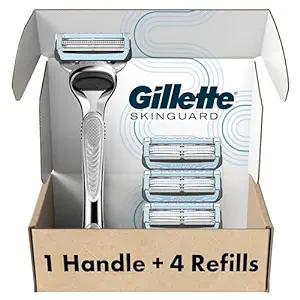
The Gillette SkinGuard Sensitive Skin Razor takes a different approach — it places a protective bar between two blades to flatten skin and cut hair at surface level, not below it. That single design choice dramatically reduces tugging.
The aloe‑infused lubrication strip works before and after blade contact, keeping friction low throughout each stroke.
At $19.94, it’s clinically tested for sensitive skin and includes a precision back trimmer for edges.
Expect clean results for about 6–8 shaves per cartridge.
| Best For | Anyone with sensitive or irritation-prone skin who wants a comfortable, low-fuss shave without the razor burn, bumps, or ingrown hairs. |
|---|---|
| Skin Sensitivity | Dermatologist-tested sensitive |
| Price | $19.94 |
| Lubrication | Integrated aloe strip |
| Blade Count | 2 cartridge blades |
| Post-Shave Care | Not included |
| Reusability | Replaceable cartridges |
| Additional Features |
|
- The protective bar between the blades is a genuine game-changer — it keeps skin flat so the razor cuts hair at the surface instead of dragging it out, which means way less irritation.
- The aloe lubrication strips work both before and after the blades hit, so each stroke stays smooth from start to finish.
- The precision trimmer on the back is a nice bonus — great for cleaning up edges around sideburns or the nose without needing a separate tool.
- Cartridges tend to dull after just 6–8 shaves, which is shorter than average and means refill costs add up faster than you’d expect.
- The two-blade design trades closeness for comfort — if you want that ultra-smooth, just-left-the-barbershop finish, you might find it falls a bit short.
- The handle can get slippery when wet and soapy, which isn’t ideal when you’re trying to do precise detail work.
4. Harrys Original Men Shaving Kit
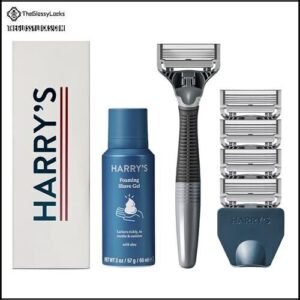
Harry’s Original Men Shaving Kit packs real value into one $19.75 box. You get the Truman handle — weighted, matte, with a soft rubber grip — plus five German-engineered 5-blade cartridges, aloe foaming shave gel, and a TSA-approved travel cover.
The flex hinge follows your jawline; the lubricating strip reduces friction with every stroke.
There’s even a precision back trimmer for sideburns and tight spots.
It’s a complete starter setup designed to shave cleanly and keep irritation low.
| Best For | Guys who want a solid, no-fuss shaving kit — whether it’s a first razor, a travel bag staple, or an easy gift for the man in your life. |
|---|---|
| Skin Sensitivity | Normal to sensitive |
| Price | $19.75 |
| Lubrication | Aloe shave gel included |
| Blade Count | 5 cartridge blades |
| Post-Shave Care | Not included |
| Reusability | Replaceable cartridges |
| Additional Features |
|
- Five 5-blade cartridges with a lubricating strip and precision trimmer — everything you need right out of the box
- The weighted Truman handle with a no-slip grip makes it easy to maneuver, even around tricky spots
- At $19.75 with a TSA-approved blade cover, it’s genuinely great value for travel or everyday use
- Not built for head or body shaving — strictly a face-only kit
- Guys with curly or coarse beards may run into more ingrown hairs than expected
- No full kit case included, and the plastic cartridges add up as waste over time
5. Bulldog Sensitive Glass Razor Stand
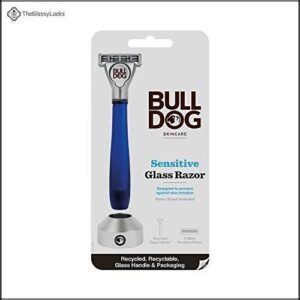
The Bulldog Sensitive Glass Razor Stand ($14.99) does something most razors skip entirely — it keeps your blade dry between shaves.
The recyclable metal stand holds the razor head-side up in open air, cutting off the moisture that feeds bacterial growth.
The handle itself is crafted from 70% recycled glass with a frosted grip, weighing 5.29 oz for steady, controlled pressure.
Baobab oil lubricating strips reduce friction on every pass.
It’s a smart, sustainable setup built for sensitive skin.
| Best For | Anyone with sensitive or normal skin who wants a sustainable, well-balanced razor that stays clean and dry between shaves. |
|---|---|
| Skin Sensitivity | Normal to sensitive |
| Price | $14.99 |
| Lubrication | Baobab oil strip |
| Blade Count | 5 cartridge blades |
| Post-Shave Care | Not included |
| Reusability | Replaceable cartridges |
| Additional Features |
|
- The recycled glass handle is weighty and grippy, giving you real control without extra effort
- The metal stand keeps blades dry, which helps them last longer and stay cleaner
- Works with existing Bulldog cartridges, so you’re not locked into buying a whole new system
- Only comes with one razor — extra cartridges are sold separately
- Glass handles can crack or shatter if dropped, so it’s less forgiving than plastic or metal
- Some users find the Sensitive blade rough rather than gentle, especially on coarser skin
6. Gillette Heated Razor Kit

Heat changes everything about how your skin deals with a razor. The Gillette Heated Razor Kit warms to either 109°F or 122°F in under a second, mimicking a hot-towel shave without the salon visit.
That warmth softens hair and opens pores before each stroke, which directly lowers friction and post-shave redness.
Four built-in heat sensors keep temperature steady throughout. The 5-blade FlexDisc adjusts to facial contours, and the fully waterproof design works at the sink or in the shower.
| Best For | Anyone with sensitive skin who wants a closer, more comfortable shave without the irritation that comes with a standard razor. |
|---|---|
| Skin Sensitivity | Sensitive-skin suitable |
| Price | ~$140 |
| Lubrication | Heat + lubricating strip |
| Blade Count | 5 cartridge blades |
| Post-Shave Care | Not included |
| Reusability | Rechargeable + cartridges |
| Additional Features |
|
- Heats up in under a second to mimic a hot-towel shave, reducing redness and razor burn
- The 5-blade FlexDisc hugs facial contours for a consistently close shave
- Fully waterproof — use it at the sink or in the shower, no fuss
- At around $140, it’s a real investment compared to a standard razor
- You’re locked into proprietary GilletteLabs blade refills, which adds up over time
- Battery life is modest at 6–8 shaves per charge, and it tends to get worse with age
7. Bevel Men’s Complete Shaving Kit

Sensitive skin needs a system, not just a single product. The Bevel Men’s Complete Shaving Kit builds that system around a knurled safety razor with a closed comb head, designed to reduce tugging and micro-abrasions.
Each diamond-coated blade is engineered for 5–7 shaves without scraping. The synthetic shaving brush lifts hair for cleaner cuts, and the low-fragrance cream keeps friction minimal. A soothing post-shave balm with menthol-free ingredients calms skin after each session.
For $67.99, it’s a complete, irritation-focused routine in one box.
| Best For | Anyone looking to build a complete shaving routine from scratch, especially those prone to razor burn or irritation who want everything in one box. |
|---|---|
| Skin Sensitivity | Minimizes irritation |
| Price | $67.99 |
| Lubrication | Shave cream included |
| Blade Count | Double-edge single blade |
| Post-Shave Care | Alcohol-free balm included |
| Reusability | Replaceable DE blades |
| Additional Features |
|
- Full kit in one purchase — razor, brush, oil, cream, and balm, nothing else to track down
- Alcohol-free balm and moisturizing cream are gentler on sensitive or easily irritated skin
- Weighty handle gives you real control, making it easier to get a clean, close shave
- At $67.99, it’s pricier than basic starter kits, which might feel like a stretch for first-timers
- Loading the blades can be a bit fiddly compared to other safety razors on the market
- The exact blade count (20 or 40) isn’t always clear, so what you get may vary by shipment
8. Merkur Mk34c Double Edge Razor

The Merkur MK34C is old-school engineering that still outperforms most modern razors for sensitive skin. Its brass-core, chrome-plated handle weighs around 59 grams — just enough to let gravity do the work so you don’t press down.
That closed-comb head keeps blade exposure controlled, reducing nicks and micro-abrasions on reactive skin.
Standard DE blades cost $0.10–$0.15 each and swap out in seconds.
At $45, it’s a one-time investment that pays off every single shave.
| Best For | Anyone with sensitive skin who wants a close, consistent shave without spending a fortune on cartridges. |
|---|---|
| Skin Sensitivity | Sensitive-skin suitable |
| Price | $45.00 |
| Lubrication | Soap/brush lather |
| Blade Count | Double-edge single blade |
| Post-Shave Care | Not included |
| Reusability | Replaceable DE blades |
| Additional Features |
|
- The brass-weighted handle lets gravity do the work — no pressing needed, which means fewer nicks.
- Closed-comb head keeps things controlled and rinses clean, great for reactive or sensitive skin.
- DE blades run about $0.10–$0.15 each, so the long-term cost is basically nothing.
- There’s a real learning curve if you’ve never used a safety razor — angle and pressure take some practice.
- The short handle can feel cramped if you have bigger hands or prefer more leverage.
- The top-plate threads can wear down over time with heavy use, which may throw off blade alignment.
9. Gillette Venus Extra Smooth Sensitive Razor
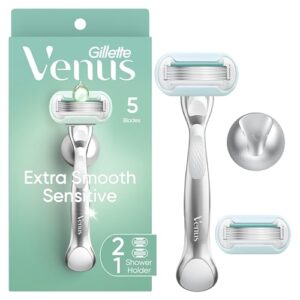
If double-edge razors feel like too much of a learning curve, the Gillette Venus Extra Smooth Sensitive is built for straightforward, low-irritation shaving.
Its five-blade cartridge with a SkinElixir aloe lubricating strip activates on contact with water, reducing friction before it becomes red.
The pivoting head follows curves at your knees and ankles without dragging.
Skin Health Alliance-accredited for sensitive skin.
At $14.97 with a reusable weighted handle and included shower wall holder, it’s practical and well-designed.
| Best For | Anyone with sensitive skin who wants a reliable, fuss-free shave without switching to a more technical razor setup. |
|---|---|
| Skin Sensitivity | Skin Health Alliance certified |
| Price | $14.97 |
| Lubrication | Aloe lubricating strip |
| Blade Count | 5 cartridge blades |
| Post-Shave Care | Not included |
| Reusability | Replaceable cartridges |
| Additional Features |
|
- Five blades with an aloe strip cut friction way down, so you get a close shave without the redness
- The weighted metal handle gives you real control around tricky spots like knees and ankles
- Comes with a shower holder that keeps the blade dry and sharper for longer
- The handle’s extra weight can feel like a lot if you just want a quick, casual shave
- Replacement cartridges cost more than generic options, so ongoing costs add up
- The wall holder’s adhesive and clip have a reputation for loosening or breaking over time
10. Cortizone 10 Aloe Itch Relief Cream
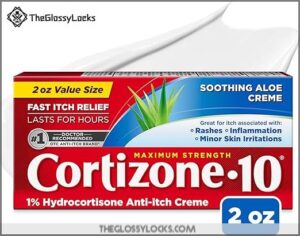
Sometimes shaving leaves skin that’s past "a little pink" — it’s actively itching and inflamed. That’s where Cortizone 10 Aloe Itch Relief Cream earns its place in your kit.
The 1% hydrocortisone — maximum OTC strength — targets inflammation directly, while aloe vera adds a cooling layer of comfort. It’s fragrance-free, dye-free, and absorbs without greasiness.
Apply up to 3–4 times daily until redness settles. At $8.97, it’s an affordable backup when technique alone isn’t enough.
| Best For | Anyone dealing with post-shave irritation, razor burn, or inflamed skin who needs fast, no-fuss itch relief without a prescription. |
|---|---|
| Skin Sensitivity | Soothes irritated skin |
| Price | $8.97 |
| Lubrication | Aloe vera enriched |
| Blade Count | N/A (topical cream) |
| Post-Shave Care | Hydrocortisone relief cream |
| Reusability | Single-use tube |
| Additional Features |
|
- Maximum OTC-strength 1% hydrocortisone tackles redness and inflammation at the source
- Aloe vera adds a cooling, soothing feel that makes irritated skin more comfortable fast
- Fragrance-free, dye-free, and non-greasy — easy to layer into any skincare routine
- Contains parabens, which some people prefer to avoid
- The 2 oz tube runs out quickly if you’re using it regularly
- Not meant for long-term daily use — ongoing skin issues really need a dermatologist’s input
Frequently Asked Questions (FAQs)
How to prevent razor burn?
Preventing razor burn comes down to three things: a sharp blade, proper lubrication, and shaving with the grain.
Replace blades every 5–7 shaves, use a fragrance‑free gel, and rinse with cool water after.
Should you put cold compresses on a razor burn?
Yes, a cool compress helps. Press a clean, damp washcloth on the area for 5 to 10 minutes. It calms the burn, reduces redness, and takes the sting down fast.
Do razor blades dull evenly?
No, razor blades don’t dull evenly. Microscopic chips and fractures form at random points along the edge, creating uneven cutting performance.
Some sections go dull faster, which means rougher strokes and more irritation.
How to immediately reduce facial redness?
Cool water first — rinse your face immediately after shaving, then press a cold, damp cloth on red areas for 5 to 10 minutes.
Pat dry and apply aloe vera gel to calm irritation fast.
How to remove redness from skin in 5 minutes?
Rinse with cool water, then press a damp cold cloth on the area for 5 minutes. Follow with pure aloe vera gel. Redness usually calms noticeably within minutes.
Can diet affect skin redness after shaving?
Your skin is a mirror of what you eat. High-glycemic foods, alcohol, and spicy meals can trigger inflammation that makes post-shave redness worse and slower to calm down.
Are electric razors better for redness-prone skin?
Electric razors can be gentler on redness-prone skin. Their foil or rotary heads reduce direct blade scraping, which lowers micro-scrape risk. Many people naturally press lighter, cutting friction substantially.
Can water hardness impact blade performance and irritation?
Hard water leaves mineral deposits on blade edges, increasing drag and friction.
That buildup accelerates dullness, clogs cartridge slots, and stresses your skin barrier — making redness more likely with every pass.
Conclusion
The ball is now in your court. By prioritizing blade care to reduce redness, you’ll be well on your way to smoother, calmer skin.
Remember, a sharp blade is just the beginning. Proper cleaning, storage, and replacement are key.
Combine these habits with gentle shaving techniques and soothing after-care, and you’ll be saying goodbye to post-shave irritation for good. Take control of your shave, and your skin will thank you.