This site is supported by our readers. We may earn a commission, at no cost to you, if you purchase through links. This content is for general informational and educational purposes only and is not a substitute for professional medical, dermatological, or nutritional advice.

You’re exhausted, your hair is styled, and the bathroom sink feels miles away. So you fall into bed with gel still stiff on your strands and hope for the best.
Your pillow doesn’t take sides. Friction can snap dried-out hair overnight, and buildup can irritate the scalp while you sleep. But some products are made to work through the night, and a few even work better that way.
So can I sleep with product in my hair? It depends on what’s in your hands. Here’s how to tell which products are safe, which aren’t, and how to protect your hair either way.
If you’re also coloring your hair, check whether bubble hair dye is damaging before leaving any product in overnight, since chemical treatments make strands more fragile.
Table Of Contents
- Key Takeaways
- Can I Sleep With Product in My Hair?
- Which Hair Products Can You Leave in Overnight?
- Can Leaving Hair Products in Overnight Cause Irritation or Breakage?
- Is Sleeping With Wet, Product-Treated Hair Safe?
- How Can You Protect Product-Treated Hair While Sleeping?
- Frequently Asked Questions (FAQs)
- Is it bad to leave product in hair overnight?
- Should you sleep with products in your hair?
- How long can I leave product in my hair?
- Do you have to wash products out of hair?
- Are silk or satin pillowcases only beneficial for wavy hair?
- Can the ‘pineapple’ style be used on short hair?
- How long should I keep twists or braids in my hair overnight?
- Do hair rollers work on all hair types?
- How does hair porosity affect overnight product absorption?
- Can overnight products cause scalp acne or dandruff?
- Conclusion
Key Takeaways
- You can safely sleep with leave-in conditioners, light serums, and oils, but keep them on your lengths and ends, and use only a small amount so they don’t build up on your scalp.
- Skip gels, mousse, hairspray, and rinse-out conditioners or masks at night, since they harden, trap oil, and can snap strands against your pillow unless the label says they’re made for overnight use.
- Wet hair swells and breaks more easily, so dry it fully or most of the way before bed and watch for burning, lasting redness, or new breakage as signs to wash the product out.
- You can cut friction overnight with a silk or satin pillowcase or bonnet, or by loosely braiding, twisting, or pineapple-tying your hair, as long as the style is snug but never tight.
Can I Sleep With Product in My Hair?

Why does it matter what’s in your hair when you fall asleep? Because sleeping with product in your hair gives that product eight hours to sit on your scalp and strands. Sometimes that’s fine. Other times, it isn’t.
If mornings are rushed, a few overnight styling habits, like those in this everyday hair styling guide for busy moms, can save time without stressing your scalp.
The answer depends on the product and how you use it. A light overnight hair treatment can support hair hydration overnight. Heavy styling products can cause product buildup on scalp, which may clog follicles and irritate skin. Friction against your pillow adds to the risk of breakage. Applying leave-in products to brushed, fully dry hair rather than wet hair matters, since wet strands are weaker and more vulnerable to damage while you sleep.
So is it safe? Sometimes. Check labels first, and look for noncomedogenic hair products, which are formulas made not to clog pores. Your scalp, hair type, and routine all matter. Knowing why keeps you safe.
Which Hair Products Can You Leave in Overnight?

Not every hair product is safe to sleep in. Some are made for overnight wear, while others can cause real damage. Here’s how the main types compare, so you know what to leave in and what to rinse out.
Leave-in Conditioners, Serums, and Oils
Most leave-in conditioners are made to stay on your hair, so using one overnight is usually fine. Think of it as an easy overnight hair treatment.
Serums and hair oils are different. Check the label first. Keep them on your lengths and ends, and use a small amount. Too much can cause product buildup on scalp and leave hair greasy.
If your hair is dry or damaged, a cream may suit you better, so this guide to choosing between oil and cream for hair can help you decide.
Rinse-Out Conditioners and Hair Masks
Rinse-out conditioners are a different story. They’re made to be washed off, so they aren’t the same as leave-in conditioner benefits you get overnight.
Masks vary, so read the directions. Only products labeled for overnight use should stay on.
- Rinse-out formulas: Wash them out as directed.
- Overnight masks: Use them only if labeled.
- Hair mask overuse: Too much can leave hair heavy.
- Porosity: It affects product absorption, hydration, and moisture retention in hair.
Gels, Mousse, and Hairspray
Like rinse-out formulas, gels, mousse, and hairspray don’t belong in your hair at night. They harden, trap oil, and break strands against your pillow.
Since a calm, well-nourished scalp helps hair grow back stronger after nightly wear, these scalp care tips for healthier hair growth are worth adding to your bedtime routine.
| Product | Risk | Better Move |
|---|---|---|
| Gel | Buildup | Rinse out |
| Mousse | Moisture | Dry fully |
| Hairspray | Brittleness | Brush out |
Brush product out, then wash your hair. That’s real hair product absorption reduction. Save overnight hair treatments for labeled products.
Can Leaving Hair Products in Overnight Cause Irritation or Breakage?
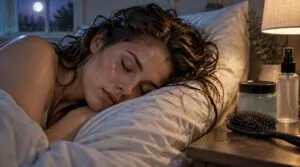
Sleeping in styling products can cause problems for some people, though not everyone. Can Leaving Hair Products in Overnight Cause Irritation or Breakage? Yes, depending on the product and your skin.
Scalp irritation is the most common issue. Fragrance and preservatives may trigger itching, redness, or scaling, and product residue can aggravate seborrheic dermatitis. Heavy oils and waxes may also clog follicles and cause tender bumps.
Hair breakage is the other risk. Stiff gels and sprays coat strands, so tossing and turning can snap them. Damaged or chemically treated hair is the most vulnerable.
Watch for burning, persistent redness, or new breakage. Those signs point to overnight hair damage, so wash the product out and stop using it right away.
Is Sleeping With Wet, Product-Treated Hair Safe?

Many of you wonder if it’s safe to sleep with product in your hair while it’s still damp. Usually, yes, if you follow the label. The bigger concern is the water, not the product.
Wet hair swells, which makes strands stretch and snap more easily. This wet hair vulnerability matters most with friction, and repeated swelling can lead to hygral fatigue, a weakening of the hair shaft from constant wetting and drying. Overnight hair damage is more likely when you toss and turn on soaked strands.
Wet hair swells and stretches, so tossing and turning on damp strands makes them snap far more easily
Keep these three points in mind:
- Check your label, especially on overnight care serums.
- Air-dry partly first if your hair is thick or long.
- Use a light amount, since heavy layers slow drying time.
How Can You Protect Product-Treated Hair While Sleeping?
Sleeping with product in your hair doesn’t have to mean waking up to frizz or breakage. A few simple habits can shield your strands from friction and keep your products working. Here are two easy protective options to try tonight.
Silk or Satin Pillowcases and Bonnets

Does your pillowcase work against your hair? Cotton absorbs oils and creates friction, which can undo whatever you applied before bed.
Silk or satin pillowcases let hair glide instead of snag. They also soak up less moisture, so your leave-in hair conditioners, hair oils and serums stay on your strands.
For full coverage, wear a silk or satin bonnet. It stays put when you toss and turn.
Loose Braids, Twists, and Pineapple Styles

Picture your hair gathered into one soft rope that rests on your shoulder instead of fanning across the pillow.
That’s a loose braid, and it’s the easiest way to cut friction overnight.
Twists work the same way for coily hair.
Curls do well in a pineapple hairstyle, tied high and loose.
Use a silk scrunchie, and keep every style snug, never tight.
Frequently Asked Questions (FAQs)
Is it bad to leave product in hair overnight?
It depends on the product. Light leave-ins sealed with a small amount of oil protect hair elasticity overnight. Heavy or drying products attract residue, clog follicles, and irritate skin, so rinse them out first.
Should you sleep with products in your hair?
Is it worth the risk? Usually not. Skip gels and sprays, since they invite product residue attraction and weaken strands. A light leavein conditioner is fine. Use a silk or satin pillowcase for overnight hair recovery.
How long can I leave product in my hair?
Wondering how long is too long? It comes down to the product type. Leave-ins and serums can stay in for hair hydration and moisture retention. Rinse-out products shouldn’t. Always follow the label’s timing.
Do you have to wash products out of hair?
No, not always. Rinse-out products like regular conditioner and masks need washing out after their stated time. Leave-ins, serums, and oils stay in, supporting hair hydration and moisture retention without rinsing.
Are silk or satin pillowcases only beneficial for wavy hair?
No, a silk or satin pillowcase helps every hair type. Hair friction reduction means less tangling, which helps hair breakage prevention and limits cuticle layer damage.
It protects moisture balance and keeps styles intact overnight.
Can the ‘pineapple’ style be used on short hair?
Hair grows about half an inch monthly, so short hair may soon reach your crown. The pineapple style is among protective hairstyles for overnight curl setting.
Loosely tie it. Too short? A satin bonnet works.
How long should I keep twists or braids in my hair overnight?
Keep your twists or braids in for at least 6 to 8 hours. These protective hairstyles suit a nighttime routine for reducing overnight tangles and enhancing natural curl pattern.
Experiment to find your best fit.
Do hair rollers work on all hair types?
Yes, hair rollers work on most textures, but hair type suitability matters. Foam or flexi suit curls, while velcro adds fine hair volume.
This heatless hairstyling method aids preserving hairstyle shape and overnight serum efficacy.
How does hair porosity affect overnight product absorption?
You’d think eight hours of sleep would give any product plenty of time to sink in. Not so. Hair porosity decides the outcome: low porosity hair resists absorption, while high porosity hair absorbs fast but loses moisture quickly.
Can overnight products cause scalp acne or dandruff?
Overnight products can trigger acne breakouts from hair products and dandruff.
Hair oils and serums cause scalp pore clogging, and product transfer to skin irritates sensitive skin. Wash them out before bed if you’re oily.
Conclusion
Picture your pillow at 3 a.m., a quiet surface that either cushions your strands or slowly wears them down.
So, can I sleep with product in my hair? Yes, if it’s a leave-in formula like a serum or light conditioner. Skip heavy gels, rinse-out masks, and anything stiff with spray.
Dry your hair first, then wrap it in silk or tie it loosely. Choose carefully, protect your strands, and morning finds them soft, not strained.