This site is supported by our readers. We may earn a commission, at no cost to you, if you purchase through links.
The barbershop question catches people off guard: can white people get waves? The short answer is yes, but the path looks different than it does for those with coily or kinky hair textures. Waves—those rippling patterns that circle the head like liquid silk—traditionally form through training tightly coiled hair to lie in organized patterns.
Straighter hair types face real challenges because their follicle structure doesn’t naturally create the sharp S-curves that hold wave patterns. Still, with the right combination of techniques, products, and realistic expectations, lighter hair textures can develop visible waves.
Success depends on understanding your specific curl pattern, committing to consistent brushing routines, and respecting the cultural roots of this iconic style.
Table Of Contents
- Key Takeaways
- What Are Hair Waves?
- How Hair Texture Affects Wave Formation
- Can White People Get Waves?
- Steps for White People to Achieve Waves
- Chemical and Professional Methods for Waves
- Maintaining and Styling Waves on Straight Hair
- Top 9 Products for Getting Waves
- 1. Medium Soft Wave Brush Torino
- 2. Silky Satin Durag Wave Cap
- 3. Duke Wave And Fade Caps
- 4. Diane Black Silicone Tail Comb
- 5. SheaMoisture Curl Enhancing Hair Cream
- 6. Wave Saving Shampoo For Waves
- 7. Wave Defining Moisture Treatment Cream
- 8. Curly Hair Enhancing Mousse Product
- 9. Argan Curl Defining Hair Cream
- Frequently Asked Questions (FAQs)
- Can white people get waves?
- How do you get waves if you’re white?
- What is the difference between waves for black people and white people?
- How do you maintain your waves?
- How can you style waves in different ways?
- What products can I use to get waves?
- Do I need to use a special shampoo or conditioner for my waves?
- Can I use a curling iron to get waves?
- Can I use hot rollers to get waves?
- What is the difference between a curling iron and hot rollers?
- Conclusion
Key Takeaways
- White people can develop waves if their hair has natural curl (2C-3A pattern), but straighter textures require chemical treatments like perms or texturizers to permanently reshape the follicle structure.
- Success depends on follicle shape—round follicles produce straight hair while elliptical ones create the S-curves needed for wave patterns, making consistent brushing alone insufficient for truly straight hair types.
- The wave formation process demands daily commitment including 50+ brush strokes per section twice daily, moisture-locking products, overnight durag compression, and respecting the style’s deep roots in Black hair culture.
- Chemical methods like perms can force wave patterns into any texture but carry risks of scalp burns and long-term damage, while natural techniques work best when you’ve got at least some baseline curl to train.
What Are Hair Waves?
Hair waves are a short-cropped hairstyle that creates smooth, rippling patterns across the head—think ocean tides frozen in place. While the exact origins aren’t clear, this distinctive look has been a staple in Black hair culture for generations and continues to turn heads today.
Before you can figure out whether you can get waves, you need to understand what they actually are, where they came from, and why they’ve stayed so popular.
Definition and Key Features
Waves are laid-down curls that form ripple patterns across your scalp through repeated brushing and training. The classic 360-wave style circles your entire head in a continuous ring radiating from the crown. Your natural curl pattern gets compressed into uniform ripples through mechanical styling rather than cutting.
This wave maintenance approach works best when you’ve got some natural curl formation—your hair texture determines whether these styling techniques will deliver visible wave patterns. Understanding your hair wave type is vital for effective wave formation and maintenance.
History and Cultural Significance
This styling method emerged from African grooming traditions that used oils and combs to create organized patterns centuries ago. By the 1920s Harlem Renaissance, Black men turned waves into a statement of urban style and respectability during Jim Crow—your hair became tied to survival and identity.
Waves evolved from African grooming traditions into a symbol of Black pride and respectability during the Harlem Renaissance, when your hair became inseparable from survival and identity
Today, waves carry that legacy of discipline and pride, making cultural sensitivity essential when you’re considering adoption. Understanding the influence of historical barbering techniques is vital here.
Why Waves Are Popular
Beyond the cultural roots, you’ll find waves everywhere—from barbershops to your Instagram feed—and there’s good reason for that surge. Consider what’s driving the wave phenomenon:
- Celebrity Influence brought hip-hop artists and athletes into the spotlight during the 1990s, cementing waves as an aspirational style.
- Social Media showcases 40 million posts demonstrating wave techniques and results.
- Aesthetic Appeal creates a polished, attention-grabbing look that frames your face.
- Cultural Significance continues resonating as a symbol of grooming dedication and heritage.
How Hair Texture Affects Wave Formation
Your hair texture determines whether you’ll see wave patterns form—or just end up frustrated with a brush.
The shape of your follicles and your natural curl pattern create the foundation for everything that comes next.
Let’s break down the science so you know what you’re working with before you start brushing.
The Role of Curl Pattern
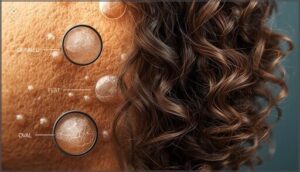
Your follicle shape is the architect of your curl pattern—round follicles produce straight fibers, while oval ones create wavy S-curves. The more elliptical your follicle, the tighter your curl geometry becomes. This follicle-to-fiber relationship determines whether 360 waves are within your reach or if you’ll need chemical curl enhancement to reshape your natural hair texture.
| Follicle Shape | Resulting Curl Pattern |
|---|---|
| Round | Straight hair (Type 1) |
| Slightly oval | Loose waves (Type 2) |
| Elliptical | Defined curls (Type 3) |
| Highly elliptical | Tight coils (Type 4) |
| Curved follicle angle | Enhanced wave formation |
Hair Typing Systems Explained
Classification tools like the Andre Walker system give you a roadmap. Walker’s 1990s framework divides hair texture into four categories—Type 1 straight through Type 4 coily—with A–C subtypes marking curl pattern tightness.
Most Caucasian hair falls between Type 1 and Type 2, which explains why traditional wave formation requires extra effort or chemical intervention for straighter follicle shapes.
Differences in Hair Follicle Shape
Your follicle geometry directly shapes every hair fiber you grow. Curved or angled follicles create wavy or curly patterns, while straight follicles produce straight strands.
Caucasian hair typically emerges from round, symmetrical follicles, resulting in Type 1–2 texture. African-ancestry follicles often show pronounced asymmetry and elliptical cross-sections, generating tighter curl patterns.
That’s why follicle shape determines whether waves come naturally or need chemical assistance.
Can White People Get Waves?
Yes, white people can get waves—but success depends on your natural hair texture and how much work you’re willing to put in. If your hair is naturally wavy or curly, you’ve got a head start, but even straighter textures can achieve waves through the right methods.
Let’s break down the science, the factors that make or break your results, and the myths that keep people from even trying.
The Science Behind Wave Formation
Wave formation starts at the cellular level, where hair follicle shape and cortical keratin structure determine your natural curl pattern. The cortex holds the key—keratin bonds, especially hydrogen bonds that break when wet and reform during drying, let you reshape fiber structure temporarily. Flatter, more elliptical follicles produce tighter curl genetics, while round follicles yield straighter hair texture.
- Hair keratin can stretch up to 30% when wet, making waves possible through mechanical styling
- Disulfide bonds maintain your baseline curl pattern unless chemically altered with perms or relaxers
- Follicle asymmetry drives curvature—lateral cell imbalance creates natural wave patterns from root to tip
- Genes like KRT74 and TCHH influence curl across all ancestries, not just one ethnic group
- Repetitive brushing aligns fibers and trains them into uniform wave ridges over time
Factors That Influence Success
Your hair texture and curl pattern matter most—you need at least a 2C to 3A curl geometry to see wave patterns. Fine hair bends easier than coarse, which needs more brushing force.
Hair porosity controls how well moisture levels stay locked in, because dry strands won’t hold definition.
Daily consistency with technique, products, and durag compression separates success from frustration when white people chase hair waves.
Myths and Facts About Race and Waves
You’ve probably heard that waves belong exclusively to African American culture—that’s Racial Hair Bias talking, not Wave Formation Science. Cultural Wave Narratives overlook Hair Texture Diversity: studies show wavy hair appears in 42.9% of people across ethnic groups.
White people with 2C–3A Ethnic Curl Patterns can form visible Wave Patterns. The Cultural Significance of Hairstyles matters, but texture—not ancestry—determines success, sidestepping Cultural Appropriation concerns when approached respectfully.
Steps for White People to Achieve Waves
Getting waves with straighter hair isn’t about following some secret formula—it’s about understanding your texture and working with it, not against it.
You’ll need the right prep, technique, and products to train your hair into those signature ripple patterns.
Here’s what you need to focus on to get started.
Assessing Your Hair Type
Before you dive into brushing and product selection, you need to know exactly what you’re working with. Hair Texture Analysis starts by observing your natural pattern when it air-dries without heat or products—this reveals your true Curl Pattern Identification and Wave Formation Potential. Here’s how to assess your compatibility:
- Examine your natural texture: Let your hair dry completely without blow-drying or straightening, then check if you see any S-shaped bends or slight waves, especially at lengths beyond two to three inches—many people of European descent have Type 2A–2C Caucasian Hair that appears straight when short but shows wave potential when longer.
- Test your Hair Porosity: Spritz a clean strand with water and watch how quickly it absorbs—high-porosity hair soaks up moisture fast but may struggle with frizz, while low-porosity hair resists penetration and needs lighter, water-based formulas for effective Wave Pattern development.
- Consider strand thickness: Roll a single hair between your fingers—fine strands form waves quickly but lose definition easily, while medium to coarse strands hold wave patterns more firmly once you establish them through consistent Hair Care and Styling techniques.
Understanding your Hair Type and Follicle Shape Determination sets realistic expectations and guides your entire wave journey.
Getting The Right Haircut
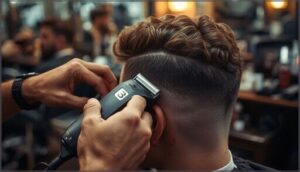
Once you understand your Hair Type, it’s time to talk Haircut Techniques with your Barber. For Caucasian Hair trying to form Wave Patterns, avoid cutting too short—start at a 3–4 guard with the grain so strands have enough length to bend into that signature S-shape.
Barber Tips emphasize a low taper over a high Fade; aggressive Fade Styles remove the length you need to establish waves. Strategic Cutting Strategies preserve your pattern.
Washing and Conditioning for Waves
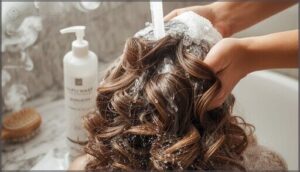
After the right cut preserves your length, your wash routine sets the stage for Wave Hairstyle Trends. Use a sulfate-free Wave Shampoo every three to five days—daily washing strips Hair Moisture that curly textures need for Curl Care and pattern clarity.
Follow with a lightweight Conditioner on mid-lengths and ends, skipping your scalp to protect Scalp Health and avoid buildup that flattens waves during Wave Maintenance.
Brushing Techniques and Patterns
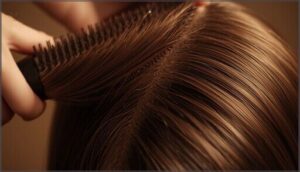
Once your hair is clean and conditioned, consistent brushing builds your Wave Pattern. Work from the crown forward on top, downward on the back, and diagonally toward your cheeks on the sides—this Hair Flow creates 360-degree Pattern Formation.
A medium Wave Brush delivers 50 Brush Strokes per section, twice daily, training your Hair Texture to hold each Wave Direction through repeated Hair Styling Techniques.
Using Durags and Wave Caps
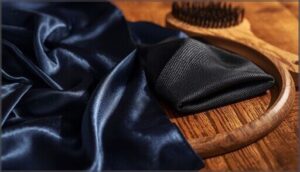
After brushing, lock in your work with compression. A Durag made from silk or satin delivers Friction Reduction that protects your Hair Waves overnight, while Wave Cap Styles offer lighter, all-day Hair Protection.
Both use Compression Techniques to train your 360 waves—pair your Wave Brush routine with quality Durag Materials, and you’ll see consistent Pattern Formation without breakage.
Chemical and Professional Methods for Waves

If your natural texture won’t cooperate with brushing alone, chemical and professional treatments can reshape your hair’s structure to hold wave patterns. These methods work by breaking and reforming the bonds inside each strand, creating lasting curl or wave where there wasn’t any before.
Here’s what you need to know about perms, texturizers, and salon wave services.
Permanent Wave (Perm) Services
If you’re looking for a lasting solution, professional perm services can reshape straight hair into waves. Salons use chemical reducing agents followed by neutralizers to permanently reform the hair shaft’s bonds.
This process usually costs more—with pricing reflecting specialized training—but delivers uniform wave patterns across all hair textures.
You’ll need regular wave shampoo and careful perm maintenance to keep your new texture healthy and defined.
Chemical Texturizers and Risks
Chemical texturizers can permanently alter your hair texture and wave pattern, but they come with serious risks. These formulas can cause scalp irritation, chemical burns, and long-term hair damage if misapplied. Some products contain toxic ingredients linked to cancer risks and disrupted hair growth.
Always use protective creams around your hairline and follow timing instructions precisely to minimize harm during chemical hair care treatments.
Professional Wave Styling Options
Salons now offer body-wave services customized to your hair texture analysis—no tight curls, just soft, brushable waves.
Stylists trained in chemical processing can map your follicle shape and recommend cold perms or digital waves that work with straighter hair.
You’ll need consistent Wave Brush sessions and a Durag between appointments to maintain 360 waves.
Professional wave styling techniques deliver results home methods can’t match.
Maintaining and Styling Waves on Straight Hair

Getting waves is only half the battle—keeping them sharp takes consistency. If you’ve got straighter hair, your routine needs to work harder to lock in those patterns and fight off frizz.
Let’s break down the daily habits, moisture strategies, and nighttime moves that’ll keep your waves looking clean.
Moisturizing and Daily Care
Daily hydration keeps your wave pattern sharp and your hair healthy. Apply a water-based leave-in product or moisturizer every few days on clean hair—light misting between washes helps maintain moisture balance without buildup.
For straighter textures especially, you’ll need consistent conditioning and a quality hair serum to support curl pattern definition.
Pair moisturizers with overnight care using a durag, and you’re set.
Preventing Frizz and Breakage
Frizz control and breakage prevention require you to manage moisture balance and protect your hair structure. High humidity drives water uptake, disrupting hydrogen bonds and causing frizz, while heat above 300°F weakens keratin and increases breakage risk.
Here’s how to preserve your wave pattern:
- Limit heat exposure—air dry when possible or use blow-dryers below 120°F to prevent cuticle damage.
- Choose humidity-control products—leave-in conditioners with proven moisture-regulating actives reduce water sorption by up to 52%.
- Minimize chemical processing—repeated treatments increase hair porosity and fragility, especially in textured hair.
Nighttime Routines for Wave Retention
Your nighttime routine is crucial for maintaining wave retention. Before bed, dedicate 30 minutes to brushing your hair to set the pattern, followed by applying a light moisturizer to enhance moisture retention and promote cuticle health. Wearing a durag or wave cap made of satin material is essential, as it reduces friction by up to 40% compared to cotton pillowcases. Additionally, your sleep position plays a significant role; sleeping on your back minimizes pattern disruption during the critical 6–8 hours of rest.
| Evening Step | Product/Tool | Why It Works |
|---|---|---|
| Pre-sleep brushing (30 min) | Wave brush (soft/medium bristle) | Sets directional pattern before compression |
| Moisturize hair | Leave-in cream or light oil | Keeps cuticles pliable, aids wave hold |
| Apply compression | Durag or satin wave cap | Reduces friction, locks in alignment overnight |
| Sleep on back | Satin pillowcase (optional boost) | Minimizes side pressure that flattens waves |
Top 9 Products for Getting Waves
Getting the right products makes all the difference when you’re working toward waves. You need tools that support your hair’s moisture, define your wave pattern, and protect your progress overnight.
Here are nine essential products that can help you achieve and maintain waves, no matter your starting texture.
1. Medium Soft Wave Brush Torino

You’ll need the right wave brush to train your hair texture and curl pattern into those signature wave formations, and the Torino Pro medium soft bristle brush delivers exactly that.
This olive wood palm brush features bristles positioned between soft and medium, giving your scalp a comfortable pull without irritation during daily brushing sessions. The curved design follows your head’s natural shape for better coverage, while the pointy tip helps isolate your crown area.
Following proper brush maintenance and wave brush care extends its lifespan, and Torino Pro benefits include versatility across all waving stages.
Best For: Wavers with medium to coarse hair texture looking for a comfortable brush that works through all stages of wave development without irritating the scalp.
- 100% boar bristles distribute natural oils to reduce frizz and add shine while training your wave pattern
- Curved design and pointy tip let you work the crown area easily and match the contours of your head for better control
- Gentle enough for daily use even on thinning hair, but still provides enough pull to lay waves at longer lengths
- Some users with fresh cuts or sensitive scalps find the bristles too firm for comfort
- Won’t work well if your hair is very soft or very hard—it’s really designed for that middle texture range
- Higher price point than basic wave brushes and can be hard to find in stock due to popularity
2. Silky Satin Durag Wave Cap

After brushing, locking in those wave patterns becomes your next priority—that’s where the Silky Satin Durag Wave Cap steps up. This $9.99 satin durag uses smooth fabric that cuts hair friction by roughly 30–45% compared to cotton, protecting your 360 waves from overnight frizz and breakage.
The extra-long tail provides secure compression to hold moisture and keep waves pressed down while you sleep. Wave cap materials matter because lower friction means less cuticle damage, and this silky satin option delivers solid wave retention tips without breaking your budget or your hairline.
Best For: Anyone training 360, 540, or 720 waves who needs an affordable overnight cap that locks in moisture and reduces frizz without causing breakage.
- Smooth satin fabric cuts friction by 30–45% versus cotton, protecting waves and preventing hair damage while you sleep
- Extra-long tail delivers secure compression to hold patterns in place and keep moisture locked in all night
- Budget-friendly at $9.99, offering solid wave retention without the higher cost of natural silk options
- Durability can be hit-or-miss with regular use—synthetic satin may snag or tear faster than natural silk
- May slip off during sleep if not tied properly, since the smooth fabric doesn’t grip as firmly as rougher materials
- One-size-fits-most doesn’t work for everyone—some users report it runs small or has straps that feel too wide
3. Duke Wave And Fade Caps
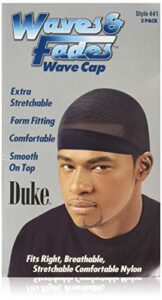
Once your waves are forming under a quality durag, you’ll want backup options for different situations—that’s where Duke Wave And Fade Caps come in. This two-pack offers extra stretchable, form-fitting compression that locks down your 360 waves during brush sessions or after showers.
The breathable fabric keeps your scalp cool during extended wear, while the smooth top prevents forehead marks that cheaper wave caps leave behind. At under $10 for two units, you’re getting reliable hairstyle maintenance without the durability issues some alternatives bring.
Best For: Anyone building or maintaining 360 waves who needs affordable backup caps for overnight wear, post-shower sessions, or daily compression without spending much.
- Extra stretchy material creates solid compression for wave formation while staying comfortable during long wear
- Two-pack under $10 gives you a backup option so you always have a clean cap ready
- Breathable fabric keeps your scalp from getting too hot or sweaty during extended sessions
- Fit can be hit or miss—some people find it too tight while others say it’s perfect, so sizing is inconsistent
- Durability issues reported with tearing or holes developing after regular use
- Material might feel too thin for some users compared to thicker wave cap options
4. Diane Black Silicone Tail Comb

Clean partings reveal symmetrical wave patterns—that’s where the Diane Black Silicone Tail Comb earns its spot in your styling tools lineup. The heat-resistant silicone construction withstands flat irons up to 500°F, while the fine-tooth design and elongated rattail end let you create precise sections across your scalp.
This comb’s anti-static properties reduce flyaways during hair sectioning, giving you control over each quadrant before brushing. At 9.25 inches, it manages detailed hair maintenance and grooming tasks without snagging on textured hair, making it ideal for mapping out your wave layout before durag compression.
Best For: Home users and professionals who need precise scalp partings for wave styling, braiding, or detailed sectioning work with heat tools.
- Heat-resistant silicone handles temperatures up to 500°F, so you can use it safely alongside flat irons and curling tools without warping or melting
- Anti-static design cuts down on flyaways and frizz during sectioning, giving you cleaner parts and better control over each hair section
- Fine-tooth spacing and rattail end create sharp, symmetrical parts for wave patterns and structured styles without snagging on textured hair
- Lightweight silicone construction can feel flimsy and may bend or kink easily during shipping or regular use
- Some users report durability concerns, with the comb showing wear or breaking after extended salon or daily styling sessions
- Flexible material might lack the rigidity needed for certain parting techniques, especially if you prefer firmer control during sectioning
5. SheaMoisture Curl Enhancing Hair Cream
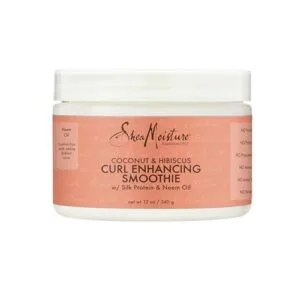
Moisture balance drives wave formation in hair with texture—that’s why the SheaMoisture Coconut & Hibiscus Curl Enhancing Smoothie shows up in wave routines across curl patterns.
This sulfate-free cream blends coconut oil, neem oil, and silk protein to hydrate strands without weighing them down, helping white people with wavy or loosely curled hair texture define natural bends while reducing frizz.
Apply a small amount to damp hair before brushing to support curl enhancement and wave definition throughout your daily maintenance routine.
Best For: White people with naturally wavy or loosely curled hair who want to define their texture and train waves without heavy buildup or silicones.
- Sulfate-free formula with coconut oil, shea butter, and silk protein moisturizes and defines waves without weighing hair down
- Reduces frizz and adds shine while supporting daily brushing routines for wave training
- Budget-friendly and widely available, with recognition as an Allure Best of Beauty award winner
- Can feel too heavy or greasy if you use too much—a little goes a long way
- May not provide enough hold on its own for tighter wave patterns, so you might need to pair it with a pomade
- Some users report inconsistent results depending on hair type and application method
6. Wave Saving Shampoo For Waves
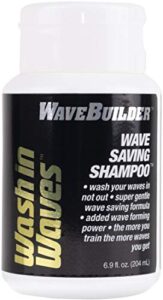
Harsh surfactants strip the natural oils your scalp needs to maintain wave patterns—that’s where WaveBuilder’s Wave Saving Shampoo comes in. Formulated with keratin and collagen amino acids, this product cleans without over-drying, supporting hair moisture retention essential for wave preservation.
The “Quick Brush Wash” technique applies shampoo to wet hair, then brushes with your wave grain before rinsing. Reviews highlight effective scalp health maintenance and soft, defined results.
Use it twice weekly to remove buildup while protecting the texture work you’ve built through consistent brushing and styling routines.
Best For: Wavers who need a sulfate-based shampoo that cleans thoroughly without stripping the natural oils required to maintain 360 wave patterns.
- Keratin and collagen amino acids help strengthen hair and support wave definition while cleaning
- Quick Brush Wash technique lets you maintain wave grain direction during shampooing
- Twice-weekly use removes product buildup while preserving moisture for soft, defined waves
- Ammonium sulfates can still dry out hair if you’re not following up with proper conditioning
- Burns if it gets in your eyes or mouth, so you need to be careful during application
- Some users report the formula feels acidic or irritating on sensitive skin
7. Wave Defining Moisture Treatment Cream

You need a product that locks in definition without weighing your hair texture down. Wave King’s leave-in moisture treatment cream delivers powerful moisturizing and conditioning with honey to nourish each strand.
Apply after washing—brush or comb it through damp hair waves, lay them down, and skip the rinse. This curl enhancer works especially well on coarse, porous hair that fights humidity.
The non-sticky formula adds shine and controls frizz while supporting wave retention between wash days. Regular moisturizers can’t match its wave-specific design.
Best For: People with coarse, high-porosity wavy hair who need long-lasting moisture and defined waves that hold up in humid conditions.
- Honey-infused formula delivers deep hydration without sticky residue, keeping waves soft and nourished between washes.
- Leave-in design means no rinsing required—just brush through damp hair, lay it down, and let the cream work while you go about your day.
- Controls frizz and adds shine even in humidity, which is tough to find in products designed specifically for wave patterns.
- Formulated specifically for wavy hair, so it might not perform as well on straight, curly, or kinky textures.
- Requires a specific application method (brushing, combing, and laying hair down) to get the best results, which takes a bit more effort than a quick spray or rinse-out conditioner.
- Not much info available on how it interacts with other styling products or what happens with long-term daily use.
8. Curly Hair Enhancing Mousse Product
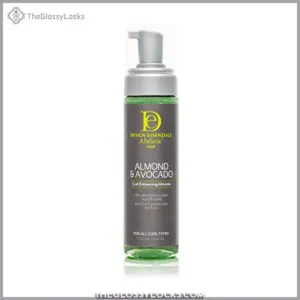
Volume-boosting mousse brings your curl pattern to life without heaviness or crunch. SheaMoisture’s curl enhancing mousse delivers definition for wavy and curly hair textures with a paraben-free, lightweight formula that separates each curl cleanly.
Apply to damp hair, scrunch upward, then air-dry or diffuse on low heat. Product reviews highlight its frizz control and shine, though very dry hair may need extra moisture underneath.
This styling product works across curl types, making it a flexible addition to your hair care products and tools lineup for consistent curl enhancement.
Best For: People with wavy to curly hair who want lightweight curl definition and volume without crunch or residue.
- Separates and defines curls cleanly while adding bounce and shine
- Paraben-free, cruelty-free formula works across different curl types
- Provides frizz control and soft hold that works with air drying or diffusing
- May not provide enough moisture for very dry or coily hair on its own
- Some users report mixed results with frizz resistance in high humidity
- Can leave a gummy feeling with repeated use, requiring periodic clarifying
9. Argan Curl Defining Hair Cream
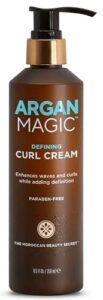
Argan Oil Benefits go beyond simple hydration—this curl defining hair cream combines biotin, antioxidants, and nourishing argan oil to amplify your natural curl pattern without weighing strands down.
The lightweight formula works across hair textures, delivering curl definition and moisture for wavy to coarse hair types.
Apply a small amount to damp hair, working through sections to avoid over-application. While some users find it slightly oily, proper cream application gives you frizz control and shine.
It’s a flexible wave cream that complements your existing hair care products and tools.
Best For: People with wavy to curly hair who want lightweight moisture and frizz control without heavy buildup or crunch.
- Lightweight formula that hydrates and defines curls without weighing hair down or leaving it greasy when applied correctly
- Enriched with biotin, antioxidants, and argan oil to strengthen hair while adding shine and reducing frizz
- Paraben-free and cruelty-free, works well with the Curly Girl Method and various curl types
- Can feel too oily if you use too much product, requiring careful application to get the right amount
- Doesn’t provide strong hold, so it won’t work if you need your curls to stay locked in place all day
- May not be moisturizing enough on its own for very dry or damaged hair without adding other products
Frequently Asked Questions (FAQs)
Can white people get waves?
Yes, white people can get waves if their hair has some natural curl pattern. Straight hair needs chemical help like perms, while wavy or curly Caucasian hair textures respond better to traditional brushing methods and wave maintenance products.
How do you get waves if you’re white?
Start with a short haircut, then brush your damp Hair Texture daily using a Wave Brush in consistent patterns.
Apply Wave Cream for moisture, wear a durag overnight, and follow Wave Maintenance Tricks for lasting Hair Waves.
What is the difference between waves for black people and white people?
Regarding the science of wave formation, the proof is in the pudding—Black hair usually has tighter coils that compress naturally into waves, while White hair often needs extra help through chemical texturizers or intensive brushing.
How do you maintain your waves?
Your wave pattern maintenance starts with daily brushing techniques—30 to 60 minutes spread across the day. Keep hair moisture balance in check, wear a durag nightly, and follow frizz control strategies to preserve your hairstyle maintenance tips.
How can you style waves in different ways?
You can switch up your look beyond the classic 360 pattern. Try 540 diagonal waves, vertical 720 styles, or beachy messy waves using wave cream, curl enhancers, and varied brushing techniques that complement different hair textures.
What products can I use to get waves?
You’ll want a wave brush, pomade, curl enhancer, and durag. Moisturizing creams, wave-specific shampoos, and styling gels help define texture. Hair oils keep strands flexible, while wave caps lock everything in overnight.
Do I need to use a special shampoo or conditioner for my waves?
Think of sulfate-free shampoo as your wave pattern’s best friend—it cleanses without stripping moisture your hair texture needs.
Pair it with curl care conditioner to fight product buildup and support wave formation through proper hair moisture balance.
Can I use a curling iron to get waves?
Yes, you can use a curling iron to create waves on straight hair. Wrap small sections around a 1-inch barrel for 3–5 seconds, alternating direction for natural wave formation. Always apply heat protectant first.
Can I use hot rollers to get waves?
Hot rollers create large, bouncy body waves—not the tight, brushed patterns defining traditional hair waves. They’re better for soft, voluminous styling.
For authentic waves, stick with wave brush techniques and wave cream instead.
What is the difference between a curling iron and hot rollers?
Curling irons deliver concentrated heat directly to small hair sections, allowing precise curl formation and faster styling techniques.
Hot rollers distribute gentler, indirect thermal settings across multiple sections simultaneously, reducing hair damage risk while creating softer wave patterns—ideal for protecting delicate hair texture.
Conclusion
Wave formation is like training vines to climb a trellis—patience and consistency shape the result. Whether you’re asking “can white people get waves” or simply exploring new styling territory, your texture determines the journey, not the destination.
Commit to the brushwork, respect the cultural foundation, and keep expectations grounded in reality. Some heads will develop deep ripples, others subtle movement. Either way, the process teaches you what your hair can truly do.
- https://pmc.ncbi.nlm.nih.gov/articles/PMC6219221/
- https://www.onychair.com/different-types-of-hair-textures-natural-hair-types/
- https://talk.hairboutique.com/forum_posts.asp?TID=49953&title=official-360-wave-methods-thread
- https://hairstory.com/blogs/news/how-to-make-straight-hair-wavy-with-without-heat-hairstory
- https://www.youtube.com/watch?v=VIkeoQkz5U8