This site is supported by our readers. We may earn a commission, at no cost to you, if you purchase through links. This content is for general informational and educational purposes only and is not a substitute for professional medical, dermatological, or nutritional advice.
Bad breath affects roughly half of all adults at some point—and most of them reach for minty gum or mouthwash and call it solved. The real fix, though, starts with what you brush with twice a day.
Not all toothpastes work the same way. Some mask odor with flavor. Others target the sulfur-producing bacteria living in your gum line and on your tongue.
Choosing the best toothpaste for bad breath means knowing which ingredients actually neutralize odor at the source. The picks ahead cut through the noise with clinical evidence behind each one.
Table Of Contents
- Key Takeaways
- Top 10 Toothpastes for Bad Breath
- 1. TheraBreath Deep Clean Toothpaste
- 2. Crest Clean Breath Spearmint Toothpaste
- 3. TheraBreath Healthy Gums Clean Mint Toothpaste
- 4. Crest Scope Whitening Toothpaste
- 5. Biotene Fluoride Toothpaste Fresh Mint
- 6. LIVFRESH Wintergreen Plaque Removing Toothpaste
- 7. Colgate MaxFresh Clean Mint Toothpaste
- 8. Parodontax Active Gum Repair Toothpaste
- 9. Hello Naturally Whitening Fluoride Toothpaste
- 10. Listerine Essential Care Fluoride Toothpaste
- Why Toothpaste Choice Matters
- Common Causes of Bad Breath
- Ingredients That Fight Halitosis
- How We Evaluated These Toothpastes
- Choosing The Right Formula
- Habits That Keep Breath Fresh
- When Toothpaste is Not Enough
- Frequently Asked Questions (FAQs)
- What toothpaste is best for bad breath?
- Why does my breath still stink after using toothpaste?
- What is the best toothpaste for bad breath?
- Why does my breath still stink even after brushing and mouthwash?
- What toothpaste to use for halitosis?
- What can I do to get rid of bad breath?
- Does toothpaste really work for bad breath?
- Which toothpaste is best for treating bad breath?
- How can I make my breath smell better with rotten teeth?
- What is the best thing to take for bad breath?
- Conclusion
Key Takeaways
- Toothpastes with stannous fluoride or zinc compounds actually neutralize the sulfur-producing bacteria behind bad breath, while most standard pastes just mask the smell.
- Your daily habits — tongue scraping, flossing, and staying hydrated — do as much for fresh breath as the toothpaste itself.
- If bad breath sticks around despite switching products, it’s often a sign of gum disease, dry mouth, or a systemic issue that no toothpaste can fix on its own.
- Matching your formula to your specific problem — dry mouth, gum issues, or sensitivity — matters more than picking whichever brand sits on the top shelf.
Top 10 Toothpastes for Bad Breath
Not all toothpastes are built the same, especially when bad breath is your main concern. The right one targets bacteria and sulfur compounds actually causing the problem.
Look for toothpastes that combine fluoride with antibacterial agents—toothpastes that fight bad breath bacteria and sulfur compounds tend to work far better than standard options.
Here are ten options worth knowing about.
1. TheraBreath Deep Clean Toothpaste
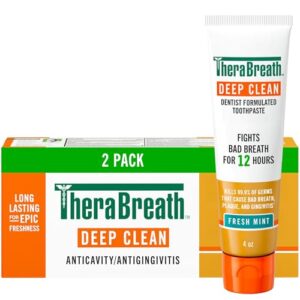
TheraBreath Deep Clean Toothpaste is a solid pick if chronic bad breath is your main concern. It uses stannous fluoride, which does double duty — fighting cavity-causing bacteria while also targeting the germs linked to gingivitis and plaque.
The formula kills 99.9% of odor-causing germs in lab tests and leaves a fresh mint taste without any burning sensation. You get two 4-oz tubes for $12.55, making it both practical and affordable for daily use.
| Best For | Anyone dealing with chronic bad breath, plaque buildup, or early signs of gingivitis who wants a gentle daily toothpaste that won’t irritate sensitive teeth or gums. |
|---|---|
| Fluoride | Stannous fluoride |
| Whitening | Gentle whitening |
| Flavor | Fresh mint with lemon/eucalyptus/basil |
| Cavity Protection | Yes |
| Antibacterial | Kills 99.9% germs |
| Pack Size | 2 x 4 oz |
| Additional Features |
|
- Kills 99.9% of odor-causing germs in lab tests, so it actually tackles bad breath at the source
- Stannous fluoride pulls double duty — cavity protection and anti-gingivitis in one tube
- No alcohol, no harsh abrasives, and no burning — great for people with sensitive teeth
- The flavor can be pretty strong, so if you prefer something mild, it might catch you off guard
- The paste can harden around the tube opening when exposed to air, which gets annoying fast
- No ADA Seal of Acceptance listed, which might give some buyers pause
2. Crest Clean Breath Spearmint Toothpaste
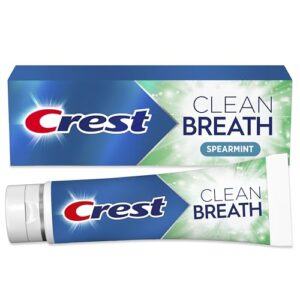
Another strong option in Crest’s lineup is the Clean Breath Spearmint Toothpaste. It uses stannous fluoride at 0.454%, which targets odor-causing bacteria rather than just masking them with flavor.
The spearmint taste is mild and clean — a good fit if strong mint burns your mouth. It also includes zinc citrate for sulfur neutralization and hydrated silica for gentle polishing.
At $8.97 for a 4.6-oz tube, it covers cavity protection, whitening, and breath control without breaking the bank.
| Best For | Anyone who wants long-lasting fresh breath with a gentler mint flavor — especially those who find regular toothpaste too harsh or irritating. |
|---|---|
| Fluoride | Yes |
| Whitening | Gentle whitening |
| Flavor | Spearmint |
| Cavity Protection | Yes |
| Antibacterial | Neutralizes bacteria |
| Pack Size | 1 x 4.48 oz |
| Additional Features |
|
- Actually kills odor-causing bacteria instead of just covering them up, so fresh breath lasts longer
- Mild spearmint flavor is easy on sensitive mouths without that harsh burning sensation
- Pulls triple duty — cavity protection, gentle whitening, and breath control all in one tube
- At $8.97, it’s a bit pricier than your typical drugstore toothpaste
- A few users notice a gritty texture after brushing, which can feel off-putting
- Spearmint version isn’t always easy to find in stores, so you may need to order online
3. TheraBreath Healthy Gums Clean Mint Toothpaste
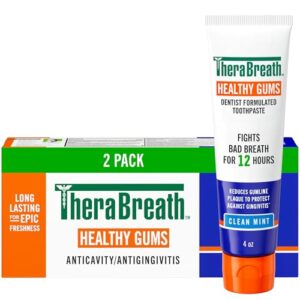
If gum health is part of your concern, this one’s worth a closer look.
TheraBreath Healthy Gums Clean Mint Toothpaste uses stannous fluoride at 0.454%, giving you both cavity protection and real antibacterial action at the gumline.
It’s dentist-developed, alcohol‑free, and designed to reduce gingivitis indicators like sensitivity and bleeding.
The clean-mint flavor blends peppermint, spearmint, and subtle green‑tea notes — gentle, not sharp.
A twin 4‑oz pack runs about $13.97, making it reasonable for daily long‑term use.
| Best For | Anyone dealing with early gum issues — sensitivity, bleeding, or gingivitis — who wants one toothpaste that handles cavities and gum health at the same time. |
|---|---|
| Fluoride | Stannous fluoride (0.454%) |
| Whitening | Not specified |
| Flavor | Clean mint blend |
| Cavity Protection | Yes |
| Antibacterial | Reduces plaque/bacteria |
| Pack Size | 2 x 4 oz |
| Additional Features |
|
- Stannous fluoride fights bacteria at the gumline, not just cavities — real dual-action protection
- Alcohol-free with a gentle mint flavor, so no harsh burn after brushing
- Up to 12 hours of fresh breath, which is solid for a toothpaste
- Pricier than most drugstore options, which adds up over time
- The texture runs watery — if you like a thick gel or paste, it might feel off
- Efficacy claims lean on one internal study, so long-term independent data is thin
4. Crest Scope Whitening Toothpaste
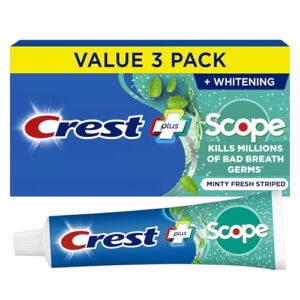
Not everyone needs a clinical-grade formula. If you want fresher breath alongside gradual whitening, Crest Complete Whitening + Scope manages both without overcomplicating your routine.
The built-in Scope component targets bad-breath germs directly, while sodium fluoride protects your enamel from decay. You also get mild tartar control and gentle stain removal — all in one tube.
The catch? It contains SLS, so if your mouth runs dry easily, you might notice some irritation over time.
| Best For | Anyone who wants fresher breath and gradual whitening in one simple, affordable toothpaste without the fuss of a multi-step routine. |
|---|---|
| Fluoride | Yes |
| Whitening | Gentle whitening |
| Flavor | Mint with Scope |
| Cavity Protection | Yes |
| Antibacterial | Kills bad breath germs |
| Pack Size | 3 x 5.4 oz |
| Additional Features |
|
- The built-in Scope formula actually tackles bad-breath germs, not just masks them
- Fluoride keeps enamel strong while gently lifting everyday stains from coffee and tea
- Three-pack at $8.99 is solid value — toss one in your bag, keep one at the office
- Whitening is subtle — don’t expect dramatic results like you’d get from strips or professional treatments
- Contains SLS, which can cause irritation or dryness for people with sensitive mouths
- Stock can be hit or miss depending on where you shop
5. Biotene Fluoride Toothpaste Fresh Mint
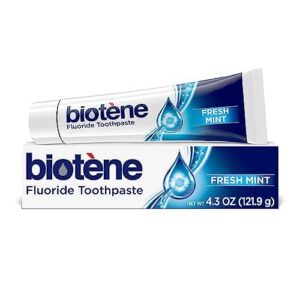
If dry mouth is making your breath worse, Biotène Fluoride Toothpaste Fresh Mint was built for exactly that problem.
It’s SLS-free, alcohol-free, and skips harsh foaming agents — so it won’t dry you out further.
The sodium fluoride formula still protects your enamel and fights cavities.
You get a light mint flavor without the burning sensation many pastes leave behind.
At around $7 for 4 oz, it’s an easy add to your daily routine.
| Best For | Anyone dealing with dry mouth who wants a gentle, non-irritating toothpaste that still protects against cavities. |
|---|---|
| Fluoride | Yes |
| Whitening | Not specified |
| Flavor | Light fresh mint |
| Cavity Protection | Yes |
| Antibacterial | Not specified |
| Pack Size | 1 x 4 oz |
| Additional Features |
|
- SLS-free and alcohol-free, so it won’t burn or make dryness worse
- Light mint flavor that freshens breath without that harsh aftertaste
- Easy-open cap makes it a solid pick for anyone with limited grip strength
- Lower fluoride levels than standard toothpastes, which may not cut it for high-risk teeth
- Contains saccharin, which some people prefer to avoid
- At $7 for 4 oz, it costs more than generic options and can be tricky to find in stores
6. LIVFRESH Wintergreen Plaque Removing Toothpaste
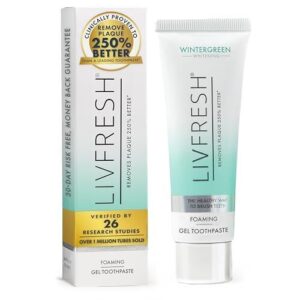
LIVFRESH Wintergreen takes a different approach than most pastes on this list. Its Activated Edathamil technology works by breaking the bond between plaque and your tooth surface — and the brand backs that up with a clinical study showing 250% better plaque removal than leading brands.
It’s SLS-free, triclosan-free, and uses edible-grade ingredients.
The wintergreen flavor leaves a clean finish, and brushing at night may noticeably reduce morning breath.
At $24.95 for a small tube, it’s pricey, but users report a genuinely cleaner feel.
| Best For | Anyone who struggles with stubborn plaque buildup and wants a deeper clean between dental visits. |
|---|---|
| Fluoride | Not specified |
| Whitening | Modest whitening |
| Flavor | Wintergreen |
| Cavity Protection | Not specified |
| Antibacterial | Reduces plaque 250% |
| Pack Size | 1 x 1.76 oz |
| Additional Features |
|
- Clinically shown to remove plaque ~250% better than standard toothpaste — that’s a meaningful difference you can actually feel
- SLS-free and made with edible-grade ingredients, so it’s gentler on sensitive mouths
- Helps reduce gum bleeding and improves gum comfort within just a few weeks of regular use
- At $24.95 for a tiny 1.76 oz tube, you’ll be repurchasing pretty often — the cost adds up fast
- Wintergreen flavor is a bit polarizing; if you’re used to classic mint, it takes some getting used to
- It’s not a substitute for regular dental care, and some users didn’t notice much difference during short trial periods
7. Colgate MaxFresh Clean Mint Toothpaste
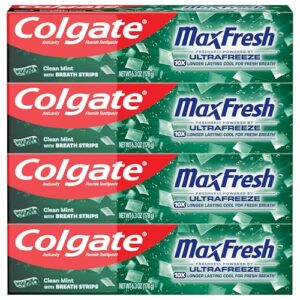
Colgate MaxFresh Clean Mint isn’t trying to reinvent your routine — it’s just quietly doing more than you’d expect.
Those mini breath strips dissolve as you brush, releasing a steady mint burst that keeps working after you rinse. Its Ultrafreeze cooling technology delivers a noticeably longer‑lasting chill than standard paste.
You also get sodium fluoride at 0.24% to protect enamel daily.
The flavor is bold, so if you’re sensitive to intense mint, that’s worth knowing upfront.
| Best For | Anyone who wants a fresh, long-lasting clean throughout the day — especially families or heavy coffee and tea drinkers dealing with light surface stains. |
|---|---|
| Fluoride | Yes |
| Whitening | Surface stain reduction |
| Flavor | Cool spearmint |
| Cavity Protection | Yes |
| Antibacterial | Not specified |
| Pack Size | 4 x 6.3 oz |
| Additional Features |
|
- The mini breath strips give you a real burst of freshness that actually lingers after you rinse
- Fluoride protection makes it a solid daily driver for keeping cavities in check
- The 4-pack is great value, especially for households going through toothpaste fast
- The "10× longer-lasting cool" claim is pure marketing — no independent studies back it up
- The mint is strong, so if you’re sensitive to intense flavors, it might be a bit much
- Whitening is surface-level only — don’t expect dramatic results like you’d get from a professional treatment
8. Parodontax Active Gum Repair Toothpaste
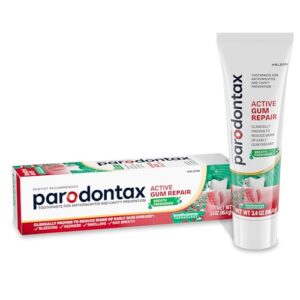
Bleeding gums and bad breath often go hand in hand — and Parodontax Active Gum Repair addresses both at once.
Its stannous fluoride (0.454%) fights plaque bacteria right at the gumline, while zinc helps neutralize the sulfur compounds that cause odor. That’s a real dual-action formula, not just marketing.
Clinical data shows measurable gum improvement within three weeks of twice-daily use. It’s especially worth trying if your breath issues seem connected to gum sensitivity or early gingivitis.
| Best For | Anyone dealing with bleeding gums, early gingivitis, or persistent bad breath who wants a toothpaste that tackles the root cause rather than just masking symptoms. |
|---|---|
| Fluoride | Not specified |
| Whitening | Mild whitening |
| Flavor | Mild mint |
| Cavity Protection | Not specified |
| Antibacterial | Breath Cleanse Technology |
| Pack Size | 1 x 3.4 oz |
| Additional Features |
|
- Hits four gum-problem signs at once — bleeding, redness, swelling, and bad breath — so you’re not juggling multiple products.
- The odor-neutralizing tech actually breaks down the compounds causing bad breath, not just covers them up.
- Great option if you have gum sensitivity or you’re recovering from dental implant work.
- The mint flavor runs mild, so if you love that sharp, icy toothpaste feel, this might feel underwhelming.
- Clinical comparisons are only against other Parodontax products — not the full market, so take the "proven" claims with a small grain of salt.
- Won’t replace a dentist if your gum disease has progressed beyond the early stages.
9. Hello Naturally Whitening Fluoride Toothpaste
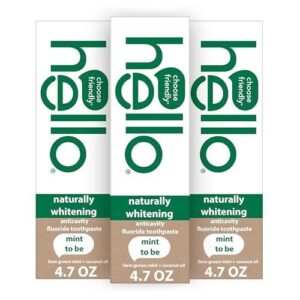
Not every breath problem calls for a clinical-strength formula. Hello Naturally Whitening Fluoride Toothpaste is a solid everyday pick if you want fresh breath without a mouthful of synthetic additives.
It’s SLS-free, vegan, and uses tea tree oil and peppermint to work against odor-causing bacteria. The sodium monofluorophosphate still gives you real cavity protection. Whitening happens gradually through a calcium mineral blend, so don’t expect overnight results. It’s gentle, clean, and honest — a good fit for sensitive mouths.
| Best For | People who want a clean, natural daily toothpaste that freshens breath and protects teeth without harsh chemicals or artificial ingredients. |
|---|---|
| Fluoride | Yes |
| Whitening | Calcium mineral whitening |
| Flavor | Peppermint oil |
| Cavity Protection | Yes |
| Antibacterial | Tea tree oil |
| Pack Size | 3 x 4.7 oz |
| Additional Features |
|
- Fluoride protection keeps cavities in check while the calcium mineral blend gently lifts surface stains over time
- SLS-free and packed with tea tree and peppermint oils — real antibacterial action without the synthetic stuff
- Vegan, cruelty-free, and free of peroxide, dyes, and artificial sweeteners — great for sensitive mouths
- Whitening is slow and gradual — not the move if you need fast results or have deep stains
- Lower foam than most mainstream toothpastes, which can feel different if you’re used to that bubbly sensation
- Essential oils like tea tree and peppermint can irritate people with sensitivities or allergies
10. Listerine Essential Care Fluoride Toothpaste
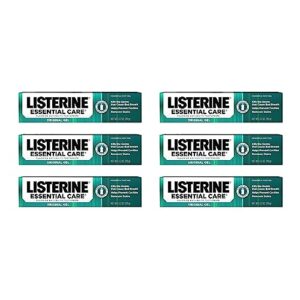
Listerine built its reputation on killing germs, and this toothpaste carries that same energy. The formula combines eucalyptol, menthol, and thymol — the same essential oils in the mouthwash — to actively fight odor-causing bacteria.
Sodium monofluorophosphate protects your enamel and helps prevent cavities. Hydrated silica gently removes surface stains over time.
The mint flavor is strong, so if you’re sensitive to bold tastes, that’s worth knowing. It does contain SLS, but for most users, it delivers reliable all-day freshness.
| Best For | Anyone who wants an all-in-one toothpaste that fights germs, freshens breath, and protects enamel — especially people who already love Listerine mouthwash or want that same antibacterial punch in their daily brush. |
|---|---|
| Fluoride | Yes |
| Whitening | Stain removing |
| Flavor | Powerful mint |
| Cavity Protection | Yes |
| Antibacterial | Reduces odor germs |
| Pack Size | 6 x 4.2 oz |
| Additional Features |
|
- The essential oil formula actually kills odor-causing bacteria, so your breath stays fresh well past your morning routine
- Six tubes for $21 is a solid deal — you’re getting cavity protection, whitening, and antibacterial action without buying separate products
- The gel texture is gentle and non-foaming, making it a comfortable pick for anyone with sensitive gums or braces
- That mint flavor hits hard — if you’re not into intense, mouthwash-level freshness, it might feel like a lot first thing in the morning
- The non-foaming gel takes some getting used to if you’ve always used traditional toothpaste
- Contains fluoride and SLS, so it’s not a fit for people avoiding either ingredient
Why Toothpaste Choice Matters
Not all toothpastes work the same way regarding bad breath. The formula you choose can make a real difference in how well it addresses the bacteria and compounds causing the problem.
Here’s what to look at when picking the right one.
Impact on Odor-causing Oral Bacteria
Your toothpaste does more than freshen your breath—it targets the bacteria actually causing it. Odor-linked microbes like Porphyromonas and Fusobacterium hide in three key places:
- Tongue Reservoir Reduction — Scrubbing loosens the coating where bacteria multiply
- Biofilm Disruption — Breaking up plaque denies anaerobic bacteria their shelter
- Plaque Microenvironment Shift — Antimicrobial agents like zinc compounds, stannous fluoride, and essential oils change conditions so fewer odor producers survive
Neutralizing Volatile Sulfur Compounds
Bad breath often comes down to volatile sulfur compounds — gases your mouth bacteria produce constantly. Zinc compounds bind those sulfur molecules directly, while chlorine dioxide oxidizes them before they reach your nose.
Bicarbonate of soda helps pH buffering to slow bacterial activity. Essential oils add antimicrobial punch.
Together, these ingredients — including odor-targeted polymers and metal ion chelation — cut odor at the source, not just cover it. A single-use chlorine dioxide rinse can reduce odor for up to eight hours.
Supporting Gum Health and Plaque Control
Fresh breath and healthy gums go hand in hand. When plaque builds unchecked, gum inflammation fuels the same bacterial activity behind halitosis treatment failures.
Here’s what actually promotes gum health and plaque control daily:
- Use antibacterial agents like stannous fluoride to target biofilm disruption techniques at the gumline.
- Try Plaque Disclosing Strips to see exactly where brushing misses.
- Add Dental Water Flossers to flush debris from tight spaces.
- Address Xerostomia Management since dry mouth accelerates bacterial growth.
- Support gum tissue regeneration by keeping inflammation low consistently.
Balancing Fresh Breath With Cavity Protection
Good gum health sets the stage, but your toothpaste still needs to pull double duty.
Fluoride-Zinc Synergy in formulas like Colgate Total means you get cavity protection alongside sulfur neutralization.
Stannous Dual Action delivers Enamel Remineralization Benefits while fighting odor-producing bacteria.
Antimicrobial toothpaste formulas with zinc compounds support Dry-Mouth Saliva Support and Taste Balance Optimization, so fresh breath and strong teeth aren’t a trade-off.
Common Causes of Bad Breath

Bad breath usually has a cause you can actually fix — and most of them start in your mouth. Knowing what’s triggering it makes choosing the right toothpaste a whole lot easier.
Here are the most common culprits to know about.
Poor Brushing and Flossing Habits
Inconsistent brushing and skipping floss are two of the biggest drivers of bad breath — and most people don’t realize how much damage a short brushing time or improper technique causes daily.
- Neglecting interdental cleaning leaves food rotting between teeth
- Inconsistent brushing lets bacteria build thick, odor-producing biofilm
- Short brushing time misses plaque along the gumline
- Skipping floss traps debris that smells worse by evening
- Improper technique leaves back teeth virtually untouched
Brush and floss daily, clean your tongue, and use mouthwash to complete your dental hygiene routine. Your oral hygiene habits either fight bad breath or feed it.
Gum Disease and Bleeding Gums
Bleeding gums aren’t just a minor annoyance — they’re often your mouth’s first distress signal.
Early gingivitis signs like redness, swelling, and bleeding point to active inflammation driven by plaque buildup along the gumline.
Left unchecked, it advances into periodontitis, where periodontal pocket depth increases and bone loss begins.
Zinc compounds and plaque and gingivitis control through toothpaste like Parodontax Clean Mint Toothpaste help lower inflammatory biomarkers and support gum tissue healing.
Dry Mouth and Mouth Breathing
When your mouth dries out, saliva production drops — and that’s when odor-causing bacteria throw a party.
Here’s what fuels dry mouth and how to fight back:
- Medication-Induced Xerostomia — hundreds of prescriptions reduce saliva flow
- Mouth breathing skips nasal breathing training and strips moisture fast
- Hydration strategies like sipping water regularly keep bacteria in check
- Xylitol and zinc compounds stimulate saliva and neutralize sulfur gases
- Mouthguard for moisture and saliva stimulation techniques support overnight protection
Tooth Decay and Plaque Buildup
Plaque isn’t just a cosmetic problem — it’s a breeding ground. As plaque matures through its biofilm stages, acidogenic bacteria break down sugars and trigger enamel demineralization, releasing foul-smelling byproducts.
The more frequently you eat sugar, the faster this cycle spins.
Your saliva buffering capacity helps, but it can’t keep up alone.
That’s where fluoride, antibacterial agents, and consistent plaque reduction become your best defense.
Diet, Smoking, and Health Conditions
What you eat, smoke, or live with medically can overpower any toothpaste.
- Garlic breath and onion odor release volatile sulfur compounds into your bloodstream, escaping through your lungs — brushing won’t fully stop that.
- Smoking dries your mouth, cutting saliva that clears bacteria.
- Diabetic halitosis signals high ketones or poor gum health.
- GERD breath carries acid and food odors back up from your stomach.
- Sinus odor feeds on postnasal drip, creating dry mouth and persistent halitosis tied to deeper systemic health issues.
Ingredients That Fight Halitosis
Not all toothpastes are built the same, and the ingredients inside make a real difference for bad breath. Some target odor at the source, while others protect enamel or calm sensitive mouths.
Here’s what to look for.
Stabilized Chlorine Dioxide for Odor Control
Stabilized chlorine dioxide works differently from most antimicrobial agents — it targets odor molecules directly through an oxidation mechanism rather than just masking them. At safe concentrations around 0.1%, clinical efficacy is well-documented, with studies showing measurable drops in hydrogen sulfide levels.
Stabilized chlorine dioxide eliminates bad breath by destroying odor molecules directly, not masking them
residual activity means breath freshening continues after you rinse. Despite some formulation challenges with taste, it remains one of the most effective ingredients in bad breath toothpaste.
Zinc Compounds for Sulfur Neutralization

Zinc compounds work through chemistry, not cover-up. Zinc chloride releases free zinc ions quickly, while zinc citrate offers steadier zinc salt stability over time.
That difference in free zinc release matters for how long protection lasts.
In lab testing, zinc reduced hydrogen sulfide by over 90% within minutes.
Zinc o-cymen synergy, zinc saliva retention, and zinc concentration impact make these compounds genuinely reliable for volatile sulfur compound neutralization.
Stannous Fluoride for Bacteria and Enamel
Stannous fluoride does more than zinc alone can. As an antimicrobial toothpaste ingredient, it works through bacterial metabolism inhibition, slowing acid-producing activity in plaque for up to 12 hours.
Tin ion release builds an acid resistance layer on enamel, improving remineralization kinetics by roughly 50%.
That means stronger enamel, fewer volatile sulfur compounds, and noticeably fresher bad breath control — with stannous fluoride stability that lasts.
Cetylpyridinium Chloride and Essential Oils

Two more heavy hitters round out the antibacterial lineup: cetylpyridinium chloride (CPC) and essential oils.
Their mechanism of action differs, but both target halitosis causes effectively:
- CPC disrupts bacterial cell membranes directly
- Essential oils like thymol and menthol cut bacterial load
- Both support mouthwash compatibility for layered protection
- Staining potential is a known CPC tradeoff
- Safety profile and taste preference vary by formula
SLS-free Formulas for Sensitive Mouths

While CPC and essential oils work hard on bacteria, some mouths need a gentler approach. If brushing leaves your gums stinging or dry, an SLS-free formula might be your answer.
| Feature | Benefit |
|---|---|
| Gentle Foaming | Less irritation, easier daily use |
| Mouth Soothing Agents | Calm inflamed tissue |
| Betaine Moisturizers | Support saliva in dry mouths |
| Non-Detergent Texture | Soft Bristle Compatibility |
| SLS-free formula | Reduces bad breath triggers |
These antimicrobial toothpaste formulas still deliver zinc for odor neutralization — without the harsh detergents that worsen a sensitive mouth.
How We Evaluated These Toothpastes
Not all toothpastes earn a spot on this list by accident. Each one was put through a consistent set of criteria to make sure it actually delivers on its promises.
Here’s exactly what we looked at.
Breath-freshening Active Ingredients
Not all toothpastes fight bad breath the same way — the active ingredients make all the difference.
We checked each formula for:
- Chlorine dioxide and bicarbonate of soda to neutralize odor at the source
- Zinc citrate and zinc chloride for fluoride zinc synergy against sulfur gases
- Xylitol anticavity agents, polyol moisturizers, and metal chelators to disrupt odor-causing bacteria
Fluoride Content and Enamel Support
Fluoride concentration shapes how well a toothpaste actually protects your enamel.
We looked for formulas with 1,000–1,500 ppm, the sweet spot for enamel remineralization and acid resistance.
Stannous fluoride stood out for building a surface fluoride reservoir that keeps defending teeth between brushes.
| Fluoride Benefit | What It Does |
|---|---|
| Enamel strengthening | Rebuilds early mineral loss |
| Acid resistance | Slows enamel breakdown after meals |
Gum Care and Plaque Reduction
Healthy gums don’t happen by accident — they’re the result of smart daily choices.
We checked each formula for stannous fluoride action, antibacterial agents, and support for mechanical plaque removal.
Here’s what moved the needle:
- Targeted gum massage support via the right gumline brushing angle
- Plaque disruption through interdental brush types
- Antibacterial action that curbs gum disease at the source
Sensitivity and Dry-mouth Friendliness
Brushing shouldn’t hurt — and for many people dealing with bad breath, dry mouth makes it worse. We checked each formula for alcohol-free design, low-foaming texture, and moisturizing ingredients that support saliva flow.
Sensitive teeth care mattered too, especially potassium nitrate relief and gentle pH balance.
| Feature | Why It Matters |
|---|---|
| Alcohol-free formulas | Prevent extra dryness |
| Low-foaming texture | Gentler on irritated tissue |
| Potassium nitrate relief | Calms sensitive nerves |
| Moisturizing ingredients | Helps dry mouth relief |
| SLS-free options | Toothpaste options for sensitive mouths |
Taste, Texture, and Everyday Usability
Daily use is where a toothpaste either earns its place or gets abandoned. We evaluated each formula based on what you actually feel:
- Mint Flavor Intensity — mild to bold, affecting how pleasant-tasting brushing feels
- Foam Level — light foaming vs. heavy lather from SLS-free formula choices
- Paste Consistency — smooth gels versus thicker thickening ingredients
- Aftertaste Cleanliness — no bitter or metallic finish
- Dispensing Convenience — easy, controlled application every time
Value and Product Accessibility
Good breath control shouldn’t cost a fortune. Most bad-breath toothpastes run between $3.50 and $12.49 at major retailers, so price per ounce matters more than sticker price alone.
Retail distribution is strong at Walmart, Target, and Walgreens, and coupon availability can lower your cost further.
Income sensitivity is real, which is why we factored online purchase options and overall value into every recommendation.
Choosing The Right Formula

Not every toothpaste works the same way for every mouth. Your best pick depends on what’s actually driving your bad breath.
Here’s how the top formulas break down by specific needs.
Best Picks for Chronic Bad Breath
When halitosis won’t quit, you need more than a minty cover-up. TheraBreath and Colgate Total stand out in clinical study results for targeting volatile sulfur compounds directly.
User satisfaction scores favor antimicrobial toothpaste with zinc citrate for long-term safety and cost effectiveness. Flavor preference matters too — you’ll actually stick with something you enjoy using twice daily.
Best Options for Dry Mouth
Dry mouth is a real driver of bad breath, and zinc citrate or plain mint won’t fix it alone. You need an SLS-free formula with ingredients that actually restore moisture — think Xylitol Sweeteners for saliva stimulation, Carboxymethylcellulose Gels, or Hydroxyethyl Cellulose.
Biotène pairs fluoride with these moisturizers beautifully. Add Alcohol-Free Rinses and Portable Moisture Sprays throughout the day for steady relief.
Best Formulas for Gum Problems
Bleeding gums often mean gingivitis is already in play. That’s where an Antibacterial Gum Matrix like stannous fluoride makes a real difference — it’s both a Mineralizing Gum Formula and an Anti-gingivitis Complex in one tube. Parodontax, for example, reduced gingival bleeding by 63% in clinical use.
Look for these features in your Gum Health Toothpaste Choices:
- Enamel-Gum Synergy via stannous fluoride for plaque and cavity control
- Antibacterial toothpaste ingredients that target bacteria at the gumline
- Therapeutic Mouthfeel with fluoride that helps gum disease recovery
Best Toothpaste for Sensitive Teeth
Sensitive teeth don’t have to mean sacrificing fresh breath. Toothpaste options for sensitive mouths have come a long way.
Sensodyne Pronamel Gentle Whitening uses potassium nitrate to calm nerve sensitivity while protecting enamel. Arginine-based relief formulas help seal open dentin tubules. Look for a low abrasivity formula with gentle gel texture — even flavor-free options exist.
ADA-accepted picks cover sensitive teeth care and bad breath together.
Whitening Versus Breath-focused Formulas
Whitening and breath-focused formulas aren’t always the same thing. Whitening toothpastes rely on higher RDA Impact scores — sometimes reaching 130 — which can cause Enamel Wear over time.
Breath Freshening Dental Care formulas keep abrasion low while targeting Stain vs Odor differently, using active ingredients like zinc and stabilized chlorine dioxide.
Both include fluoride, but if Flavor Longevity and odor control are your priority, choose a breath-focused formula.
Natural Versus Medicated Toothpaste Options
Natural toothpaste appeals to many people, but medicated toothpaste usually wins when chronic halitosis is the problem. Here’s how they compare:
- Ingredient Transparency – Natural formulas skip synthetic additives, making labels easier to understand.
- Regulatory Standards – Both can meet ADA guidelines for toothpaste safety and efficacy.
- Cost Effectiveness – Medicated options often deliver more targeted bad breath relief per dollar.
- Environmental Impact – Natural toothpaste generally uses cleaner sourcing aligned with Consumer Preferences.
For persistent halitosis, choose medicated.
Habits That Keep Breath Fresh
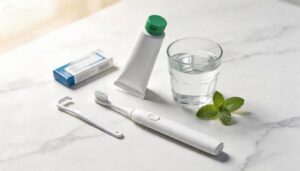
The right toothpaste does a lot of heavy lifting, but it can’t do everything on its own. Your daily habits are what keep breath fresh between brushes and beyond the bathroom sink.
Here are six simple practices worth building into your routine.
Brush Twice Daily for Two Minutes
Twice-daily brushing is the foundation of any solid oral hygiene routine. Two minutes give you time to clear plaque from every surface — and plaque is what feeds odor-causing bacteria.
| Brushing Element | Why It Matters |
|---|---|
| Two Minute Routine | Disrupts plaque buildup fully |
| Consistent Timing | Boosts Fluoride Reinforcement daily |
Pairing the best toothpaste for bad breath with Gum Stimulation along the gumline builds real fresh breath confidence.
Clean The Tongue Every Day
Your tongue is a bacteria hideout — and brushing alone won’t clear it. That coating you see each morning is packed with odor-causing microbes that drive halitosis.
Follow these Scraper Technique Tips to clean your tongue effectively:
- Use Back-to-Front Motion, starting at the rear to avoid gagging
- Rinse the scraper after each pass
- Watch Coating Color Signals — yellow or white mean buildup
- Finish with a Morning Tongue Rinse
Daily tongue scraping transforms your oral hygiene routine.
Floss to Remove Trapped Debris
Brushing misses up to 40% of your tooth surfaces — that’s where floss earns its place in your dental hygiene routine. Interdental Debris Removal isn’t optional if you’re serious about fresh breath.
| Flossing Technique Tips | Waxed vs Unwaxed | Targeted Flossing Areas |
|---|---|---|
| Slide gently, don’t snap | Waxed glides through tight spaces | Behind your last molar |
| C-shape around each tooth | Unwaxed suits roomier gaps | Along the gumline |
| Use a fresh section per gap | Tape works for wider contacts | Between crowded teeth |
| Move up and down slowly | Both support plaque removal | Around bridges or crowns |
| Follow Flossing Frequency Guidelines: daily | Neither beats consistent use | All interdental contacts |
Daily flossing clears trapped food before bacteria turn it into odor.
Stay Hydrated to Support Saliva
Your mouth needs water the same way a garden needs rain — without enough of it, everything dries out. Dry mouth reduces saliva, letting odor-causing bacteria thrive.
Focus on Sipping Water Regularly throughout the day rather than gulping it all at once. Moisture Boosting Snacks like cucumber or celery also support enhanced saliva flow to combat bacteria, keeping your oral hygiene routine working harder for you.
Add an Alcohol-free Mouthwash
Staying hydrated helps, but pairing your toothpaste routine with an alcohol‑free mouthwash takes bad breath control further. Unlike traditional rinses, alcohol‑free formulas won’t dry your mouth out — a key win for halitosis sufferers.
- Alcohol-Free Benefits: No burning, no dryness, just clean
- Swish Duration: 60 seconds gets full antibacterial contact
- Kids Safety: Gentler formula, always supervise under 12
- Travel-Friendly Size: Easy to keep your routine consistent anywhere
Limit Odor-triggering Foods and Tobacco
Your mouthwash routine controls bacteria well, but what you eat and smoke can undo that work fast.
Garlic and onions — classic allium consumption offenders — release sulfur compounds through your lungs for up to 24 hours. Red meat limits and reduced coffee, dairy intake also matter.
Tobacco cessation is non‑negotiable. Sulfur food awareness gives you real control over halitosis before it starts.
When Toothpaste is Not Enough

Sometimes toothpaste just can’t solve the whole problem on its own. If your breath stays off even after switching products and building better habits, something deeper might be going on.
Here’s what to watch for — and when it’s time to get a professional involved.
Signs of Persistent Halitosis
Sometimes your body sends quiet signals that something deeper is going on. If morning breath lingers well after brushing, or you notice a metallic taste that won’t quit, that’s worth paying attention to.
Tongue coating, throat clearing, dry mouth, and postnasal drip can all feed oral bacteria and ramp up VSCs.
Persistent halitosis causes like these won’t disappear with toothpaste alone.
When Gum Disease May Be Involved
Gum disease and breath odor go hand in hand. If halitosis lingers even after switching to antimicrobial toothpaste formulas, your gums may be signaling something bigger.
Watch for these warning signs:
- Bleeding Gums Indicators – bleeding when brushing or eating
- Pocket Depth Measurement – dentists flag pockets deeper than 3mm
- Gum Recession Signs – teeth appearing longer than usual
- Tooth Mobility Concerns – any looseness or bite shifting
These point toward active infection where oral bacteria control requires professional care, not just active ingredients.
Dry Mouth, Reflux, or Sinus Issues
Bad breath that survives every brush and rinse may trace back to dry mouth, acid reflux, or a sinus infection. Xerostomia relief strategies — like sipping water and choosing SLS-free formulas — support saliva production boost and slow bacterial growth.
Acid reflux management and postnasal drip care address throat irritation prevention from the inside, where no ingredients that neutralize sulfur compounds can fully reach.
When to See a Dentist
If switching toothpastes hasn’t solved the problem, your mouth may be asking for more than a product change. Chronic halitosis, gum bleeding episodes, a severe toothache, or facial swelling all signal it’s time for professional dental care for halitosis.
Dental trauma also needs prompt attention.
Most adults benefit from checkups every 12 to 24 months, though your dentist may recommend more frequent visits based on your risk.
When to Seek Medical Evaluation
Bad breath that lingers despite good dental care can sometimes point to something bigger. When your body is signaling trouble, pay attention.
Seek medical evaluation if you notice:
- Sudden shortness of breath or chest pressure
- Stroke symptoms like facial drooping or slurred speech
- Persistent fever lasting more than five days
- Unexplained weight loss without trying
- Chronic postnasal drip, acid reflux contributing to bad breath, or other systemic health conditions and bad breath patterns
These go beyond what professional dental care for halitosis can address alone.
Frequently Asked Questions (FAQs)
What toothpaste is best for bad breath?
For halitosis, look for antimicrobial toothpaste formulas containing zinc chloride or stannous fluoride. These ingredients that neutralize sulfur compounds target the real source of bad breath, not just the smell.
Why does my breath still stink after using toothpaste?
Toothpaste can’t reach every hiding spot.
Your tongue bacterial reservoir, post-brush food residue, and medication‑induced dryness all disrupt saliva flow variability, throwing your oral microbiome imbalance into overdrive — and no paste fully fixes that alone.
What is the best toothpaste for bad breath?
If chronic bad breath keeps coming back, TheraBreath’s OXYD-8 formula targets odor at the source — not just the smell — making it a trusted, effective first pick.
Why does my breath still stink even after brushing and mouthwash?
Brushing helps, but it doesn’t always reach tongue biofilm, where most volatile sulphur compounds originate.
Dry mouth, medication side effects, or systemic illnesses can also override bacterial neutralization, meaning saliva production and hidden halitosis cause matter just as much as active ingredients.
What toothpaste to use for halitosis?
For halitosis, look for antimicrobial toothpaste formulas with zinc for odor neutralization or stabilized chlorine dioxide. These ingredients that neutralize sulfur compounds address the actual source, not just the smell.
What can I do to get rid of bad breath?
Bad breath doesn’t have to run your life. Brush twice daily, clean your tongue, floss, stay hydrated, and avoid odor foods. Small habits make a big difference.
Does toothpaste really work for bad breath?
Yes, it really works — but only when you pick the right formula.
Antimicrobial toothpaste formulas with ingredients that neutralize sulfur compounds deliver genuine, clinically supported relief, not just a placebo effect.
Which toothpaste is best for treating bad breath?
TheraBreath and Colgate Total stand out for halitosis. Both use antimicrobial toothpaste formulas targeting sulfur compound neutralization, and clinical study results back their fluoride-based protection.
Your best pick depends on your specific needs.
How can I make my breath smell better with rotten teeth?
Rotten teeth trap bacteria deep inside cavities where toothpaste can’t reach. Professional Dental Treatment is your real fix.
Meanwhile, use antibacterial toothpaste, Antibacterial Mouth Rinses, and Dietary Adjustments to reduce bad breath until you see a dentist.
What is the best thing to take for bad breath?
The strangest fix for halitosis isn’t always a product — it’s consistency.
Choosing the right toothpaste for halitosis, paired with mouthwash selection, zinc tablets, or probiotic lozenges, matters far less than using them daily.
Conclusion
Fresh breath isn’t built overnight—it’s laid brick by brick, starting with what’s on your toothbrush. Picking the best toothpaste for bad breath means looking past the minty packaging and choosing ingredients that actually neutralize bacteria at the source.
Pair the right formula with consistent brushing, tongue cleaning, and hydration, and you’re not just covering the problem—you’re solving it.
Your mouth will tell the difference, and so will everyone around you.