
This site is supported by our readers. We may earn a commission, at no cost to you, if you purchase through links.
You’ve likely experienced that familiar shoulder dusting routine, brushing away those telltale white flakes that seem to multiply no matter how often you wash your hair. While it’s tempting to blame poor hygiene or cheap shampoo, the reality involves a more complex interplay of factors ranging from microscopic yeast populations living on your scalp to the stress hormones coursing through your bloodstream during deadline season.
Dandruff affects nearly half of all adults at some point in their lives, cutting across age groups, hair types, and hygiene habits with striking impartiality. Yet most people cycle through drugstore solutions without understanding what’s actually happening beneath those flakes.
The good news is that once you identify your specific triggers—whether they stem from an overgrowth of Malassezia fungus, seasonal dryness, product sensitivities, or underlying skin conditions—you can move beyond temporary fixes. Address the root causes with targeted remedies that range from evidence-based medicated treatments to surprisingly effective natural alternatives.
Table Of Contents
Key Takeaways
- Dandruff stems from multiple root causes, including Malassezia yeast overgrowth, disrupted oil balance, dry skin from low humidity, product sensitivities, and underlying conditions like seborrheic dermatitis or psoriasis, making accurate diagnosis essential before treatment.
- Medicated shampoos containing ketoconazole, zinc pyrithione, or selenium sulfide directly target fungal populations and inflammation when applied twice weekly for 2-5 minutes, while natural remedies like coconut oil address dryness but work best alongside conventional treatments.
- Lifestyle factors, including stress hormones, seasonal weather shifts, improper washing frequency, and nutritional deficiencies in zinc or omega-3s, can trigger or worsen symptoms, requiring adjustments to diet, hair care habits, and environmental controls.
- Professional dermatological intervention becomes necessary when over-the-counter treatments fail after four weeks, symptoms spread beyond the scalp, or thick greasy scales with severe inflammation suggest systemic conditions requiring prescription-strength therapies and ongoing medical supervision.
Common Causes of Dandruff
Dandruff doesn’t have just one trigger, and understanding what’s behind those flakes can help you tackle the problem more effectively. The causes range from microscopic fungi living on your scalp to everyday factors like product sensitivities and underlying skin conditions.
Let’s walk through the most common culprits so you can identify what might be affecting your scalp.
Fungal Overgrowth (Malassezia)
Fungal infections often drive persistent dandruff, and the yeast Malassezia plays a central role in disrupting your scalp ecosystem. This microorganism metabolizes scalp oils into irritating byproducts that trigger inflammation, itching, and flaking characteristic of seborrheic dermatitis. Learning how to get rid of beard dandruff requires similar antifungal approaches, since Malassezia thrives in facial hair just as it does on your scalp.
Antifungal therapies targeting Malassezia—such as ketoconazole or zinc pyrithione shampoos—effectively restore scalp health by reducing yeast populations and controlling the immune response that fuels your symptoms. For longer-term relief, pairing these treatments with proven beard fungus prevention strategies helps keep Malassezia levels balanced and flare-ups at bay.
Oily and Irritated Scalp
When excess sebum combines with Malassezia proliferation, your scalp becomes a breeding ground for irritation and flaking. Oily scalp conditions trap cellular debris, promote follicular blockage, and trigger inflammatory mediators that intensify itch and redness—hallmarks of seborrheic dermatitis requiring targeted scalp oil control and sebum regulation. A seborrheic dermatitis dandruff treatment plan that addresses both fungal overgrowth and oil balance can break this cycle and restore scalp comfort.
Effective irritation management and flake reduction strategies include:
- Using zinc pyrithione or ketoconazole shampoos to reduce Malassezia load and control inflammation
- Choosing pH-balanced, fragrance-free cleansers to maintain barrier integrity without provoking rebound sebum production
- Applying cool compresses or antipruritic agents for temporary itch relief on irritated areas
- Avoiding occlusive styling products that obstruct follicles and worsen scalp health
Dry Skin and Scalp
While oil fuels irritation in some, low humidity and harsh cleansers strip your scalp’s protective lipid layer, triggering fine white flakes and tightness. Dry skin care emphasizes scalp moisturizing with glycerin-based leave-ons and gentle pH-balanced formulas that support skin barrier repair, restore scalp hydration, and prevent itchy scalp symptoms without aggravating flake prevention efforts.
| Dry Scalp Factor | Impact on Scalp Health |
|---|---|
| Low humidity exposure | Increases transepidermal water loss, worsening flaky skin |
| Barrier disruption | Reduces ceramides, elevating irritation and dandruff risk |
| Insufficient washing frequency | Allows natural shedding to accumulate as visible flakes |
| Harsh detergents | Strips oils, compromising scalp hydration and comfort |
Sensitivity to Hair Products
Your shampoo or styling product might be the culprit behind persistent scalp inflammation and itchy scalp symptoms. Ingredient sensitivities to fragrances, preservatives like parabens, and surfactants such as sodium lauryl sulfate trigger product allergies that manifest as hair irritants causing scalp irritation and dandruff.
Fragrance reactions and contact dermatitis from hair care formulas often mimic classic flaking, making patch testing essential for identifying the true source of your discomfort.
Skin Conditions (Eczema, Psoriasis, Seborrheic Dermatitis)
Chronic inflammatory skin disorders frequently disrupt your skin barrier and trigger immune responses that compromise scalp health, requiring targeted dermatological care to manage inflammatory reactions underlying dandruff. Incorporating scalp exfoliation for dandruff control into your routine helps remove buildup and dead skin cells that can worsen inflammation and flaking.
- Seborrheic dermatitis produces greasy yellowish scales on oily areas, driven by Malassezia yeast proliferation
- Psoriasis creates thick silvery plaques with well-defined borders
- Eczema manifests as intensely itchy, dry patches with potential secondary infections
- Overlapping conditions complicate diagnosis and treatment approaches
Hormonal and Genetic Factors
Your body’s internal chemistry plays a measurable role in dandruff development. Hormonal shifts during puberty increase androgen levels, which stimulate sebaceous glands and create oily environments where Malassezia thrives. Genetic testing reveals heritable variations in immune system and skin barrier genes that increase susceptibility. A family history of seborrheic dermatitis often predicts your own risk, guiding tailored scalp health strategies and, in select cases, consideration of hormone therapy to address dandruff causes and symptoms through targeted scalp health and hygiene interventions.
Hormonal shifts and genetic variations in immune function create oily scalp conditions where dandruff-causing yeast thrives, often running in families
| Factor | Impact on Dandruff |
|---|---|
| Androgen Levels | Increase sebum production, promoting Malassezia growth |
| Genetic Predisposition | Family history raises susceptibility to scalp inflammation |
| Immune Response Genes | Variants affect inflammatory reactions to yeast overgrowth |
| Hormone Therapy | May modulate scalp oiliness and flaking in certain patients |
Recognizing Dandruff Symptoms
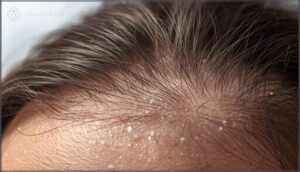
Dandruff manifests through a range of visible and sensory indicators that can vary in intensity from person to person, making early recognition essential for timely intervention and effective management. If persistent flaking occurs despite regular washing, restoring moisture to your dry scalp may help address underlying hydration imbalances that worsen symptoms.
While many people associate dandruff solely with flaking, the condition often presents with multiple concurrent symptoms that affect the scalp and potentially other areas of the body as well.
Understanding these telltale signs allows you to distinguish dandruff from other scalp conditions and select the most appropriate treatment approach for your specific situation.
Flaking and White Scales
The hallmark symptom of dandruff is visible flaking, usually appearing as white scales measuring 1–2 millimeters that collect on your scalp, hair, and shoulders.
These flakes stem from accelerated epidermal turnover driven by Malassezia yeast overgrowth, which compromises scalp health and triggers persistent shedding.
Proper dandruff management begins with scalp exfoliation and targeted shampoo formulations designed for effective flake removal and symptom control.
Itching and Redness
Itching and redness often signal that your scalp health is under siege from inflammatory responses to Malassezia yeast, which disrupts your skin’s natural barrier and triggers cytokine signaling that causes vasodilation.
When you notice persistent scalp irritation alongside flaking, you’re likely dealing with seborrheic dermatitis or psoriasis, conditions where inflammation factors and skin sensitivity demand targeted antidandruff treatments to restore comfort and control redness causes effectively.
Greasiness or Dryness of The Scalp
Your scalp’s oil balance plays a central role in determining whether you experience greasy flake formation or dryness causes that trigger fine white scales. Scalp moisture levels shift with hormonal fluctuations, seasonal changes, and hair care practices, directly influencing scalp health and flake prevention strategies you’ll need to adopt for effective scalp care.
- Greasy scalps produce larger, yellowish flakes that cling to hair strands due to excess sebum production
- Dry scalp conditions yield smaller, white flakes accompanied by tightness and irritation without persistent oiliness
- Malassezia yeast thrives on scalp oil, amplifying inflammation and scaling in oily scalp conditions and symptoms
- Overwashing strips natural lipids and paradoxically triggers compensatory oil production, worsening greasiness
- Environmental factors like low humidity and cold temperatures accelerate moisture loss, intensifying dryness
Dandruff Beyond The Scalp (Eyebrows, Beard, Ears)
Dandruff doesn’t stop at your hairline. Malassezia fungal infections often spread to eyebrow dandruff zones, beard care regions, and even the ear canal, where fine white facial flakes mimic scalp health issues.
Periorbital itch and scaling along the brow ridge signal seborrheic dermatitis extending beyond your scalp, while beard skin conditions may require targeted antifungal treatments to restore balance and reduce inflammation in these sensitive areas.
Lifestyle and Environmental Triggers

Dandruff doesn’t happen in isolation, and what you do every day can either keep your scalp balanced or tip it toward flaking and irritation.
Your habits, your environment, and even what’s happening inside your body all play a role in triggering or worsening symptoms.
Understanding these lifestyle and environmental factors can help you identify patterns and take control of your scalp health.
Stress and Hormonal Changes
Your body’s response to pressure can reshape your scalp’s landscape, making dandruff triggers more likely to activate through hormonal shifts and inflammation. Stress management and hormone balance play central roles in maintaining scalp health, and understanding these flaking causes helps you regain control over your skin conditions and immune system function.
- Elevated cortisol from chronic stress increases sebum production, creating an oily environment where Malassezia yeast thrives
- Androgen fluctuations during puberty or menstrual cycles heighten oil gland activity, worsening flaking
- Sleep disturbances linked to stress compromise your scalp’s barrier function and inflammatory response
- Poor hair care adherence under stress allows debris buildup that aggravates existing dandruff
- Stress-reduction techniques like yoga or regular outdoor activity correlate with fewer flare-ups
Weather and Seasonal Fluctuations
Cold months often worsen dandruff because low humidity levels and indoor heating dry your scalp, while seasonal patterns shift sebum production and skin conditions flare with climate effects.
Regional variations matter—dry winters in northern zones trigger different scalp health challenges than humid coastal areas. Adjusting your hair care routine and shampoo frequency to match these environmental shifts can reduce flaking and restore comfort.
Hair Care Practices (Over/Under Shampooing)
Just as dry winter air calls for extra attention, your approach to Scalp Hygiene matters year-round. Shampoo Frequency is a balancing act—overwashing strips protective oils, while underwashing lets dead skin and sebum build up.
Gentle Cleansing with the right Hair Care and Maintenance, including Scalp Massage, keeps Dandruff at bay and promotes overall Scalp Health with every wash.
Diet and Nutritional Deficiencies
What you eat influences scalp health more than you might realize. Low zinc, vitamin D, or B vitamins can worsen flaking, while omega 3 benefits include calming inflammation and supporting micronutrient balance.
Probiotic effects on gut flora may ease seborrheic symptoms, and limiting high-glycemic foods helps control oil production—key steps in managing health and personal health management for dandruff relief.
Understanding the gut skin connection is vital for effective dandruff treatment.
Effective Home Remedies for Dandruff
You don’t always need prescription-strength solutions to manage dandruff effectively, as several accessible treatments can address symptoms right at home.
From specialized shampoos designed to target fungal growth and excess oil to natural ingredients that soothe and balance your scalp, these remedies offer practical starting points for relief.
Understanding which approaches work best for your specific scalp condition enables you to take control of flaking, itching, and discomfort before considering more aggressive interventions.
Medicated and Anti-Dandruff Shampoos

When over-the-counter dandruff prevention isn’t cutting it, medicated solutions step in with active ingredients that target the root cause. Here’s what works:
- Ketoconazole shampoos reduce Malassezia yeast and inflammation with prescription-strength 2% formulations available for resistant cases.
- Zinc pyrithione offers broad anti-fungal options that calm itching while controlling flakes.
- Selenium sulfide and salicylic acid shampoos slow skin turnover, though they may require follow-up moisturizer to prevent dryness.
Apply these scalp treatment products twice weekly, massaging into wet hair and letting them sit 2–5 minutes before rinsing to optimize contact with your scalp, and you’ll see noticeable improvement within weeks if you stick with the regimen and rotate shampoo ingredients every month or two to maintain effectiveness. Researchers use scientific study methods to develop effective treatments.
Natural Treatments (Coconut Oil, Aloe Vera, Baking Soda)

Many people reach for pantry staples before prescriptions, and you might find relief that way. Coconut oil benefits include moisturizing properties that reduce flaking, while aloe vera effects soothe itching through anti-inflammatory compounds. Baking soda uses extend to gentle exfoliation that addresses oil buildup, though overuse disrupts your scalp’s natural barrier.
Patch-test these natural remedies first, and remember they work best alongside conventional shampoo treatments for overall scalp health.
Scalp Hygiene and Care Habits

Gentle shampooing with fingertip scalp massage—never fingernails—loosens flakes without causing microtrauma that worsens dandruff and other scalp conditions and diseases. Your hair care and maintenance routine benefits when you:
- Rinse thoroughly with cool water to close pores and reduce irritation
- Brush damp hair to redistribute oils and remove dead cells
- Practice daily rinsing after sweating to prevent microbial overgrowth
These scalp hygiene habits support healthier scalp exfoliation patterns.
Dietary Adjustments for Scalp Health

Your diet shapes your scalp’s defense against dandruff more than you might think, influencing inflammatory responses and microbial balance from within. Increased zinc intake and omega fatty acids support skin health and wellness, while probiotic foods help modulate gut-skin connections that affect hair care outcomes.
Vitamin balance, particularly B complex nutrients, strengthens scalp resilience, and hydration tips include limiting sugar to reduce flare-ups affecting scalp conditions.
When to Seek Professional Treatment

Most cases of dandruff respond well to over-the-counter treatments and home care, but sometimes you need a dermatologist’s expertise to get your scalp back on track.
If you’ve tried multiple remedies without improvement, or if your symptoms are interfering with your daily comfort and confidence, it’s time to seek professional intervention.
Here’s when you should schedule that appointment and what to expect from specialized care.
Persistent or Severe Dandruff
When you’ve tried multiple over-the-counter remedies but still face severe flaking affecting more than 10% of your scalp for at least four weeks, or when chronic itching persists beyond two weeks despite diligent dandruff management, it’s time to seek professional help for your scalp condition.
- Thick, greasy scales with red patches may signal seborrheic dermatitis rather than simple dandruff
- Symptoms spreading to your eyebrows, ears, or beard often indicate a systemic issue
- Persistent scalp inflammation unresponsive to two different antifungal treatments warrants dermatologic assessment
- Intense scalp irritation disrupting your sleep requires medical evaluation
- Well-defined plaques could suggest psoriasis, not typical dandruff
Prescription Medications and Shampoos
When over-the-counter options fall short, your dermatologist can prescribe stronger formulations that target the root of stubborn dandruff, addressing both fungal overgrowth and inflammation with clinical precision while monitoring for medication side effects throughout your scalp therapy.
Prescription topical antifungals and corticosteroid regimens require medical supervision, ensuring you receive appropriate shampoo ingredients customized to your specific condition, whether fungal treatments alone suffice or combination therapy becomes necessary for best results.
| Active Ingredient | Primary Action |
|---|---|
| Ketoconazole | Reduces fungal load; ketoconazole effects include decreased scaling in randomized trials |
| Ciclopirox olamine | Provides antifungal activity; decreases itching in clinical studies |
| Prescription-strength pyrithione zinc shampoos | Combines antifungal and anti-inflammatory effects for moderate cases |
| Tar-based shampoos with salicylic acid | Manages epidermal turnover; may have tolerability concerns |
Underlying Medical Conditions
Sometimes dandruff signals more than dryness—it can flag seborrheic dermatitis, psoriasis symptoms, or hormonal disorders that alter skin turnover and fuel fungal infections and treatment challenges, particularly when immunodeficiency effects weaken your immune system’s ability to regulate scalp microbes and manage these skin conditions.
Your dermatologist will evaluate whether endocrine conditions or other systemic factors drive persistent flaking, determining if specialized treatment becomes necessary:
- Seborrheic dermatitis
- Psoriasis symptoms
- Hormonal disorders
- Immunodeficiency effects
- Endocrine conditions
Tips for Consulting a Dermatologist
Once your dermatologist confirms seborrheic dermatitis or other skin conditions, preparation matters—compile your medical history, document ineffective treatments, and bring photos showing progression.
During consultation, report adverse reactions and ask about treatment planning timelines so you understand expected improvement. Clear communication helps your dermatologist tailor follow-up care, adjust medicated products based on your response, and guarantee structured dermatological care and advice fosters lasting scalp health.
Frequently Asked Questions (FAQs)
Can dandruff spread from person to person?
People love imagining dandruff as contagious, but dermatology organizations confirm it’s not. Malassezia yeast exists on most healthy scalps without symptoms, and direct person-to-person transmission hasn’t been clinically demonstrated.
Does dandruff cause permanent hair loss?
Dandruff itself won’t cause permanent damage, but intense scratching from scalp inflammation can harm follicles and trigger temporary hair loss that resolves once you address the underlying irritation with proper dandruff treatment options.
Is dandruff more common in certain climates?
In muggy Singapore, a patient’s persistent flaking improved after moving to Arizona—climate matters.
Tropical heat and humidity fuel Malassezia overgrowth, making seasonal patterns and regional variations in scalp irritation and fungal infections more pronounced, requiring targeted dandruff treatment options.
Can children develop dandruff like adults?
Yes, children can develop dandruff, though it’s less common before puberty. Pediatric dandruff often resembles seborrheic dermatitis, with teenage flakes increasing as hormones shift.
Infant cradle cap presents differently, requiring gentle shampoo and specialized child scalp care.
Does wearing hats worsen dandruff symptoms?
Tight, non-breathable hat materials can trap warmth and moisture on your scalp, creating an environment where Malassezia thrives and seborrheic dermatitis flares.
Making hair care tips about hat hygiene essential for managing dandruff triggers and scalp occlusion.
Conclusion
Think of your scalp as a finely tuned ecosystem—when balance tips, dandruff emerges as the visible signal that something needs attention.
Understanding dandruff causes and remedies equips you to move beyond guesswork, matching your specific triggers with targeted interventions that address fungal overgrowth, dryness, product sensitivities, or underlying conditions.
Whether you choose medicated shampoos, natural treatments, or lifestyle modifications, consistent care restores equilibrium and puts those persistent flakes permanently behind you.
- https://links.e.response.mayoclinic.org/EmailPreview-GeneralHealth
- https://mcforms.mayo.edu/mc5200-mc5299/mc5256-01.pdf
- http://www.lifesciencesite.com/lsj/life1101s/058_27160life1101s14_323_333.pdf
- https://nationaleczema.org/eczema/treatment/over-the-counter/
- https://www.aad.org/public/everyday-care/hair-scalp-care/scalp/treat-dandruff