This site is supported by our readers. We may earn a commission, at no cost to you, if you purchase through links. This content is for general informational and educational purposes only and is not a substitute for professional medical, dermatological, or nutritional advice.
Cold weather, hot showers, and a week of dry indoor heating can leave your scalp tight, itchy, and flaking within days. Those white flakes often look alarming, yet most stem from moisture loss rather than dandruff, and the fix differs. Learning to restore moisture to dry scalp starts with knowing what stripped it in the first place.
You’ll find the common triggers, a clear breakdown of dryness versus dandruff and psoriasis, and a practical routine built on gentle cleansing, hydrating serums, and oils. Ten product picks, from aloe masques to medicated shampoos, round out the plan, along with the warning signs that warrant a dermatologist.
Table Of Contents
- Key Takeaways
- Identify Dry Scalp Causes and Distinguish Dryness From Dandruff
- How to Restore Moisture to a Dry Scalp With Gentle Cleansing, Serums, and Oils
- Prevent Dry Scalp With Washing Habits and Protection Suited to Your Hair Type
- Top 10 Scalp Products: Moisturizing Care and Medicated Options
- 1. SheaMoisture Aloe Butter Pre-Wash Masque
- 2. Living Proof Dry Scalp Treatment
- 3. Christophe Robin Hydrating Aloe Vera Scrub
- 4. Nécessaire Scalp Serum For Hair Growth
- 5. Head Shoulders Clinical Itch Relief Shampoo
- 6. Head Shoulders Classic Clean Shampoo Twin
- 7. Medicated Dandruff Shampoo For Adults
- 8. Neutrogena Extra Strength Dandruff Shampoo
- 9. Neutrogena T Sal Scalp Shampoo Pack
- 10. Nizoral Psoriasis Shampoo and Conditioner
- When Persistent Scalp Dryness, Irritation, or Flaking Needs a Dermatologist
- Frequently Asked Questions (FAQs)
- How to hydrate an extremely dry scalp?
- How to get moisture back into scalp?
- What vitamin are you lacking if you have a dry scalp?
- Does dry scalp ever go away?
- Can diet affect dry scalp and moisture levels?
- How long until scalp moisture treatments show results?
- Is dry scalp worse at certain life stages?
- Should I moisturize my scalp daily or weekly?
- Can stress or hormones cause sudden scalp dryness?
- How often should I oil my scalp?
- Conclusion
Key Takeaways
- Flakes don’t always mean dandruff: dry scalp sheds small white flakes and feels tight, while dandruff leaves larger, oily or waxy scale, so you’ll want to match the fix to the cause.
- You can restore moisture with a gentle routine of lukewarm water, a sulfate-free shampoo, a hydrating serum on damp skin, and a few drops of oil, and most people notice improvement within two to four weeks.
- You’ll prevent flare-ups by matching your wash frequency to your hair type, keeping hot water and harsh products away from your scalp, and running a humidifier in winter.
- You should see a dermatologist if flaking or itching lasts past four to six weeks of consistent care, or if you notice hair loss, oozing, crusting, or spreading redness, since scarring conditions can look like plain dryness.
Identify Dry Scalp Causes and Distinguish Dryness From Dandruff
A flaky, tight scalp isn’t always what it seems, and knowing the cause helps you choose a gentle fix that works.
Because eczema, psoriasis, and seborrheic dermatitis often look alike, this guide to identifying the real cause behind a tight, flaky scalp can help you treat it correctly.
A flaky, tight scalp isn’t always what it seems, so identifying the true cause helps you choose a gentle fix that works
Below, you’ll find the common dry scalp triggers, how to tell dryness from dandruff, other reasons your scalp may flake, and when it’s time to seek care.
Take them in order so you can match what you see on your own scalp with the right next step.
Common Dry Scalp Triggers

Often, a dry scalp comes from small habits you repeat without noticing. These are the usual triggers:
- Cold weather and indoor heating pull moisture from your scalp, leaving it tight and itchy.
- Hot showers strip protective oils.
- Product buildup from gels and sprays irritates skin.
- Excessive sun exposure dries it, too.
Plan seasonal scalp care accordingly.
Dryness Versus Dandruff

Flakes alone won’t tell you which one you have, but a few clues help. Dry scalp sheds small, white flakes and feels tight. Dandruff usually leaves larger, oily or waxy scale with a persistent itch.
If your scalp is oily and itchy, suspect dandruff. If your skin is dry everywhere, suspect dryness. Hydrating shampoo can help the second, but not the first.
Other Causes Of Flaking
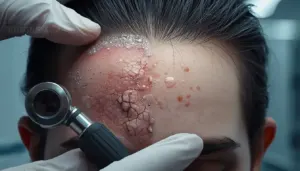
If hydration and anti-dandruff care haven’t helped, other causes of flaking may be involved. Psoriasis leaves thick, silvery scale that sticks to the scalp. Contact dermatitis brings burning where a dye or shampoo touched your skin. Eczema causes itchy, dry scaling from a weakened skin barrier. Tinea capitis, a fungal infection, often shows broken hairs or black dots.
Because some of these conditions can look like dandruff, avoiding scalp self-diagnosis matters, since scarring disorders can permanently destroy hair follicles if they go untreated.
When To Seek Care

Because scarring conditions can look like plain dryness, watch for warning signs. See a dermatologist if flaking and itching persist despite gentle scalp hydration, or if you notice patchy hair loss, cracks, oozing, or crusting.
Pus, warmth, spreading redness, fever, or rapidly increasing pain call for urgent care. Stop any product that triggers burning or swelling. Facial swelling or trouble breathing needs emergency help.
How to Restore Moisture to a Dry Scalp With Gentle Cleansing, Serums, and Oils

You can bring moisture back to a dry scalp with a few gentle changes, and most people notice improvement within weeks.
Start with a sulfate-free shampoo containing glycerin, ceramides, or aloe. Wash with lukewarm water, using your fingertips in slow circles. Once or twice a week is enough for most dry scalps.
After cleansing, apply a scalp serum such as Living Proof Dry Scalp Treatment to damp skin, focusing on flaky zones. Follow with a few drops of jojoba oil to support moisture retention. Leave-in treatments work well here too.
For extra softness, try coconut oil 20 to 30 minutes before washing. If you’d like relief that feels reassuring, picture:
- Your scalp feeling calm, not tight or itchy
- Wearing dark clothes without worrying about flakes
- Trusting your routine again
Prevent Dry Scalp With Washing Habits and Protection Suited to Your Hair Type

You can prevent most dry scalp flare-ups by matching your routine to your hair type. If your hair is fine, straight, or oily, you’ll likely need to wash more often. Coarse, curly, or coily hair usually does well with longer gaps, though sweat and buildup still call for cleansing.
Choose gentle shampoos that are sulfate-free, pH-balanced, and fragrance-free formulations if you’re sensitive. Use lukewarm water, since hot water worsens dryness. Massage shampoo into your scalp, let the rinse carry it through your lengths, and rinse thoroughly so no residue lingers.
Keep conditioner on your lengths, not your roots.
In winter, run a humidifier indoors. Wear a hat or sunscreen-safe scalp cover outdoors, and rinse after swimming. Space out coloring, heat styling, and tight styles when you can.
A cool mist humidifier for your bedroom keeps the air comfortably moist while you sleep, helping to fend off winter dryness.
Top 10 Scalp Products: Moisturizing Care and Medicated Options
Choosing a scalp product gets easier when you know which kind your scalp needs. The list below starts with moisturizing treatments for dryness, then moves to medicated shampoos for flaking that won’t go away. Read each one with your own symptoms in mind, and you’ll find it simpler to pick gently and with confidence.
1. SheaMoisture Aloe Butter Pre-Wash Masque
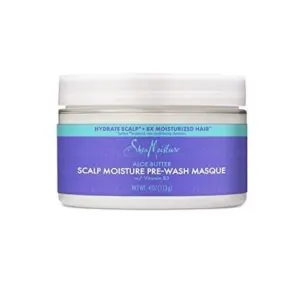
Dry, tight scalp before you’ve even shampooed? A pre-wash step can help.
SheaMoisture’s Aloe Butter Pre-Wash Masque pairs aloe butter with vitamin B3 and Fair Trade shea butter to hydrate and calm your scalp. It’s free from parabens, phthalates, mineral oil, and petrolatum. In the brand’s comparison, hair ended up 8x more moisturized and 4x stronger than with non-conditioning shampoo.
Section your hair and massage a small amount into your dry scalp. The texture is thick, so a little goes a long way. Rinse it out, then shampoo as usual.
One consideration: the bottle is small, so you may want to use it sparingly. Some customers wish for more product for the price. Use it externally only.
| Best For | People with dry, tight, or dehydrated scalps who want a moisturizing pre-wash treatment to use before shampooing. |
|---|---|
| Key Active | Aloe butter, vitamin B3 |
| Product Type | Pre-wash masque |
| Usage Frequency | Before shampooing |
| Fragrance | N/A |
| Free-From Claims | No parabens, phthalates, mineral oil, petrolatum |
| Main Concern | Dry, tight scalp |
| Additional Features |
|
- Infused with aloe butter, vitamin B3, and Fair Trade shea butter to hydrate the scalp and hair
- Free from parabens, phthalates, mineral oil, and petrolatum
- In the brand’s comparison, hair was 8x more moisturized and 4x stronger than with non-conditioning shampoo
- The bottle is considered too small by some customers
- Some customers wish they got more product for the price
- It’s for external use only
2. Living Proof Dry Scalp Treatment
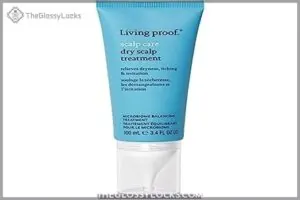
Picture a dry, tight scalp that feels like cracked earth after a long summer, itchy and dusted with fine flakes.
Living Proof Dry Scalp Treatment is a leave-in formula built to soothe that dryness.
It pairs a hyaluronic acid Molecular Patch for hydration with a vitamin B3 complex that balances your scalp’s microbiome.
Apply it after you cleanse and condition, before styling products, using the dropper on damp, detangled hair. Aim for three times a week, since that’s when you’ll see the best results.
Be realistic, though. It isn’t a cure for dandruff or seborrheic dermatitis, and some customers have reported regret after buying it.
If you’re prone to fungal acne or scent sensitivity, patch test first.
| Best For | People with a dry, flaky, itchy scalp who want a leave-in treatment for hydration and comfort, and who are willing to use it about three times a week. |
|---|---|
| Key Active | Hyaluronic acid, vitamin B3 |
| Product Type | Leave-in treatment |
| Usage Frequency | About 3 times weekly |
| Fragrance | Scent sensitivity caution |
| Free-From Claims | N/A |
| Main Concern | Dry, flaky, itchy scalp |
| Additional Features |
|
- Soothes dry scalp flaking, itching, and irritation
- Delivers instant and sustained hydration with its hyaluronic acid Molecular Patch
- Uses a vitamin B3 complex to help balance the scalp’s microbiome
- Not a cure for dandruff or seborrheic dermatitis
- Needs about three uses per week for the best results
- Some customers have reported regret after buying it
3. Christophe Robin Hydrating Aloe Vera Scrub
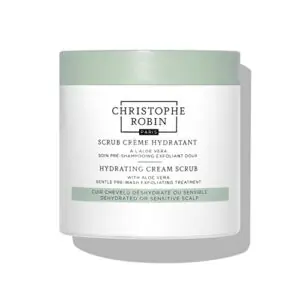
Does your scalp feel tight and parched, even after you’ve switched shampoos? This pre-wash scrub is made for dehydrated or sensitive scalps.
It pairs aloe vera and fermented agave juice, which hydrate and soothe, with natural jojoba beads that gently lift dead skin cells and buildup without harsh abrasion.
In user testing, 95% felt their scalp was nurtured and moisturized after two weeks, and 94% said the scrub exfoliated gently.
Apply it to a dry scalp once a week, massage in circles, and leave it on for 5 to 10 minutes. Then lather with water and rinse well. Skip broken or irritated skin, and always patch test first.
| Best For | People with dehydrated or sensitive scalps who want a gentle weekly pre-wash exfoliating treatment. |
|---|---|
| Key Active | Aloe vera, agave juice |
| Product Type | Pre-wash scrub |
| Usage Frequency | Once weekly |
| Fragrance | N/A |
| Free-From Claims | N/A |
| Main Concern | Dehydrated, sensitive scalp |
| Additional Features |
|
- Aloe vera and fermented agave juice hydrate and soothe tight, parched scalps.
- Natural jojoba scrub particles gently lift dead skin cells and buildup without harsh abrasion.
- Helps reduce the look of redness and leaves hair feeling sleek, shiny, and conditioned.
- Not recommended for broken or irritated skin.
- A patch test is advised before first use, especially for sensitive individuals.
- At $43 for 150 ml, it is a pricey option for a once-a-week treatment.
4. Nécessaire Scalp Serum For Hair Growth
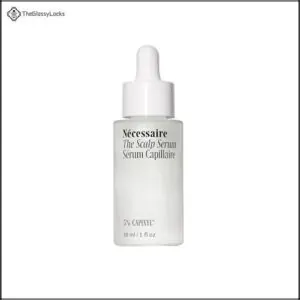
Can one serum hydrate your scalp and support fuller hair? Nécessaire’s Scalp Serum is designed to do both.
It contains 5% Capixyl for thicker, healthier-looking hair and 1% hyaluronic acid to soothe dryness, plus vitamins B3 and B5 to support your scalp barrier.
In a 12-week study with 50+ participants, 96% reported better hydration and less itchiness. The formula is water-light, alcohol-free, fragrance-free and leaves no greasy residue, so you can use it daily without weighing down your roots.
Apply it to damp or dry scalp, massage gently and leave it in. One 30ml bottle lasts 30 days, and consistency matters, so plan on steady, long-term use.
| Best For | People with a dry or itchy scalp who want a lightweight, fragrance-free daily serum to support fuller-looking, thicker hair and are willing to stick with it long term. |
|---|---|
| Key Active | 5% Capixyl, hyaluronic acid |
| Product Type | Scalp serum |
| Usage Frequency | Daily |
| Fragrance | Fragrance-free |
| Free-From Claims | Alcohol-free, fragrance-free |
| Main Concern | Dry, itchy scalp |
| Additional Features |
|
- Combines 5% Capixyl for fuller, thicker-looking hair with 1% hyaluronic acid to soothe dry scalp.
- Water-light, non-greasy, and residue-free, so it can be used daily without weighing down roots.
- Alcohol-free, fragrance-free, hypoallergenic, and non-comedogenic, with vitamins B3 and B5 to support the scalp barrier.
- Needs consistent daily use over a long period to see results.
- One 30ml bottle lasts only 30 days, so it requires ongoing repurchasing.
- Not intended to diagnose, treat, cure, or prevent any disease, and it is for external use only, with care needed to avoid the eyes.
5. Head Shoulders Clinical Itch Relief Shampoo
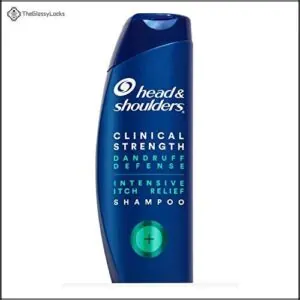
If your scalp itches as much as it flakes, a medicated wash may do more than a leave-in serum. Head & Shoulders Clinical Itch Relief Shampoo uses 1% selenium sulfide for prescription-strength flake protection, and it delivers 35% more dandruff-fighting power after one wash than ordinary anti-dandruff shampoos.
Cooling menthol calms the itch while you lather. It also helps control oil and rescue dry scalp conditions, which makes it useful when dandruff and dryness overlap.
Use it regularly, since protection fades without consistency. Skip it if you’re sensitive to selenium sulfide or menthol, and know some users dislike the fragrance.
| Best For | People dealing with an itchy, flaky scalp from dandruff or seborrheic dermatitis who want a medicated shampoo with cooling relief. |
|---|---|
| Key Active | 1% selenium sulfide |
| Product Type | Medicated shampoo |
| Usage Frequency | Regular use |
| Fragrance | Menthol, fragrance disliked by some |
| Free-From Claims | N/A |
| Main Concern | Dandruff, itch, seborrheic dermatitis |
| Additional Features |
|
- Contains 1% selenium sulfide for prescription-strength flake protection, with 35% more dandruff-fighting power after one wash than ordinary anti-dandruff shampoos
- Cooling menthol gives intensive itch relief while you lather
- Helps control oil and rescue dry scalp conditions
- Not recommended for anyone sensitive to selenium sulfide or menthol
- Needs regular use to keep dandruff protection and itch relief going
- Some users find the fragrance doesn’t meet their expectations
6. Head Shoulders Classic Clean Shampoo Twin
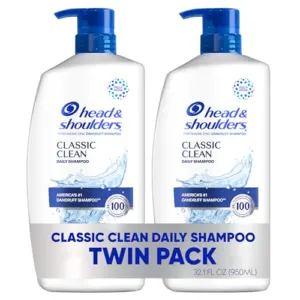
If the selenium sulfide formula above feels stronger than you need, Classic Clean is a gentler daily option. It uses 1% pyrithione zinc to target the yeast-related cause of flaking, and its pH-balanced formula is mild enough for regular use. Niacinamide and glycerin add comfort to a dry scalp.
You’ll get up to 72 hours of protection with regular use. Start with twice a week, then move to daily washing if flakes persist. It’s safe for all hair types, including color-treated hair, and leaves a clean scent. It can reduce dandruff-related hair fall.
Note: regular conditioners can weaken protection, so pair it with an H&S conditioner. The twin pack holds two bottles.
| Best For | People dealing with dandruff who want a pH-balanced, 1% pyrithione zinc shampoo gentle enough for daily use. |
|---|---|
| Key Active | 1% pyrithione zinc |
| Product Type | Medicated shampoo |
| Usage Frequency | Twice weekly, then daily |
| Fragrance | Classic Clean scent |
| Free-From Claims | N/A |
| Main Concern | Dandruff |
| Additional Features |
|
- Uses a 1% pyrithione zinc formula that targets dandruff at the source.
- Gives 72 hours of dandruff protection with regular use.
- Reduces hair fall associated with dandruff and leaves hair smelling clean with the Classic Clean fragrance.
- Regular cosmetic conditioners may reduce the anti-dandruff protection.
- Needs consistent daily use to keep dandruff under control.
- Works best when paired with H&S conditioner, which means buying a second product.
7. Medicated Dandruff Shampoo For Adults
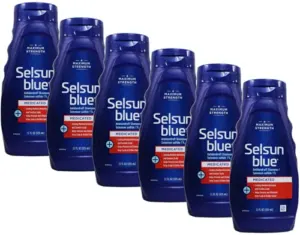
If Classic Clean doesn’t settle stubborn flakes, this 1% selenium sulfide shampoo is the stronger option. Selenium sulfide slows how fast your scalp sheds skin cells, which makes it a good match for oily scalps and thick, stubborn scaling. It eases itching, redness, and irritation.
Lather it in and leave it on for several minutes before rinsing, so the formula has time to work. Menthol adds a cooling feel, and the formula skips SLS, parabens, phosphates, phthalates, and silicones. Hair feels soft afterward.
It’s for adults only, and it may not suit sensitive scalps. Expect results in two to four weeks with regular use.
| Best For | Adults with oily scalps or stubborn, heavy flaking who need a stronger medicated option when a gentler dandruff shampoo hasn’t worked. |
|---|---|
| Key Active | 1% selenium sulfide |
| Product Type | Medicated shampoo |
| Usage Frequency | Regular use |
| Fragrance | N/A |
| Free-From Claims | No SLS, parabens, phosphates, phthalates, silicones |
| Main Concern | Oily scalp, heavy flaking |
| Additional Features |
|
- Contains 1% selenium sulfide, which slows how fast the scalp sheds skin cells to control itching, flaking, redness, and scaling
- Menthol gives a cooling sensation, and hair feels soft and silky afterward
- Made without SLS, parabens, phosphates, phthalates, or silicones
- Intended for adults only
- The medicated formula may not suit sensitive scalps
- Needs regular use, with results expected in two to four weeks, to keep dandruff under control
8. Neutrogena Extra Strength Dandruff Shampoo
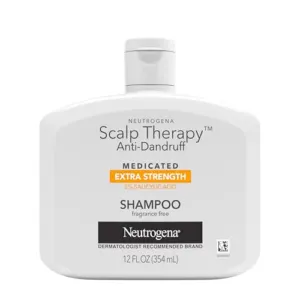
If the selenium sulfide option felt too strong or you’d rather skip menthol, Neutrogena Extra Strength is a gentler route. Its 3% salicylic acid loosens dead skin and scalp buildup so flakes rinse away. It’s fragrance-free, alcohol-free, and paraben-free, and it’s made for dandruff, seborrheic dermatitis, and scalp psoriasis.
Use it at least twice a week. Work it into wet hair, massage your scalp, and let the lather sit for several minutes before rinsing.
It has no antifungal ingredient, so it won’t suit every case. Reviews are mixed, too. Some people feel soothed, while others notice more itching. If that happens, stop using it and see a doctor.
| Best For | People with dandruff, seborrheic dermatitis, or scalp psoriasis who want a fragrance-free, alcohol-free, paraben-free shampoo that uses 3% salicylic acid to loosen flakes and buildup. |
|---|---|
| Key Active | 3% salicylic acid |
| Product Type | Medicated shampoo |
| Usage Frequency | At least twice weekly |
| Fragrance | Fragrance-free |
| Free-From Claims | Alcohol-free, paraben-free |
| Main Concern | Dandruff, seborrheic dermatitis, psoriasis |
| Additional Features |
|
- Contains 3% salicylic acid to help loosen and reduce scalp flakes
- Fragrance-free, alcohol-free, and paraben-free formula
- Made to treat dandruff, seborrheic dermatitis, and scalp psoriasis
- Customer feedback is mixed on how well it reduces dandruff
- Some users find it soothing, while others report more intense itching
- Experiences vary with moisturizing effect, rinsability, and lather
9. Neutrogena T Sal Scalp Shampoo Pack
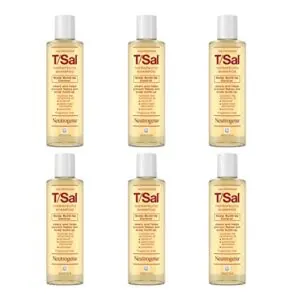
The Neutrogena T/Sal Scalp Shampoo Pack gives you a practical option for stubborn build-up and dry flakes. Each 4.5-fluid-ounce bottle delivers 3% salicylic acid, a keratolytic that softens and lifts dead skin so crusty patches clear after the first wash. Use it twice weekly to treat dandruff, psoriasis, and seborrheic dermatitis without over-drying your scalp.
The formula is fragrance-free and dye-free, and it keeps working for hours after you rinse. With six bottles, one pack lasts roughly 4–5 months. It isn’t an overnight fix, and some buyers find it overpriced, so compare costs before committing.
| Best For | People dealing with stubborn scalp build-up, dandruff, psoriasis, or seborrheic dermatitis who want a fragrance-free, dye-free treatment that starts clearing crusty patches after the first wash. |
|---|---|
| Key Active | 3% salicylic acid |
| Product Type | Medicated shampoo |
| Usage Frequency | Twice weekly |
| Fragrance | Fragrance-free |
| Free-From Claims | Dye-free, preservative-free |
| Main Concern | Buildup, dandruff, psoriasis |
| Additional Features |
|
- Contains 3% salicylic acid, which softens and lifts dead skin so crusty build-up clears after the first use
- Relieves itching and flaking and keeps working for hours after rinsing
- Fragrance-free, dye-free, and preservative-free; the six-bottle pack lasts about 4–5 months with regular use
- Not an overnight fix for scalp conditions
- Some customers find it overpriced
- Requires regular use (about twice weekly) to keep results
10. Nizoral Psoriasis Shampoo and Conditioner
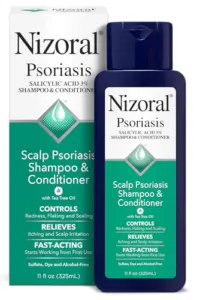
The Nizoral Psoriasis Shampoo and Conditioner pairs 3% salicylic acid with tea tree oil, green tea extract, and vitamins E, C, and B5, so you get clinical scale removal and conditioning care in one step. Use it at least twice weekly, or as your doctor directs, and it starts easing itching, redness, and flaking from the first wash. The formula is sulfate-free, paraben-free, dye-free, and alcohol-free, which suits sensitive scalps and color-treated, chemically processed, or gray hair.
Keep expectations realistic. Some users find the texture watery, and scalp responses vary, so stop if irritation worsens. It’s built for psoriasis and seborrheic dermatitis, not fungal dandruff. For that, choose Nizoral Anti-Dandruff with 1% ketoconazole instead.
| Best For | People with scalp psoriasis or seborrheic dermatitis who want salicylic acid scale removal with conditioning care, including those with color-treated, chemically processed, or gray hair. |
|---|---|
| Key Active | 3% salicylic acid |
| Product Type | Medicated shampoo |
| Usage Frequency | N/A |
| Fragrance | No artificial fragrances |
| Free-From Claims | No preservatives, dyes |
| Main Concern | Scalp psoriasis |
| Additional Features |
|
- Contains 3% salicylic acid to help relieve itching, redness, and flaking
- Free from artificial fragrances, preservatives, and dyes, making it suitable for sensitive scalps
- Provides rich lather that rinses clean and leaves hair conditioned
- Some users report the formula is too watery
- Mixed customer experiences with scalp benefits; some note worsening of condition
- Fragrance may be pleasant to some but not universally preferred
When Persistent Scalp Dryness, Irritation, or Flaking Needs a Dermatologist

Picture Maya, who has stuck with her dandruff shampoo for two months and still finds flakes on her collar. That persistence matters, but so does knowing when to stop guessing.
Book a dermatologist appointment if you notice any of these:
- Flaking or itching that continues after 4–6 weeks of consistent medicated shampoo use
- Swelling, spreading redness, pus, bleeding, or oozing crusts
- Joint pain or nail pitting alongside scalp symptoms
- Hair loss or thick plaques extending past the hairline
- A reaction after dye, bleach, or a new product
These signs suggest you need more than a flaky scalp solution. A dermatologist can confirm the diagnosis and guide antiinflammatory scalp care and scalp barrier repair, so your scalp hydration routine finally works.
Frequently Asked Questions (FAQs)
How to hydrate an extremely dry scalp?
Start with a sulfate-free, pH-balanced shampoo and lukewarm water. Apply a leave-in serum with humectants for scalp, like hyaluronic acid, then seal it with emollient oils such as squalane. Support barrier lipids with ceramides and drink enough water.
How to get moisture back into scalp?
A dry scalp is a cracked riverbed: it needs water held in, not just poured on. Wash with lukewarm water and gentle shampoos, then seal damp skin with scalp serums or oils. Support moisture retention through internal hydration.
What vitamin are you lacking if you have a dry scalp?
Dry scalp doesn’t point to one missing vitamin. Vitamins A, B and C rarely cause it alone, and a deficiency usually shows other signs. Try scalp moisturizing and internal hydration first, and see a doctor if dryness persists.
Does dry scalp ever go away?
Yes, even if it feels permanent. Weather or harsh shampoos often cause dry scalp, and scalp barrier repair follows once triggers stop. Gentle cleansing, scalp treatments, and hydration from within help. Persistent flaking needs a dermatologist.
Can diet affect dry scalp and moisture levels?
Diet plays only a small role. Hydration from within and nutritional support for skin matter, but extra water intake, sea vegetables, or omega3s won’t reliably moisturize your scalp. Persistent flaking usually needs a clinician’s assessment.
How long until scalp moisture treatments show results?
Your scalp won’t take your impatience as a hint.
Topical hydration usually shows within two to four weeks, once skin barrier repair reduces transepidermal water loss. Moisture retention takes about three months, so stay consistent.
Is dry scalp worse at certain life stages?
Not necessarily. Puberty usually makes your scalp oilier, while later adulthood lowers oil and can leave dry scalp more likely. Gentle scalp treatments help moisture retention, but persistent or painful flaking deserves a clinical check.
Should I moisturize my scalp daily or weekly?
Why choose just one? Your scalp type decides. Dry scalps like daily moisturizing for scalp hydration, while oily ones need less. Most people do well with two to three times weekly.
Can stress or hormones cause sudden scalp dryness?
Not usually. Stress hormones and hormonal shifts can alter sebum regulation and scalp sensitivity, but they rarely cause sudden scalp moisture loss alone. Your scalp barrier function may simply be reacting to an existing condition.
How often should I oil my scalp?
Say your scalp feels tight but your roots turn greasy by day two. Oil once a week before shampooing, using a few drops, and adjust based on itch, flakes, and sebum balance.
Conclusion
Why does something so small feel so urgent? Because an itchy scalp demands attention, yet the answer is quiet. To restore moisture to dry scalp skin, start gentle: mild cleansing, a hydrating serum, and a little oil.
Keep your showers lukewarm, protect your scalp from cold air, and wash only as often as your hair type needs. If flaking lingers, itches badly, or spreads, see a dermatologist. Your scalp will tell you when it’s calm.