This site is supported by our readers. We may earn a commission, at no cost to you, if you purchase through links. This content is for general informational and educational purposes only and is not a substitute for professional medical, dermatological, or nutritional advice.

Grab a strand of your hair right now and drop it in a glass of water. Sinks fast? Floats for a minute? That one test tells you more about your hair’s needs than any product label ever will.
Once you know whether your strands sank or floated, you can start choosing hair products based on porosity instead of just guessing at the store.
Most people follow the same wash-and-go routine every day, no matter what their scalp or strands are actually doing. Fine hair gets treated like coarse hair. Oily roots get the same schedule as bone-dry ends. That mismatch is why your hair feels off no matter how much you spend on products.
A real daily hair maintenance schedule starts with knowing your hair’s specific traits, then builds a routine around them—morning, wash day, and everything in between.
Table Of Contents
- Key Takeaways
- Customize Your Hair Maintenance Schedule
- Follow a Simple Morning Hair Routine
- Complete Your Wash-Day Hair Routine
- Maintain Hair Between Wash Days
- Schedule Nighttime and Weekly Hair Care
- Frequently Asked Questions (FAQs)
- What should my daily hair care routine include?
- Can I go 2 weeks without washing my hair?
- Which fruit stops hair fall?
- Can I treat my hair every week?
- What should be my daily hair care routine?
- How to maintain hair every day?
- How does diet affect daily hair health?
- What water temperature is best for washing?
- Should I trim hair between salon visits?
- How does exercise impact hair maintenance routines?
- Conclusion
Key Takeaways
- Test your hair’s porosity with a simple float test—strands that sink fast need heavier sealants, while ones that float need lightweight protein—so you can stop guessing and match products to what your hair actually needs.
- Your wash frequency should match your scalp’s oil levels, not a fixed schedule: oily scalps do best with washing every 2-3 days, while dry or low-porosity hair can stretch to 5-7 days.
- Small daily habits—like a 60-second morning scalp check, ends-first detangling, and low-tension styles—prevent breakage far more effectively than expensive products ever will.
- Nighttime care matters just as much as wash day, since oiling your ends, sleeping on silk, and deep conditioning weekly give your hair the time it needs to actually repair itself.
Customize Your Hair Maintenance Schedule

Ever copy someone else’s hair routine and wonder why it just doesn’t work for you? That’s because no two heads of hair are the same. Here’s how to figure out what yours actually needs, step by step.
Whether your strands crave moisture or protein depends on your hair’s unique porosity, so it helps to check out this guide on choosing the right conditioner for dry, damaged hair before building your routine.
No two heads of hair are the same, so copying someone else’s routine will never work quite like it does for them
Assess Texture and Density
Before you can build a real Daily Hair Maintenance Schedule, you need to know what you’re working with.
Grab a strand near your crown. Fine hair measures around 0.04 mm, medium runs 0.05–0.07 mm, coarse hits 0.08 mm or thicker.
Next, do a ponytail density check: under 2 inches means low density, over 4 means high. That’s your texture classification sorted—own it.
Check Hair Porosity
Texture and density tell you what you’re working with. Porosity tells you how it drinks.
Try the float test: drop a strand in water. Sinks in 10 seconds? High porosity. Floats 30+ seconds? Low porosity.
- Sinks fast = high porosity
- Floats = low porosity
- Partial sink = medium
Confirm it with a water droplet test on a dry strand for accuracy.
Identify Scalp Oil Levels
Now check your scalp condition. The finger shine test works fast: press a clean finger to your crown for five seconds. Shiny fingertip? High oil. Tight, inflexible skin? Dry scalp.
Try blotting paper near the crown, too. Translucent and greasy means heavy oil production. Roots greasy within 24 hours after washing? That’s your root grease timing clue for building this into your Daily Hair Maintenance Schedule.
Regular scalp monitoring helps identify early signs of imbalance using consistent observation methods like the four-angle monitoring technique.
Set Your Wash Frequency
Got your oil results? Good. Now turn them into a real number.
High oil, sensitive scalp: wash every 2-3 days, sulfate-free. Dry scalp or low porosity: stretch to 5-7 days for moisture-protein balance. Athletes sweating heavily need 3-4 washes weekly. Summer humidity pushes frequency up; winter heat calls for fewer washes. This becomes your suited hair regimen.
Match Products to Hair Concerns
Porosity and scalp type decide what goes in your routine, not the label on the bottle. Low porosity hair wants heavier sealants; high porosity craves lightweight protein.
Oily scalp? Grab a detoxifying, sulfate-free shampoo. Dry or sensitive scalp needs soothing, fragrance-free formulas.
Color-treated strands demand UV-filtering, sulfate-free care. Match ingredients to your actual concerns—that’s how you stop guessing.
Follow a Simple Morning Hair Routine

Mornings set the tone for your hair, whether you’ve got five minutes or twenty. You don’t need a complicated routine—just the right order of steps. Here’s what that looks like, one move at a time.
If you’re working with shorter curls, this guide to styling short curly hair can help you adjust your morning routine for that extra shrinkage.
If your scalp feels itchy or tender during your morning routine, it’s worth reading up on early warning signs of hair loss in men before reaching for any product.
Check Scalp, Lengths, and Ends
Before you touch a comb, take 60 seconds to read your hair. Run fingers along your scalp for tender spots or flaking. Grab a strand and stretch it—healthy hair gives up to 30% before snapping.
If your strand snaps well before that 30% mark, it’s worth slowing down and following this guide to frosted tips for men’s hair for gentler, damage-conscious application steps.
- Scalp sensitivity: any redness or warmth?
- Elasticity test: does it stretch and bounce back?
- Split ends: more than 2 per 10 cm means trouble
Detangle From Ends to Roots
Knots love roots. Start with fingers for 30 seconds per section, easing tips upward before roots—this cuts breakage fast.
Mist detangling spray 2–3 inches from scalp, wait 60 seconds, then glide a wide-tooth comb ends-to-roots.
| Step | Tool | Time |
|---|---|---|
| Finger detangle | Fingertips | 30 sec |
| Spray & wait | Detangling spray | 60 sec |
| Comb through | Wide-tooth comb | 1–2 min |
Finish with a jojoba serum to seal in moisture.
Refresh Curls, Waves, or Roots
Yesterday’s style shouldn’t dictate today’s. Whether you’re rocking curls, waves, or straight roots, mist a little water and scrunch upward for curl reactivation—or finger-comb waves for quick wave enhancement.
Flat crown? Flip your head, blast roots 15 seconds for instant root lift.
This isn’t a full refresh day. It’s a 60-second reset for definition refresh and light moisture boost.
Apply Leave-in or Lightweight Serum
Two palm rubs, that’s it. Warm a pea-sized amount of leave-in or lightweight serum between your palms, then smooth through damp mid-lengths and ends.
Skip the scalp—buildup isn’t cute. This step locks in moisture retention, cuts frizz, and preps curls for definition without stiffness. Bonus: it makes tomorrow’s detangling easier and adds light heat protection before you style.
Choose a Low-Tension Style
High ponytail or low? Your scalp votes low. A crown-high pony pulls roughly 3 kgf—a nape-low one drops to 1.5. Skip thin elastics; a 2cm soft one keeps tension under 1.2 kgf.
Better yet, go loose braids or a twist—true breakage prevention starts here. Rotate placement daily so no single spot takes the strain.
Complete Your Wash-Day Hair Routine
Wash day isn’t just "shampoo and go." Every step, from water temp to how you dry, either builds healthy hair or breaks it down. Here’s exactly how to get it right, start to finish.
Use Lukewarm Water

Under the tap, temperature matters more than you’d think. Aim for 100°F to 110°F—true lukewarm. This range opens cuticles for deep cleansing without swelling strands.
Why bother? Warm water:
- Cuts rinse time by 2 minutes
- Boosts lather 15%
- Removes 85% of residue
- Lifts elasticity 12%
That’s real hydration and moisture balance, built into your daily routine.
Shampoo The Scalp Only

Water’s warm. Now work the suds where they count—your scalp.
Dispense 2–3 ml per square inch, then massage in a figure-eight pattern for 30 seconds with fingertip pressure. This lifts buildup and boosts circulation.
| Do | Skip |
|---|---|
| Scalp-focused lather | Scrubbing lengths |
| Fingertip pressure | Nail scratching |
Let it sit 2 minutes. Gentle cleansing beats harsh scrubbing every time.
Condition Mid-Lengths to Ends

Rinsed clean? Good. Now flip your focus to mid-lengths and ends—roots stay untouched to dodge greasy buildup.
Apply conditioner generously, squeeze gently, let it sit 3–5 minutes. Formulas with ceramides or hydrolyzed proteins rebuild strength; argan oil locks moisture into thirsty ends. That’s hair moisture balance in action, restoring what shampoo strips away.
Detangle During Conditioning
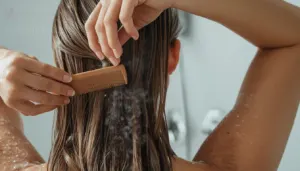
Conditioner’s sitting? Grab your wide-tooth comb now—slip is at its peak.
Work in sections, ends first, short gentle strokes upward. Never yank from roots down.
- Divide hair into four clipped sections
- Comb ends before working toward mid-lengths
- Lift no more than half an inch per stroke
- Loosen resistant knots with fingertips first
- Finish each section within ten minutes
Rinse Cool and Dry Gently

Crank that handle cold. A cool water rinse between 50 and 60°F seals your cuticle, cutting frizz up to 30%.
Massage your scalp thirty seconds first—circulation gets a boost.
Then blot, don’t rub, with a microfiber towel to slash friction and breakage.
| Step | Tool | Benefit |
|---|---|---|
| Rinse | Cool water | Seals cuticle |
| Dry | Microfiber towel | Cuts friction |
| Finish | Air dry | Zero heat damage |
Maintain Hair Between Wash Days

Wash day isn’t the finish line—it’s just the start. The days in between are where your routine either holds up or falls apart. Here’s how to keep hair fresh, hydrated, and protected until your next wash.
Absorb Oil With Dry Shampoo
Roots looking greasy on a refresh day? Grab your dry shampoo, part your hair, and spray 6-8 inches from the scalp. Wait 60 seconds, then massage and brush out.
Rice starch or kaolin clay absorb oil fast without buildup. Choosing a formula suited to your scalp oil production keeps you looking fresh, not chalky.
Rehydrate Dry Lengths and Ends
Ends feeling straw-like by midweek? That’s your cue. Mist a hydrating spritzer with aloe and rose water onto dry lengths, then seal with 2-3 drops of argan oil for lasting hair moisture balance.
Leave-in conditioners work here too—pea-sized amounts on ends only. No time to wash? A nighttime mask with ceramides and hyaluronic acid rehydrates while you sleep.
Refresh Natural Curl Patterns
Flat curls by day two? Water’s your fastest fix. Mist a glycerin-aloe mix, scrunch upward, and watch your curl memory wake right back up.
For coily or wavy types, this reactivates natural pattern without a full rewash—perfect for refresh days when hair porosity types determine how much moisture you actually need to restore bounce naturally.
Apply Heat Protectant Before Styling
Skipping heat protectant is like walking into rain without an umbrella—your strands take the hit. Mist 2-3 pumps evenly on damp hair, 6-8 inches away, then comb through.
- Silicone polymers build a thermal barrier
- Argan oil locks in moisture
- Protection holds up to 450°F
- Effects last up to 8 hours
Let it absorb 30 seconds. Then style.
Alternate Ponytails, Buns, and Braids
Same style every day? That’s asking for trouble.
Low tension styles cut breakage by up to 30%. Rotate every 2-3 days—ponytail, bun, braid—to prevent scalp tension buildup.
| Style | Wear Time | Benefit |
|---|---|---|
| Ponytail | 6-8 hrs | Elasticity kept 48 hrs |
| Bun | Under 8 hrs | Even scalp pressure |
| Braid | Up to 5 days | Shaft protection |
Loosen often. Your scalp will thank you.
Schedule Nighttime and Weekly Hair Care

Your hair does most of its repair work while you sleep, not while you’re rushing out the door. That means your nighttime and weekly habits carry more weight than you’d think. Here’s how to build that routine, step by step.
Oil Dry Ends Before Bed
Every night, before bed, oil your dry ends. Grab a lightweight oil like jojoba—it mimics your scalp’s natural sebum. Just 2-3 drops, worked into the last 2-3 inches. Let it absorb 30 minutes before your head hits the pillow. This simple habit cuts split ends by up to 20% in four weeks.
Consistency wins.
Use Silk and Protective Styles
Now cover it up. Swap your cotton pillowcase for silk—cotton pulls moisture right out of your strands while you sleep. Silk cuts friction, so hair glides instead of snags.
Loose braids, twists, or a silk bonnet keep ends tucked and tension low. Low-tension styling protects your edges. That’s real breakage prevention, night after night.
Deep Condition Once Weekly
Silk protects what you’ve built. Now build something worth protecting.
Once a week, work 2 to 3 ounces of deep conditioner into damp hair, ends to mid-lengths. Cap it, wait 20 minutes—30 if hair’s damaged. Rinse cool. This is real hair repair, restoring hydration and strength deep tools can’t touch.
Alternate Moisture and Protein Masks
Deep conditioning fixes moisture. Protein? That’s a separate job.
Low porosity: moisture every two weeks, protein every three. High porosity: moisture every seven days, protein every ten. Rotate them—never skip past four weeks, or strands lose balance.
Expect firmness week one as protein rebuilds; softness follows by week three. That’s your hair recalibrating, not a problem.
Monitor Shedding and Scalp Changes
Grab a brush weekly and count. Fifty to one hundred hairs daily is normal—150 or more signals a problem.
Check the bulb: shedding hairs have one, breakage doesn’t. Scan for scalp redness or flaking, and note autumn’s natural 20% uptick.
Track patterns on a calendar. Consistent counts above 200? Book a consultation.
Frequently Asked Questions (FAQs)
What should my daily hair care routine include?
Think a solid routine is just shampoo and go? Not quite. Real care means morning scalp checks, gentle detangling, quick oil assessment, leave-in moisture, low-tension styling, and a night moisture seal—every single day, rain or shine.
Can I go 2 weeks without washing my hair?
For low-oil, coarse, or curly hair, yes. But scalp buildup, odor, and product residue creep in past day 7– Use dry shampoo, refresh curls, and stick to a weekly wash to protect scalp pH.
Which fruit stops hair fall?
No single fruit works magic overnight. But guava’s vitamin C builds collagen for hair strength, while amla’s iron and pomegranate’s antioxidants fight breakage and shedding—pair with avocado and banana for real hair growth support.
Can I treat my hair every week?
Yes, if it’s the right kind. Match treatment to your hair type—weekly moisture masks suit curly hair, while straight or fine strands need less. Rotate moisture and protein to dodge buildup and keep scalp care balanced.
What should be my daily hair care routine?
Your hair is a garden—it thrives on rhythm, not guesswork. Know your texture and scalp first, then build daily habits: morning hydration, scalp refresh, ends protection, curl revival, gentle detangling, and night sealing for lasting results.
How to maintain hair every day?
Keep it simple: morning scalp check, gentle detangling ends-first, refresh curls with water or cream, apply leave-in, use low-tension styles, add nighttime oil to ends, and protect strands with silk before bed.
How does diet affect daily hair health?
Like a VCR feeding tape frame by frame, your body builds hair from what you feed it. Protein fuels strength, iron drives growth, omega-3s calm your scalp, vitamin D wakes follicles, and zinc curbs shedding.
What water temperature is best for washing?
Aim for lukewarm wash water, about 100°F. It cleanses gently without hot water’s cuticle damage, then finish with a cool water rinse to seal shine—adjust slightly based on your hair’s porosity for best hydration levels.
Should I trim hair between salon visits?
Split ends creep up like weeds in a garden—ignore them and they spread. Spot-trim every 6 to 8 weeks with sharp shears. That cuts breakage, strengthens strands, and keeps growth on track between salon visits.
How does exercise impact hair maintenance routines?
Sweat raises scalp pH to 5 and boosts oil production fast. That’s why post-workout cleansing matters.
Rinse within 30 minutes, choose gym-friendly protective styles, and support workout recovery care with a quick scalp massage to maintain hydration and curb shedding.
Conclusion
Your hair is a living record of every choice you make—water, oil, tension, time. Read it daily, and it’ll tell you exactly what it needs. That’s the real power of a daily hair maintenance schedule: it turns guesswork into instinct. You stop reacting to bad hair days and start preventing them.
Ninety seconds each morning, ten minutes each wash day—that’s the trade. Small habits, repeated well, build hair that holds up. Own your routine.