This site is supported by our readers. We may earn a commission, at no cost to you, if you purchase through links. This content is for general informational and educational purposes only and is not a substitute for professional medical, dermatological, or nutritional advice.
Two-thirds of men will experience noticeable hair loss by age 35—but most don’t act until the damage is already done. By the time thinning becomes obvious in photos or mirrors, the follicles responsible have often been miniaturizing for years.
That’s the frustrating biology of androgenetic alopecia: it moves slowly enough to ignore, then fast enough to regret.
The good news is that the gap between early intervention and permanent loss is wide, and the tools available now—clinically proven treatments, targeted nutrition, smarter daily habits—give you real control over the outcome.
Catching the signs early and responding with the right approach makes all the difference.
Table Of Contents
- Key Takeaways
- Main Causes of Male Hair Loss
- Early Signs to Catch Hair Thinning
- Proven Treatments That Slow Loss
- Top 7 Hair Loss Prevention Products
- Daily Habits That Protect Hair
- When to See a Dermatologist
- Frequently Asked Questions (FAQs)
- What is the best prevention for hair loss in men?
- What is the name of the oil that grows hair?
- Can a man’s hair grow back?
- How to prevent losing hair for men?
- What is the best preventative hair loss product for men?
- How does smoking impact hair loss progression?
- Are there any myths about wearing hats?
- Can certain hairstyles accelerate hair thinning?
- Does hair loss always require medical treatment?
- How do frequent styling products affect hair health?
- Conclusion
Key Takeaways
- DHT is the real villain behind most male hair loss — it quietly shrinks follicles over years, so starting a blocker like finasteride or minoxidil early is your best shot at keeping what you have.
- Catching the early signs — a creeping hairline, crown thinning, or finer strands — gives proven treatments the best window to work before follicles go permanently dormant.
- Combining minoxidil and finasteride outperforms either alone, with studies showing around 94% of men responding to the two-front approach.
- Daily habits — enough protein, managed stress, gentle washing, and no smoking — quietly protect your follicles in ways no treatment can fully compensate for on its own.
Main Causes of Male Hair Loss
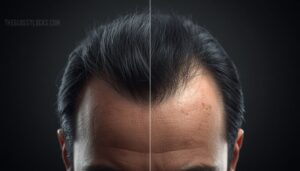
Hair loss doesn’t just happen overnight — it usually has a root cause worth understanding. Most men are dealing with one of a handful of culprits, and knowing which one applies to you changes everything about how you treat it.
Conditions like seborrheic dermatitis or scalp psoriasis can quietly accelerate shedding, so it’s worth learning about scalp conditions that trigger hair loss before assuming genetics are to blame.
Here are the main reasons your hair may be thinning.
Genetics and Androgenetic Alopecia
If you’ve ever watched your father or grandfather lose their hair, you already know androgenetic alopecia runs in families. But it’s not one rogue gene — it’s polygenic risk, meaning multiple chromosomal loci across chromosomes X, 1, 5, and beyond all vote on your fate.
The follicle miniaturization process is driven by dihydrotestosterone.
Here’s what that inherited blueprint actually controls:
- Androgen receptor variants that make follicles hypersensitive
- Hair growth pathways shifting toward weaker, vellus-like strands
- Genetic risk scoring that predicts — but doesn’t guarantee — male pattern baldness
- A genetic predisposition inherited from both sides of your family
DHT and Follicle Miniaturization
DHT is basically a more potent testosterone derivative — and in genetically susceptible follicles, it’s the molecule doing the most damage. Through Androgen Receptor Binding, it triggers Dermal Papilla Signaling changes that quietly shrink your follicles cycle by cycle.
| DHT Effect | What It Means for You |
|---|---|
| Anagen Phase Shortening | Hair grows for less time each cycle |
| Telogen Prolongation | Follicles rest longer, producing less |
| Terminal to Vellus Shift | Thick hairs become thin, fine strands |
| Follicle Dormancy | Growth eventually stops in affected zones |
| Androgenic Alopecia Progression | Pattern thinning advances without intervention |
DHT blockers like finasteride and minoxidil directly target follicle miniaturization — slowing this process before dormancy sets in.
Stress-related Shedding and Telogen Effluvium
While DHT quietly miniaturizes follicles, stress takes a different route — flooding your system with cortisol and hijacking the hormonal pathway that regulates growth cycles. This stress-induced hair loss follows a predictable trigger timeline: shedding normally starts two to four months after the stressful event.
The result is a diffuse shedding pattern across your scalp.
Recovery duration varies, but most cases resolve within months once the trigger’s gone.
Medical Conditions That Trigger Thinning
Beyond stress, certain medical conditions can quietly pull the strings behind your thinning. These are the main culprits worth knowing:
- Autoimmune Alopecia — conditions like alopecia areata and Lupus shedding trigger immune attacks on follicles
- Thyroid Imbalance — thyroid problems shift hair into shedding phases, causing diffuse loss
- Nutrient Deficiency — low iron, zinc, or B12 weakens growth cycles
- Scalp Infection — fungal infections cause patchy, inflammatory thinning
Medication-induced Hair Loss
Some prescription medications quietly cause hair loss as a side effect — and FAERS data analysis confirms the pattern across multiple drug classes.
Chemotherapy triggers rapid anagen effluvium, while antihypertensives, SSRIs, and hormonal treatments drive dose-dependent shedding through telogen effluvium.
Medication timing clues matter here: shedding usually starts weeks after you begin a new drug.
The good news? Reversible alopecia is common — adjust the dose or switch, and regrowth usually begins within three to six months.
Early Signs to Catch Hair Thinning

Most men don’t notice hair loss until it’s already well underway — and that’s exactly what makes it so frustrating. The early signals are subtle, easy to brush off as stress or a bad hair day.
Here’s what to watch for before the window for easy intervention closes.
Frontotemporal Recession
The temples usually speak first. That slow backward creep at the corners of your hairline — that’s frontotemporal recession, one of the earliest flags of androgenetic alopecia.
Temporal density mapping helps track this subtle shift before it becomes obvious. Catching it early means adjunctive topical agents and DHT blockers can genuinely preserve what’s there.
Hairline maintenance techniques work best when you start while the follicles are still active.
Vertex Thinning and Widening Part Lines
Crown thinning sneaks up on you — one day your part looks fine, the next it’s catching the light like an open road.
Here’s what vertex thinning actually looks like:
- Your part line shows higher Part Contrast under overhead lighting.
- Scalp Texture appears flatter as density drops at the crown.
- Lighting Visibility reveals visible scalp between strands.
- The crown looks "empty" even at the same hair length.
- Camouflage Techniques like styling products mask it temporarily.
Diagnostic Imaging tools like trichoscopy can confirm early male pattern hair loss before it advances — giving DHT blockers and minoxidil the best window to work.
Miniaturized Hairs and Reduced Density
Your hair might look full in photos, but dermoscopy miniaturization tells a different story up close. In androgenic alopecia, DHT inhibition becomes critical once follicles start producing finer, shorter strands — a shift visible through follicular unit analysis.
Hair density metrics drop not because you’re losing follicles, but because your telogen-anagen ratio is shifting.
Scalp microcirculation suffers too, quietly starving male pattern hair loss sufferers of the hair follicle stimulation needed to maintain real hair density.
Increased Shedding in Shower or Brush
Noticing more strands in the drain lately? Most men lose 50–100 hairs daily — that’s normal. But if your brush looks like a small toupee, pay attention.
- Breakage vs Shedding: Breakage leaves short pieces; true shedding shows a root bulb.
- Shower Water Temperature: Hot water weakens the cuticle, amplifying visible loss.
- Hard Water Effects: Mineral buildup stresses follicles, worsening the shedding phase.
- Brush Bristle Hardness: Stiff bristles increase mechanical breakage, mimicking telogen effluvium.
- Seasonal Shedding: Stress-induced hair loss spikes in fall — temporary, but worth monitoring.
Scalp Itching, Burning, or Inflammation
itchy, burning scalp isn’t just irritating — it’s your follicles waving a red flag. Inflammation directly disrupts the growth cycle, accelerating shedding you didn’t see coming.
| Condition | Key Symptom | What It Means |
|---|---|---|
| Seborrheic Dermatitis | Oily flaking, itch | Yeast-driven scalp inflammation |
| Psoriasis Flare | Thick scaling, burn | Immune-triggered skin turnover |
| Contact Dermatitis | Redness after products | Chemical sensitivity reaction |
| Folliculitis Infection | Tender, red follicles | Bacterial or fungal infection |
Neuropathic Dysesthesia causes burning without visible rash — easy to dismiss, but worth investigating. Oxidative stress worsens all inflammatory scalp conditions. A targeted scalp serum supporting scalp health daily can calm irritation before it silently costs you density.
Proven Treatments That Slow Loss
Good news: you’re not out of options. Science has handed us a solid toolkit of treatments that can genuinely slow hair loss — and in many cases, regrow what’s already thinning.
Here’s what’s actually worth your time.
5% Minoxidil Foam for Scalp Application

Minoxidil foam is the go-to FDA-approved option for male pattern hair loss — and for good reason.
Applied twice daily using just a half capful, this propylene glycol free foam delivers fast absorption with virtually no residue in 20–30 seconds.
Its foam delivery system concentrates the active ingredient for precise vertex targeting, making it a scalp-compatible, practical first step.
Finasteride for DHT Reduction

Minoxidil addresses the surface — finasteride works deeper.
This prescription medication targets DHT blockers at the source, inhibiting the enzyme that converts testosterone into DHT, the hormone driving androgenetic alopecia.
At 1 mg daily, it reduces DHT levels by roughly 70%.
Long-term adherence matters; results take months.
Watch for sexual side effects — they affect a small percentage but are worth discussing with your doctor.
Combination Therapy for Stronger Results

finasteride alone targets DHT — but pairing it with minoxidil is where combination therapy approaches for hair regrowth really gain traction. Synergistic dosing means both pathways work simultaneously, and studies show around 94% of men respond. Think of it as a two-front strategy.
- Sequential initiation helps your doctor track what’s working
- Treatment scheduling keeps both medications consistent daily
- Adherence monitoring prevents gaps that reset your progress
- Side effect management covers finasteride’s systemic effects and minoxidil’s scalp irritation separately
- Role of DHT blockers in treating male hair loss remains central — minoxidil promotes regrowth, finasteride preserves it
Low-level Laser Therapy Devices

Beyond combining medications, low-level laser therapy (LLLT) adds another layer — think LED helmet devices like iRestore, engineered with precise wavelength selection, optimized power settings, and high emitter count to enhance scalp coverage.
Clinical trials show hair density improvements from laser therapy helmets after three months.
Follow the treatment protocol consistently, and check that safety features prevent overexposure.
Platelet-rich Plasma for Added Support
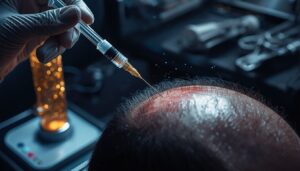
Platelet-rich plasma therapy for hair loss works by turning your own blood into a growth signal — centrifugation techniques spin it into concentrated layers, pulling platelets rich in PDGF and TGF-beta1. Platelet activation then releases these factors directly into thinning areas.
PRP aids male pattern baldness treatment through:
- Growth factor delivery to dormant follicles
- Targeted injection protocols into the scalp
- Angiogenesis — building fresh blood supply
- Reduced shedding over consistent sessions
Hair Transplant Options for Advanced Loss
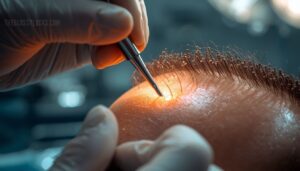
When standard therapies plateau, hair transplant surgery becomes a serious conversation.
FUE vs FUT isn’t just a technique preference — it shapes your entire donor area management strategy.
| Technique | Key Consideration |
|---|---|
| Follicular unit excision FUE | Minimal scarring, slower harvest |
| Follicular unit transplantation FUT | Higher graft yield per session |
| Beard body grafting | Expands limited donor supply |
| Staged graft planning | Balances coverage across sessions |
| Recipient density strategy | Prioritizes hairline before crown |
Top 7 Hair Loss Prevention Products
Knowing what works is one thing — knowing which products to actually buy is another. The market is flooded with options, but these seven have earned their place based on ingredients, evidence, and real-world results.
Here’s what’s worth your time and money.
1. Rogaine Men Minoxidil Foam
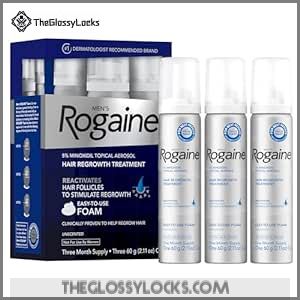
Rogaine Men’s 5% Minoxidil Foam is the widely respected choice for a reason — it’s clinically shown to improve regrowth roughly four times better than a control after 16 weeks.
You apply half a capful to a clean, dry scalp twice daily, massaging it into thinning areas.
The unscented foam dries fast and won’t disrupt your morning routine.
At $49.97 for a three-month supply, it’s affordable.
Just commit — stopping means losing what you’ve gained.
| Best For | Men in the early stages of hair thinning — especially on the top of the scalp — who are ready to commit to a consistent twice-daily routine. |
|---|---|
| Price | $49.97 |
| Primary Use | Hair regrowth |
| Application Method | Foam, twice daily |
| Results Timeline | 8–16 weeks |
| Hair Type | All hair types |
| Sulfate-Free | Yes |
| Additional Features |
|
- Clinically shown to regrow hair roughly 4x better than control after 16 weeks
- Fast-drying, unscented foam that fits easily into any morning routine
- Three-month supply at under $50 is solid value for a proven treatment
- You have to use it forever — stop, and the regrowth goes with it
- Works best on the vertex (crown area), not great for the hairline or fully bald spots
- Some users have reported getting liquid instead of foam, or missing cans in their order
2. Patricks RD1 Thinning Hair Spray
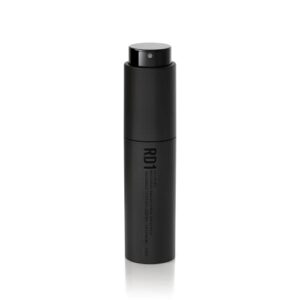
Patricks RD1 presents itself as a dual-purpose spray — part scalp treatment, part styling primer — and that’s where it gets interesting.
You get Redensyl, Capixyl, caffeine, and panthenol in a fast-drying mist, you apply with 4–5 sprays daily. It adds volume to thinning hair and works well under other products.
The catch? At $90 for under one ounce, it’s a serious investment with no proven regrowth backing. Think of it as a smart complement to a real treatment plan, not a replacement.
| Best For | Guys who already have a hair care routine and want an easy daily spray to add volume and texture to thinning hair. |
|---|---|
| Price | $90.00 |
| Primary Use | Volume boost |
| Application Method | Spray, daily |
| Results Timeline | Immediate volume |
| Hair Type | Thinning hair |
| Sulfate-Free | Yes |
| Additional Features |
|
- Adds noticeable volume fast — works great as a pre-styling base on dry hair
- Non-greasy, quick-drying formula that plays well with other products
- Solid lineup of actives (Redensyl, Capixyl, caffeine) for scalp support
- $90 for less than an ounce is steep, especially if it runs out in under a month
- No proven hair regrowth — it’s a volume booster, not a treatment
- Won’t cut it as a standalone solution for serious hair loss
3. Act Acre Stem Cell Scalp Serum
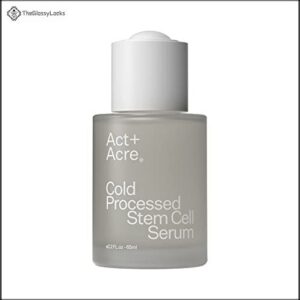
Act Acre takes a different approach — cold-processed under 40°C to keep every active intact.
You apply one dropper along your hairline, part, massage it in, and leave it overnight.
Apple stem cells, aloe vera, bamboo extract, and sodium hyaluronate work together to hydrate the scalp and support follicle health.
In a 12-week study of 90 women, 90% saw new growth.
At $86, it’s a premium pick — best used alongside a proven treatment, not instead of one.
| Best For | Women dealing with thinning hair or postpartum shedding who want a clean, science-backed serum to layer into their existing hair care routine. |
|---|---|
| Price | $86.00 |
| Primary Use | Shedding reduction |
| Application Method | Dropper, daily |
| Results Timeline | Up to 12 weeks |
| Hair Type | All hair types |
| Sulfate-Free | Yes |
| Additional Features |
|
- Cold-processed formula keeps the active ingredients potent — not just a marketing claim, it actually affects how well it works
- 90% of study participants saw new growth in 12 weeks, and the ingredient list (apple stem cells, hyaluronate, aloe) backs that up
- Totally clean formula — no sulfates, silicones, parabens, or synthetic fragrance, and it won’t mess with color-treated hair
- $86 is a real commitment, especially since results can take the full 12 weeks to show up
- The dropper applicator has a reputation for leaking, which means you might waste some of that pricey product
- The clinical study only had 90 participants, so take the percentages with a little grain of salt — individual results vary
4. DS Labs Revita Shampoo
Most shampoos do one thing — clean. Revita tries to do more.
DS Labs packed this sulfate-free formula with caffeine, biotin, niacinamide, zinc gluconate, copper tripeptide-1, and ketoconazole — ingredients that target thinning at the scalp level, not just surface buildup. Ginseng root and turmeric round it out.
It’s dermatologist-tested, color-safe, and gentle enough for daily use.
At $28 for 205 mL, it won’t replace minoxidil — but as a scalp-supportive cleanser, it earns its spot in your routine.
| Best For | Anyone dealing with thinning hair or a sluggish scalp who wants a daily shampoo that does more than just clean. |
|---|---|
| Price | $28.00 |
| Primary Use | Scalp cleanse |
| Application Method | Shampoo, regular |
| Results Timeline | Immediate feel |
| Hair Type | All hair types |
| Sulfate-Free | Yes |
| Additional Features |
|
- Loaded with heavy hitters like caffeine, biotin, and ginseng to support scalp health and hair appearance
- Color-safe and gentle enough for daily use, even on chemically treated hair
- Leaves hair feeling lighter and the scalp refreshed longer — even after sweaty workouts
- At $28 for a small 205 mL bottle, the price adds up fast
- The cap is a hassle — users report it’s hard to open and tends to leak
- Won’t work miracles for everyone, especially those with more serious hair loss conditions
5. iRestore Laser Hair Growth System
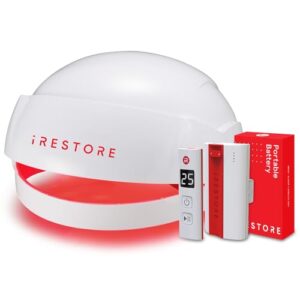
If a shampoo is your foundation, think of iRestore as the next level up — a hands-free laser helmet that brings clinical-grade light therapy home. It uses 282 lasers and LEDs tuned to the 650–670 nm range, delivering energy directly to dormant follicles.
Use it 25 minutes every other day.
A 2017 study reported a 43.2% average increase in hair count after consistent use.
At $479, it’s an investment — but it stacks well with minoxidil or finasteride for stronger results.
| Best For | People dealing with thinning hair or receding hairlines who want a hands-free, non-surgical option they can use at home alongside other treatments like minoxidil or finasteride. |
|---|---|
| Price | $479.00 |
| Primary Use | Laser therapy |
| Application Method | Helmet, every other day |
| Results Timeline | 3–6 months |
| Hair Type | All hair types |
| Sulfate-Free | N/A |
| Additional Features |
|
- FDA-cleared and backed by a 2017 study showing an average 43.2% increase in hair count
- Completely hands-free and cordless — you can fold laundry or watch TV during your 25-minute session
- Works well layered with topical or oral hair-loss treatments for potentially better results
- $479 upfront is a real commitment, especially with a limited return window if it doesn’t work for you
- Results aren’t guaranteed — some users see solid regrowth, others see nothing after months of consistent use
- You need to stick to the every-other-day schedule for 3–6 months before expecting any visible change
6. Nutrafol Exfoliating Scalp Mask
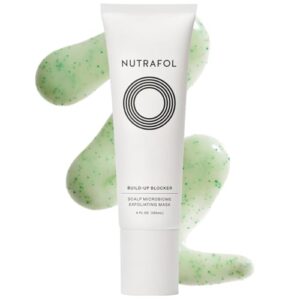
While iRestore works from the outside in, your scalp environment matters just as much. The Nutrafol Exfoliating Scalp Mask clears the way — literally.
It combines AHA fruit acids and jojoba esters to dissolve oil buildup, product residue, and flaking that suffocates follicles.
In clinical testing, 97% of users saw immediate reduction in buildup.
Apply it to sectioned hair, leave it five minutes, rinse. Use it one to three times weekly depending on your scalp type.
At $49, it’s solid preventative groundwork.
| Best For | Anyone dealing with scalp buildup from dry shampoo, styling products, or extensions — especially those with dandruff, seborrheic dermatitis, or thinning hair who want to support a healthier scalp environment. |
|---|---|
| Price | $49.00 |
| Primary Use | Scalp exfoliation |
| Application Method | Mask, pre-shampoo |
| Results Timeline | Immediate buildup removal |
| Hair Type | All hair types |
| Sulfate-Free | Yes |
| Additional Features |
|
- Dual-action exfoliation (chemical AHAs physical jojoba esters) tackles buildup thoroughly
- Physician-formulated and microbiome-certified, so it’s not just effective — it’s thoughtfully made
- 97% of clinical participants saw immediate reduction in buildup after one use
- At $49, it’s a premium buy that might be hard to justify for a supplemental step
- Some users report tiny beads lingering after rinsing, which can be frustrating
- Too intense for sensitive scalps, and it always needs a shampoo follow-up — it can’t stand alone
7. Hims Minoxidil Hair Regrowth Treatment

Once the scalp is clear, you need something working deeper — at the follicle level. Hims Minoxidil 5% Foam does exactly that.
It reactivates dormant follicles and extends the growth phase, giving thinning hair a real chance to come back thicker.
Apply half a capful directly to the vertex area once daily. The unscented foam dries quickly and doesn’t leave residue.
At $53.69 for a 3-pack, you’re getting months of clinically proven regrowth support — just don’t quit early.
| Best For | Men dealing with thinning hair at the crown or vertex who want a no-fuss, foam-based minoxidil option they can stick with long-term. |
|---|---|
| Price | $53.69 |
| Primary Use | Hair regrowth |
| Application Method | Foam, once daily |
| Results Timeline | 3–6 months |
| Hair Type | Thinning hair |
| Sulfate-Free | Yes |
| Additional Features |
|
- Foam formula is quick-drying and unscented — easy to work into a morning routine
- Three-bottle pack gives you months of supply at a solid price ($53.69)
- Clinically tested to support real regrowth with consistent daily use
- You need cold hands to apply it properly, which adds a small but annoying extra step
- Won’t do much for a receding hairline — works best on the crown area
- Results take months, and stopping means losing whatever progress you’ve made
Daily Habits That Protect Hair

Treatments do the heavy lifting, but your daily habits are quietly working in the background — for better or worse. What you eat, how you handle stress, and even how you wash your hair can either protect your follicles or slowly work against them.
Here’s what actually moves the needle.
Eat Enough Protein, Iron, and Omega-3s
Your hair is built from keratin — and keratin is a protein. Without consistent protein intake, follicles lose their raw material.
Pair iron-rich foods like lentils or dark greens with a vitamin C boost (think tomatoes or citrus) to enhance plant iron absorption. Add omega-3 fatty acids through salmon or sardines a few times weekly, and you’ve covered the core nutritional support for hair.
Manage Stress With Sleep, Exercise, and Mindfulness
Chronic stress quietly drives cortisol levels up — and cortisol is one of the main triggers behind stress‑induced hair loss.
Here’s your simple framework for stress management and hair loss prevention:
- Lock in a Consistent Bedtime to anchor your body clock
- Get Morning Light Exposure within 30 minutes of waking
- Build an Evening Wind Down routine — dim screens, slow breathing
- Add Moderate Aerobic Exercise most days (aim for "can talk, can’t sing")
- Practice Brief Mindful Breathing — even 5 minutes cuts cortisol
These relaxation techniques address oxidative stress reduction and help regulate the hormonal hair loss cycle at its root.
Quit Smoking to Reduce Shedding Risk
If you’re still smoking, you’re basically pouring fuel on the fire of follicle miniaturization. Nicotine drives oxidative stress, disrupts hormone balance, and chokes blood circulation to the scalp — all at once.
Smoking pours fuel on follicle miniaturization, choking scalp circulation while oxidative stress quietly destroys your hair from within
Smoking cessation and hair loss prevention genuinely go hand in hand: quitting reduces inflammation, helps follicle regeneration, and begins restoring scalp circulation within days. That’s a powerful lever most men overlook.
Wash and Style Hair Gently
How you wash matters more than most men realize. Use a Scalp Massage Technique — fingertips, light pressure, about three minutes — to lift buildup without irritating follicles.
Cool Water Rinsing smooths the cuticle and protects scalp health.
Apply conditioner to ends only, and always prioritize Heat Protection Styling before blow-drying.
Gentle Detangling before and after washing keeps your hair care routine from becoming a breakage trap.
Avoid Harsh Chemicals and Tight Hairstyles
Some habits quietly wreck your progress.
Tight ponytails and braids create constant tension along the hairline — that’s traction alopecia in the making.
Hairline Tension Relief starts simply: loosen the style, rotate your looks.
Chemical relaxers and bleach weaken strands and inflame the scalp, demanding serious Scalp Irritation Management.
Breakage Prevention Strategies mean ditching harsh formulas and choosing Chemical-Free Hair Care whenever possible.
Support Scalp Health With Regular Care
Your scalp is a living ecosystem — neglect it, and everything upstream suffers. A Gentle Cleansing Routine clears buildup before it clogs follicles, while Scalp pH Management keeps that slightly acidic environment where your microbiome thrives.
Skip the heavy oils; Oil-Free Hydration with glycerin or hyaluronic acid works better. Add a daily scalp massage for blood flow stimulation — it’s simple, free, and genuinely moves the needle on density.
When to See a Dermatologist

Most men wait too long before getting a professional set of eyes on their scalp — and by then, options narrow fast. Some signs go beyond normal shedding and deserve a dermatologist’s attention sooner rather than later.
Here’s when it’s time to make that appointment.
Rapid Thinning or Sudden Heavy Shedding
Losing a hundred hairs a day is normal — losing clumps in the shower isn’t.
When shedding spikes suddenly, something has disrupted your hair cycle, and your body is signaling that.
Telogen effluvium, stress-induced hair loss, Nutrient Deficiencies, Hormonal Fluctuations, Sleep Deprivation, and Environmental Toxins can all trigger synchronized shedding within months.
Don’t wait it out.
- Hair coating your brush daily
- Noticeably wider part lines appearing fast
- Diffuse thinning across your entire scalp
Scalp Pain, Itching, or Burning
Pain, itching, or burning on your scalp isn’t something to brush off. Conditions like seborrheic dermatitis, scalp psoriasis, and contact dermatitis each trigger their own inflammatory cycle — redness, flaking, tenderness — that can quietly accelerate thinning.
Trichodynia symptoms, like chronic stinging without visible irritation, are easy to misread.
A dermatologist can pinpoint what’s driving the discomfort before it compounds your hair loss.
Patchy Hair Loss or Body-wide Shedding
Patchy loss tells a different story than gradual thinning. coin-sized bald spot appearing within weeks? That’s alopecia areata — your immune system attacking its own follicles. Tinea capitis leaves scaly, irregular patches. Trichotillomania creates uneven breakage from repeated pulling. Body-wide shedding — eyebrows included — often signals telogen effluvium, autoimmune disorders, or hormonal fluctuations.
See a dermatologist when you notice:
- Circular, smooth bald patches appearing suddenly
- Scaly or inflamed skin alongside hair loss
- Thinning eyebrows or body hair simultaneously
- Uneven patches with broken, stubby hairs
- Itching or tingling before patches form
Blood Tests for Iron and Thyroid Issues
Sometimes the issue isn’t your follicles — it’s your bloodwork. Iron deficiency and thyroid disease are two quiet culprits behind hair loss that often masquerade as male pattern baldness.
A simple panel covering Ferritin Levels, Transferrin Saturation, TSH Screening, Free T4 Measurement, and CBC Iron Indicators can reveal what’s really driving the shed.
| Blood Test | What It Measures | Hair Loss Connection |
|---|---|---|
| Ferritin Levels | Stored iron reserves | Low ferritin starves follicles |
| Transferrin Saturation | Iron transport efficiency | Below 20% signals deficiency |
| TSH Screening | Thyroid stimulation signal | Elevated TSH suggests hypothyroidism |
| Free T4 Measurement | Active thyroid hormone | Low T4 slows follicle cycling |
| CBC Iron Indicators | Red blood cell patterns | Flags anemia tied to thinning |
Early Treatment Before Loss Becomes Advanced
Once your bloodwork checks out, the next move is acting early. Early detection and treatment of hair loss is where you hold the most cards. Minoxidil and finasteride — your two frontline DHT blockers — work best before follicles are gone for good.
Patient adherence matters here more than anything.
- Start hormonal screening before thinning accelerates
- Track adherence monitoring with a dermatologist regularly
- Protect your scalp microbiome throughout treatment
- Ask about insurance coverage and patient education resources
Frequently Asked Questions (FAQs)
What is the best prevention for hair loss in men?
armor against an invisible enemy, the best defense starts early.
Combining DHT blockers, minoxidil, and scalp health habits — sleep quality, hormone balance, and dietary factors — gives you the strongest foundation against androgenetic alopecia.
What is the name of the oil that grows hair?
Rosemary oil leads the evidence, rivaling 2% minoxidil in studies.
Castor oil usage thickens strands; jojoba oil conditioning hydrates the scalp.
Olive oil benefits reduce breakage.
None replaces minoxidil, but all support scalp health.
Can a man’s hair grow back?
Yes — and it happens more often than you’d think.
If your follicle stem cells are still active, treatments like minoxidil, Finasteride, or low-level laser therapy can genuinely wake them back up.
How to prevent losing hair for men?
Preventing hair loss starts with catching androgenetic alopecia early.
DHT blockers, scalp massage, adequate hydration, UV protection, avoiding heat styling, vitamin D, and smart lifestyle factors all work together to keep follicles healthier, longer.
What is the best preventative hair loss product for men?
Think of minoxidil as the proven anchor — FDA-approved, accessible, and backed by decades of clinical trial evidence. For most men, it’s the strongest first move against thinning.
How does smoking impact hair loss progression?
Smoking accelerates hair loss through vasoconstriction effects, oxidative stress, DNA damage, and follicular inflammation — all of which heighten androgen sensitization.
Quitting smoking improves vascular circulation to the scalp and reduces these compounding lifestyle factors influencing hair loss.
Are there any myths about wearing hats?
Hats don’t cause baldness — that’s the short answer. Traction irritation from tight fits, scalp heat buildup, and poor hat hygiene can aggravate your scalp, but they won’t miniaturize your follicles.
Can certain hairstyles accelerate hair thinning?
Yes — tight hairstyles like cornrows, high ponytails, and extensions create traction alopecia through edge tension stress.
That constant pull damages follicles over time, blurring the line between breakage vs thinning until loss becomes permanent.
Does hair loss always require medical treatment?
Not every hair loss story needs a prescription. Sometimes, watchful waiting and lifestyle monitoring — paired with non-medical management — is enough, especially when genetics are the quiet culprit moving slowly.
How do frequent styling products affect hair health?
Frequent styling products can cause residue accumulation, scalp sensitivity, and hair shaft dryness over time.
Alcohol-based formulas increase breakage risk, while clarifying washes help reset scalp health and reduce friction damage from buildup.
Conclusion
Most men treat hair like it’s invincible—until suddenly it isn’t. Hair loss prevention for men doesn’t require a miracle; it requires paying attention before the mirror forces the conversation.
The follicles quietly signaling distress today are the ones worth fighting for.
Start with one proven treatment, build smarter daily habits, and see a dermatologist before "thinning" becomes "gone." Hair isn’t just receding—it’s waiting to see if you’ll show up.
- https://pmc.ncbi.nlm.nih.gov/articles/PMC9776982/
- https://getroman.pxf.io/DVgPEj?rvo_aff=1&rvo_brandid=Ro&rvo_campaignid=234&rvo_prodid=464f2b9d-c85c-4896-8a49-129aa77d7e15&rvo_subid=464f2b9d-c85c-4896-8a49-129aa77d7e15&rvo_subid2=%2Fhealth%2Fhair-loss-treatments-for-men&subid1=null&subid2=%2Fhealth%2Fhair-loss-treatments-for-men&subid3=null
- https://keeps.q3qw.net/vn5Q0d?rvo_aff=1&rvo_brandid=Keeps&rvo_campaignid=5425&rvo_prodid=3f4a880a-f7ab-43f2-9264-1d247542c171&rvo_subid=3f4a880a-f7ab-43f2-9264-1d247542c171&rvo_subid2=%2Fhealth%2Fhair-loss-treatments-for-men&subid1=null&subid2=%2Fhealth%2Fhair-loss-treatments-for-men&subid3=null