This site is supported by our readers. We may earn a commission, at no cost to you, if you purchase through links. This content is for general informational and educational purposes only and is not a substitute for professional medical, dermatological, or nutritional advice.

Skin rashes affect roughly one in four people at any given time—yet most reach for a prescription before checking what’s already in their kitchen or bathroom cabinet. That gap between reflex and reason costs time, money, and often unnecessary chemical exposure.
A contact dermatitis flare from nickel jewelry responds differently than heat rash or ringworm, and the remedy that soothes one can aggravate another.
Knowing which natural remedy for skin rash fits your specific situation changes everything.
The solutions ahead are grounded in dermatological evidence, practical to apply, and—when used correctly—genuinely effective.
Table Of Contents
- Key Takeaways
- What Causes Skin Rashes?
- Best Natural Rash Remedies
- Colloidal Oatmeal Baths for Itching and Inflammation
- Aloe Vera Gel for Cooling and Skin Soothing
- Coconut Oil for Moisturizing Irritated Skin
- Cold Compresses for Quick Itch Relief
- Baking Soda Baths for Calming Mild Irritation
- Diluted Apple Cider Vinegar for Certain Fungal-related Rashes
- Epsom Salt Soaks for Swollen, Itchy Skin
- Herbal Compresses With Chamomile or Calendula
- How to Use Home Remedies Safely
- Patch Testing Before Trying Any New Remedy
- Proper Dilution for Vinegar and Essential Oils
- Applying Remedies Only to Clean, Dry Skin
- How Often to Reapply Natural Treatments
- Ingredients to Avoid on Broken or Raw Skin
- When Essential Oils May Cause More Irritation
- Choosing Breathable Cotton Clothing After Application
- Preventing Rash Flare-Ups
- When Rash Needs Medical Care
- Frequently Asked Questions (FAQs)
- What helps a rash go away quickly?
- What is the best natural remedy for rashes?
- Will apple cider vinegar get rid of a rash?
- What clears up skin rashes?
- How does diet influence rash healing speed?
- Are natural remedies effective for sun-induced rashes?
- What is the role of hydration in rash recovery?
- Do weather changes impact natural remedies effectiveness?
- Can diet changes help reduce skin rashes?
- Does stress trigger or worsen existing rashes?
- Conclusion
Key Takeaways
- Identifying your rash type—eczema, contact dermatitis, hives, or fungal—is the first step, because the wrong remedy can make things worse, not better.
- Colloidal oatmeal, aloe vera gel, cold compresses, and diluted apple cider vinegar are the evidence-backed natural options, but each works best for specific rash causes.
- Always patch test any new remedy, dilute acids and essential oils properly, and apply only to clean, dry skin to avoid turning a minor irritation into a bigger problem.
- If your rash comes with fever, spreads rapidly, shows signs of infection, or causes breathing difficulty, stop home treatment immediately and seek medical care.
What Causes Skin Rashes?
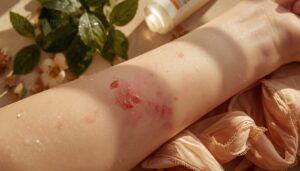
Skin rashes rarely show up without a reason. Something — whether it’s a plant, a product, or your own sweat — usually sets them off.
Tracking those triggers is the first step, and natural skin care remedies for irritation can help you respond once you’ve found the culprit.
Knowing what’s behind yours is the first step toward finding relief, so here’s a look at the most common causes.
Allergic Triggers Like Poison Ivy, Nickel, Cosmetics, and Detergents
Some rashes aren’t random — they’re your immune system reacting to a specific trigger. Poison ivy is a classic example; its urushiol oil causes contact dermatitis even with brief contact.
Nickel-free jewelry, fragrance-free products, and detergent sensitivity testing can help you identify what’s setting your skin off.
Cross-reactive allergens like cosmetic fragrances often overlap, making pattern recognition key to protecting your skin barrier.
The plant can be identified by its three glossy leaflets.
Irritants Such as Soaps, Solvents, Sweat, and Friction
Not every rash comes from an allergy. skin simply gets worn down.
Harsh soaps disrupt skin barrier repair by stripping natural oils, while solvents and cleaning chemicals can cause direct, painful inflammation.
Sweat adds prolonged moisture that prevents recovery. Friction makes it worse.
Check ingredient safety labels for non-irritant surfactants, use temperature controlled showers, and consider friction-reducing lubricants in high-contact areas.
Common Rash Types, Including Eczema, Contact Dermatitis, Hives, and Ringworm
Knowing what type of rash you’re dealing with changes everything.
Eczema causes dry, itchy patches — and long-term scratching leads to eczema lichenification, where skin thickens noticeably.
Contact dermatitis follows contact allergen profiles closely, meaning your jewelry or lotion may be the culprit.
Hives involve histamine release, fading within a day.
Ringworm shows distinct ringworm border patterns — a key visual clue.
Signs a Rash May Be Caused by Infection
Some rashes go beyond simple irritation. Watch for localized warmth, pustular discharge, or red streaks — signs of lymphatic drainage issues that suggest a spreading microbial infection.
Systemic symptoms like fever or chills alongside unresolved lesions are clear signals of when to seek medical advice for rashes.
Natural antiseptic and antimicrobial properties in home remedies won’t resolve a true skin infection.
How to Tell if Heat, Allergy, or Fungus is Involved
Three clues help narrow your rash diagnosis: onset speed, distribution patterns, and bump texture.
Heat rash appears quickly after sweating, with small prickly bumps on your neck or chest.
Allergic reactions tend to stay where skin contacted the trigger.
Fungal infections favor warm, moist folds and often show a scaly, ring-shaped edge.
Exposure history ties it all together.
Best Natural Rash Remedies

Most skin rashes respond well to simple ingredients you probably already have at home. None of these remedies require a prescription, but knowing how to use them correctly makes all the difference.
Here’s what dermatologists commonly recommend for calming irritated skin naturally.
Colloidal Oatmeal Baths for Itching and Inflammation
One of the simplest ways to calm inflamed skin is a colloidal oatmeal bath for itching — and it works better than most people expect. Ground into fine particles using a particle dispersion technique, colloidal oatmeal dissolves evenly in lukewarm water, coating your skin throughout the soak. Its avenanthramide benefits include real anti‑inflammatory and itch relief action.
Here’s how to do it right:
- Add 1 cup of colloidal oatmeal to lukewarm water and soak for 15–30 minutes
- Gently pat your skin dry — don’t rub
- Apply a plain moisturizer immediately for post‑soak hydration
- Repeat up to three times daily during active flares
This barrier repair mechanism helps your skin hold moisture and recover faster.
Aloe Vera Gel for Cooling and Skin Soothing
Fresh aloe vera gel is one of the most reliable tools for immediate itch relief. Its polysaccharide benefits help support your skin barrier while vitamins A, C, and E add vitamin antioxidant protection. Aloe gel stability matters — store it cool to preserve the cooling sensation mechanism.
| What It Does | How It Helps |
|---|---|
| Aloe vera gel anti-inflammatory use | Calms redness and swelling |
| Skin barrier support | Locks in moisture |
Coconut Oil for Moisturizing Irritated Skin
Coconut oil is a surprisingly effective moisturizing agent for irritated skin. Its lauric acid content drives real lipid replacement benefits, restoring what dry, inflamed skin loses. The moisture retention mechanism works simply — a thin layer slows evaporation and helps your skin barrier throughout the day.
- Offers natural skin soothing and anti-inflammatory effects on redness-prone areas
- Delivers coconut oil moisturizing and antibacterial effects without harsh additives
- Rates well on sensory acceptability factors and cost-effectiveness overview
Cold Compresses for Quick Itch Relief
A cold compress for rash relief works fast — cold temperatures interrupt itch signaling in the skin, creating a temporary skin numbness mechanism that calms the urge to scratch. Wrap ice in a clean cloth (avoid direct ice contact) and apply for 10 to 15 minutes following basic duration guidelines.
Use a cool washcloth as an easier alternative.
Repeat scheduling throughout the day keeps itchy skin relief consistent between applications.
Baking Soda Baths for Calming Mild Irritation
Baking soda is a surprisingly simple fix for mild skin inflammation. Its alkaline pH soothing effect neutralizes acidic irritants sitting on your skin’s surface — which is often what drives that persistent itch.
Here’s how to do it right:
- Dissolve 1–2 tablespoons in a gallon of warm water temperature bath
- Soak for 15–20 minutes, keeping frequency of soaks to three times weekly
- Use proper bath dilution ratio — never apply concentrated baking soda directly
- Rinse and moisturize immediately after to protect your skin barrier
This baking soda pH balancing skin care approach is one of the gentler home remedies for rash relief available.
Diluted Apple Cider Vinegar for Certain Fungal-related Rashes
Apple cider vinegar works differently than most home remedies for rash — its acetic acid action creates an acidic environment that many fungal infections simply can’t thrive in.
For superficial fungal rashes, mix one tablespoon in a cup of water and apply briefly with a cotton ball. Ideal soak time is just 5–20 seconds.
Irritation risk management matters here: dilute carefully, and stop immediately if burning occurs.
Epsom Salt Soaks for Swollen, Itchy Skin
Unlike vinegar’s acidic approach, Epsom salts work through magnesium absorption — dissolved magnesium sulfate helps calm skin inflammation and strengthens your skin barrier from the outside in. Add one cup to lukewarm water and soak for 15–20 minutes.
Water temperature tips matter here: keep it warm, not hot. Avoid this bath soak remedy on open wounds, and moisturize immediately after.
Herbal Compresses With Chamomile or Calendula
Herbal compresses for irritation offer something a salt soak can’t — plant chemistry working directly on inflamed skin. chamomile compress or Calendula officinalis cloth delivers flavonoid anti-inflammatory and triterpenoid soothing compounds right where you need them.
Steep the flowers, cool the liquid, soak a clean cloth, and apply for several minutes. patch test first — natural doesn’t automatically mean reaction-free.
How to Use Home Remedies Safely
Natural remedies can genuinely help, but how you use them matters just as much as which ones you choose. A few simple habits can mean the difference between faster healing and making things worse.
Here’s what to keep in mind before you apply anything to irritated skin.
Patch Testing Before Trying Any New Remedy

Before you put anything new on a skin rash, do a patch test — it’s your first safety precaution. Reaction indicators can show up within 24–48 hours, sometimes longer.
- Test Site Selection: Use your inner elbow or behind the ear
- Covering Methods: Tape a small dressing over the area
- Observation Duration: Watch for 24–48 hours minimum
- Reaction Indicators: Stop if you notice redness, itching, or swelling
Proper Dilution for Vinegar and Essential Oils

Getting dilution ratios right is what separates a helpful topical treatment from one that makes things worse.
For apple cider vinegar antibacterial skin remedy use, mix equal parts vinegar and water first.
Essential oil percentages should stay at 1–2% — roughly 5–12 drops per ounce of carrier.
Mind the mixing order: oils go into carrier before adding your vinegar‑oil emulsion.
Safety concentration limits matter, especially on inflamed skin.
Applying Remedies Only to Clean, Dry Skin
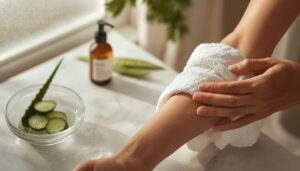
Before any home remedies for rash reach your skin, Pre-Application Cleansing matters more than most people realize. Residue-Free Application starts with a gentle wash — then careful Surface Drying Method by patting, never rubbing. Clean and dry skin allows Absorption Enhancement of topical anti‑inflammatory and moisturizing agents while supporting Targeted Area Isolation.
- Remove dirt, oil, and leftover product first
- Use a gentle, fragrance‑free cleanser
- Pat dry with a clean towel
- Wait until skin feels neither wet nor tacky
- Apply only to the specific rash area
How Often to Reapply Natural Treatments

Reapplication timing depends on the remedy. Here’s a quick reference:
| Remedy | Frequency | Stop If… |
|---|---|---|
| Oatmeal Bath Reapplication | Several times weekly | Irritation worsens |
| Aloe Gel Timing | 2–3 times daily | Stinging increases |
| Coconut Oil Frequency | 1–2 times daily | Rash spreads |
| Cold Compress Schedule | 10 min, multiple times daily | Skin numbs or pales |
| Baking Soda Reuse | 1–2 baths daily | Burning occurs |
home remedies for a rash work best when you follow consistent schedules — don’t over-apply, since more isn’t always better.
Ingredients to Avoid on Broken or Raw Skin

Broken skin has no buffer — the wrong ingredient can turn minor irritation into a real setback.
Steer clear of:
- Strong Acids and Retinoid Products, which disrupt barrier repair
- Harsh Alcohols and Synthetic Fragrances, known triggers for allergic reaction and skin irritation
- Toothpaste Compounds, which sting raw tissue despite the old home‑remedy myth
Always patch test before using any essential oils for skin, as safety considerations for home skin treatments start with knowing what to leave out.
When Essential Oils May Cause More Irritation

Essential oils can backfire on already-inflamed skin. Undiluted application compromises your skin barrier, and high concentration irritation can deepen dermatitis rather than calm it.
Phototoxic sun reactions from citrus-based oils may blister exposed skin.
Oxidized oil sensitivity and mucosal contact risks add more reason for caution.
Always patch test first — essential oils on irritated skin demand more care, not less.
Choosing Breathable Cotton Clothing After Application
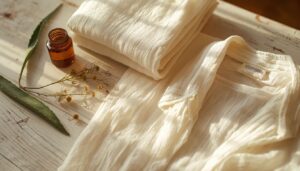
After applying any remedy, what you wear next matters more than most people realize. Fabric choice directly affects how well your skin heals.
- An airy cotton weave lets air circulate, reducing trapped heat against treated skin.
- A loose fit comfort approach lowers friction where inflammation is active.
- Moisture absorption in cotton prevents pooling of applied emollients.
- Clean dry garments eliminate detergent and dye irritants.
- Lightweight fabric choice minimizes pressure on tender areas.
Preventing Rash Flare-Ups

Treating a rash is only half the battle — keeping it from coming back is where real progress happens.
A few consistent habits can make a noticeable difference in how often your skin flares up. Here’s worth building into your routine.
Keeping Skin Clean Without Over-washing
Washing too often is just as disruptive as not washing enough. Stick to gentle hand washing with cool water rinse, using limited soap use on rash-prone areas.
Skip harsh scrubs entirely — your fingertips work better. Pat drying method matters too: press, don’t rub.
Clean and dry skin absorbs bath soak remedies like colloidal oatmeal baths and aloe vera gel far more effectively.
Moisturizing to Support The Skin Barrier
Clean skin is ready to absorb, and that’s your opening. A well-chosen moisturizer does more than soften — it rebuilds what rashes break down.
Look for products that work in layers:
- Humectant Layers like glycerin or urea osmolyte, draw water into the skin
- Ceramide Enrichment helps lipid replacement in the outer barrier
- Occlusive Protection seals everything in, slowing evaporation
- Moisturizing emollients like shea butter and coconut oil, add antibacterial effects alongside skin hydration
Avoiding Known Allergens and Irritants
Once your barrier is reinforced, the next step is keeping it intact. That means knowing your contact dermatitis triggers and staying clear of them.
Start with Ingredient Label Scanning — manufacturers change formulas quietly, so check every time.
Use Protective Gloves during cleaning, swap in Household Cleaning Substitutes, and choose Hypoallergenic Fabric Choices.
Separate Storage Containers prevent cross-contact with known irritants.
Reducing Sweat, Heat, and Skin Friction
Sweat and heat are quiet troublemakers for sensitive skin. When moisture sits against your skin too long, it fuels irritation, itchiness, and even heat rash. Here’s how to stay ahead of it:
- Wear Ventilated Athletic Wear to keep air moving across your skin
- Choose Temperature Regulating Fabrics and Friction-Free Smooth Design to cut rubbing
- Try Sweat Absorbing Powders on high-friction zones
- Practice Hydration Management Strategies — drinking enough water helps regulate body heat
- Switch into dry, loose-fitting clothes after sweating to reduce ongoing skin rash risk
Managing Rash-prone Areas With Gentle Products
Rash-prone skin needs a simpler routine, not a busier one.
Start with Soap Substitute Cleansing to avoid stripping your skin’s natural oils. Follow with Fragrance-Free Moisturizers containing ceramides, then seal vulnerable patches with Non-Comedogenic Barrier Salves.
Always run a Patch Test Protocol before adding anything new — even gentle products can surprise sensitive skin.
Stick with Gentle Fabric Choices to keep friction low between applications.
Lifestyle Habits That Help Prevent Recurring Rashes
Preventing recurring rashes often comes down to daily habits more than any single product. Small, consistent changes add up.
- Sleep Hygiene — consistent rest aids overnight skin repair
- Stress Reduction techniques like slow breathing daily
- Adequate Hydration and dietary adjustments for skin health
- Gentle Laundry Practices with fragrance-free detergents
- Air Quality Control indoors to limit airborne irritants
When Rash Needs Medical Care

Home remedies can do a lot, but they have their limits. Some rashes are your body’s way of signaling something more serious is going on.
Here’s when it’s time to stop treating at home and call a doctor instead.
Fever, Chills, or Feeling Unwell With a Rash
A fever alongside a rash isn’t something to brush off at home. Fever Rash Timing matters — note whether the fever came first or appeared with the skin changes, as this detail shapes the Differential Diagnosis Checklist, your doctor will use.
Chills, fatigue, and Mucous Membrane Involvement are Systemic Illness Indicators pointing toward infection. These Red Flag Symptoms mean home remedies for a rash aren’t enough — seek medical attention.
Rapid Spreading, Blisters, or Severe Pain
A rash that spreads fast or causes severe burning pain isn’t a wait-and-see situation. Conditions like Herpes Zoster, Bullous Pemphigoid, Scalded Skin Syndrome, and Necrotizing Fasciitis can worsen within hours.
Mucosal Involvement or large, tense blisters signal you’ve moved well beyond home remedies for rash or natural anti-inflammatory care.
Skip the herbal remedies for skin inflammation and get evaluated the same day.
Pus, Warmth, Odor, or Signs of Infection
Pus discharge, unusual warmth, foul odor, redness progression, or swelling, tenderness around a rash aren’t quirks — they’re your skin flagging a microbial infection.
No herbal product or home remedy offers the clinical evidence needed to replace antibacterial or antifungal treatment at this stage. A warmth assessment and odor evaluation by a clinician can catch what you’d easily miss at home.
Breathing Trouble, Facial Swelling, or Throat Tightness
These symptoms aren’t just uncomfortable — they’re a medical emergency. Breathing trouble, facial swelling, or throat tightness alongside a skin rash can signal anaphylaxis, angioedema, or even vena cava obstruction. Call emergency services immediately.
Breathing trouble, facial swelling, or throat tightness with a rash is a medical emergency — call for help immediately
Watch for these Anaphylaxis Warning Signs:
- Throat tightness or hoarseness
- Facial or lip swelling (common angioedema trigger)
- Difficulty breathing within minutes of allergen exposure
No natural antihistamine or anti‑inflammatory home remedy replaces emergency airway management here.
Rash Lasting More Than a Few Days
Most minor irritations clear within a few days. But if your rash lingers past 10–14 days despite consistent home remedies for rash and natural treatments for skin rashes, that’s delayed healing worth taking seriously.
Chronic inflammation and ongoing dermatitis can quietly damage your skin barrier repair process. Start a trigger diary, keep up symptom monitoring, and see a dermatologist — anti‑inflammatory home care only goes so far.
Rashes With an Unclear Cause or Worsening Symptoms
When the cause isn’t clear, don’t keep guessing. A dermatologist can run Diagnostic Testing, Allergy Blood Work, or even a Skin Biopsy to get real answers.
A Medication Review and Environmental Assessment help with identifying rash causes and risk factors you might overlook.
Natural treatments for skin rashes have limits — knowing when to seek medical attention for a rash protects your skin long-term.
Frequently Asked Questions (FAQs)
What helps a rash go away quickly?
A Cool Water Rinse, colloidal oatmeal bath for itching, and aloe vera gel anti-inflammatory use can calm a rash fast. Add Anti-Itch Creams and a Hydration Boost for quicker relief.
What is the best natural remedy for rashes?
No single remedy wins every time.
Colloidal oatmeal, aloe vera, and cold compresses are reliable natural anti-inflammatory options, while turmeric, olive oil, and honey antimicrobial balm address both inflammation and bacteria effectively.
Will apple cider vinegar get rid of a rash?
Apple cider vinegar won’t reliably clear a rash. Its mild Acidity Balance and Microbial Inhibition may ease certain fungal-related irritation, but Vinegar Sensitivity Risks are real — always dilute it first.
What clears up skin rashes?
Clearing a skin rash depends on the trigger.
Topical applications for itch relief like aloe vera gel, adequate hydration, stress reduction, probiotic intake, and dietary changes all support recovery alongside anti-inflammatory herbal skin care.
How does diet influence rash healing speed?
What you eat directly affects how fast a rash resolves.
Protein intake, Vitamin C, Zinc levels, and Omega-3 fats all drive tissue repair, immune modulation through nutrition, and an anti-inflammatory diet response.
Are natural remedies effective for sun-induced rashes?
Yes, but with limits. Aloe vera’s cooling effect and colloidal oatmeal’s anti-inflammatory herbal skin care properties ease sun rash symptoms. They calm, not cure. Always patch test first.
What is the role of hydration in rash recovery?
Staying hydrated promotes skin elasticity, cellular repair, and fluid balance. It aids topical absorption and inflammation reduction, keeping your skin barrier stronger during recovery.
Do weather changes impact natural remedies effectiveness?
Weather genuinely affects how well remedies work.
Humidity’s impact changes temperature absorption, cold compress efficacy drops in heat, and seasonal ingredient stability shifts with storage conditions — all contributing to weather-driven irritation on dry skin.
Can diet changes help reduce skin rashes?
Diet can influence rash frequency, especially when food allergy triggers or gluten sensitivity are involved.
Anti-inflammatory foods, omega-3 intake, and gut-skin connection awareness support immune system balance and may reduce flare-ups over time.
Does stress trigger or worsen existing rashes?
Stress absolutely can.
Cortisol inflammation signals make rashes redder and itchier, skin barrier weakening lets irritants in more easily, and stress induced hives can appear from nowhere — turning a minor flare into a frustrating cycle.
Conclusion
The most powerful natural remedy for skin rash has always been the same thing that causes most flares in the first place—your own choices. What you put on your skin, wear against it, or expose it to daily shapes, shapes every outcome.
Colloidal oatmeal, aloe, cold compresses—these work, but only when matched to the right cause.
Know your triggers. Patch test everything. And treat your skin like the barrier it is, not an afterthought.