This site is supported by our readers. We may earn a commission, at no cost to you, if you purchase through links.
You’re standing at the drugstore staring at rows of shampoo bottles, confused about whether you need a medicated anti-dandruff formula or a moisturizing scalp treatment. The flakes on your shoulders look similar, but the difference between dandruff and dry scalp isn’t just semantic—it determines whether your treatment works or wastes your money.
Dandruff produces larger, yellowish, oily flakes caused by fungal overgrowth, while dry scalp sheds smaller, powdery white flakes from simple dehydration. Using the wrong approach can actually worsen your symptoms, leaving you scratching your head in more ways than one.
Understanding what’s happening on your scalp means you can target the root cause with the right ingredients and routines.
Table Of Contents
Key Takeaways
- Dandruff produces larger, yellowish, oily flakes (2-3mm) caused by Malassezia yeast overgrowth, while dry scalp sheds smaller, powdery white flakes from simple moisture loss—using the wrong treatment can worsen your symptoms.
- Medicated shampoos with zinc pyrithione, ketoconazole, or selenium sulfide target dandruff’s fungal root cause, whereas dry scalp responds best to gentle cleansers and moisturizers that restore your scalp’s protective barrier.
- You’ll know it’s dandruff if your scalp feels greasy despite flaking and shows redness with intense itching, but dry scalp creates tightness, rough patches, and worsens in low humidity or after hot showers.
- Most cases clear up within two to four weeks with the right approach—wash 2-3 times weekly, use lukewarm water, and see a dermatologist if symptoms persist beyond six weeks or you notice hair loss.
Dandruff Vs Dry Scalp: Key Differences
You might think dandruff and dry scalp are the same thing, but they’re actually two different conditions that need different treatments. The confusion makes sense—both cause flakes and itching—but once you know what to look for, telling them apart becomes straightforward.
Here’s how to spot the key differences so you can tackle your specific scalp issue effectively.
Flake Appearance and Texture
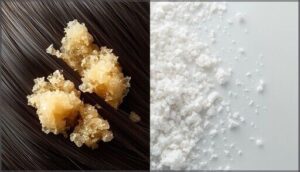
Flake size, texture, and oil content reveal whether you’re dealing with dandruff or dry scalp. Dandruff produces larger, oily flakes (2-3 millimeters) that feel waxy and appear yellowish-white. Dry scalp generates smaller, powdery flakes that break easily and look white or grayish. Understanding these texture differences helps you target the right treatment for your flaky scalp condition.
| Characteristic | Dandruff | Dry Scalp |
|---|---|---|
| Flake Size | Larger (2-3 mm), oily clusters | Smaller, powdery particles |
| Texture Analysis | Waxy, sticky, adheres to hair | Crisp, dry, falls freely |
| Flake Color | Yellowish-white from oil content | White to pale gray |
Common Symptoms Compared
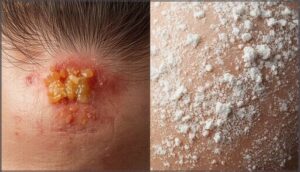
Beyond how flakes look, pay attention to what your scalp feels like. Scalp itching affects both conditions, but dandruff usually brings more intense itch triggers tied to inflammation and scalp redness. Dry scalp creates tightness and rough patches that worsen with low humidity. Here’s how scalp symptoms differ:
| Symptom | Dandruff | Dry Scalp |
|---|---|---|
| Scalp Itching Intensity | Moderate to severe, persistent | Mild to moderate |
| Flake Types | Oily, yellow-tinged clusters | Small, white, powdery |
| Scalp Redness | Often present with inflammation | Rare, unless irritated |
| Dryness Levels | Normal to oily skin | Very dry, tight feeling |
| Flaky Scalp Distribution | Hairline, shoulders | Evenly spread across scalp |
Underlying Causes and Triggers
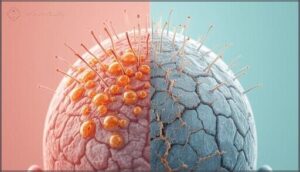
What sets these conditions apart comes down to what’s happening beneath your scalp’s surface. Dandruff stems from microbial imbalance—specifically Malassezia yeast overgrowth feeding on sebum. This fungal infection triggers seborrheic dermatitis with inflammation. Dry scalp, however, reflects moisture loss from harsh products or low humidity, not yeast overgrowth. Sebum regulation and scalp pH shifts create different environments:
Dandruff arises from yeast overgrowth feeding on sebum, while dry scalp reflects simple moisture loss from environmental factors
| Trigger Type | Dandruff | Dry Scalp |
|---|---|---|
| Primary Cause | Malassezia yeast, fungal infections | Moisture depletion, barrier damage |
| Sebum Levels | Excess oil production | Insufficient hydration |
| Genetic Predisposition | Family history common | Variable skin barrier genes |
Risk Factors and Who is Affected
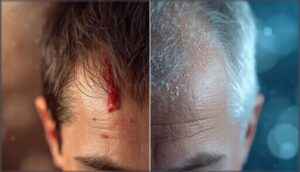
Certain factors increase your risk for either condition. Up to 50% of adults experience dandruff at some point, with men more commonly affected than women. You’re more vulnerable during adolescence and young adulthood. Oily scalps favor dandruff development, while sensitive skin heightens dry scalp susceptibility to environmental triggers like cold weather. Understanding the importance of methodological rigor is essential in scientific studies about skin conditions.
| Risk Category | Higher Dandruff Risk | Higher Dry Scalp Risk |
|---|---|---|
| Age Factors | Adolescents, young adults | Any age, worsens with aging |
| Gender Differences | Men more frequently affected | Equal distribution, women and men |
| Genetic Predisposition | Family history of seborrheic dermatitis | Inherited barrier dysfunction, eczema-prone skin |
Causes of Dandruff and Dry Scalp
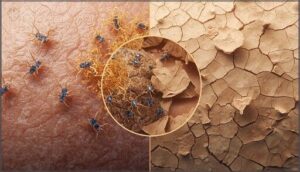
Now that you can spot the differences between dandruff and dry scalp, it’s time to understand what’s actually happening beneath the surface.
Each condition has distinct triggers that drive those frustrating flakes and itching. Let’s break down the three main causes so you know exactly what you’re dealing with.
Role of Malassezia Yeast in Dandruff
Dandruff develops when Malassezia yeast—naturally present on your scalp—grows beyond normal levels, triggering a fungal infection. This yeast metabolism breaks down scalp oils into irritating compounds, causing scalp irritation and the characteristic flaking of seborrheic dermatitis.
That’s why antifungal treatments and antidandruff shampoo work effectively: they target the underlying fungal growth rather than just masking symptoms.
Moisture Loss and Dry Scalp
Your scalp’s protective barrier—a thin layer of lipids and natural oils—loses moisture when harsh products, hot water, or low humidity strip away its defense. Unlike dandruff, dry scalp stems from insufficient hydration rather than yeast overgrowth.
Here’s what disrupts moisture balance:
- Harsh surfactants in shampoos dissolve protective oils
- Hot showers increase water loss by 10-20 g/m²/h
- Winter air and indoor heating reduce scalp hydration
- Frequent washing without moisturizing strips natural sebum
- Poor ceramide levels weaken barrier repair mechanisms
Restoring hydration requires gentle cleansing and targeted moisturizing treatments.
Influence of Skin Conditions
Inflammatory disorders often mimic or worsen dandruff and dry scalp. Atopic dermatitis frequently coexists with seborrheic dermatitis, increasing scalp inflammation. Psoriasis affects 40-60% of sufferers on the scalp, producing thick silvery scales. Contact dermatitis from hair products triggers irritation resembling dry scalp. Eczema weakens your scalp’s barrier, while lichen planus causes violaceous flaking that can destroy follicles permanently.
| Condition | Key Features | How It Affects Scalp |
|---|---|---|
| Atopic Dermatitis | Elevated IgE, Th2 cytokines | Amplifies itching, worsens barrier function |
| Psoriasis | Thick silvery scales, erythema | Extends beyond hairline, rapid skin turnover |
| Contact Dermatitis | Reaction to products | Burning, peeling mimics dandruff |
| Lichen Planus | Violaceous papules | Causes scarring alopecia if untreated |
Symptoms and Diagnosis Guide
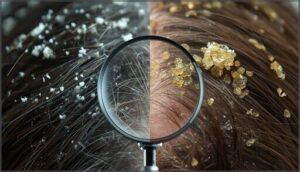
Recognizing what’s happening on your scalp is the first step toward finding relief. While both dandruff and dry scalp share some symptoms, looking closely at your flakes and other signs can help you tell them apart.
Here’s what to watch for and when it’s time to get a professional opinion.
How to Recognize Dandruff
You’ll notice dandruff by its telltale white or off-white flakes that often land on your shoulders—these flakes usually look oily and appear alongside an itchy scalp. The itching comes and goes, worsening when your scalp sheds skin more rapidly.
Check your hairline and temples closely, as flakes cluster there. Oil balance matters too—your scalp may feel greasy despite the flaking.
Identifying Dry Scalp Symptoms
When your skin feels tight and you see small, white flakes dusting through your hair, you’re likely dealing with dry scalp rather than dandruff. These flakes are smaller and drier—not oily—and itching intensifies during winter months or after hot showers.
You may notice scalp sensitivity alongside dryness on your arms or legs, suggesting moisture loss rather than fungal overgrowth.
When Symptoms Overlap
Sometimes you can’t tell whether dandruff or dry scalp is causing your itching and flaky scalp—and you might actually have both. Overlapping symptoms like persistent scalp irritation create diagnostic difficulties, making treatment challenges common when standard shampoos don’t fully work.
These scalp conditions often require combined therapies: antifungal agents paired with moisturizers to address both fungal overgrowth and moisture loss simultaneously.
When to Seek Medical Advice
Most cases resolve with over-the-counter treatments, but certain medical red flags warrant dermatology referral. Seek emergency care if you notice rapidly spreading redness, fever, or severe itching disrupting sleep.
Scalp infections with pus, persistent symptoms after six weeks of treatment, or hair loss alongside flaking require professional scalp conditions diagnosis.
When standard dandruff and dry scalp remedies fail, it’s time to consult a specialist for proper scalp health evaluation.
Best Treatments and Prevention Tips

Once you’ve identified whether you’re dealing with dandruff or dry scalp, the next step is choosing the right treatment approach. The good news is that most cases respond well to targeted products and simple changes to your hair care routine.
Let’s break down the most effective treatments for each condition and explore ways to keep your scalp healthy long-term.
Medicated Shampoos for Dandruff
When dandruff strikes, medicated shampoo becomes your first line of defense against fungal infections. Look for hair care products containing zinc pyrithione, ketoconazole, or selenium sulfide—shampoo ingredients proven to combat Malassezia yeast.
These dandruff remedies work as effective scalp treatment by reducing flaking and inflammation. Use your chosen dandruff treatment two to three times weekly until symptoms improve.
Moisturizing Remedies for Dry Scalp
Unlike dandruff’s antifungal approach, dry scalp remedies focus on restoring moisture. Choose gentle cleansers and moisturizing conditioners that won’t strip natural oils. Effective dry scalp treatments include:
- Humectant products with glycerin (5–20%) that draw water into your scalp
- Scalp moisturizers containing ceramides to rebuild your skin barrier
- Overnight treatments with lightweight oils to seal in hydration
- Dry scalp masks applied twice weekly for intensive repair
Scalp Care Routines and Lifestyle Changes
Your scalp hygiene and hair care routine work hand in hand with targeted treatments. Wash your hair 2–3 times weekly to manage dandruff without stripping natural oils from dry scalp. Use pH-balanced gentle cleansing products, and try scalp massage or hair brushing to distribute those oils evenly.
Don’t overlook stress reduction and sleep hygiene—they’re proven to minimize flare-ups by calming inflammatory pathways.
Tips for Preventing Flaky Scalp
Consistent scalp hygiene forms your first line of defense against flakes. Choose gentle products labeled hypoallergenic or fragrance-free to prevent irritation and support moisture balance. Lukewarm water protects your scalp’s natural barrier better than hot showers.
Try scalp exfoliation monthly to clear buildup without overdoing it, and apply ceramide-rich moisturizers when dryness triggers itch relief methods that actually work.
Top 3 Shampoos for Dandruff and Dry Scalp
Choosing the right shampoo can make all the difference when you’re dealing with flakes and itching. The key is finding a product with ingredients that target your specific condition—whether that’s excess yeast, inflammation, or simply moisture loss.
Here are three dermatologist-recommended options that address both dandruff and dry scalp effectively.
1. Nizoral Anti Dandruff Shampoo Treatment
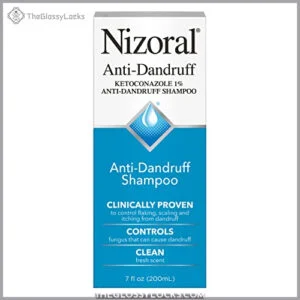
If you’re fighting stubborn flakes, Nizoral offers a clinically proven solution powered by 1% ketoconazole. This antidandruff shampoo targets fungal infections by blocking the Malassezia yeast that triggers dandruff. You’ll usually apply it twice weekly, leaving the lather on for three to five minutes before rinsing.
Most people notice itch relief and reduced flaking within two weeks. While effective for scalp irritation and potentially helpful for hair loss prevention, ketoconazole effects can include dryness, so avoid overuse. This medicated shampoo works best when you stick to the recommended shampoo frequency.
| Best For | Anyone dealing with persistent dandruff, flaking, or itchy scalp caused by fungal buildup who wants a clinically proven treatment that only requires twice-weekly use. |
|---|---|
| Brand | Nizoral |
| Form | Liquid |
| Hair Type | All |
| Age Range | Adult, Youth |
| Active Ingredient | 1% Ketoconazole |
| Target Condition | Dandruff, Fungal Infections |
| Additional Features |
|
- Targets the root cause by killing Malassezia fungus with 1% ketoconazole, delivering noticeable results within two weeks
- Gentle enough for color-treated and chemically processed hair, so you don’t have to sacrifice your style
- Only needs to be used twice a week, making it more convenient than daily dandruff shampoos
- Can dry out your hair and scalp if you use it too often or don’t follow the recommended frequency
- May cause irritation or stinging on sensitive or broken skin, so patch testing is smart
- Requires consistent use to maintain results—stop using it and the flakes might come back
2. Dove Derma Care Shampoo
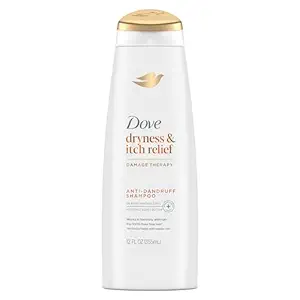
For dual-action relief, Dove Derma Care combines pyrithione zinc—a proven antifungal agent—with coconut oil to tackle both dandruff and dry scalp concerns. The shampoo ingredients work synergistically to reduce itchiness and provide 100% flake-free results with regular use.
You’ll apply this medicated shampoo as part of your daily scalp treatment routine, benefiting from its pH-balanced formula that targets flaking while delivering hair moisture from root to tip.
Product reviews highlight consistent scalp relief, and dermatologist insights support pyrithione zinc’s effectiveness against Malassezia yeast.
| Best For | People dealing with persistent dandruff and dry, itchy scalp who want a daily-use shampoo that moisturizes while treating flakes. |
|---|---|
| Brand | Dove |
| Form | Liquid |
| Hair Type | Dry, Itchy |
| Age Range | Adult |
| Active Ingredient | Pyrithione Zinc |
| Target Condition | Dandruff, Dry Scalp |
| Additional Features |
|
- Combines pyrithione zinc with coconut oil to fight dandruff while keeping hair hydrated
- PH-balanced formula is gentle enough for everyday use and backed by clinical research
- Delivers consistent flake-free results and soothes scalp irritation with regular application
- Contains fragrance that might trigger sensitivity in some users with reactive scalps
- Can leave hair feeling greasy or not fully clean for certain hair types
- Pricier than basic dandruff shampoos, though many find the dual benefits worth the cost
3. Vanicream Gentle Dandruff Shampoo
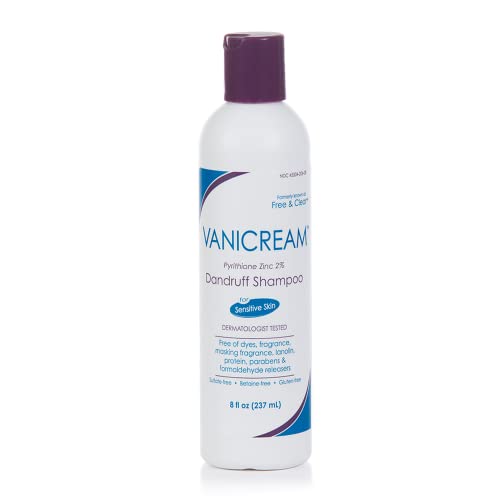
If your sensitive scalp rebels against most medicated treatments, Vanicream‘s 2% pyrithione zinc formula offers dandruff relief without the harsh additives. This medicated shampoo strips away fragrance, parabens, and lanolin—common irritants in traditional dandruff shampoos—while still delivering clinical-grade treatment for seborrheic dermatitis and dry scalp concerns.
The gentle formulas make it suitable for all hair types, and dermatologists often recommend rotating it with other medicated treatments when standard shampoo ingredients trigger contact dermatitis or worsen scalp sensitivity.
| Best For | People with sensitive scalps who need dandruff treatment but react badly to fragrances, parabens, and other common shampoo additives. |
|---|---|
| Brand | Vanicream |
| Form | Liquid |
| Hair Type | All |
| Age Range | Adult |
| Active Ingredient | 2% Pyrithione Zinc |
| Target Condition | Dandruff, Seborrheic Dermatitis |
| Additional Features |
|
- Contains 2% pyrithione zinc for actual medical-grade dandruff and seborrheic dermatitis relief
- Completely free of fragrance, parabens, and lanolin—perfect if your scalp freaks out over typical shampoo ingredients
- Works for all hair types and can be rotated with other treatments without causing extra irritation
- Can dry out your hair if you use it too much or skip conditioner
- Pricier than drugstore dandruff shampoos, which adds up over time
- Doesn’t work for everyone—some people need stronger antifungal ingredients or a different approach entirely
Frequently Asked Questions (FAQs)
Can dandruff or dry scalp cause hair loss?
Neither dandruff nor dry scalp usually causes permanent hair loss. However, excessive scratching from severe itching may temporarily weaken hair shafts.
If you notice significant thinning, consult a dermatologist to rule out underlying alopecia causes.
Are dandruff and dry scalp contagious conditions?
Good news: dandruff and dry scalp aren’t contagious. You won’t spread them through contact or shared items.
These scalp health issues stem from individual factors like fungal activity or skin irritation, not fungal transmission between people.
How long does treatment take to work?
Ironically, patience matters most when you’re desperate for relief. Dandruff treatment usually shows symptom reduction within two to four weeks, while dry scalp management often brings faster results—days to two weeks—depending on recovery speed and product consistency.
Can diet affect dandruff or dry scalp?
Your diet plays a supporting role in scalp health. Omega-3 fatty acids, zinc, and adequate hydration can reduce inflammation and support moisture balance, though they won’t cure dandruff or dry scalp alone.
Is it safe to color hair with these conditions?
Coloring your hair when flakes are flying? Tread carefully. Patch test first—dyes can spark scalp irritation or uneven color absorption on inflamed skin.
If severe itching or cracking persists, consult a dermatologist before scheduling that salon appointment.
Conclusion
The truth is simple: the dandruff vs dry scalp difference lies in what’s causing your flakes—fungal overgrowth or moisture loss.
Once you identify which condition you’re dealing with, you can select targeted treatments that actually work. Stop guessing at the drugstore and start treating your scalp based on evidence, not trial and error.
Your scalp will respond when you address the real problem, not just the symptoms on your shoulders.