This site is supported by our readers. We may earn a commission, at no cost to you, if you purchase through links. This content is for general informational and educational purposes only and is not a substitute for professional medical, dermatological, or nutritional advice.
You grab the clippers to clean up your neckline. Ten seconds later, you’ve got a bald patch the size of a quarter. Wrong tool.
Here’s what most guys miss: the difference between hair clippers and trimmers comes down to blade gap. Trimmers cut 0.1 to 0.3mm from skin. Clippers sit at 0.5 to 1.0mm, built to move through thick hair without snagging.
One controls bulk. The other grips detail. Mix them up and you’ll pull hair, clog blades, or wreck a hairline.
Get the roles straight, and your cuts get cleaner. Here’s how each tool works, and which one you actually need.
Table Of Contents
- Key Takeaways
- Hair Clippers Vs. Trimmers: Key Differences and Best Uses
- Clipper Vs. Trimmer Blades: Cutting Lengths, Guards, and Precision
- Clipper Vs. Trimmer Performance: Motor Power and Corded Vs. Cordless Options
- Clippers Vs. Trimmers: Skin Comfort, Handling, and Close Cutting
- Choosing Hair Clippers, a Trimmer, or Both
- Frequently Asked Questions (FAQs)
- Is a hair clipper the same as a trimmer?
- Can I use a hair clipper as a trimmer?
- Can you use trimmers to cut your hair?
- Is a trimmer better than shaving?
- Can you use clippers on wet hair safely?
- Do trimmers work well for thick hair?
- How often should blades be professionally sharpened?
- Are expensive clippers worth the extra cost?
- Can one device replace both tools effectively?
- How often should clipper blades be oiled?
- Conclusion
Key Takeaways
- Clippers are built to remove bulk with guard combs, while trimmers handle detail work like hairlines, necklines, and beard edges, so you’ll get clean results only if you match the tool to the job.
- Trimmers cut closer than clippers because their blade gap is just 0.1 to 0.3mm compared with 0.5 to 1.0mm, which is why they give you crisp lines but can irritate skin if you skip a guard.
- Clippers have the stronger motor for thick hair, and while premium cordless models match corded power, budget cordless units slow down under load.
- If you can’t decide, buy both: use a clipper with guards for the cut and fade, then switch to a trimmer for outlines, because one device that does both sacrifices power and precision.
Hair Clippers Vs. Trimmers: Key Differences and Best Uses

You’ve probably stood in the grooming aisle wondering if a hair clipper and a hair trimmer are the same thing. They’re not. The clipper vs trimmer question comes down to one thing: job.
If you’re also weighing a shaver against both tools, this shaver vs trimmer vs clipper comparison shows which one suits your hair type and grooming routine.
A hair clipper controls bulk cutting. Fades, buzz cuts, full haircuts. It’s built heavier and stronger to chew through thick hair without snagging. Why does that matter? Because it takes the weight off the motor and keeps your cut even.
A hair trimmer is different. It’s all about the finishing touches: hairlines, sideburns, beard edges, the back of your neck. Light, compact, precise. Trimmer blades are only about 8–10mm wide, so they cut at a shallow cutting depth of 0.2mm to 0.5mm for crisp, close-to-skin lines.
Here’s the catch. Use a trimmer for a full head and you’ll overheat the motor and dull the blades fast. Get it?
Match the tool to the task. Your results will show it.
Clipper Vs. Trimmer Blades: Cutting Lengths, Guards, and Precision
Blades are where the clipper vs trimmer gap shows up. Clippers use guard combs, so cutting length changes in steady steps, roughly 1.5mm to 25mm. Same guard, same length, every time.
Trimmers? No guards. You control length with blade exposure, so precision trimming depends on your hand. Blade material matters too, since sharp, hard steel holds a clean edge.
| Blade Type | Best For |
|---|---|
| Clipper | Bulk cutting with guards |
| Trimmer | Edges and outlines |
| T-blade | Sharp lineups |
| Foil shaver | Smooth, skin-level finish |
Fade work needs both. Use a clipper with a guard comb for the shift, then switch to a T-blade for the outline. Why? Exposed teeth zero-gap safely and won’t snag your skin.
If you’re still comparing options, this roundup of the best hair clippers for men breaks down which models handle fades and sharp outlines best.
Pick blades for the job. Never force it.
Clipper Vs. Trimmer Performance: Motor Power and Corded Vs. Cordless Options
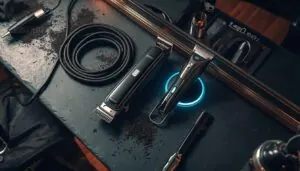
Blades set the cut, but motor power decides how smoothly it happens. In a clipper vs trimmer match-up, clippers carry the heavier load. Thick hair needs steady motor torque. Trimmers just skim edges.
Corded vs cordless comes down to this:
| Type | Power | Best Use |
|---|---|---|
| Corded | Constant speed | Back-to-back cuts |
| Premium cordless | Matches corded | Fades, necklines |
| Budget cordless | Drops under load | Light touch-ups |
Corded models never fade. Cordless battery life runs 60 to 180 minutes, enough for 6 to 8 haircuts. Lower-tier cordless units slow down as the charge drains. Why does that matter? Bulky, coarse hair bogs them down.
If you’re shopping for a cordless model that holds steady power through a full fade, this roundup of the best hair clippers for fades is a good place to start.
Want both? Many pros do exactly that: corded for bulk removal, cordless for finishing and detail work. Power matches the job.
Clippers Vs. Trimmers: Skin Comfort, Handling, and Close Cutting
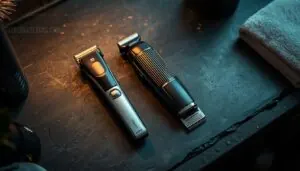
Power sets the pace. Now the skin decides the comfort.
In a clipper vs trimmer test, trimmers cut closer. Blade gaps run just 0.1 to 0.3mm, so cuts land at or below skin level. Clippers leave stubble. Guards keep 1.5 to 3mm between blade and skin.
| Trait | Trimmer vs clipper |
|---|---|
| Blade gap | 0.1-0.3mm vs 0.5-1.0mm |
| Weight | 3-5oz vs 8-12oz |
| Heat | Lower vs higher |
| Guards | Rare vs standard |
Close cutting costs you. For skin irritation prevention, use a guard or comb attachment. Freehand work demands blade angle precision. Hold it flat, use light pressure, short strokes.
Handling matters too. Trimmers have an ergonomic grip for ears and hairlines. Clippers need two hands. Corded vs cordless won’t change that. Get it? Good.
Choosing Hair Clippers, a Trimmer, or Both
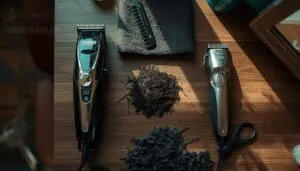
So, which tool do you actually need? It depends on what you’re cutting and where you’re cutting it. Here’s how to match your tool to three common situations.
Full Haircuts and Bulk Removal
Want a full haircut at home? Grab a hair clipper. Its wide blade width covers more scalp per pass, so bulk hair cutting goes fast. A trimmer? Too slow.
Start with a longer guard, then work down. Why? Cutting long hair straight to a short length pulls and clogs. Use your guard combs in stages. A cordless clipper works fine, just keep the blades clean.
Beard Shaping and Detail Work
Beard shaping belongs to the hair trimmer. Why? Blade width matters. A narrow blade cuts crisp cheek lines and necklines that clippers just can’t touch.
Here’s the move: pull off the guard combs for detail work. Bare blade, close to the skin. Follow a straight line from sideburn to mustache. Neckline? Stop 2-3 cm above your Adam’s apple. Get it?
Home Vs. Professional Grooming
Barbers run tools eight hours a day. You run yours twenty minutes a month. Different jobs, different gear.
Barbers use their tools eight hours a day while you use yours twenty minutes a month, so different jobs call for different gear
Professional barbering demands a hair clipper with industrial cooling and metal construction. Your home haircut kit? It’s built for short sessions. Pair a mid-range hair clipper with a hair trimmer, learn your blade guard systems, and you’re set. Practice beats expensive gear.
Frequently Asked Questions (FAQs)
Is a hair clipper the same as a trimmer?
No. A hair clipper and a hair trimmer aren’t the same tool. Clippers remove bulk, like on your scalp. Trimmers handle edging and detail work. Think of blade width as the clue: wide for volume, narrow for precision.
Can I use a hair clipper as a trimmer?
Can a hair clipper double as a trimmer? Sort of: use it for bulk, not detail. Pick the right blade guards, and variable guard lengths help with beard grooming. For sharp lines? You’ll need a hair trimmer.
Can you use trimmers to cut your hair?
Many trimmers cut as close as 2 mm bare. So yes, you can cut your hair with one. Keep it short, though. Use blade guards for even length, and expect extra passes on thick hair.
Is a trimmer better than shaving?
Picture a guy with a 5 o’clock shadow and razor bumps on his neck. Is a trimmer better than shaving for him? Often, yes. It skips the scrape, so sensitive skin calms down. Close, though, not smooth.
Can you use clippers on wet hair safely?
I once watched a hair clipper choke on soaked hair. Why? Wet strands clog blades.
Use only a waterproof trimmer rated for wetdry shaving. Otherwise towel-dry first, plan hair length adjustment around hair type compatibility.
Do trimmers work well for thick hair?
Yes, but power matters. Thick, coarse hair needs a high-torque motor and wide blade spacing, or the trimmer pulls instead of cuts. Get it? Pre-trim with clippers first, then use your trimmer for detailing.
How often should blades be professionally sharpened?
Check your blade sharpness every two to six months. Busy shop? Every eight weeks. Brush hair with a cleaning brush, add blade oil, protect blade corrosion resistance. Sharpen early and blade replacement cost stays low.
Are expensive clippers worth the extra cost?
Think price equals quality? Not always. Here, it mostly does.
Stronger motor power, lasting blade sharpness, better blade corrosion resistance, a longer-lasting rechargeable battery, and tighter cutting precision.
Cut weekly? Worth it. Occasionally? Skip it.
Can one device replace both tools effectively?
Not really. A hybrid with an adjustable blade sacrifices power and precision, so your fades turn patchy and edges stay rough.
Pair a cordless clipper for bulk with a beard trimmer for detail. Get it?
How often should clipper blades be oiled?
Oil before every use. Heavy session? Add a few drops every 10–15 minutes. Why? Oil cuts friction, aids blade heat dissipation, and protects self-sharpening blades. Clean first, then oil. Always check your manufacturer’s exact guidance.
Conclusion
Clippers take the bulk. Trimmers take the detail. Same hands, opposite jobs.
That’s the difference between hair clippers and trimmers, and it’s the whole game. Use clippers when you’re cutting length, fading, or shaving down thick hair. Reach for a trimmer when you’re outlining, shaping a beard, or cleaning a neckline.
Still can’t decide? Honestly? Buy both. Your hairline stays sharp, your cuts stay even, and you finally stop gambling with that quarter-sized bald patch.