This site is supported by our readers. We may earn a commission, at no cost to you, if you purchase through links.
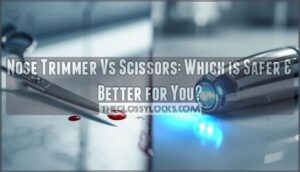
I’ve nicked the inside of my nose with scissors twice. Both times bled like hell and stung for days. That’s when I switched to an electric trimmer and never looked back.
The difference between nose trimmer and scissors isn’t just about convenience—it’s about not turning a simple grooming task into a minor medical emergency. Trimmers use guarded rotating blades that can’t reach your skin, while scissors give you all the precision of a blade with none of the protection.
Most guys stick with scissors because they’re cheaper and already in the bathroom drawer. But here’s the thing: one cut inside your nostril can lead to an infection that costs way more than any trimmer. You need to know which tool actually works for your situation, your pain tolerance, and how steady your hand is at 7 AM.
Table Of Contents
- Key Takeaways
- Key Differences: Nose Trimmer Vs Scissors
- Pros and Cons of Nose Trimmers
- Pros and Cons of Nose Hair Scissors
- Top Nose Trimmers and Scissors to Consider
- Choosing The Right Tool for Your Needs
- Frequently Asked Questions (FAQs)
- Can I use normal scissors to cut nose hair?
- What is the difference between a trimmer and a scissor?
- Can nose trimmers cause ingrown hairs or irritation?
- How often should trimmer blades be replaced?
- Are nose trimmers suitable for sensitive skin?
- Whats the ideal nose hair length to maintain?
- Can women use mens nose hair trimmers?
- Conclusion
Key Takeaways
- Trimmers use guarded rotating blades that can’t reach your skin, while scissors expose sharp edges that can cut your nostril lining and lead to infections costing more than any trimmer.
- Electric trimmers clear both nostrils in under 60 seconds with minimal injury risk, but scissors demand steady hands, good lighting, and several minutes of careful positioning for each session.
- Rounded-tip scissors cost $5-$15 and work forever with zero maintenance, while trimmers run $15-$60 but need regular cleaning, battery replacements, and blade changes every 6-12 months.
- Your grooming frequency matters—weekly trimmers suit busy schedules and client-facing jobs, while scissors work fine if you’ve got time and surgeon-level hand control.
Key Differences: Nose Trimmer Vs Scissors
You might think both tools do the same job, but they’re built completely different.
If you’re unsure where to start, check out how to sharpen a safety razor for step-by-step guidance on maintaining your blade.
Trimmers use rotating blades with guards while scissors rely on your steady hand and good lighting.
Let’s break down what actually separates these two so you can pick the right one.
Design and Mechanism Comparison
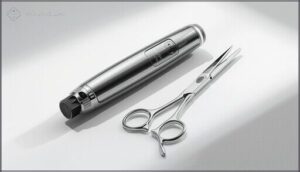
Electric trimmers spin blades inside a protective barrel—you shove it in, press a button, and you’re done. Scissors cut one hair at a time with exposed blades you control yourself.
Here’s what separates them:
| Feature | Electric Trimmer | Scissors |
|---|---|---|
| Blade Design | Hidden rotary or reciprocating blades | Exposed straight-edge blades |
| Cutting Action | Continuous motor-driven motion | Manual snip-by-snip cuts |
| Safety Guards | Perforated protective cap | Rounded tips (if designed well) |
| Ergonomic Grips | Pen-grip or textured barrel | Finger loops, compact build |
| Dual Functionality | Often works for ears, brows | Works anywhere you can reach |
Trimmers do the heavy lifting. Scissors demand patience. For a deeper look at the, consider how modern technology enhances grooming.
Safety Features and Injury Risk
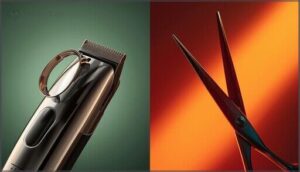
A guarded nose trimmer head keeps blades tucked inside, so you can’t nick the nasal lining. Scissors—even with rounded tips—expose sharp edges that can scratch or stab if your hand slips.
Trimmers hide blades behind guards to protect delicate skin, while scissors expose sharp edges that can cut if your hand slips
Here’s the safety breakdown:
| Feature | Trimmer | Scissors |
|---|---|---|
| Blade Guard Safety | Enclosed rotating head | Exposed cutting edge |
| Injury Risk | Minimal surface contact | High if hand slips |
| Nose Hair Protection | Physical depth stop | Depends on your control |
| Grooming Safety | Built-in safeguards | Manual precision required |
Trimmers prevent most accidents by design. Scissors demand steady hands. If you want more details about advanced trimmer safety technology, recent innovations have made trimmers even more comfortable and effective.
Precision and Ease of Use
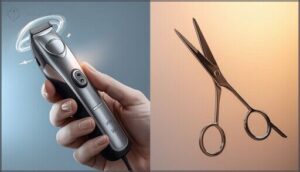
Rotary nose hair trimmers sweep a 360-degree circle, so you catch all angles in one pass. Scissors need mirror checks and awkward wrist twists for every snip.
Here’s how they compare on handling ease:
| Feature | Electric Trimmer | Scissors |
|---|---|---|
| Trimming Accuracy | Consistent cutting depth | Hair-by-hair control |
| User Comfort | Thick rubberized grip | Light, manual precision |
| Handling Ease | Works mostly by feel | Demands steady hands |
| Cutting Precision | Fixed stub length | Selective shaping |
| Control Features | Auto-rotation | Full manual angle |
Nose hair trimming with a rotary head takes 30 seconds. Scissors take minutes and constant repositioning.
Maintenance and Hygiene Factors
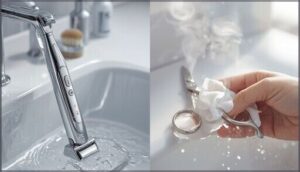
Beyond speed and control, both tools demand different cleaning schedules.
Nose hair trimmers trap mucus and debris inside the cutting head after every session. You’ll need a brush and rinse to clear that gunk. Scissors? A quick wipe with alcohol does the job.
Here’s the hygiene breakdown:
| Aspect | Electric Trimmer | Scissors |
|---|---|---|
| Sanitizing Methods | Alcohol spray or rinse | Alcohol wipe |
| Cleaning Schedules | After every use | After each session |
| Debris Removal | Brush + water flush | Simple wipe-down |
| Rust Prevention | Dry thoroughly | Store dry |
| Ease of Maintenance | Detachable heads help | Zero fuss |
Trimmer motors rust if stored damp. Scissors corrode if left wet. Both need proper drying for grooming safety and long-term nose care hygiene practices.
Keeping your tools dry extends their lifespan, which is especially important when you’re investing in quality beard grooming tools for beginners.
Pros and Cons of Nose Trimmers
Nose trimmers seem like the obvious modern choice, but they’re not perfect. They’ve got some serious advantages over scissors, but also a few downsides you should know about.
Let’s break down what makes them work and where they fall short.
Safety and Skin Protection
The blade design on most trimmers puts a guard between sharp edges and your skin. That’s huge for infection prevention and grooming safety. You won’t nick the delicate nasal lining like you’d with standard scissors.
Rounded guards let hairs through while blocking contact, so trimming techniques stay gentle. Less skin irritation, fewer cuts, and way more confidence when you’re tackling nose care or ear hair removal.
Battery Life and Water Resistance
Most electric trimmers run 30 to 45 minutes per charge—enough for months of quick sessions. AA models last even longer before needing fresh batteries.
Look for USB-C charging and waterproof ratings if you want real convenience. An IPX7 nose hair trimmer lets you rinse the head under the tap without worry.
Water resistance keeps your trimmer working in humid bathrooms, and battery life means you won’t scramble mid-trim.
Cleaning and Maintenance
Cleaning a nose hair trimmer takes seconds. Rinse the head under the tap, brush out loose hairs, and let it dry. That’s it.
Easy to clean grooming tools save you time and keep hygiene practices simple. Most models come with a tiny brush for the blades.
Sanitizing methods matter—wipe with alcohol weekly. Tool storage? Keep it dry. Hair removal devices last when you follow simple cleaning schedules.
Suitability for Different Hair Types
Trimmers tackle thick hair trimming better than scissors—rotary blades cut coarse growth without tugging. Fine hair care? Most electric models work fast.
Curly hair management gets tricky, so look for anti-pull designs. Sensitive skin solutions include ceramic blades and rounded tips.
Your nose hair trimmer deals with varied textures if you pick the right motor speed and blade style for ingrown hair prevention.
Pros and Cons of Nose Hair Scissors
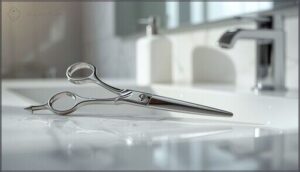
Scissors can work, but they’re not as foolproof as you’d think.
The right pair with rounded tips is safer than grabbing whatever’s in your bathroom drawer.
Let’s break down what actually matters when you’re considering the old-school approach.
Types of Scissors (Rounded Tip Vs Standard)
Not all scissors are built the same, and that matters when grooming tools get near your nose. Rounded tip scissors use blunt, bulbous ends that won’t puncture your nasal lining if you slip.
Standard grooming scissors have sharper, tapered tips that can poke or scratch delicate tissue. Those smooth safety features make rounded designs the smarter pick for nose hair trimming.
Manual Control and Precision
You control every millimeter with nose hair scissors. Blade visibility lets you see exactly which hair you’re cutting before you close the blades—no guessing. Grip stability and large finger holes give you finer angle adjustment than any nose hair trimmer.
Tactile feedback is instant; you feel each snip and know when to stop. Manual trimmer tools rely on twisting, but scissors let you make targeted, deliberate cuts one hair at a time using proven trimming techniques.
Risk of Cuts and Infections
Sharp blades near delicate nasal lining create real trimming hazards. One sneeze or slip drags the edge across moist tissue—micro‑cuts you won’t see but will definitely feel.
Those tiny nicks disrupt your skin barrier, giving bacteria like staph an open invitation. Infection control gets trickier when you’re trimming daily; follicles stay irritated, scabs form, and painful sores pop up.
Rounded‑tip nose hair scissors help, but they won’t eliminate every nasal safety risk.
Portability and Cost
Beyond injury worries, your wallet and suitcase matter too. A decent pair of rounded-tip scissors runs you three to fifteen bucks—seriously cheap compared to electric trimmers that start around ten to twenty dollars.
Scissors slip into any dopp kit without hogging space, and TSA allows blades under four inches in carry-on. No batteries, no chargers, no hidden costs. Just grab and go.
Top Nose Trimmers and Scissors to Consider
You’ve heard the theory. Now here’s what actually works. I’ve rounded up the best trimmers and scissors that won’t leave you bleeding or crying in the bathroom mirror—each one tested, rated, and worth your money.
1. Norelco Nose And Ear Trimmer
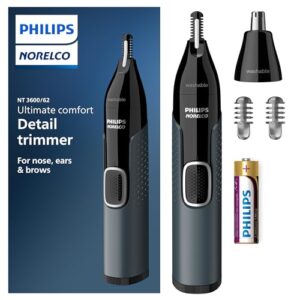
Norelco’s trimmer runs on a single AA battery that lasts months before you need a replacement. You get dual-sided steel blades that cut from both sides, so trimming goes faster. The Protective Guard System keeps those spinning blades away from your skin—no nicks, no irritation.
It’s fully washable, so you can rinse it under the tap after each use. The kit includes eyebrow combs and a detail head for sideburns. Compact enough to toss in your travel bag without thinking twice.
| Best For | People who want a simple, reliable trimmer for nose, ear, and eyebrow hair without spending a lot or dealing with complicated features. |
|---|---|
| Material | Stainless Steel Blades |
| Power Source | Battery Powered |
| Primary Use | Nose, Ear, Eyebrow |
| Portability | Travel-Friendly |
| Cleaning | Water-Resistant |
| Weight | 6.37 ounces |
| Additional Features |
|
- Long battery life means you’re not constantly buying replacements
- Washable design makes cleanup quick and easy
- Protective guard keeps blades away from skin so you won’t nick yourself
- Finding the right angle to catch hairs can take some trial and error
- Some attachments don’t work well in certain areas (like the comb attachment in your nose)
- Can be louder than expected during use
2. AsonTao Round Tip Hair Scissors
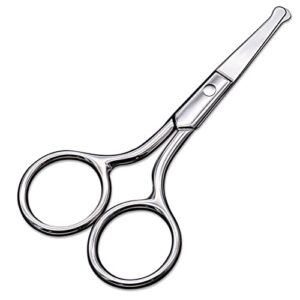
AsonTao’s stainless steel scissors give you a rounded tip instead of a sharp point, so you won’t stab the inside of your nostril by accident. They’re about 3⅝ inches long and weigh just 15 grams—light enough that your hand won’t cramp during detailed work.
You can trim nose hair, eyebrows, even mustache strays with the same pair. Rinse them off, wipe with alcohol, toss them in a pouch. They won’t rust from bathroom humidity, and they cost way less than battery-powered gadgets.
| Best For | People who want a budget-friendly, low-maintenance tool for trimming nose hair, eyebrows, and facial strays without the hassle of batteries or chargers. |
|---|---|
| Material | Stainless Steel |
| Power Source | Manual |
| Primary Use | Nose, Ear, Eyebrow |
| Portability | Travel-Friendly |
| Cleaning | Manual Cleaning |
| Weight | Lightweight |
| Additional Features |
|
- Rounded tip design prevents accidental pokes in sensitive areas like nostrils and ears
- Lightweight stainless steel construction resists rust and wipes clean easily
- Versatile enough for grooming, crafting, or quick pet touch-ups
- Build quality feels average and may not hold up to heavy or professional use
- Hair can get trapped between the blades, causing pulling or irritation
- Struggles with thicker or coarser hair compared to powered trimmers
3. Micro Touch Hair Trimmer

Micro Touch’s pen-style body fits your hand like a marker, and the built-in LED lights up your nostril so you spot every rogue hair. German stainless steel blades cut close without tugging, and the guarded head keeps you from nicking delicate skin inside your nose or ears.
One AA battery powers the whole thing—no charging dock to lose. It’s not waterproof, so brush it clean instead of rinsing. Batteries die fast if you forget to remove them between uses, but it’s cheap enough that early breakdown won’t wreck your budget.
| Best For | People who want a cheap, no-fuss trimmer for quick touch-ups on nose and ear hair without dealing with charging cables. |
|---|---|
| Material | Stainless Steel |
| Power Source | Battery Powered |
| Primary Use | Nose, Ear, Face |
| Portability | Compact Design |
| Cleaning | Safe to Touch |
| Weight | 0.1 Pounds |
| Additional Features |
|
- Built-in LED light helps you see exactly what you’re trimming in dark spots like nostrils
- Compact pen design fits easily in a travel bag or bathroom drawer
- German stainless steel blades cut cleanly without pulling or irritating skin
- Battery drains quickly if you leave it in between uses
- Not waterproof, so you can’t rinse it under the tap for easy cleaning
- Some units stop working after just a few months of regular use
4. Wahl Lithium Detail Trimmer
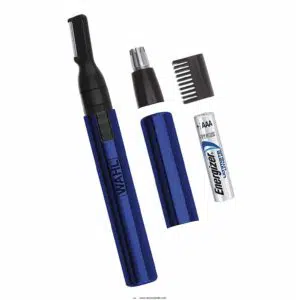
Wahl’s aluminum body feels solid in your palm—no cheap plastic wobble. The lithium battery keeps cutting speed steady for months before needing a replacement, so you won’t fight a dying motor mid-trim.
You get two heads: a rotary nose piece that spins inside your nostril without yanking, and a detail blade for cleaning up sideburns or brows.
Stainless steel blades rinse clean under the tap, though you’ll want to dry them fully to avoid internal rust. It fits a dopp kit easily and costs less than most electric shavers.
| Best For | Men who want a compact trimmer for quick touchups on facial hair, nose, ears, and eyebrows without dealing with cords or bulky tools. |
|---|---|
| Material | Stainless Steel |
| Power Source | Battery Powered |
| Primary Use | Nose, Ear, Eyebrow |
| Portability | Compact with Pouch |
| Cleaning | Washable Head |
| Weight | Aluminum Body |
| Additional Features |
|
- Aluminum body feels durable and won’t flex or crack like plastic models
- Lithium battery maintains consistent power through the entire charge cycle
- Two interchangeable heads handle both nostril hair and detail work like sideburns
- Multiple users report the motor failing after 12-24 months of regular use
- Plastic internal components may break down faster than the metal exterior suggests
- Cap doesn’t always stay secure, making it annoying to toss in a travel bag
5. ConairMan Nose Ear Hair Trimmer
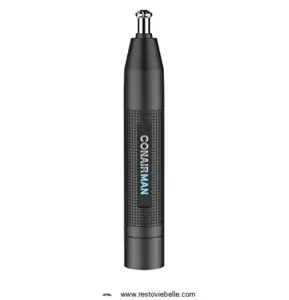
ConairMan’s 360-degree bevel blade cuts from every angle without tugging, so thick nose hairs disappear in seconds. You twist on the detailer head for sideburns or the foil shaver for lip edges—three tools in one compact body.
It runs on a single AA lithium cell you swap in seconds, no charging wait. Rinse the head under the tap after each trim, then let it air-dry completely.
The motor’s loud inside your ear canal, but it works fast enough that you won’t mind.
| Best For | People who want a quick, multi-purpose trimmer that handles nose, ear, and eyebrow hair without the hassle of charging cables. |
|---|---|
| Material | Stainless Steel |
| Power Source | Battery Powered |
| Primary Use | Nose, Ear, Eyebrow |
| Portability | Compact with Pouch |
| Cleaning | Washable Attachment |
| Weight | 0.11 kilograms |
| Additional Features |
|
- 360-degree beveled blade cuts thick hair cleanly from any angle without pulling
- Three attachments (trimmer, detailer, foil shaver) cover multiple grooming needs in one compact tool
- Washable head and AA battery design make it simple to maintain and travel with
- Loud motor can be uncomfortable when trimming inside your ear
- Requires disposable AA lithium batteries instead of being rechargeable
- Basic accessory case doesn’t feel premium
6. Panasonic Ear And Nose Hair Trimmer
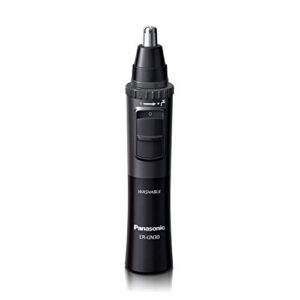
Panasonic’s ER-GN30 spins dual-edge stainless-steel blades that grab hair from the top and sides in one pass. The hypoallergenic curves follow your nostril shape without stabbing delicate skin—no nicks, no blood.
You can trim dry or wet in the shower. Flip the switch under a faucet and the Vortex system sucks water through the head to rinse clippings in seconds.
One AA battery lasts about ninety minutes total—roughly a year of weekly trims. At 2.2 ounces it drops into any travel bag without drama.
| Best For | Anyone who wants a simple, no-fuss trimmer for nose and ear hair that works in the shower and doesn’t need charging cables. |
|---|---|
| Material | Stainless Steel |
| Power Source | Battery Powered |
| Primary Use | Nose, Ear, Facial |
| Portability | Cordless |
| Cleaning | Vortex Cleaning System |
| Weight | 5.44 ounces |
| Additional Features |
|
- Dual-edge blades catch hair from multiple angles so you’re not going over the same spot ten times
- Vortex cleaning system makes rinsing out hair clippings really easy under the tap
- Runs on one AA battery that lasts about a year of regular use
- Some people report it stops working after a few months and needs battery wiggling to restart
- Takes a bit of patience to take apart and put back together for deep cleaning
- No battery included in the box
7. Panasonic Nose And Ear Trimmer
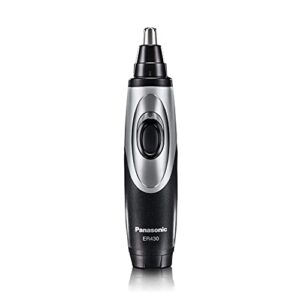
If you want the bare minimum that still works, grab the ER-GN30. It’s basically the same dual-edge stainless-steel setup as Panasonic’s nicer model—cuts from top and sides without stabbing your nostril lining.
The waterproof body is good for shower duty or dry grooming. Hold it under a tap and the vortex cleaning spins out hair in seconds flat.
One AA battery gives you ninety minutes of runtime. At 108 grams you won’t feel it in your bag. Budget pick that doesn’t suck.
| Best For | Anyone who needs a basic, reliable trimmer for ear and nose hair without spending much—especially if you travel and want something waterproof you can rinse clean. |
|---|---|
| Material | Stainless Steel |
| Power Source | Battery Powered |
| Primary Use | Nose, Ear, Facial |
| Portability | Includes Travel Pouch |
| Cleaning | Washable Head |
| Weight | 108 Grams |
| Additional Features |
|
- Dual-edge blade cuts from multiple angles without poking sensitive skin
- Fully waterproof so you can use it in the shower and clean it under the tap in seconds
- Runs 90 minutes on a single AA battery and weighs almost nothing
- Can feel ticklish or uncomfortable if you’re sensitive to vibration
- You might nick yourself if you’re not careful with technique
- Battery compartment isn’t waterproof, so you need to be cautious around water despite the body being safe
8. Motanar Stainless Steel Grooming Scissors
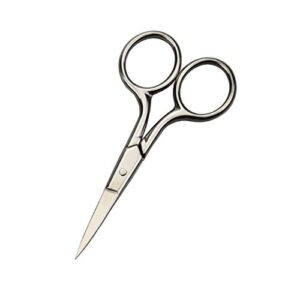
Motanar’s 3.5-inch scissors give you manual control for around ten bucks. The rounded ball tips won’t stab your nostril when your hand slips—huge upgrade over pointed nail scissors that everyone tries once then regrets.
Stainless steel stays sharp through dozens of trims and rinses clean in two seconds. You can toss them in your shaving kit without worrying about rust or corrosion.
They work for eyebrows and stray beard hairs too. Simple tool that does one job well.
| Best For | Anyone who wants affordable, safe nose hair scissors that won’t poke you when trimming hard-to-reach areas. |
|---|---|
| Material | Stainless Steel |
| Power Source | Manual |
| Primary Use | Nose, Ear, Eyebrow |
| Portability | Portable |
| Cleaning | Manual Cleaning |
| Weight | Lightweight |
| Additional Features |
|
- Rounded ball tips prevent accidental nicks and jabs inside your nose
- Stainless steel construction resists rust and stays sharp through regular use
- Works for multiple grooming tasks like eyebrows and stray facial hairs
- 3.5-inch size might feel small or awkward if you have larger hands
- May need some breaking in before the blades open and close smoothly
- Not ideal for cutting very fine or short hairs
Choosing The Right Tool for Your Needs
You’ve seen the options. Now you need to figure out which tool actually fits your life.
Let’s break down what matters most—safety, how often you groom, and what you can actually afford.
Factors to Consider (Safety, Comfort, Efficiency)
Picking the right grooming tool comparison isn’t rocket science—just focus on three core elements. Here’s what actually matters:
- Cuts prevention: Trimmers hide blades behind guards so you won’t nick your nasal lining, while scissors demand perfect hand control.
- Sensation comfort: Rotary blades feel like mild vibration instead of sharp metal scraping tissue.
- Quick grooming: A nose hair trimmer clears both nostrils in under 60 seconds; scissors take several minutes per session.
- IR trimming techniques: Waterproof trimmers rinse clean fast, keeping your nose hair trimming safety routine simple and hygienic.
Grooming Frequency and Personal Preferences
Your grooming routine drives tool choice. Weekly trimmers suit busy professionals who value speed and nose hair trimming safety.
Scissors work for flexible schedules—trim when hairs show. Fast growers need a reliable nose hair trimmer every few days.
Appearance goals matter: client-facing jobs demand frequent touch-ups, while natural looks need less. Comfort factors shift choosing the right trimmer—sensitive skin prefers gentler, spaced-out sessions over aggressive daily cutting.
Budget and Product Availability
Once you’ve nailed your schedule, money and access seal the deal. Electric trimmers run $15–$60 depending on features like water resistance. Scissors cost $5–$15 and last forever.
Budget trimmer options:
- Basic electric models start around $8–$15
- Mid-range trimmers ($20–$30) balance features and price
- Rounded-tip scissors run $5–$15
- Discount Opportunities drop prices 10–25% during sales
Major brands like Panasonic and Wahl stock shelves at Walmart, Target, and Amazon—easy to grab anytime.
Frequently Asked Questions (FAQs)
Can I use normal scissors to cut nose hair?
You can, but it’s a gamble. Standard scissors have sharp tips that poke delicate nostril skin. Awkward angles mean you can’t see well. Infections love those tiny cuts.
What is the difference between a trimmer and a scissor?
An electric trimmer uses spinning or oscillating blades behind a guard to catch hairs automatically.
Scissors cut manually where blades meet, so you position each snip yourself—slower but super precise.
Can nose trimmers cause ingrown hairs or irritation?
Trimmers rarely cause ingrown hairs if you use them right. They cut hair at the surface instead of yanking it out.
But pressing too hard or trimming super close can irritate sensitive nasal skin.
How often should trimmer blades be replaced?
Most brands say replace nose hair trimmer blades every 6 to 12 months with regular use.
Stainless steel blades dull faster, while cleaning frequency and hair type affect replacement schedules for ideal trimming performance.
Are nose trimmers suitable for sensitive skin?
In the case of sensitive skin, most nose hair trimmers play it safe. They hide blades behind guards so sharp edges never kiss delicate nostril tissue, cutting irritation before it starts.
Whats the ideal nose hair length to maintain?
Keep nose hair just inside the nostril rim so it’s invisible from arm’s length.
Trim every one to two weeks using a nose hair trimmer or rounded scissors to maintain nasal health.
Can women use mens nose hair trimmers?
Most nose hair trimmers work fine for women—they’re basically unisex tools.
The blade mechanism doesn’t care about gender.
Just clean it thoroughly if you’re sharing a men’s model, especially around sensitive skin.
Conclusion
Your nose doesn’t need a trip to the ER for a grooming routine. The difference between nose trimmer and scissors comes down to whether you want protection or just hope your hand doesn’t slip.
Trimmers cost more upfront but save you from infections and bleeding. Scissors work if you’ve got surgeon-level steadiness. Pick the tool that matches your risk tolerance. Your nostril will thank you either way.
- https://www.menshealth.com/grooming/g32085361/best-nose-hair-trimmer/
- https://www.realmenrealstyle.com/nose-hair-grooming-methods/
- https://www.tampa-xway.com/for-travelers/tolls/toll-map-calculator/
- https://www.liliprobeauty.com/a-the-ultimate-guide-to-finding-the-best-nose-trimmer.html
- https://sharpologist.com/what-is-the-best-nose-and-ear-trimmer/