This site is supported by our readers. We may earn a commission, at no cost to you, if you purchase through links. This content is for general informational and educational purposes only and is not a substitute for professional medical, dermatological, or nutritional advice.

You’ve scrolled past a dozen ads promising a lumberjack beard in thirty days, and you’re skeptical—rightfully so. The beard growth kit market thrives on hope and patchy genetics, selling everything from mystery serums to torture devices disguised as derma rollers.
But here’s the truth most brands won’t tell you: these kits don’t rewrite your DNA, and they won’t magically sprout follicles where none exist. What they can do, when formulated correctly, is wake up dormant follicles and create conditions for healthier growth—assuming you’ve got the raw materials to work with.
The science behind ingredients like biotin, minoxidil, and microneedling is legitimate, but effectiveness hinges entirely on your genetics, hormone levels, and whether you’re actually addressing the right problem.
Table Of Contents
- Key Takeaways
- What Are Beard Growth Kits?
- How Do Beard Growth Kits Claim to Work?
- Do Beard Growth Kits Really Work?
- Key Ingredients and Tools in Beard Growth Kits
- How to Use a Beard Growth Kit for Best Results
- Potential Benefits and Limitations
- Choosing The Right Beard Growth Kit
- Frequently Asked Questions (FAQs)
- How do beard growth kits work?
- Does castor oil help with the growth of a beard?
- Do you need a beard growth kit?
- Do beard growth products really work?
- Do beard growth kits really work?
- How long do beard growth kits take to work?
- Do beard growth stimulators work?
- Can you actually stimulate beard growth?
- Can beard kits cause skin irritation?
- How long until I see results?
- Conclusion
Key Takeaways
- Beard growth kits can’t create new follicles or override your genetics, but they can wake up dormant ones and improve existing hair quality through ingredients like minoxidil, biotin, and microneedling—assuming you have the baseline follicles to work with.
- Clinical evidence supports individual components (minoxidil increases facial hair density, derma rollers boost absorption and stimulate growth factors), though success rates hover around 75% with visible results typically emerging between 8-12 weeks of consistent use.
- Most kits bundle oils for moisture, derma rollers for follicle stimulation, and vitamins for keratin production, but effectiveness depends entirely on your genetics, hormone levels, and whether you maintain the routine long enough to see results.
- Gains aren’t permanent without continued effort—discontinued use can reverse progress within 3-6 months, and potential side effects include skin irritation, allergic reactions, and hormonal imbalances from high-dose supplements.
What Are Beard Growth Kits?
Beard growth kits are bundled products designed to stimulate dormant hair follicles and promote healthier, fuller facial hair. Think of them as a curated toolkit that combines different approaches—nutrients, stimulation devices, and maintenance products—all working together to create conditions where your beard can actually thrive.
Many of these kits also include beard shaping tools that help define edges and create clean lines as your facial hair fills in.
Here’s what you’ll usually find packed into these kits.
Common Components in Beard Growth Kits
Most beard growth kits bundle multiple products into one package so you can tackle patchy spots from several angles. Think of it as a coordinated attack on stubborn follicles. Here’s what you’ll usually find inside:
Most packages include a derma roller for beard stimulation, plus nourishing oils and balms to keep those new whiskers healthy as they grow in.
- Beard oils and serums – Lightweight formulas with jojoba, argan, or castor oil that moisturize skin and reduce breakage. Many include biotin or vitamin E to support healthier hair shafts, while some add peptide blends like Capilia Longa marketed for thickness.
- Derma rollers – Microneedling devices with 0.25–0.5 mm needles that lightly puncture skin to stimulate follicles and boost absorption of growth supplements you apply afterward.
- Hair vitamins – Capsules loaded with biotin (often several thousand micrograms), plus B-complex vitamins and minerals like zinc that support keratin production for beard growth and maintenance.
You can learn more about the effectiveness and ingredients of a to further understand how these products work.
A hyperpigmentation treatment guide breaks down how ingredients like vitamin C, niacinamide, and retinoids target dark spots at different stages.
How Do Beard Growth Kits Claim to Work?

Beard growth kits make bold promises about transforming patchy facial hair into a full, thick beard. But what’s actually happening beneath your skin when you use these products?
The manufacturers claim these kits work through three primary mechanisms that target different aspects of hair growth and follicle health.
Stimulation of Hair Follicles
Most follicle activation happens through mechanical and chemical pathways that beard growth kits exploit. Derma rollers create tiny wounds, triggering the release of growth factors—VEGF and EGF specifically—while minoxidil prolongs the anagen phases, where your hair actually grows. Microneedling boosts dermal signaling to follicle stem cells, prompting cellular regeneration. Think of it as waking dormant follicles rather than creating new ones.
Once follicles activate, consistent care routines—like those outlined in keeping your beard soft and healthy—help sustain that growth momentum.
Beard growth kits use derma rollers and minoxidil to wake dormant follicles through controlled micro-injuries and extended growth phases—not to create new ones
Nutrition also plays a critical role in hair health, as can markedly affect growth outcomes.
Role of Nutrients and Vitamins
Your body can’t manufacture what it doesn’t have. Mineral deficiency sabotages hair growth supplements before they even start working.
Biotin builds keratin, the structural protein in beard hair, while vitamin D receptors sit directly in follicles and support testosterone production. Zinc prevents shedding and backs DHT activity, which controls thickness. Omega-3s extend the growth phase, and vitamins C and E protect follicles from oxidative stress.
Microneedling and Skin Health Benefits
Derma rollers in beard growth kits use microneedling therapy to trigger collagen production and improve skin health. Tiny needles create controlled micro-injuries that activate your body’s repair response, boosting blood flow to dormant hair follicles.
This dermatological benefit goes beyond facial hair—you’re getting skin rejuvenation that makes topical serums penetrate deeper. Hair follicle stimulation becomes more effective when your skin barrier actually works with you.
Do Beard Growth Kits Really Work?

The real question isn’t whether these kits claim to work—it’s whether science backs them up. You need to know what the research actually shows, not just what marketing promises deliver.
For example, a thick beard styling guide can show you which products actually support healthy growth versus those relying on empty promises.
Let’s look at the clinical evidence, success rates, and the personal factors that determine whether a beard growth kit will work for you.
Scientific Evidence and Clinical Studies
You’ll find stronger medical evidence for individual kit components than for pre-packaged beard growth kits themselves. Clinical trials show that 3 to 5 percent minoxidil increases terminal facial hair density in men with patchy beards over 16 to 24 weeks.
Dermatological research confirms microneedling plus minoxidil boosts hair follicle stimulation through growth factors and improved drug penetration—one study recorded 91 new hairs versus 22 with minoxidil alone after 12 weeks.
Reported Success Rates and Real-World Results
Real results from beard growth kits land somewhere between marketing promises and outright disappointment. Community surveys show roughly 75 percent of minoxidil users see noticeable facial hair growth after consistent use, while brand data suggests visible beard density improvements emerge around six to eight weeks for most responders.
User feedback reveals a practical truth:
- About 35 percent added coverage represents typical gains among success stories
- Only 10 percent report zero improvement after completing full protocols
- Growth patterns often start with thin vellus hairs that need months to mature
- Money-back guarantees after 150 days signal brands expect slow, variable results
- Critical reviews frequently mention kits improving existing beard quality without filling bare patches
Real-world experiences show beard growth kits work modestly for many—not miracles, but measurable progress.
Factors Influencing Effectiveness (Genetics, Lifestyle)
Genetics ultimately sets your beard ceiling—facial hair follicles respond to androgens like testosterone and DHT, so men with active androgen receptors see thicker facial hair growth faster. Ethnicity shapes baseline density, hormone balance determines follicle activity, and lifestyle choices like chronic stress or poor sleep disrupt hair growth cycles.
Nutrient deficiencies and environmental impact from smoking further limit how well beard growth kits deliver real gains.
Key Ingredients and Tools in Beard Growth Kits
Understanding what’s actually in these kits helps you separate the products with real potential from the ones just selling hope in a bottle.
Most beard growth kits combine four main categories of ingredients and tools, each claiming to target different aspects of facial hair development.
Let’s break down what you’re likely to find and what each component is supposed to do for your beard.
Beard Oils and Serums

Most beard care products in growth kits lean heavily on oils and serums to hydrate your facial hair and the skin underneath. Here’s what these blends actually do:
- Carrier oils like jojoba and argan soften coarse beard hair and lock in moisture without clogging pores.
- Growth serums with biotin or caffeine aim to support thicker-looking facial hair over weeks of consistent use.
- Minoxidil-based formulas can genuinely boost follicle activity, though results fade if you stop applying them.
These beard growth kits won’t rewrite your genetics, but quality oil blends improve skin health and make existing facial hair more manageable. Serum benefits depend on the active ingredients and your follicle response.
Derma Rollers and Microneedling Devices
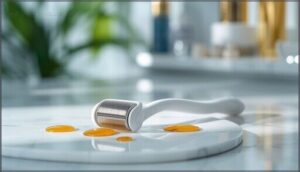
Microneedling therapy with derma rollers creates controlled micro-injuries that trigger collagen production and increase blood flow to your follicles. Most at-home devices use 0.25 to 0.5 mm needles—long enough to stimulate facial hair growth without hitting deeper tissue.
| Feature | Home Devices | Professional Treatments |
|---|---|---|
| Needle depth | 0.25–0.5 mm | Up to 3 mm |
| Safety risk | Moderate with proper hygiene | Lower in sterile settings |
| Best for | Maintenance, product absorption | Dramatic skin changes |
Derma roller safety hinges on needle length guidelines and skin irritation prevention. Roll horizontally, vertically, and diagonally once or twice weekly—never press hard. Sanitize before every session to avoid infection. Overuse scars your skin and sabotages beard growth kits instead of helping them.
Beard Growth Vitamins and Supplements

Most supplements toss biotin at your beard at doses 300 times higher than the 30 micrograms you actually need each day. Here’s the truth about beard nutrition and supplement safety:
- Biotin strengthens keratin in hair follicles—but only fills gaps in deficient men, not magic for healthy diets
- Zinc balances hormones and protein synthesis to support beard growth patterns and reduce shedding
- Vitamins A, C, D, E maintain skin health and normal follicle function without dramatic new coverage
- Herbal extracts like saw palmetto may help circulation but interact with medications
- MSM and collagen provide keratin building blocks for thicker, more resilient hairs
Expect 3 to 6 months before noticing healthier beard growth—these work like targeted multivitamins, not genetic overrides.
High‑dose biotin skews lab tests for thyroid and heart markers, so tell your doctor before blood work. Quality varies wildly between beard growth kits, so choose brands following good manufacturing practices to avoid mislabeled doses.
Shampoos, Conditioners, and Maintenance Tools

Beyond supplements, smart beard maintenance protects what you’re trying to grow. Beard wash with milder surfactants like decyl glucoside cleans without stripping natural oils that harsh scalp shampoos remove. Conditioners with jojoba or argan oil reduce breakage and frizz for fuller coverage.
Boar‑bristle brushes act like scalp massage tools—they distribute sebum and stimulate circulation through gentle facial grooming.
Wash oily skin three to four times weekly; dry or sensitive types need only one to two sessions.
How to Use a Beard Growth Kit for Best Results
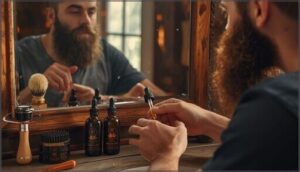
Having the right products won’t mean much if you’re using them wrong. The difference between patchy results and actual growth often comes down to technique, timing, and consistency.
Here’s how to optimize what your beard growth kit can actually do for you.
Step-by-Step Application Guide
Set yourself up for success by gathering your entire kit before you start.
Wash your face with a gentle cleanser, then apply your growth serum or oil, massaging it into the skin with circular motions for 30 to 60 seconds.
Follow up with your beard growth vitamins, taking the recommended dose with water to support facial hair stimulation from within.
Frequency and Routine Recommendations
Your grooming routine should hit that sweet spot between consistent and sustainable. Apply oils or serums two to three times daily during the first month, then scale back to once or twice as your beard care evolves.
Microneedling sessions work best once or twice weekly on non-consecutive days, giving skin time to recover. Maintenance strategies that respect your growth patterns beat aggressive product rotation every time.
Common Mistakes to Avoid
Even the best beard growth kits backfire when you press derma rollers too hard, causing scarring instead of gentle follicle stimulation. Poor hygiene—like skipping roller sanitization or layering oils on unwashed skin—invites breakouts and infections.
Incorrect application of minoxidil beyond label doses raises systemic side effects, while unrealistic expectations about overriding genetics lead to quitting before the three-month mark when real facial hair growth appears.
Potential Benefits and Limitations

Before you invest time and money into a beard growth kit, you need to know what’s actually achievable—and what the real trade-offs are. Most guys see initial changes within 8-12 weeks, but the gains don’t always stick around without continued effort.
Let’s break down the timeline, sustainability, and potential side effects so you can make an informed decision.
Expected Timeline for Results
Your beard won’t transform overnight—growth patterns follow a predictable arc if you stick with it. Most users notice early signs like softer texture within 2 to 4 weeks, but real facial hair growth and thickness improvements usually emerge around the 8 to 12 week mark. Here’s what to expect for realistic outcome predictions and progress tracking:
- Weeks 1-4: Reduced itchiness, improved softness—your skin adjusts to the routine
- Weeks 4-8: Visible fullness begins, especially if you’re consistent with oils and microneedling
- Weeks 8-12: Peak density gains appear; timeline variations depend on your hair growth cycle
- Beyond 12 weeks: Continued beard growth and care sustains momentum, though genetics set your ceiling
Result expectations should account for age, hormones, and lifestyle—some guys see changes in 4 weeks, others need 6 months for noticeable coverage.
Sustainability of Beard Growth Gains
Permanence isn’t guaranteed—your hair cycle determines how long new strands stick around. Most gains hold steady with consistent maintenance, but discontinued use can trigger regrowth patterns to revert over three to six months.
Longevity factors like diet, stress, and hygiene play a bigger role than any single product.
If you’re invested in eco-friendly options with green packaging, sustained routines support both beard health and wellness and the planet.
Possible Side Effects and Precautions
Though generally safe, skin irritation from oils or serums can trigger redness and clogged pores—especially if you’re layering products daily. Allergic reactions to fragrances hit sensitive skin hard, while microneedling risks include infection if your derma roller isn’t sterile.
High-dose supplements may cause hormonal imbalance or nutritional interactions with meds, so patch-test new beard growth kits and introduce one product at a time to protect hair follicles and skin health.
Choosing The Right Beard Growth Kit

Not all beard growth kits are created equal, and the wrong choice can waste both your time and money. You need to know what separates legitimate products from overhyped gimmicks before you commit.
Here’s what actually matters when you’re shopping for a kit that produces outcomes.
What to Look for on The Label
The label tells you everything about what you’re putting on your face—if you know where to look. Start with ingredient lists to confirm active compounds like biotin or castor oil actually appear, not just in marketing copy.
Check net contents to gauge value, allergen warnings if you’re sensitive, and storage instructions to maintain potency.
Beard growth kits with transparent labeling show confidence in their beard care formulation.
Importance of Customer Reviews and Clinical Backing
You can’t grow a beard on hype alone. Customer testimonials and review verification separate real facial hair growth from empty promises.
Clinical trials on beard growth kits—when they exist—should detail timelines, participant numbers, and measurable outcomes for product legitimacy.
Trust building happens when brands back claims with data and authentic user experiences in hair growth products and beard care. Check both before you buy.
Budget Considerations and Value for Money
Beard growth kits aren’t cheap, so budget planning matters as much as the ingredients inside. Cost analysis means comparing what you’re actually getting versus splurging on beard care and maintenance hype.
- Basic kits with oils and combs run $20 to $60 for entry-level beard growth
- Mid-tier options with dermarollers usually cost $60 to $120
- Premium beard growth kits can exceed $150 with specialty serums
- Bundled sets save 15 to 40 percent versus buying products individually
- Refill programs cut yearly costs by 20 to 25 percent for ongoing beard growth and care
Price comparison reveals that complete beard growth kit bundles offer better value assessment than piecemeal purchases. Factor in replacement schedules—dermarollers last three to six months, oils need replenishing every one to three months. Smart savings strategies focus on what delivers measurable beard growth, not flashy packaging.
Frequently Asked Questions (FAQs)
How do beard growth kits work?
Want thicker facial hair fast? Beard growth kits use microneedling derma rollers to trigger skin regeneration and stimulate dormant hair follicles, while oils deliver beard nutrition to support the natural growth cycle.
Does castor oil help with the growth of a beard?
Castor oil benefits facial hair by moisturizing skin and softening beard strands, but won’t speed up actual hair growth patterns.
It’s great for beard care and thickness appearance—just don’t expect miracles from hair follicle stimulation alone.
Do you need a beard growth kit?
You don’t need a Swiss Army approach to facial hair growth. If your genetics and beard health already favor solid growth patterns, stick with basic beard care tips—clean skin, balanced diet, regular grooming.
Do beard growth products really work?
Yes, some beard growth products really work. Minoxidil consistently shows measurable facial hair growth in clinical trials, while derma rollers boost absorption and stimulate follicles. Results depend on genetics and product quality.
Do beard growth kits really work?
Beard growth kits can thicken existing facial hair and wake up miniaturized follicles through microneedling plus minoxidil, but they won’t create coverage where you completely lack follicles—genetics still sets the blueprint.
How long do beard growth kits take to work?
When do you actually see progress? Most beard growth kits deliver first visible results between two and three months, with fuller beard density and thickness appearing around the four to six month mark when used consistently.
Do beard growth stimulators work?
Hair follicle stimulation through derma rollers and microneedling can support facial hair growth by boosting circulation and collagen production.
Oils and serums improve skin health, but results depend on your genetics and consistent beard care tips.
Can you actually stimulate beard growth?
You can enhance what you’ve got—better blood flow, hydration, and nutrition support hair follicles to fulfill their genetic potential.
But you can’t conjure new follicles or override your DNA’s blueprint for facial hair growth.
Can beard kits cause skin irritation?
Yes, they can. Fragrance-heavy oils, certain fatty acids, and microneedling devices may trigger redness, itching, or breakouts—especially if you have sensitive skin, eczema, or acne-prone facial areas.
How long until I see results?
Like watching grass grow, facial hair growth from a beard growth kit unfolds slowly—expect subtle follicle stimulation and vellus hairs within weeks, but real beard density improvements take three to four months of consistent progress tracking.
Conclusion
Hope isn’t a strategy—but informed action is. Whether beard growth kits work depends entirely on what you’re starting with and what you’re willing to commit to.
If you’ve got dormant follicles and the discipline for a consistent routine, ingredients like minoxidil and microneedling can deliver measurable results.
But if genetics dealt you a weak hand, no serum will rewrite your biology. Know your baseline, manage expectations, and skip the miracle promises.