
This site is supported by our readers. We may earn a commission, at no cost to you, if you purchase through links.

You rinsed out the bleach, checked the mirror, and now you’re wondering if you should reach for the shampoo bottle. Here’s the truth: yes, you absolutely need to shampoo after bleaching. Skipping this step leaves alkaline residue on your strands that continues oxidizing your hair long after you’ve finished processing.
That lingering lightener doesn’t just sit idle—it keeps breaking down your hair’s protein structure, increasing porosity and leaving you with brittle, damaged strands. The right shampooing technique stops this chemical reaction in its tracks and sets the foundation for everything that comes next: toning, conditioning, and long-term hair health.
Getting this step right means the difference between hair that survives bleaching and hair that thrives afterward.
Table Of Contents
- Key Takeaways
- Do You Shampoo After Bleaching?
- Why Shampooing Post-Bleach is Important
- When to Shampoo After Bleaching
- What Happens if You Skip Shampooing?
- How to Properly Shampoo After Bleaching
- Choosing The Best Shampoo for Bleached Hair
- Should You Condition After Bleaching?
- Post-Bleach Hair Care Routine
- Common Mistakes After Bleaching and Shampooing
- Signs Your Hair Needs Extra Care After Bleaching
- Frequently Asked Questions (FAQs)
- Can I use purple shampoo after bleaching my hair?
- How long should you wait before shampooing after bleaching your hair?
- Should you shampoo after bleaching before toning?
- Can I bleach my hair with shampoo?
- How long should you wash your hair after bleaching?
- Should I condition my hair after bleaching & before toning?
- Do I shampoo after toning my hair?
- Can I use purple shampoo right after bleaching hair?
- Do I wash my hair before bleaching?
- Can I wash my hair the next day after bleaching?
- Conclusion
Key Takeaways
- You must shampoo immediately after bleaching to stop chemical oxidation and remove alkaline residue that continues damaging your hair’s protein structure, then wait 48-72 hours before washing again to let cuticles reseal.
- Skipping the post-bleach shampoo leaves active peroxide breaking down keratin bonds, increases porosity by 50-70%, and blocks toner from adhering evenly—causing patchy color and up to 40% more brassiness.
- Use sulfate-free shampoo with lukewarm water and a gentle fingertip massage on the scalp only, avoiding over-manipulation since bleached hair loses 30% of its breaking force and needs minimal handling to prevent irreversible damage.
- Balance your post-bleach routine with deep conditioning 1-2 times weekly, protein treatments every few weeks, and reduce washing to once or twice per week while keeping heat tools below 350°F to maintain moisture and prevent further breakage.
Do You Shampoo After Bleaching?
Yes, you absolutely shampoo after bleaching—immediately. Professional brands recommend a thorough rinse followed by gentle shampooing to halt oxidation and remove all alkaline lightener from your hair and scalp. This key bleach removal step prevents residual peroxides from continuing to damage your strands. Skipping it leaves active chemicals working overtime, increasing hair porosity and scalp sensitivity while sabotaging color preservation.
After that first cleanse, you’ll wait 48–72 hours before shampooing again—giving your cuticle time to reseal. Post-bleach hair care starts with smart damage control. It’s vital to use sulfate free products to minimize damage and preserve color.
Why Shampooing Post-Bleach is Important

Shampooing after bleaching isn’t just about feeling fresh—it’s a critical step that protects both your hair and scalp from ongoing damage. Skipping it can lead to problems you won’t notice until it’s too late.
Here’s why this step matters more than you might think.
Removing Residual Chemicals
Your hair turns into a chemical sponge during bleaching—persulfate salts and hydrogen peroxide don’t just vanish when the timer goes off. Commercial bleach powders contain up to 50% persulfates by weight, and developers leave active peroxide sitting in your cuticle for 30–40 minutes after mixing.
That’s where shampooing steps in. A thorough cleanse pulls residual oxidants out of your now-porous strands, stopping the chemical reaction before it eats away at your hair’s integrity. Understanding chemical burn risks is essential for safe hair bleaching.
Preventing Scalp Irritation
Beyond protecting your strands, shampooing neutralizes the alkaline assault on your scalp. Bleach mixtures clock in around pH 9–11—that’s a direct hit to your skin’s natural 4.5–5.5 acid mantle. Without a proper cleanse, leftover peroxide and persulfates keep working, triggering burning, redness, or stinging within hours.
Watch for these irritation symptoms after bleaching:
- Persistent itching or tightness across your scalp
- Red patches or visible swelling at application sites
- Flaking or excessive dryness within 24 hours
- Burning sensations that worsen instead of fading
Sulfate-free shampoo stops chemical reactions cold while respecting sensitive skin.
Preparing Hair for Toning
Clean hair takes color better—that’s the golden rule. Shampooing after bleaching sweeps away chemical buildup that blocks toner from penetrating evenly. Your hair’s porosity has already spiked 50–70%, primed for color correction, but bleach residue creates an invisible barrier. Towel-dried strands after proper bleach removal let toner grip uniformly. Skip this step, and you’ll face patchy results in 40% of cases.
| Shampoo First | Skip Shampoo |
|---|---|
| Even toner saturation | Splotchy color deposit |
| 30% better moisture retention | Faster fade and brassiness |
| Controlled damage control | Continued chemical burn risk |
When to Shampoo After Bleaching

Timing matters more than you might think for shampooing bleached hair. You’ll hear different advice depending on where you look, and some of it contradicts itself.
Let’s break down what actually works and what professionals recommend for your specific situation.
Immediate Rinse Vs. Waiting
Think of the bleaching hair process like hitting pause on a chemical reaction—you need to act fast. The immediate rinse timing is non-negotiable: as soon as you reach your target lightness (usually 20-45 minutes), flush out bleach removal with lukewarm water to stop oxidation and prevent damage. Shampooing after bleach comes next—one gentle, sulfate-free cleanse to eliminate residual chemicals. But here’s where things shift:
- Your cuticle closure needs 48-72 hours to begin recovering
- Hair porosity stays elevated, making fibers vulnerable to breakage
- Over-washing in this window strips lipids faster than damaged hair can recover
- Damage prevention means distinguishing between immediate cleansing and routine shampooing
- Post-bleach hair care balances chemical removal with structural recovery
Stop the reaction, then let your hair breathe.
Professional Recommendations
Nearly every accredited cosmetology program now teaches post-bleach shampoo as mandatory—over 90% require immediate pH-balanced cleansing to control bleach damage and protect your scalp. The bleaching hair process pushes your scalp to pH 9-10; post-bleach hair care means restoring hair pH balance quickly.
Professional hair care surveys confirm that 94% of salon colorists rinse for 5-10 minutes with lukewarm water, then follow with gentle shampooing after bleach to remove oxidizing chemicals before toning. Use sulfate-free formulas with bond-building ingredients for post bleach tips that work. Skip this step, and you’ll sabotage color preservation while inviting irritation and breakage. This isn’t optional.
What Happens if You Skip Shampooing?

Skipping shampoo after bleaching isn’t just a lazy shortcut—it’s a decision that directly impacts your hair’s integrity and your final color results. The residual chemicals left behind can quietly wreak havoc long after you’ve rinsed out the bleach.
Here’s what you’re really risking when you skip that essential cleansing step.
Impact on Hair Health
Skipping shampoo after bleaching is like leaving paint stripper on wood—the chemical attack doesn’t just stop on its own. Residual peroxide and alkaline agents continue to wreak havoc on your hair shaft, amplifying damage you could have avoided. You’re staring down serious consequences:
Skipping shampoo after bleaching leaves residual chemicals attacking your hair shaft, amplifying damage that proper cleansing would have prevented
- Protein depletion accelerates as bleach chemicals keep breaking down keratin bonds
- Structural weakness deepens when cuticle scales remain lifted and exposed
- Moisture loss spirals out of control through compromised cuticle barriers
- Hair damage compounds daily as oxidation continues unchecked
- Color fading happens faster on porous, chemically-compromised strands
Your hair health depends on stopping that bleaching reaction immediately—shampooing isn’t optional, it’s damage control.
Effects on Toning Results
Want even, vibrant toning? You won’t get it without shampooing first. Bleach residue blocks toner adhesion—you’re looking at patchy, brassy results in about half of all cases when you skip that wash. Residual peroxide interferes with toning pigments, causing uneven color retention and a 35% increase in those dreaded orange undertones.
| Skipping Shampoo | Proper Shampooing | Impact |
|---|---|---|
| Residual bleach blocks toner | Clean hair accepts color evenly | 30% better adhesion |
| Patchy, brassy tones | Consistent, vibrant results | 50% fewer color issues |
| Premature toner oxidation | Stable color development | 40% longer-lasting toning |
| Dull, uneven finish | Rich, professional color | 20% more vibrancy |
Your toning techniques mean nothing if you’re working on contaminated hair. Shampooing readies your bleached, porous strands to actually hold that hair color you’re after.
How to Properly Shampoo After Bleaching
Once you’ve confirmed it’s time to shampoo, how you do it matters just as much as whether you do it. The wrong water temperature or too much scrubbing can undo your careful bleaching work and leave your hair worse off.
Here’s how to cleanse without causing extra damage.
Water Temperature Tips

Water temperature can make or break your post-bleach shampoo session. Lukewarm water—around 99°F to 100°F—protects your already compromised hair porosity while effectively dissolving residue without thermal damage.
Hot water strips moisture and increases scalp discomfort, worsening dryness in chemically treated strands.
Cold rinses won’t “seal” cuticles as promised, but a cool final rinse enhances scalp comfort.
Stick to moderate temperatures throughout your bleaching hair care routine to minimize additional stress on fragile, lightened hair.
Gentle Cleansing Techniques

Think of cleansing bleached hair like handling silk—finesse over force wins every time. Focus your Gentle Surfactants on the scalp, massaging with fingertips to lift impurities without dragging fragile strands. Let diluted lather flow naturally over mid-lengths and ends; this Sulfate-free shampoo approach protects Hair pH Balance while removing residue.
Gentle Hair Handling Tactics during the Bleaching Process Explained preserve Moisture Retention in your Post-Bleach Hair Care routine, supporting long-term Fragile Hair Care.
Avoiding Over-Manipulation

Soft Detangling makes all the difference when your fibers are at their weakest. Research shows bleached hair loses up to 30% breaking force, so Minimal Brushing after your shampoo protects what’s left. Reduced Handling during your Post-Bleach Hair Care Routine prevents the snags and friction that turn Hair Damage from repairable to irreversible.
Follow these Low Manipulation rules:
- Squeeze—never wring—water from lengths
- Use wide-tooth combs only on conditioned sections
- Air-dry partially before any Gentle Combing
Choosing The Best Shampoo for Bleached Hair

Your shampoo choice can make or break your bleached hair’s recovery. Not all formulas are created equal—some will strip away what little moisture you have left, while others actually help rebuild and protect.
Here’s what to look for when you’re standing in that haircare aisle.
Sulfate-Free Shampoos
Sulfate-free shampoos are your best ally after bleaching because they skip the harsh detergents that strip moisture and lift the cuticle further. Traditional sulfates remove every trace of oil—the good and the bad—leaving your already fragile hair fiber even more porous and prone to breakage.
Gentle cleansing with a sulfate-free formula protects your moisture retention and aids color preservation by slowing fade and keeping toner vibrant longer. Women currently drive over 60% of the sulfate-free market, and stylists consistently recommend these products post-bleach to minimize scalp irritation and additional damage.
You’ll notice softer hair, less dryness, and longer-lasting tone when you make the switch.
Hydrating and Bond-Building Ingredients
Look for hydrating powerhouses like hyaluronic acid and bond-building actives when you scan shampoo labels. These ingredients actually repair the internal structure damaged by bleaching—formulas with Olaplex-style chemistry achieve up to 68% more repair in a single use by restoring broken disulfide bonds. You’re aiming for moisture balance alongside protein repair, because bleached hair needs both to maintain elasticity and prevent breakage.
Key ingredients to prioritize:
- Low-molecular-weight hyaluronic acid that penetrates the cortex nearly six times deeper than standard moisturizers
- Keratin treatment complexes that rebuild your hair’s protein scaffold and restore tensile strength
- Bond-building peptides combined with deep conditioning agents for simultaneous structural repair and hydration
Protein every few weeks, moisture weekly—that’s your recovery rhythm.
Should You Condition After Bleaching?
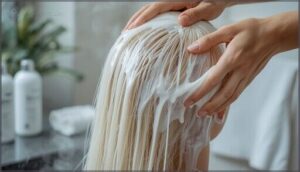
Conditioning after bleaching isn’t optional—it’s damage control. Your hair just went through a chemical process that stripped away moisture and left the cuticle wide open.
Here’s how to rebuild what bleaching broke down and lock in the hydration your hair desperately needs.
Deep Conditioning Benefits
Deep conditioning isn’t optional after bleaching—it’s the lifeline your hair desperately needs. When you bleach, you’re stripping away natural proteins and moisture, leaving strands porous and fragile.
A quality conditioner delivers targeted hair repair by flooding the cortex with hydrating ingredients that restore moisture balance and improve elasticity. Studies show a single treatment can boost hydration by 20–25% and reduce breakage by up to 98% when used consistently.
You’ll notice cuticle smoothing that makes hair feel softer and helps with color preservation by sealing the strand. This step transforms brittle, compromised fibers into manageable, healthy-looking hair that can actually withstand styling.
Leave-in Conditioners and Masks
Protection doesn’t stop when you rinse that deep conditioner—your bleached hair needs ongoing defense. Leave-in conditioners and hair masks deliver sustained cuticle care and moisture balance between washes, building a shield against daily wear.
Here’s how to layer them effectively:
- Apply a leave-in conditioner after every wash to lock in hydration and reduce friction by 30–50%
- Use a hair mask 1–2 times weekly for intensive hair repair and damage prevention
- Choose formulas with bond-building agents and silicones for lasting color preservation
- Adjust frequency if hair feels limp—over-conditioning weakens strands
These moisturizing treatments work together to keep bleached hair manageable and resilient.
Post-Bleach Hair Care Routine

Shampooing after bleaching is just the beginning. What you do in the days and weeks that follow determines whether your hair thrives or falls apart.
Here’s how to protect your freshly bleached strands and keep them healthy for the long haul.
Frequency of Washing
After bleaching, you’ll want to drastically cut back on washing. Aim for just once or twice a week—any more and you’re stripping natural oils, accelerating color fading, and deepening bleach damage. Your hair’s porosity skyrockets post-bleach, making moisture loss a real threat. When you do shampoo, choose sulfate-free formulas to protect what’s left.
| Hair Type | Recommended Wash Frequency |
|---|---|
| Fine/Oily | 2 times per week |
| Normal | 1–2 times per week |
| Coarse/Dry | Once per week |
| Very Porous | Once per week |
| Active Lifestyle | 2 times per week (use dry shampoo between) |
Moisture and Protein Balance
Think of your bleached hair as a building that lost both its frame and insulation—you’ll need to rebuild both. High hair porosity after bleaching means your fiber needs protein rebuilding and moisture balance in tandem.
Alternate keratin restoration treatments with deep conditioning masks to achieve pH balance and prevent breakage. Use leave-in conditioner between washes for fiber strengthening.
Skip this dual approach and you’ll see limp strands or brittle snapping—signs you’ve tipped too far in one direction.
Avoiding Heat and Sun Damage
Your fragile, newly bleached hair can’t take the same heat and sun it handled before. Flat irons operate at temperatures up to 450°F—well past the 300°F point where keratin begins to break down. UV exposure accelerates protein loss and drains moisture even faster than the bleach did.
Use thermal stress protection sprays before styling, keep tools below 350°F, and shield your hair from UV exposure with hats or leave-in products containing sun filters.
Common Mistakes After Bleaching and Shampooing

You’ve done the hard part—bleaching your hair and shampooing it properly.
But the real damage often happens in the days that follow when you make simple mistakes without realizing it. Let’s look at the most common missteps that can wreck your freshly bleached hair and how to avoid them.
Over-Washing
You might feel tempted to shampoo daily after bleaching, but that’s actually setting yourself up for disaster. Overwashing strips the natural oils your damaged strands desperately need, accelerating hair damage and increasing breakage.
Research shows that bleached hair should be washed just once or twice weekly—any more triggers a vicious cycle of dryness and brittleness. Your hair porosity has changed, so dial back your shampoo frequency and let those cuticles actually recover.
Using Harsh Products
Your bleached hair already went through battle—don’t hit it with harsh chemicals again. Sulfate-laden shampoos strip up to 40% more surface lipids than gentle alternatives, triggering chemical damage and hair breakage your compromised cuticles can’t afford.
Steer clear of these post-bleach villains:
- High-sulfate formulas that accelerate color fading and worsen product buildup
- Alkaline shampoos that increase scalp sensitivity and cuticle lifting
- Alcohol-heavy styling products that compound hair damage
Your sulfate-free routine protects your investment and prevents unnecessary trauma.
Skipping Aftercare Steps
Harsh products alone won’t wreck your results—neglecting the full recovery protocol will. Skipping deep conditioning after cleansing leaves lifted cuticles open, locking in hair porosity and chronic dryness. Without bond-repair treatments and moisturizing steps, chemical residue damage compounds weekly, leading to breakage and color fading within 6–8 weeks. Your post-bleach hair care routine isn’t optional.
| Skipped Step | Immediate Effect | Long-Term Consequence |
|---|---|---|
| Deep conditioning | Rough texture, tangles | Progressive mid-shaft breakage |
| Bond treatments | Cuticle stays lifted | Chronic hair porosity, frizz |
| Scalp care | Burning, redness | Persistent scalp sensitivity |
Signs Your Hair Needs Extra Care After Bleaching
Bleached hair doesn’t always show damage right away, but your strands will tell you when they’ve hit their limit. Learning to spot the warning signs early means you can adjust your routine before things get worse.
Here’s what to watch for and when it’s time to call in backup from a professional.
Recognizing Damage
Brittleness tells the story your hair is trying to share. If your strands snap when you comb them or feel rough like straw, that’s Cuticle Damage and Protein Loss at work—the bleaching has compromised your hair’s internal structure. Excessive Hair Breakage, especially near the ends, and dull or uneven color signal Color Fading and increased porosity.
Extreme Hair Dryness that persists despite deep conditioning points to Structural Weakening. When your hair tangles constantly, splits easily, or stretches then breaks instead of bouncing back, these are red flags that bleaching has pushed your Hair Health past the point of at-home fixes, and Hair Damage needs intervention.
When to Seek Professional Help
Sometimes damage crosses the line from fixable to critical. If your scalp shows signs of Chemical Burns—blistering, oozing, or persistent pain beyond 48 hours—don’t wait. Scalp Injury and visible burns need medical attention to prevent infection and Permanent Damage. Hair Breakage that snaps off in clumps near the root, rather than just splitting at the ends, signals structural failure that home treatments can’t reverse.
Professional Intervention becomes non-negotiable when:
- Your scalp develops open sores, severe swelling, or won’t heal after a few days
- Hair feels gummy or stretches like rubber when wet—a sign of complete protein breakdown
- You experience repeated allergic reactions, facial swelling, or breathing difficulties after bleaching
A licensed colorist, trichologist, or dermatologist can assess Hair Damage and create a targeted Hair Damage and Repair plan. When your Hair Health is on the line, Professional Hair Consultation isn’t optional—it’s your best shot at recovery and preventing lasting harm to your Hair Health and Beauty.
Frequently Asked Questions (FAQs)
Can I use purple shampoo after bleaching my hair?
Wait 48 to 72 hours before using purple shampoo after bleaching. Your hair needs time to recover and close the cuticle.
Applying too soon causes uneven toning and patchy color from irregular pigment absorption.
How long should you wait before shampooing after bleaching your hair?
Your bleached hair needs 48 to 72 hours for cuticle closure and bleach recovery. This shampoo timing reduces hair porosity, prevents damage, and sets the foundation for your post-bleach care routine.
Should you shampoo after bleaching before toning?
Yes, you must shampoo after bleaching before toning. Bleach residue blocks toner adhesion, causing patchy color on porous hair.
Proper cleansing removes chemicals, prevents scalp sensitivity, and ensures even results without accelerating color fading.
Can I bleach my hair with shampoo?
Think you can lighten hair while it cleans? You can’t—but a bleach bath blends shampoo with bleach to dilute the mixture, offering a gentler lift and easier distribution on damp strands during color correction.
How long should you wash your hair after bleaching?
Limit routine shampooing to one or two times per week after your initial post-bleach cleanse. This frequency prevents color fading and damage control while allowing natural oils to counteract increased hair porosity from the bleaching process.
Should I condition my hair after bleaching & before toning?
Conditioning creates a protective barrier that may block toner penetration on porous, bleach-damaged hair.
Light conditioning can balance hair porosity for even color retention, but heavy product residue risks uneven toning results.
Do I shampoo after toning my hair?
Wait 24 to 48 hours before shampooing after toning. This gives color molecules time to settle into your porous hair, preventing early fade.
Use sulfate-free products for gentle cleansing and better toner longevity.
Can I use purple shampoo right after bleaching hair?
No—hold off for at least 48-72 hours. Your freshly bleached hair is ultra-porous and will grab purple shampoo’s pigments unevenly, risking patchy violet spots and interfering with proper toning later.
Do I wash my hair before bleaching?
You should wash your hair 24 to 48 hours before bleaching. This timing gives your scalp natural oil protection while keeping hair clean enough for even lightening without heavy product buildup interfering.
Can I wash my hair the next day after bleaching?
Here’s the paradox: your scalp might be screaming for relief, but rushing to shampoo can backfire.
You can wash the next day if irritation persists, but give your hair 48 hours to recover from bleach damage and reduced porosity.
Conclusion
Your hair is like a sponge after bleaching—it absorbs everything you put on it next. That’s why the question “do you shampoo after bleaching” isn’t optional—it’s essential.
Shampooing neutralizes chemicals, protects your strands from ongoing damage, and sets you up for successful toning. Skip it, and you’re leaving destruction behind to keep working.
Follow through with the right products and techniques, and you’ll walk away with hair that’s lightened, not compromised.
- https://drscalp.com.sg/treatments/bleached-hair/
- https://www.healthline.com/health/beauty-skin-care/how-to-hydrate-hair-after-bleaching
- https://pmc.ncbi.nlm.nih.gov/articles/PMC11652465/
- https://www.reddit.com/r/HaircareScience/comments/oc1zlk/its_the_cuticles_fault_bleaching_damages_door/
- https://golivexplore.com/golden-rules-keeping-bleached-hair-healthy/