This site is supported by our readers. We may earn a commission, at no cost to you, if you purchase through links.

You’ve probably heard the promise: steam your hair regularly, and you’ll release faster growth. It’s an appealing idea, especially when you’re staring at the mirror willing your hair to grow past your shoulders.
But here’s the truth that most hair care enthusiasts don’t want to hear—steaming doesn’t actually speed up how fast your hair grows from the follicle. What it does do, however, is create the conditions where your hair can reach its full length potential without snapping off halfway there.
The real magic happens in retention, not acceleration, and understanding this difference can save you from chasing empty promises while missing out on steaming’s legitimate benefits.
Table Of Contents
- Key Takeaways
- Does Steaming Your Hair Make It Grow Faster?
- How Hair Steaming Impacts Hair Growth
- Key Benefits of Hair Steaming
- Steaming for Scalp Health and Hair Growth
- Can Steaming Prevent Hair Breakage?
- Best Hair Steaming Techniques for Growth
- How Often Should You Steam Your Hair?
- Which Hair Types Benefit Most From Steaming?
- Essential Precautions When Steaming Hair
- Other Proven Ways to Support Hair Growth
- Frequently Asked Questions (FAQs)
- How often should you steam your hair to promote faster growth?
- Can steaming your hair too frequently cause damage?
- What temperature is best for hair steaming?
- Can you steam color-treated or chemically processed hair?
- Should you steam hair before or after washing?
- What ingredients work best in steaming treatments?
- Conclusion
Key Takeaways
- Steaming doesn’t accelerate hair growth from the follicle since genetics and biology control your growth rate, but it prevents breakage and helps you retain the length you’re already growing by improving moisture balance and cuticle health.
- The real benefit of steam therapy is enhanced product absorption and reduced breakage through improved hair elasticity—your strands become flexible instead of snap-prone when moisture penetrates the shaft and cuticles lift to drink in conditioning agents.
- Low porosity hair, curly/natural textures, and dry or damaged strands benefit most from steaming sessions (15-20 minutes, 1-2 times weekly), but over-steaming triggers hygral fatigue where hair weakens from repeated swelling and contraction.
- Pairing steaming with scalp massage, regular trims every 6-8 weeks, proper nutrition (biotin, zinc, iron), and sulfate-free cleansing creates better growth conditions than steaming alone since real length retention starts with follicle health and breakage prevention.
Does Steaming Your Hair Make It Grow Faster?

Does steaming actually turbocharge your hair growth, or is that just wishful thinking? Here’s the truth: no credible study shows that steam therapy directly speeds up how fast your hair grows from the follicle. Your hair growth rate is locked into your biology—genetics, hormones, and overall health call the shots, not topical steam exposure.
That said, hair steaming isn’t a total myth regarding hair health. It works indirectly by boosting hair hydration, improving scalp health, and creating a better environment for your strands to thrive. When you reduce breakage through better hair nourishment and scalp treatment, you’re retaining more length over time. So while steaming won’t make your hair sprout faster, it can help you keep what you’re already growing—and that’s worth something.
Hair steaming won’t accelerate growth, but it prevents breakage and helps you retain the length you’re already growing
For accurate information on scientific studies, it’s vital to examine methodological rigor in research findings.
How Hair Steaming Impacts Hair Growth

Let’s cut through the noise and get real about what steaming actually does to your hair growth. The relationship between steam and length isn’t as straightforward as the beauty industry wants you to believe, and understanding the difference between direct and indirect effects matters.
Your genetics and biology call the shots here, but steaming plays a supporting role worth understanding.
Some ingredients in your routine, like cetearyl alcohol, work with steam to lock in that moisture and smooth down rough cuticles.
Direct Vs. Indirect Effects on Growth
Confusion around steam therapy often stems from mixing up what it actually does to your hair. The truth is, moisture from steaming affects your hair shaft directly—hydrating the cuticle and boosting elasticity—but doesn’t wake up your hair follicle or speed up growth patterns. Instead, it works indirectly by improving scalp conditions and hair health, which can prevent breakage that sabotages your length goals. Understanding the language related aspects of hair care can also help clarify the benefits of steam therapy.
Here’s what steam therapy really changes:
- Hair texture becomes softer and more manageable when the cuticle absorbs moisture during steaming
- Scalp health improves as steam loosens buildup that can clog follicles and create inflammation
- Hair hydration increases temporarily, strengthening your strands against daily damage that stunts progress
Role of Genetics and Biology
Your genetic blueprint controls how fast your hair grows—not any product or treatment. Each hair follicle operates on a cycle determined by hereditary traits, with biological factors like hormones and age dictating how long your anagen phase lasts.
While some people wonder whether protective styles like braids help hair grow, the truth is they mainly reduce breakage rather than speed up your natural growth rate.
Growth patterns are hardwired into your DNA, which explains why steaming can’t override your follicle’s natural programming or accelerate your hair’s timeline.
Instead, focus on hair care and styling advice that supports your scalp’s health and works with your natural growth cycle.
Key Benefits of Hair Steaming

So steaming won’t magically speed up your hair growth, but that doesn’t mean it’s useless. Think of it as creating the right conditions for your hair to thrive, kind of like prepping soil before planting seeds.
Here’s where steaming actually produces outcomes that matter.
Improved Moisture Retention
One of the strongest perks of hair steaming is how it supercharges moisture balance in your strands. When warm steam opens your cuticles, your hair drinks in water and conditioning agents more effectively, boosting hair hydration within the cortex. Here’s what you’ll notice:
- Higher moisture retention after each steam therapy session
- Reduced daily moisture loss when you seal with occlusive products
- Softer, more manageable hair that responds better to styling
- Improved hair porosity handling, especially for low-porosity types
- Less brittleness and breakage from dehydration
Just remember—over-steaming without proper cuticle care can backfire, causing swelling that actually increases moisture loss when humidity drops.
Enhanced Product Absorption
You’ve probably dumped money into expensive treatments that just sit on top of your strands. Hair steaming flips that script by opening your cuticles temporarily, ramping up product penetration and treatment efficacy for everything from proteins to humectants. Your hair porosity dictates how much you’ll absorb, but steaming accelerates moisture uptake across the board.
Before you steam, consider that filtered shower water for your hair removes minerals and chlorine that can block cuticle opening and limit how well treatments actually penetrate.
Here’s what drives better results:
| Factor | Impact on Absorption |
|---|---|
| Cuticle opening | Allows deeper ingredient diffusion into cortex |
| Hair product absorption | Increases with heat-assisted permeability |
| Moisture retention | Improves when conditioning agents penetrate deeper |
Overdo it, though, and you’ll saturate your strands beyond what’s useful—wasting product and potentially weakening your hair care routine.
Reduction in Breakage
Breakage prevention is where steaming earns its keep—your strands get flexible instead of snap-prone when moisture penetrates the shaft. Hair elasticity improves because hydrated cuticles bend rather than break during manipulation, and that directly impacts your length retention over time.
Here’s what steaming addresses:
- Reduces moisture loss that causes mechanical breakage during styling
- Boosts hair strengthening through enhanced conditioning film formation
- Minimizes split end repair needs by keeping strands pliable
- Improves moisture balance, lowering brittleness and frizz control issues
- Decreases damage from combing by softening hair elasticity responses
Your hair growth won’t accelerate, but you’ll keep more of what you’ve got.
Steaming for Scalp Health and Hair Growth

You can’t grow hair where the foundation is weak, and that’s where your scalp comes in. Steaming doesn’t magically speed up follicle activity, but it does create the conditions your scalp needs to support healthier hair.
Here’s how steaming sets the stage for a cleaner, more balanced scalp environment.
Removing Buildup and Debris
Think of your scalp like a clogged engine—debris buildup can stifle everything. Regular hair clarifying removes styling product residue and environmental pollutants, while gentle scalp exfoliation addresses flaky buildup. When you incorporate hair steaming after thorough follicle cleansing, your hair treatment actually penetrates instead of sitting on top. This product removal and debris cleanup create the foundation for better scalp health and stronger hair growth.
| Buildup Type | Impact on Scalp |
|---|---|
| Styling Products | Clogs follicles, reduces breathability |
| Sebum Accumulation | Triggers inflammation, traps debris |
| Environmental Pollutants | Prevents product absorption |
| Dead Skin Cells | Creates flaky, unhealthy conditions |
Promoting a Healthy Scalp Environment
Your scalp’s microbiome balance is the unsung hero of hair wellness. When you maintain sebum control through regular scalp cleansing and gentle scalp exfoliation, you’re clearing the path for each hair follicle to thrive.
Add scalp massage during hair steaming sessions to boost scalp stimulation, and you’ll support scalp health that actually encourages consistent hair growth—no miracle claims needed.
Can Steaming Prevent Hair Breakage?

Here’s the thing about breakage: it’s the silent saboteur that makes your length goals feel impossible, no matter how fast your hair actually grows.
Steam can be your secret weapon against snapping strands, working from the inside out to fortify each hair shaft.
Let’s break down exactly how steaming builds up your hair’s defenses against breakage.
Increased Hair Elasticity
Here’s why your hair snaps when you least expect it: moisture balance is everything. Steam therapy opens the cuticle just enough to drench your strands with conditioning agents, boosting hair flexibility and elastic recovery. When your hair stretches without breaking, you’re winning. Here’s what improved hair elasticity from hair steaming benefits actually delivers:
- Your strands withstand more stress during styling and manipulation
- Elastic recovery helps hair bounce back after heat or tension
- Hair nourishment penetrates deeper when cuticles lift slightly
- Flexibility increases reduce those frustrating mid-strand snaps
- Moisture balance prevents brittleness that sabotages hair growth efforts
Minimizing Split Ends
Split ends hijack your hair growth goals before you notice the damage. Hair trimming every 6 to 8 weeks stops splits from climbing up the shaft, while gentle combing and hair serum smooth the cuticle.
Moisturizing treatments during hair steaming boost hair protection and hair elasticity, reducing hair breakage. Split end repair isn’t magic—it’s a consistent hair growth strategy that works.
Best Hair Steaming Techniques for Growth
Getting the most out of hair steaming isn’t just about turning on a device and hoping for the best. The way you approach the process, from the equipment you choose to what you apply beforehand, can make a real difference in how your hair responds.
Let’s break down the techniques that actually support healthier growth conditions.
Choosing The Right Steamer

A hood-style at-home steamer with adjustable settings and heat control gives you the freedom to tailor each steaming session to your needs. Look for a clear water reservoir, auto-shutoff for steamer safety, and even heat distribution to support hair growth promotion.
Regular steamer maintenance—cleaning the unit and checking tubing—keeps your hair steaming ritual safe and effective.
Using Deep Conditioners and Masks

Once you’ve picked your steamer, pair it with a protein-rich hair mask or deep conditioning treatment to boost product penetration.
Steam opens the cuticle, letting mask formulations—especially those with hydrolyzed keratin—slip into damaged areas and support cuticle repair.
For low hair porosity strands, this combo unlocks serious moisture retention and sets the stage for resilient hair growth.
Scalp Massage During Steaming

While your mask does its thing, add a gentle scalp massage to enhance steam therapy benefits. Circular motions boost scalp circulation by up to 30%, spread sebum evenly, and loosen stubborn buildup—all within minutes.
Though massage won’t speed up your follicle cycle, these scalp stimulation perks improve scalp health and create better conditions for hair relaxation and resilience during your steam treatment.
How Often Should You Steam Your Hair?

You don’t want to overdo it and turn your hair into a soggy mess, but you also don’t want to steam so rarely that you miss out on the benefits. The sweet spot depends on your hair type and how it reacts to moisture.
If steaming still feels like a guessing game, pairing it with the right styling method — like plopping hair to lock in moisture without frizz — can make a real difference in how your curls actually behave.
Here’s what you need to know about finding your ideal steaming schedule and recognizing when you’ve gone too far.
Recommended Frequency for Different Hair Types
Your hair texture and porosity testing results should dictate your steaming schedules—not trends or guesswork. Here’s your roadmap for moisture balance:
- Coarse or curly hair: Steam every 1–2 weeks to maintain hydration and support hair growth
- Medium porosity: Target 1–2 sessions monthly for scalp health and hair maintenance
- Low porosity: Steam every 2–4 weeks to boost product absorption without overwhelming strands
Match frequency to your hair type analysis, and you’ll enhance results.
Signs of Over-Steaming
Your hair will tell you when you’ve crossed the line—watch for these red flags. Over-steaming triggers hygral fatigue, where strands swell and weaken with every session, leading to increased hair breakage and moisture loss once hair cools.
| Warning Sign | What It Means |
|---|---|
| Mushy, swollen strands | Steam damage from excessive moisture absorption |
| Limp, stretchy texture | Loss of hair elasticity and structural integrity |
| Redness or tenderness | Scalp irritation from prolonged heat exposure |
| Dry, brittle feel post-steam | Moisture loss as cortex contracts after cooling |
Pull back on frequency if you notice these symptoms.
Which Hair Types Benefit Most From Steaming?
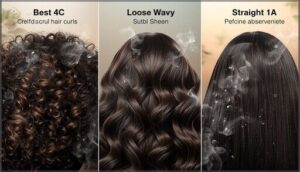
Not every head of hair reacts to steaming the same way, and that’s where understanding your specific hair type becomes your secret weapon. Some hair structures practically drink up the benefits of steam, while others might not see dramatic changes at all.
Let’s break down which hair types get the most mileage out of a steaming session so you can decide if it’s worth your time.
Low Porosity Hair
If your strands repel water like a raincoat, steam therapy offers a breakthrough for moisture management. Low porosity hair keeps cuticles locked tight, blocking hair hydration and product penetration.
Even so, opening the cuticle with steam beforehand can make a real difference, so it’s worth reading whether henna effectively covers gray hair on low porosity strands before committing to a full application.
Steaming temporarily opens those scales, boosting absorption without heavy buildup. Use lightweight conditioners during 5–10 minute sessions, rinse cool to seal, then lock moisture with a light oil—your porosity testing results will thank you.
Curly and Natural Hair
Coils and kinks thrive on steam’s moisture boost, making it a breakthrough for natural hair care. Those tighter curl patterns—types 3 and 4—drink up hydration during steaming sessions, improving curl definition and scalp care while reducing shrinkage-related breakage.
Your hair texture benefits from 15–20 minute treatments with deep conditioners, sealing cuticles afterward to lock moisture balance. It won’t speed hair growth, but healthier curly hair retains length better through natural styling practices.
Dry and Damaged Hair
When your strands snap under the slightest tension, steam therapy becomes your damage control ally. Hair steaming helps restore moisture balance in brittle, porous hair—though it won’t accelerate hair growth directly.
Focus on these hair repair strategies:
- Steam with protein-rich treatments to rebuild weakened shafts
- Limit sessions to 15 minutes for breakage prevention
- Follow with cool rinses to seal lifted cuticles
- Balance hydration with strengthening masks
- Monitor elasticity improvements weekly for hair restoration
Essential Precautions When Steaming Hair

Hair steaming can work wonders for your hair, but like any powerful treatment, it comes with a few ground rules you need to follow. Skip these precautions, and you risk turning a helpful habit into something that actually damages your strands.
Let’s break down the two biggest mistakes people make when steaming their hair.
Avoiding Hygral Fatigue
Over-steaming can trigger hygral fatigue, a condition where your hair swells and contracts too much from repeated moisture exposure, weakening your strands over time.
To maintain cuticle care and prevent steam damage, you’ll want to limit hair steaming sessions to 15-20 minutes, once or twice weekly.
Watch for increased hair breakage or unusual elasticity—these signal that your moisture balance is off and your hair porosity may be compromised.
Managing Heat and Moisture Balance
Keep your steaming temperature below 140°F—think warm, not scorching—to protect your hair’s cortex from thermal damage. Heat control matters because porous or chemically treated hair absorbs moisture faster, risking overhydration.
Pair steaming techniques with a pre-conditioning treatment to regulate water uptake, then seal with oil afterward. This approach balances moisture levels and maintains hair hydration methods without compromising scalp health.
Other Proven Ways to Support Hair Growth

Here’s the reality: steaming your hair won’t magically speed up growth, but you’re not stuck with what genetics handed you.
You can absolutely create the conditions for stronger, longer hair by focusing on what actually works.
Let’s look at the proven strategies that support healthy hair growth from the inside out.
Nutrition and Hydration
Your follicles thrive on what you feed them. Vitamin intake—especially biotin, zinc, and iron—fuels hair growth from the inside out. Pair that with hydration tips like drinking eight glasses daily to support water absorption and hair moisturizing at a cellular level.
Nutrient balance through a healthy diet builds the foundation for scalp health and hair nourishment tips that actually work, not just surface fixes.
Scalp Care Practices
Beyond nutrition, your scalp craves attention. Gentle cleansing removes follicle-clogging debris, while weekly scalp exfoliation strips away dead cells that choke hair growth. Pair that with 2-5 minute scalp massage sessions to boost blood flow and moisture balance.
These scalp health benefits eclipse what hair steaming alone delivers—because real hair growth starts where your hair follicle breathes, not just where conditioner sits.
Regular Hair Maintenance
You can’t outrun poor hair maintenance. Hair trimming every 6–8 weeks cuts breakage by 20–40%, while sulfate-free shampooing twice weekly preserves natural oils that support scalp health.
Assess your hair porosity to guide product layering—low-porosity strands need heat for conditioning absorption.
Daily hydration, scalp exfoliation, and strategic hair care trump steaming’s hype when you’re chasing real hair growth and retention.
Frequently Asked Questions (FAQs)
How often should you steam your hair to promote faster growth?
Here’s the paradox: steam therapy can’t speed up your hair growth cycle, yet strategic steaming frequency might reveal faster-looking length.
For damaged strands, aim for 1-2 weekly sessions targeting hair porosity and breakage prevention.
Can steaming your hair too frequently cause damage?
Yes, over-steaming limits hair’s resilience. Excessive steam frequency triggers hygral fatigue—weakening the hair shaft through repeated swelling.
You’ll notice increased breakage, scalp irritation, and limp texture if steaming benefits turn into hair damage from overuse.
What temperature is best for hair steaming?
Think of your steamer like a thermostat—you want warmth, not a sauna. Most hair types thrive at 65 to 75 degrees Celsius, balancing scalp sensitivity with effective moisture penetration during each steaming session.
Can you steam color-treated or chemically processed hair?
You can absolutely steam color-treated hair, but dial down your heat settings and keep sessions short.
Use color-safe deep conditioners to shield pigment and preserve your dye while reaping steaming’s moisture benefits.
Should you steam hair before or after washing?
Steam timing matters for your hair steaming routine. Apply steam after washing on clean hair with a conditioner or mask—this opens the hair cuticle for better moisture lock and product penetration into your hair’s structure.
What ingredients work best in steaming treatments?
Like adding premium fuel to an engine, your hair steaming sessions thrive on natural oils (coconut, argan, jojoba), protein enrichments (hydrolyzed keratin), humectant benefits (glycerin), and botanical additives (green tea extract) for peak deep conditioning results.
Conclusion
Here’s the irony: the question “does steaming your hair make it grow faster” implies you’re chasing speed, when the real battle is preservation. Your follicles already have their growth rate programmed—steaming just helps you keep what you grow.
Think of it as damage control, not rocket fuel. Master moisture retention, eliminate breakage, and create scalp conditions where every strand survives the journey. That’s not magic—it’s biology working in your favor.