This site is supported by our readers. We may earn a commission, at no cost to you, if you purchase through links. This content is for general informational and educational purposes only and is not a substitute for professional medical, dermatological, or nutritional advice.
Type 4 hair shrinks. Not a little—sometimes up to 90%, which means hair that reaches your shoulders when stretched can sit at your ears when dry.
That single fact confuses more people than almost anything else about coily and kinky hair, and it explains why so many standard hair care routines simply don’t work for this hair type.
Type 4 hair follows its own rules, and once you understand them, everything from choosing products to building a routine starts to make sense.
Whether you’re newly natural, still figuring out your subtype, or just want better results, knowing your hair is the first step toward actually loving it.
Table Of Contents
Key Takeaways
- Type 4 hair can shrink up to 90% of its length, which is why your hair looks so much shorter when dry than it does when stretched or wet.
- Knowing your subtype — 4A, 4B, or 4C — matters because each one has different moisture needs, curl patterns, and care routines that actually work for it.
- Keeping your coils healthy comes down to a few consistent habits: sulfate-free cleansing, leave-in conditioners, gentle detangling, and sealing in moisture with a butter or oil.
- Protective styles aren’t just a trend — they reduce daily manipulation, lock in moisture, and help you actually retain the length your hair is growing.
Type 4 Hair Overview

If you’ve ever wondered why your hair doesn’t quite match someone else’s curl pattern, hair typing systems can help explain that. Several frameworks exist to classify Type 4 hair, and each one approaches the topic a little differently.
Most systems run from 1 to 4, with A, B, and C subcategories that get surprisingly specific—this breakdown of hair texture types shows exactly where Type 4 fits in.
Here are the most widely used systems you’ll want to know.
Andre Walker Hair Typing System
When celebrity stylist Andre Walker introduced his hair typing system in the 1990s, he gave coily hair a real framework.
Originally built to support his product line, the system’s marketing influence quietly shaped consumer adoption worldwide.
His hair type chart sorts hair from Type 1 (straight) to Type 4 (kinky/coily), with Type 4A, Type 4B, and Type 4C as subcategories.
Despite cultural impact debates and critiques around its limitations, the Andre Walker Hair Typing System remains a go-to reference.
Understanding hair porosity considerations helps tailor moisture‑balancing routines.
LOIS Hair Typing System
LOIS Hair Typing System works differently than Andre Walker’s hair type chart — instead of numbers, it uses a letter pattern. Each letter describes what your strand actually does: L for sharp bends, O for coils, I for straight, and S for waves.
Type 4A, Type 4B, and Type 4C hair often fall under combined classification, like LO or OS.
Fresh observation on clean, product-free hair helps you identify strand thickness and texture categories honestly, without hierarchy.
NaturallyCurly Hair Typing System
The NaturallyCurly Hair Typing System builds on Andre Walker’s foundation, but goes further — it sharpens the Curl Pattern Lexicon so you can actually see yourself in it. Their Texture Scale breaks Type 4 into Type 4A, Type 4B, and Type 4C, giving each subtype its own Coil Definitions and hair care tips.
Think of it as a Hair Typing Guide designed with your coils in mind.
Fia’s Hair Typing System
Fia’s Hair Typing System takes things a step further by combining three separate classifiers into one label.
Together, they give you a fuller picture of your Type 4 hair than any single system can:
- Curl Definition Subdivision — follows Type 4A, 4B, and 4C coil shapes
- Strand Appearance Coding — labels strands fine (F), normal (N), or coarse (C)
- Ponytail Measurement Technique — assigns Volume Category Thresholds using circumference
That System Comparison Overview is what makes Fia’s Hair Typing System so practical.
Type 4 Hair Characteristics
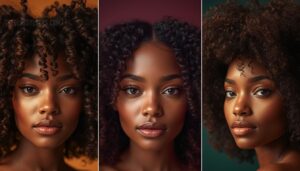
Type 4 hair isn’t a single experience — it shows up differently depending on your specific subtype. From curl shape to porosity to how your hair holds moisture, the details matter more than you might think.
That’s why building a routine around consistent leave-in conditioner layering for Type 4 hair can make all the difference in keeping your curls hydrated between wash days.
Here’s a closer look at what makes 4A, 4B, and 4C hair each unique, including how texture and porosity play into the bigger picture.
4A Hair Characteristics
4A hair has one of the most recognizable curl patterns in the type 4 family — tight S-shaped coils with springy elasticity that bounce back when touched. The coil shape is small but defined, and the fine density means your strands pack closely together, creating serious volume bounce even on shorter hair. High shrinkage is real here, sometimes up to 60%, so wet hair looks much longer than dry.
The good news? Moisture retention is stronger in 4A than other type 4 subtypes. Three things that define your experience:
- Coils clump and define beautifully with proper hydration
- Protective styles like twist-outs thrive on this curl pattern
- Consistent moisture keeps shrinkage manageable and frizz low
4B Hair Characteristics
Unlike 4A’s springy spirals, 4B hair forms a tight zigzag coil shape — sharp Z-bends rather than smooth loops. That wiry texture gives your strands a cottony, full feel with dense volume that turns heads.
The curl definition challenge is real, though. High shrinkage rate means your hair can pull back 70–75%, making length hard to see.
Protective styles and consistent moisture are your best tools here.
4C Hair Characteristics
Of all coily hair types, 4C hair sits at the most tightly wound end of the spectrum. Its zigzag coil pattern creates dense strand packing that gives hair that beautiful, full-cloud volume — but low curl definition comes with the territory.
High shrinkage can reach up to 90%, hiding your true length.
Low porosity and dryness susceptibility mean moisture won’t absorb easily, so your tight coils need consistent, intentional care.
Hair Texture and Porosity
Texture and porosity aren’t the same thing, and mixing them up makes choosing products harder than it needs to be. Texture describes your coily or kinky hair’s curl pattern — what you see.
Porosity is about cuticle scale structure — how moisture moves in and out.
Low porosity hair care focuses on opening the cuticle first, while high porosity hair care prioritizes sealing it. Porosity testing helps you stop guessing.
Caring for Type 4 Hair

Type 4 hair needs a little extra love, but once you know the basics, it’s very manageable. The key is building a routine that keeps moisture in and breakage out.
core practices that make the biggest difference.
Avoiding Sulfates and Heat Styling
Sulfate-free shampoos are one of the simplest swaps you can make for better scalp oil retention. Ingredients like sodium lauryl sulfate strip your natural oils every wash, leaving your coils thirsty before you even reach for a conditioner.
gentle cleansing routine every one to two weeks keeps moisture where it belongs.
When you do use heated styling tools, apply heat protectant sprays first and keep temperatures below 300°F to protect your strands.
Using Leave-in Conditioners and Moisturizers
Leave-in conditioner is your first line of defense against dryness. Apply it to damp hair right after washing — that’s your best application timing — focusing on mid-lengths and ends for smart root avoidance.
Layer a glycerin-based moisturizer first, then seal with shea butter. This layered sealing locks hydration in for days.
Aim for two to three times weekly to match your hair’s needs.
Gentle Detangling and Handling
Once your moisture layers are locked in, detangling becomes so much easier. Start with sectioning techniques — divide your hair into four to six parts so you’re working a manageable amount at a time. Think of it as protecting your ends from unnecessary pulling.
- Use finger detangling first to loosen big knots before reaching for a wide-tooth comb
- Apply a conditioner for moisture slip so the comb glides instead of grabbing
- Practice low tension and finger support to avoid snapping strands mid-pass
Stick to a consistent detangling schedule — weekly works well for most.
Protective Styling and Hair Care Tips
Protective styles give your hair a real break — but they work best when paired with consistent care. Here’s what a solid protective hair routine looks like:
| Protective Styling Technique | Hair Care Tips for Type 4 Hair |
|---|---|
| Braids, twists, Bantu knots | Replace every 4–8 weeks to prevent matting |
| Edge Tension Management | Communicate discomfort to your stylist immediately |
| Scalp Cleansing Routine | Cleanse weekly with a mild shampoo between styles |
| Nighttime Frizz Protection | Sleep with a satin bonnet or pillowcase |
| Moisture Retention | Apply oil to scalp twice daily to prevent dryness |
Type 4 Hair Subtypes
Not all type 4 hair is the same, and knowing your specific subtype makes a real difference in how you care for it. Each subtype — 4A, 4B, and 4C — has its own coil pattern, moisture needs, and quirks worth understanding.
Here’s a closer look at what sets each one apart.
4A Hair Subtype

4A hair features tight S-shaped coils with a curl pattern that naturally clumps and springs back beautifully. Its Scalp Oil Travel is more efficient than tighter subtypes, giving you better moisture retention overall. Coil Shape Dynamics here favor Product Absorption Rate, so lightweight creams work best.
Try these Moisture Locking Techniques:
- Apply leave-in on soaking-wet hair
- Seal with a light butter or oil
- Use Stretching Methods like twist-outs to reduce shrinkage
Protective styles keep 4A hair thriving.
4B Hair Subtype

Unlike 4A’s springy spirals, 4B hair forms Z-shaped coils with sharp angles and serious Coil Tightness Variability across your scalp.
Scalp Oil Distribution is uneven, so dryness hits fast. The shrinkage factor can reach 75%, making length retention tricky.
Prioritize moisture retention with these basics:
- Deep condition weekly
- Seal with a butter or oil
- Sleep with Nighttime Silk Wraps
Protective styles and Frizz Management keep your tight coils thriving.
4C Hair Subtype

4C hair sits at the far end of the curl spectrum, with a Zigzag Coil Pattern so tight that individual strands almost seem to defy length.
The shrinkage factor alone can reach 75%, so Length Retention Strategies like twist-outs and braid-outs matter.
Low porosity and a slow Product Absorption Rate mean Scalp Oil Distribution stays uneven.
Heat-Free Styling and protective styles keep your tight coils healthy.
| Feature | Detail | Strategy |
|---|---|---|
| Shrinkage Factor | Up to 75% | Stretching techniques |
| Low Porosity | Slow absorption | Lightweight liquid layers |
| Heat-Free Styling | Protects fragile coils | Twist-outs, braids |
Hair Care Differences Between Subtypes
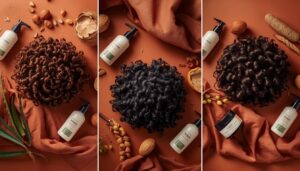
Each subtype has its own personality, and that shapes everything from your Moisture Frequency to your Protective Style Choice.
With 4A, lightweight layers and Product Layering keep those ringlets defined without weighing them down.
4B needs richer creams to support Shrinkage Management and reduce breakage.
And 4C, with its slower Scalp Oil Distribution, calls for deep hydration applied consistently.
Distinguishing Type 4A, 4B, and 4C hair is the first step toward a routine that actually works.
Maintaining Type 4 Hair Health

Keeping type 4 hair healthy takes more than just washing and styling—it’s really about building consistent habits that your hair can count on.
The good news is that a few focused practices can make a real difference in how your hair looks and feels over time.
Here’s what to focus on.
Regular Deep Conditioning and Moisturizing
Think of deep conditioning as your weekly reset button for type 4 hair.
A good deep conditioner relies on smart humectant selection — glycerin, honey, and aloe draw moisture straight into the strand — while the right emollient ratios of oils and butters seal it in.
Apply with a warm wrap to boost heat absorption, and aim for 20–30 minutes.
Consistent mask frequency timing and a leave-in conditioner afterward keep moisture retention steady between washes.
Minimizing Breakage and Tangling
Breakage doesn’t just happen — it builds up from small moments of rough handling and missed moisture. Start with leave-in slip on damp hair, then use a wide-tooth comb, working ends toward roots.
Friction-reducing tools like microfiber towels and a silk pillowcase wrap cut overnight damage substantially. The moisture slip method, combined with protective styling, keeps your strands strong and your breakage prevention routine consistent.
Reducing Shrinkage and Enhancing Definition
Shrinkage is one of those things that can catch you off guard — your hair looks short in the mirror, but stretched out, it’s inches longer. That gap is real, and a few smart techniques can help you work with your natural texture instead of against it.
Type 4 hair may look short, but stretched out, it tells a longer story
Here’s what actually moves the needle for type 4 hair shrinkage management and curl definition:
- Water Stretch Rinse — Saturate hair thoroughly before styling so curls elongate and clump with more definition.
- Film Formers — Layer a leave-in over damp hair to build a moisture retention base before curl creams or gels.
- Gel Cast Technique — Scrunch gel into wet sections and let hair dry fully before breaking the cast.
- Microfiber Drying — Blot, don’t rub, to preserve curl clumps and reduce frizz.
- Humidity Blocking — Finish with a light anti-frizz serum, then use protective styling techniques overnight with a satin bonnet.
Promoting Hair Growth and Retention
Growing type 4 hair long starts beneath the surface. Scalp massage techniques boost circulation, while a nutrient-rich diet gives your strands the building blocks they need.
Pair that with low manipulation routines and protective styling to cut down on daily breakage. Deep conditioning, protein moisture cycling, and the LOC method keep moisture retention strong, so every inch you grow, you actually keep.
Frequently Asked Questions (FAQs)
What is a Type 4 hair?
Type 4 hair — whether 4A, 4B, or 4C — is tightly coiled hair with deep genetic roots, rich cultural significance, and real fragility.
It needs consistent moisture and gentle handling to truly thrive.
What is type 4A hair?
4A hair features tight coils with an S-shaped curl pattern, strong coil elasticity, and impressive moisture capacity.
Its shrinkage rate hovers around 70%, and its moderate porosity enhances better moisture retention than 4B or 4C.
What is type 4C hair?
Think of a spring compressed all the way down — that’s basically what type 4C hair does.
With tight coils, intense shrinkage percentage, and real moisture needs, it’s beautifully dense and full of character.
What type of 4 hair do I have?
Determining your hair type starts with a simple Coil Pattern Test — wet your hair, skip the products, and watch how it dries. That’s your most honest answer.
What is type 4 for hair?
Coily hair carries deep roots — genetic, cultural, and historical — yet it’s often the least understood. Type 4 hair features tight, kinky coils divided into 4A, 4B, and 4C subtypes.
What ethnicity has type 4 hair?
Type 4 hair is most common among people of African descent, including African American and Afro-Caribbean communities.
Genetic inheritance drives this, though mixed-race individuals and people across global populations can carry these coil patterns too.
Can Mexicans have type 4 hair?
Yes, Mexicans can have type 4 hair. Genetic ancestry, not nationality, determines curl pattern. With African roots in the mix, coily or kinky hair is absolutely possible.
How to identify if my hair is type 4c?
Look closely at your strands when wet — if they coil into tight, Z-shaped zigzags with almost no visible curl definition and shrink dramatically when dry, you’re likely working with 4C hair.
How many types of alopecia are there?
There are dozens of alopecia types, but six main categories matter most: nonscarring alopecia, scarring alopecia, alopecia areata spectrum, pattern hair loss, and diffuse shedding types like telogen and anagen effluvium.
What are the 4 types of hair?
Hair falls along a spectrum, from straight (Type 1) to wavy (Type 2), curly (Type 3), and coily (Type 4).
Each category on this curl density scale has its own texture, needs, and genetic hair traits.
Conclusion
They say know thyself—and with type 4 hair, that wisdom is everything. Once you understand your curl pattern, porosity, and what your strands actually need, the guesswork disappears.
You stop chasing routines built for someone else’s hair and start building one that genuinely works for yours.
Moisture, patience, and the right techniques aren’t optional extras—they’re the foundation.
Your hair isn’t difficult. It just finally deserves someone who understands it.