This site is supported by our readers. We may earn a commission, at no cost to you, if you purchase through links. This content is for general informational and educational purposes only and is not a substitute for professional medical, dermatological, or nutritional advice.
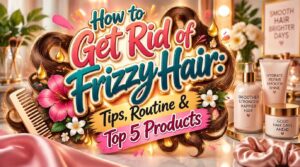
You spend forty minutes straightening your hair, walk outside, and twenty minutes later you’re wearing a halo of fluff. Sound familiar? Frizz isn’t a hair type problem, it’s a moisture problem, and your strands are winning the tug-of-war with the air around them.
Here’s the good news: once you understand what’s prying open your cuticles, whether it’s humidity, hot water, or that cotton pillowcase, you can shut the whole operation down. I’ve spent years behind the chair testing what works. Below, you’ll find the exact routine, the products worth your money, and how to get rid of frizzy hair for good.
Table Of Contents
- Key Takeaways
- What Causes Frizzy Hair?
- How to Build an Anti-Frizz Routine
- Top 5 Products for Frizzy Hair
- Home Remedies and Long-Term Frizz Prevention
- Frequently Asked Questions (FAQs)
- How do I stop my hair from being frizzy?
- How can I quickly get rid of frizzy hair?
- What is the root cause of frizzy hair?
- What is frizzy hair lacking?
- How often should I get a trim to manage frizz?
- What are the best products for reducing frizz?
- What are the best tools for blow-drying my hair?
- How often should I use a deep conditioning treatment?
- What kind of pillowcase is best for avoiding frizz?
- Does hard water make hair frizzier over time?
- Conclusion
Key Takeaways
- Frizz is fundamentally a moisture problem, caused by lifted cuticles that absorb humidity unevenly, so fixing it means sealing the cuticle rather than switching products.
- The order you apply products matters more than the products themselves: layer leave-in conditioner first, then anti-frizz cream, then styling product, always on damp hair.
- Daily habits like sleeping on silk, rinsing with cool water, and blotting instead of rubbing do more for long-term smoothness than any single product.
- Hot tools, sulfate shampoos, and friction from cotton pillowcases all raise cuticle porosity, so reducing heat and switching materials cuts frizz at the source.
What Causes Frizzy Hair?
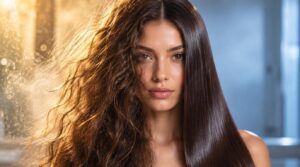
You can’t fix frizz until you know what’s fueling it, and the culprit changes with the weather. I’ve seen clients blame their products when the real issue was humidity, UV damage, or static. Here are the six main causes, so you can pinpoint yours and treat it properly. If you’re protective styling with braids while fighting frizz, keeping your scalp and roots nourished with a good hair growth serum for braids makes the smoothing process easier.
Once you’ve identified your cause, a simple fix like a banana and yogurt mask—check out my guide to homemade hair masks—can start smoothing things right away. If you’re not sure where to start, my guide to the hair growth cycle and hair loss explains how damage at the root shows up as frizz down the strand.
Humidity and Porosity
Understanding humidity levels is step one. Your hair is hygroscopic hair at its finest: it drinks moisture straight from the air, and high-porosity strands drink fastest. When water sneaks through a lifted cuticle, sections swell unevenly, so strands puff and separate. The fastest fix starts with choosing the right moisturizer for your porosity level, since the wrong formula can make frizz worse.
Think of conditioning agents as your humidity barrier, keeping hair porosity balanced. For lowporosity hair care, lighter products work better.
UV Bond Damage
Humidity isn’t the only culprit. UV bond damage quietly roughs up your cuticle every time you skip protection, and those raised edges drink moisture just like high-porosity hair does. Sun oxidizes the hair shaft, leaving strands brittle, dull, and full of flyaways.
I tell clients: think of UV filters as sunscreen for your hair. Reapply after swimming, and your smoothness will thank you.
Cold-Air Static
And then there’s winter’s sneaky culprit: cold-air static. When indoor heat drops the humidity, your strands trade electrons like kids trading stickers, and flyaways stand straight up.
I tell clients to hit the cool shot button at the end of blow-drying; it flattens the cuticle and locks in smoothness. Reducing hair static also means swapping synthetic brushes for boar bristle.
Harsh Washing
Static’s cousin? Harsh washing. Sulfate shampoos strip your scalp’s oils, and hot water pries the cuticle open, so hair dries rough and thirsty. I tell clients, "Wash less, rinse cooler."
Try sulfate-free formulas, rinse conditioner completely, and detangle only when hair’s slippery wet. Hard water deposits minerals, too, so a chelating shampoo once monthly keeps your moisture balance and frizz control on track.
Friction and Breakage
Friction is the sneaky culprit behind frizzy hair. Every rub against a pillowcase, collar, or rough towel lifts your cuticle, and those lifted spots snag, snap, and turn into split ends and flyaways.
Quick wins:
- Swap cotton pillowcases for silk or satin
- Blot hair dry, never rub
- Detangle gently with slip from conditioner
- Use regular trims to remove weak ends
- Keep hair in a low-tension style overnight
Hair breakage prevention comes down to fewer friction cycles. Master that, and you’re halfway to smooth.
Pairing fewer friction cycles with bond-building formulas—like the ones in this guide to hair care maintenance products—helps rebuild what daily styling wears down.
Heat-Induced Porosity
When you crank the heat, your cuticles lift and lipids weaken, quietly wrecking your hair shaft integrity. The result? High-porosity hair care headaches: moisture rushes in, then vanishes, leaving frizz behind.
Always mist on a heat-protectant spray, drop the dryer to low, and skip flat-ironing damp strands. Prioritize cuticle sealing conditioners, because thermal damage compounds with every hot cycle.
How to Build an Anti-Frizz Routine
You’ve got the products, the patience, and the plan. Now here’s the order that makes them work. My mentor used to say, "Frizz is a layering problem, not a product problem," and she was right.
Frizz is a layering problem, not a product problem, so apply your products in the right order
Follow this sequence:
- Leave-in conditioner on damp hair for slip and hair hydration
- A light anti-frizz cream to film the cuticle and add hold
- Your styling product last, on damp hair, so it sets shape as things dry
- Blot, don’t rub, with a microfiber towel or soft tee
- Low heat, nozzle on, keep it moving, and stop once hair is fully dry
Section before you blow-dry so no strand cooks too long. Skip brushing afterward, since dry brushing just invites static back. That’s your antifrizz routine, and honestly, cuticle sealing comes down to this order more than anything else.
Top 5 Products for Frizzy Hair
You’ve got your routine down, so now let’s talk gear. I’ve tested enough products in my chair to know the difference between hype and the real deal. Here are my five favorites for fighting frizz, from a trusty dryer to a gel that actually holds up.
1. Solano Forza 1875W Ionic Hair Dryer
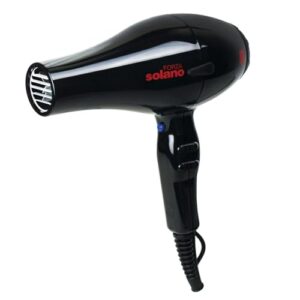
Let’s talk tools, because your dryer matters more than you think. The Solano Forza 1875W uses far infrared heat that dries hair from the inside out, so you’re not frying the cuticle to get results. That 1875-watt AC motor cuts drying time on long, thick hair, which means less heat exposure, period.
There’s a built-in silencer (your mornings will thank you), multiple heat and speed settings, and a cold shot to lock in smoothness.
Fair warning: it’s pricier than drugstore dryers, and the diffuser’s sold separately. Worth it.
| Best For | People with long or thick hair who want faster drying with less heat damage, whether at home or in a salon setting. |
|---|---|
| Product Type | Hair Dryer (Tool) |
| Suitable Hair Types | Long, thick hair |
| Frizz Control | Moisture-balanced drying |
| Core Technology | Far infrared heat |
| Sulfate-Free | N/A |
| Price Point | High (premium) |
| Additional Features |
|
- Far infrared heat dries hair from the inside out, reducing surface heat damage
- 1875-watt AC motor cuts down drying time significantly
- Built-in silencer keeps operational noise low, plus a cold shot button for setting styles
- Diffuser attachment sold separately
- Some users find it heavy to handle
- Costs more than standard drugstore dryers
2. R+Co High Dive Moisture Crème
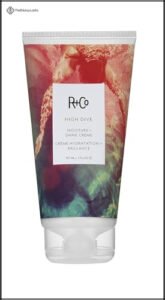
If your hair drinks up humidity and then frizzes out of spite, R+Co High Dive is your lifeline. It’s a moisture crème with Sodium PCA, a humectant that literally pulls water from the air, plus Pro Vitamin B5, sunflower seed extract, and vitamin E.
I tell clients: emerald-sized dab on damp hair, mid-lengths to ends, then air-dry or blow-dry. You’ll get a satin finish, zero crunch, and hours of smooth. Fair warning, it’s too heavy for fine hair, and the fragrance is bold.
| Best For | People with thick, wavy, or curly hair that frizzes in humidity and want a hydrating leave-in cream that smooths, softens, and adds shine. |
|---|---|
| Product Type | Leave-in Styling Cream |
| Suitable Hair Types | Thick, wavy, curly |
| Frizz Control | Reduces frizz, adds shine |
| Core Technology | Pro Vitamin B5, Sodium PCA |
| Sulfate-Free | Yes |
| Price Point | $28.80 / 1 liter |
| Additional Features |
|
- Hydrating formula with Sodium PCA, Pro Vitamin B5, sunflower seed extract, and vitamin E that pulls moisture from the air
- Leaves hair smooth and glossy with a satin finish and no crunch, whether air-dried or blow-dried
- Vegan, Leaping Bunny Certified, free of sulfates, parabens, and gluten, with up to 55% post-consumer recycled packaging
- Too heavy for fine hair and can leave it greasy or lifeless if overused
- Bold fragrance that may be overwhelming, even though it fades quickly
- Price of $28.80 feels high to some customers despite the product’s effectiveness
3. Pattern Leave-In Conditioner Curly Hair
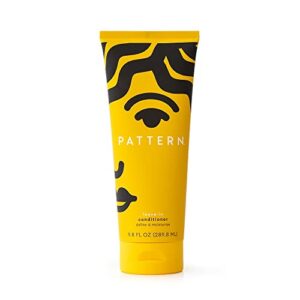
If your curls drink up moisture and still frizz by noon, Pattern’s Leave-In Conditioner for Curly Hair deserves a spot in your shower caddy.
It blends eight oils, including jojoba, avocado, olive, and argan, plus biotin, aloe, and honey for hydration without heaviness.
Apply it to soaking wet hair for the best slip, then layer a gel on top.
Yes, it’s $29 for 9.8 ounces, and the texture runs thin, but the detangling and definition are worth it.
| Best For | People with curly hair who want lightweight moisture, detangling, and curl definition without heavy butters, and who don’t mind paying a premium for it. |
|---|---|
| Product Type | Multi-Oil Hair Blend |
| Suitable Hair Types | Curly, wavy |
| Frizz Control | Seals moisture, tames flyaways |
| Core Technology | Jojoba, argan, avocado oils |
| Sulfate-Free | N/A |
| Price Point | $29.00 / 9.8 fl oz |
| Additional Features |
|
- Blend of eight oils (jojoba, avocado, olive, argan) plus biotin, aloe, and honey for hydration without heaviness
- Works as a detangler and defines curl patterns, with light hold for flyaways
- Layers easily under gels or creams and can be applied to soaking wet or dry hair
- Priced at $29.00 for just 9.8 fl oz, which some find expensive
- Thinner texture than expected for those accustomed to heavier butters
- Results vary by hair type, with some users reporting limited manageability benefits
4. Amika Curl Corps Defining Cream 200ml
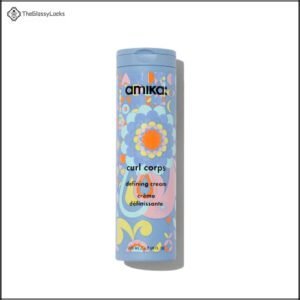
Layering a cream over that leave-in is where the magic happens, and Amika Curl Corps Defining Cream nails it. The oat peptide forms a moisture barrier, so your curls stay defined without a crunchy cast.
Emulsify a pea-to-dime amount, work it through mid-lengths and ends, then scrunch or finger-coil. Air-dry or diffuse, either works.
It’s sulfate-free, vegan, and smells like sea buckthorn berries. Fair warning: it’s pricey for 200ml, and fine hair may find it heavy.
| Best For | People with wavy to curly hair who want lightweight, flexible curl definition without crunch, and don’t mind paying a premium for a vegan, sulfate-free formula. |
|---|---|
| Product Type | Curl Defining Cream |
| Suitable Hair Types | Wavy to curly |
| Frizz Control | Weather-proof curl hold |
| Core Technology | Oat peptide barrier |
| Sulfate-Free | Yes |
| Price Point | High (premium) |
| Additional Features |
|
- Oat peptide barrier locks in moisture while keeping curls soft, never crunchy
- Encourages natural curl formation and holds up well in humid weather
- Versatile for both air-drying and diffusing, with a pleasant sea buckthorn berry scent
- Thick cream can be hard to dispense from the bottle after a few weeks of use
- May feel too heavy for fine or straight hair types
- High price relative to the 200ml volume, with inconsistent frizz control reported by some users
5. Odele Air Dry Styling Gel
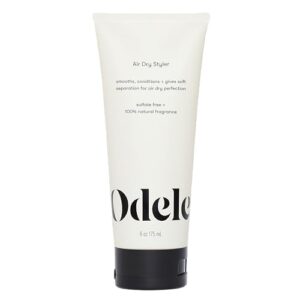
If you’d rather skip the cream entirely, Odele Air Dry Styling Gel is your budget-friendly winner. Amaranth and rice protein condition from root to tip, and third-party testing backs its 24-hour frizz reduction with 2x smoother strands. No crunch, just soft separation for beachy waves.
Apply to soaking-wet hair, a dime-size per section, then scrunch and hands-off while it dries. It’s vegan, sulfate-free, and smells like oakmoss and cucumber. Heads up: low-porosity hair can see buildup, and viscosity varies by batch.
| Best For | Budget-conscious buyers who air-dry their hair and want soft, crunch-free definition for waves or curls without sulfates or synthetic ingredients. |
|---|---|
| Product Type | Frizz Control Cream |
| Suitable Hair Types | Wavy, curly |
| Frizz Control | Up to 24-hour reduction |
| Core Technology | Amaranth & rice protein |
| Sulfate-Free | Yes |
| Price Point | N/A |
| Additional Features |
|
- Third-party tested 24-hour frizz reduction and 2x smoother strands
- Vegan, sulfate-free, and color-safe with a natural oakmoss and cucumber scent
- Leaves soft, touchable separation without a crunchy cast
- Can cause buildup on low-porosity hair, requiring a clarifying shampoo
- Some users report increased frizz, and results vary by individual
- Viscosity and texture may be inconsistent between batches
Home Remedies and Long-Term Frizz Prevention

Products get you partway there, but your daily habits decide whether you keep frizzfree hair. Start in the shower: rinse with cool water, then blot with a microfiber towel instead of rubbing, which roughs up cuticles.
For a kitchen-cabinet fix, try a natural hair mask of mashed avocado with a spoon of honey once a week. It’s cheap, and my clients swear by it.
The real secret to long term frizz prevention is protecting your hair moisture barrier. Sleep on a silk pillowcase, use a wide-tooth comb on damp hair, and keep hot tools at moderate heat with a protectant. Skip harsh sulfate shampoos, too.
One of my favorite home remedies? A dime-sized dab of leave-in smoothed over dry strands tames static instantly. Small habits, big payoff.
Frequently Asked Questions (FAQs)
How do I stop my hair from being frizzy?
Great news: your hair isn’t broken, it’s just thirsty. Stop frizz by boosting hair hydration, sealing moisture retention with a leave-in, and skipping rough towel drying. Gentle washing, heat protection, and consistent frizz prevention win.
How can I quickly get rid of frizzy hair?
Want to get rid of frizzy hair fast? Blot with a microfiber towel, apply leave-in conditioner to your hair cuticles, then seal with a light gel. That hydration and moisture balance smooths flyaways within minutes.
What is the root cause of frizzy hair?
The root cause is damaged, high-porosity hair cuticles. When your outer layer lifts, humidity and moisture slip inside, strands swell and repel each other, and you get that puffy, frizzy halo.
What is frizzy hair lacking?
A client once asked why her hair frizzed before the rain even hit. Simple: frizzy hair is lacking moisture and cuticle alignment. Dry hair drinks humidity unevenly, so strands swell and lift.
How often should I get a trim to manage frizz?
Honestly, skipping trims is the fastest way to frizzy hair. Get a trim every 8–12 weeks. See-through, splitting ends? Go every 6–8 weeks. Consistent hair maintenance beats any antifrizz routine.
What are the best products for reducing frizz?
You’ll want a leave-in conditioner for daily moisture, a curl cream to define, an antifrizz serum for sealing, a heat-protectant spray before styling, and an ionic dryer like the Solano Forza.
What are the best tools for blow-drying my hair?
Ever wonder why salon blowouts look so smooth? It’s the tools. Grab a professional hair dryer (ionic, 1875W), a concentrator nozzle, a boar-bristle brush, and always apply heat protectant spray first.
How often should I use a deep conditioning treatment?
For most hair, deep conditioning once a week hits the sweet spot. Damaged, high-porosity, or heat-styled hair? Go twice weekly. If it feels greasy or weighed down, stretch to every two weeks.
What kind of pillowcase is best for avoiding frizz?
Here’s the funny part: you spend hundreds on serums, then sleep on a cotton pillowcase that undoes it all. Choose a silk or satin pillowcase; it reduces friction, preserves moisture, and keeps frizz down overnight.
Does hard water make hair frizzier over time?
Picture chalky white streaks on your shower door. That same mineral film coats your strands, too. Hard water buildup roughs up your cuticle, blocks hair cuticle sealing, and yes, makes frizzy hair worse over time. Install a shower filter.
Conclusion
Last week a client walked in mid-meltdown, her blowout gone in one rainy commute. Twenty minutes of troubleshooting later, she’d a plan, and her hair held for days.
That’s the real secret to how get rid of frizzy hair: stop fighting the weather and start managing moisture. Seal your cuticles, cool your rinses, sleep on silk. Do that consistently and frizz stops being your hair’s personality. It becomes a rare guest, not a roommate.