This site is supported by our readers. We may earn a commission, at no cost to you, if you purchase through links. This content is for general informational and educational purposes only and is not a substitute for professional medical, dermatological, or nutritional advice.
Summer is gorgeous, but it’s quietly wrecking your hair. UV-B rays break down keratin, chlorine strips your natural oils, and heat pulls moisture out faster than you can replenish it. By August, what started as a healthy mane can feel like straw.
The good news? Summer hair damage is predictable, which means it’s preventable. Once you understand what’s hitting your hair and when, you can build a routine that actually keeps up.
This summer hair care guide gives you practical, targeted strategies, from washing schedules to swim-day prep, so your hair stays strong and shiny all season.
Table Of Contents
- Key Takeaways
- How Summer Damages Your Hair
- Build Your Summer Hair Care Routine
- Protect Hair From Sun and Swimming
- Customize Care for Your Hair Type
- Maintain Healthy Hair and Scalp
- Frequently Asked Questions (FAQs)
- What is the best hair care routine for the summer?
- Why is Japanese hair so healthy?
- What are 3 do’s and don’ts or hair care?
- What to do with hair in hot weather?
- What are the best hairstyles for summer that don’t require heat styling?
- How often should I trim my hair in the summer months?
- How often should I trim my hair during summer?
- Can I use regular conditioner as a leave-in product?
- Whats the best way to dry hair after swimming?
- Should I change my hair routine for vacation travel?
- Conclusion
Key Takeaways
- UV rays, chlorine, and heat each damage hair in distinct ways, so defending against all three—not just one—is what keeps your hair strong all summer.
- Prewetting hair with fresh water before swimming and rinsing immediately after are the two most effective habits for preventing chlorine and salt damage.
- Deep conditioning weekly and using a protein treatment monthly work together to rebuild moisture and elasticity lost from constant sun and heat exposure.
- Your hair type determines your summer priorities: straight hair needs lighter, more frequent washing, while coily hair demands richer moisture and sealing oils to lock hydration in.
How Summer Damages Your Hair

While summer feels freeing, it’s actually one of the toughest seasons for your hair. UV-B rays penetrate each strand, breaking down keratin and pigment until hair looks duller, feels rougher, and your UV protection gaps become very visible.
Pairing UV-blocking products with daily habits that prevent cumulative hair damage can stop that breakdown before it becomes visible.
Add chlorine or saltwater and things get worse fast. Both strip the oils that support moisture retention, leaving hair dehydrated, tangled, and brittle. Your hair hydration drops faster than you’d think, and chlorine resistance isn’t something most hair naturally has built in.
Heat makes all of it compound. Sun-warmed hair loses moisture more quickly, the cuticle wears down from repeated temperature stress, and split ends start appearing sooner than you’d expect. Weeks of summer exposure add up to real and noticeable damage.
Build Your Summer Hair Care Routine
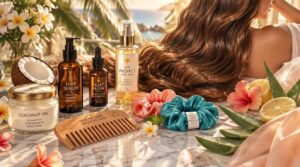
Building a summer routine doesn’t have to feel overwhelming. A few targeted tweaks to your regimen can make a huge difference in how your hair holds up through heat, humidity, and everything in between. Here’s what I’d focus on first.
Adjust Your Washing Schedule
Sweat makes your scalp greasier faster. A wash frequency adjustment, like shampooing every other day, keeps roots fresh and light. After workouts, an immediate rinse removes salt and oil before buildup sets in.
Before swimming, do a prechlorine rinse. After, use a chelating shampoo to clear mineral residue. Keep clarifying treatment balance in check by using it monthly, not weekly.
Choose Lightweight Hydrating Products
Once your wash routine is dialed in, your product choices matter just as much. Skip thick creams and reach for water-based gels or milky sprays instead. They won’t weigh your fine or wavy hair down.
For even more targeted picks, hair products curated for protective styles can help you find lightweight formulas that keep moisture in without weighing strands down.
Layer a lightweight oil like argan on top to seal in moisture and cut down frizz. In high humidity, keep your glycerin level below 6%.
Deep Condition Weekly
Those lightweight products set the stage, but deep conditioning weekly is where real change happens. Here’s how:
- Apply to your damp, sectioned hair from mid-lengths down to ends.
- Leave it on for 20-30 minutes and let moisture retention techniques work.
- Try a protein treatment monthly to build better hair elasticity.
- Rinse with cool water using cuticle protection methods for shine.
Limit Heat Styling
Since heat damages hair fast, cut back on heat styling now. Swap your tools for heatless hairstyles on alternate days, and you’ll notice a difference.
| Day | Heat Tool | Heatless Option |
|---|---|---|
| Monday | Flat iron | Braid-out |
| Wednesday | Blow-dryer | Air-dry |
| Friday | Curling wand | Flexi rods |
Always use heat protection products before styling. Finish the week with a hair mask treatment to restore moisture.
For color-treated hair, pairing these weekly rituals with insights from summer hair color trends helps you choose shades that stay vibrant longer with less upkeep.
Protect Hair From Sun and Swimming
Summer sun and pool water are two of the biggest threats to healthy hair. The good news? A few simple habits can keep your strands protected all season long.
Use UV Hair Protection
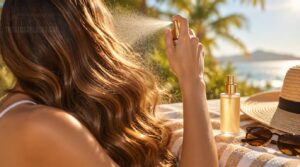
Your hair needs sunscreen too! UV exposure breaks down keratin and fades color, making sun damage prevention essential. Reach for a UV protectant spray before heading out, coating mid-lengths and ends evenly.
- Reapply after long outdoor sessions
- Use UV filter products during peak sun hours
- Try hair sunscreen for dyed or highlighted strands
- UV protection works only when applied first
Prepare Hair Before Swimming
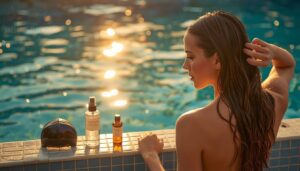
Think of your hair like a dry sponge: it absorbs the first liquid it meets, so make that fresh water. Prewet thoroughly, then layer on an oil or leave-in barrier to limit how much chlorine or salt actually reaches your strands.
Prewet your hair before swimming so it absorbs fresh water first, not chlorine
Swim caps help even more. After your swim, an immediate rinse and a good chelating shampoo finish the job.
Remove Chlorine and Salt

After a beach day, I skipped rinsing and woke up with straw-like strands. Saltwater wind and chlorinated pools are brutal without an immediate rinse right after.
- Pre-coat with a prewet oil or leave-in barrier before swimming
- Rinse thoroughly with cool water right after getting out
- Follow with a chelating shampoo to lift residue
That simple sequence makes a real difference!
Prevent Fading and Discoloration
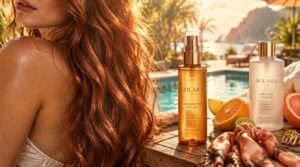
Your color fades faster than you’d expect in summer. UV light breaks down dye molecules quickly, so switch to a color-preserving shampoo and apply a UV hair protection spray every single time you step outside.
Hard water minerals can make discoloration look much worse than it actually is, so run a chelating wash once a month to fully restore brilliance.
Customize Care for Your Hair Type
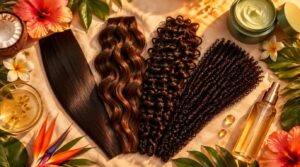
No two heads of hair experience summer the same way. By hair type, summer adjustments that respect geometry make all the difference between frustration and gorgeous results.
If you have Type 1 straight hair, focus on keeping roots fresh. Humidity pushes oil faster down your strands, so lighter products and more frequent washing are your friends.
Type 2 wavy hair battles frizz and definition loss. A lightweight curl cream plus an anti-humidity spray keeps waves bouncy without weighing them down.
For Type 3 curly hair, deep conditioning becomes non-negotiable. Less washing, more moisture. Your curls will thank you!
Type 4 coily hair needs the richest hydration. Seal everything with a light oil to stop moisture escaping fast in the heat.
Maintain Healthy Hair and Scalp

Once you’ve nailed your hair type routine, keeping your scalp health in check becomes the real difference-maker.
Your scalp is skin. Summer heat increases sebum production, so sweat and product buildup can trigger itching fast. Wash at the right frequency for your skin type, not just your hair type.
Here’s what keeps everything balanced:
- Massage hair oils into lengths only, not roots, in warm weather
- Book regular trims every 8 to 10 weeks to clear split ends before they travel
- Try protective hairstyles like braids or buns to reduce friction from hats
- Use deep conditioning treatments weekly to replenish lost moisture
- Rinse with lukewarm water to protect your cuticle layer
Small habits add up to big results. You’ve got this!
Frequently Asked Questions (FAQs)
What is the best hair care routine for the summer?
Start by washing a little less often. Then use a lightweight leave-in conditioner daily. Deep condition every week, shield your strands with UV hair protection, and rinse right after swimming. Skip the heavy heat tools.
Why is Japanese hair so healthy?
Honestly, hair health maintenance in Japan comes down to actively boosting scalp circulation, eating a nutrient-rich diet full of omega-3s, and doing consistent gentle cleansing that protects each hair follicle without stripping any natural moisture.
Traditional Japanese routines also incorporate pre-wash camellia oil massage to nourish the scalp, loosen scalp, loosen impurities, and reduce breakage before cleansing.
What are 3 do’s and don’ts or hair care?
Studies show 90% of hair damage is preventable. Do use heat protection products before styling. Don’t skip frizz control in humidity. Do try protective hairstyles. Don’t overwash your scalp. Do build your moisture barrier weekly.
What to do with hair in hot weather?
Think your hair can handle summer heat alone? Think again. Heat lifts cuticles, humidity swells strands and brings frizz, and UV fades color quickly. Use UV hair protection, antihumectants, and protective styling to stay ahead.
What are the best hairstyles for summer that don’t require heat styling?
Braided updos, loose twists, and curl sets are your best protective hairstyles for summer. They keep your hair totally secure, reduce friction way down, and let you completely skip heat styling without ever losing style.
How often should I trim my hair in the summer months?
Every single summer secretly destroys your ends faster than you’d ever guess! Regular trims every six to eight weeks prevent splits from spreading. If you swim a lot, go every four to five weeks instead.
How often should I trim my hair during summer?
Summer speeds up hair growth, so regular trims matter even more. Your schedule depends on your type: fine hair every 4 to 6 weeks, medium every 6 to 8, and thick every 8 to
Can I use regular conditioner as a leave-in product?
Less is more, always. A small amount of regular conditioner can truly work as a great leave-in conditioner on damp hair, but applying too much causes buildup that tanks your hair strength and moisture sealing.
Whats the best way to dry hair after swimming?
Picture water from chlorinated pools dripping down your back and neck. Pat dry first using a microfiber towel, and never rub.
Apply leave-in conditioner while still damp, detangle gently, then air-dry or use low heat.
Should I change my hair routine for vacation travel?
Yes, and you really don’t need to overhaul everything. Travel shifts your washing cadence, water hardness, and local climate. Just adjust how often you wash, pick lighter hydrators, and keep a weekly deep condition going.
Conclusion
Picture your hair at the end of August: shiny, strong, and nothing like the dry, brittle mess the season usually delivers. That’s exactly what a solid summer hair care guide is built to give you, and now you’ve got one.
Protect before you swim, hydrate consistently, and cut back on heat styling. Small, consistent habits add up faster than you’d think. Your hair doesn’t have to just endure summer. This season, it gets to shine.
- https://mainstreetcutters.com/summer-hair-care-guide-protect-your-hair-from-sun-chlorine-and-heat
- https://hairbarnyc.com/blog/this-summer-sun-healthy-hair-simple-tips-for-uv-hair-protection
- https://www.dove.com/us/en/stories/tips-and-how-to/hair-care-tips-advice/how-to-protect-hair-from-sun-and-uv-damage--an-essential-guide.html