This site is supported by our readers. We may earn a commission, at no cost to you, if you purchase through links. This content is for general informational and educational purposes only and is not a substitute for professional medical, dermatological, or nutritional advice.
Your wavy hair has more curl in it than you’re getting right now. The S-shaped pattern that forms when your hair air-dries tells you the structure is already there, and the right technique is what unlocks it.
Most people reach for a curling iron and wonder why the results fall flat by noon. Moisture, product order, and application method matter far more than heat. Dry or porous hair resists clumping, which means no styling product does its job if your foundation is off.
Learning how to make wavy hair curly starts with understanding what your hair needs first.
Table Of Contents
- Key Takeaways
- Can Wavy Hair Become Curly?
- How to Make Wavy Hair Curly Step by Step
- Heat-Free Ways to Make Wavy Hair Curlier
- How to Use Heat Safely for Tighter Curls
- How to Maintain Curls and Restore Definition
- Frequently Asked Questions (FAQs)
- Can I turn my wavy hair into curls?
- How to make your natural wavy hair curly?
- What not to do to wavy hair?
- Does the curly girl method work on wavy hair?
- Can curly hair be made wavy?
- How do you make wavy hair curly?
- Is wavy hair a straight hair?
- How often should I use protein treatments for wavy hair?
- How do I get my curls to form at the roots and not just the ends?
- Is it possible to have curly bangs or layers with wavy hair?
- Conclusion
Key Takeaways
- Your hair’s curl potential is already built into its structure, and the right technique—not heat or better tools—is what brings it out.
- Applying products to soaking-wet hair in the correct order (leave-in, then cream, then gel) is what allows curl clumping to actually form.
- Heat-free methods like finger coiling, overnight twists, and braiding damp hair can create defined curls without risking the moisture loss that flattens waves.
- Consistency in your wash-day routine matters more than switching products—curl definition builds over time when you repeat the same steps reliably.
Can Wavy Hair Become Curly?

How far your wavy hair can shift toward curly hair depends mainly on your follicle shape, which genetics sets. You can’t permanently change that. What you can do is bring out its natural potential by working with your hair rather than fighting it.
Embracing heatless hair styling techniques is one of the simplest ways to let your natural wave or curl pattern fully express itself without heat damage holding it back.
Your hair’s curl potential is set by genetics, but you can unlock what’s already there
Wavy hair sits between straight and curly on the texture spectrum. Some wavy patterns have a natural S-shape that tightens with the right moisture, products, and technique. Hair hydration for curls matters here: dry or porous hair resists clumping and falls flat before any definition forms.
Curl definition improvement is realistic for most wavy hair types. Curl pattern restoration is also possible after damage or neglect. True curls aren’t guaranteed for everyone, but a noticeable shift is.
How to Make Wavy Hair Curly Step by Step
Getting wavy hair to curl comes down to technique at every step. The order you do things matters more than most people expect. Follow these six steps from wash to dry to get the best results.
Cleanse Without Stripping Moisture

During every wash, the goal is to clear buildup without stripping moisture from your strands. Use a sulfate-free shampoo applied only to your scalp, then let the lather rinse down through the full length on its own. That’s what limits drying along the shaft while still clearing oil at the root.
Finish with a cool rinse to smooth the cuticle.
Condition Without Weighing Hair Down

After that cool rinse, your strands are prepped and ready. Now conditioner steps in.
- Helps moisture retention through the shaft
- Aids cuticle smoothing for better curl clumping
- Promotes hair elasticity restoration after washing
- Delivers hair hydration without buildup
- A leave-in conditioner adds slip and lightness
Apply it from mid-lengths to ends. Avoid your scalp so roots stay lifted. Rinse thoroughly.
For best results, choose a high-quality option from this guide to olive oil brands recommended for hair care, since purity and grade can affect how well it absorbs and nourishes.
Apply Products to Wet Hair
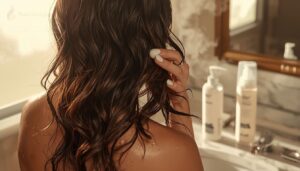
After conditioning, don’t towel-dry. Apply products to wet hair right away so each strand absorbs them evenly. Once your products are in, try plopping your hair with a microfiber towel or cotton t-shirt to lock in moisture without disturbing the pattern you just created.
| Product | Purpose | Amount |
|---|---|---|
| Leave-in conditioner | Adds slip and base moisture | Dime-sized |
| Styling cream | Defines and softens wave pattern | Quarter-sized |
| Gel | Seals hold and reduces frizz | Nickel-sized |
Layer in this order. Work each product through from roots to ends before adding the next layer.
Scrunch or Brush for Definition
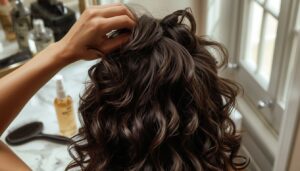
Choose your method based on texture and wave tightness.
- Apply curl enhancer to fully wet hair.
- Scrunch upward in small sections.
- Try a Denman brush for looser wavy hair.
- Work fast before drying starts.
- Leave clumps alone to hold their shape.
Tighter waves often respond best to scrunching. Looser waves often gain more curl definition with a brush pass first.
Plop and Diffuse on Low

Plopping your hair first gives curls time to form before heat touches them. Wrap your hair in a microfiber towel or a cotton t-shirt for ten to fifteen minutes, until it’s damp but not dripping.
Then diffuse on low heat and low airflow, working in sections from underneath. Keep the diffuser cupped around your clumps without disturbing them too aggressively.
A good hair diffuser for curly hair fits snugly over your dryer’s nozzle and distributes airflow evenly to encourage clumping without frizz.
Scrunch Out The Cast
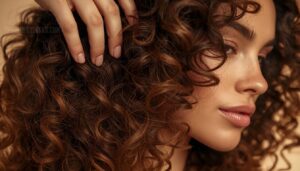
Think of the cast like a shell protecting your curls while they set. Your gel has done its job. Once hair’s fully dry, it’s time to scrunch out the cast.
- Use dry hands, not damp ones
- Target the curl clumps, not your roots
- Keep pressure light to avoid frizz
- Work your way up section by section
Soft, defined curls follow.
Heat-Free Ways to Make Wavy Hair Curlier

You don’t need heat to get curlier results. There are a few simple, heat-free techniques that work with your hair’s natural texture to create more defined spiral patterns. Each method below works best on wet or damp hair, so start with freshly washed strands.
One popular heat-free approach is plopping — a technique that encourages curl definition while cutting down on frizz, and our plopping guide for curly and wavy hair walks you through exactly how to do it.
Finger-Coil Wet Hair
Finger coiling gives your waves a defined spiral shape they’d otherwise skip. A curl defining cream with light hold helps each coiled section keep its shape without weighing the wave down.
On soaking-wet hair, apply your leave-in conditioner and a curl definer, then wrap small sections around your finger from root to tip. Keep your direction consistent throughout each section.
Let hair air-dry fully before touching it. Your hair porosity affects drying time, but patience drives curl pattern improvement.
Create Overnight Twists
To Create Overnight Twists, start with damp, product-coated hair. Section it, then twist and pin each piece tightly from root to tip. You can also use small clips instead. Smaller sections produce tighter, springier curls.
Let them fully dry before releasing. Separate gently to promote hair shaft sealing and improve curl longevity without undoing the definition you’ve carefully built overnight.
Set Hair With Braids
Braid size decides your curl size. Smaller braids create tighter curls, while larger ones give looser waves. Work a light hold product through damp hair, then braid each section all the way to the ends. Secure every tip so nothing unravels overnight.
Don’t undo a single braid until your hair’s completely dry, then gently separate the sections with your fingers.
How to Use Heat Safely for Tighter Curls
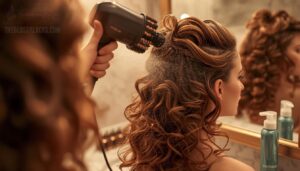
While heatless overnight curls are gentle, heat can push your waves into tighter, more defined curls when you apply it the right way.
Always start with damp, not dry hair. Apply a heat protectant spray before any tool touches your strands. Pair that with hair mousse to build hold and help the curl pattern set. Use a Denman brush on soaking-wet hair to define sections before you diffuse.
Follow these steps every time you use heat:
- Detangle with a Denman brush on wet hair
- Apply hair mousse from roots to ends
- Coat each strand with heat protectant spray
- Diffuse on low heat, cupping curls upward
- Keep the diffuser moving to avoid hot spots
Let curls cool before you touch them.
How to Maintain Curls and Restore Definition

Heat helps set your curls, but keeping them defined day to day is where real hair texture transformation happens.
On refresh days, lightly mist your hair with water and scrunch in a small amount of curl definer to reactivate your styling products. A quick Denman brush rake through damp sections rebuilds clump shape fast. Add a touch of leave-in conditioner to smooth strands without weighing them down.
Keep these habits between wash days:
- Pineapple your hair loosely overnight to protect root volume
- Sleep on a silk or satin pillowcase to reduce friction and frizz
- Use low-heat diffusing to revive curls that feel flat
- Let curls dry fully before you touch them
- Avoid product buildup by co-washing instead of daily shampooing
Frequently Asked Questions (FAQs)
Can I turn my wavy hair into curls?
Your hair type won’t change permanently, but you can absolutely boost your natural wave pattern into defined curls.
With the right products and drying technique, curl clumping happens naturally, giving you curlier results every time.
How to make your natural wavy hair curly?
Your waves are already a spring waiting to coil tighter.
Apply a leave-in conditioner and curl definer to soaking-wet hair. Scrunching section by section and diffusing on low heat will activate your natural curl pattern.
What not to do to wavy hair?
More conditioner isn’t always better. Heavy buildup flattens your natural bend, while skipping sulfate-free shampoo strips your oils completely.
Always apply products only to wet hair, and never skip your heat protectant before any styling.
Does the curly girl method work on wavy hair?
Wondering if it’s only meant for tight curls? The curly girl method works really well on wavy hair. It cuts dryness and buildup that flatten your natural pattern, letting your waves form tighter, defined clumps.
Can curly hair be made wavy?
Yes, curly hair can be made wavy. Braiding damp hair, using rollers, or applying curl-relaxing products temporarily loosen tight curls. For lasting results, chemical treatments like texturizers permanently alter your hair’s texture and follicle shape.
How do you make wavy hair curly?
Want tighter curls from your waves? Start with the Curly Girl Method: skip sulfates, co-wash instead, and apply a curl definer to soaking wet hair. A Denman Brush helps distribute product and boosts definition fast.
This approach is rooted in avoiding sulfates and silicones, which helps preserve your hair’s natural curl pattern over time.
Is wavy hair a straight hair?
Wavy hair isn’t straight hair. It’s a distinct curl type with its own follicle shape, oval or elliptical, naturally producing S-bends, while straight hair grows from perfectly round follicles at perpendicular angles with no wave.
How often should I use protein treatments for wavy hair?
For damaged or high-porosity hair, use a protein treatment every 2-4 weeks. If your hair’s healthier, stretch it to every 4-6 weeks and use lighter options. Always balance with moisture to maintain good hair elasticity.
How do I get my curls to form at the roots and not just the ends?
Your roots are the foundation. Too much product weighs them flat. Apply a lightweight hold gel while hair’s soaking wet, work it into the scalp, scrunch upward firmly, then diffuse upside down on low heat.
Is it possible to have curly bangs or layers with wavy hair?
Think your 2B or 2C waves can’t form curly bangs or layers? They can. Finger-coil small damp sections with a curl definer, let them air-dry completely, and your wave pattern tightens into defined curl clumps.
Conclusion
Curl specialists often say clients who finally get consistent results share one thing in common: they stopped switching products every week. Figuring out how to make wavy hair curly takes repetition, not reinvention.
Give each step real time to work. Keep your wash day routine steady, protect your curls overnight, and then refresh them again the next morning. Your hair’s curl pattern is already there, waiting. Now you know exactly how to bring it out.
- https://moonstoneseven.com/blogs/news/understanding-plopping-a-guide-for-curly-and-wavy-hair
- https://www.facebook.com/moonstoneseven/videos/hair-plopping-is-a-technique-for-wavy-and-curly-haired-people-after-youve-applie/1714971083106408
- https://us.milkshakehair.com/blogs/news/a-quick-guide-to-plopping-curly-and-wavy-hair