This site is supported by our readers. We may earn a commission, at no cost to you, if you purchase through links. This content is for general informational and educational purposes only and is not a substitute for professional medical, dermatological, or nutritional advice.
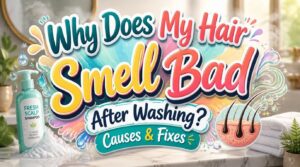
You wash your hair. It smells clean for about an hour. Then something sour and stale settles in, and you’re left wondering where you went wrong.
You didn’t miss a step. The real culprit lives closer to your scalp than you’d think. Scalp buildup, bacterial activity, and incomplete rinsing can all turn a fresh wash into a breeding ground for odor, sometimes within hours. The problem isn’t always how often you wash but how you’re washing.
Understanding why your hair smells bad after washing starts at the scalp. The causes are specific, and so are the fixes.
Table Of Contents
- Key Takeaways
- Why Does Hair Smell Bad After Washing?
- How to Wash Hair to Remove Odor
- How to Prevent Post-Wash Hair Odor
- Which Products Help Eliminate Scalp Odor?
- When Should You See a Dermatologist?
- Frequently Asked Questions (FAQs)
- How do I get rid of bad smell in my hair?
- Why does my hair still smell bad even after I wash it?
- What does smelly hair syndrome smell like?
- What shampoo is best for smelly hair?
- Why does my hair smell bad after washing?
- What causes a smelly scalp & hair?
- Why does my hair smell like mildew after washing?
- Are smelly hair a bad thing?
- Does your hair smell good without washing it?
- Why does my hair smell like dandruff?
- Conclusion
Key Takeaways
- Post-wash hair odor usually comes from the scalp, not the strands — product buildup, bacterial or fungal overgrowth, rushed rinsing, damp roots, and hard water minerals all trap smell right where you can’t see it.
- Fixing it is mostly about technique: massage shampoo into the scalp for 30 seconds, rinse for a full minute or two until the water runs clear, keep conditioner off your roots, and use lukewarm water (35–40°C) instead of hot.
- Prevention happens between washes — dry your roots fully, exfoliate the scalp weekly, swap pillowcases every 2–3 days, clean brushes and accessories regularly, and swap heavy waxes and silicone gels for water-based products.
- Targeted products break stubborn cycles: clarifying shampoos for buildup, medicated options with zinc pyrithione or ketoconazole for microbes, salicylic acid for flaking, and diluted apple cider vinegar to rebalance scalp pH — but see a dermatologist if odor persists, or if you notice sores, scaling, redness, or sudden hair loss.
Why Does Hair Smell Bad After Washing?

You just washed your hair — so why does it still smell off? The answer usually comes down to one of a handful of root causes, and most of them are fixable once you know what you’re dealing with. Here’s what’s likely going on.
If that wet-dog odor keeps showing up right after washing, understanding the root causes of hair that smells like wet dog can help you trace it back to microbial buildup, improper drying, or scalp imbalances you might not have considered.
Scalp Buildup and Product Residue
Think of your scalp like a slow-draining sink that’s quietly clogging. Every gel, spray, serum, and dry shampoo leaves behind product residue that your regular hair washing routine doesn’t fully clear.
Your scalp is a slow-draining sink, and every product you use is quietly clogging it
That residue bonds with sebum and dead skin, forming scalp buildup that locks in odor. Switching to a clarifying shampoo and adding scalp exfoliation weekly breaks that cycle fast. Left untreated, this buildup can lead to folliculitis and scalp inflammation, making timely treatment essential.
Incomplete Shampoo Rinsing
Product residue isn’t the only culprit. Washing hair incorrectly, specifically rushing the rinse, leaves surfactants clinging to your scalp. Those detergent compounds trap odor just like buildup does.
Your hair washing routine likely shortchanges rinse time. Use proper hair rinse methods: run fingers through your strands, hit the nape, and keep rinsing until the water runs completely clear.
Bacterial or Fungal Overgrowth
Rushed rinsing sets the stage for bacterial or fungal overgrowth.
Your scalp microbiome hosts countless microbes in balance. Shift that balance and certain species multiply fast.
Signs of microbial imbalance:
- Odor returns hours after washing
- Greasy or flaky patches
- Itchy scalp with no clear cause
- Smell worsens without visible buildup
Fungal overgrowth thrives when scalp surfaces stay moist or coated.
Damp Roots After Washing
Microbial overgrowth and damp hair go hand in hand. If your roots stay wet after washing, you’re creating the warm, moist environment that bacteria and fungi thrive in.
Wet roots trap moisture against the scalp, slowing evaporation where airflow is already low. Towel wrapping makes it worse, absorbing surface water while keeping dampness sealed at the root, where odor develops.
Hard Water Mineral Film
If your water is hard, calcium and magnesium are depositing on your strands after every single wash, trapping product buildup, disrupting scalp pH, and locking odor into the hair fiber.
Signs hard water is the culprit:
- Heavy, dull hair post-wash
- Smell returning the same day
- Poor shampoo lather
- Mineral spots on fixtures
Dial in a clarifying treatment based on your washing frequency.
If you wash daily, scaling back your routine with an oily hair care plan can help your scalp stop overproducing oil within a few weeks.
How to Wash Hair to Remove Odor
Here’s the good news: washing away that smell usually comes down to technique, not some miracle product. Most people wash their hair on autopilot, and a few small tweaks can break the odor cycle at its source.
Let’s walk through the wash-day habits that actually get rid of the smell—and keep it gone.
Shampoo The Scalp, Not Ends
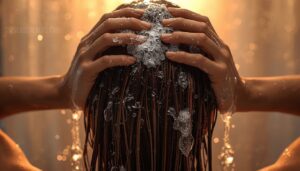
Here’s the thing: most of the odor on your head comes from your scalp, not your hair strands. Sebum production happens at the root, so scalp cleansing is where you should focus your effort.
Massage shampoo into your scalp for about 30 seconds, then rinse thoroughly. Your hair washing frequency matters too. Product buildup starts at the roots. Shampoo the scalp, not ends.
Double-cleanse Heavy Product Buildup
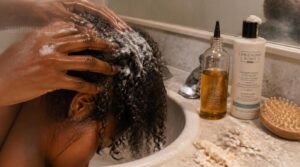
If one wash isn’t cutting it, try two. Double-cleansing means washing twice in a row: first with a cleansing oil or balm on dry scalp to dissolve heavy product buildup, then with your regular shampoo to lift leftover residue. Pomades, dry shampoo, and sunscreen cling stubbornly. One cleanse just smears them around.
You don’t need this daily. Save double-cleansing for when your scalp feels grimy despite your usual hair care routine.
Rinse Longer Than Usual

Most people rinse for ten seconds and call it done. That’s the problem.
Shampoo surfactants, the ingredients that dissolve sebum and product buildup, need time to flush away. Give yourself a full minute or two of rinsing, and part your hair so water hits the scalp, not just the strands. Lingering residue feeds odor fast.
Rinse longer, top to bottom.
Condition Away From Roots
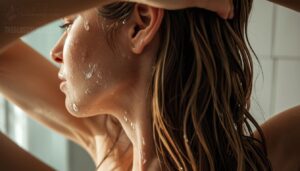
Your scalp already conditions your roots. Sebum, the oil it naturally produces, takes care of that. Adding conditioner there just creates product buildup and disrupts your scalp’s pH balance. Keep it to mid-lengths and ends:
- Start at ear level
- Work toward the tips
- Leave on for a minute
- Rinse clean
Roots stay fresh. Ends get what they actually need.
Use Lukewarm, Not Hot Water
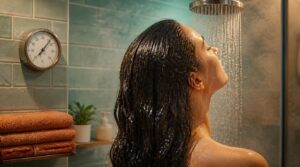
Hot water feels satisfying, but it strips your scalp’s sebum faster than it should, knocking your pH balance off and triggering rebound oil production. That extra oil is exactly what odor-causing microbes feed on.
Aim for 35 to 40°C, comfortably warm but not steaming. The wrist test works: if water feels neither hot nor cold, you’re in the right zone.
How to Prevent Post-Wash Hair Odor

Washing correctly gets you halfway there — the other half is what you do between washes. A few consistent habits can stop odor from coming back before it even starts. Here’s what actually makes the difference:
Dry Roots Completely
Your roots are where the trouble hides. Damp hair at the scalp creates a warm, moist environment that bacteria and fungi thrive in, and that’s exactly what drives post-wash odor. Don’t just let your hair air-dry and call it done.
Focus a low-heat blow dryer at the roots, or press a microfiber towel against them. The ends will dry on their own.
Exfoliate The Scalp Weekly
Once your roots are dry, keep them that way by clearing the buildup that traps oil and odor at the source.
A scalp exfoliating scrub lifts dead skin cells, excess sebum, and stubborn product buildup that regular shampoo misses entirely. Think of it as resetting your scalp once a week. Use gentle circular motions for two to three minutes, then shampoo as usual.
Wash Pillowcases and Towels Regularly
Your freshly cleaned scalp is only as clean as what touches it next. Dirty pillowcases transfer oils, sweat, and bacteria right back into your hair overnight, so swap them every two to three days.
Use a microfiber towel as part of your hair drying technique, and don’t overlook unwashed hair accessories like clips or scrunchies doing the same quiet damage.
Clean Brushes, Combs, and Hats
The same logic applies to your brushes and combs. They collect oils, dead skin, and product residue with every use, then deposit it right back the next time you style. Clean them every two weeks at minimum, using a shampoo-and-water soak to loosen buildup. A dedicated hair brush cleaning tool set makes it much easier to scrub bristles and remove stubborn buildup in minutes.
Hats trap sweat and scalp oils in fabric just as easily. Let everything dry completely before reuse.
Avoid Heavy Styling Products
What you put on today affects how you smell tomorrow. Heavy styling products like waxes and silicone gels don’t fully wash out. They trap bacteria and sweat against your scalp, making hair odor prevention harder over time. Switch to water-based options.
The worst offenders for product buildup:
- Waxes and pomades
- Petroleum jelly
- Heavy mineral oils
- Silicone-based serums
- Dry shampoo overuse
Which Products Help Eliminate Scalp Odor?
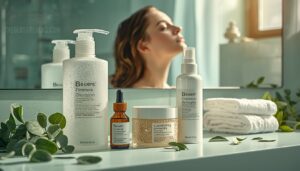
The right product can make a real difference when washing alone isn’t cutting it. Your scalp’s specific issue — whether it’s buildup, fungal overgrowth, or pH imbalance — determines which formula actually works. Here are the products worth knowing about.
Clarifying Shampoos for Buildup
Product buildup is why your shampoo fails. A clarifying shampoo takes care of what regular washing misses.
| Ingredient | Targets | Best For |
|---|---|---|
| Heavy surfactants | Oils, styling residue | All hair types |
| Chelators | Minerals | Hard water |
| Activated charcoal | Scalp impurities | Oily scalps |
| Apple cider vinegar | Product residue | Sensitive scalps |
| Sulfate-free formula | Buildup (gentle) | Color-treated hair |
Monthly scalp cleansing maintains hair hygiene without stripping oils.
Anti-dandruff Shampoos for Microbes
When the odor traces back to microbial overgrowth, a medicated shampoo is what you actually need. Ingredients like zinc pyrithione, ketoconazole, and selenium sulfide work directly on the yeast and bacteria driving the smell. Think of it as an antifungal shampoo doing the job your regular shampoo simply can’t. Use it two to three times a week until things settle.
Salicylic Acid Scalp Treatments
Salicylic acid is a keratolytic ingredient, meaning it dissolves dead skin cells that clog the scalp. That buildup is tied to sebum production, odor, and poor scalp health.
Use it right:
- Wet hair thoroughly first
- Apply only to the scalp
- Leave lather for 5 minutes
- Rinse well afterward
Stick to shampoos with 1 to 3 percent for effective dandruff treatment.
Diluted Apple Cider Vinegar Rinses
Diluted apple cider vinegar rinses work by lowering scalp pH balance, which makes it harder for bacterial overgrowth and fungal growth to thrive. The active ingredient is acetic acid, and at 5% concentration straight from the bottle, it needs diluting.
Mix 2 to 4 tablespoons into 16 ounces of water. Apply after shampooing, massage into the scalp, wait two minutes, then rinse.
Shampoo Suited to Scalp Type
The right shampoo is the foundation here. If sebum production runs high, reach for labels like "clarifying," "balancing," or "oil-control."
Sensitive or dry scalps need a sulfate-free shampoo that keeps scalp pH balance intact without stripping everything out.
Dandruff-prone scalps need an antimicrobial treatment baked into the formula.
Adjust hair washing frequency to your scalp type, not your hair length.
When Should You See a Dermatologist?

Most scalp odor clears up once you fix your washing routine or swap in the right products — but not always. Sometimes the smell is your scalp’s way of waving a red flag at something that needs a professional eye. Here’s when it’s time to stop troubleshooting on your own and book an appointment with a dermatologist.
Odor Persists After Proper Washing
If you’ve cleaned up your routine, switched pillowcases, and cut out heavy hair product buildup, but scalp odor keeps coming back, that’s your signal to see a professional.
Persistent smell usually points to bacterial or fungal growth that a regular shampoo simply can’t reach on its own.
A dermatologist can prescribe a targeted antimicrobial treatment to actually address the source.
Severe Itching, Redness, or Scaling
Persistent smell often travels with other symptoms. If your itchy scalp is paired with visible redness or thick, silvery scaling, that’s a sign of something deeper, like seborrheic dermatitis or scalp psoriasis.
Both conditions involve inflammation that disrupts the skin barrier, which invites fungal or bacterial growth to take hold. A regular shampoo won’t fix that. You need a diagnosis.
Sores, Crusting, or Drainage
When scalp inflammation goes from irritated to infected, the signs get harder to ignore. Seborrheic dermatitis and scalp psoriasis can break the skin barrier, creating conditions where fungal or bacterial growth thrives and scalp odor worsens.
See a dermatologist if you notice:
- Open sores or pus-like discharge
- Crusting from dried drainage
- Foul scalp odor after washing
- Spreading redness or tenderness
Sudden Hair Loss or Tenderness
Hair loss that comes on suddenly, especially alongside scalp tenderness, is a sign the problem has moved well past odor. Losing more than 100 hairs a day in clumps signals real follicle stress.
Scalp inflammation from conditions like alopecia areata or a fungal infection can cause permanent damage without prompt treatment. Seborrheic dermatitis left unchecked creates the same risk.
Possible Dermatitis or Scalp Infection
If greasy flaking and persistent odor keep cycling back, seborrheic dermatitis is the likely culprit. It’s driven by Malassezia fungus, a yeast overgrowth that feeds on scalp oils and won’t quit without targeted treatment.
If your scalp still looks oily soon after washing, this guide to oily scalp causes and treatment can help you pinpoint the trigger.
Tinea capitis, another fungal infection with similar scalp irritation, is also worth ruling out. A dermatologist can confirm which it is and get you the right fix.
Frequently Asked Questions (FAQs)
How do I get rid of bad smell in my hair?
Washing more often isn’t always the fix. Scalp hygiene goes beyond frequency. An antimicrobial rinse like diluted apple cider vinegar resets an oily scalp, cuts through scalp odor, and removes the residue regular shampoo misses.
Why does my hair still smell bad even after I wash it?
Even after a thorough wash, scalp odor can linger due to microbial overgrowth, residual buildup, or damp roots. The problem usually lives on your scalp, not your strands.
What does smelly hair syndrome smell like?
Smelly hair syndrome can smell like sour milk, wet dog, moldy hay, or a pair of dirty socks. That persistent scalp odor comes from microbial overgrowth converting your sweat and oils into something genuinely unpleasant.
What shampoo is best for smelly hair?
A clarifying or medicated shampoo is usually your best bet. Look for zinc pyrithione, ketoconazole, or tea tree oil when odor comes with flaking or itching. Avoid sulfate-free shampoo if heavy buildup is the problem.
Why does my hair smell bad after washing?
Don’t get too lathered up about it, but your wash routine might actually be part of the problem. Bacteria, fungal overgrowth, and product buildup can all survive a rinse, leaving you with persistently smelly hair.
What causes a smelly scalp & hair?
A smelly scalp usually starts with your microbial community. Bacteria and yeast feed on excess sebum and sweat, breaking them into odor compounds. Product buildup, overwashing, and hard water disrupt sebum regulation, making things worse.
Why does my hair smell like mildew after washing?
That damp-towel smell rising from your roots? It’s trapped moisture. Poor drying practices leave water sitting on your scalp, letting mildew-loving microbes multiply. Sweat, overwashing, and a dirty pillowcase make that musty odor worse.
Are smelly hair a bad thing?
Usually, no. A smelly scalp is rarely dangerous. Most odor comes from sweat and odor, product buildup, or underwashing. Even so, persistent smell can signal fungal issues or bacterial overgrowth worth treating.
Does your hair smell good without washing it?
No, and your scalp makes sure of it. Within hours, sebum, dead skin, and sweat and odor start mixing, feeding bacteria that create a noticeable smell. Even clean hair picks up scents from pillowcases, hard water, and daily grime.
Why does my hair smell like dandruff?
Ironically, washing more won’t fix it. Dandruff affects roughly half of adults, and its smell comes from Malassezia yeast breaking down scalp oils into musty compounds that cling to strands and flake everywhere.
Conclusion
Hippocrates figured this out centuries before shampoo bottles existed: treat the scalp, not just the hair. If you’re still asking why does my hair smell bad after I wash it, look at your routine, not your genes. Buildup, microbes, and damp roots all leave fingerprints.
Cleanse thoroughly, rinse longer, dry completely. Your scalp isn’t mysterious. It just needs better habits, and now you have the exact playbook to give it exactly that.