This site is supported by our readers. We may earn a commission, at no cost to you, if you purchase through links. This content is for general informational and educational purposes only and is not a substitute for professional medical, dermatological, or nutritional advice.

You toned your hair two weeks ago, and already that fresh, icy shade is slipping back to yellow. So you reach for the toner again. Hold that thought.
Here’s the catch most people miss: toner doesn’t only deposit pigment. It opens the cuticle to do its job, and your hair pays a small toll every single time. Tone too often, and you trade brassiness for dryness, frizz, and strands that snap like old rubber bands.
So how often can you tone your hair without wrecking it? The answer depends on your toner type, your hair’s porosity, and its overall health. Let’s break down a schedule that keeps your color cool and your hair intact.
Table Of Contents
- Key Takeaways
- What Does Hair Toner Do?
- How Often Can You Tone Your Hair? Usually Every 4–6 Weeks
- How Does Toner Type Affect Frequency?
- What Happens if You Tone Hair Too Often?
- How Can You Retone Hair Safely?
- Frequently Asked Questions (FAQs)
- How long should you wait between toning hair?
- Can you overdo toner?
- Are toners damaging to hair?
- Can I tone my hair again if it’s still yellow?
- How long does hair toner last?
- Is hair toner safe to use?
- How often should I use hair toner?
- Is hair toner suitable for all hair types?
- Does hair toner damage my hair?
- Can you tone wet or damp hair?
- Conclusion
Key Takeaways
- Tone every 4–6 weeks for most hair, but wait 6–8 weeks if your hair is damaged, and high-porosity hair may need it every 3–4 weeks since it grabs and loses pigment fast.
- Toner type sets the pace: semi-permanent lasts 2–3 weeks, demi-permanent 4–6 weeks, and permanent toners 6–8 weeks, with high-lift formulas limited to every 8 weeks.
- Overtoning causes dryness, frizz, and breakage because each session opens the hair cuticle, and same-day retoning is never safe—wait at least a week if brass persists.
- Retone safely by strand-testing first, applying to damp (not wet) hair, following exact processing times, deep-conditioning after, and using purple shampoo 1–2 times weekly between sessions to stretch your tone.
What Does Hair Toner Do?

Hair toner is one of those tools that quietly does a lot of heavy lifting for your color. It’s not just about canceling brassiness — it shapes the whole look and feel of your hair. Here’s what toner actually does, from the moment you apply it to the day it fades.
If you’re curious how toner fits into bigger color changes, this guide to popular hair dye techniques breaks down the difference between correcting and transforming your shade.
Neutralizing Yellow and Orange Tones
Think of your hair like a canvas. When bleach lifts color, it almost always leaves behind yellow or orange undertones, those warm pigments that stubbornly hang on. Toner deposits the opposite color on the wheel: purple neutralizes yellow, and blue cancels orange to cut brassiness. That’s why toning frequency matters. Push it too soon, and you risk overtoning your hair. Just as students benefit from a data-centered reading approach to better interpret visual information, training your eye to examine your hair’s undertones closely before toning can help you make smarter, safer color decisions.
Refreshing Dull or Faded Color
Beyond brassiness, toner also brings flat, faded color back to life. Even without visible brass, toner on color-treated hair fades over time. A consistent toning schedule prevents that.
Watch for signs your toner needs updating:
- Color looks washed out or flat
- Shine has noticeably dropped
- Tone feels uneven in sections
- Hair appears dull under light
Toner Versus Hair Dye
Toner and dye work very differently. Toner deposits sheer, translucent pigment to correct unwanted undertones, without lifting your natural color. Dye chemically opens the hair shaft to replace existing pigment entirely.
That’s why toning frequency matters. Toner is a subtle correction, not a color overhaul. It’s gentler on your strands, with far less recovery time than a full dye job.
Typical Toner Longevity
Since toner is gentler than dye, how long does it actually last? Most toners hold their color for 2 to 4 weeks, though that window shifts with your hair’s porosity, the toner type, and wash habits.
Demi-permanent formulas can stretch closer to 4 to 6 weeks, while semi-permanent options fade faster. Your hair toner usage frequency should reflect that reality.
Signs Toner Has Faded
How do you know it’s time? Watch for yellow or orange tones creeping back into your midlengths and ends. Your hair may also look matte or dull in natural light, losing the reflective shine toning gave it.
Uneven color balance is another giveaway, where some strands look cooler while others look brassy. That patchiness is your clearest signal to schedule your next session.
How Often Can You Tone Your Hair? Usually Every 4–6 Weeks

For most people, toning every 4–6 weeks hits the sweet spot between keeping color fresh and keeping hair healthy. That said, your hair type and condition can shift that window in either direction. Here’s what to expect based on where your hair falls.
If you’re using semi-permanent color, how long semi-permanent dye actually lasts can vary a bit, so it’s worth knowing what to expect before you plan your touch-ups.
Damaged Hair: Wait 6–8 Weeks
If your hair is damaged, patience isn’t optional, it’s the whole plan. Push toner onto stressed strands too soon and you invite breakage. Give your hair a 6–8 week recovery period between sessions so it can rebuild strength and moisture. That waiting window is your best tool for overtoning prevention after chemical processing damage.
High-Porosity Hair: Every 3–4 Weeks
Most high-porosity hair needs toning every 3–4 weeks. Why so soon? Your open cuticle (the hair’s outer shield) grabs pigment fast, then lets it slip away just as quickly. Think of a sponge with holes: it soaks up toner in minutes but can’t hold it.
Protect your toner with these habits:
- Apply toner to damp, not wet hair to slow absorption.
- Cut processing time by about 25–30% to avoid overtoning.
- Use a protein treatment 1–2 weeks before toning, never right after.
- Seal ends with jojoba or grapeseed oil between sessions.
That faster fade isn’t your imagination. Warm yellow tones resurface within 10–14 days because violet pigments wash out first, sometimes losing most of their color by week three. Watch your hair elasticity, too. If strands stretch and snap instead of bouncing back, you’re overdoing it, so stretch your toning interval and let recovery time catch up.
Low-Porosity Hair: Six Weeks Plus
Low-porosity hair works the opposite way. Your tightly shut cuticle resists pigment, so toning frequency stretches to six weeks or more.
Run a quick hair strand test: if water beads on your strands, warm them gently before toning and use a slightly higher developer volume.
Give yourself extra hair recovery time, because buildup blocks absorption and dulls results.
Platinum Blonde Toning Frequency
Platinum is the highest-maintenance blonde you can wear. To hold that icy, level 10 shade, book a toning session every four to six weeks, because brassiness shows fast at that lightness.
If your hair feels damaged or porous, stretch to six or eight weeks instead. Overtoning fragile platinum strands invites breakage, so patience protects the look.
Hair Health Before Retoning
Before you rebook that toner, run a quick health check. Your hair tells the truth if you listen.
Try the porosity float test: a strand that sinks fast means high porosity, so wait longer between sessions.
Stretch a wet strand too. If it snaps instead of bouncing back, your elasticity is shot, and toning now only deepens the damage.
Healthy first, blonde second.
How Does Toner Type Affect Frequency?
Not all toners are created equal, and the type you choose plays a big role in how often you can safely reapply. Some formulas are gentle enough for frequent touch-ups, while others demand serious patience between sessions. Here’s a breakdown of each toner type and how long you should wait before reaching for the bottle again.
Semi-Permanent Toners: 2–3 Weeks

Most semi-permanent toners last just 2 to 3 weeks, so they need the most frequent touch-ups. They coat the outside of your hair rather than soaking in, which means pigment rinses away each wash.
If you shampoo daily with hot water, expect the shorter end. Cool rinses and color-safe products stretch your toner lifespan closer to three.
Demi-Permanent Toners: 4–6 Weeks
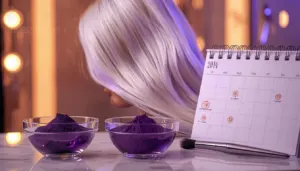
Demi-permanent toners are the sweet spot for most clients. They deposit pigment under the cuticle without lifting, so they hold tone for a solid 4 to 6 weeks before brass sneaks back in.
Your porosity sets the pace. High-porosity hair drinks pigment fast but sheds it fast too, so plan reapplication closer to four weeks. Low-porosity hair stretches toward six.
Permanent Toners: 6–8 Weeks
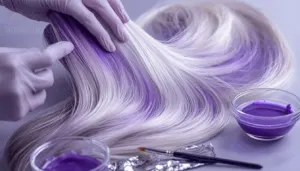
Permanent toners take things up a notch. They deposit cool pigment that actually stays put, holding brass at bay for a full 6 to 8 weeks.
That longer hair toner lifespan comes with a trade-off, though. Permanent formulas sit deeper in the strand, so toning frequency matters more. Retouch before six weeks and you risk buildup and dryness. Space it right, and your hair color maintenance stays easy.
High-Lift Toner Usage Limits
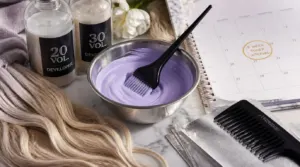
High-lift toners are a different animal. They lift and tone at once, which means more stress on your strands.
A quick developer selection guide helps: 20-volume for gentle lift, 30-volume for stubborn brass, never 40-volume at home.
Because they work harder, limit high-lift permanent toners to every 8 weeks. Always respect hair toner processing time, since overprocessing sneaks up fast.
Purple Shampoo Between Tonings

Between toning sessions, purple shampoo is your best friend. Its violet pigments cancel yellow and brassy tones, keeping your cool color fresh without a full toning session.
Most stylists suggest using it 1–2 times weekly, adjusting for sun exposure and hair porosity. Remember, it’s not a dye, so results build gradually.
In any toning product comparison, it’s the gentlest option for maintaining tone.
What Happens if You Tone Hair Too Often?
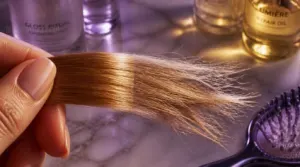
Toner is gentle compared to bleach, but "gentle" doesn’t mean "harmless" when you use it too often. Overtoning creeps up on you—one day your hair feels fine, and the next it’s dry, frizzy, and snapping off at the ends. Here’s what happens when you tone too frequently, and how to spot the warning signs before real damage sets in.
Toner may be gentler than bleach, but overtoning creeps up quietly—until one day your hair is dry, frizzy, and snapping off at the ends
Dryness, Frizz, and Split Ends
Overtoning strips moisture fast, and dry hair is where the damage starts. Your cuticles lift, humidity creeps in, and frizz takes over. Watch for these warning signs:
- Ends that feel rough and straw-like
- Hair elasticity loss (snaps instead of stretches)
- Split ends spreading upward
- Dullness no serum can fix
A weekly deep conditioning treatment helps, but prevention beats repair.
Breakage and Stringy Texture
Stringy, snapping strands are the next red flag. When hair damage goes past dryness, your hair loses elasticity and breaks mid-shaft, leaving thin, stringy pieces that stick together. Split ends travel upward, making the problem worse.
If your ponytail feels thinner or strands snap when stretched, that’s hair elasticity loss talking. Stop toning and rebuild strength with protein treatments first.
Risks of Same-Day Retoning
Toning twice in one day is a hard no. Same-day retoning stacks chemical hair processes back to back, and your hair never gets a hair recovery period between them.
The result? Double cuticle opening, stripped natural oils, and serious scalp irritation, sometimes with burning or flaking. You also risk patchy color and hair breakage.
Wait at least a week before retoning.
Warning Signs of Overprocessing
Your hair sends warning signals before it gives up completely. Watch for gummy, stretchy strands when wet, which means the internal protein structure is damaged. Snapping during brushing, rough straw-like texture, and dull color that fades fast all point to overprocessing.
Scalp redness, itching, or burning after toning means stop immediately. That’s chemical damage affecting your roots, and ongoing irritation can slow healthy hair growth.
When to Consult a Colorist
Sometimes the smartest move is handing the reins to a professional. If you’re unsure whether your hair damage comes from overtoning or something else, a hair colorist can diagnose the real cause.
Here’s when to book that appointment:
- Your hair toner fades within days
- Highlights look patchy or uneven
- You’re chasing a shade from old photos
- Breakage keeps getting worse
- You’ve toned twice in one week
A colorist also checks porosity, reviews your sulfate-free shampoo routine, and builds a maintenance plan that protects your hair while toning hair safely.
How Can You Retone Hair Safely?

So you’ve waited the right amount of time, and now it’s finally safe to retone—great. The way you apply toner matters just as much as how often you use it. Here are five simple habits that keep your color fresh without wrecking your hair in the process.
Strand-Test Before Every Application
Before you pour toner over your whole head, spend ten minutes on a strand test. It’s your insurance policy.
Apply the formula to a one-inch section behind your ear, rinse, dry, and check the result against your goal.
If the shade runs too warm or uneven, you’ve saved yourself hours of correction work.
Apply Toner to Damp Hair
Once your strand test checks out, prep the hair itself. Towel-dry until it’s about 70% dry, not dripping and not bone-dry. That sweet spot gives the toner even porosity, so it absorbs smoothly instead of pooling or grabbing patchy.
Section the hair and work from roots to ends with gentle massaging motions. Damp application also protects strands, keeping your toning session from turning drying.
Follow Exact Processing Times
Timing is where toning hair goes right or wrong. Most toners process in 5 to 20 minutes, so set a timer the moment application ends. Check every five minutes, because once the reaction finishes, extra time adds nothing but damage.
That’s why your hair toner strand test matters: it shows when your tone lands, not just when the clock runs out.
Deep-Condition After Toning
Once the toner is rinsed, your hair is thirsty. Apply a deep conditioning mask right away, starting at the ends and combing it through evenly. Leave it on 20 to 30 minutes under a shower cap, then rinse thoroughly.
This restores moisture, protects elasticity, and keeps strands from feeling rough or snapping between toner applications.
Limit Washing, Heat, and UV
Stretching your toner’s lifespan comes down to three habits: washing less, styling cooler, and blocking sun.
Wait two to three days after toning hair before your first wash, then use a sulfate-free shampoo with lukewarm water.
Heat above 375°F breaks down pigment, so air dry when you can.
And UV rays turn blondes brassy fast, so wear a hat outdoors. A wide-brimmed UV protection sun hat shields your strands from fading, so your fresh tone stays cool and brass-free all summer.
Frequently Asked Questions (FAQs)
How long should you wait between toning hair?
Patience pays off with pigment. Most people should wait 4 to 6 weeks between toning sessions, letting the toner fading timeline run its course. Damaged hair needs longer, around 6 to 8 weeks, before toner reapplication.
Can you overdo toner?
Yes, you can. Toning your hair too often causes dryness, frizz, breakage, and dull, over-ashy color. If strands feel coated or stringy, pause and condition before any toner reapplication.
Are toners damaging to hair?
Think of toner like lemon juice on a cut apple: gentle in small doses, harsh if overdone. Toners themselves aren’t very damaging, but overuse causes dryness and weakened hair elasticity.
Can I tone my hair again if it’s still yellow?
You can, but wait at least a week or two. Retoning bleached blonde hair too soon risks damage. If yellow tones persist, a violet-based toner usually corrects brassy tones safely.
How long does hair toner last?
Most toners fade after 4 to 6 weeks, roughly 20 shampoos. Semipermanent formulas wash out in 2 to 3 weeks, while demipermanent ones hold longer. Porosity and aftercare decide your toner fading timeline.
Is hair toner safe to use?
Hair toner is safe when you follow the directions. Quality formulas deposit color gently, but rushing the timing or skipping a strand test can leave your strands dry, so handle application with care.
How often should I use hair toner?
Most clients should tone every 4–6 weeks, since toner pigments fade rather than grow out. Give hair at least four weeks to recover between sessions, keeping it healthy and strong.
Is hair toner suitable for all hair types?
Toner treats nearly every hair type, but bleached or lightened hair shows the truest transformation. Darker strands need lifting first, since color-depositing formulas can’t lighten. Check porosity and scalp sensitivity, or consult a professional before toning.
Does hair toner damage my hair?
Short answer: no, toner isn’t the villain here. When used correctly, it deposits pigment without lifting your natural color, so hair damage stays minimal. Overuse, though, causes dryness and breakage.
Can you tone wet or damp hair?
Yes, but only damp. Wet hair dilutes toner, weakening your results, while damp hair spreads it evenly and helps color grab properly. Towel-dry first, then apply your toner for the best control.
Conclusion
Think of toner like seasoning, a little brings out the best, but too much ruins the whole dish.
Now you know how often you can tone your hair: every four to six weeks for most, longer if your strands are stressed.
Patience beats brassiness every time.
Let purple shampoo hold the line between appointments, deep-condition like it’s your job, and your cool, glossy color will thank you.