This site is supported by our readers. We may earn a commission, at no cost to you, if you purchase through links. This content is for general informational and educational purposes only and is not a substitute for professional medical, dermatological, or nutritional advice.
Your curls already exist. Shrinkage is hiding them.
Type 4 hair can shrink by 75% or more, so the tight, compact texture in your mirror holds more length and curl than you’d guess. The pattern sits there, waiting on the right routine to bring it out.
Learning how to get curly hair as a Black man comes down to method, not luck. You don’t need a texturizer, either. Wash the right way, apply product in sections, dry without touching, and protect your hair overnight. Master those steps, and your natural texture gets to speak for itself.
Table Of Contents
- Key Takeaways
- How Black Men Can Get Curly Hair
- Best Curl Methods for Black Men
- Build a Moisture-Focused Curl Routine
- Choose The Right Curl Products
- Keep Black Men’s Curls Defined
- Frequently Asked Questions (FAQs)
- What products should I use to define my curls?
- How often should I wash my curly hair?
- How can I avoid frizz when styling my hair?
- Are there any heat-free styling techniques for curly hair?
- How long does curly hair take to grow?
- Can diet affect curl pattern and texture?
- What causes sudden curl pattern changes?
- How often should curly hair be trimmed?
- Does sleeping position damage curly hair overnight?
- How long does it take to train curls?
- Conclusion
Key Takeaways
- Your curls are already there — shrinkage from tight coil patterns can hide up to 75% of your actual length, so the texture you see isn’t the full picture.
- Getting defined curls comes down to four repeatable steps: cleanse, moisturize, define with cream or gel, and protect overnight with satin or a durag.
- Knowing your curl type (4A, 4B, or 4C) helps you choose the right products and methods, from finger coils for tight definition to twist-outs for softer volume.
- Consistency matters more than any single product — most men start seeing real curl formation after two to three months of sticking to a moisture-focused routine.
How Black Men Can Get Curly Hair

Getting curly hair starts with knowing what your hair already does naturally. From there, it’s really just a matter of working with it — not against it. Here are the steps that make it happen.
The right equipment helps too — this guide to styling tools for curly hair covers everything from high-wattage dryers to detanglers that keep frizz in check.
Curly hair comes from knowing your natural pattern and working with it, never against it
Identify Your Natural Curl Pattern
The first step in your curl journey is knowing what hair type you’re actually working with. The Andre Walker Hair Typing System puts most Black men in the type 4 category, which breaks into 4A, 4B, and 4C. Each one has a different coil shape and reacts to products differently.
For accurate curl pattern identification, check your hair when it’s clean and completely product-free. That’s when your natural curl pattern comes through clearly. For example, Type 4C hair is known to experience extreme shrinkage from tight zigzags, shrinking 75% or more from its actual length.
Start With Clean, Damp Hair
Once you know your curl pattern, your wash day sets the tone for everything that follows.
Focus your shampoo on the scalp and roots to lift oil and buildup. Rinse with lukewarm water, not hot. Then blot your hair with a microfiber towel to pull out dripping water. You want hair that feels cool and moist, with no dry patches.
Apply Leave-in Conditioner Evenly
While your hair is still damp, work your leave-in conditioner through the mid-lengths and ends.
- Start at ends and work upward
- Use your fingers or a wide-tooth comb
- Section hair for even coverage
- Skip your roots to avoid buildup
- Adjust the amount for your hair thickness
This helps hair hydration, moisture retention, curl definition, and frizz control all at once.
Add Curl Cream or Gel
Once your leave-in is in, reach for a curl cream or styling cream next. It adds moisture and keeps your curls soft without stiffness. If you want extra hold, layer a hair gel right on top. That combo works well for most curl types and cuts down on frizz. Go lightweight on the gel if your hair is fine.
Set and Dry Curls Completely
Drying is where your curls either hold or fall apart. Start by squeezing out excess water with a microfiber towel to cut down frizz before anything else.
Then let curls air-dry, or use a diffuser or hooded hairdryer on low heat to lock the shape in. Don’t touch your curls until they’re fully dry, especially if you used hair gel.
Best Curl Methods for Black Men
Not every curl method works the same for every hair type, and that’s a good thing — it means you’ve got options. Whether your hair is fresh-cut short or growing out, there’s a technique that fits where you are right now. Here are the best curl methods for Black men to know.
Whichever method you land on, the right hair gel for Black men’s hair locks in definition while keeping that delicate curl pattern healthy.
Curl Sponge for Short Hair
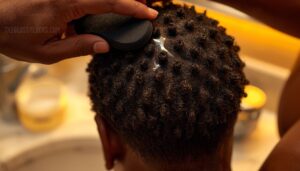
The curl sponge is one of the quickest tools black men can use on short hair. It works by pressing the foam’s circular holes against your scalp and rolling with steady, consistent pressure.
Dampen your hair first, apply a light gel, then rub in one single direction for defined sponge curls. Five to ten minutes is really all it takes.
Finger Coils for Defined Curls

When you want serious definition, finger coiling gives results no sponge can match. Work curl cream into damp hair section by section, starting at the nape.
- Use 1-inch sections for uniformity
- Start coils close to the roots
- Hold each coil 5–10 seconds to set
- Let coils air-dry completely
A leave-in conditioner underneath locks in moisture retention before you start coiling.
Twist-Outs and Braid-Outs
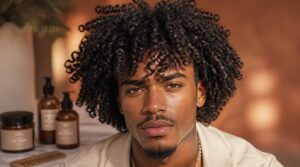
Twist-outs and braid-outs are classic styling techniques that work for Black men across all curl types. Both start on clean, damp hair with curl cream applied root to tip.
Twist-outs give you soft, voluminous curly hair with plenty of body. Braid-outs deliver tighter, more defined waves with less frizz. Let them dry completely before unraveling, then separate with oiled fingers.
Straw Sets and Bantu Knots

Straw sets and Bantu knots are both protective styling methods that lock in seriously defined curls.
- Wrap each section around a straw from root to tip
- Apply curl defining cream before wrapping
- Coil Bantu knots at the scalp and tuck the ends under
- Let both styles fully dry before releasing
- Separate gently to keep natural hair movement alive
Chemical Texturizers and Safety
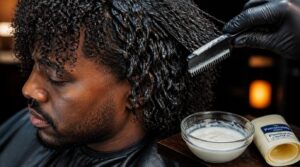
Chemical texturizers loosen your curl pattern without fully straightening it. They work faster on finer textures, so a strand test 48 hours before full application is always essential.
Apply petroleum jelly along your hairline first to protect your skin from irritation. If burning starts, rinse immediately with cool water. Skip this if your hair is already damaged or chemically treated.
Build a Moisture-Focused Curl Routine
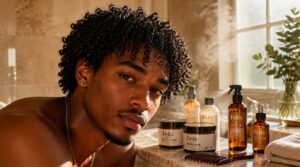
Healthy curls start with a routine built around moisture — not just products. The steps below are straightforward and work with your natural curl pattern, not against it. Here’s how to build a weekly routine that keeps your hair defined and hydrated from wash day to the next.
Shampoo Once or Twice Weekly
For curly hair black men, shampoo once or twice weekly and space wash days a few days apart to prevent dryness. Washing too often strips natural oils. Use curl pattern identification to pick your schedule, then reach for a sulfate-free shampoo or high-quality moisturizing shampoo:
- Coarse or thick hair: once weekly
- Fine curls: twice weekly
- Chemically treated hair: once weekly
Pre-Poo Before Shampooing
Before you shampoo, work in a prepoo step to your wash day routine. Apply a hair oil or detangling conditioner to dry hair, focusing on mid-lengths and ends. Let it sit for at least 30 minutes.
It shields your strands from shampoo’s cleansing action and helps scalp health by locking in moisture before your sulfate-free shampoo does its job well.
Deep Condition Every Week
After your shampoo, don’t skip the deep conditioner. Apply it to damp hair in sections, rake it through with your fingers, then cover with a plastic cap for 15 to 30 minutes.
Weekly deep conditioning keeps your moisture balance steady, which directly helps with hair elasticity and breakage prevention. Hydrated strands hold curl definition better and create the right conditions for consistent hair growth.
Detangle Hair in Small Sections
After deep conditioning, your hair is at its most pliable, which makes it the right time to detangle. Detangle hair in small sections, working from the ends upward before moving toward the roots.
Use your fingers first to loosen curly strands, then follow with a wide-tooth comb. This simple hair care step keeps tension low and helps prevent unnecessary breakage.
Refresh Curls Between Washes
Reviving your curls between washes keeps them soft and defined. A quick curl refresh with water and a little leave-in conditioner brings bounce back fast. Mist lightly, then scrunch upward.
Curl defining sprays also work for touch-ups.
At night, pull on a durag or sleep on a satin pillowcase. This simple nighttime hair care habit keeps curls fresh until morning.
If you want smoother results on a beard too, start with good prep and follow this guide to straightening black beard hair safely.
Choose The Right Curl Products
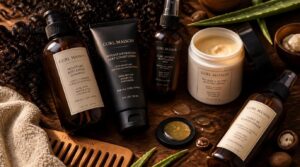
Walk down any hair care aisle and the options can feel endless. Truth is, you only need a handful of staples to keep your curls popping. Here’s the lineup that carries you from wash day all the way to the final seal.
Sulfate-Free Moisturizing Shampoo
Your wash day starts with the right bottle. A sulfate-free shampoo cleanses without stripping the natural oils curly hair black men need to thrive. Skip harsh sulfates like SLS and SLES. Instead, check the label for natural ingredients:
- Coconut oil
- Shea butter
- Aloe vera
- Glycerin
- Panthenol
A good moisturizing shampoo leaves curls soft, never squeaky clean. That’s smart hair care.
Leave-in Conditioner and Curl Cream
These two products team up. A leave-in conditioner adds moisture to damp hair and keeps frizz down all day. Follow it with curl cream to clump and define your pattern from mid-length to ends.
Fine curls need light formulas. Thick hair can handle richer creams. Master this hair care step, and styling techniques from wash-and-go to protective styles get easier.
Alcohol-Free Gel or Mousse
Gel is your hold player. Drying alcohols strip moisture and shrink coils, so choose alcohol-free gel or mousse instead. Hair gels lock in tight definition, while hair mousse lifts roots with soft, pliable hold.
Apply small amounts to damp curls and scrunch. For lighter days, try an alcohol-free setting lotion or curl-defining sprays. Styling creams can layer under your gel.
Oils and Butters for Sealing
Oils and butters are your seal team. They lock in moisture after your leave-in and cream. Think of them as a lid on a pot.
Rub a few drops of argan or jojoba oil between your palms and smooth over damp curls. Coconut oil and castor oil are heavier, so use them sparingly. Shea butter works for thick, coarse textures.
Combs, Brushes, Towels, and Diffusers
Your tools matter as much as your products. A wide-tooth comb detangles without snapping coils. A Denman Brush clumps curls into clean definition.
Ditch the cotton towel. A microfiber towel soaks up water gently and won’t rough up your curls.
For drying, use a hooded hairdryer or diffuser attachments on low heat. Keep the airflow soft so curls stay intact.
Keep Black Men’s Curls Defined

Getting your curls defined is only half the job. The other half is protecting that shape through drying, sleeping, and everything between wash days. These five habits will keep your pattern sharp and your curls fresh all week long.
Air-Dry or Diffuse on Low
Drying curly hair keeps black men’s curls defined. Both air-dry and diffuser methods belong in your hair care routine. Air-dry when you have time, since curls set best undisturbed. Need faster results? Diffuse on low heat and keep it moving:
- Apply leave-in first.
- Diffuse upside down.
- Keep the diffuser 15 cm away.
- Finish with cool air.
- Scrunch out the cast.
Protect Curls While Sleeping
Once your curls are dry, protect them overnight. Friction from cotton pillows pulls moisture out and roughs up your pattern. Switch to a satin pillowcase or wear a hair bonnet or silk scarf.
For longer hair, try the pineapple method: gather curls loosely at your crown with a satin scrunchie. Loose braids and twists also work well as low-manipulation styles.
Reduce Frizz and Shrinkage
Frizz and shrinkage go hand in hand. Dry hair grabs moisture from the air, which puffs up and shortens your pattern. Keep curls moisturized with a leave-in and seal with light oil.
To fight shrinkage, try banding or twist-outs, which stretch curls while keeping definition. Refresh with a water mister and keep hands out of your hair during the day.
Prevent Buildup, Heat, and Breakage
Moisture keeps curls soft, but buildup and heat undo that work fast. Here’s how you fight back:
- Wash weekly with a sulfate-free shampoo to prevent buildup.
- Apply heat protectant before any hot tool, and keep heat low.
- Detangle damp hair gently for breakage prevention.
- Use a protein treatment monthly if curls feel limp.
Stick with it, and curls stay strong.
Trim Hair and Adjust Routines
When curls stop cooperating, adjust the plan.
| Sign | Fix | When |
|---|---|---|
| Split ends | Trim | Every 8 weeks |
| Dryness | Hair porosity test | Monthly |
| Breakage | Low-manipulation styles | Weekly |
| Limp curls | Adjust moisture balance | As needed |
Regular trims every 8-12 weeks stop split ends, which prevents hair breakage. Run a hair porosity test for moisture balance. Lean on low-manipulation styles while curls recover.
Frequently Asked Questions (FAQs)
What products should I use to define my curls?
Great curls start in the shopping aisle, not the price tag. Use a curl defining shampoo, follow with leave in conditioner and curl cream, then seal with hair serums. Refresh midweek with curl defining sprays.
How often should I wash my curly hair?
Wash once or twice weekly with a sulfate-free shampoo, since oils travel slowly down coils. Between washes, try cowashing or a rinse-out conditioner. Monthly, use clarifying shampoo to clear buildup. Adjust to your hair porosity levels.
How can I avoid frizz when styling my hair?
Treat your curls like delicate springs. Apply leave-in conditioner to damp hair for moisture locking, then scrunch gently with a microfiber towel. Finish with curl cream and air-dry or diffuse on low for frizz control.
Are there any heat-free styling techniques for curly hair?
Imagine this: you wake up with twists and curls just appearing. That’s heat-free styling.
How long does curly hair take to grow?
Hair grows about half an inch monthly. Shrinkage hides length, so your natural curl pattern needs four to six months to show gains. Protect hair follicle health and curl pattern retention, whatever your hair type.
Can diet affect curl pattern and texture?
Genetics set your curl pattern, so diet won’t change that. But protein, iron-rich greens, and omega-3s support hair growth, balance hair porosity, and help hair breakage prevention. Drink water and pick natural ingredients for softer, stronger curls.
What causes sudden curl pattern changes?
One morning your coils spring looser, no warning. Sudden curl pattern changes usually come from hormonal shifts, thyroid issues, medications, or heat and chemical damage, not your hair type changing overnight. Dryness shifts hair porosity too.
How often should curly hair be trimmed?
Trim your curls every 6 to 8 weeks. Regular trims remove split ends before they climb the shaft, reducing hair breakage and promoting healthy growth. Between cuts, low-manipulation styles like twists keep your ends protected.
Does sleeping position damage curly hair overnight?
Yes. Tossing and turning creates friction that causes frizz and breakage overnight. Switching to a satin pillowcase or tying on a silk scarf is a simple nighttime habit that protects your curl pattern.
How long does it take to train curls?
Training your curls takes time. Most men notice early curl definition within 2-4 weeks, but consistent curl formation and real pattern improvement usually come closer to the 2-3 month mark based on hair type.
Conclusion
A few weeks from now, you’ll look in the mirror and see something different. Not a new person, just your texture finally getting the room to show up.
How to get curly hair for Black men isn’t a mystery you solve once and forget. It’s a routine you build and improve over time. Clean, moisturize, define, protect. Those four steps carry everything. Your curls were always there. Now you know how to let them lead.