This site is supported by our readers. We may earn a commission, at no cost to you, if you purchase through links. This content is for general informational and educational purposes only and is not a substitute for professional medical, dermatological, or nutritional advice.
Plopping is a curly-hair trick, but straight hair has a frizz problem too. Every time a terry cloth towel rubs against your strands, it lifts the cuticle and turns smooth hair into a puffed-up mess before you’ve even touched the blow dryer.
The way your hair dries is the way it sets. Control that window and you control the finish.
Learning how to plop straight hair keeps your strands flat, aligned, and smooth by letting a gentle fabric do the work instead of friction and gravity. The steps are quick, the difference is real.
Table Of Contents
- Key Takeaways
- Can Straight Hair Benefit From Plopping?
- Prepare Straight Hair for Plopping
- Choose The Best Plopping Fabric
- How Do You Plop Straight Hair?
- How Long Should You Plop Straight Hair?
- Style Plopped Hair and Avoid Mistakes
- Frequently Asked Questions (FAQs)
- What are common plopping mistakes?
- How long should you leave a plop on?
- How to correctly plop your hair?
- How can I scrunch my straight hair?
- What kind of fabric should I use for plopping my hair?
- Should I use a product before plopping my hair?
- How often should I plop my hair?
- Should I use cold or warm water for plopping?
- Are there any risks associated with plopping my hair?
- Can you plop hair overnight for straight styles?
- Conclusion
Key Takeaways
- Rubbing wet hair with a regular terry cloth towel lifts the cuticle and creates frizz before styling even begins, making fabric choice your most impactful swap.
- Plopping works for straight hair by letting a microfiber towel hold strands in place while they dry, so the shape they set in is smooth and aligned rather than puffed up.
- Timing your plop to 10–20 minutes removes excess moisture without over-drying, and wrapping too tight or too long is the fastest way to end up with flat, creased results.
- Once the wrap comes off, resist touching your hair and use a diffuser on low heat and speed to lock in the smoothness the plop built for you.
Can Straight Hair Benefit From Plopping?

For straight hair, plopping isn’t about creating waves you don’t have. It’s about controlling how your hair dries so it lands smoother, flatter, and with a lot less frizz.
A microfiber towel speeds up drying time significantly, which makes it an especially smart swap for straight hair prone to frizz from over-manipulation.
Here’s what’s actually happening. When wet hair dries directly against a regular towel, the terry cloth drags across the cuticle and causes lift. That lift becomes frizz. Plopping swaps rough contact for gentle fabric pressure, which keeps your strands aligned while water slowly leaves them.
Think of it as setting a mold before the concrete hardens. The shape your hair dries in becomes its final shape, and hair plopping gives you more control over that outcome. So yes, straight hair really can benefit from plopping, just differently than curly hair does.
A microfiber hair towel wrap kit makes this process even easier, since the gentle fabric holds your hair in place without the friction that turns drying time into frizz time.
Hair plopping sets the mold—your hair dries into its final shape, and you control what that shape becomes
Prepare Straight Hair for Plopping
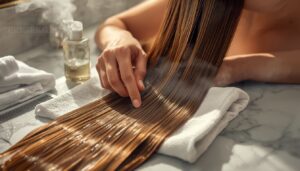
Getting prep right is half the battle. To prepare straight hair for plopping, start with wet clean hair, freshly washed. Old product or partially dry roots dry unevenly under the wrap, and that’s exactly where texture problems begin. A sulfate-free shampoo for straight hair preserves your hair’s natural moisture, so the plop wrap has a clean, balanced base to work with.
After washing, towel-dry by blotting (never rubbing) until your hair is damp but not dripping.
Before you plop straight hair:
- Detangle while wet so wrapped strands stay aligned and dry evenly.
- Apply a light leave-in or styling cream evenly from mid-length to ends.
- Avoid heavy product at the roots to prevent flat, greasy texture after drying.
- Split longer hair into two or three loose sections so the fabric contacts more surface area.
That setup is what makes real frizz reduction actually work.
For anyone still searching, this roundup of leave-in conditioners for dry, frizzy hair breaks down exactly which products deliver on that promise without weighing your hair down.
Choose The Best Plopping Fabric
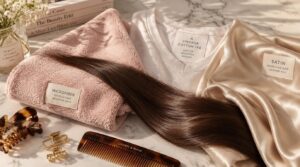
The fabric you choose makes a bigger difference than most people expect. Not every material plays nice with straight hair, and picking the wrong one can mean frizz, flatness, or a tangled mess. Here’s what actually works and what to skip.
Cotton T-Shirt Versus Microfiber
Think of your wet clean hair like a sponge; the fabric around it controls everything.
| Cotton T-Shirt | Microfiber Towel |
|---|---|
| High friction | Low friction |
| Slow drying | Fast drying |
| Leaves lint | No lint |
The hair plopping technique performs better with a microfiber towel. It helps with frizz reduction by gliding over cuticles gently. A cotton tshirt absorbs more water and drags against hair.
Fabrics to Avoid
Not every fabric plays nice with the hair plopping technique.
Cotton, for instance, can snag curls and cause frizz, which is why microfiber and old T-shirt fabrics are recommended for hair plopping.
Skip these:
- Rough, high-pile textiles that snag and tangle strands
- Heat-trapping materials that slow drying and shift straightness
- Static-prone synthetics that cause flyaways
Even a cotton tshirt creates too much friction and moisture absorption compared to a microfiber towel, which is why frizz reduction depends on making the right swap.
How Do You Plop Straight Hair?
The steps here are simple, but the order matters. Get the sequence right and you’ll walk away with smooth, frizz-free results every time. Here’s exactly what to do.
Position Hair Over Fabric
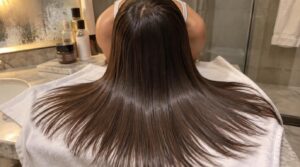
Placement matters more than you’d think.
When you position hair over fabric for tshirt plopping, center it carefully so each section makes full, even contact with the material. Fan your hair outward and smooth every strand flat, no crossing, no clumping. Before you plop, run a wide tooth detangling comb through each section so strands lie smooth and parallel against the fabric.
Crossed strands trap moisture unevenly, and that’s exactly what ruins your chance to eliminate frizz before styling ever starts.
Wrap Low Near Nape

For straight hair, nailing this step is what makes tshirt plopping worth doing. When you wrap low near nape, your heaviest lengths press into the fabric instead of hanging loose.
- Keeps hair frizz control working where it matters most
- Extends how evenly your ends and roots dry
- Backs up scrunching techniques you apply afterward
Worth the extra two seconds it takes.
Secure Without Flattening Roots

Picture a sleeping cat curled up loosely in a blanket, not squished under one. Your wrap needs that same gentle slack.
Tie it snug but not tight, pulling both sides evenly before knotting. A strangled wrap will flatten limp hair fast.
After securing, do a quick root lifting check: slide two fingers under the crown. Still compressed? Loosen it now. Just as with curly hair, avoiding terry cloth towels is key since their looped weave snags strands and causes frizz.
How Long Should You Plop Straight Hair?

One client left her plop on for 45 minutes and couldn’t figure out why her hair felt stiff and flat. Knowing how to plop is only half the battle. Timing matters when you plop straight hair.
The sweet spot is 10 to 20 minutes. Fine hair needs closer to 10 or 15. Denser hair takes the upper end. The goal is to remove excess moisture, not fully dry your hair against fabric.
Three things that shape your ideal plopping duration:
- Hair density and thickness: denser strands hold moisture longer and need more time.
- Starting wetness: dripping-wet hair needs the full window; damp hair needs less.
- Your environment: humid rooms slow drying, so you may need to extend your plop time.
Style Plopped Hair and Avoid Mistakes

The wrap comes off, and your instinct says touch it. Don’t. Touching wet strands disrupts the cuticle and cancels any chance of a frizz-free finish before you’ve even started drying.
Shake gently to separate, then reach for a diffuser on low heat and low speed. That combination is your best tool for style retention and style longevity, locking in the root lift and bend the plop built for you.
Watch your products, too. Heavy creams flatten fine hair fast. Product buildup from silicones quietly blocks moisture over time and leaves strands dry, so keep things lightweight. A mousse or serum does the job without the weight.
Overplopping is real. You’ve already done the work, so step away and trust it.
Frequently Asked Questions (FAQs)
What are common plopping mistakes?
Think plopping can’t go wrong? It can. Overplopping your hair leaves it stiff and creased.
Wrapping too tight flattens roots, giving you that limp hair look. Product buildup under damp fabric creates patchy, uneven texture.
How long should you leave a plop on?
Like Goldilocks, straight hair needs a plopping duration that’s just right. Aim for 10 to 20 minutes, giving your wet hair enough drying time to reduce frizz without over-drying or stiffening the surface too quickly.
How to correctly plop your hair?
Flip your hair onto the fabric, crown centered. Wrap low near the nape for root pressure, then secure it loosely. Too tight and it creases. Too loose and it slips right off. Find your middle.
How can I scrunch my straight hair?
Scrunching straight hair sounds counterintuitive, but just stay with it. After a cool water rinse, blot excess moisture, then scrunch your hair upward from ends to roots with consistent, even pressure for better clump formation.
What kind of fabric should I use for plopping my hair?
Microfiber holds up to seven times its weight in water.
That’s why a microfiber towel wins for hair plopping. It glides over strands instead of roughing them up.
A cotton T-shirt runs a close second.
Should I use a product before plopping my hair?
You can, but keep it light. A water-based leave-in conditioner distributes evenly through wet hair without blocking wicking. Heavy creams and oils cause product buildup at the roots. Apply less than you think you need.
If you work out often, these leave-in conditioners for gym workouts protect your hair from sweat and friction without leaving it limp.
How often should I plop my hair?
Surprise: more plopping doesn’t mean better results. Tie your hair plopping to your wash schedule only. Plop once per wash, adjust based on how fast your hair dries, and your hair care routine stays balanced.
Should I use cold or warm water for plopping?
Hot water feels like the best self-care, but it’s quietly sabotaging you. For hair plopping, cool water seals the cuticle flat, keeping your wet hair noticeably calmer and setting you right up for frizz-free curls.
Are there any risks associated with plopping my hair?
Plopping comes with a few risks worth knowing. Leaving your hair wrapped too long traps moisture and harms scalp health. Tight wrapping near the nape also raises the risk of hair breakage on fragile strands.
Can you plop hair overnight for straight styles?
Overnight plopping works for some hair types, but straight hair dries fast. By morning, you’ll likely wake up to flat, over-dried strands with zero volume. Stick to 20 to 30 minutes for the best results.
Conclusion
A stylist once told a client her towel was sabotaging her hair before she even touched the blow dryer. That single habit was the real culprit.
Now you know how to plop straight hair the right way, and that rough terry cloth routine doesn’t have to follow you anymore. A microfiber cloth and five extra minutes can reshape your whole morning. Less friction, less frizz. The smoothest version of your hair truly starts right here.