This site is supported by our readers. We may earn a commission, at no cost to you, if you purchase through links. This content is for general informational and educational purposes only and is not a substitute for professional medical, dermatological, or nutritional advice.
Silkworms spin a single thread up to 1,000 meters long, strong enough to stop it from snapping under its own weight. That same fiber, broken down into tiny peptides, can do something similar for your hair.
Silk protein benefits for hair go beyond a glossy marketing claim. Fibroin, the structural protein in silk, slips into the hair shaft and reinforces it from the inside, while sericin coats and calms the surface. Once you understand how these two proteins work together, at a molecular level, the results on your mirror start making a lot more sense.
Here’s what’s actually happening beneath the shine.
Table Of Contents
- Key Takeaways
- What is Silk Protein for Hair?
- What Are Silk Protein Benefits for Hair?
- How Does Silk Protein Repair Hair?
- How to Use Silk Protein Treatments
- Silk Protein Risks and Limitations
- Frequently Asked Questions (FAQs)
- What are signs your hair needs protein?
- What are the disadvantages of protein hair treatment?
- Does silk protein help with wrinkles?
- Why is silk good for your hair?
- What is silk protein & how does it work?
- Is silk protein good for hair?
- What are the benefits of hydrolyzed silk protein?
- Can hydrolyzed silk protein improve hair elasticity?
- Why should you use silk protein conditioner?
- How can I tell if a product contains silk proteins?
- Conclusion
Key Takeaways
- Hydrolyzed silk protein (silk broken into tiny peptides through a water-based process) works because its small size lets it actually penetrate your hair shaft instead of just sitting on the surface like whole silk fibers would.
- Fibroin and sericin, the two proteins in silk, split the work: fibroin reinforces hair from the inside with a structure similar to keratin, while sericin smooths and calms the outer cuticle.
- Silk protein delivers real, measurable results, like up to 30% better elasticity, 40% less visible frizz, and up to 40% restored tensile strength after bleach damage, but it can’t fix true split ends or replace moisture on its own.
- Using too much silk protein backfires, so match the amount and frequency to your hair’s porosity and always pair protein treatments with moisture to avoid stiff, straw-like buildup.
What is Silk Protein for Hair?

Silk protein sounds simple, but there’s real chemistry behind why it works so well on hair. You’re dealing with two different proteins, a processing method that changes everything, and ingredient names that show up on labels in confusing ways. Here’s what you need to know before your next product pick.
If you’re wondering whether it’s a true emollient or something else entirely, this breakdown of how silk protein functions as an emollient clears up the confusion.
Fibroin, Sericin, and Hair Structure
Silkworms spin two proteins that work as a team: fibroin, the structural fiber, and sericin, the glue holding it together (about 25-30% of cocoon protein). Fibroin’s amino acids form beta-sheets much like keratin bonding in your hair shaft. That similarity is why silk protein aligns naturally with your hair cuticle, supporting moisture retention rather than just coating strands.
Sericin itself brings added value thanks to its anti-inflammatory and antioxidant properties, which can further support scalp and strand health.
How Hydrolyzed Silk Protein Differs
That whole-fiber structure is great for strength, but too large to pass through your cuticle. Hydrolysis (breaking proteins into smaller pieces using water) fixes that.
Hydrolyzed silk protein averages around 10,000 molecular weight, small enough for real penetration depth into the hair shaft rather than sitting on top.
- Molecular weight effects: smaller peptides absorb, not just coat
- Amino acid profile shift: more cysteine for keratin support
- Film formation: lighter, flexible moisture-retention layer
Silk Protein Versus Keratin
Keratin is hair’s own structural protein, while silk protein is borrowed support. Your hair makes keratin naturally; silk arrives topically, offering similar amino acids like cysteine.
Keratin forms disulfide bonds for elasticity. Silk fibroin builds beta-sheet structures instead, close enough to bond with keratin and strengthen it, but it’s supplementing your hair’s design, not replacing it.
Identifying Silk Protein Ingredients
Reading labels? Look for hydrolyzed silk, hydrolyzed fibroin, or hydrolyzed sericin, each showing different processing states. "Silk," fibroin, and sericin also appear separately.
You might spot silk extract, silk powder, or silkworm cocoon extract too. Some products list MEA-hydrolyzed silk, a chemically modified variant. Knowing these names helps you choose formulas matching your hair’s actual needs.
What Are Silk Protein Benefits for Hair?

So what does silk protein actually do for your hair once it’s in the formula? The benefits show up in ways you can see and feel, from how your strands hold moisture to how they catch the light. Here’s what you can expect when you add it to your routine.
Hydration and Moisture Retention
Ever wonder why some hair feels hydrated hours after washing while other strands dry out fast? Silk’s humectant amino acid profile grabs water molecules and won’t let go.
Hydrolyzed peptides penetrate the shaft, delivering a real hair hydration boost from within.
- Attracts moisture
- Forms protective film
- adjusts to humidity
- Extends retention
That’s your hair moisture lock, working with your environment, not against it.
For a full breakdown of building that lock into your routine, this guide on repairing hair after bleaching at home walks through the products and habits that make the biggest difference.
Strength, Elasticity, and Less Breakage
Snap a hair tie too many times and you know how breakage happens: weak bonds give out under stress. Fibroin brings tensile strength rivaling steel, gram for gram, building a crystalline lattice inside each strand that boosts elasticity by 25-30%. Treated hair resists snapping at 15% higher force. Pair it with bond builders, and breakage drops another 40% within a month.
Fibroin’s steel-like tensile strength builds a crystalline lattice inside hair, boosting elasticity by up to 30 percent
Smoother Cuticles and Reduced Frizz
When cuticle scales lift, hair snags and tangles, but silk protein smooths them back down through cuticle alignment.
- Fills gaps, reducing roughness by 21.9%
- Cuts combing force needed by 30%
- Locks in moisture, curbing humidity-driven swelling
- Visible frizz drops 40%, peaking at two weeks
That’s cuticle sealing and hair moisture retention working together, so strands lie flatter and behave.
Shine, Softness, and Manageability
Light bounces differently off smooth hair, and that’s the secret behind silk protein’s mirror-like shine. Luster enhancement comes from filled cuticle gaps reflecting light evenly.
| Effect | Mechanism | Result |
|---|---|---|
| Shine | Smoother surface | 2-3x more reflective |
| Softness | Moisture retention | Silkier feel |
| Manageability | Hair slip improvement | Easier styling |
Cuticle smoothing plus frizz control means hair simply behaves better, day after day.
Color and Heat Damage Protection
Dyed hair fades fast because pigment molecules sit exposed to UV photons and oxidation. Silk protein’s UV-filter connection blocks 280-340 nm rays, cutting fade by 50% after 30 washes.
Heat styling brings its own damage. Silk protein withstands 450°F, and heat protectant teamwork with glycerin and panthenol reduces breakage by 70%, giving real hair damage reversal and color protection together.
How Does Silk Protein Repair Hair?

So how does silk protein actually fix damaged hair, not just mask it? The answer comes down to size, chemistry, and timing, working together at a molecular level you can’t see but can definitely feel. Here’s what’s really happening inside every strand.
Low-Molecular-Weight Peptide Penetration
Size decides everything here. Peptides under 500 Daltons slip past the cuticle into the cortex, reaching 10-15 micrometers deep, while anything over 2,000 Da just sits on the surface.
Heat, humidity, and mild surfactants open the cuticle further, letting hydrolyzed silk protein’s small glycine-rich chains penetrate faster, boosting moisture retention right where damaged hair needs it most.
Binding to Damaged Keratin
Once those small peptides reach the cortex, they don’t just sit there. They latch onto keratin binding sites, exposed sulfhydryl groups in damaged, cystine-rich patches, forming hydrogen bonds that align with your hair’s natural filament structure.
This peptide adhesion works best on already-damaged surfaces, where lifted scales create pockets for binding, encouraging mild protein cross-linking that restores lost strength and stiffness.
Cysteine’s Role in Keratin Support
Here’s why that binding matters so much: cysteine, the sulfur amino acid delivered by those peptides, feeds disulfide bridge formation, the covalent links holding keratin chains together. Studies even show cysteine upregulates keratin synthesis itself.
More bioavailable cysteine means your hair has the raw material for real keratin synthesis support, not just surface patching, rebuilding strength and elasticity from within.
Cuticle Sealing and Split Ends
That cysteine boost helps from within, but your cuticle, the outer layer of overlapping scales, needs its own care. Silk peptides create a temporary sealing effect, smoothing lifted scales so hair looks sleeker.
Here’s the catch: sealing can’t fix true split ends. Once that shaft fractures, only trimming removes it, since ends face the most friction and wear as hair grows.
Bleach and Chemical Damage Recovery
Bleach strips keratin’s protective layer, leaving strands porous and prone to snapping. Silk protein steps in fast: fibroin peptides bind broken keratin within 5-15 minutes, restoring up to 40% of lost tensile strength after just one treatment.
Repairing bleached strands works best on this timeline:
- Treat within 48 hours of bleaching
- Repeat every 10-14 days
- Follow with moisture within 24 hours
- Expect 4-6 weeks for full recovery
How to Use Silk Protein Treatments
Knowing how silk protein works is one thing, but getting it into your routine is where the real payoff shows up.
You’ve got more options than you might think, from quick rinse-outs to concentrated salon formulas, and each one plays a slightly different role.
Here’s how to actually put silk protein to work for your hair.
Shampoos and Rinse-Out Conditioners
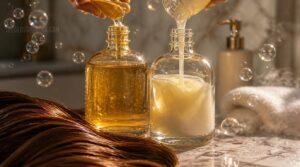
Your shampoo’s surfactants do the heavy lifting, stripping oil while hydrolyzed silk protein rides along for the wash. Contact time is short, so absorption rates stay modest, but rinse-out conditioners fare better.
Cationic bases pair well with silk peptides, boosting surfactant compatibility and letting proteins cling to the cuticle just long enough to smooth strands and boost hair elasticity before rinsing.
Masks and Leave-in Treatments
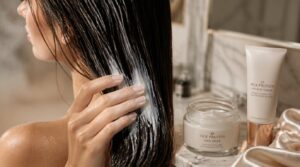
Giving hair a deeper drink, masks trade brief contact for real dwell time. Applied mid-lengths to ends for 5-15 minutes, hydrolyzed silk protein and humectants team up for a genuine hydration boost, while sealing cuticles for frizz reduction and shine enhancement.
Leave-in versions build on that, forming a lightweight film for ongoing color protection and lasting hair elasticity, without weighing strands down.
Salon Versus At-Home Treatments
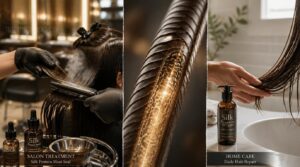
Since price often signals depth, not just luxury, here’s the real split: salon treatments run $150-$300 per visit, using low-weight peptides (under 1000 Da) for true cortex penetration, versus $10-$20 monthly for at-home surface films.
- Penetration depth: salon formulas reach deeper
- Professional tools: steam and heat-sealing lock protein in
- Customization: stylists assess porosity first
- Duration: results last 4-8 weeks versus 1-2
Best Frequency by Hair Type
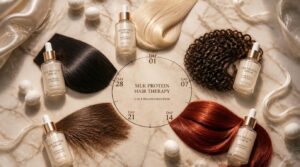
No single schedule fits every head of hair. Fine hair does best every 3-4 weeks, curly hair once or twice monthly, and color-treated strands every other month. Damaged or high-porosity hair needs weekly treatments initially, tapering to bi-weekly. Low-porosity hair should stretch to 6-8 weeks.
Match protein treatment frequency to your hair’s actual needs, not a generic calendar.
Pairing Protein With Moisture
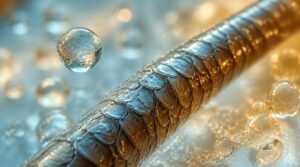
Protein alone can leave hair stiff, like a rope with no give. Humectant Balance fixes that: glycerin pulls water in, while Lipid Support (fatty alcohols, esters) fills cuticle gaps.
Apply silk protein on damp hair for Water Activation, then layer a rinse-out conditioner. This combo boosts hair elasticity, hair strength, hair shine, and manageability without the crunch.
Silk Protein Risks and Limitations
Silk protein works wonders, but more isn’t always better, and your hair will tell you when it’s had enough. Knowing your hair type, porosity, and any allergy risks helps you use it smartly instead of guessing. Here’s what to watch for, so you get the benefits without the backfire.
Signs of Protein Overload
Ever notice hair turning stiff and straw-like right after a protein treatment? That’s overload talking.
Watch for:
- Stiff hair texture that won’t soften
- Brittle strands snapping under light tension
- Reduced elasticity, no bounce back
- Excessive shedding beyond normal
- Tangles and knots forming fast
Buildup blocks moisture, undermining hair strength and manageability. Scale back immediately if you spot these signs.
Hair Types That Benefit Most
Knowing when to pull back matters, but so does knowing who’s invited to the table.
Every hair type gains something, just in different amounts. Straight hair gets lightweight softness without weight. Wavy hair sees smoother, less frizzy patterns. Curly and coily hair benefit most, since their density traps dryness and needs deeper conditioning support. Damaged hair, regardless of type, welcomes the repair work most.
Porosity and Damage Considerations
Porosity decides how much protein your hair can actually use. Low porosity hair stays closed, so protein sits on top; high porosity hair has gaps that need filling.
Match protein to porosity:
- Low porosity: minimal protein, moisture-focused
- Normal: balanced application
- High porosity: 1-2.5% concentration, ends-focused
Damage level guides frequency, matching repair to what your hair truly needs.
Allergy and Sensitivity Precautions
Matching protein to your porosity won’t help if your scalp reacts badly to it in the first place. Patch test first: dab product behind your ear or on your inner arm, tape it, and wait 48 hours. Redness or itching means stop.
Silkworm or protein allergies raise cross-reactivity risk, so try rice or oat protein instead, and keep a product diary.
What Silk Protein Cannot Do
Patch tests protect your scalp, but they won’t stop other limits. Silk protein can’t rebuild bonds bleach destroyed, that damage is permanent. It won’t hydrate dry strands alone (moisture substitution myth), boost hair growth or density, or replace oral supplements.
Low porosity hair blocks penetration without heat, and daily use risks protein overload. It’s also not vegan.
Frequently Asked Questions (FAQs)
What are signs your hair needs protein?
Ironically, your hair often begs for help by stretching further than ever, not bouncing back. Watch for elasticity loss, gummy wet texture, increased breakage, limp appearance, and tangling easily, all signal weakened strands needing repair.
What are the disadvantages of protein hair treatment?
Too much protein causes protein overload: stiffness, tangling, and reduced hair elasticity. Watch for scalp irritation, chemical buildup, or mismatched treatments if your hair’s porosity doesn’t actually need extra strength, since it won’t fix bleach damage or replace moisture.
Does silk protein help with wrinkles?
Think of it as a side gig, not silk’s main job. Silk sericin antioxidants and collagen support benefits aid skin hydration and elasticity and firmness, offering indirect wrinkle prevention claims rather than the direct hair repair, strength, and hydration it’s known for.
Why is silk good for your hair?
Your hair’s structure shares a lot with silk’s amino acids, so hydrolyzed silk protein slips into the shaft easily. It boosts moisture retention, rebuilds hair elasticity and hair strength, smooths cuticles for less friction, and adds natural shine.
What is silk protein & how does it work?
Break it down and it’s really two proteins working together: fibroin gives structural strength through beta-sheet bonding, while sericin controls hydration. Hydrolyzed silk protein means these peptides are small enough to penetrate the hair shaft and bond with keratin directly.
Is silk protein good for hair?
Skeptical it’s just marketing hype? The data says otherwise. Hydrolyzed silk protein shows real protein bonding efficacy, reinforcing keratin, boosting hair elasticity improvement, cutting breakage up to 52%, and supporting genuine cuticle repair from within, not just surface coating.
What are the benefits of hydrolyzed silk protein?
This peptide-rich ingredient works from the inside out, offering real moisture retention, better hair elasticity, and noticeable strength improvement. You’ll also notice frizz reduction, added hair shine, and extra color protection against everyday styling damage.
Can hydrolyzed silk protein improve hair elasticity?
Yes. Hydrolyzed silk protein works through peptide penetration, keratin bond reconstruction, and cysteine stimulation, giving hair strength and moisture retentive flexibility.
Smoother cuticles and better cuticle repair mean strands stretch further before snapping, so hair elasticity genuinely improves with consistent use.
Why should you use silk protein conditioner?
A silk protein conditioner works where regular formulas stop, penetrating the shaft to repair split ends, boost elasticity, and strengthen strands.
Hydrolyzed silk protein also improves moisture retention and cuticle repair, so you get real hair strength, less frizz, more shine.
How can I tell if a product contains silk proteins?
Flip the bottle and read the ingredient label closely. Look for "hydrolyzed silk," sericin, or fibroin near the top, and check the datasheet for concentration if you want proof it’s doing real work.
Conclusion
That single silkworm thread, unbroken across a thousand meters, is a fitting symbol for what happens on your strands. Silk protein benefits for hair come down to patience and structure, not magic. Peptides fill cracks, sericin smooths the surface, and your hair holds together the way that thread does, under real tension.
Use it consistently, respect your porosity, and watch your mirror slowly reveal the difference over time. Small fibers, quietly, build real lasting strength.