This site is supported by our readers. We may earn a commission, at no cost to you, if you purchase through links.

Razor bumps don’t just look bad—they itch, burn, and can keep you from shaving altogether. Many people reach for witch hazel after hearing it’s a natural remedy, but the real question is whether the science backs up the folklore.
The answer lies in witch hazel’s unique combination of tannins and polyphenols, compounds that have measurable effects on inflammation and skin irritation. While clinical trials specifically targeting pseudofolliculitis barbae remain scarce, laboratory studies confirm that witch hazel reduces inflammatory markers and tightens irritated tissue.
Understanding how these mechanisms work can help you decide whether this botanical extract deserves a spot in your post-shave routine.
Table Of Contents
- Key Takeaways
- Does Witch Hazel Help With Razor Bumps?
- How Witch Hazel Works on Razor Bumps
- How to Use Witch Hazel After Shaving
- Choosing The Right Witch Hazel Product
- When Witch Hazel May Not Be Enough
- Frequently Asked Questions (FAQs)
- Is Razor Burn the Same as Razor Bumps?
- Is Witch Hazel the Best Solution for Razor Burn?
- Does Witch Hazel Treat Razor Bumps?
- How Can You Get Rid of Razor Bumps Quickly?
- How Long Do Razor Bumps Last?
- Can witch hazel be used for other skin conditions?
- Is Witch Hazel Good for Ingrown Hairs?
- Can witch hazel be used on bikini area?
- Does witch hazel expire or lose effectiveness?
- How often should you apply witch hazel daily?
- Conclusion
Key Takeaways
- Witch hazel contains tannins and polyphenols that reduce inflammation and tighten irritated skin around razor bumps, though clinical trials specifically targeting pseudofolliculitis barbae remain limited.
- Apply alcohol-free witch hazel immediately after shaving with a cotton pad, let it air-dry, then follow with a fragrance-free moisturizer to prevent the 30-40% water loss that alcohol-based formulas can cause.
- If razor bumps persist beyond two weeks, show signs of infection like pus or fever, or develop scarring and hyperpigmentation, you need professional medical evaluation rather than relying on witch hazel alone.
- Preventive shaving techniques—using single-edge razors, shaving with the grain, maintaining 0.5-1mm hair length, and proper exfoliation—address the root cause of bumps more effectively than witch hazel treats existing ones.
Does Witch Hazel Help With Razor Bumps?
Yes, witch hazel can help with razor bumps, and there’s solid research backing up what people have noticed for years. The plant extract contains compounds that calm inflammation, tighten irritated skin, and fight off bacteria that can make bumps worse.
Let’s look at the scientific evidence, how it addresses inflammation, and whether it can actually stop those ingrown hairs before they start.
Scientific Evidence on Witch Hazel’s Effectiveness
The research picture on witch hazel for razor bumps is surprisingly incomplete. While clinical trial data specifically testing witch hazel against pseudofolliculitis barbae doesn’t exist yet, its anti-inflammatory mechanisms show real promise in related skin conditions:
- Tannins and hamamelitannin deliver measurable astringent effects that reduce swelling
- Laboratory studies confirm it dampens inflammatory cytokines tied to skin irritation
- Its safety profile remains favorable across multiple dermatological uses
- Antimicrobial properties offer theoretical benefits, though direct antibacterial effects appear modest
Studies show it can also inhibit inflammatory mediator release.
How Witch Hazel Addresses Skin Inflammation
Witch hazel’s anti-inflammatory properties work by shutting down key inflammatory signals. Its hamamelitannin and polyphenols calm cytokine modulation—especially IL-6 and TNF-α—that drive skin inflammation after shaving.
The astringent actions tighten tissue and reduce redness by up to 27%, while antioxidants tackle oxidative stress. These antimicrobial effects keep pores clear, and improved barrier integrity helps your skin bounce back faster from irritation.
It’s also derived from the Hamamelis virginiana plant.
Witch Hazel’s Role in Preventing Ingrown Hairs
Beyond calming inflammation, witch hazel’s astringent properties—driven by tannins—help tighten follicle openings after you shave, making it harder for hairs to curl back into your skin. Its antimicrobial support keeps surface bacteria in check, and many aftercare protocols recommend it 1–2 times daily post-shaving.
That said, evidence gaps remain; most studies focus on general irritation, not ingrown hairs specifically.
How Witch Hazel Works on Razor Bumps
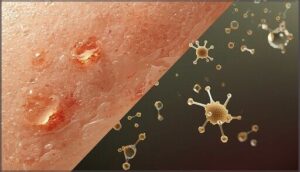
Witch hazel works on razor bumps through a combination of active compounds that target inflammation, infection risk, and skin texture. The plant extract contains tannins, flavonoids, and essential oils that each play a specific role in calming irritated skin after shaving.
Understanding these mechanisms helps you use witch hazel more effectively as part of your post-shave routine.
Anti-Inflammatory and Astringent Properties
When you apply witch hazel, two powerful mechanisms kick in: its tannins immediately constrict surface tissue and tiny blood vessels, reducing edema and redness around inflamed follicles, while polyphenols dampen cytokine-driven inflammation at the cellular level.
- Astringent properties tighten skin and limit fluid seepage from irritated areas
- Vasoconstriction effects shrink swollen capillaries that contribute to visible bumps
- Cytokine modulation directly suppresses inflammatory signals like IL-6 and IL-8
This dual action strengthens your skin barrier while calming the fire beneath razor bumps.
Antimicrobial Effects for Skin Health
The natural antiseptic compounds in witch hazel don’t just soothe—they actively combat the bacteria colonizing your freshly shaved skin. Tannin-rich extracts inhibit Staphylococcus aureus and Staphylococcus epidermidis, the chief culprits behind follicular infection, while disrupting biofilm formation that lets bacteria entrench themselves in irritated follicles.
| Antimicrobial Mechanism | Target Bacteria | Practical Impact |
|---|---|---|
| Bacterial Growth Inhibition | S. aureus, S. epidermidis | Reduces surface colonization |
| Biofilm Modulation | Multiple skin pathogens | Prevents chronic irritation |
| Virulence Suppression | Toxin-producing strains | Limits inflammatory damage |
That said, over-the-counter witch hazel isn’t a hospital-grade disinfectant—its microbiota interactions support healthy skin balance rather than eradicating all microbes, making it a complementary defense against bacterial infection and skin irritation, not a standalone treatment.
Potential Benefits for Sensitive Skin
When your skin reacts to everything, formulation matters as much as ingredient. Alcohol-free witch hazel delivers anti-inflammatory properties without stripping your natural barrier—clinical data shows 10% extract reduces irritation markers by 27%, while supporting hydration through gentle astringent action.
If you’re prone to redness or stinging, patch-test first and choose fragrance-free versions with added humectants like aloe to boost tolerability and preserve skin barrier support after shaving.
How to Use Witch Hazel After Shaving
Getting the best results from witch hazel isn’t complicated, but timing and technique matter. You’ll want to apply it correctly right after you shave, then follow up with the right moisturizer to keep your skin balanced.
Here’s how to make witch hazel work for you every time.
Step-by-Step Application Guide

Your post-shave routine starts the moment you rinse. First, wash away all shaving residue with cool water and pat—don’t rub—your skin completely dry.
Then saturate a cotton pad with witch hazel and gently press it over shaved areas using light, sweeping motions. Cover every inch, including those tricky neck contours. Let it air-dry for several minutes before moving on.
Moisturizing After Witch Hazel Use

Once the witch hazel dries, don’t skip moisturizer—your freshly shaved skin needs that barrier repair. Alcohol-based formulas increase water loss by roughly 30–40%, so hydration importance is real. Choose an alcohol-free balm or cream and apply it right away:
- Select fragrance-free, gentle formulations
- Use products with hyaluronic acid or aloe
- Apply while skin is still slightly damp
- Massage gently until absorbed
- Reapply daily for long-term benefits
Tips for Consistent Results

Routine consistency drives results: shaving every 48–72 hours can cut razor bumps by 20–30% over six weeks, especially when paired with technique standardization—think sharp blades every 5–7 shaves and pre-shave prep like warm water.
Post-shave application of witch hazel immediately after rinsing matters most.
Keep monitoring response weekly, adjusting your postshave routine to match what your skin tells you.
Choosing The Right Witch Hazel Product

Not all witch hazel products are created equal, and choosing the wrong one can do more harm than good. The key difference lies in what else is in the bottle beyond the witch hazel extract itself.
Let’s break down what to look for so you can pick a product that soothes your skin instead of irritating it further.
Impacts On Daily Life
Dealing with razor bumps isn’t just about skin irritation—it reshapes your entire daily rhythm. Time disruption hits hard when you’re juggling multiple postshave routine steps, and physical discomfort can make even buttoning a collar feel rough.
Razor bumps don’t just irritate your skin—they disrupt your entire day, from shaving routines to the simple act of buttoning a collar
The psychosocial effects run deeper than you might think:
- Visible bumps on your neck or face can shake your confidence in professional settings
- Persistent burning may push you to skip social plans or avoid close interactions
- Financial burden adds up when treating razor bumps demands specialized products and possible dermatology visits
Preventing razor bumps through careful shaving techniques and aftercare—including skin irritation treatments like witch hazel—becomes a non-negotiable part of life, not just a grooming preference.
Economic Shifts Predicted
Beyond your bathroom cabinet, global growth projections and inflation trends are quietly reshaping the skincare market. As ecological shift investments shift manufacturing priorities and trade policies influence ingredient sourcing, your go-to witch hazel for razor bumps may cost more or reformulate.
Labor markets in botanical extraction face disruptions, potentially affecting the anti-inflammatory properties you depend on to calm skin irritation after shaving.
Policy Response Strategies
Government oversight of witch hazel and other herbal products has tightened with MoCRA, requiring manufacturers to uphold GMP compliance, report adverse events like contact dermatitis, and guarantee supply chain transparency.
These consumer safety policies help you trust that your natural remedy for razor bumps won’t introduce hidden irritants or violate labeling standards, backing up the anti-inflammatory properties you count on for skin irritation relief.
When Witch Hazel May Not Be Enough

Witch hazel can be a helpful tool for managing razor bumps, but it’s not always the complete solution. Some situations call for medical attention, while others benefit from combining witch hazel with additional strategies.
Let’s look at when you might need to step up your approach, explore other remedies that work alongside witch hazel, and review shaving techniques that prevent bumps before they start.
Signs You Need Medical Treatment
When should you put down the witch hazel and pick up the phone? Some razor bumps signal deeper trouble. Persistent folliculitis that won’t quit after two weeks, signs of secondary infection like pus or spreading warmth, and systemic symptoms such as fever or red streaks demand professional eyes. Watch for scarring changes, post-inflammatory darkening, or diagnostic uncertainty—conditions mimicking razor bumps include bacterial infections, herpes virus outbreaks, blisters, and other dermatological conditions that need proper identification and prescription treatment.
- Persistent symptoms lasting beyond 14 days despite proper self-care
- Infection warning signs including pustules, boils, purulent drainage, or cellulitis
- Systemic red flags such as fever, chills, malaise, or lymphangitic streaking
Alternative Remedies and Complementary Care
When witch hazel doesn’t quite cut it, you’ve got backup. Natural remedies like aloe vera, tea tree oil, and colloidal oatmeal offer soothing relief for skin irritation and inflamed follicles. These treatments often work best when layered, providing thorough care.
For more stubborn cases, hydrocortisone creams and mentholated aftershaves can provide stronger, rapid relief. Hydrocortisone offers inflammation control, while menthol acts as a counter-irritant, cooling and comforting the skin.
| Remedy | Primary Benefit |
|---|---|
| Aloe vera gel | Hydration & cooling relief |
| Tea tree oil | Antimicrobial action |
| Colloidal oatmeal | Anti-itch, barrier support |
| Hydrocortisone 0.5–1% | Rapid inflammation control |
| Mentholated aftershave | Counter-irritant sensation |
Preventive Shaving Techniques to Reduce Bumps
The best defense against razor bumps is changing how you shave. These shaving techniques, backed by dermatology research, greatly reduce inflammation and ingrown hairs:
- Blade selection: Use single-edge guarded razors or electric clippers that leave 0.5–1 mm of hair, which dramatically lowers bump formation.
- Shaving direction: Always follow hair growth patterns—never against the grain.
- Lubricant usage: Apply non-comedogenic shaving cream to reduce friction.
- Hair length: Maintain consistent trimming schedules to prevent curling back into skin.
Proper exfoliation benefits your routine by clearing follicles before shaving. When combined with witch hazel afterward, these shaving best practices create complete bump prevention that addresses the root cause, not just symptoms.
Frequently Asked Questions (FAQs)
Is Razor Burn the Same as Razor Bumps?
You might say they’re razor-close, but not identical. Razor burn causes immediate skin irritation and redness.
Razor bumps develop later when cut hairs curl back, triggering inflammation and follicular papules—a chronic condition requiring different management prevention strategies.
Is Witch Hazel the Best Solution for Razor Burn?
While witch hazel can soothe razor burn, clinical evidence doesn’t show it outperforms alternatives like aloe vera or salicylic acid.
Its anti-inflammatory properties offer temporary relief, but it’s not necessarily the best solution for everyone’s skin irritation.
Does Witch Hazel Treat Razor Bumps?
Ironically, “treat” overstates what witch hazel actually does—it soothes inflammation and reduces redness from razor bumps but doesn’t cure the underlying ingrown hair problem. Think symptom relief, not a complete fix.
How Can You Get Rid of Razor Bumps Quickly?
For fast relief from razor bumps, apply a cold compress first, then use topical treatments like witch hazel or salicylic acid.
Gentle exfoliation helps, while always shaving in the direction of hair growth prevents worsening skin irritation.
How Long Do Razor Bumps Last?
Razor bumps generally last 3–14 days on healthy skin, though ingrown hairs can persist for 1–2 weeks. Prolonging factors like coarse hair and continued shaving may extend healing time beyond three weeks, signaling complications.
Can witch hazel be used for other skin conditions?
Yes. Beyond razor bumps, witch hazel helps soothe eczema, acne, hemorrhoid discomfort, insect bites, and sunburn relief.
Its anti-inflammatory properties and natural astringent effects make it a multipurpose remedy across multiple skin conditions.
Is Witch Hazel Good for Ingrown Hairs?
Witch hazel shows promise for ingrown hairs through its anti-inflammatory properties and antimicrobial skin effects, offering follicle inflammation relief and astringent pore tightening after post-hair removal.
However, evidence limitations exist—no direct clinical trials specifically examine this natural remedy.
Can witch hazel be used on bikini area?
Smooth moves matter when grooming down there. You can apply alcohol-free witch hazel to your pubic area after shaving to calm razor bumps, but skip high-alcohol formulations that risk stinging sensitive bikini-area skin.
Does witch hazel expire or lose effectiveness?
Commercial witch hazel generally lasts 2–3 years unopened and 6–12 months after opening. Alcohol-based formulas stay stable longer, while preservative-free versions degrade faster.
Watch for darkening, cloudiness, or odd smells—these signal reduced potency from tannin breakdown.
How often should you apply witch hazel daily?
For most people, twice-daily application—morning and evening works well for managing razor bumps.
If you have sensitive skin, start with once daily or every other day, then increase frequency gradually as your skin tolerates it.
Conclusion
Your skin doesn’t have to stage a protest every time you pick up a razor. The evidence suggests witch hazel helps with razor bumps by calming inflammation and tightening pores, though it won’t single-handedly solve chronic irritation.
Pair it with proper shaving technique, adequate moisture, and patience. If bumps persist or worsen despite consistent care, consulting a dermatologist ensures you’re not overlooking infection or a condition that demands prescription intervention.
Relief is within reach when you approach it strategically.
- https://pmc.ncbi.nlm.nih.gov/articles/PMC9408886/
- https://my.clevelandclinic.org/health/diseases/23583-razor-burn
- https://www.verywellhealth.com/how-to-get-rid-of-razor-bumps-7105273
- https://kintsuspa.com/5-razor-bumps-solutions-for-a-smooth-irritation-free-shave/
- https://www.barristerandmann.com/blogs/our-blog/witch-hazel-after-shaving