This site is supported by our readers. We may earn a commission, at no cost to you, if you purchase through links. This content is for general informational and educational purposes only and is not a substitute for professional medical, dermatological, or nutritional advice.
That burning, itchy rash after shaving isn’t random bad luck—it’s your skin sending a clear distress signal. Razor burn happens when the razor disrupts the outer skin layer, called the epidermis, triggering inflammation.
Most people reach for soothing creams after the damage is done, but the real fix starts before the blade ever touches your skin. Understanding what causes razor burn puts you in control of preventing it entirely.
Table Of Contents
- Key Takeaways
- What Causes Razor Burn?
- Recognizing Razor Burn Symptoms
- Shaving Techniques for Razor Burn Prevention
- Essential Products to Prevent Razor Burn
- Aftercare Tips to Minimize Razor Burn
- Frequently Asked Questions (FAQs)
- What should I put on to prevent razor burn?
- Do some people always get razor burns?
- How to prevent razor burn?
- Why is it important to avoid sunburn every day?
- What causes razor burn?
- What are the best home remedies for Razor Burn?
- Does shaving with a razor cause razor burn?
- How do you get rid of a razor burn after shaving?
- Can diet or hydration affect razor burn?
- Does hair type influence razor burn likelihood?
- Conclusion
Key Takeaways
- Razor burn starts before the blade touches your skin — dry, unprepped skin and dull blades cause most of the damage, so fixing your prep routine eliminates the problem at the source.
- Shaving with the grain and using light, short strokes dramatically cuts friction, which is the real driver of redness, bumps, and that post-shave sting.
- People with curly or coily hair face a higher risk because cut hairs naturally curl back into the skin, making blade angle, grain direction, and pre-shave oil non-negotiable steps.
- After shaving, a cold compress followed by an alcohol-free, ceramide-based moisturizer repairs your skin barrier fast — skipping this step keeps irritation going long after the razor’s put down.
What Causes Razor Burn?
Razor burn doesn’t just happen randomly — your shaving habits play a bigger role than you might think. Several common mistakes can trigger that uncomfortable rash before you even rinse off. Here’s what’s actually causing it.
If your skin is already reacting, these razor burn remedies and soothing treatments can help calm those red bumps fast.
Friction and Shaving Technique
Friction is the root cause of razor burn. Your shaving technique controls how much of it touches your skin. Get these three things right:
- Hold the blade at 30–45 degrees for clean friction reduction
- Keep shaving cadence slow — under 2 inches per second
- Maintain consistent skin tension for smooth razor glide
Better shaving techniques mean less irritation every time. Using proper shaving techniques can greatly reduce razor burn.
Dull Blades and Multiple Passes
Your blade tells you when it’s done — it drags, tugs, and burns instead of gliding. Blade wear patterns develop fast; most cartridges dull after 5–7 shaves. Razor drag causes skin microtears, breaking your skin’s protective barrier. Dull blade risks multiply with every extra pass.
For smart razor burn prevention, swap blades regularly and limit passes to two. Sharp edge maintenance is everything. To minimize razor burn, understanding shaving techniques is essential for a smooth shave.
Shaving Against The Grain
Even with a sharp blade, grain direction matters. Shaving against it forces the razor angle into the hair root, tugging each strand upward before cutting. That extra tension strains your follicles, especially with curly hair texture.
The result? Razor burn, ingrown hairs, and a shaving rash that lingers for days. Razor burn prevention starts with understanding which way your hair grows.
Inadequate Lubrication
Grain direction isn’t the only thing working against you. Lubricant failure is just as damaging. Without proper lather coverage, your razor has nothing to glide on — dry skin means the blade drags and tears instead.
Cheap shaving cream breaks down fast, leaving patches unprotected. A quality shaving oil keeps razor glide smooth throughout. Skip lubrication, and razor burn is almost guaranteed.
Sensitive or Curly Hair Types
Your hair texture matters more than you think. Curly hair has curved follicles — tiny tunnels that bend toward the skin’s surface. After shaving, sharp cut ends curl back and pierce the skin, causing ingrown hairs. This condition, called pseudofolliculitis barbae, affects up to 60% of Black men.
Curly hair follicles bend back into skin after shaving, causing ingrown hairs that affect up to 60% of Black men
Sensitive skin compounds the problem. Smart curly hair care and targeted shaving tips make ingrown hair prevention possible.
Digging into ingrown hair prevention tips for sensitive skin can help you build a routine that actually works for your skin type.
Recognizing Razor Burn Symptoms
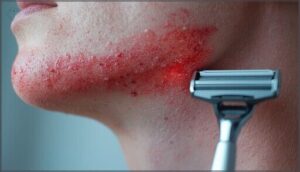
Razor burn doesn’t always announce itself the same way for everyone. Your skin might react with one sign or a combination of a few. Here’s what to watch for.
Redness and Rash
Razor burn shows up fast — sometimes within an hour or two of shaving. You’ll notice redness patterns spreading across shaved skin, often following the exact path your razor took. This skin irritation isn’t random; blade friction causes micro-tears, triggering real inflammation beneath the surface.
Here’s what the redness and skin rash usually look like:
- Pink to deep red discoloration covering broad areas like your cheeks or neck
- Streaky patches that mirror your razor strokes
- Flat, inflamed zones — no pus, no whiteheads, just angry skin
- A slightly shiny surface from minor epidermal disruption
- Razor bumps or ingrown hairs forming underneath irritated skin
For burn relief and rash treatment, catching these signs early makes a real difference.
Itching and Tenderness
Itching and tenderness aren’t just discomfort — they’re your skin signaling real nerve sensitivity. When shaving strips the protective lipid layer, exposed nerve endings fire continuously, making even light clothing feel unbearable. Histamines peak hours after the blade passes, amplifying skin irritation.
For itch relief, a gentle hydrocortisone cream helps calm follicle care issues like razor bumps and ingrown hairs fast.
Swelling and Burning Sensation
Swelling and burning aren’t random — they’re your skin’s inflammation response in action. Razor burn causes plasma to leak into tissue, raising skin noticeably within 30 minutes. Blade friction also generates real heat, making the area hot to touch for up to an hour. Watch for these signs:
- Localized puffiness, especially around the neck
- Skin that feels warm or stings in open air
- Burning that mimics mild sunburn from nerve damage
- Fluid buildup that peaks fast then slowly drains
Small Red Bumps
Those tiny raised bumps aren’t just irritation — they’re your skin fighting trapped hairs. Pseudofolliculitis barbae (ingrown beard hairs curling back into the follicle) triggers real inflammation. Bump prevention starts with understanding what you’re seeing.
| Bump Type | What It Means |
|---|---|
| Red papule | Ingrown hair, early follicle care needed |
| Pustule | Possible folliculitis barbae developing |
| Dark spot | Post-razor bump pigmentation |
| Skin-colored bump | Hair trapped beneath surface |
Razor bumps worsen with repeated shaving over the same area.
Shaving Techniques for Razor Burn Prevention
The way you shave matters just as much as what you shave with. Small adjustments to your technique can make a real difference in how your skin feels afterward.
For instance, shaving with the grain and easing up on repeated strokes can go a long way—this guide on how to prevent razor bumps on your neck breaks down exactly why those habits work.
Here’s what to change starting with your very next shave.
Shaving With The Grain

Start with grain mapping — run your fingertip along your stubble to feel which direction hair grows. Shaving techniques and tools work best when your razor glide follows that path.
This simple adjustment aids follicle care by reducing friction, making razor burn and bump prevention far more achievable.
Hair texture matters too — curly hair especially benefits, with ingrown hair treatment and prevention improving markedly when you respect natural shave angles.
Using Light Pressure and Short Strokes

Once you’ve mapped the grain, pressure control becomes your next line of defense. Think of it like writing with a pen — you don’t need to press hard to get results. Let the razor’s weight do the work.
Short strokes give you better stroke direction around curves, reducing razor burn and bump prevention mistakes. Your skin safety depends on technique, not force.
Proper Blade Maintenance and Replacement
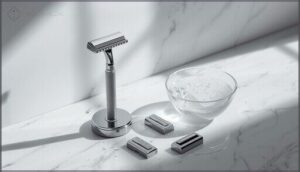
Pressure and stroke length get you far — but a dull blade undoes all of that. Proper razor maintenance starts with rinsing every few strokes and weekly blade sanitizing using mild soap. For edge preservation, store your razor upright and dry.
Follow smart replacement schedules: cartridges every one to two weeks. Consistent razor care is your best razor burn treatment.
Pre-Shave Skin Preparation

Your skin care routine before shaving matters more than most people realize. Gentle cleansing removes bacteria and unclogs pores. Then, warm water softens hair shafts for easier cutting.
Light skin exfoliation two to three times weekly lifts embedded hairs.
A pre-shave oil massage — just a few drops — creates a smooth barrier. That simple prep protects your skin health every time.
Essential Products to Prevent Razor Burn

The right products can make a real difference in how your skin manages shaving. Think of them as your first line of defense — not fancy extras, but essentials that work together to protect your skin.
Here’s what you’ll want to have on hand.
Quality Shaving Creams and Gels
Think of shave cream as your skin’s first line of defense. A quality shaving cream with natural ingredients — like aloe vera, shea butter, and glycerin — creates a protective cushion that dramatically reduces razor burn.
pH balance matters too; creams sitting at 5 to 5.5 preserve your acid mantle. Surfactant types in the formula determine lubrication benefits, so choose cream texture over gels if your skin runs dry.
Sharp, Clean Razors
A dull blade is basically the main villain behind razor burn and shaving rash. Replace your razor every 5–7 shaves — you’ll notice less tugging immediately.
For edge maintenance, rinse under hot water every few strokes. Razor sanitizing matters too: store it dry to stop bacteria growth.
Proper blade angle — around 30 degrees — lets sharpness do the work, not pressure.
Shaving Brushes and Oils
Two small tools — a brush and a drop of shaving oil — can quietly change your whole shave. Pre-shave oils reduce blade drag, softening hair before a single stroke lands.
The brush manages lather generation and exfoliation techniques in one motion, lifting hairs upright so the razor cuts cleanly. Match bristle types to your skin: synthetic for sensitivity, boar for tougher texture.
Fewer passes, less razor burn.
Alcohol-Free Moisturizers and Soothing Gels
Relief doesn’t have to sting. Alcohol-free moisturizers skip harsh ethanol, so they won’t dry out freshly shaved skin.
Look for moisturizer ingredients like ceramides for skin barrier repair, glycerin for hydration mechanisms, and aloe vera gel to calm razor burn fast.
A good aftershave balm or soothing gel — fragrance-free — is smart, simple aftershave care your skin will thank you for.
Aftercare Tips to Minimize Razor Burn

What you do right after shaving matters just as much as how you shave. Your skin needs a little recovery time, and the right steps can make a real difference.
If you’re just getting started, this beginner’s guide to safety razor shaving walks you through the essential tools and technique before you even think about aftercare.
Here’s what to do once you put the razor down.
Cold Compresses and Aloe Vera
Your skin is on fire — and you need quick razor relief. Cold therapy works fast. Press a cool, damp cloth directly on the irritation for a few minutes. This cold compress calms redness and numbs that burning sting.
Follow it with a thin layer of pure aloe vera gel. Aloe’s natural skin-soothing properties reduce inflammation while locking in moisture — gentle post-shave care that actually works.
Hydrating and Barrier Repair Moisturizers
After shaving, your barrier needs real repair — not just surface comfort. Look for an aftershave balm containing ceramide benefits, hyaluronic acid, and niacinamide effects.
Ceramides seal microscopic cracks; hyaluronic acid holds moisture deep in your skin. Shea butter and occlusive layers lock everything in.
These emollients make a difference in your skin care routine, calming razor burn without needing hydrocortisone.
Loose Clothing and Post-Shave Hygiene
What you wear after shaving matters more than you’d think. Breathable fabrics like cotton or bamboo reduce friction against freshly shaved skin — a simple but powerful part of post shave care. Loose fits allow airflow, cutting sweat buildup that worsens razor burn.
For post-shave hygiene, rinse with cool water and use gentle cleansing to clear residue, supporting skin hydration and overall skin care recovery.
When to Seek Medical Advice
Most razor burn clears up within a few days. But sometimes it doesn’t — and that’s your signal to get medical attention. Watch for infection signs like pus, red streaks, or fever.
Severe symptoms, including pain that disrupts sleep, need a dermatology visit. Rash duration beyond a week may suggest folliculitis barbae or other dermatological conditions requiring proper diagnosis.
Frequently Asked Questions (FAQs)
What should I put on to prevent razor burn?
The right products make all the difference. Use pre shave oils, shave gels, and soothing creams before and after. Aloe vera, aftershave balms, and hydrating lotions calm irritation fast.
Do some people always get razor burns?
Yes — and it’s not your fault. Genetic factors, curly hair, and sensitive skin all raise your risk. Pseudofolliculitis barbae affects up to 83% of people with certain ethnic differences, making razor bumps nearly unavoidable.
How to prevent razor burn?
Preventing razor burn isn’t complicated — it just takes the right habits. Shaving tips like proper skin exfoliation, razor maintenance, and smart post shave care can stop razor burn before it starts.
Why is it important to avoid sunburn every day?
Skipping sunscreen daily lets UV rays cause DNA damage, trigger immune suppression, and accelerate photoaging. Over time, that raises your skin cancer risk sharply — protecting skin every day isn’t optional, it’s essential.
What causes razor burn?
Razor burn happens when your razor drags across skin instead of gliding. Dull blades, dry shaving, and going against your hair follicle’s growth direction all trigger skin irritation, razor bumps, and folliculitis fast.
What are the best home remedies for Razor Burn?
You don’t need a pharmacy trip every time. Aloe vera gel, witch hazel, coconut oil, and a cold tea compress are proven natural remedies that calm razor burn fast and effectively.
Does shaving with a razor cause razor burn?
Yes, shaving can cause razor burn — but the razor itself isn’t always to blame. Poor skin preparation, dull blades, and skipping shave gel ingredients like moisturizers are the real culprits.
How do you get rid of a razor burn after shaving?
Cool the area first. A damp cloth held on the shaving rash for five minutes calms redness fast. Then apply aloe-based soothing gels or 1% hydrocortisone for quick razor burn relief.
Can diet or hydration affect razor burn?
Both hydration levels and nutrient balance genuinely matter. Dehydrated skin tears more easily under a blade, worsening shaving rash.
Inflammatory foods can heighten skin irritation too. Drink enough water and eat clean.
Does hair type influence razor burn likelihood?
Absolutely. Hair texture, curl patterns, and hair thickness all play a role. Tightly coiled hair is more likely to curve back into the skin, triggering ingrown hair treatment needs and shaving rash far more often.
Conclusion
Razor burn has derailed a million mornings—but it never has to derail yours again. Now that you understand what causes razor burn, prevention becomes less guesswork and more habit.
Prep your skin, use a sharp blade, shave with the grain, and follow up with a gentle moisturizer. These aren’t complicated steps. They’re small decisions that protect your skin every single time.
Take control of your routine, and the redness stays gone for good.