This site is supported by our readers. We may earn a commission, at no cost to you, if you purchase through links. This content is for general informational and educational purposes only and is not a substitute for professional medical, dermatological, or nutritional advice.

That post-shave sting is one thing. Those stubborn little bumps that stick around for days are another. Most people treat them the same way — and that’s exactly why the irritation keeps coming back.
Razor burn and razor bumps look similar at first glance, but they’re different skin reactions with different causes and different fixes. Knowing which one you’re dealing with changes everything about how you treat it.
The right approach clears your skin faster and keeps it clear longer.
Table Of Contents
- Key Takeaways
- Razor Burn Vs Razor Bumps
- What Causes Razor Burn?
- What Causes Razor Bumps?
- How to Tell Them Apart
- How to Prevent Razor Burn
- How to Prevent Razor Bumps
- Best Post-Shave Relief
- When to See a Dermatologist
- Frequently Asked Questions (FAQs)
- Are razor bumps and Razor burn the same thing?
- Are razor bumps a symptom of razor burn?
- What is the difference between Razor Burn and ingrown hair?
- What does a razor burn look like?
- How long do razor bumps go away?
- How to tell the difference between razor burn and razor bumps?
- How do you get rid of razor bumps down there asap?
- How to tell the difference between razor bumps and folliculitis?
- Can women get razor bumps on their legs?
- How long do razor bumps typically last?
- Conclusion
Key Takeaways
- Razor burn shows up within minutes as flat, stinging redness, while razor bumps appear 1–3 days later as raised, follicle-level bumps caused by ingrown hairs — they need different treatments.
- Dull blades, skipping shaving cream, and pressing too hard are the main triggers for razor burn, and all three are easy to fix with small habit changes.
- If you have curly or coarse hair, shaving against the grain puts you at much higher risk for razor bumps, so shaving with the grain and exfoliating 2–3 times weekly makes a real difference.
- See a dermatologist if bumps keep coming back, skin shows signs of infection (pus, spreading redness, fever), or dark marks linger — home care has its limits.
Razor Burn Vs Razor Bumps
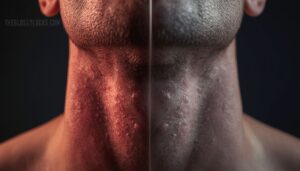
Razor burn and razor bumps might look similar at first glance, but they’re actually two different skin reactions.
Telling them apart matters more than you’d think — here’s a quick guide to spotting the difference between razor burn and razor bumps so you can actually treat the right thing.
Knowing which one you’re dealing with makes it a lot easier to treat — and prevent. Here’s what sets them apart.
What Razor Burn Looks Like
Razor burn shows up fast — often within minutes of putting down the razor. You’ll notice streaky red patches spreading across the shaved area, giving your skin a diffuse flushed skin look rather than isolated spots. It feels raw and sensitive to the touch, with a heat tingling sensation that lingers. Think of it as a smooth red overlay — redness, rash, and a burning sensation all at once.
If the sting and redness stick around, a few gentle aftercare tricks can calm things down fast — this guide to soothing razor burn quickly walks through what actually helps.
| What You See | What You Feel |
|---|---|
| Streaky red patches | Burning or stinging |
| Diffuse flushed skin | Heat tingling sensation |
| Smooth red overlay | Raw sensitive feel |
| Skin inflammation | Tenderness on touch |
| Postshave rash | Persistent irritation |
Using a single-blade double-edge razor([https://www.barristerandmann.com/blogs/our-blog/get-rid-of-razor-burn) can reduce friction and prevent razor burn.
What Razor Bumps Look Like
Unlike the smooth flush of razor burn, razor bumps are something you can actually feel — small, firm raised red bumps clustered in shaved areas. These are follicle papules, meaning each one forms around a hair follicle where shaved hair curls back into the skin.
Some develop into pustular whiteheads with visible pus. Others show trapped hair beneath the surface — a hallmark of pseudofolliculitis barbae, or ingrown hairs.
| Feature | Appearance | Feel |
|---|---|---|
| Follicle papules | Red, raised clusters | Firm, tender |
| Pustular whiteheads | Pus-filled, pimple-like | Swollen, sore |
| Bump texture | Uneven, 2–5mm wide | Rough to touch |
How Fast Each Develops
Timing tells the two apart faster than anything else. Razor burn is rapid irritation — that stinging heat shows up within hours. Razor bumps follow a slower path, with delayed papule formation starting one to three days post-shave.
| Feature | Razor Burn | Razor Bumps |
|---|---|---|
| Onset Timing | Minutes to hours | 24–72 hours |
| Peak Day | Day 1 | Days 3–5 |
| Symptom Progression | Fades within 48 hours | Lingers a week+ |
| Spread Pattern | Diffuse redness | Follicle clusters |
| Feel at Peak | Burning, hot | Itchy, tender |
What Causes Razor Burn?

Razor burn doesn’t just happen randomly — something always triggers it. Most of the time, it comes down to a few habits that are easy to fix once you know what to look for.
Here are the main culprits.
Dull or Clogged Blades
A dull blade is one of the most common — and overlooked — causes of razor burn. Blade edge deterioration occurs gradually, so you often don’t notice until your skin pays the price. Micro edge nicks force the blade to catch and drag instead of glide smoothly.
Lather residue buildup between cartridge blades, combined with corrosion mineral deposits from stored moisture, accelerates razor blade dullness. This residue and corrosion reduce blade glide, increasing friction and irritation.
Prioritizing blade replacement frequency is a simple yet effective maintenance step that significantly reduces razor burn.
Dry Shaving and Friction
Skipping shaving cream might save a minute, but your skin will notice. Without a lubricant layer, the blade drags directly across your skin’s microtexture — the tiny uneven surface of the stratum corneum.
That contact force increases substantially, and dry shaving turns each stroke into a friction burn waiting to happen. Lubricant absence is a leading cause of razor burn, and it can worsen razor bumps too.
Some symptoms show up immediately, while others develop hours later—understanding both is key to catching irritation early, as covered in this guide to razor burn treatment for sensitive skin.
Shaving Too Hard or Too Fast
Pressing too hard or rushing through each stroke does real damage.
Aggressive speed causes blade drag — the razor scrapes instead of gliding, leaving micro-cuts along the skin’s surface.
Rushed strokes also mean overlapping passes, which compounds irritation quickly.
Stick to short, light strokes and shave in the direction the hair is growing.
Shaving too quickly, with excessive depth or force, turns a simple routine into a flare-up.
Sensitive Skin Triggers
If your skin is sensitive, shaving becomes a minefield. Razor burn isn’t always about technique — sometimes your skin’s barrier is simply weaker, letting everyday triggers sneak through.
- Fragrance allergens and preservative irritation in shaving products inflame reactive skin quickly
- Metal contact from razor components can spark localized reactions
- Temperature swings — hot showers followed by cold air — weaken barrier function
- Environmental pollutants compound existing sensitivity
Know your triggers.
What Causes Razor Bumps?
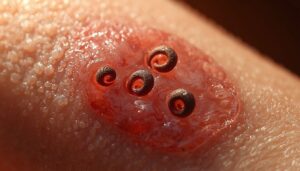
Razor bumps are a different story from razor burn — they go a little deeper, literally. They happen when a cut hair curls back and grows into the skin instead of out of it.
A few specific habits and hair types make this more likely to happen.
Ingrown Hairs After Shaving
When you shave, the blade cuts each hair at a sharp angle. That angled tip is what causes trouble — it makes it easy for the hair to curl back and pierce the skin as it regrows.
This hair curl angle triggers a foreign-body reaction in the follicle. Without proper post-shave hygiene, bacterial colonization can follow, slowing follicle healing and turning a simple ingrown hair into a painful, inflamed bump.
Curly or Coarse Hair
Your hair type plays a bigger role than most people realize. Follicle shape determines curl pattern, and curved follicles produce strands that naturally bend back toward the skin after cutting. Strand thickness adds to this — coarse hair is rigid and more likely to pierce the follicle wall.
Individuals with curly hair face the highest risk of pseudofolliculitis barbae (razor bumps) because of:
- Tight curl patterns that redirect cut hair straight into surrounding skin
- Coarse strand thickness that creates a sharp, skin-piercing tip after shaving
- Poor moisture behavior that leaves dry, stiff hairs less flexible and harder to manage
Understanding these differences between razor bumps and razor burn — and how hair biology drives them — is key to preventing ingrown hairs before they start.
Shaving Against Hair Growth
The direction you shave matters more than you’d think. When you shave against the grain, blade angle optimization breaks down — the hair shaft gets cut at a sharp angle, and that edge curls straight back into your skin. This is a core cause of razor bumps.
| Shaving Direction | Effect on Skin |
|---|---|
| With the grain | Lower follicle alignment issues |
| Against the grain | Higher microtrauma frequency |
| Multiple passes | Increased stubble edge sharpness |
| Fast blade movement | Worse blade speed dynamics |
Choosing to shave in the direction the hair is growing reduces these risks substantially.
Skin Tension and Repeated Passes
Pulling your skin taut and making repeated passes compounds the problem. Each extra stroke creates Blade Drag Accumulation, building Localized Heat Buildup that stresses the barrier.
Tight skin concentrates pressure into Pressure Concentration Zones, forming Micro-abrasion Hotspots that trigger Follicle Re-Trauma. Use short light strokes and shave in the direction the hair is growing — it’s one of the simplest shaving techniques to reduce skin irritation.
How to Tell Them Apart
Both conditions can look pretty similar right after shaving, which makes it easy to confuse them. But a few clear signs set them apart. Here’s what to look for.
Redness Versus Raised Bumps

The clearest difference comes down to texture. Razor burn appears as a flat redness rash with a burning sensation—vascular inflammation spreading across the shaved area, marked by notable color intensity. Razor bumps, however, feature a distinct papular texture: small, raised red bumps clustered near follicles.
Their healing timeline is longer too, as barrier disruption runs deeper with ingrown hairs involved. This prolonged recovery stems from the follicular involvement and deeper tissue damage associated with trapped hairs.
Burning, Itching, and Tenderness

Both conditions trigger nerve sensory pathways, but they feel different. Razor burn causes redness and a burning sensation — almost like touching a hot pan — through heat-induced vasodilation and inflammatory mediator release. Razor bumps feel itchy or painful in specific spots due to skin barrier disruption around trapped hairs.
Razor burn stings like a hot pan across your skin, while razor bumps itch and ache in targeted spots
This sensory overlap syndrome makes them easy to confuse.
Diffuse Rash Versus Follicle-specific Spots
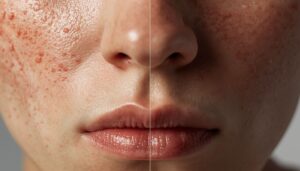
Pattern distribution tells the story here. Razor burn spreads as a diffuse rash — broad, even redness with no clear center points.
Razor bumps, or folliculitis, cluster in dotted lesion morphology tied to individual follicles. freckles versus a sunburn.
Trigger sensitivity and healing characteristics differ too: bumps follow hair spacing, while skin irritation after shaving from razor burn fades more uniformly.
Signs of Infection or Pus

When razor bumps get infected, your skin sends clear signals. Watch for thick cloudy pus, foul odor drainage, or pustule formation — those small, pus-filled bumps that resemble whiteheads. Tenderness on pressure and warm, spreading redness that moves outward indicate bacterial growth, not merely post-shave inflammation.
Recognizing signs of infection early matters, as folliculitis can worsen quickly without treatment.
How to Prevent Razor Burn

Razor burn is mostly preventable, and the fix usually starts before you even pick up the razor.
few small changes to your routine can make a real difference.
Here’s what to do.
Warm and Soften Skin First
Think of your skin before shaving like cold butter — hard to work with. Warming up first makes everything smoother.
Use the warm towel method or a steam pre-shave: press a warm damp washcloth against the area for about 10 minutes. This warm water shave prep softens hair and helps skin hydration timing, so your blade glides instead of dragging.
Use Shaving Cream or Gel
Skipping shaving cream or gel is one of the fastest ways to invite razor burn. A good product does three things at once: it creates a barrier cushion between blade and skin, improves glide enhancement so the razor moves smoothly, and gives you a visibility advantage if you choose a clear gel.
Look for options that suit your skin:
- Sensitive or dry skin — colloidal oatmeal or aloe-based creams
- Oily or normal skin — lightweight, clear shaving gel
- Fragrance sensitivity — unscented, alcohol-free formulas only
- All skin types — rinse residue cleanly so pores don’t clog
Your shaving cream or gel isn’t optional — it’s your first defense.
Shave With Light Pressure
Most people press too hard without realizing it. A sharp razor blade should glide — not scrape.
Focus on grip relaxation techniques: hold the handle loosely, like a pen, not a fist.
Use short stroke length control of one to two inches and keep blade angle optimization around 30 degrees.
Let the razor’s weight do the work.
Replace Blades Before They Dull
A dull blade is often the hidden culprit behind razor burn. Watch for edge wear signals like tugging, dragging, or needing extra passes — those are signs your blade is done. The dullness-irritation link is real: worn edges increase friction and microdrag, stressing your skin.
Stick to a blade replacement schedule of every five to seven shaves. Rinse after each stroke to clear blade residue, minimizing buildup that accelerates dulling.
For a fuller picture of keeping your razor in top shape, shaving sensitive skin without irritation pairs well with a consistent blade-care routine.
How to Prevent Razor Bumps

Razor bumps are trickier to avoid than razor burn, but the right habits make a real difference. Most of them come down to how you prep your skin and handle the razor.
These four steps are worth building into every shave.
Exfoliate Before Shaving
Exfoliation is one of the most underrated tools for keeping razor bumps away. It clears dead skin cells and debris from your hair follicles, so hair grows out cleanly instead of curling back in.
timing and frequency matter — exfoliate two to three times weekly, not right before shaving. Choose physical or chemical options based on skin type suitability, and always follow with post-exfoliation hydration.
Shave in Hair Growth Direction
Once your skin is prepped and clear, shave in the direction of hair growth — this single habit cuts ingrown hair risk dramatically.
- Grain Detection: Run your hand over stubble to feel which way hair lies.
- Shave Order: Start with the grain strokes first, always.
- Blade Angle: Keep it flat and let skin glide, guide you.
- Post-Shave Soothing: Calm skin immediately after each session.
Avoid Multiple Passes
Going over the same spot repeatedly is one of the fastest ways to trigger razor bumps.
The Single Pass Method keeps it simple: one slow, controlled stroke per area.
Each extra pass increases Blade Loading Management issues — hair and debris clog the edge, raising friction.
If you missed a patch, use a Lubrication Refresh and the Area Rotation Strategy before trying again.
Don’t Pull Skin Too Tight
tight skin might feel like better control, but it often works against you. When you stretch too much, the blade scrapes instead of gliding — that’s Blade Glide Optimization lost in seconds.
Practice Skin Tension Control with these tips:
- Use a Gentle Grip Technique — light fingers, no white‑knuckle pulling
- Keep a Relaxed Hand Position throughout each stroke
- Minimize Stretching to let skin move naturally with the blade
- Never shave against the grain or shave in the wrong direction on taut skin — shave against grain risks multiply fast
Best Post-Shave Relief

Once the razor’s down, what you do next really matters.
Your skin is sensitive right after shaving, so the right products can calm irritation fast and prevent it from getting worse.
Here’s what actually helps.
Cool Compresses for Fast Soothing
One of the fastest ways to calm razor burn is a cool compress— you probably already have what you need at home. Soak a clean cloth in cool water, wring it out until just damp, and press it gently on irritated skin for 15 to 20 minutes.
For DIY cooling options, a frozen pea bag wrapped in a towel works too. Always keep that cloth barrier between ice and skin for safety.
Fragrance-free Moisturizers
After a cool compress, reach for a fragrance-free lotion to lock in comfort. Look for ingredients like ceramides and glycerin on the label — they handle lipid barrier support and humectant hydration in one step.
A lightweight gel cream absorbs quickly without feeling heavy.
Fragrance-free products skip the parfum that inflames irritated skin, making post-shave moisturization genuinely simple and effective.
Barrier-repair Creams and Ointments
When skin barrier takes a hit from shaving, a barrier-repair cream or ointment can rebuild what friction strips away. Occlusive ingredients like petrolatum seal in moisture, while ceramide blends restore the lipid structure between skin cells.
Pair those with humectant benefits from glycerin or hyaluronic acid, and your skin holds water better.
Application timing matters — apply right after patting dry for the best results.
Short-term Hydrocortisone Use
If postshave irritation won’t settle down, hydrocortisone 1% cream is a solid short-term option. It calms redness and itching from both razor burn and razor bumps by quietly dialing down inflammation.
Apply a thin layer once or twice daily — application frequency matters more than amount.
Layering with moisturizers is fine, but apply hydrocortisone first.
Limit use to a few days; longer duration guidelines exist because potential side effects like skin thinning are real, especially on sensitive skin types.
When to See a Dermatologist

Most razor burn and bumps clear up on their own with the right home care.
But sometimes, your skin is telling you it needs more than a cool compress and some moisturizer. Here’s when it’s worth booking a visit with a dermatologist.
Recurrent or Severe Bumps
If razor bumps or razor burn keep coming back no matter what you try, that’s your skin asking for professional help.
Recurrent pseudofolliculitis barbae in curly-haired individuals, folliculitis management, and chronic boils treatment often require prescription corticosteroids or a supervised shaving break.
Keratosis pilaris care and managing ingrown hairs and folliculitis long-term are real dermatology referral criteria — don’t keep guessing when a dermatologist can give you real answers.
Painful, Swollen, or Infected Skin
Some signs go far beyond normal razor burn or razor bumps. If you notice spreading redness, warmth, and swelling — classic cellulitis symptoms — that’s dermal inflammation signaling a deeper infection.
Watch for these red flags:
- painful, pus-filled pocket (abscess formation)
- Blisters leaking yellow or cloudy fluid
- swollen, tender lymph nodes nearby (lymphadenopathy signs)
- fever or chills alongside folliculitis
- worsening pain despite your postshave skin care routine
See a dermatologist promptly.
Dark Marks and Scarring
Dark marks after razor bumps or razor burn aren’t true scars — they’re usually hyperpigmentation from shaving, a melanin response triggered by inflammation. These flat, brownish patches often fade on their own, but sun exposure impact can slow that process considerably.
Scar texture differences, like firmness or indentation, suggest deeper damage worth evaluating.
A dermatologist can recommend appropriate treatment modalities and a postshave skin care routine that helps skin barrier repair after shaving.
Prescription Options and Shaving Breaks
When dark marks linger or bumps keep coming back, a dermatologist can move beyond basic care. Prescription options vary based on what’s driving the problem:
- Topical Steroid Regimen or a short Antibiotic Course target active inflammation and infection
- Retinoid Maintenance clears follicle buildup and reduces recurring bumps over time
- Intralesional Injection shrinks stubborn, swollen lesions fast
Your dermatology advice may also include adjusting shaving frequency or a structured shaving hiatus length to let your skin sensitivity settle before resuming your postshave skin care routine.
Frequently Asked Questions (FAQs)
Are razor bumps and Razor burn the same thing?
No, they’re not the same.
Razor burn is surface irritation from friction, while razor bumps are inflamed, follicle-level bumps from ingrown hairs. Their onset timing, inflammation depth, and skin barrier impact differ noticeably.
Are razor bumps a symptom of razor burn?
No, they’re not.
Though both share a pathophysiology connection rooted in shaving irritation, razor bumps stem from ingrown hairs — a clinically distinct mechanism. That diagnostic distinction matters, because treatment implications differ for each condition.
What is the difference between Razor Burn and ingrown hair?
Razor burn is surface irritation from blade friction.
An ingrown hair forms when the cut strand curls back into the skin.
One is a rash; the other is a trapped hair causing a raised, tender bump.
What does a razor burn look like?
Razor burn shows up as patchy redness and a flat rash across the shaved area.
You’ll usually feel burning heat, mild itching, and tender swelling — all classic signs of surface-level skin irritation.
How long do razor bumps go away?
Most razor bumps clear up in 3 to 7 days with proper postshave care. Severity impact and body area variation matter — moderate cases can take 1 to 2 weeks.
For a calmer, less irritated shave, these razor bump remedies for sensitive skin can soothe redness and help bumps heal faster.
How to tell the difference between razor burn and razor bumps?
Not sure which shaving woe you’re dealing with? Think of it this way: razor burn stings fast, while razor bumps show up fashionably late — and stay longer than you’d like.
How do you get rid of razor bumps down there asap?
Stop shaving the area immediately. Apply cool compresses, then use aloe vera gel to calm redness. A benzoyl peroxide wash or anti-inflammatory ointment helps reduce swelling and bacteria fast.
If irritation lingers or the hairline shape still bothers you once skin heals, this widow’s peak removal guide breaks down temporary and permanent options worth exploring.
For longer-term relief, pair these soothing steps with proper prevention methods, like the ones outlined in this guide to preventing razor burn, so irritation doesn’t keep coming back.
How to tell the difference between razor bumps and folliculitis?
Timing tells the story. Razor bumps appear 24–72 hours post-shave; folliculitis can keep spreading days later. Folliculitis often shows pus, crusting, and microbial evidence — razor bumps don’t.
Can women get razor bumps on their legs?
Yes, women absolutely can get razor bumps on their legs. Anyone who shaves can develop them.
Hormonal skin changes, leg hair texture, shaving frequency, and even clothing irritation after shaving all raise your risk.
How long do razor bumps typically last?
Mild razor bumps usually clear in 3 to 7 days. Moderate ones last 1 to 2 weeks. Severe cases can stretch to 4 weeks, especially with coarse hair or repeated shaving.
Conclusion
Like an old apothecary who knew every remedy by name, your skin tells you exactly what it needs — you just have to listen. Razor bumps vs razor burn aren’t the same problem, and they won’t respond to the same fix.
Treat the cause, not just the symptom.
Prep well, replace blades often, and respect your hair’s direction.
Do that consistently, and clear skin stops being something you chase — it becomes something you keep.