This site is supported by our readers. We may earn a commission, at no cost to you, if you purchase through links. This content is for general informational and educational purposes only and is not a substitute for professional medical, dermatological, or nutritional advice.

Skin loses roughly 1% of its collagen every year after age 20—a slow erosion that eventually shows up as that thin, crinkled texture you notice on your arms, thighs, and neck. Crepey skin isn’t just about moisture; it reflects a structural deficit happening deep in the dermis, where collagen fibers thin and the scaffolding that once kept skin taut begins to fail.
What you eat directly influences how well your body rebuilds that scaffolding.
Choosing the best protein for crepey skin isn’t guesswork—clinical evidence points to specific proteins and cofactors that measurably improve dermal density, elasticity, and hydration.
Table Of Contents
- Key Takeaways
- Best Protein for Crepey Skin
- How Collagen Supports Crepey Skin
- Collagen Peptides Versus Whey Protein
- Other Proteins for Firmer Skin
- Nutrients That Build Collagen
- Fats That Support Skin Barrier
- Topical Ingredients for Crepey Skin
- Top 10 Crepey Skin Products
- 1. Gold Bond Strength Resilience Lotion
- 2. Onnit Alpha Brain Nootropic Supplement
- 3. Gold Bond Age Renew Neck Chest Cream
- 4. Adamia Therapeutic Repair Lotion
- 5. Alpha Skin Care Glycolic AHA Body Lotion
- 6. Gold Bond Healing Hydrating Lotion
- 7. Ayurved Co Nourishing Body Oil
- 8. NIVEA Skin Firming Body Lotion
- 9. Diva Stuff Crepey Skin Cream
- 10. Gold Bond Age Renew Firming Lotion
- Daily Habits That Preserve Elasticity
- Frequently Asked Questions (FAQs)
- Which protein tightens crepey skin?
- What protein tightens skin?
- Does eating protein help crepey skin?
- What is the best supplement for crepey skin?
- Which protein is best for skin tightening?
- What protein deficiency causes crepey skin?
- What protein do you need to prevent Crepey skin?
- What protein tightens saggy skin?
- What vitamin is lacking for crepey skin?
- What protein is best for aging skin?
- Conclusion
Key Takeaways
- Hydrolyzed collagen peptides are your strongest bet for crepey skin—clinical trials confirm measurable elasticity and firmness gains within 28 days at just 2.5–10 g daily, because their low-molecular-weight dipeptides reach the dermis directly and shift the balance toward collagen rebuilding over breakdown.
- Protein alone won’t do the job if you’re short on vitamin C (250–500 mg daily), zinc, and copper—these three cofactors drive the hydroxylation, cross-linking, and repair signaling that actually lock new collagen into place.
- No single protein wins for every goal—collagen peptides target dermal structure, whey fuels post-exercise muscle repair, soy supports postmenopausal skin via isoflavones, and egg white delivers highly bioavailable essential amino acids, so timing and stacking them strategically beats picking just one.
- Daily SPF 30+, cutting added sugar to reduce glycation, staying consistently hydrated, and combining cardio with resistance training are the lifestyle non‑negotiables that protect the collagen you’re working hard to rebuild.
Best Protein for Crepey Skin
Not all proteins do the same job regarding crepey skin. Some target collagen synthesis directly, while others support tissue repair or reinforce the skin barrier in different ways.
Choosing the right protein for your skin type matters more than most people realize, as explained in this guide to collagen-boosting strategies for anti-aging skin care in your forties.
Here are the five proteins worth knowing about.
Collagen Peptides for Skin Firmness
Hydrolyzed collagen peptides stand out as the most targeted option for addressing crepey texture. After digestion, low‑molecular‑weight dipeptides and tripeptides reach the dermis through dermal peptide transport, where they drive matrix remodeling via TGF‑β activation and MMP inhibition—shifting the balance toward collagen biosynthesis rather than breakdown.
Key mechanisms include:
- Enhanced skin firmness and elasticity within 8 weeks of consistent daily dosing
- Improved peptide bioavailability compared to intact collagen sources
- Measurable increases in dermal collagen density
Clinical studies show that oral collagen peptides can improve skin hydration in individuals with dry skin.
Whey Protein for Tissue Repair
collagen peptides target the dermis directly, whey protein works upstream—fueling the tissue repair machinery that your body depends on. A 20–25 g serving delivers rapid amino absorption, spiking blood leucine levels and triggering leucine mTOR activation to drive collagen synthesis and skin barrier function.
Post‑out recovery, immune system support, and daily repair all benefit.
If lactose is a concern, whey protein isolate outperforms whey protein concentrates.
Soy Protein and Isoflavones
Soy protein stands out among plant-based collagen boosters because it brings more than dietary amino acids to the table. Its isoflavones — genistein and daidzein — support skin elasticity through phytoestrogen antioxidant effects and estrogen receptor modulation, particularly relevant for postmenopausal skin.
A 24-week trial showed measurable hydration gains. Soy protein digestibility is high, and gut microbiome conversion improves isoflavone bioavailability, making it a practical protein source for skin firmness.
Egg White Protein Benefits
Egg white protein is a low calorie protein with high digestibility — every gram works harder, delivering essential amino acids, your dermis uses for collagen synthesis and skin elasticity. Think of it as lean infrastructure support for crepey skin repair.
Key benefits:
- Supplies complete amino acids for collagen building
- Aids muscle repair post‑exercise
- Acts as a satiety enhancer without excess fat
- Fits weight‑management support goals easily
- Absorbs rapidly as a high digestibility source
Silk Protein for Barrier Support
Silk protein works differently than most supplements — it reinforces your skin barrier from the outside in.
Its fibroin film forms a protective layer over the skin surface, while sericin junctions support tight-junction proteins like claudin-1, improving your epidermal seal and reducing moisture loss.
These barrier-boosting amino acids boost moisture retention, making silk protein a smart addition alongside collagen for overall skin barrier strength.
How Collagen Supports Crepey Skin
Collagen isn’t just a buzzword — it’s the structural protein your skin relies on to stay firm, smooth, and hydrated. Understanding exactly how it works helps you make smarter choices about supplementation and dosing.
Here’s what the science says about collagen’s role in crepey skin.
Glycine, Proline, and Hydroxyproline
Three amino acids do all the heavy lifting in Triple Helix Formation: glycine, proline, and hydroxyproline. Together, they make up 57% of collagen’s Amino Acid Ratio.
Glycine fits into every third position along the chain, while proline adds structural curvature.
Hydroxyylation Process converts proline into hydroxyproline post-synthesis, strengthening Thermal Stability Role and advancing the entire Collagen Synthesis Pathway — which is exactly why hydrolyzed collagen remains among the most targeted Collagen building nutrients and supplements available.
Dermal Elasticity and Hydration
When collagen breaks down, your skin loses more than structure — it loses its ability to hold water.
Hydrolyzed collagen delivers glycine and proline directly into the dermal matrix, supporting Elastic Fiber Remodeling and restoring Dermal Matrix Hydration.
Aquaporin-3 Regulation improves how water moves across skin layers, while collagen’s Water Binding Capacity enhances Viscoelastic Skin Mechanics, helping skin recover its shape and maintain lasting skin elasticity and hydration.
Wrinkle-depth Reduction Evidence
Objective data tells a compelling story. Using Multiphoton Microscopy and Instrumental Depth Metrics, researchers have documented measurable wrinkle depth reductions — Active vs Static rhytides, improving up to 89 percent and 43–56 percent, respectively.
Clinical Trial Dosing of hydrolyzed collagen between 2.5–10 g daily consistently reaches statistical significance for skin elasticity gains, confirming that protein supplementation for skin produces structural, not merely surface-level, results.
Why Collagen Declines With Age
After your mid-thirties, your collagen production drops roughly 1% per year — and several forces accelerate that decline simultaneously.
Fibroblast senescence reduces protein synthesis while MMP activation breaks existing fibers down faster.
Hormonal decline after menopause removes estrogen’s protective signaling.
UV-induced damage compounds the deficit, and glycation accumulation from high-sugar diets forms complex glycation end products that stiffen collagen beyond repair.
Oxidative stress depletes vitamin C—your skin’s key repair cofactor.
Marine Versus Bovine Collagen
Both are hydrolyzed, but your choice hinges on a few key differences. Marine collagen — sourced from fish skin like salmon — delivers mainly type I collagen with a smaller peptide size, which facilitates a faster absorption rate.
Bovine offers a broader collagen type mix, including types I and III. Factor in your allergen profile, dietary restrictions, and sustainability concerns before committing to either source.
Collagen Peptides Versus Whey Protein
Both collagen peptides and whey protein can support your skin, but they work in different ways — and knowing that difference changes how you use them.
Choosing the right one depends on your age, goals, and whether you’re also trying to maintain muscle.
Here’s how they compare across the factors that matter most for crepey skin.
Skin-focused Amino Acid Profile

When you compare collagen peptides to whey protein, the amino acid profiles tell two very different stories. Collagen delivers glycine, proline, and hydroxyproline — the exact building blocks your skin needs for collagen protein and your skin’s structural repair.
Whey, meanwhile, concentrates cysteine for keratin strength, lysine for moisture retention, arginine for barrier repair, histidine for stress protection, and methionine for antioxidant support — covering skin turnover broadly.
Muscle Repair and Collagen Support

Whey protein pulls ahead when muscle repair is the goal. Its complete amino acid profile fuels post‑exercise dosing windows, accelerating tissue recovery and supporting whey protein muscles and overall health.
collagen peptides drive tendon collagen synthesis and ECM remodeling, reinforcing the connective scaffolding that holds muscle to bone.
Together, they target both contractile tissue and the collagen cross‑linking that keeps structural integrity intact.
When to Use Each Protein

Knowing when to use each protein matters as much as choosing between them — timing directly shapes the impact of protein intake on skin structure and overall tissue repair.
- Pre‑workout collagen (30–60 min before training) prepares connective tissue amino acids where they’re needed most.
- Post‑workout whey (~20 g immediately after exercise) delivers fast-absorbing BCAAs for muscle repair.
- Morning soy intake fits naturally into breakfast and helps consistent meal protein distribution throughout the day.
- Nighttime egg white provides steady amino acid release during overnight tissue regeneration.
- Collagen as a daily steady supplement — not a single-window dose — helps the supplementation timeline for skin improvement, since skin-focused protein sources for collagen synthesis require day-to-day consistency to show measurable results.
Matching each protein to the right window is basically how you turn "collagen vs. whey — which is the best protein powder for skin tightening" from a debate into a practical daily protocol.
Can You Take Them Together?
Yes, you can take collagen and whey protein together — and for crepey skin, the amino acid synergy is actually worth it. Collagen supplies glycine and hydroxyproline; whey delivers leucine and essential amino acids your body can’t make.
Smart dose scheduling matters most: take whey post-workout and collagen daily.
Watch digestive tolerance — bloating is possible, so split servings if stomach comfort becomes an issue.
Best Choice for Older Adults

For older adults juggling muscle maintenance and skin firmness, the smartest stack combines both proteins strategically:
- Collagen peptides — daily collagen-boosting nutrition for aging skin, best taken with vitamin C
- Whey protein — hits the leucine threshold per meal, supporting tissue repair and supplement adherence
- Cost effectiveness — alternate or combine based on digestive tolerance
Protein timing and nutrient density, not flawless, drive results.
Other Proteins for Firmer Skin
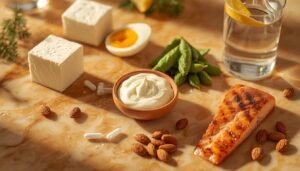
Collagen and whey get most of the attention, but they’re not the only proteins worth your time for firmer, smoother skin. Depending on your diet, health history, or stage of life, other options may actually suit you better.
Here’s what the evidence says about the rest of the lineup.
Silk Protein for Lightweight Hydration
Silk protein works through two complementary mechanisms: sericin water binding pulls moisture into the surface film, while fibroin film formation creates a breathable barrier that slows water loss.
Hydrolyzed silk peptides distribute evenly across dry areas like the neck and décolletage, delivering a lightweight protein formula with notable silk moisturizer feel.
This silk humectant compatibility makes it practical for daily skin barrier reinforcement through silk and collagen proteins combined.
Soy Protein for Postmenopausal Skin
Soy protein stands apart from other dietary protein sources because its isoflavone content directly targets postmenopausal estrogen decline—the hormonal shift most responsible for age-related skin changes.
In a 24‑week clinical dosing schedule using soy protein isolate with added isoflavones, skin hydration outcomes and wrinkle severity improved measurably at weeks 16 and 24.
Isoflavone metabolism matters here: women who produce S‑equol show stronger barrier benefits, making soy one of the smarter collagen‑boosting foods for postmenopausal skin firmness.
Egg White Protein Absorption
Egg white protein earns its reputation as one of the most bioavailable protein sources for skin firmness—and digestion explains why. Stomach acid denaturation unfolds its proteins immediately, enabling pepsin hydrolysis to cleave them into absorbable peptides. Brush-border peptide transport then moves those fragments into enterocytes efficiently, accelerating portal circulation timing for rapid amino acid appearance in the bloodstream.
- all essential amino acids supporting collagen synthesis and skin barrier repair
- net protein utilization score reflects higher digestibility for crepey skin recovery
- Faster nutrient absorption compared to many intact protein forms
- Hydrolyzed egg white variants enhance this speed advantage further
Plant-based Options for Vegans
You don’t need animal protein to support firmer skin. Quinoa complete protein and buckwheat grain each delivers all nine essential amino acids, while hemp seed amino acids and chia seed protein round out your collagen-boosting foods arsenal.
Nutritional yeast B12 covers a common vegan gap directly.
Together, these vegan-friendly ingredients and plant-based collagen boosters function as practical nutraceuticals and reliable protein sources for skin firmness.
Food Sources Versus Supplements
Whole foods win on complexity — salmon delivers omega-3s, zinc, and protein simultaneously through a natural Food Matrix Effect that no single supplement replicates. Still, Supplement Timing matters when dietary gaps exist.
- Absorption Competition between zinc and copper favors food-based intake.
- Fiber Interaction in plant meals moderates protein digestion rates.
- Nutrient Synergy makes collagen-boosting nutrition for aging skin most effective when both approaches combine strategically.
Nutrients That Build Collagen
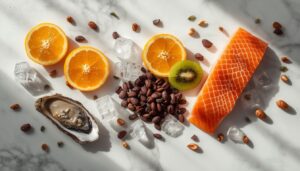
Protein alone won’t rebuild collagen if your body is missing the raw materials to actually make it.
vitamin C, zinc, and copper as the behind-the-scenes crew — without them, even the best supplement won’t get the job done.
Here’s what your body needs to support collagen synthesis from the inside out.
Vitamin C as a Collagen Cofactor
Vitamin C does more than boost immunity — it’s the cofactor that drives the hydroxylation enzyme converting proline into hydroxyproline, locking collagen’s triple helix stability into place. Without it, your collagen production literally stalls.
For crepey skin, that redox environment support matters: aim for an ideal daily dose of 250–500 mg alongside your protein sources for skin firmness, making it a non-negotiable synergistic nutrient pairing.
Zinc for Repair and Turnover
Alongside vitamin C, zinc quietly powers the repair cycle from the inside out.
As one of the body’s most active Zinc Enzyme Cofactors, it drives skin cell turnover, helps skin remodeling, and activates Zinc Signaling Pathways that tell damaged tissue to rebuild.
Zinc deficiency effects show up quickly — poor wound closure, compromised Zinc Barrier Restoration, and weakened Zinc Immune Support that slows recovery.
Top protein sources for skin firmness that also deliver zinc:
- Oysters — highest bioavailable zinc per serving
- Red meat — pairs protein with meaningful zinc density
- Legumes and seeds — solid plant-based options
- Whole grains — contribute to daily zinc intake alongside fiber
Zinc deficiency directly undermines the role of zinc and copper in skin structure, making adequate intake non‑negotiable.
Copper for Elastin Cross-linking
Zinc manages the repair signal — copper completes the structure.
Without adequate Copper Bioavailability, Lysyl Oxidase Activation stalls, and that enzyme is what drives Elastin Cross-link Chemistry: oxidizing lysine residues in tropoelastin into the reactive aldehydes that lock mature elastin into place.
Dietary Copper Sources like organ meats, cashews, and dark chocolate directly support the role of zinc and copper in skin structure — and protein sources for skin firmness mean little if that cross-linking step can’t finish.
Protein Intake Targets for Repair
Copper sets the structure — but none of it holds without enough raw material coming in daily.
Your daily gram targets matter here: most adults repairing aging skin benefit from 1.2–1.5 g of protein per kilogram of body weight.
- Per-meal dosing: aim for 20–40 g per sitting
- Post-exercise timing: consume protein within 120 minutes
- Older adult intake: push toward 1.5 g/kg daily
- Kidney considerations: consult your doctor before increasing protein substantially
Best Food Sources for Cofactors
Getting these cofactors from food is easier than it sounds.
Red bell peppers and citrus fruit sources like oranges deliver vitamin C directly to your collagen-building pathways.
Shellfish copper riches — think oysters and crab — cover both zinc and copper in one meal.
Nuts’ zinc content is solid in pumpkin seeds, while Brazil nut selenium helps antioxidant enzymes.
Leafy greens folate rounds everything out.
Fats That Support Skin Barrier
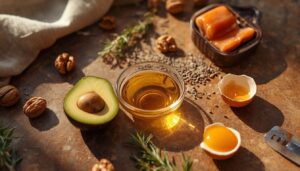
Protein gets most of the spotlight regarding skin repair, but fat deserves a seat at the table too.
The right dietary fats act like mortar between bricks — they hold your skin barrier together, lock in moisture, and keep inflammation from breaking down collagen faster than your body can rebuild it.
Here’s what the evidence says about the fats most worth your attention.
Omega-3s for Inflammation Control
Chronic low-grade inflammation quietly degrades collagen faster than aging alone. Omega-3 fatty acids counter this through three precise mechanisms: membrane lipid remodeling that reshapes how immune receptors signal, oxylipin profile shifts that favor resolution over activation, and cytokine modulation — measurably reducing IL-6 and TNF-alpha. EPA and DHA also generate pro-resolving mediators that actively switch inflammation off rather than simply dialing it down.
Omega-3s don’t just reduce inflammation — they actively switch it off
- Compete with omega-6s for shared enzyme pathways
- Remodel cell membranes to alter inflammatory receptor behavior
- Shift oxylipin profiles toward anti-inflammatory mediators
- Trigger pro-resolving mediators that end the inflammatory cycle
Ceramide Support From DHA and EPA
Not all omega-3 fatty acids behave identically in your skin. EPA drives a measurable ceramide-1-phosphate increase in epidermal tissue, selectively elevating ceramide species tied to barrier reinforcement — what researchers call species-specific ceramides.
DHA’s ceramide role is comparatively limited in the same skin models.
These lipid signaling changes mean EPA delivers the more targeted ceramide boost your barrier actually needs.
Evening Primrose and Borage Oil
Both evening primrose oil and borage oil deliver gamma-linolenic acid, but their GLA concentration differs considerably — borage oil reaches roughly 21%, nearly double evening primrose oil’s 8–10%. This linoleic-GLA ratio influences prostaglandin synthesis, which regulates skin hydration at a cellular level.
Both oils also carry a tocopherol antioxidant profile that protects essential fatty acids from oxidation, reinforcing skin moisturization.
Olive Oil and Avocado Fats
Olive oil and avocados earn their place in any skin‑supportive diet through oleic acid dominance — both oils derive more than half of their fat content from this omega‑9 monounsaturated fatty acid.
That monounsaturated fat ratio directly aids skin barrier reinforcement by supplying flexible lipid building blocks.
Their vitamin E tocopherols and polyphenol antioxidant profile — especially in extra virgin olive oil — further protect against oxidative collagen breakdown, supporting lasting skin moisturization and overall skin health.
Why Lipids Help Crepey Texture
Think of your skin’s outer layer as a brick wall — without the mortar holding everything together, moisture escapes and the surface crumbles.
That lipid mortar structure, built from long-chain ceramides, cholesterol barrier function components, and sebum lipid balance, is what keeps crepey texture in check.
Ceramide chain diversity, reinforced through omega-3 and omega-7 fatty acids, olive oil, and avocados, restores that barrier where collagen and silk proteins can’t reach.
Topical Ingredients for Crepey Skin
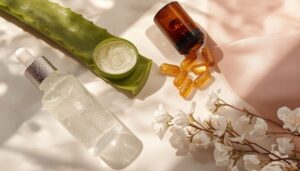
What you eat matters, but what you put on your skin matters too. The right topical ingredients can reinforce your skin’s barrier, stimulate collagen, and visibly reduce that tissue-paper texture over time.
Here are the key actives worth knowing.
Hyaluronic Acid and Glycerin
Regarding crepey skin, hyaluronic acid and glycerin work best as a team. Glycerin draws moisture to the surface while hyaluronic acid—particularly lower molecular weight forms—retains it deeper.
This humectant synergy maximizes skin hydration, but occlusion strategies matter: seal both in with a barrier cream.
Formulation stability and pH optimization make certain these ingredients stay active and effective long-term, reinforcing your skin barrier consistently.
Peptides and Ceramides
Beyond humectants, your skin needs structural rebuilding — and that’s where Peptide Ceramide Synergy delivers real results.
Peptides trigger Signal Driven Repair through Barrier Signaling Pathways, prompting collagen production, while ceramides rebuild the Layered Lipid Architecture that holds moisture in.
Together, they support skin elasticity and crepey skin recovery simultaneously.
- Peptides signal dermal repair and collagen turnover
- Ceramides restore lipid lamellae, reducing water loss
- Ceramide Peptide Delivery improves ingredient penetration across the barrier
- Both support skin barrier maintenance and hydration strategies long-term
Glycolic AHA Body Lotions
While peptides and ceramides rebuild from within, glycolic AHA body lotions work on the surface — sloughing dead cells so your other actives can actually penetrate.
Formulas range from 10% to 15% glycolic acid; pH Optimization around 4.0 keeps Ingredient Stability intact and the acid effective.
Start with Exfoliation Frequency two to three nights weekly, always Patch Testing first, then monitor for Barrier Recovery before increasing use.
Ammonium Lactate for Rough Skin
Once you’ve addressed surface buildup with glycolic AHA, ammonium lactate 12% picks up where it left off — targeting rougher cases like keratosis pilaris treatment and xerosis hydration strategy simultaneously.
Its dual humectant mechanism both exfoliates via lactic acid exfoliation and draws moisture into the stratum corneum, delivering measurable skin texture improvement within weeks of consistent use.
Apply it this way:
- Spread a thin layer over crepey skin once daily until your skin adjusts
- Increase to twice daily if moisture retention stays insufficient after two weeks
- Follow application frequency guidance on your specific formulation — 12 g per 100 g is standard strength
- Layer a ceramide or peptides moisturizer over it to lock hydration and buffer any mild irritation
Broad-spectrum SPF 30+ Protection
UV damage is the single fastest way to undo every collagen-building effort you make.
Daily broad-spectrum SPF 30+ sunscreen blocks both UVA photoaging rays and UVB burn radiation — mineral filters like zinc oxide offer reliable photostability without chemical breakdown.
Check the label for water-resistant designation, and maintain a strict reapplication schedule every two hours during sun exposure.
No topical routine works without this foundation.
Top 10 Crepey Skin Products
Finding the right product for crepey skin doesn’t have to be a guessing game. The options below are chosen based on their active ingredients, clinical relevance, and real-world usability.
Here are ten worth your attention.
1. Gold Bond Strength Resilience Lotion
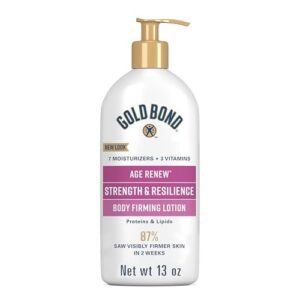
Gold Bond Strength & Resilience Lotion layers seven moisturizing agents — including glycerin, sodium PCA, sodium lactate, and hydroxyethyl urea — over an occlusive base of petrolatum and dimethicone, giving crepey skin both immediate surface hydration and longer-term barrier support.
Whey protein and hydrolyzed jojoba esters reinforce the skin matrix, while tocopheryl acetate and magnesium ascorbyl phosphate deliver antioxidant protection.
Dermatologist-tested and fragrance-free, it’s a clinically grounded daily option, with 87% of users reporting visibly firmer skin within two weeks.
| Best For | Anyone with mature or aging skin who wants a no-fuss, science-backed daily lotion to fight dryness, crepiness, and loss of firmness. |
|---|---|
| Product Type | Body Lotion |
| Primary Benefit | Skin Firming |
| Fragrance | Fragrance-Free |
| Dermatologist Tested | Yes |
| Key Ingredient | Proteins & Lipids |
| Price Range | Mid-Range |
| Additional Features |
|
- Packs seven moisturizing agents plus a skin-firming complex, so it tackles dryness and texture at the same time.
- Fragrance-free, dermatologist-tested, and fast-absorbing — easy to work into any daily routine without irritation.
- 87% of users saw visibly firmer skin in just two weeks, which is a solid real-world result.
- Results aren’t guaranteed — some people see little to no visible improvement in skin firmness.
- No scent at all, which is a downside if you like your lotion to smell like something.
- It hydrates and firms, but it won’t replace prescription treatments if you’re dealing with serious skin concerns.
2. Onnit Alpha Brain Nootropic Supplement
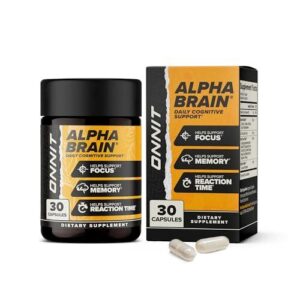
Alpha Brain isn’t a skin supplement — and that’s exactly the point.
While it won’t rebuild your dermal matrix, it earns a spot here because crepey skin is a long game that demands consistent daily habits. Mental clarity helps you stay the course.
Formulated without caffeine, it combines Alpha-GPC, Huperzine A, Tyrosine, L-Theanine, and Bacopa monnieri. It supports memory, focus, and sustained attention.
Take two capsules daily, and expect subtle effects that build over several weeks of consistent use.
| Best For | Anyone who wants calm, steady focus without caffeine — especially students, professionals, or creatives who need to stay sharp for long stretches. |
|---|---|
| Product Type | Supplement Capsules |
| Primary Benefit | Cognitive Focus |
| Fragrance | None Listed |
| Dermatologist Tested | No |
| Key Ingredient | L-Theanine & B6 |
| Price Range | $29.98 |
| Additional Features |
|
- Caffeine-free formula gives you real focus without the jitters or energy crashes
- Bacopa monnieri and L-Theanine are well-studied ingredients with solid track records for memory and clarity
- Vegetarian capsules with non-GMO certification — clean label you can actually trust
- Effects build slowly, so don’t expect overnight results — it takes weeks of consistent use
- Some users report nausea or stomach discomfort, especially early on
- At $29.98 for just 30 capsules, it’s a bit pricey compared to similar nootropics on the market
3. Gold Bond Age Renew Neck Chest Cream
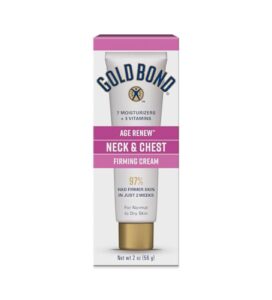
The neck and chest — often the first places crepey texture shows — need targeted care, not just a general body lotion. Gold Bond Age Renew Neck Chest Cream targets exactly that.
Its blend of hyaluronic acid, glycerin, and seven moisturizers penetrates up to ten skin surface layers, delivering sustained hydration where thinning is most visible. Salicylic acid adds gentle exfoliation to improve texture without irritating sensitive skin.
Unscented, fast-absorbing, and dermatologist-tested, apply it morning and evening using upward strokes for best results.
| Best For | Anyone dealing with crepey skin on the neck and chest — whether from aging, sun damage, or weight loss — who wants a simple, no-fuss daily cream. |
|---|---|
| Product Type | Neck & Chest Cream |
| Primary Benefit | Neck Firming |
| Fragrance | Unscented |
| Dermatologist Tested | Yes |
| Key Ingredient | Hyaluronic Acid |
| Price Range | Mid-Range |
| Additional Features |
|
- Packs hyaluronic acid, seven moisturizers, and salicylic acid into one formula that hydrates and gently exfoliates at the same time
- Unscented, fast-absorbing, and dermatologist-tested — a solid pick if your skin runs sensitive
- 97% of users in testing reported visibly firmer skin within two weeks
- Results don’t last — stop using it and the benefits fade
- Salicylic acid can irritate very sensitive skin, and a few users noticed a slightly greasy feeling right after applying
- Some people see only modest improvement even with consistent use
4. Adamia Therapeutic Repair Lotion
Thin, distressed skin needs a lipid-first approach — and that’s exactly what Adamia Therapeutic Repair Lotion delivers.
Its dual-action formula pairs pure macadamia nut oil (naturally dense in omega-7 fatty acids) with Promega-7 to actively repair and strengthen your skin’s protective barrier.
Allantoin calms irritation while aloe and vitamin E work together to soothe and protect.
Fragrance-free, non-greasy, and dermatologist-tested, it’s built for sensitive or crepey skin.
Apply twice daily for measurable improvement in texture and moisture retention.
| Best For | Older adults and anyone dealing with thin, dry, or crepey skin who wants a clean, fragrance-free formula that actually works to rebuild the skin’s barrier. |
|---|---|
| Product Type | Body Lotion |
| Primary Benefit | Skin Repair |
| Fragrance | Fragrance-Free |
| Dermatologist Tested | Yes |
| Key Ingredient | Macadamia Oil |
| Price Range | Mid-Range |
| Additional Features |
|
- Pure macadamia nut oil plus Promega-7 make a genuinely effective combo for repairing dry, distressed, or paper-thin skin
- Completely clean formula — no fragrance, parabens, petroleum, or gluten, and it’s vegan and cruelty-free
- Light enough to wear daily without that greasy, heavy feeling, yet still calms redness and visible skin damage
- If your skin is seriously parched, this might not feel rich enough on its own — you may need to layer something heavier on top
- It costs more than your average drugstore lotion, so the price can sting a little
- Results aren’t guaranteed for everyone — how well it works really depends on your skin and how consistently you use it
5. Alpha Skin Care Glycolic AHA Body Lotion
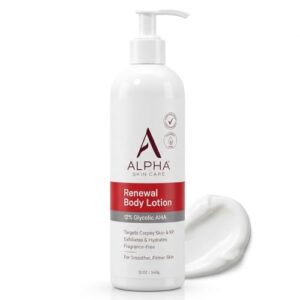
Chemical exfoliation is one of the most clinically validated tools for improving crepey texture — and this lotion puts it to work at a serious concentration.
Alpha Skin Care’s formula delivers 12% glycolic acid at pH 4.0, a combination that stimulates collagen production and accelerates cell turnover.
Studies confirm visible elasticity gains within two weeks of consistent AHA use.
It’s fragrance-free, dermatologist-recommended, and designed for broad body application.
One important note: always follow with SPF 30+ during daylight hours, since glycolic acid meaningfully increases photosensitivity.
| Best For | Anyone dealing with rough, bumpy, or crepey skin who wants a daily lotion that actually does something beyond basic hydration. |
|---|---|
| Product Type | Body Lotion |
| Primary Benefit | Exfoliation |
| Fragrance | Fragrance-Free |
| Dermatologist Tested | Yes |
| Key Ingredient | 12% Glycolic Acid |
| Price Range | $22.00 |
| Additional Features |
|
- 12% glycolic acid at pH 4.0 is a clinically meaningful dose — you’re getting real exfoliation, not a token amount
- Fragrance-free and dermatologist-tested, so it’s a solid pick for most skin types without a lot of risk
- Doubles as a moisturizer and treatment in one step, which keeps your routine simple
- Sunscreen becomes non-negotiable during the day — glycolic acid bumps up your sun sensitivity noticeably
- First-time users often feel tingling or a sticky finish, and very dry skin may still need an extra moisturizer on top
- Results take a few weeks to show up, so don’t expect overnight magic
6. Gold Bond Healing Hydrating Lotion
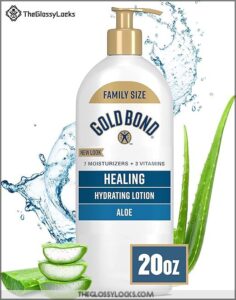
While exfoliating actives accelerate renewal, your skin also needs steady, deep hydration to look and feel less crepey — and that’s exactly where Gold Bond Healing Hydrating Lotion earns its place.
Its formula combines seven intensive moisturizers with hydrolyzed collagen, hydrolyzed elastin, and vitamins A, C, and E.
Dimethicone and petrolatum lock moisture in, while jojoba esters and aloe soothe.
The 20-oz pump bottle makes daily post-shower application straightforward.
It’s dermatologist-tested, hypoallergenic, and delivers up to 24 hours of hydration without a greasy finish.
| Best For | Anyone with dry, sensitive, or crepey skin who wants a reliable daily moisturizer that hydrates deep without feeling greasy. |
|---|---|
| Product Type | Body Lotion |
| Primary Benefit | Deep Hydration |
| Fragrance | Light Scent |
| Dermatologist Tested | Yes |
| Key Ingredient | Vitamins A, C & E |
| Price Range | Mid-Range |
| Additional Features |
|
- Seven moisturizers plus vitamins A, C, and E give your skin serious, all-day hydration — up to 24 hours worth.
- Dermatologist-tested and hypoallergenic, so it’s a safe pick even for sensitive or eczema-prone skin.
- The big 20-oz pump bottle makes it easy to use every day without running out fast.
- Has a light fragrance, so it won’t work for anyone who needs completely scent-free products.
- The consistency runs a little thick, which might feel heavy if you prefer something more lightweight.
- The pump nozzle needs to be manually unscrewed before it works — a small but annoying surprise out of the box.
7. Ayurved Co Nourishing Body Oil
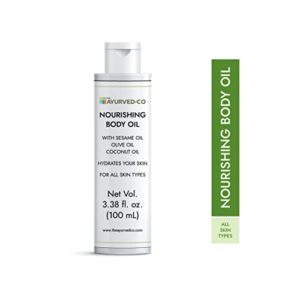
Sometimes your skin doesn’t need another lotion — it needs oil. Ayurved Co Nourishing Body Oil blends sesame, olive, and coconut oils into a lightweight, quick-absorbing formula that works particularly well on dry, crepey areas like heels and cuticles.
Apply it to slightly damp skin after showering for best absorption. One application can keep skin noticeably softer for two to three days.
Sensitive to fragrance? Know that the scent runs on the stronger side before committing.
| Best For | Anyone with seriously dry skin — especially older adults dealing with age-related dryness or anyone who wants real moisture that actually lasts. |
|---|---|
| Product Type | Body Oil |
| Primary Benefit | Moisturization |
| Fragrance | Light Fresh Scent |
| Dermatologist Tested | Not Listed |
| Key Ingredient | Natural Oils Blend |
| Price Range | Mid-Range |
| Additional Features |
|
- Soaks in fast and doesn’t leave that sticky, greasy feeling
- A little goes a long way — skin stays soft for two to three days
- Natural oil blend works great on rough spots like heels and cuticles
- The scent is strong, which can be a dealbreaker if you’re sensitive to fragrance
- Oil can transfer to clothes if you get dressed too soon after applying
- Some bottles have arrived leaking or with labels peeling off
8. NIVEA Skin Firming Body Lotion
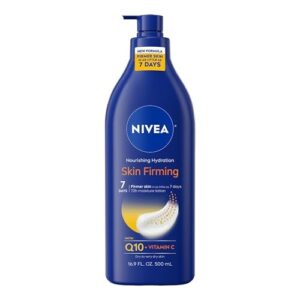
If oils feel too heavy for everyday use, NIVEA Skin Firming Body Lotion offers a lighter alternative. Formulated with Coenzyme Q10 and Vitamin C — both antioxidants that help protect collagen from oxidative breakdown — it delivers up to 72 hours of hydration from a single application.
Dermatologically tested and free of parabens and silicones, it absorbs quickly without greasiness.
Apply twice daily for roughly seven days before expecting visible firmness changes.
One honest caveat: fragrance divides users sharply.
| Best For | Anyone with dry to very dry skin who wants a lightweight daily moisturizer that also targets firmness and elasticity over time. |
|---|---|
| Product Type | Body Lotion |
| Primary Benefit | Skin Firming |
| Fragrance | Light Fresh Scent |
| Dermatologist Tested | Yes |
| Key Ingredient | Coenzyme Q10 |
| Price Range | $10.27 |
| Additional Features |
|
- Up to 72 hours of hydration from one application — great if you hate reapplying throughout the day.
- Absorbs fast and doesn’t leave that greasy film, so you can get dressed right after. Since it sinks in quickly, it’s worth checking Avon Skin So Soft Original Bath Oil bonus size for the full value breakdown and patch-testing tips before buying.
- Clean formula — no parabens, silicones, or phthalates, and dermatologically tested.
- The scent is hit or miss — some people love it, others say it smells like bug spray.
- The thick texture can pick up pet hair and feel too slick for texture-sensitive folks.
- Firming results aren’t guaranteed — some users didn’t notice much difference within the trial window.
9. Diva Stuff Crepey Skin Cream
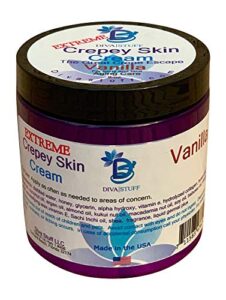
kitchen-sink approach — and that’s not necessarily a criticism. Its formula stacks hyaluronic acid, hydrolyzed collagen, alpha hydroxy acids, and eight plant-based oils, including argan, macadamia, and sacha inchi, alongside vitamin E and honey. meaningful coverage across hydration, barrier repair, and mild exfoliation in one jar.
At $24.99, it’s reasonably priced, though user feedback is mixed — some report little visible change, and a few note an unexpected glue-like odor despite the unscented label.
| Best For | Anyone with crepey skin on the face, neck, or body who wants a single cream that covers hydration, mild exfoliation, and anti-aging support without layering multiple products. |
|---|---|
| Product Type | Body Cream |
| Primary Benefit | Anti-Aging |
| Fragrance | Unscented Option |
| Dermatologist Tested | Not Listed |
| Key Ingredient | Hydrolyzed Collagen |
| Price Range | $24.99 |
| Additional Features |
|
- Packs a serious ingredient list — hyaluronic acid, AHAs, hydrolyzed collagen, and eight plant oils all in one jar
- Works as a leave-on treatment, so it’s easy to fit into any routine, morning or night
- At $24.99, it’s a reasonable price for the range of actives you’re getting
- Results are hit or miss — several users saw little to no real change in crepey skin
- Some reviewers noticed a glue-like smell even in the unscented version
- The tightening effect, when felt, tends to wear off pretty quickly
10. Gold Bond Age Renew Firming Lotion
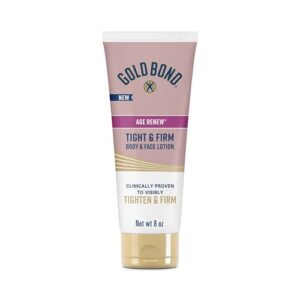
Gold Bond Age Renew Firming Lotion takes a straightforward approach at $11.98 for 8 oz. Its Skin-Firming Complex combines whey protein and lipids with seven moisturizers and vitamins B, C, and E — nutrients your skin actually needs for collagen stabilization and barrier repair.
A third-party clinical study confirmed visible firmness improvements within two weeks. It’s fragrance-free, non-comedogenic, and dermatologist-tested, making it suitable for sensitive or dry skin.
Results vary by individual, but the formulation’s evidence base is stronger than most budget options.
| Best For | Anyone on a budget who wants a no-fuss firming lotion for dry or sensitive skin, especially after weight loss or as skin starts to lose elasticity with age. |
|---|---|
| Product Type | Body Lotion |
| Primary Benefit | Skin Firming |
| Fragrance | Fragrance-Free |
| Dermatologist Tested | Yes |
| Key Ingredient | Proteins & Lipids |
| Price Range | $11.98 |
| Additional Features |
|
- Clinically tested by a third party — actual evidence behind the firming claims, not just marketing
- Fragrance-free, non-greasy, and non-comedogenic, so it plays nice with sensitive skin and works under makeup
- Seven moisturizers plus vitamins B, C, and E for solid hydration that lasts a full 24 hours
- Results aren’t guaranteed — some users see little to no firming improvement
- Only comes in one 8 oz size, which runs out fast if you’re applying head-to-toe
- Not a medical-grade treatment, so don’t expect miracles if skin laxity is significant
Daily Habits That Preserve Elasticity

What you put in your body matters, but so does what you do with your day. A few consistent habits can meaningfully breakdown of collagen and elastin over time.
the evidence actually demonstrates.
Drink Enough Water Daily
Water is your skin’s most underrated structural ally. Aiming for roughly 2 liters daily — spread through consistent hydration timing rather than consuming all at once — measurably improves both surface and deep skin hydration within 30 days.
Monitor urine color as your indicator: pale yellow signals adequate fluid distribution.
A morning hydration ritual jumpstarts moisture retention and helps skin barrier maintenance throughout the day.
Reduce Sugar and Glycation
Sugar isn’t just an energy source — it’s a slow-acting threat to your skin’s structural proteins. When glucose lingers in the bloodstream, it bonds with collagen and elastin to form complex glycation end products, stiffening the very fibers that keep skin firm.
Three practical moves to limit glycation damage:
- Choose Low-Glycemic Meals paired with Fiber-Rich Foods to blunt post-meal glucose spikes.
- Use Acidic Marinades when cooking proteins — they reduce Maillard browning and lower dietary AGE load.
- Prioritize Antioxidant Foods for Skin Protection — think berries, leafy greens, and dark chocolate — alongside adequate Hydration for AGE clearance support.
Portion Control matters too; smaller, balanced meals reduce repeated glucose elevations that accelerate collagen stiffening over time.
Quit Smoking for Skin Health
Smoking accelerates collagen breakdown faster than almost any lifestyle factor — cigarette chemicals trigger matrix metalloproteinases that shred elastin fibers while driving free radical damage that no antioxidant foods for skin protection can fully offset.
| Timeline After Quitting | Skin Change | Mechanism |
|---|---|---|
| 2–4 weeks | Improved blood flow | Vessels dilate; oxygen delivery increases |
| 1–3 months | Reduced oxidative stress | Reactive oxygen species exposure drops |
| 3–6 months | Lower inflammation | Matrix breakdown signals decline |
| 6–12 months | Enhanced wound healing | Collagen synthesis pathways recover |
Quitting also meaningfully reduces skin cancer risk over time.
Add Cardio and Resistance Training
Movement is collagen’s best friend. Cardio Boosts Circulation by delivering oxygen and nutrients directly to dermal fibroblasts, while Resistance Enhances Tone by building the muscular scaffold beneath thinning skin — both driving Exercise-Induced Collagen synthesis.
- Aim for 150 minutes weekly of cardiovascular exercises
- Add strength training at least 2 days per week
- Time lean protein intake around sessions for Recovery Nutrition Timing
- Combine both for Hybrid Training Benefits that increase collagen remodeling
Use Sunscreen Every Day
UV damage is the single fastest route to photoaging — and it happens even on cloudy days or during a quick errand run. Apply a broad-spectrum SPF 30+ sunscreen 15–30 minutes before sun exposure, prioritizing mineral filters like zinc oxide for sensitive skin.
Reapplication frequency matters: every two hours, or immediately after swimming. Water-resistant formulas hold up during activity.
Pair with sun-safe clothing for full UV protection.
Frequently Asked Questions (FAQs)
Which protein tightens crepey skin?
Hydrolyzed collagen peptides are your strongest option — clinical trials confirm measurable gains in elasticity and firmness within 28 days at doses of 5–10 g daily, directly rebuilding the structural scaffold crepey skin has lost.
What protein tightens skin?
Collagen peptides lead to skin tightening — their hydrolyzed peptide bioavailability delivers glycine, proline, and hydroxyproline directly to the dermis, stimulating collagen synthesis and measurably improving elasticity within 28 days at 5–10 g daily.
Does eating protein help crepey skin?
Yes, eating protein genuinely helps.
Your skin constantly rebuilds itself, and without adequate amino acid balance from quality protein sources, collagen production slows — accelerating that thin, papery texture you’re trying to reverse.
What is the best supplement for crepey skin?
For crepey skin, hydrolyzed collagen peptides stand out as the top collagen supplement.
At 5–10 g daily, paired with 50–500 mg vitamin C for maximum synergy with vitamins, clinical results appear within 28 days.
Which protein is best for skin tightening?
Ironically, the simplest answer wins: hydrolyzed collagen peptides outperform whey for skin tightening.
Their protein molecular weight and absorption kinetics deliver glycine, proline, and hydroxyproline directly where dermal collagen synthesis needs them most.
What protein deficiency causes crepey skin?
A shortfall in collagen precursors — specifically low glycine levels and proline deficiency — weakens dermal structure.
This essential amino shortage accelerates crepey texture by starving elastin and collagen synthesis of their core building blocks.
What protein do you need to prevent Crepey skin?
Hydrolyzed collagen protein delivers the glycine, proline, and hydroxyproline your dermis needs most. At 5–10 g daily, it’s the single most targeted amino acid strategy for preventing crepey texture.
What protein tightens saggy skin?
Collagen peptides lead the way — their glycine, proline, and hydroxyproline directly rebuild the dermal matrix. At 5–10 g daily, consistent intake visibly firms loose, thinning skin within weeks.
What vitamin is lacking for crepey skin?
Vitamin C tops the list, but vitamin E deficiency, Vitamin A insufficiency, Vitamin D shortfall, and Folate deficiency all quietly accelerate crepey texture by weakening collagen, antioxidants, and skin-cell renewal.
What protein is best for aging skin?
For aging skin, hydrolyzed collagen peptides lead the pack — delivering the exact amino acid synergy your dermis needs. A daily 5–10 g dose, timed consistently, outperforms general proteins for skin-specific repair.
Conclusion
you’re what you eat—and your skin keeps the receipts. Rebuilding crepey skin isn’t a cosmetic problem; it’s a structural one, and the fix starts at the cellular level.
Choosing the best protein for crepey skin, pairing it with vitamin C, zinc, and copper, and protecting existing collagen through daily SPF and hydration gives your dermis the raw materials it needs.
Consistency, not complexity, is what actually moves the needle.