This site is supported by our readers. We may earn a commission, at no cost to you, if you purchase through links. This content is for general informational and educational purposes only and is not a substitute for professional medical, dermatological, or nutritional advice.
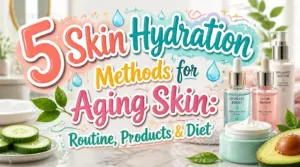
Between your twenties and your fifties, your skin loses about half its hyaluronic acid. Ceramide production drops by as much as 40%, and water escapes through the surface roughly 30% faster. Think of a once-sturdy brick wall whose mortar has begun to crumble.
That’s why the cream that worked at thirty now leaves you tight and dull by noon. Your skin isn’t failing you. Its protective barrier needs different support.
The right skin hydration methods for aging skin rebuild that mortar, starting with how you cleanse and ending with what’s on your plate. Here’s how to restore comfort, softness, and glow.
Table Of Contents
- Key Takeaways
- Why Aging Skin Needs Hydration and Moisture
- Cleanse Gently to Protect Aging Skin’s Barrier
- 5 Hydration Aids for Aging Skin
- Build a Daily Skin Hydration Routine
- Support Skin Hydration With Water and Food
- Frequently Asked Questions (FAQs)
- How does hormonal change impact skin hydration needs?
- Should hyaluronic acid go on dry or damp skin?
- Can hydrating masks help mature skin, and how often?
- Do occlusives like petrolatum or shea butter clog pores?
- Does indoor humidity affect aging skins moisture levels?
- Can frequent travel affect skin moisture levels?
- Conclusion
Key Takeaways
- Your skin’s barrier weakens with age as ceramides and hyaluronic acid decline and water escapes faster, so what once worked now needs richer, barrier-supporting care.
- You’ll protect that barrier best by cleansing gently with a sulfate-free, fragrance-free formula, using lukewarm water twice a day, and stopping before your skin feels squeaky or tight.
- Layer your hydration from thinnest to richest, applying hyaluronic acid to damp skin, sealing it with a ceramide cream, and adding sunscreen in the morning, while introducing one new product at a time.
- You’ll get lasting results by supporting your skin from within with enough water and water-rich foods, and by adjusting for dry air, winter, and travel with richer moisturizers and humidity of 40% to 60%.
Why Aging Skin Needs Hydration and Moisture

Why does your skin feel tighter and thirstier than it used to, even when you’re moisturizing as faithfully as ever? Time quietly changes the way your skin holds water.
Pairing a hyaluronic acid serum for dry skin with your moisturizer can help replenish lost water and then seal it in.
Ceramide production can fall by up to 40%, and those lipids are the mortar between your skin cells. As your skin barrier function weakens, transepidermal water loss rises by roughly 30%, so moisture slips out faster than it once did. Natural moisturizing factors like urea and lactic acid dwindle too, and hyaluronic acid drops by about half between your twenties and fifties.
Sebum fades as well, and cell turnover slows from about 28 days to 45 or more, leaving dull, dehydrated cells on the surface.
The reassuring part is that you can help. Humectant ingredients, gentle care and lipid barrier support make your skin feel comfortable again.
Cleanse Gently to Protect Aging Skin’s Barrier

Since your skin already loses water faster, the way you wash it matters more than you might think. A harsh cleanser can push your skin’s pH above 5.5, upsetting the acid mantle, the thin protective veil that sits near 4.7 when your skin is happy.
Choose a sulfate-free, fragrance-free formula that’s low-foaming and includes glycerin. That kind of gentle cleanser lifts away debris without stripping the lipids your skin barrier function depends on.
Cleanse twice a day, no more. Use lukewarm water and light fingertips, then pat dry. If your face feels squeaky clean afterward, that tightness is a sign your barrier lipids were stripped away.
Research on polymeric surfactant-based cleansers shows they maintain stable transepidermal water loss and skin pH without increasing irritation or dryness.
Think of cleansing as setting a calm stage. Done kindly, it leaves your skin ready to welcome hydrating products instead of fighting them.
5 Hydration Aids for Aging Skin
Once your cleansing habits are gentle, you can start adding the right hydration aids to your routine. The five picks below cover your cleanser, your moisturizer, your serums, and even what you take in from the inside. Here’s what each one offers and where it fits in your day.
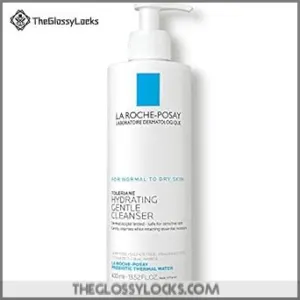
1. La Roche-Posay Gentle Cleanser
Picture washing your face after a long day and feeling that tight, squeaky pull across your cheeks. That tightness is your barrier asking for help.
This cleanser is built to avoid that. It’s formulated with niacinamide, ceramide-3, and prebiotic thermal spring water, and it lifts away dirt, makeup, and impurities while leaving your natural moisture barrier intact. It’s fragrance-free, oil-free, soap-free, and non-comedogenic, so it suits normal to dry, sensitive skin.
Pairing it with a daily skin hydration routine helps keep your moisture barrier strong and your skin comfortable between washes.
A small caution: some users report burning, so patch test first.
| Best For | People with normal to dry, sensitive skin who want a gentle, fragrance-free daily cleanser that removes dirt and makeup without stripping the skin’s moisture barrier. |
|---|---|
| Dimensions | 2.4 x 2.4 x 8.25 inches |
| Weight | 15.4 ounces |
| Product Size | 13.52 fl oz |
| Fragrance-Free | Yes |
| Skin Benefit | Restores comfort and hydration |
| Model Number | N/A |
| Additional Features |
|
- Made with niacinamide, ceramide-3, and prebiotic thermal spring water to help repair and protect the skin barrier while soothing visible discolorations.
- Cleanses dirt, makeup, and impurities while leaving skin comfortable and hydrated.
- Fragrance-free, oil-free, soap-free, non-comedogenic, allergy-tested, and paraben-free.
- Some users report a burning sensation when using it.
- May not suit people with specific ingredient sensitivities.
- Results vary depending on individual skin type and condition.
2. CeraVe Moisturizing Cream for Dry Skin
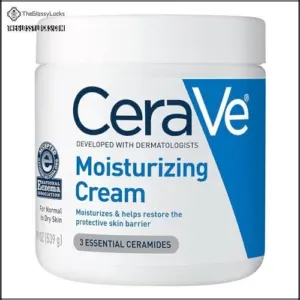
Once your cleanser has done its work, your skin is ready for moisture, and a good cream earns its place.
CeraVe’s cream contains three ceramides (1, 3, and 6-II) plus hyaluronic acid, which help restore and maintain your skin’s natural barrier. Its MVE technology releases moisturizers over 24 hours. It’s fragrance-free, paraben-free, non-comedogenic, and carries the National Eczema Association Seal of Acceptance.
Texture is rich, so gel lovers may find it heavy, and severely damaged skin may need extra treatment.
| Best For | People with dry or eczema-prone skin who want a fragrance-free, rich cream that hydrates the face, body, and hands for up to 24 hours. |
|---|---|
| Dimensions | 3.58 x 3.58 x 8 inches |
| Weight | 19 ounces |
| Product Size | 19 ounces net weight |
| Fragrance-Free | Yes |
| Skin Benefit | 24-hour hydration for dry skin |
| Model Number | N/A |
| Additional Features |
|
- Contains three ceramides (1, 3, 6-II) and hyaluronic acid to help restore and maintain the skin’s natural barrier
- Releases moisturizers over 24 hours thanks to MVE technology
- Fragrance-free, paraben-free, non-comedogenic, and carries the National Eczema Association Seal of Acceptance
- May not be enough on its own for severely compromised skin barriers
- The rich texture can feel heavy to people who prefer lightweight gels or lotions
- Results vary depending on your skin condition and environment
3. Nutriceuticals Omega 3 for Health
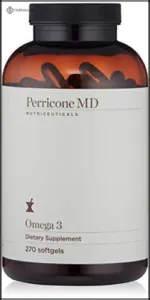
You might think of omega-3 as nourishment that works from the inside, a partner to the creams you apply. This Nutriceuticals capsule, model 52578, is associated with skin care benefits and sits at rank 955 among Amazon’s omega-3 supplements.
Dr. Perricone’s dosage for weight maintenance is one capsule three times daily with meals. For weight loss, it’s three capsules three times daily. Those aren’t universal guidelines, and the label doesn’t list EPA or DHA amounts, so ask your doctor first.
| Best For | Shoppers who want an omega-3 supplement tied to skin care and weight support and who are comfortable following Dr. Perricone’s suggested dosing after checking with their doctor. |
|---|---|
| Dimensions | 6 x 5 x 4 (units unspecified) |
| Weight | N/A |
| Product Size | N/A |
| Fragrance-Free | N/A |
| Skin Benefit | Associated with skin care benefits |
| Model Number | 52578 |
| Additional Features |
|
- Associated with skin care benefits
- Comes new in the box and sealed
- Ranked 955 among Amazon’s omega-3 supplements
- The label gives no EPA or DHA amounts or purity details
- Dr. Perricone’s dosing is not a universal guideline
- Dimensions are listed without units, so the package size is unclear
4. NeoStrata Bionic Serum for Sensitive Skin
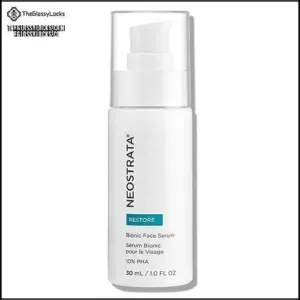
A fragrance-free formula makes this serum a calm choice when your skin feels reactive. NeoStrata Bionic Serum contains 10% polyhydroxy acid, an antioxidant active that helps correct signs of photoaged skin while supporting your moisture barrier. You’ll notice smoother texture and a softer glow, along with deep moisturization.
The 1.0 fl oz bottle is easy to tuck into your routine. It offers no SPF, so pair it with daily sunscreen. Keep it away from your eyes, and use it externally only.
Consistency counts, as studies show results around the 56-day mark, so see which moisturizing cream benefits to expect along the way.
| Best For | People with sensitive or reactive skin who want a fragrance-free serum to help with signs of sun-aged skin and dryness. |
|---|---|
| Dimensions | 1.52 x 1.66 x 4.68 inches |
| Weight | 1.06 ounces |
| Product Size | 1.0 fl oz / 30 ml |
| Fragrance-Free | Yes |
| Skin Benefit | Intense moisturization and radiance |
| Model Number | N/A |
| Additional Features |
|
- Contains 10% polyhydroxy acid, an antioxidant active that helps correct signs of photoaged skin
- Fragrance-free formula suits sensitive skin and supports the moisture barrier
- Improves surface texture and radiance while providing intense moisturization
- Offers no SPF, so daily sunscreen is still needed
- Ranked 5,982 in Facial Serums, which suggests it is less popular than many competitors
- For external use only, and it must be kept away from the eyes
5. Vichy Mineral 89 Hyaluronic Acid Serum
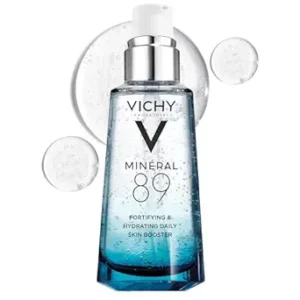
Picture a dry, windy morning where your skin feels tight by the time you’ve finished your coffee. A lightweight serum, pressed onto still-damp skin, can soften that feeling quickly.
This serum pairs hyaluronic acid with polyglutamic acid and Vichy Volcanic Water to support your barrier. It’s fragrance-free, so sensitive skin can tolerate it, and you can use it morning and night. It also buffers actives like Vitamin C and retinol.
Give it 4 to 6 weeks for plumpness. Opinions on value vary.
| Best For | People with dry or sensitive skin who want a fragrance-free, lightweight hydrating serum that layers well under actives like Vitamin C and retinol. |
|---|---|
| Dimensions | 5.22 x 1.95 x 5.22 inches |
| Weight | 7.05 ounces |
| Product Size | N/A |
| Fragrance-Free | Yes |
| Skin Benefit | Instant hydration on damp skin |
| Model Number | VIC0200317 |
| Additional Features |
|
- Delivers instant hydration when applied to damp skin
- Fragrance-free formula suitable for sensitive skin
- Can be used twice daily and works as a buffer with actives like Vitamin C and Retinol
- Plumpness and radiance results require 4–6 weeks of consistent use
- Some customers report mixed opinions on value for money
- Not evaluated for long-term use beyond a clinical testing period of 2 months
Build a Daily Skin Hydration Routine
Hydration works best when it becomes a rhythm you can count on, not a single product you hope will do everything. Below, you’ll find three simple stages that carry your skin from morning light to evening rest and through the changing seasons. Each one gives you clear, gentle steps you can follow with confidence.
Morning Hydration and Sun Protection
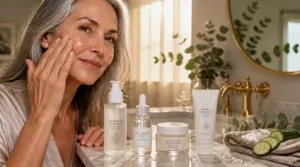
Think of your morning routine as dressing your skin for the day. Hydrate first, then shield.
- Rinse with a gentle cleanser.
- Press in hyaluronic acid serum on damp skin.
- Smooth on a barrier-respecting moisturizer.
- Finish with mineral-based sunscreen, SPF 30 or higher.
- Reapply sunscreen every two hours outdoors.
Water-based layers go on first, and sunscreen seals the protection on top.
Nighttime Layering and Moisture Sealing

Think of nighttime as your skin’s quiet repair shift. While you sleep, water slips away faster, so your routine should hold it in.
Start with the thinnest layer: a hydrating toner or a hyaluronic acid serum on slightly damp skin. Follow with a ceramide-rich cream to support your moisture barrier. Finish with a few drops of rosehip oil, which seals everything in until morning.
Seasonal Adjustments and Irritation Prevention

Your skin notices the weather before you do. When the air turns dry and heated, swap in a richer moisturizer with ceramides and fatty acids, and keep showers under 10 minutes and lukewarm.
Change things slowly. Over two to three weeks, introduce one product at a time, watching for tightness or redness while your basic routine stays steady.
Support Skin Hydration With Water and Food

Everything you apply to your skin works better when it has support from within. Think of your routine as watering the leaves, while what you drink and eat feeds the roots.
Lotions treat the surface, but lasting glow starts below, so nourish your skin from within while you care for it outside
Aim for about eight glasses of water a day. In one study, people who drank around 2 liters daily for a month saw clear gains in epidermal hydration, especially if they’d been drinking little before.
Your plate can help too. Water-rich foods add gentle moisture and nutrients together:
- Cucumber and watermelon for light, hydrating hydration
- Leafy greens and berries for steady, nourishing support
- Oranges or tomatoes as easy additions to any meal
Small, steady habits matter most. A glass beside your morning cleanser and a colorful lunch can keep your skin soft, plump, and resilient.
Frequently Asked Questions (FAQs)
How does hormonal change impact skin hydration needs?
As estrogen, progesterone, and androgens fall, your skin makes less hyaluronic acid and oil, so it holds water poorly and loses it faster. You’ll need richer moisture, gentler care, and steady barrier repair support.
Should hyaluronic acid go on dry or damp skin?
Hyaluronic acid can hold up to 1,000 times its weight in water, so damp skin is where it works best. Apply it within a minute of cleansing, then seal with moisturizer to support moisture retention.
Can hydrating masks help mature skin, and how often?
You might wonder if a mask is just a pampering extra. It isn’t. In studies, hydrating masks raised mature skin’s hydration by 51% right away, and benefits held after 28 days. Use them two or three times weekly.
Do occlusives like petrolatum or shea butter clog pores?
Rarely, and that’s good news for you. Petrolatum and shea butter both rate at or near zero on the pore-clogging scale, so their occlusive nature works for your skin, not against it. Patch test first.
Does indoor humidity affect aging skins moisture levels?
Ever notice your skin feels tighter in winter, even after moisturizing? Indoor humidity plays a real part. Below 30%, aging skin loses water faster, and it struggles to recover. Aim for 40% to 60%.
Can frequent travel affect skin moisture levels?
Yes, it can. Airplane cabin air is often drier than a desert, so moisture slips from your skin quickly. Aging skin recovers slowly, so pre-flight humectants and an occlusive balm help protect your barrier function.
Conclusion
Cleanse gently, layer wisely, and eat well. Repeated daily, those habits do more for your complexion than any miracle jar.
The best skin hydration methods for aging skin work like a patient repair crew, rebuilding your protective barrier one step at a time. Water holds, softness returns, and tightness fades.
So start tonight. Choose one product, one habit, one change. Your skin will answer with comfort, and comfort, settled in, looks a lot like glow.