This site is supported by our readers. We may earn a commission, at no cost to you, if you purchase through links. This content is for general informational and educational purposes only and is not a substitute for professional medical, dermatological, or nutritional advice.

Glycolic acid gets all the hype, but it’s often too small and too fast for melanin-rich skin—slipping past the surface and stirring up inflammation that leaves dark marks behind. Mandelic acid works differently. Its larger molecule size means slower penetration, gentler exfoliation, and far less risk of triggering the postinflammatory hyperpigmentation that Fitzpatrick types 4 through 6 know all too well.
That’s not a minor perk. For melanin-rich skin, irritation itself can create new dark spots, so the "gentlest AHA in the cabinet" title actually matters clinically.
Below, you’ll find six formulas worth your money, plus the science behind why a well-chosen mandelic acid exfoliant dark skin types can trust actually fades discoloration instead of causing it.
Table Of Contents
Key Takeaways
- Mandelic acid’s larger molecule size slows penetration compared to glycolic acid, making it gentler and less likely to trigger the post-inflammatory hyperpigmentation common in Fitzpatrick types 4-6.
- It fades dark spots primarily by inhibiting tyrosinase (the enzyme driving melanin production) while gently resurfacing skin to lift existing pigment, rather than through aggressive scrubbing.
- For melanin-rich skin, the ideal concentration range is 5-10%, applied at night starting once weekly, with daily SPF 30 being non-negotiable to prevent rebound pigmentation.
- Visible results follow a predictable timeline—smoother texture in 1-2 weeks, noticeable pigment fading in 4-8 weeks, and 3-6 months for deeper spots or melasma—so consistency matters more than speed.
Is Mandelic Acid Dark-Skin Friendly?

Short answer: yes, and there’s real chemistry behind why. Mandelic acid’s larger molecule size means it works slower and gentler than its AHA cousins, which is exactly what melanin-rich skin needs to avoid new dark spots forming.
That gentler pace also makes it easier to build a sustainable routine, so check out this guide on how often you should exfoliate your body to avoid overdoing it.
Here’s what makes it such a good match for you, point by point.
Gentle AHA Exfoliation
Picture dead skin cells stuck together like Velcro — mandelic acid gently pries them apart by dissolving those intercellular bonds, no scrubbing required.
Its larger molecular size means slower absorption than glycolic acid, which mitigates the inflammatory response that darker skin tones often experience with harsher acids.
Why gentle exfoliation matters:
- Reduces irritation risk
- Helps pores absorb ingredients (lipophilic)
- Calms hyperpigmentation triggers
Using a mandelic exfoliating mask can provide situational skin clarification for various skin types.
Fitzpatrick Types 4–6
That gentle exfoliation carries even more weight once you factor in skin biology. Types 4-6 rarely burn, tan darkly, and rarely freckle — but higher melanin also means overreacting to irritation with stubborn hyperpigmentation.
| Type | Burning | Tanning |
|---|---|---|
| 4 | Minimal | Well |
| 5 | Rare | Darkly |
| 6 | Never | Always |
Mandelic acid respects that sensitivity beautifully.
Lower Irritation Risk
Low frequency adaptation matters just as much as the acid itself. Starting once weekly lets your skin barrier adjust gradually.
Look for formulas with humectants and soothing blends—glycerin, panthenol—to offset dryness. Correct pH levels keep stinging minimal. For reactive skin, short contact therapy (rinsing off after a few minutes) offers a gentler entry point into exfoliation without sacrificing results.
Hyperpigmentation Support
Tyrosinase inhibition is where mandelic acid earns its keep for dark spots—it blocks the enzyme driving excess melanin, while gentle exfoliation lifts surface pigment already sitting there. Pair that with:
- Daily iron-oxide sunscreen (blocks visible light triggers)
- Consistent 6-12 week use
- Melasma-aware routines
That’s how you get real skin tone evening without the irritation rebound.
Acne-prone Skin Benefits
If your skin leans oily and breakout-prone, mandelic acid pulls double duty. Its bacterial control properties help clear acne-causing buildup, while gentle exfoliation loosens pore congestion before it turns into a full-blown blemish.
Better still, it helps with sebum regulation—less oily shine, less clogging—and calms inflammatory acne without the redness spiral other acids trigger on dark skin tones. Smoother texture, fewer flare-ups.
Top 6 Mandelic Exfoliants for Dark Skin
Okay, so you know mandelic acid plays nice with deeper skin tones—now comes the fun part. Not every formula is created equal, and concentration, texture, and add-in ingredients all matter for your results. Here are six standouts worth putting on your radar.
1. Naturium Mandelic Topical Acid with Niacinamide
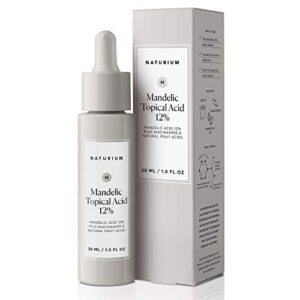
Consider this your workhorse option. At 12% mandelic acid, it’s strong enough for real exfoliation but the molecule’s size keeps penetration slow and steady—less stinging, less rebound redness.
Even so, it’s smart to patch test on your jawline first, and if irritation is a concern, pair your routine with a gentle aftershave balm formulated for sensitive young skin to soothe any post-exfoliation tightness.
Niacinamide backs it up, calming inflammation while supporting your barrier so you’re not left raw. Add sodium hyaluronate for moisture and antioxidant fruit extracts for extra polish.
It’s rated best overall for dark spot correction, and for melanated skin chasing brightness without backlash, that’s a meaningful distinction.
| Best For | Those with sensitive, dry, acne-prone, or combination skin—especially melanated skin—looking to fade dark spots and improve overall texture without harsh irritation. |
|---|---|
| Active Ingredient | 12% Mandelic Acid |
| Volume | 1 oz |
| Skin Sensitivity | Sensitive-friendly |
| Sun Protection Needed | Yes |
| Cruelty-Free | Yes |
| Recommended Use Time | PM only |
| Additional Features |
|
- Slow-penetrating 12% mandelic acid delivers real exfoliation with less stinging and rebound redness
- Niacinamide and fruit acids calm inflammation while supporting the skin barrier
- Versatile enough for the face and rough-textured body areas
- Requires diligent daily SPF use due to increased sun sensitivity
- Can leave an unpleasant cinnamon or glue-like scent
- May cause mild burning, redness, or peeling, especially with over-application
2. Mandelic and Lactic Acid Exfoliant
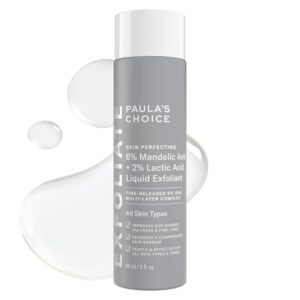
Two acids, one goal: smoother, more even-toned skin without the drama. This weightless liquid exfoliant pairs 6% mandelic acid with 2% lactic acid, using time-released technology so potency builds gradually instead of all at once.
The formula sits in a pH range of 3.0 to 4.0—technical, sure, but it’s what keeps the acids active without tipping into harshness. Yarrow and cherry blossom extracts round things out, calming skin while it resurfaces. Fragrance-free, barrier-conscious, and genuinely gentle enough for reactive skin types.
| Best For | This exfoliant is best for those with sensitive or reactive skin who want to fade discoloration, smooth texture, and soften fine lines without a harsh routine. |
|---|---|
| Active Ingredient | 6% Mandelic + 2% Lactic |
| Volume | 3 fl. oz. |
| Skin Sensitivity | Sensitive-friendly |
| Sun Protection Needed | Yes |
| Cruelty-Free | Not specified |
| Recommended Use Time | Not specified |
| Additional Features |
|
- Time-released lactic acid technology delivers exfoliation gradually, minimizing irritation
- Antioxidant-rich yarrow and cherry blossom extracts help calm skin and support the barrier
- Fragrance-free formula suitable for sensitive skin types
- Liquid format requires careful, controlled application to avoid uneven use
- AHAs can increase sun sensitivity, requiring diligent SPF use
- Not ideal for those seeking an intense, fast-acting exfoliation
3. Versed Skin Refine Pore Clearing Serum
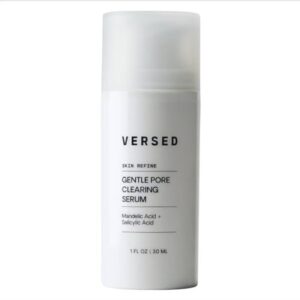
Pores acting like tiny magnets for oil and grime? This serum experiences that head-on with 8% mandelic acid plus 0.2% salicylic acid, so it’s exfoliating skin’s surface while also clearing out what’s clogging pores from within.
Willow bark extract adds a gentle, botanical salicylate boost, and glycerin keeps things hydrated throughout. It’s fragrance-free and formulated without parabens or sulfates—solid for daily use if your skin’s oily or congestion-prone, though you’ll still want to ease in gradually.
| Best For | People with oily or congestion-prone skin who want smoother texture and fewer clogged pores without dealing with parabens, sulfates, or synthetic fragrances. |
|---|---|
| Active Ingredient | 8% Mandelic + 0.2% Salicylic |
| Volume | 30 ml / 1 fl oz |
| Skin Sensitivity | Depends on individual |
| Sun Protection Needed | Yes |
| Cruelty-Free | Not specified |
| Recommended Use Time | Daily |
| Additional Features |
|
- Combines mandelic and salicylic acid to exfoliate the surface while clearing out clogged pores
- Willow bark and glycerin help balance exfoliation with hydration, so skin doesn’t feel stripped
- Clean formula (no parabens, silicones, sulfates, or synthetic fragrances) makes it a good fit for sensitive routines
- The acid blend increases sun sensitivity, so daily SPF becomes a must
- New users should introduce it gradually rather than applying daily right away
- Dermatologist-tested doesn’t guarantee compatibility—those with reactive or very sensitive skin should patch test first
4. Good Molecules Mandelic Acid Serum
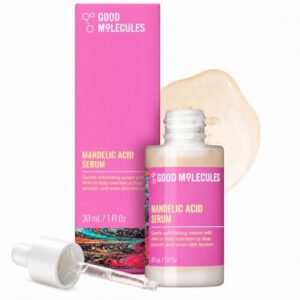
Budget-conscious skin care can still be smart skin care. This water-based formula pairs 10% mandelic acid with gluconolactone (a gentler polyhydroxy acid) and phytic acid for mineral-chelating brightness support.
Dimethyl isosorbide boosts penetration, while allantoin calms things down mid-exfoliation. No added fragrance or dye, either—a plus if your skin flags easily. Great entry point for melanated, oily, or combination skin wanting texture refinement without the sting.
| Best For | This serum is best for anyone on a budget who wants gentle, effective exfoliation, especially those with sensitive, melanated, oily, or combination skin dealing with bumpiness, dry patches, or uneven tone. |
|---|---|
| Active Ingredient | 10% Mandelic + Phytic + Gluconolactone |
| Volume | 30 ml / 1 oz |
| Skin Sensitivity | Sensitive-friendly |
| Sun Protection Needed | Not specified |
| Cruelty-Free | Yes |
| Recommended Use Time | Up to 4x/week PM |
| Additional Features |
|
- Triple peeling acid blend (mandelic, phytic, and gluconolactone) resurfaces skin while remaining gentle enough for sensitive types
- Dual-weight hyaluronic acid delivers both immediate and long-lasting hydration
- Fragrance-free and dye-free formula, lightweight and non-greasy for easy daily wear
- Requires layering with a moisturizer or oil afterward, adding a step to your routine
- Limited to four uses per week in the evening, so results build gradually
- Patch testing is recommended first, meaning it’s not an immediate grab-and-go product
5. Mandelic Acid Hyaluronic Acid Serum
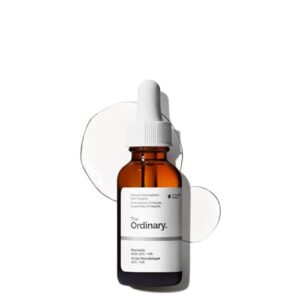
Exfoliation without the tightness—that’s the sell here. This one pairs mandelic acid with hyaluronic acid, which grabs water and plumps skin within minutes, offsetting the dryness acids sometimes cause.
Airless pump packaging keeps both ingredients stable, and the water-based, non-comedogenic formula plays nice with normal-to-oily skin. For melanated tones managing post-inflammatory hyperpigmentation, that hydration cushion matters: dry, stressed skin is more reactive, and reactive skin pigments easier. Start at 2–3 nights weekly.
| Best For | People with sensitive or melanin-rich skin who want gentle exfoliation and extra hydration in their evening routine. |
|---|---|
| Active Ingredient | Mandelic Acid |
| Volume | 1 fl oz |
| Skin Sensitivity | Sensitive-friendly |
| Sun Protection Needed | Yes |
| Cruelty-Free | Not specified |
| Recommended Use Time | PM only |
| Additional Features |
|
- Mandelic acid offers gentle AHA exfoliation without harsh irritation
- Hyaluronic acid delivers hydration that helps offset dryness from acids
- Tasmanian Pepperberry extract soothes and calms reactive skin
- Requires daily sunscreen use due to increased sun sensitivity
- Water-based formula may feel light and require layering for very dry skin
- Limited to once-daily evening use, so results build gradually
6. Allies of Skin Mandelic Night Serum
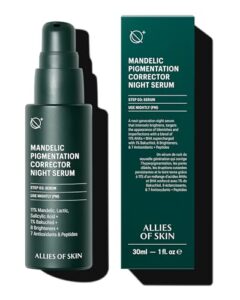
If your skin wants more than exfoliation—think firming, brightening, texture repair, all at once—this is the overachiever of the bunch. Mandelic, lactic, and salicylic acids work multiple layers, while tranexamic acid and niacinamide tag-team pigment and barrier support. Bakuchiol adds retinol-like renewal without the flaking.
It’s a lot of actives in one bottle, so patch test first and ease in gradually. For melanated skin managing stubborn discoloration, this multi-tasking formula covers a lot of ground in one nightly step.
| Best For | Anyone dealing with pigmentation, dullness, and early signs of aging who wants a multi-tasking nighttime treatment that exfoliates, brightens, and firms in one step. |
|---|---|
| Active Ingredient | 11% Mandelic + Lactic + Salicylic |
| Volume | 1 oz |
| Skin Sensitivity | Prone to imperfections |
| Sun Protection Needed | Yes |
| Cruelty-Free | Yes |
| Recommended Use Time | Nightly only |
| Additional Features |
|
- Blends 11% Mandelic, Lactic, and Salicylic acids to exfoliate on multiple levels while improving texture and pore appearance
- Combines Bakuchiol, Niacinamide, and Hyaluronic Acid for retinol-like renewal without the irritation of traditional retinol
- Free from silicones, sulfates, and phthalates, and both dermatologist-tested and cruelty-free
- High concentration of actives means it needs a patch test and gradual introduction to avoid irritation
- Strictly a nighttime product, so it requires careful sequencing with other steps in your routine
- AHA content increases sun sensitivity, making daily SPF use essential
How Mandelic Acid Fades Dark Spots

So how does this bitter almond derivative actually erase those stubborn dark marks? It’s not magic, it’s chemistry working on a few different fronts at once. Here’s what’s happening under the surface, one mechanism at a time.
Tyrosinase Inhibition
Chemistry explains why this works: mandelic acid inhibits tyrosinase, the copper-dependent enzyme driving melanin biosynthesis. Rather than physically scrubbing pigment away, it dials down production at the source—similar to turning down a faucet instead of mopping the floor.
Mandelic acid inhibits tyrosinase to slow melanin production at the source, like turning down a faucet instead of mopping the floor
Inhibition patterns vary (competitive vs. non-competitive, mushroom vs. human tyrosinase), but the practical takeaway stays simple: less enzyme activity means less new pigment forming in melanin-rich, dark skin tones.
Post-acne Marks
Here’s where that enzyme-throttling matters most: postinflammatory hyperpigmentation, not true scarring. Dark skin tones overproduce melanin after any inflammation—acne included—leaving brown marks that outlast the actual pimple.
Mandelic acid combats this through gentle resurfacing. Quick distinctions:
- Hyperpigmentation = flat, brown, pigment-only
- Keloid scars = raised, spreading
- Atrophic scars = pitted, textural
- UV exposure worsens all pigment marks
Melasma Discoloration
Melasma plays by different rules than a stray pimple mark. It shows up in symmetry patterns—matching patches on both cheeks—and can sit epidermal (crisp, dark brown) or dermal (blurrier, blue-grey).
Triggers include hormones and visible light triggers like blue light from screens, not just sun. Mandelic acid helps calm pigment production, though melasma often needs longer, more patient management.
Uneven Tone
Ever notice how discoloration rarely shows up as one uniform shade? That’s melanin distribution doing its own thing—patchy from sun exposure, old breakouts, or just genetics.
Mandelic acid helps with cell turnover consistency, gently resurfacing skin so pigment fades evenly. For darker skin tones especially, that gradual rhythm matters: slow, steady exfoliation smooths tone without provoking the very inflammation that worsens hyperpigmentation in the first place.
Surface Pigment Removal
Think of dark spots sitting like dust on a shelf—mandelic acid wipes the surface clean through epidermal layer exfoliation, speeding keratin turnover rates.
Here’s what happens:
- Loosens dead, pigmented cells
- Boosts surface desquamation
- Improves light reflection uniformity
- Acts as a pigmentation corrector
- Exfoliates and brightens skin
Pair it with post-exfoliation barrier support (hello, moisturizer) and you’ve got real progress against hyperpigmentation in darker skin tones.
Choosing The Right Formula
Not every mandelic acid product is built the same, and picking the right one comes down to your skin’s specific needs. Concentration, added ingredients, and what your skin can actually tolerate all matter here. Let’s break down what to look for before you buy.
Growing a beard too? Ask your doctor about minoxidil first, then pick non-comedogenic beard growth products that won’t clog your pores.
Best Concentration Range
Sweet spot? 5% to 10% mandelic acid for most melanin-rich skin. Start low, let your skin build tolerance over weeks, then climb if needed.
Remember, concentration isn’t the whole story—pH matters just as much. A well-formulated 8% can outperform a poorly balanced 12%. Go slow, protect your barrier, and let results (not impatience) guide your next step up.
Sensitive Skin Formulas
Reactive, easily-irritated skin needs backup, not just a gentle AHA. Look for barrier repair lipids like ceramides alongside squalane, plus hydrating humectants (glycerin, hyaluronic acid) to offset mandelic acid’s exfoliation.
Soothing anti-inflammatories—niacinamide, aloe, colloidal oatmeal—calm reactivity before it starts. Choose fragrance-free formulations with gentle preservation methods (potassium sorbate over harsh alternatives). For melanated skin tones prone to hyperpigmentation from irritation, this combo keeps mandelic acid effective without triggering the very inflammation you’re trying to avoid.
Oily and Acne-prone Skin
Shiny by noon, breaking out by evening — sound familiar? Oily, acne-prone skin needs mandelic acid’s antibacterial punch alongside sebum regulation, without stripping the barrier and triggering rebound irritation.
- Look for niacinamide (oil control)
- Zinc PCA (sebum reduction)
- Salicylic acid pairing (pore congestion)
- Lightweight, non-comedogenic textures
- Alcohol-free bases (barrier protection)
This combo curbs acne lesion triggers while calming hyperpigmentation in melanated skin tones.
Hydrating Ingredients
Here’s the thing about acids: they exfoliate, but they don’t hydrate. That’s on you to layer in.
Look for hyaluronic acid (a humectant pulling water into skin) plus glycerin or panthenol for soothing moisture support. Ceramides help lock it in via barrier lipid retention. A lightweight gel emollient finishes things off without clogging pores — smart hydration layering keeps melanin-rich skin calm during gentle exfoliation.
Ingredients to Avoid
Now flip the script: what your mandelic acid product shouldn’t contain. Fragrance sensitizers and essential oils can trigger irritation. Skip harsh sulfates and drying alcohols in your cleanser—they strip barrier lipids while acid exfoliates.
Avoid stacking bleaching agents or aggressive acid layering (glycolic plus mandelic plus retinoid) on melanin-rich skin. Simpler formulas prevent irritation better than "more active" ones.
Safe Use for Melanated Skin
Picking the right product is only half the job—how you use it matters just as much, especially with skin that scars and pigments easily. Melanated skin can absolutely handle mandelic acid, but it plays by its own set of rules. Here’s exactly how to introduce it without any drama.
Patch Testing First
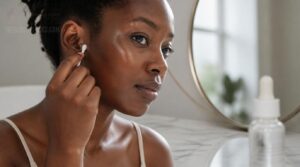
Patch test before you commit. Dab the mandelic acid on your jawline or behind your ear for a few days, watching for redness or itching that stays put.
- Testing location: jawline or behind the ear
- Wait time: 48 hours, plus a follow-up check
- Reaction signs: bumps, swelling, or blistering
Melanin-rich skin can mask early irritation, so consistency matters more than speed here.
Nighttime Application

Once your patch test clears, save mandelic acid for nighttime. Overnight contact time lets exfoliation work while you sleep, undisturbed by sunlight or makeup.
Layer smart: hydrating serum first, mandelic acid second, then a nighttime moisturizer to seal it all in. This barrier support prevents the dryness that flares dark marks. Stagger retinoids or other actives to separate nights—your skin (and your dermatologist) will thank you.
Weekly Starting Frequency
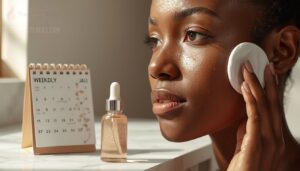
Once a week is plenty to start. Give your skin seven days between applications so you can watch how it responds—any stinging or redness means dial back further.
Once you’re tolerating weekly use with zero drama, gradually nudge frequency upward. Rushing this stage disrupts your skin barrier, and melanin-rich skin punishes barrier damage with extra pigmentation.
SPF 30 Daily
Skip sunscreen and all that mandelic acid exfoliation just backfires—freshly exfoliated skin sunburns faster and darkens easier.
You need broad spectrum SPF 30, blocking both UVB (burning) and UVA (aging, pigment-worsening) rays. Choose mineral or chemical filters, whichever feels non-greasy on you. Look for non-comedogenic, moisturizing formulas with hydrating filters.
This isn’t optional—it’s what protects your hard-won results from sun sensitivity and rebound pigmentation.
Over-exfoliation Warning

More is not always better—especially with melanated skin, where over-exfoliation backfires fast. Watch for burning, persistent redness, or a tight, papery feel; these signal barrier damage.
Dehydration, sudden breakouts, and worsening dark spots often follow. Your skin barrier needs recovery time between chemical exfoliation sessions. If irritation shows up, pause mandelic acid entirely until things calm down—your skin will thank you.
Frequently Asked Questions (FAQs)
Is mandelic acid good for dark skin?
Big molecule, big benefits: larger AHA size means slower penetration, less melanocyte activation, and lower erythema risk.
That’s exactly why dermatologists call it a smart, gentle dark skin exfoliation choice—effective pigmentation corrector, minus the angry red aftermath other acids can trigger.
Can I use mandelic acid while pregnant?
Generally yes, at low strength—fetal safety research is limited, but its slower absorption means minimal systemic absorption. Still, hormonal skin reactivity varies, so patch test first and get obstetrician consultation before adding it to your skincare routine.
Is mandelic acid safe with tree nut allergies?
Since it’s derived from bitter almonds, tree-nut allergy sufferers should proceed cautiously—true IgE reactions are rare, but irritation isn’t. Patch test first, and loop in your dermatologist or allergist before trying it on melanin-rich, sensitive skin.
Can mandelic acid be combined with retinoids?
Absolutely, like pairing peanut butter and jelly—when done right. Use mandelic acid mornings, retinol at night, or alternate nights entirely. This layering schedule prevents overlap, protects your skin barrier, and minimizes irritation risk.
How long until I see visible results?
Patience pays off here: expect smoother texture within 1-2 weeks, but real pigment fading takes 4-8 weeks. Deeper spots and melasma need 3-6 months. Daily SPF and steady use speed things along considerably.
Can I use mandelic acid as a rinse-off treatment?
Rinsing works, washing off wisely reduces irritation risk. Apply to clean skin, leave briefly, then rinse thoroughly with lukewarm water—controlled contact time limits sensitivity while still delivering exfoliation benefits for melanin-rich, easily reactive skin.
Conclusion
Think of your skin like a garden that’s been over-watered by harsh acids—it needs patience, not force, to bloom evenly.
That’s the quiet power of a mandelic acid exfoliant dark skin can actually trust: slow, steady, science-backed fading instead of another flare-up.
Start low, go slow, and pair it with SPF daily. Clear, even tone isn’t luck. It’s consistency and patience, paired with the right formula for your unique skin.