This site is supported by our readers. We may earn a commission, at no cost to you, if you purchase through links.
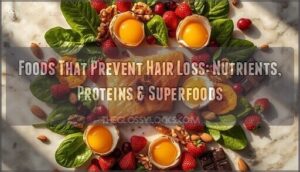
Your hairbrush tells a story you’d rather not read. When shedding crosses from normal into alarming territory, your first instinct might be to blame stress or genetics—and you’re partly right. But here’s what catches most people off guard: the same plate that fuels your energy also determines whether your hair follicles thrive or quietly shut down.
Iron deficiency alone can trigger telogen effluvium, a condition where follicles prematurely enter their resting phase. Low zinc levels have been directly linked to worsening alopecia areata, while vitamin D below 30 ng/mL correlates with earlier onset of pattern baldness. The connection between what you eat and what remains on your head isn’t just correlation—it’s biochemistry.
Certain foods deliver the precise nutrients your follicles need to maintain their growth cycle, reduce inflammation, and resist the hormonal shifts that miniaturize hair over time.
Table Of Contents
- Key Takeaways
- Common Causes of Hair Loss
- Essential Nutrients for Hair Health
- Protein-Rich Foods That Prevent Hair Loss
- Top Vegetables, Fruits, and Greens for Hair
- Nuts, Seeds, and Superfoods for Hair Growth
- Frequently Asked Questions (FAQs)
- What foods stop hair falling?
- What are the big 3 to prevent hair loss?
- What to drink to stop hair loss?
- Which vitamin stops hair fall?
- How fast do dietary changes affect hair?
- Can supplements replace food for hair health?
- Does caffeine impact hair growth?
- Are fermented foods beneficial for hair?
- Can intermittent fasting prevent hair loss?
- Can drinking more water improve hair thickness?
- Conclusion
Key Takeaways
- Hair loss stems from nutritional deficiencies—iron below 30–40 μg/L ferritin, zinc shortages, and vitamin D under 30 ng/mL all disrupt follicle growth cycles and trigger shedding you can reverse through targeted diet changes.
- Protein-rich foods like salmon, eggs, lentils, and lean meats deliver the complete amino acids and omega-3 fatty acids your follicles need to build keratin and reduce inflammation-driven hair loss.
- Antioxidant-packed produce—especially leafy greens, berries, and colorful vegetables—protects follicles from oxidative stress while vitamins C and E boost collagen synthesis and iron absorption for stronger strands.
- Dietary improvements take 3–6 months to show visible hair regrowth, but you’ll notice reduced shedding within 4–8 weeks once you correct deficiencies in iron, zinc, biotin, and B vitamins through whole foods.
Common Causes of Hair Loss
Hair loss affects nearly half of all adults by age 50, but understanding what’s behind it can help you take control. From the genes you inherit to what’s missing from your plate, multiple factors play a role in thinning hair.
Let’s look at the most common culprits driving hair loss and what they mean for your nutrition strategy.
Genetic Factors and Hormonal Imbalances
Heredity steers hair loss more than you might think—twin studies show genetics account for about 80% of androgenetic alopecia risk. Your hormone regulation also plays a role, with androgen sensitivity driving follicle health changes at the scalp. Consider how these factors interact:
Genetics account for about 80% of pattern baldness risk, with androgen sensitivity driving follicle changes at the scalp
- Genetic predisposition shapes your susceptibility to pattern baldness
- Androgen sensitivity miniaturizes hair follicles over time
- Menopause effects shift estrogen-androgen balance, thinning hair
- Deficiencies in vitamin D, omega-3 fatty acids, biotin, zinc, and iron can worsen hormonally driven loss.
Understanding the genetic variants of autoimmune diseases can provide insight into hair loss prevention.
Nutritional Deficiencies (Iron, Zinc, Vitamins)
While genetic factors set the stage, nutritional deficiencies often push hair loss into overdrive. Iron deficiency disrupts follicle DNA synthesis, triggering telogen effluvium—a 2,851-woman review found low ferritin in most cases. Zinc supplements can reverse alopecia areata severity, and vitamin D levels below 30 ng/mL correlate with premature androgenetic alopecia. Vitamin B12, biotin, omega-3 fatty acids, and mineral imbalance all compromise nutrient absorption, weakening your hair from the root. Understanding the role of zinc deficiency is essential in addressing hair loss conditions.
Thyroid Disorders and Autoimmune Conditions
Your thyroid hormone levels directly control hair growth cycles. Even mild T3 or T4 shifts disrupt anagen, causing telogen effluvium.
Between 8% and 28% of hair-loss patients have thyroid dysfunction, and autoimmune reactions like Hashimoto’s or alopecia areata often co-occur, with shared immune pathways attacking follicles.
Correcting nutrient deficiency—especially selenium, zinc, and vitamin D—stabilizes thyroid function and aids hair regrowth, offering real hope for thyroid-related hair loss prevention.
Essential Nutrients for Hair Health
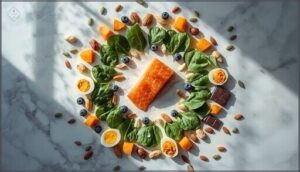
Your body needs specific building blocks to grow strong, resilient hair—and without them, even the healthiest follicles struggle to keep up. While hair loss has many causes, certain nutrients play an outsized role in keeping your strands anchored and thriving.
Let’s break down the key players that deserve a spot on your plate.
Iron and Its Role in Hair Growth
Your hair follicles are tiny protein factories that work overtime during the anagen phase—and they need iron to keep churning. When ferritin levels dip below 30–40 μg/L, your follicles can’t sustain that growth sprint, triggering shedding months later.
Iron supplementation and nutrient-rich foods like lean meats restore those reserves, giving your hair the fuel it needs for hair loss prevention.
Omega-3 Fatty Acids for Scalp Nourishment
Omega-3 fatty acids are your scalp’s best defense against inflammation and sluggish follicles. In one six-month trial, women taking omega-3 and omega-6 supplements saw measurably thicker hair and less shedding—nearly 90% reported visible improvements in hair density.
To tap into these fatty acid benefits, focus on:
- Salmon, mackerel, and sardines twice weekly for scalp health and natural fish oil effects
- Omega-3 supplements (1,000–1,500 mg EPA+DHA daily) if your diet falls short
- Flaxseeds and chia seeds as nutrient-rich foods packed with antioxidants and plant-based omega-3 fatty acids
Give it three to six months—hair growth doesn’t happen overnight.
Zinc, Biotin, and B Vitamins
Your body can’t manufacture zinc, biotin, or B vitamins on its own, so you need them from food or biotin supplements.
Zinc deficiency appears in up to 20% of women with hair loss, lowering hair follicles’ ability to cycle properly. Meanwhile, vitamin B12 and biotin support nutrient absorption and cell turnover—when levels drop, shedding accelerates.
Correct any vitamin deficiency through diet or targeted supplementation.
Antioxidants and Vitamin C
Free radical damage accelerates hair follicle aging, but antioxidants—especially vitamin C—counter oxidative stress by neutralizing reactive oxygen species. Studies show people with the highest antioxidant intake had 22% lower odds of androgenetic alopecia.
Load your plate with:
- Red bell peppers (190 mg vitamin C per cup)
- Strawberries and citrus fruits
- Broccoli and kale
- Papaya
- Omega-3 fatty acids from fatty fish
Antioxidant-rich foods protect follicle cells and support collagen synthesis for healthier hair.
Protein-Rich Foods That Prevent Hair Loss
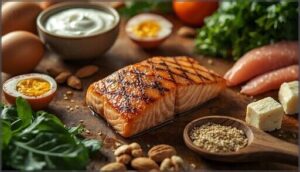
Your hair is built from protein, so getting enough of it isn’t optional—it’s the foundation. Without adequate protein in your diet, your body can’t produce the keratin strands that make up each hair shaft, and you’ll see more shedding and slower regrowth.
Let’s look at the protein-rich foods that can help you hold onto a healthy head of hair.
Lean Meats and Seafood
When you’re trying to stop hair loss, lean meats and seafood deliver some of the most powerful nutrients you can eat. Salmon and other omega-rich foods provide omega-3 fatty acids that nourish your scalp, while lean meat diets supply complete protein your follicles need to build strong keratin.
Seafood nutrition shines with zinc from oysters and highly absorbable iron from red meat—fish oil benefits include reduced shedding and improved density.
Plant-Based Protein Sources (Lentils, Beans, Quinoa)
If you’re following plant-based diets, lentils, beans, and quinoa deliver complete protein your hair needs to thrive. Lentil benefits include 9 grams of protein per 100 grams—that’s 18% of your daily target—plus iron to prevent shedding.
Bean nutrition adds zinc for repair, while quinoa protein supplies all nine essential amino acids.
These nutrient-rich foods and antioxidant-rich foods support keratin synthesis, making legume recipes a smart, protein-rich choice for stronger strands.
Top Vegetables, Fruits, and Greens for Hair
You don’t need supplements or fancy treatments to give your hair what it needs—the produce aisle is packed with powerful options. Vegetables, fruits, and greens deliver iron, vitamins, and antioxidants that support healthy hair growth from the inside out.
Here’s what you should add to your plate.
Leafy Greens (Spinach, Kale, Broccoli)
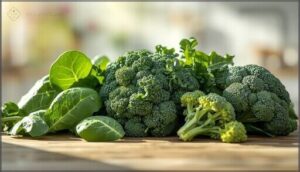
Think of spinach, kale, and broccoli as your scalp’s personal nutrition team. These green superfoods pack iron, protein, and antioxidants that fuel hair follicle health from the inside out.
Spinach delivers nearly half your daily folate needs, while broccoli’s vitamin C boosts iron absorption—critical for preventing shedding.
Kale’s nutrient-dense profile nourishes scalp nutrition, giving you stronger strands with every bite.
Colorful Vegetables (Carrots, Brussels Sprouts)
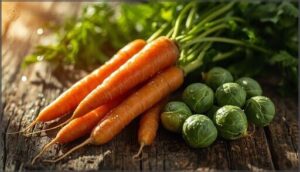
Orange and vibrant vegetables like carrots and Brussels sprouts deliver powerful carotenoid benefits and phytochemical role support for your hair. Carrots provide beta-carotene for vitamin A balance—supporting healthy follicles without toxicity risk—while Brussels sprouts pack vitamins C and K to boost collagen and iron absorption. Their micronutrient density and antioxidant effects combat inflammation and oxidative stress linked to hair loss.
Why these nutrient-rich foods work:
- Carrots supply 57% daily vitamin A from beta-carotene per serving
- Brussels sprouts deliver 81% daily vitamin C for collagen synthesis
- Antioxidant-rich foods reduce follicle miniaturization and shedding
- Vitamin balance matters—food sources beat high-dose supplements
- Phytochemical compounds fight scalp inflammation naturally
Fruits and Berries (Berries, Guava, Mango, Oranges)

Berries, guava, mango, and oranges deliver concentrated vitamin C and antioxidants that protect your hair follicles from oxidative damage. Strawberries supply 65% of daily vitamin C needs, while guava packs over 200%—both fueling collagen production for stronger strands.
Mango’s provitamin A aids scalp keratinization, and orange juice enhances iron absorption to reduce shedding.
These nutrient-rich foods offer natural fruit therapy against hair loss.
Nuts, Seeds, and Superfoods for Hair Growth
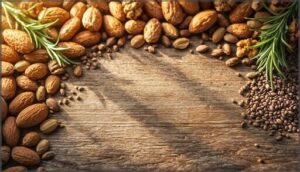
When you think about hair-healthy foods, nuts and seeds mightn’t be the first things that come to mind—but they’re loaded with biotin, vitamin E, and essential fatty acids that your scalp craves.
These small but mighty foods pack a serious nutritional punch, delivering the building blocks your hair needs to grow strong and resilient.
Let’s look at which ones deserve a spot in your daily routine.
Almonds, Walnuts, and Sunflower Seeds
Grab a handful of almonds, walnuts, or sunflower seeds—you’re feeding your follicles powerful nutrient-rich foods packed with antioxidants and essential fatty acids. These protein-rich foods deliver scalp health benefits you can measure:
- Almonds provide biotin and vitamin E, protecting hair from oxidative stress
- Walnuts supply omega-3 fatty acids that improve hair density
- Sunflower seeds offer 50% of your daily vitamin E for antioxidant-rich follicle support
Chia Seeds and Flaxseeds
Flaxseed oil and chia seeds deliver omega-3 fatty acids that calm scalp inflammation and boost hair density. Flaxseeds pack lignans that may lower DHT levels tied to hair loss, while chia seed recipes can supply over 5 grams of ALA per serving.
These antioxidant-rich and protein-rich foods support follicle nourishment, with visible hair growth tips emerging in 8–12 weeks when you consume 1–2 tablespoons daily.
Whole Grains and Brown Rice
Swap refined carbs for whole grains and brown rice to tap into a powerhouse of B vitamins, iron, and zinc that fuel hair follicle activity. Brown rice retains its bran and germ, delivering vitamin E and antioxidants that protect your scalp from oxidative stress and support new hair growth.
- Fortified whole-grain cereals provide 4–18 mg of iron per serving, addressing deficiency-linked shedding
- Brown rice supplies ferulic acid and gamma-oryzanol to neutralize follicle-damaging free radicals
- Whole wheat flour offers thiamin, riboflavin, niacin, and B6 for cellular energy production
- Fiber benefits include improved nutrient absorption and metabolic stability for hair health
- One clinical trial showed wheat polar lipids reduced telogen shedding and boosted anagen hair in 84 days
Frequently Asked Questions (FAQs)
What foods stop hair falling?
Ironically, the solution to thinning hair isn’t hiding in expensive bottles—it’s sitting on your dinner plate. Protein-rich foods like eggs, salmon, and lentils supply keratin your follicles desperately need, while leafy greens deliver iron to stop shedding.
What are the big 3 to prevent hair loss?
The big 3 for Hair Loss prevention are Finasteride Benefits, Minoxidil Therapy, and Ketoconazole Effects—pharmacologic Scalp Treatment Options that target different mechanisms to promote Hair Regrowth Tips and improve Hair Growth outcomes.
What to drink to stop hair loss?
You can support your hair with nutrient-dense beverages rich in vitamin D, iron, and collagen peptides.
Green tea offers antioxidants, while omega-3 and vitamin C drinks help your body absorb micronutrients essential for growth.
Which vitamin stops hair fall?
No single vitamin universally stops hair fall, but correcting deficiencies in vitamin D, biotin, and B vitamins can improve growth.
Vitamin E therapy and antioxidant effects from vitamin C also support healthier follicles.
How fast do dietary changes affect hair?
Like waiting for dial-up internet, hair regrowth timeline from dietary changes isn’t instant. You’ll notice reduced hair shedding rate within 4–8 weeks after correcting nutrient deficiency, but visible improvement in hair growth usually takes 3–6 months.
Can supplements replace food for hair health?
Dietary supplements can fill specific nutrient gaps when deficiencies exist, but they can’t replicate whole foods’ synergistic compounds, bioavailability factors, and antioxidants that collectively support hair follicle health and prevent hair loss effectively.
Does caffeine impact hair growth?
There’s more than meets the eye regarding caffeine and your hair. Research shows topical caffeine stimulates hair follicles, prolongs growth phases, and boosts scalp health—promising findings from caffeine research on hair loss prevention.
Are fermented foods beneficial for hair?
Yes—fermented foods like kimchi, kefir, and sauerkraut deliver probiotics that support the gut-hair axis, boost nutrient-rich foods absorption, and may improve hair growth through microbiome balance and reduced inflammation.
Can intermittent fasting prevent hair loss?
Intermittent fasting may worsen hair loss by triggering stress hormones and nutrient gaps, though caloric restriction’s effects vary.
Prioritize nutrient timing and hormonal balance—adequate protein, iron, and zinc support hair regrowth during eating windows.
Can drinking more water improve hair thickness?
Adequate water intake promotes scalp circulation and hair follicle health, helping maintain strand flexibility and reducing breakage.
However, no controlled trials show that drinking more water alone directly increases hair shaft thickness or density.
Conclusion
Think of your follicles as a garden: the wrong soil yields barren ground, but the right nutrients create conditions for growth. You’ve now mapped which foods that prevent hair loss actually deliver iron, zinc, omega-3s, and antioxidants your scalp craves.
The shift from thinning to thriving doesn’t require complicated protocols—just consistent choices. Stock your kitchen with protein-rich staples, leafy greens, and superfoods. Your hairbrush will reflect the difference.