This site is supported by our readers. We may earn a commission, at no cost to you, if you purchase through links.
Your skin shouldn’t have to burn to feel “hydrated.”
If your cheeks sting after cleansing or your moisturizer leaves you red and tight, your skin isn’t fussy—it’s sending clear distress signals.
Sensitive skin loses water faster and reacts harder, so every harsh surfactant, fragrance, or extra step chips away at its barrier.
Gentle skin hydration for sensitive skin starts with calming the barrier, then feeding it water‑binding humectants and barrier‑repairing lipids instead of perfume and irritants.
When you shift from scrubbing and layering to protecting and supporting, skin often becomes quieter, softer, and far more comfortable.
Table Of Contents
- Essential Tips for Hydrating Sensitive Skin
- Choosing The Right Hydrating Products
- Top 10 Hydrating Products for Sensitive Skin
- 1. Avène Cicalfate Restorative Protective Cream
- 2. Vanicream Sensitive Skin Moisturizer Cream
- 3. First Aid Beauty Ultra Repair Cream
- 4. La Roche Posay Face Moisturizer
- 5. Yonka Sensitive Skin Redness Relief Cream
- 6. Embryolisse Lait Creme Sensitive Moisturizer
- 7. The Ordinary Hyaluronic Acid Serum B5
- 8. Vanicream Facial Moisturizer Ceramides Hyaluronic
- 9. La Roche Posay Anthelios UV Clear Sunscreen
- 10. Magic Molecule Hypochlorous Acid Spray
- Building a Gentle Hydration Routine
- Long-Term Strategies for Healthy, Hydrated Skin
- Frequently Asked Questions (FAQs)
- Is Zo skin Health good for eczema?
- How do I choose the best skin care for sensitive skin?
- What is good for severe skin sensitivity?
- What is a good moisturizer for sensitive skin?
- How do you hydrate your skin?
- Which skincare products are best for sensitive skin?
- What is the best hydrating gel for dry skin?
- What is the most gentle moisturizer for sensitive skin?
- How to hydrate extremely sensitive skin?
- What is the best moisturiser for very sensitive skin?
- Conclusion
Essential Tips for Hydrating Sensitive Skin
When your skin is easily upset, even basic hydration can feel like guesswork.
To understand sneaky triggers behind that dryness, this guide on hidden causes of poor skin hydration breaks it down.
This section will walk you through the key signs your skin is dehydrated, what commonly sets it off, and how to better understand its sensitivity. From there, you’ll be ready to make sense of the specific tips and products that follow.
Why Gentle Hydration Matters
Hydration isn’t just comfort — it’s repair. When your skin barrier weakens, lipids like ceramides and fatty acids deplete, and water escapes faster through the stratum corneum.
Hydration is not comfort — it is repair, and a weakened skin barrier loses that protection fast
That’s where gentle skincare routines make a real difference.
Humectant benefits like glycerin pull moisture inward, while occlusive protection seals it in.
Together, they support skin barrier repair, reduce inflammation, and help break the dryness‑irritation cycle for good.
Signs of Dehydrated Sensitive Skin
Your skin often signals dehydration before you notice it in the mirror. That tightness sensation after cleansing? It’s your barrier asking for support.
Watch for these telling signs:
- Flaky texture that feels rough or sandpapery
- A dull complexion with uneven tone
- Stinging reactions when applying moisturizing products
- A crepey appearance around cheeks or forehead
- Redness relief that fades too quickly after hydration
Common Triggers of Skin Irritation
Once you know what dehydration looks like, the next step is understanding what’s causing it. Sensitive skin reacts to more triggers than most people expect.
Understanding irritant contact dermatitis can help you identify hidden triggers.
| Trigger Category | Common Examples |
|---|---|
| Fragrance Irritants | Perfumed lotions, scented cleansers |
| Preservative Allergens | Parabens, formaldehyde releasers |
| Hard Water Effects | Chlorinated or chalky tap water |
| Plant Oil Reactions | Poison ivy, certain botanical extracts |
| Solvent Acid Exposure | Nail polish remover, drain cleaners |
Irritation Prevention starts with knowing your exposures. Switching to FragranceFree formulas alone can make a noticeable difference for sensitive skin.
How to Identify Your Skin’s Sensitivity Level
Not all sensitive skin reacts the same way. Reaction timing tells a lot — some people flush within minutes, while others notice redness the next morning.
A simple comfort scale rating symptoms like burning or tightness from zero to ten helps with sensitivity grading over time.
- Immediate stinging signals surface irritation
- Next-day redness suggests delayed contact sensitivity
- Persistent flaking points to barrier damage
- Localized reactions indicate formula-specific intolerance
- Consistent discomfort across products signals higher sensitivity
Dermatologist recommendations often start here — with observation before treatment.
Choosing The Right Hydrating Products
Not all moisturizers are created equal, and for sensitive skin, the wrong pick can do more harm than good.
Knowing what to look for — and what to skip — makes the difference between skin that stays calm and skin that reacts.
Here’s what to keep in mind as you choose.
Key Ingredients for Sensitive Skin Hydration
Think of your moisturizer as a repair kit for your barrier: look for a Ceramide Complex or plain Ceramides to rebuild structure, Glycerin and Hyaluronic Acid to pull in water, plus a Squalane Emollient or Squalane to seal it in.
Niacinamide soothing and Oatmeal Extract quietly calm redness, keeping your skin comfortable all day.
This simple blend provides deep hydration.
Fragrance-Free and Hypoallergenic Formulas
Although labels can feel confusing, focus on clues that matter: Regulatory labeling, Testing protocols, and clear, transparent Ingredient sourcing.
For Sensitive Skin, choose FragranceFree, Hypoallergenic Moisturizer formulas that skip perfume yet still use thoughtful Preservative choices and Barrier lipid selection.
Look for calm, simple bases, gentle preservatives, and supporting lipids rather than heavy scents, even when products highlight Natural Ingredients.
Creams Vs. Lotions for Sensitive Skin
Choosing between creams and lotions comes down to more than just texture feel — it’s about what your skin actually needs right now. Here’s how to decide:
- Occlusive Strength: Creams seal in moisture more effectively, making them better for compromised barriers.
- Seasonal Preference: Use richer creams in winter, lighter body lotions in summer.
- Ingredient Concentration: Facial moisturizers in cream form often deliver ceramides at higher levels.
- Noncomedogenic Picks: Look for this label if your sensitive skin also breaks out.
- Patch Test First: Always test new, sensitive skin‑care formulas before full application.
Top 10 Hydrating Products for Sensitive Skin
If you’re wondering what actually works on sensitive, easily irritated skin, this is where it gets practical.
Below you’ll find moisturizers, a serum, a sunscreen, and a soothing spray that prioritize barrier support and gentle hydration. Use this list as a starting point, and choose what best fits your skin’s daily needs.
1. Avène Cicalfate Restorative Protective Cream
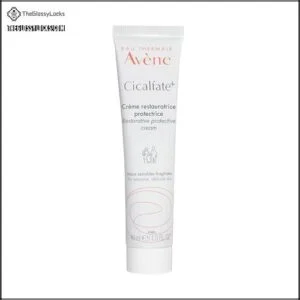
Ever wish you had a “liquid bandage” for angry, dehydrated skin?
Avène Cicalfate Restorative Protective Cream acts like that—occlusive, fragrance-free barrier cream that locks in moisture and shields against friction and cold air.
It uses Avène Thermal Spring Water plus C Restore postbiotic to calm flare‑ups, while copper and zinc sulfates keep compromised areas clean.
You can use it on face, body, intimate zones, even post‑procedure, as a night mask or daily barrier-repair moisturizer when skin feels especially fragile.
| Best For | Anyone with very dry, irritated, or sensitized skin (including eczema-prone and post-procedure skin) who wants a rich, “liquid bandage” style cream to calm, protect, and repair their barrier. |
|---|---|
| Skin Type | Sensitive, all ages |
| Fragrance Free | Yes |
| Key Benefit | Barrier restoration |
| Usage Area | Face and body |
| Paraben Free | Yes |
| Dermatologist Tested | Yes |
| Additional Features |
|
- Rich, occlusive barrier cream that locks in moisture and supports skin recovery and barrier repair.
- Gentle enough for sensitive skin, infants, children, and adults, and can be used on face, body, and even intimate or post-procedure areas.
- Versatile use as a night mask or daily moisturizer to soothe eczema, dry patches, stretch marks, and irritation.
- Texture can sometimes separate and turn watery, and may need warming or massaging to get back to a proper cream consistency.
- Rich, heavy texture is not ideal for very oily or acne-prone skin and can feel too thick for some people.
- Some users report pilling on the skin, especially when layered with other products or makeup.
2. Vanicream Sensitive Skin Moisturizer Cream
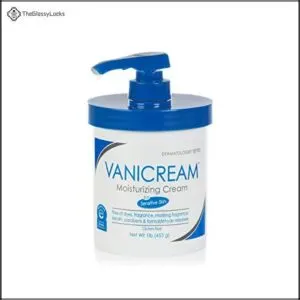
If you have reactive skin and need a no-nonsense moisturizer, Vanicream is hard to beat. It skips the common irritants—no fragrance, dyes, lanolin, parabens, or formaldehyde releasers—so your skin gets pure hydration without the guesswork.
Petrolatum and glycerin work together to seal in moisture and soften rough patches, making it ideal for eczema, psoriasis, or winter dryness.
It’s non-comedogenic, dermatologist-recommended, and earned the National Eczema Association Seal of Acceptance.
At $13.56 for 16 oz, it delivers serious barrier support without the steep price tag.
| Best For | People with sensitive, reactive, or eczema-prone skin who want a simple, fragrance-free moisturizer that hydrates deeply without clogging pores. |
|---|---|
| Skin Type | Sensitive, all ages |
| Fragrance Free | Yes |
| Key Benefit | Soothes irritation |
| Usage Area | Face and body |
| Paraben Free | Yes |
| Dermatologist Tested | Yes |
| Additional Features |
|
- Thick, smoothing cream that helps restore and maintain the skin’s moisture barrier and soothe red, irritated, or itchy patches.
- Free of common irritants like dyes, fragrance, lanolin, parabens, and formaldehyde releasers, making it a safe pick for very sensitive or reactive skin.
- Versatile and budget-friendly: non-comedogenic, dermatologist-recommended, kid-friendly, and can be used on the face, hands, feet, and body for around USD 13.56 per 16 oz.
- Thick texture can feel heavy or greasy for some skin types and may not layer well under makeup in the morning.
- Takes a minute or two to fully rub in, which might bother people who prefer fast-absorbing lotions.
- Pump can struggle to dispense product when the bottle is low, sometimes requiring you to open it and scoop the remaining cream out.
3. First Aid Beauty Ultra Repair Cream
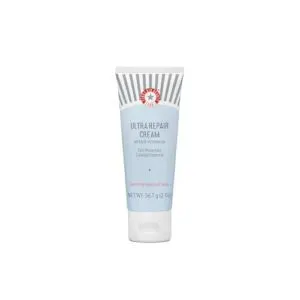
First Aid Beauty Ultra Repair Cream as a soft blanket for your skin on its worst days. This fast-absorbing, whipped formula uses colloidal oatmeal to calm itching, while shea butter, ceramide 3, glycerin, and dimethicone restore and seal in moisture for up to 24 hours.
It’s fragrance-free, non-comedogenic, and gentle enough for eczema-prone, red, or post‑treatment skin on both face and body.
At about 16.20 USD for 2 oz, it’s a focused, reparative treat during flares and winter.
| Best For | Anyone dealing with dry, sensitive, or eczema-prone skin who needs serious hydration without any irritating ingredients. |
|---|---|
| Skin Type | All skin types |
| Fragrance Free | Yes |
| Key Benefit | 24hr hydration |
| Usage Area | Head to toe |
| Paraben Free | Yes |
| Dermatologist Tested | Yes |
| Additional Features |
|
- Absorbs fast despite the rich, whipped texture — no heavy, greasy feeling
- Colloidal oatmeal actually soothes irritation, not just masks it
- Works head-to-toe, so one jar pulls double duty for face and body
- At $16.20 for just 2 oz, you’ll burn through it quickly if you use it all over
- Can leave a slight film on skin, which not everyone loves
- Results vary — some users won’t see the same dramatic hydration boost others do
4. La Roche Posay Face Moisturizer
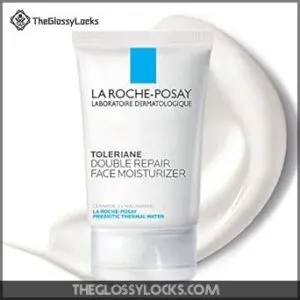
If First Aid Beauty is your flare-day rescue, La Roche-Posay Toleriane is your everyday anchor.
Priced at $24.99, this dermatologist-favorite face moisturizer delivers 48-hour hydration through a smart blend of ceramides, niacinamide, and glycerin — ingredients that actively repair your skin barrier rather than just sit on top of it.
It’s fragrance-free, fast-absorbing, and microbiome-balancing, which makes it genuinely suitable for reactive skin.
It layers cleanly under makeup without pilling, so your morning routine stays simple and calm.
| Best For | Anyone with sensitive or reactive skin who wants a reliable, no-fuss daily moisturizer that works under makeup and won’t cause irritation. |
|---|---|
| Skin Type | All skin types |
| Fragrance Free | Yes |
| Key Benefit | 48hr moisture |
| Usage Area | Face and neck |
| Paraben Free | Yes |
| Dermatologist Tested | Yes |
| Additional Features |
|
- Delivers real 48-hour hydration with ceramides and niacinamide that actually repair your skin barrier
- Lightweight and fast-absorbing — layers cleanly under makeup and sunscreen without pilling
- Fragrance-free and microbiome-balancing, making it a safe bet for all skin types, including sensitive skin
- May not cut it for very dry skin on its own — you might need a heavier moisturizer on top
- The lid doesn’t self-clean, so it can get a little grimy over time
- At $24.99, it’s on the pricier side for a daily moisturizer, though most users feel it’s worth it
5. Yonka Sensitive Skin Redness Relief Cream
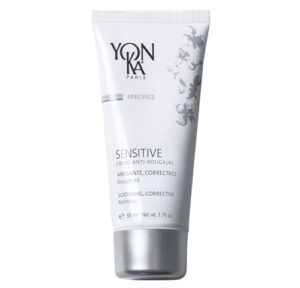
When La Roche-Posay is your daily staple, Yonka Sensitive Skin Redness Relief Cream is more like a targeted treatment.
This fragrance-free cream uses centella asiatica, Marvel of Peru, bisabolol, and rosemary extract to calm flushing and support fragile capillaries, while green mineral pigments visibly mute redness and rosacea flare‑ups.
It moisturizes with sunflower seed oil and a soft, non‑greasy finish.
At 62.40 USD and 1.76 ounces, it’s a splurge, and some users find it underwhelming for persistent redness‑prone sensitive skin.
| Best For | Those with sensitive, rosacea-prone skin who want a targeted treatment to calm redness and even out their complexion. |
|---|---|
| Skin Type | Sensitive, reactive |
| Fragrance Free | Yes |
| Key Benefit | Redness relief |
| Usage Area | Face |
| Paraben Free | Not specified |
| Dermatologist Tested | Not specified |
| Additional Features |
|
- Fragrance-free formula with skin-soothing ingredients like centella asiatica and bisabolol
- Green mineral pigments help visibly neutralize redness on the spot
- Works double duty as both a skincare treatment and a color corrector
- At $62.40 for 1.76 oz, it’s a steep price for results that aren’t guaranteed
- Some users found it absorbed poorly and didn’t moisturize as well as expected
- Doesn’t work for everyone — a few with sensitive skin saw little to no improvement
6. Embryolisse Lait Creme Sensitive Moisturizer
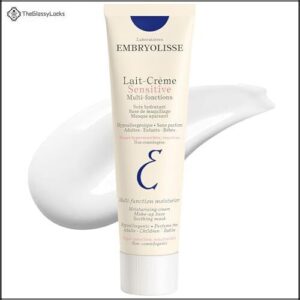
While Yonka focuses on redness relief, Embryolisse Lait Creme Sensitive is your everyday comfort blanket.
This hypoallergenic, fragrance‑free cream uses 98 percent naturally derived ingredients, including soothing aloe vera, shea butter, and soy proteins, to hydrate without upsetting reactive skin.
Glycerin and jojoba esters attract and hold water, while beeswax adds a light protective barrier.
The creamy milk texture spreads easily on face and neck, sinks in fast, and doubles as daily moisturizer, makeup base, or gentle baby‑safe care too.
| Best For | people with sensitive, reactive, or combo skin who want a gentle, fragrance‑free daily moisturizer that can double as a makeup base and all‑purpose cream for face and body. |
|---|---|
| Skin Type | All skin types |
| Fragrance Free | Yes |
| Key Benefit | Deep moisturization |
| Usage Area | Face and body |
| Paraben Free | Yes |
| Dermatologist Tested | Yes |
| Additional Features |
|
- Hypoallergenic and fragrance‑free formula that hydrates without triggering irritation or breakouts.
- Super versatile: works as a daily moisturizer, makeup primer, light mask, or even gentle baby‑safe care.
- Creamy milk texture that spreads easily, sinks in fast, and comes in eco‑conscious recyclable aluminum packaging.
- May feel too lightweight for very dry or mature skin that needs a richer, heavier cream.
- Not targeted for specific concerns like acne, hyperpigmentation, or fine lines.
- Hydration might not last all day on extremely dry skin, so some people may need to reapply.
7. The Ordinary Hyaluronic Acid Serum B5
Embryolisse feels like a comfort blanket, The Ordinary Hyaluronic Acid 2% + B5 is your quick glass of water for thirsty, sensitive skin. This lightweight, fragrance‑free serum uses five forms of hyaluronic acid plus pro‑vitamin B5 and glycerin to pull water into the skin and hold it there.
You apply just two to three drops onto damp skin, then seal with a moisturizer, which helps minimize fine lines, support your barrier, and keep skin comfortably plump throughout the day.
| Best For | Normal to dry or combination skin that wants an affordable, lightweight hyaluronic acid serum for daily hydration, plumpness, and barrier support without a heavy feel. |
|---|---|
| Skin Type | Normal to combination |
| Fragrance Free | Yes |
| Key Benefit | Multi-depth hydration |
| Usage Area | Face and hands |
| Paraben Free | Yes |
| Dermatologist Tested | Yes |
| Additional Features |
|
- Provides instant and long-lasting hydration with 2% hyaluronic acid and five HA types for smoother, bouncier skin.
- Supports the skin barrier and helps minimize fine lines and improve elasticity thanks to ceramides and pro‑vitamin B5.
- Lightweight, non-greasy texture that works on face, hands, and other dry areas and layers easily into most routines.
- Needs to be applied on damp skin and sealed with a moisturizer, especially on very dry areas, or it can feel tight.
- Can feel a bit sticky or tacky at first and may cause pilling or texture issues under makeup for some people.
- May not be hydrating enough on its own for severe dryness or dehydration without richer creams or additional moisturizing products.
8. Vanicream Facial Moisturizer Ceramides Hyaluronic
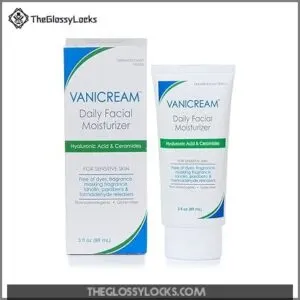
Vanicream’s Facial Moisturizer with ceramides and hyaluronic acid is a quiet workhorse when your skin feels reactive and tired. It’s fragrance‑free, gluten‑free, and packed with five barrier‑building ceramides, hyaluronic acid, squalane, and glycerin to deliver long‑lasting, non‑greasy hydration.
You can use it morning and night, and it sits smoothly under sunscreen or makeup without clogging pores.
If your skin is dry or severely inflamed, though, you may need a richer or medicated moisturizer alongside it.
Patch test if you’re sensitive.
| Best For | Sensitive, rosacea‑ or eczema‑prone skin that needs a simple, fragrance‑free daily moisturizer that won’t clog pores and plays well under sunscreen. |
|---|---|
| Skin Type | Sensitive |
| Fragrance Free | Yes |
| Key Benefit | Barrier repair |
| Usage Area | Face |
| Paraben Free | Yes |
| Dermatologist Tested | Yes |
| Additional Features |
|
- Lightweight, non-greasy texture that layers well under sunscreen or makeup.
- Fragrance-free, gluten-free, non-comedogenic formula that suits sensitive and reactive skin.
- Contains ceramides, hyaluronic acid, squalane, and glycerin to support the skin barrier and provide long-lasting hydration.
- May not be hydrating enough on its own for very dry or severely compromised skin.
- Can feel slightly grippy on application, which some people may not enjoy.
- May cause mild stinging for some users with very inflamed or highly sensitized skin and isn’t a substitute for medicated moisturizers.
9. La Roche Posay Anthelios UV Clear Sunscreen
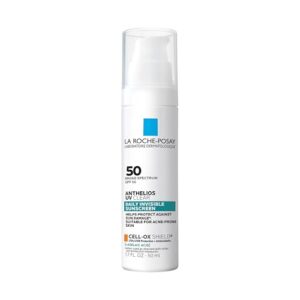
Sunscreen often feels like a barrier for sensitive skin — either too heavy, too greasy, or quietly triggering.
La Roche-Posay Anthelios UV Clear SPF 50 is different.
It’s fragrance‑free, non‑comedogenic, and contains azelaic acid to calm redness over time — a real bonus if you’re dealing with rosacea or acne‑prone skin.
The lightweight, oil‑free texture absorbs quickly and layers invisibly under makeup.
At $39.99, it’s a clinically tested daily essential that protects without compromising your skin’s comfort or barrier.
| Best For | Acne-prone, rosacea-prone, and sensitive skin that needs high SPF 50 protection in a lightweight formula that disappears under makeup. |
|---|---|
| Skin Type | Sensitive, acne-prone |
| Fragrance Free | Yes |
| Key Benefit | SPF 50 protection |
| Usage Area | Face |
| Paraben Free | Not specified |
| Dermatologist Tested | Yes |
| Additional Features |
|
- Broad-spectrum, non-comedogenic SPF 50 that helps reduce the risk of skin cancer and early aging while staying friendly to acne-prone skin.
- Lightweight, barely-there texture that blends invisibly into all skin tones and layers well under makeup.
- Fragrance-free formula with azelaic acid to help calm redness and gradually improve skin texture and tone over time.
- Contains Homosalate and Octocrylene, which some people prefer to avoid due to potential health and environmental concerns.
- Can have a slightly greasy sunscreen feel and may need a bit of powder on top to cut shine.
- Not a standalone moisturizer, so you’ll still need a separate hydrating step underneath.
10. Magic Molecule Hypochlorous Acid Spray
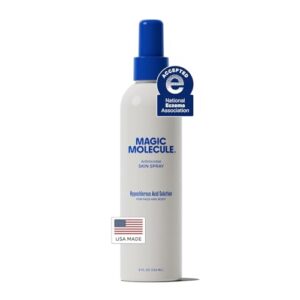
If your skin is prone to breakouts, redness, or irritation, Magic Molecule’s Hypochlorous Acid Spray is worth keeping on your shelf.
It works by mimicking what your white blood cells naturally produce — a gentle antimicrobial that targets surface bacteria without disrupting your skin barrier.
Alcohol-free, fragrance-free, and safe for daily use on face and body, it calms eczema, rosacea, and acne‑prone skin alike.
At $16 for an 8 oz bottle, it’s an affordable, multi‑use addition to any sensitive skin routine.
| Best For | Anyone dealing with breakout-prone, sensitive, or irritated skin who wants a gentle, multi-use spray that works without harsh chemicals. |
|---|---|
| Skin Type | Sensitive, breakout-prone |
| Fragrance Free | Yes |
| Key Benefit | Fights breakouts |
| Usage Area | Face and body |
| Paraben Free | Yes |
| Dermatologist Tested | Yes |
| Additional Features |
|
- Tackles acne, rosacea, eczema, and redness all in one bottle — no need for a dozen different products
- Completely free of alcohol, fragrance, parabens, and oils, so it’s safe for even the most sensitive skin
- Versatile enough to use on your face, body, eyelids, cuts, and burns every single day
- Can make hair brittle or frizzy, so keep it away from your hair
- The medicinal smell is a turn-off for some people
- At $16 for 8 oz, it might feel a little steep if you’re watching your budget
Building a Gentle Hydration Routine
Now that you know which products can help, the next step is understanding how to use them in a calm, consistent routine.
A gentle hydration routine doesn’t need to be complicated, but it does need a clear order and a few non‑negotiable habits.
Below, we’ll walk through the key steps—from cleansing to moisturizing to sunscreen—so you know exactly what to do and when.
Simplifying Your Skincare Steps
Think of your routine as a minimalist routine — less really is more. Start with gentle cleansing, follow the right layering order (cleanser, then moisturizer, then sunscreen), and don’t rush to add extras.
Ingredient prioritization matters: ceramides, hyaluronic acid, and squalane do the heavy lifting. Always follow patch test protocol with anything new. For your evening hydration ritual, one soothing moisturizer is genuinely enough.
How to Cleanse Without Stripping Moisture
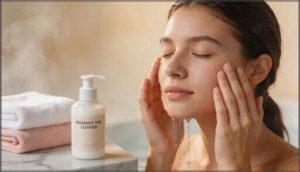
Cleansing sensitive skin is a bit like washing delicate fabric — rough handling ruins it. Use lukewarm rinsing to preserve your skin’s natural oils, and rely on gentle finger massage with circular motions instead of harsh rubbing. Low friction washing keeps irritation minimal.
- Pat dry technique: blot, never rub
- Double cleanse balance: only when wearing sunscreen or makeup
- ceramide-rich, fragrance-free cleansers for lasting hydration
Using lukewarm water benefits for skin health.
Optimal Moisturizer Application Techniques
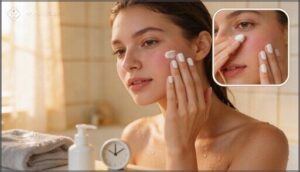
How you apply your moisturizer matters just as much as which one you choose.
| Technique | Why It Helps | Sensitive Skin Tip |
|---|---|---|
| Patting Motion | Reduces friction on reactive skin | Press gently, never rub |
| Humectant Layering | Locks in Skin Hydration | Apply to slightly damp skin |
| Timing Post‑Cleanse | Seals moisture before it escapes | Moisturize within two minutes |
Use about a fingertip-length of FragranceFree Moisturizers, spreading evenly to protect your Skin Barrier. For Eye‑Lip Care, lighten your touch — that skin is delicate. Amount Guidance matters too: enough to hydrate, not enough to feel sticky.
Incorporating Sunscreen for Sensitive Skin
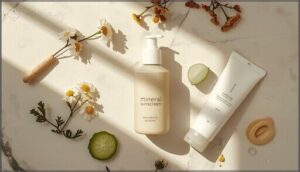
Once your FragranceFree Moisturizers are in place, Sun Protection is your next safety net.
Choose a Fragrance‑Free Sunscreen with Mineral Filters, ideally non‑comedogenic, to minimize stinging on Sensitive Skin.
For daily face use, try Tinted Mineral Options that avoid a chalky cast.
Outdoors, pick a Water‑Resistant Formula, always pairing with Moisturizer so Sunscreen feels comfortable throughout the day and beyond.
Long-Term Strategies for Healthy, Hydrated Skin
Hydrating sensitive skin isn’t just about what you apply today — it’s about building habits that protect your skin for years to come.
Small, consistent choices add up faster than you’d think. Here’s what actually has an impact over the long haul.
Maintaining The Skin Barrier
Protecting your Skin Barrier long term means treating it like a delicate shield.
- Support the Lipid Matrix with Ceramides and Moisturizers as core Barrier Repair Techniques.
- Maintain Humectant Balance using Glycerin and Hyaluronic Acid, then seal with light Occlusive Layers.
- Prioritize UV Barrier Protection daily for Sensitive Skin Management, reinforcing comfort, resilience, and steady long‑term barrier health you can feel.
Preventing Redness and Inflammation
When your barrier feels steadier from Ceramide Repair, prevention becomes your next quiet win against Redness.
Think of Cooling Moisture Layering with fragrance‑free Moisturizers as a soft compress, then add Niacinamide Benefits, Panthenol, and Anti‑Inflammatory Peptides for steady Inflammation Reduction.
Daily mineral sunscreen for Sunlight Redness Management works like a shade cloth for Sensitive Skin, especially when layered over Ceramides.
Mistakes to Avoid With Sensitive Skin
Once redness feels calmer, the biggest threats often come from your own habits.
Over‑exfoliation, hot water, and rough cleansing cloths chip away at your barrier and invite irritation.
Skipping moisturizer or relying on a watery gel alone leaves Sensitive Skin tight and stingy.
Too many actives, Ignoring sunscreen, and non‑fragrance‑free, non‑hypoallergenic formulas quietly keep your skincare routine in flare‑up mode.
When to Consult a Dermatologist
When Sensitive Skin Care at home stops helping, dermatologists become your next step.
Go urgently if you have a Persistent Rash or itch lasting more than a week, Mole Changes, Skin Cancer Signs like a fast‑growing sore, or Severe Irritation that disrupts sleep.
That’s Dermatologist Recommended, especially for stubborn skin irritation or eczema treatment pushing past normal home‑care limits.
Frequently Asked Questions (FAQs)
Is Zo skin Health good for eczema?
ZO Skin Health Hydrating Crème offers clinical efficacy for eczema, focusing on barrier repair and ingredient safety.
Patch testing is wise, since some users report irritation.
For eczema, dermatologist guidance and sensitive skin care remain essential for natural skincare choices.
How do I choose the best skin care for sensitive skin?
Look for fragrance-free, noncomedogenic formulas with ceramides and hyaluronic acid.
Always follow a patch test protocol before committing.
Keep your skincare routine simple, ingredient transparency matters more than a long, impressive-sounding label.
What is good for severe skin sensitivity?
For severe sensitivity, lean on ceramides and barrier repair lipids, layer a calming serum beneath a fragrance-free moisturizer, and follow dermatologist-guided regimens.
Hypoallergenic sunscreens and soothing night oils help protect and restore compromised skin.
What is a good moisturizer for sensitive skin?
needle in a haystack, the best moisturizer for sensitive skin is a ceramide‑rich cream with Barrier Lipid Boost, fragrance‑free formulas, and non‑comedogenic options—
think dermatologist‑recommended picks like Vanicream or fragrancefree, hypoallergenic moisturizers.
How do you hydrate your skin?
Start with your humectant choice — hyaluronic acid or glycerin — then seal with an occlusive.
Layering strategy matters: apply moisturizer on damp skin, use lukewarm water, and finish with nighttime sealing using ceramides.
Which skincare products are best for sensitive skin?
Barrier‑Boosting Serums, Squalane‑Based Moisturizers, and Niacinamide Treatments nourish sensitive skin without fuss.
Mineral Sunscreen Options shield gently.
Hypoallergenic Cleansers and Ceramides maintain hydration. Hypoallergenic Products support calm, resilient skin—each formula helps restore, soothe, and strengthen your skin’s natural defenses.
What is the best hydrating gel for dry skin?
Look for a non-comedogenic gel with hyaluronic acid for humectant pairing, plus barrier lipid integration through ceramides or squalane. That combination gives dry, sensitive skin real, lasting hydration without heaviness.
What is the most gentle moisturizer for sensitive skin?
The gentlest moisturizer for sensitive skin focuses on barrier-repair, fragrance-free certification, and ingredient minimalism.
Dermatologist recommendations consistently point to ceramide-rich, hypoallergenic formulas that prioritize hydration without unnecessary additives — your skin’s texture preference matters too.
How to hydrate extremely sensitive skin?
Nearly 70% of people have sensitive skin.
Ceramides and Hyaluronic Acid, use Temperature‑Controlled Cleansing, and build Layering Hydration with Micro‑Moisture Boosters and Barrier‑Repair Serums to protect your Skin Barrier without irritation.
What is the best moisturiser for very sensitive skin?
Ceramide-rich formulas and squalane-based creams top the list for very sensitive skin. Prioritize hypoallergenic, non-comedogenic options from dermatologist-recommended brands — they hydrate without clogging pores or triggering flares.
Conclusion
Imagine a skincare aisle whispering: "More steps, stronger acids", seventeen serums—your skin will thank you.
Spoiler: it won’t.
Sensitive skin doesn’t need a dramatic intervention; it needs you to stop overwhelming it.
Gentle skin hydration for sensitive skin is really just permission to do less, more thoughtfully.
Strip back the noise, lock in moisture with the right humectants and ceramides, and your barrier does the rest—quietly, reliably, without complaint.