This site is supported by our readers. We may earn a commission, at no cost to you, if you purchase through links.
Your grandmother’s hair grease tin wasn’t just nostalgia—it held a potent defense against breakage that modern research now validates. Hair grease benefits hair growth not by making follicles sprout new strands, but by creating a moisture-sealing barrier that prevents the kind of dryness and brittleness that snaps hair before it reaches its full length.
For textured hair especially, that protective layer means the difference between hair that breaks at six inches and hair that thrives past your shoulders.
The science behind moisture retention, scalp health, and environmental protection reveals why this old-school staple deserves a place in your regimen—when you understand how to use it correctly.
Table Of Contents
- Key Takeaways
- How Hair Grease Supports Hair Growth
- Key Ingredients in Hair Grease for Growth
- Moisture Sealing and Length Retention
- Scalp Health and Hair Grease Application
- Best Practices for Using Hair Grease
- Addressing Myths About Hair Grease and Growth
- Choosing The Right Hair Grease for Your Needs
- Frequently Asked Questions (FAQs)
- Can hair grease be used on all hair types?
- Is hair grease safe to use on a sensitive scalp?
- Does hair grease cause build-up or weigh down the hair?
- Can hair grease be used as a heat protectant?
- Can hair grease accelerate the anagen growth phase?
- Does grease work differently on chemically treated hair?
- How does hair porosity affect grease absorption?
- Can hair grease help with thinning or balding?
- Should you use grease during protective styling?
- Conclusion
Key Takeaways
- Hair grease doesn’t stimulate new follicle growth, but it creates a moisture-sealing barrier that prevents breakage and dryness, allowing your hair to reach its full genetic length potential instead of snapping prematurely.
- The protective layer works best when applied to damp hair after water-based mists, sealing hydration into the shaft while preventing transepidermal water loss that leads to brittleness and split ends.
- Key ingredients like coconut oil, jojoba, shea butter, and vitamin E penetrate or coat the hair shaft differently based on your porosity level, so matching formulation weight to your texture prevents buildup while maximizing moisture retention.
- Regular scalp cleansing before grease application prevents clogged follicles and buildup, while pairing grease with gentle massage techniques improves blood circulation and nutrient delivery to support overall scalp health.
How Hair Grease Supports Hair Growth
Hair grease doesn’t actually make your hair grow faster, but it creates the conditions your strands need to reach their full potential. When you understand how it works—from locking in moisture to shielding your hair from daily wear and tear—you can use it strategically instead of slathering it on and hoping for results.
Here’s what hair grease actually does to support healthier, longer hair over time.
Moisture Retention and Reduced Breakage
Hair grease locks in moisture by forming a protective barrier that reduces water loss from your hair shaft. This consistent scalp protection boosts fiber strength and flexibility, cutting down breakage at the ends—especially in textured hair prone to dryness. If you have low porosity hair, be mindful that heavy oils can sit on the surface and cause buildup—coconut oil may not absorb well and could leave strands feeling coated instead of moisturized.
By improving moisture balance and hydration, you’ll notice fewer split ends and stronger strands that resist snapping during combing and styling.
Regular use of hair grease can also promote a healthy scalp through scientific study methods that boost overall hair growth.
Creating an Optimal Scalp Environment
Beyond locking in moisture, you’re setting the stage for follicle stimulation and barrier protection. A well-hydrated scalp environment maintains microbiome balance, reduces flaking, and enhances circulation to your roots. Hair grease paired with scalp massage boosts nutrient delivery, while proper cleansing before application prevents buildup that suffocates follicles. This foundation drives scalp health and sets the rhythm for sustained hair growth:
- Maintain adequate scalp hydration to support barrier integrity.
- Use gentle massage techniques to increase local blood flow.
- Cleanse regularly to prevent impaired microcirculation.
- Apply balanced oil amounts to avoid over-occlusion.
- Pair grease with water-based mists for ideal hair hydration.
Protecting Hair From Environmental Stressors
Your scalp faces daily assault from air pollution, UV radiation, and climate swings that degrade protein structure and trigger oxidative stress. Protecting your scalp from these stressors starts with simple daily habits that support scalp health and strengthen its natural barrier.
Hair grease acts as a protective shield, forming an occlusive barrier that blocks particulate matter, reduces environmental damage, and preserves scalp health.
By maintaining hair moisture and hydration under harsh conditions, you’re defending follicles and supporting uninterrupted hair growth through climate control and proactive hair shielding. Pairing this approach with a soothing aftershave routine for men ensures your scalp stays calm and properly conditioned year-round.
Key Ingredients in Hair Grease for Growth
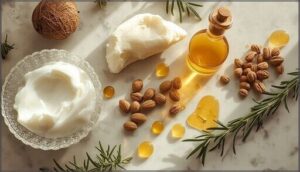
Not all hair grease formulas are created equal, and the ingredients you choose can make or break your growth results. Some oils penetrate the hair shaft to nourish from within, while others seal moisture at the surface to prevent breakage and dryness. Pairing the right grease with gentle cleansing habits that won’t strip your scalp helps you maintain that crucial balance between hydration and protection.
Let’s examine the key ingredients that support healthy hair growth and how each one works to strengthen your strands.
Natural Oils (Coconut, Olive, Argan, Jojoba)
When you want proven oil benefits that actually work with your hair texture and scalp conditions, four stand out. Each fosters growth patterns through enhanced nutrient absorption:
- Coconut oil penetrates deep to reduce protein loss, strengthening strands from within while nourishing your scalp.
- Jojoba oil mimics your natural sebum, balancing moisture without weighing down textured hair.
- Olive and argan oils deliver antioxidants and fatty acids that protect against environmental damage while promoting healthier hair growth through improved scalp conditions.
Shea Butter and Vitamin E
Two powerhouse ingredients—Shea Butter and Vitamin E—work in tandem to transform dry, fragile strands into resilient, moisturized hair. Shea Moisture products often highlight these components because they deliver genuine follicle health benefits through antioxidant effects and improved hair elasticity. When you choose natural hair products containing these vitamins A, C, and E–rich elements, you’re investing in hair nutrition and diet principles that support sustained hair growth from the inside out.
| Component | Primary Benefit |
|---|---|
| Shea Butter Fatty Acids | Soften hair shaft, improve flexibility |
| Vitamin E (Tocopherol) | Protect keratin from oxidative damage |
| Combined Emollients | Reduce moisture loss, minimize breakage |
| Antioxidant Pairing | Support scalp microcirculation |
| Natural Triglycerides | Form protective barrier on hair surface |
Shea Butter provides emollient fatty acids that boost your hair’s ability to retain water, while Vitamin E benefits extend to lipid-soluble antioxidant protection at the scalp surface. This pairing reduces trans-epidermal water loss, helping textured hair maintain its natural curl pattern without excessive dryness or frizz.
You’ll notice improved combability and shine because these ingredients work synergistically—Shea Butter enables even distribution of Vitamin E across your strands while both components defend against environmental stressors that compromise follicle health. Apply small amounts to your lengths and ends, pair with water-based mists for maximum moisture retention, and watch your hair elasticity improve over consistent use.
Modern Petroleum-Free Alternatives
Plant-based oils and natural wax blends now replace petroleum in modern hair grease formulations, giving you cleaner scalp health and hair growth support. Coconut derivatives form effective base carriers, while shea emollients and jojoba esters deliver moisture retention that mimics your scalp’s natural sebum.
These natural hair products provide occlusive protection for hair moisturizing without the heavy feel of traditional mineral oil formulas.
Moisture Sealing and Length Retention
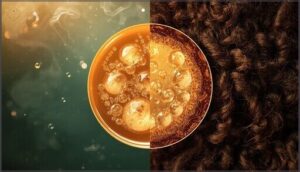
Moisture sealing is the process that determines whether your hair retains length or breaks off before reaching your growth goals. When you apply grease correctly, you lock in hydration and create a protective barrier that prevents the dryness and damage that lead to split ends.
Here’s how grease aids moisture retention and length preservation in your hair.
Preventing Dryness and Split Ends
Brittleness is your hair’s way of waving a red flag—and grease answers by locking in hair moisture before it evaporates. When you seal hydrated strands with the right hair grease, you’re building a barrier against dryness prevention that keeps cuticles smooth and split end repair manageable.
Regular hair moisturizing cuts breakage reduction by maintaining flexibility, especially when you pair grease with water-based mists for deeper hair hydration.
Reducing Moisture Loss in Textured Hair
Textured hair loses moisture faster because lifted cuticles create more surface area for water to escape—that’s where sealant strategies win. Your hair porosity dictates which approach works: high-porosity coils thrive with heavier butters, while low-porosity curls need lighter oils to avoid weighing strands down.
- Apply sealants to damp—not soaking—hair for better moisture retention over 24–72 hours
- Pair humectants with oils to prevent transepidermal water loss and brittleness
- Match your textured haircare routine to humidity levels for consistent hair hydration and moisture
- Clean your scalp first to avoid trapping buildup under your moisture balance strategy
Moderation keeps hair moisturizing tips effective without suffocating follicles.
Enhancing Curl Pattern and Texture
Sealants boost curl definition by smoothing the shaft surface—you’ll notice tighter curl clumping and frizz reduction when moisture levels stay locked in.
Hair grease preserves your curl pattern through improved hair elasticity and texture improvement, but heavy formulations flatten volume.
Start with lightweight oils on damp hair to support hair hydration without sacrificing your natural hair texture.
Scalp Health and Hair Grease Application

Your scalp isn’t just the foundation for hair growth—it’s the ecosystem that determines whether your strands thrive or struggle. When you apply hair grease correctly, you’re not simply coating your hair; you’re creating conditions that support follicle activity and prevent the problems that stall growth.
Let’s break down three essential practices that keep your scalp healthy while maximizing the benefits of hair grease.
Scalp Massage for Follicle Stimulation
Massaging your scalp while applying hair grease isn’t just relaxing—it’s a deliberate strategy for follicle stimulation. Using your fingertips in gentle circular motions for 5–10 minutes increases blood flow to hair follicles, delivering nutrients that support the anagen growth phase.
This mechanical agitation may also lower stress hormones that disrupt hair cycles, making scalp massage benefits a cornerstone of effective scalp health and hair growth techniques.
Preventing Buildup and Maintaining Cleanliness
Even the best scalp massage won’t help if buildup traps debris beneath your hair grease. Gentle cleansing with non-comedogenic formulas preserves moisture balance while preventing residue from clogging follicles.
Scalp exfoliation—whether physical or chemical—clears dead cells and excess sebum, creating a clean scalp foundation. Rinse thoroughly with lukewarm water after each application to support buildup prevention and maintain ideal scalp health in your hair care routine.
Hydrating The Scalp Before Grease Application
Water-based mists and leave-in tonics boost scalp hydration before you seal with hair grease, reducing dryness that leads to breakage. Spray a light, alcohol-free formula directly onto your scalp, then massage gently to improve absorption and support scalp pH balance—ideally near 4.5–5.5.
This pre-grease routine ensures grease compatibility, locking moisture into your hair while maintaining ideal scalp health for sustained hair moisturizing and growth.
Best Practices for Using Hair Grease
You can’t just slap grease on your hair and expect magic to happen—technique matters as much as the product itself. The way you apply it, how often you use it, and what you pair it with can either accelerate your growth goals or leave you dealing with buildup and frustration.
Let’s break down the strategies that actually work so you can get the most out of every application.
Application Methods (Ends, Roots, Pre-Shampoo)
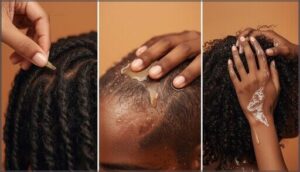
The right technique transforms grease from a product into a precision tool for hair growth. Where you place it shapes how well your scalp health and hair care routine work together.
- Ends focus seals tips and cuts breakage by leaving them coated but not saturated
- Roots massage stimulates follicles with light distribution along the crown, avoiding heavy buildup
- Pre-shampoo tips reduce friction during cleansing when you apply grease mid-length to ends before washing
Frequency and Amount for Optimal Results

Once you’ve nailed your application timing, dial in how much grease your scalp actually needs. Fine hair thrives on light passes one to two times weekly, while coarse textures often demand two to three sessions for real moisture sealing.
Start with a pea-sized amount—your scalp assessment drives everything. Too little won’t lock hydration; too much clogs follicles and stalls hair growth.
Combining Grease With Water-Based Mists

Layering works best when you mist damp hair first, then seal with grease at your ends. This moisture-locking technique prevents dryness while supporting hair growth.
Water-based sprays deliver lightweight hair hydration without heavy residue, and when paired with hair grease, they create a dual barrier that improves scalp balance and hair care results without triggering buildup.
Addressing Myths About Hair Grease and Growth
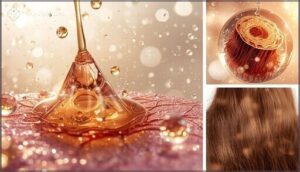
You’ve probably heard that hair grease clogs your pores and suffocates your scalp, but the science tells a different story. Understanding what’s actually happening at the follicle level helps you use grease effectively without the worry.
Let’s clear up three common misconceptions that might be holding you back from getting real results.
Does Grease Clog The Scalp?
You’ve probably heard the warning that grease clogs your scalp and stunts hair growth—but here’s the truth: petrolatum and similar ingredients in hair grease don’t inherently block hair pores or cause clogged follicles in healthy individuals.
The real culprits behind scalp irritation and grease buildup are:
- Applying grease over existing dirt, flakes, or product residue
- Skipping regular scalp cleansing routines
- Using excessive amounts that overwhelm your scalp’s natural balance
When you maintain proper hair care habits, grease won’t compromise your scalp health or sabotage your hair growth goals.
Non-Comedogenic Properties Explained
When you see non-comedogenic on hair grease labels, it means the product won’t block your follicles or trigger scalp acne—a vital distinction for follicle health. Ingredients like petrolatum score zero on comedogenic ratings scales, making them safe for most scalp types.
This non-comedogenic benefit lets you seal moisture without compromising your hair growth environment or creating inflammation that disrupts healthy hair care routines.
Importance of Scalp Cleansing
Think of your scalp like soil—grease can’t help growth if the ground is choked with debris. Regular cleansing with a pH-balanced cleanser removes buildup that hinders hair grease benefits, preserves your scalp microbiome, and protects follicle health:
Your scalp is like soil—grease can’t support growth if buildup chokes the follicles beneath
- Gentle exfoliation removes dead cells that block follicles
- Cleanser selection matters—choose formulas that respect scalp pH balance
- Pre-treatment cleansing boosts absorption for scalp treatment and hydration
- Scalp health and massage work best on clean skin
- Strategic timing in your hair care routine prevents clogged follicles while supporting hair growth
Choosing The Right Hair Grease for Your Needs

Not all hair grease is created equal, and choosing the wrong product can leave you with buildup, dryness, or minimal results. Your hair type, texture, and scalp condition should guide your selection to guarantee you’re getting the moisture and protection you actually need.
Let’s break down how to match grease to your specific hair and how to evaluate products before you buy.
Matching Grease to Hair Type and Texture
Your hair type and texture determine which grease formulations will work best for you. Hair porosity and curl patterns guide your choice: low porosity hair needs lighter oils that penetrate slowly, while high porosity hair thrives with heavier blends that seal moisture.
Coily textures benefit from breathable shea butter mixtures, whereas fine hair requires satin-textured variants that won’t weigh strands down or compromise scalp health.
Evaluating Reviews and Product Recommendations
Reviews become your roadmap when you’re exploring hundreds of hair grease options. Start by seeking user feedback from people with your hair type and scalp sensitivity—their experiences with moisture retention, wash-out ease, and actual hair growth results matter more than marketing claims.
Product comparison charts help you weigh natural hair care formulas against traditional petroleum bases, while rating systems highlight recurring issues like buildup or irritation.
Cross-reference recommendation algorithms with dermatology-backed sources to verify ingredient safety and hair product reviews that document long-term outcomes, not just initial impressions.
Frequently Asked Questions (FAQs)
Can hair grease be used on all hair types?
Yes, but results depend on your hair porosity, texture, and scalp conditions. Coarser hair often thrives with heavier grease formulas, while fine hair needs lighter product ingredients to avoid buildup and maintain scalp health.
Is hair grease safe to use on a sensitive scalp?
Proceed with caution—sensitive scalps may flare when fragrance or heavy buildup meets inflamed skin. Patch test first, choose fragrance-free formulas, and cleanse thoroughly before application to minimize irritation and protect scalp health.
Understanding language patterns can also help in choosing the right products for your hair care needs.
Does hair grease cause build-up or weigh down the hair?
When applied excessively or without proper cleansing, certain grease formulations can cause product accumulation and weigh down your hair—especially if you have high porosity or fine strands requiring lighter alternatives and strategic buildup prevention through regular clarifying.
Can hair grease be used as a heat protectant?
Most hair greases won’t shield your strands from flat-iron fury. While some occlusive oils reduce brief moisture loss, they’re not formulated for high-heat styling—leaving you vulnerable to thermal damage and breakage.
Can hair grease accelerate the anagen growth phase?
No credible research shows that topical hair grease extends your follicles’ active growth cycles. Instead, grease reduces breakage and retains moisture—giving you longer, healthier hair through protection, not biological acceleration.
Does grease work differently on chemically treated hair?
Here’s the thing: chemical damage changes the rules. Your porous strands absorb grease differently, potentially causing heavier buildup or faster moisture loss if you don’t adjust application and cleansing routines.
How does hair porosity affect grease absorption?
Your hair’s porosity determines how grease penetrates the fiber structure. High-porosity strands absorb oil quickly but lose moisture faster, while low-porosity hair resists penetration, affecting scalp health and overall moisture balance.
Can hair grease help with thinning or balding?
While grease won’t reverse balding, it can support thinning hair by reducing breakage, sealing moisture, and improving scalp health through massage—promoting circulation that may strengthen existing follicles and encourage hair regrowth.
Should you use grease during protective styling?
Yes, but apply sparingly to your ends—not the scalp—to reduce breakage during protective styling.
A light application prevents buildup, promotes scalp health, and maintains moisture without clogging follicles or disrupting your hair growth patterns.
Conclusion
The proof is in the pudding: hair grease benefits hair growth by protecting what you’ve already grown, not by creating miraculous new follicles. When you seal moisture, support your scalp, and shield strands from environmental assault, you create conditions where hair reaches its genetic potential.
Choose clean ingredients, apply strategically to hydrated hair, and cleanse regularly. Your length retention depends on preventing breakage—and that’s where grease earns its legacy.
- https://academichelpexpress.blog/2024/08/please-use-the-bulleted-points-and-the-rubric-below-to-guide-your-work-your-pa/
- https://x.com/godofprompt/status/1990526288063324577
- https://www.sciencedirect.com/science/article/pii/S0749208123000268
- https://arxiv.org/html/2507.17948v2
- https://www.scribd.com/document/683678057/Academic-Research-Manual-V1-1-April-2016