This site is supported by our readers. We may earn a commission, at no cost to you, if you purchase through links. This content is for general informational and educational purposes only and is not a substitute for professional medical, dermatological, or nutritional advice.

You lose 50 to 150 hairs a day, and that’s normal. Your body sheds old hairs to make room for new growth, no big deal. But when you start finding clumps in the shower drain or extra strands on your pillow, something’s shifted.
Here’s the tricky part: early signs of hair loss rarely show up as sudden baldness. They creep in quietly, a wider part here, a softer hairline there, easy to miss until months have passed.
If you catch these changes early, you gain something powerful: time. Time to figure out the cause, and time to act before thinning becomes harder to reverse.
Table Of Contents
- Key Takeaways
- Early Signs of Hair Loss
- Early Hair Loss Patterns
- Common Early Hair Loss Causes
- How to Detect Hair Loss Early
- Next Steps After Spotting Hair Loss
- Frequently Asked Questions (FAQs)
- How to know if hair loss is starting?
- How to restore hair growth?
- What does the first stage of hair loss look like?
- How do I stop my hair from falling?
- What is stage 1 hair loss?
- At what age does hair loss start?
- Can genetics alone determine hair loss outcome?
- When should teenagers worry about hair thinning?
- Do certain medications accelerate hair loss progression?
- How does seasonal change affect hair shedding?
- Conclusion
Key Takeaways
- Early hair loss shows up quietly, through wider parts, softer hairlines, or extra shedding, so catching these signs early gives you the best chance to act before thinning gets harder to reverse.
- Men typically notice thinning at the temples and crown in an M-shaped pattern, while women more often see a widening center part, both shaped by genetics and hormones like DHT.
- Shedding can come from many causes, including stress, thyroid changes, nutrient deficiencies, or autoimmune conditions like alopecia areata, so figuring out the root cause matters before choosing a treatment.
- You can track changes yourself with monthly scalp photos, a shedding log, and simple pull tests, then bring that information to a dermatologist for a proper evaluation and treatment plan.
Early Signs of Hair Loss

Hair loss rarely shows up overnight. If you know what to watch for, you can catch it early, when your options are best. Here are the signs that tend to show up first.
Understanding what’s driving the thinning in the first place can help you choose the right response, and this guide on preventing hair loss in men breaks down the common culprits and what actually helps.
Increased Daily Hair Shedding
A few extra strands each day is normal. Losing 50 to 150 hairs daily is typical, but when it climbs past that, take note.
Try a pull test: tug gently on clean, dry hair. One or two strands is fine. Several coming loose signals excessive shedding, sometimes triggered by stress, illness, or postpartum changes, called telogen effluvium. This is closely tied to the natural hair growth cycle, whose telogen phase precedes shedding before new hair emerges.
Thinning Temples or Crown
Shedding tells part of the story, but where hair thins matters too. Your temples and the crown of your head are often first, since DHT hits these follicles hardest, causing temple hair miniaturization and thinner strands. Watch for:
- Fine hairs replacing thick ones at your temples
- Reduced density when you part hair at the crown
- Slower thinning some notice more, especially East Asian men
Receding M-Shaped Hairline
While your temples and crown thin quietly, your hairline can shift in a more visible way. Look at old photos: has your forehead grown? If both temple corners recede more than the center, you’re seeing a genetic M shape, a hallmark of male pattern baldness. This androgenic alopecia pattern often progresses gradually over years.
Widening Center Part
If a receding hairline tells a male story, a widening center part often tells a female one. When you part your hair the same way each day, you may notice more scalp peeking through.
That’s female pattern baldness in action, tied to genetics or hormones, and worth tracking with monthly photos.
Visible Scalp and Density Loss
A quick mirror check can tell you a lot. If your scalp shows through easily, try the scalp visibility test or measure ponytail circumference, under 5 cm often signals low density.
Clinical grading shows frontal density drops faster than occipital areas. Watch for:
- Reduced volume on the crown
- Widening part
- Thinning on top of the head
Early Hair Loss Patterns
Hair loss doesn’t look the same for everyone, and that’s actually useful to know. If you can spot which pattern matches your own, you’ll have a much clearer idea of what’s driving it. Let’s walk through the patterns you’re most likely to notice first.
For instance, patchy thinning along the jawline often points to something different than overall shedding, which is why this guide to treating a bald spot in your beard is worth a look.
Male Pattern Hair Loss

Two out of three men notice male pattern baldness by 35, and DHT is usually why. This hormone triggers follicle miniaturization, shrinking follicles over time.
Doctors track progression using the Hamilton-Norwood scale, from M-shaped recession to vertex thinning. If you’re genetically prone, DHT blockers like finasteride can slow things down.
Female Pattern Hair Loss

By age 50, half of all women show some female pattern baldness. Unlike men, thinning starts at your part, widening into a "Christmas tree" shape, not the hairline.
Fortunately, there are proven strategies to slow or manage this progression — explore effective female pattern baldness solutions that dermatologists actually recommend.
Doctors use the Ludwig Classification to grade severity. Causes include:
- Genetic predisposition
- Hormonal imbalance
- Menopausal thinning
If you notice diffuse crown thinning, minoxidil or spironolactone can help, sometimes alongside platelet rich plasma therapy.
Diffuse Scalp Thinning
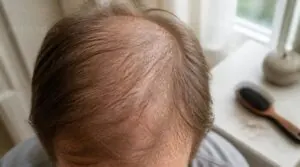
Not all thinning follows a neat pattern. With diffuse scalp thinning, hair falls out evenly, so your scalp becomes more visible all over, not just at the crown or hairline.
This uniform loss pattern often points to telogen effluvium, hormonal shifts, or a nutritional deficiency. The good news? When you catch it early and treat the cause, this type of shedding is often reversible.
Uniform hair thinning often signals a treatable cause, and catching it early makes recovery far more likely
Sudden Patchy Hair Loss
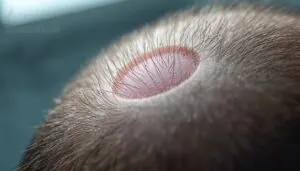
Round, quarter-sized bald spots appearing overnight? That’s often alopecia areata, an autoimmune response attacking hair follicles.
Watch for:
- Well-defined patches
- "Exclamation mark" hairs at edges
- Normal-looking scalp skin
- Possible eyebrow or eyelash involvement
- Rapid onset
Most cases stay healthy otherwise. Corticosteroid treatment often helps, and alopecia areata treatment works best when started early.
Breakage Versus Root Shedding
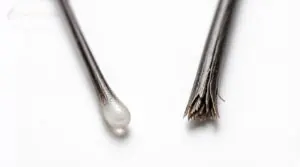
Ever check a fallen hair for a tiny white bulb? That’s bulb identification, and it’s your best clue for shedding vs breakage.
Root shedding shows a small bulb, meaning the hair finished its telogen phase naturally. Breakage looks blunt, ragged, snapped mid-shaft, often from heat or tight styles, not follicle health problems.
If breakage tops 30%, ease up on tension and tools.
Common Early Hair Loss Causes

Once you spot the signs, it helps to know why they’re happening. Hair loss rarely comes from just one thing, and your body usually gives clues about the cause. Here are the most common reasons people notice thinning early.
Genetics and Family History
Blame your parents, both of them. Androgenetic alopecia is polygenic, shaped by over 60 genes. You inherit the AR gene from your mother’s side, but your father’s genes matter too.
Twin studies show up to 80% concordance, proving genetic predisposition runs deep. If baldness runs in your family, expect earlier onset, sometimes years sooner.
Hormonal and Thyroid Changes
Genes set the stage, but hormones can pull the trigger. Thyroid dysfunction often causes diffuse thinning, affecting up to 45% of women with hypothyroidism. Watch for the Hertoghe eyebrow sign, outer eyebrow loss seen in 42% of cases.
PCOS and menopausal shifts add fuel too. If levothyroxine started your shedding, that’s often temporary.
Stress and Telogen Effluvium
Hormones aren’t the only trigger. Stress can flip hair follicles from growing into resting mode, called the telogen phase, causing sudden shedding two to three months later.
Even during this dormant window, follicles remain quietly active — explore the biological processes sustaining hair follicles in the telogen phase to see how cellular signaling persists long before regrowth begins.
This telogen effluvium is diffuse, not patchy, sometimes with scalp tingling. The good news? It’s usually temporary, resolving within six months as your hair cycle resets naturally.
Nutrient Deficiencies and Diet
What’s on your plate matters too. Low protein intake, iron deficiency anemia, low vitamin D, or zinc deficiency hair can all trigger diffuse shedding.
Watch for:
- Crash diets cutting protein and iron
- Vegan diets missing zinc sources or B12
- Rare biotin supplement needs
Correcting a real nutritional deficiency, sometimes with vitamin supplementation, often helps hair recover.
Illnesses, Medications, and Treatments
When your body fights an illness, your hair often pays the price. Chemotherapy is the clearest example, but autoimmune disease matters too. Alopecia areata happens when your immune system attacks hair follicles, and treatments now include JAK inhibitors, topical immunotherapy, systemic therapy, or a promising microneedle patch.
PCOS, thyroid issues, and certain medications can also trigger shedding worth discussing with your doctor.
How to Detect Hair Loss Early

Catching hair loss early gives you more options, but it means paying attention on purpose. You don’t need special tools, just a few simple habits done consistently. Here’s how to spot the changes before they become obvious to everyone else.
Track Daily Hair Shedding
Counting matters more than worrying. Keep a shedding count log for 7 to 14 days, same wash routine, same time daily, noting stress or med changes. Try a hair pull test too.
This baseline shedding tracking turns guesswork into a real shedding trend analysis, so you catch genuine hair loss warning signs early, not just a bad hair day.
Compare Monthly Scalp Photos
Pictures don’t lie, but bad setup can. Snap one photo a month using the same lighting consistency and camera position, no flash, no harsh sun.
Keep hair part setup identical, same width, same direction. Add date labeling to each file.
Target the crown and temples, since thinning temples and visible scalp show up there first, long before a mirror check catches it.
Monitor Part and Hairline Changes
Your part and hairline hold clues your mirror misses. Check weekly: is your widening hair part showing more scalp? Has your receding hairline softened at the corners? Look for thinning temples losing their sharp angle.
Compare both sides, since early hairline density loss often starts unevenly, one temple before the other, a quiet early sign of alopecia worth tracking.
Get a Dermatologist Evaluation
When home tracking shows real warning signs, it’s time to book a dermatologist consultation. Bring your medical history, current medications, and a shedding log. Expect a scalp exam, maybe trichoscopy or a biopsy. Ask about:
- likely cause
- treatment options
- follow-up timeline
This turns guesswork into an actual plan, not just more waiting.
Next Steps After Spotting Hair Loss

If you’ve noticed some early warning signs, don’t panic, but don’t ignore them either. The good news is you have real, practical options at this stage. Here’s where to start.
Adopt Gentler Hair Care Habits
Your hair care routine matters more than you think. Wash with sulfate-free shampoo in lukewarm water, and skip hot oil treatments.
Massage your scalp gently for two minutes daily to boost blood flow. Apply natural oils like coconut or argan weekly, and always detangle with a wide-tooth comb, never yanking wet strands.
Wash with sulfate-free shampoo in lukewarm water, and skip hot oil treatments.
Avoid Tight Styles and Heat
Gentle washing only helps so much if tight hairstyles keep pulling at your roots. That constant tension causes traction alopecia, thinning right at the hairline.
Choose low tension styles like loose braids or a low ponytail instead.
Before heat styling, always use a heat protectant, and keep tools under 365°F to protect scalp health.
Correct Confirmed Nutrient Deficiencies
Protecting your scalp only goes so far if a nutritional deficiency is driving the shedding underneath.
Ask for ferritin testing before starting anything. Below 60 ng/mL points to iron deficiency anemia hair loss, treated with iron supplementation plus vitamin C pairing for absorption.
Low serum zinc calls for 15-30 mg daily. Mind nutrient interaction, dosing iron and zinc at separate times, and ask about essential fatty acids or biotin supplementation too.
Discuss Minoxidil and Prescriptions
Once deficiencies are corrected, ask your dermatologist about topical minoxidil, FDA-approved in 2% and 5% strengths. No prescription needed, but applying to dry scalp twice daily matters, and don’t shampoo for 4 hours after.
For stronger cases, finasteride or dutasteride require a prescription. Oral minoxidil is low-dose and off-label, so discuss side effects like hypertrichosis or fluid retention first.
Seek Help for Warning Signs
Some signs shouldn’t wait for a follow-up visit. If you notice round bald patches, nail pitting, or scalp redness with burning, call your dermatologist that week.
These are classic alopecia symptoms, not routine shedding. Quick evaluation, sometimes within days, can mean the difference between reversible thinning and lasting damage.
Frequently Asked Questions (FAQs)
How to know if hair loss is starting?
Think of your hairline like a shoreline, it recedes so slowly you rarely catch the wave. Watch for early shedding signs, part widening, or scalp visibility through thinning hair. These hair loss warning signs, especially with a genetic clue, mean it’s time to look closer.
How to restore hair growth?
Once your dermatologist finds the cause, you can pair minoxidil or finasteride with scalp massage, PRP injections, low-level laser therapy, essential oils, or nutritional supplements. A hair transplant remains an option if regrowth stalls despite treatment.
What does the first stage of hair loss look like?
You’ll likely spot early thinning patterns first: more shedding in the shower, a slightly wider part line, and faint temple recession. Nothing dramatic yet, just your scalp becoming a little more visible than before.
How do I stop my hair from falling?
Getting a root handle on shedding starts with gentle care. Use mild shampoo, add scalp massage, eat balanced protein-rich meals, manage stress, skip harsh chemical treatments, and ask your dermatologist about minoxidil or laser therapy.
What is stage 1 hair loss?
On the Norwood classification, Stage 1 marks the starting point, with crown fullness retained and only slight thinning at your temples. Early follicle miniaturization is underway, though a receding hairline stays barely noticeable to the untrained eye.
At what age does hair loss start?
Your genetic age factor sets the clock. Teenage onset or early twenties thinning at your temples can happen, though most men notice a receding hairline by Women often see changes near menopausal onset, tied to DHT sensitivity and follicle miniaturization.
Can genetics alone determine hair loss outcome?
Your DNA sets the odds, not the outcome. Androgenetic alopecia reflects a strong genetic predisposition, but androgen sensitivity, DHT levels, and everyday habits like stress and nutrition still shape whether, and when, that risk becomes visible.
When should teenagers worry about hair thinning?
Losing a little hair is normal, yet worrying too soon can cause more shedding. Watch for persistent thinning, widening parts, or shedding past a few weeks, especially with family history, hormonal changes, or nutrient deficiencies. Then see a dermatologist.
Do certain medications accelerate hair loss progression?
Yes. Chemotherapy, some immunosuppressants, and even topical retinoids like tretinoin can trigger drug-induced shedding, usually 2 to 4 months after starting. This often worsens existing androgenetic alopecia, though hair usually regrows once you stop the medication.
How does seasonal change affect hair shedding?
When seasons shift, more follicles enter telogen, the resting stage, causing shedding spikes in late summer and spring. UV exposure, temperature swings, and diet changes all nudge this cycle, and it’s usually temporary.
Conclusion
You noticed the extra strands the same week your part looked wider. That’s not coincidence, it’s your body sending one message through two doors.
Catching early signs of hair loss early gives you something no treatment can replace: time. Time to find the cause, time to act, time to keep your options open.
Your hair follicles aren’t gone, just resting. Treat them gently, get checked, and you’ll likely keep more than you think.