This site is supported by our readers. We may earn a commission, at no cost to you, if you purchase through links. This content is for general informational and educational purposes only and is not a substitute for professional medical, dermatological, or nutritional advice.

Half of all women experience noticeable hair thinning by age 50. Pattern baldness isn’t a male-only condition, and the treatments today are far more precise than most women know.
The condition follows predictable patterns: a widening central part, diffuse thinning across the crown, a scalp that becomes visible under certain lighting. These aren’t random. Genetics, androgens, and post-menopausal hormone shifts drive follicle miniaturization in ways science now understands well.
Female pattern baldness solutions span FDA-approved topicals, oral medications, and expert procedures, each with documented outcomes and specific timelines. Matching the right intervention to your pattern is where results begin.
Table Of Contents
- Key Takeaways
- Female Pattern Baldness: Signs, Causes, and Diagnosis
- Medical Treatments for Female Pattern Baldness
- Natural and Lifestyle Solutions for Thinning Hair
- Advanced Hair Restoration Options for Women
- Comparing Solutions, Safety, and Regrowth Timelines
- Frequently Asked Questions (FAQs)
- Is it possible to reverse female pattern baldness?
- Can you fix female pattern hair loss?
- How to fix female balding?
- Why is Gen Z losing hair?
- Can female pattern baldness be completely reversed?
- How long before seeing hair regrowth results?
- Does insurance cover female hair loss treatments?
- Are there age limits for hair treatments?
- Can pregnancy worsen female pattern baldness permanently?
- Does wearing hats or tight hairstyles worsen thinning?
- Conclusion
Key Takeaways
- Half of all women experience noticeable hair thinning by 50, and FDA-approved treatments like minoxidil and spironolactone can halt progression and partially restore density when started early.
- Your diagnosis drives your treatment—the Ludwig and Sinclair classifications help clinicians pinpoint your specific thinning pattern, which determines whether topicals, oral medications, or procedures will actually move the needle.
- Advanced options like PRP injections and low-level laser therapy deliver 17–30% density improvement, but even surgical transplants require ongoing medical therapy to prevent native hair from continuing to miniaturize around the new grafts.
- Lifestyle factors—chronic stress, poor sleep, low ferritin, and inadequate protein—accelerate follicle dormancy independently of genetics, meaning nutrition and stress management aren’t optional extras but foundational parts of any treatment plan.
Female Pattern Baldness: Signs, Causes, and Diagnosis

Female pattern baldness doesn’t announce itself with a dramatic reveal—it often creeps in quietly, showing up in your part line or a ponytail that feels thinner than it used to. Knowing what you’re actually looking at is the first step toward doing something about it. Here’s what the signs, causes, and diagnostic process really look like.
Spotting these changes early makes a real difference, and a closer look at hair restoration options for women can help you understand what’s worth addressing and when.
Female pattern baldness creeps in quietly — and knowing what you’re seeing is the first step toward action
Common Female Hair Thinning Patterns
Most women with female pattern baldness first notice central part widening, where the midline part grows visibly broader and sometimes exposes a see-through scalp under bright light.
A second pattern, the Christmas tree pattern, fans out triangularly from the frontal hairline toward the crown. Diffuse thinning and crown thinning are also common, while your frontal hairline usually stays intact throughout. Understanding the stages of hair thinning progression can help women identify early signs and seek timely treatment before significant density loss occurs.
Ludwig and Sinclair Classifications
The Ludwig Classification grades androgenetic alopecia into three stages, all centered on crown thinning. The Sinclair scale takes a different approach, using five stages that track central part widening, making it better at catching subtle, early hair thinning that Ludwig often misses.
Many clinicians use both systems together, since no single scale captures every female pattern baldness pattern precisely.
Genetic and Hormonal Risk Factors
Those classifications map the pattern. Genetic predisposition explains why some women develop it at all.
Your risk rises 1.8 times with family history, but genes don’t work alone:
- Androgen receptor variants make follicles more reactive to DHT
- Estrogen cycle effects shorten growth phases, worsening thinning after menopause
- Steroid pathway genetics change how your body processes hormones at a cellular level
Ruling Out Other Hair Loss
Knowing your genetic risk matters, but it doesn’t confirm a diagnosis alone.
A clinical exam checks your scalp for scarring versus nonscarring patterns first, since scarring signals permanent follicle destruction. A pull test across three scalp zones quantifies active shedding. Sudden onset tied to emotional stress suggests telogen effluvium instead.
When the picture stays unclear, a scalp biopsy settles it.
Tests for Nutritional Deficiencies
When hair loss symptoms overlap with fatigue, don’t guess. Nutritional deficiencies are easy to miss without a blood test. Ask your clinician to run these five targeted tests:
- Iron and ferritin testing
- Vitamin D assessment (25(OH)D)
- B12 and folate screening
- Zinc for hair growth
- Full nutrient panel interpretation
Prep matters: note all supplements beforehand, since high doses can skew results.
For a fuller picture of what to expect before and during treatment, finasteride hair loss prevention tips and monitoring advice can help you track side effects like fluid retention and unwanted hair growth alongside your supplement log.
Medical Treatments for Female Pattern Baldness

Regarding treating female pattern baldness, you have more options today than ever before. Each one works differently depending on what’s driving your hair loss—and your doctor can help you find the right fit. Here’s a breakdown of the main medical treatments worth knowing about.
Topical Minoxidil Options
Topical minoxidil is the only FDA-approved topical hair loss treatment for female pattern baldness. It comes in three formulations: 2% solution, 5% solution, and 5% foam, all applied once daily to a dry scalp.
Propylene glycol in solutions improves scalp absorption but can irritate sensitive skin, making the foam a practical alternative. Plan to reassess hair regrowth after one year.
Low-Dose Oral Minoxidil
When topical treatments aren’t enough, oral minoxidil steps in as a widely used off-label hair loss treatment. Your protocol:
Since leftover petroleum jelly can clog follicles and irritate your scalp, it helps to know how to get Vaseline out of your hair.
- Start at 0.5-1 mg daily for female pattern baldness
- Titrate to 5 mg based on tolerance
- Expect hypertrichosis in roughly 15% of patients
- Monitor baseline: blood pressure, heart rate, kidney function
Hair regrowth begins within 1-2 months of consistent minoxidil use.
Spironolactone and Anti-Androgens
Androgens drive much of the damage in female pattern baldness. Spironolactone blocks androgen receptors and slows biosynthesis, giving your follicles a fighting chance.
Dosing starts at 25 mg daily, climbing gradually to 200 mg. Expect to wait six or more months for visible results.
A 2024 study found no increased cancer risk with dermatologic use, making it a well-tolerated option.
Finasteride for Postmenopausal Women
Finasteride works by blocking the enzyme that converts testosterone into DHT, directly targeting androgenetic alopecia at its root.
For postmenopausal women, studied regimens include:
- 2.5–5 mg daily for women without hyperandrogenism signs
- Pregnancy is a firm contraindication
- 1 mg daily showed no measurable benefit
At 5 mg per day, clinical data shows 37–55% improvement over one year.
Topical Versus Systemic Treatment
Route shapes everything here.
When medication reaches your scalp directly, like topical minoxidil, local absorption stays high while systemic exposure remains relatively low. Oral minoxidil and antiandrogens like spironolactone or finasteride circulate through your bloodstream, which means body-wide side effects become a real clinical consideration.
That trade-off matters most when you’re managing complex hormonal conditions or actively planning a pregnancy.
Natural and Lifestyle Solutions for Thinning Hair

Medical treatments aren’t the only path forward — what you eat, how you manage stress, and what you put on your scalp all play a measurable role in hair health. If you’re not ready for prescriptions, or you want to build a stronger foundation alongside them, these lifestyle-based options are worth knowing. Here’s what the evidence actually shows.
Correcting Iron and Vitamin Deficiencies
When hair loss concerns you, ferritin level testing comes first.
- Pair iron supplements with vitamin C for stronger absorption
- Avoid calcium-rich foods within two hours of dosing
- Eat lentils, spinach, and lean meat as dietary iron sources
- Include zinc, vitamin D, and biotin for broader nutritional coverage
Low ferritin accelerates shedding. Test before you supplement.
Protein Intake for Hair Growth
Your hair shafts are built almost entirely from keratin, so protein is the raw material your follicles depend on.
Understanding your follicles’ needs is the first step, so exploring proven methods to improve hair density can help you put that protein-powered knowledge into practice.
| Food | Protein |
|---|---|
| Eggs | 6g each |
| Greek yogurt | 17g/cup |
| Lentils | 18g/cup |
| Chicken breast | 26g/serving |
Target 0.8 to 1g per pound of body weight daily. Split that across 3 to 4 meals so amino acids reach your follicles steadily through each growth cycle.
Rosemary Oil and Saw Palmetto
Food builds the foundation. These two botanicals target female pattern baldness more directly.
- Rosemary oil application: Mix five drops into a teaspoon of carrier oil, massage into your scalp, and leave 10 minutes before rinsing. It matched minoxidil in trials.
- Saw palmetto: 400mg orally daily, or a 20% topical formulation, naturally blocks DHT.
- Scalp massage: Boosts absorption of both.
Stress Reduction and Better Sleep
Those botanicals work on the outside. What happens internally matters just as much.
Chronic stress drives cortisol high enough to push hair follicles into premature rest, and sleepless nights only increase that pressure. Bedtime breathing and mindfulness meditation reduce this hormonal interference directly. Keep your sleep schedule consistent, dim lights one to two hours before bed, and follicles get the stable environment they need to stay active.
Gentle Scalp and Hair Care
Your scalp reacts to how you treat it daily. Gentle scalp massage improves circulation and keeps follicles stimulated without irritating them. Wash with lukewarm water and avoid aggressive scrubbing. Use sulfate-free, fragrance-free formulas, or a ketoconazole shampoo if flaking is present. Apply products in sections for even coverage, and aim for a balance that’s not stripped dry or excessively oily.
Advanced Hair Restoration Options for Women

When lifestyle changes and medications aren’t enough, there are clinical procedures that can meaningfully move the needle on hair restoration. These options range from in-office treatments to surgical intervention, each with its own evidence base, eligibility criteria, and realistic outcomes. Here’s what you need to know about each one.
Low-Level Laser Therapy
Low-level laser therapy delivers nonthermal light at wavelengths between 640 and 850 nm, working through photochemical, not thermal, reactions. This triggers mitochondrial ATP production and modulates cellular reactive oxygen species, directly driving follicle stimulation.
Over 16 weeks, studies consistently show 17-26% hair density improvement, meaningful hair regrowth, and reduced hair shedding, with power density settings fine-tuned per individual device protocol.
Platelet-Rich Plasma Injections
Your own blood powers this approach. Platelet-rich plasma injections concentrate platelets 5-10 times above normal, fueling hair follicle stimulation and driving 20-30% hair density improvement in women with female pattern baldness.
Protocol overview:
- 3-6 sessions, every 2-4 weeks
- Dermis-depth injections placed 1-2 cm apart
- Full results within six months
- Repeat sessions preserve hair regrowth
- Side effects: minimal, usually brief discomfort
Microneedling With Minoxidil
Microneedling punches tiny channels into your scalp, forcing minoxidil deeper than surface application alone can. Sessions use 0.5 to 1.5mm needle depth, rolling in longitudinal, vertical, and diagonal passes until mild erythema appears.
Pair that with 5% minoxidil daily, skip it on treatment day, and resume 24 hours later. Weekly sessions over 24 weeks show measurable density gains.
Hair Transplant Eligibility
Hair transplantation isn’t right for most women. Only 5 to 10% of candidates actually qualify after a full evaluation.
Surgeons assess donor hair viability at the occipital scalp, confirm hair loss is stable, check scalp health for inflammation, and verify medical suitability for minor surgery. Realistic expectations are non-negotiable: follicular unit transplantation redistributes existing follicles, it doesn’t manufacture new ones.
Procedure Benefits and Limitations
When it works, the results are genuinely permanent. FUE techniques leave virtually undetectable circular scars, new growth usually begins around 3-4 months, and final density matures by 9-12 months.
The real catch: transplanted follicles simply don’t stop native hair from continuing to miniaturize. Without ongoing medical therapy, like minoxidil or spironolactone, that contrast becomes visible over time, undermining your results.
Comparing Solutions, Safety, and Regrowth Timelines
Choosing the right treatment isn’t just about what works—it’s about what works safely for your specific situation. Every option carries its own timeline, risk profile, and set of considerations that matter before you commit. Here’s what you need to know to compare them clearly.
Results at Three to Six Months
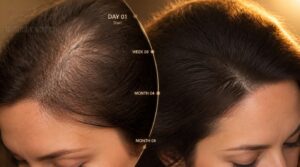
Within three months of consistent treatment, hair shedding reduction is your first signal. The hair growth cycle begins to stabilize. Track these milestones:
- Partline thinning narrows as hair density builds
- Vellus hairs gradually thicken toward terminal growth
- New hair visibility improves noticeably along the crown
By six months, 40-60% of women with hair thinning see measurable regrowth.
Side Effects and Drug Interactions

Progress markers are encouraging, but every treatment carries trade-offs. Topical minoxidil absorbs systemically, sometimes causing lightheadedness or dizziness. Oral minoxidil intensifies that risk.
Spironolactone’s antiandrogen activity can trigger hormonal side effects, and it interacts with other medications through cytochrome P450 pathways. Finasteride carries similar concerns. Foods and supplements compound these risks, so share your full medication list with your dermatologist.
Pregnancy and Hormonal Considerations

Pregnancy changes everything hormonally. Estrogen hair effects peak during gestation, then drop sharply after delivery, triggering postpartum shedding within months of birth.
Progesterone shifts and broader hormonal balance changes also affect how your body absorbs pregnancy nutrients, raising deficiency risk. A known endocrine disorder or oral contraceptive use requires disclosure to your dermatologist before any hormonal hair loss treatment begins.
Combining Treatments Safely

Hormonal status shapes which combinations are safe. Spironolactone and low-dose oral minoxidil together show strong results, and starting them simultaneously actually reduces hypertrichosis risk compared to adding them sequentially.
Key monitoring requirements:
- Blood pressure checks are recommended regularly
- Electrolyte levels need periodic review for hyperkalemia risk
- Report dizziness, fainting, or irregular heartbeat immediately
- Avoid NSAIDs, which can blunt spironolactone’s effectiveness
When to See a Dermatologist

Don’t wait until bald spots or a see-through scalp become obvious before you act.
Progressive shedding, midline part widening, or unexplained hair thinning that continues beyond three months all warrant a dermatologist visit.
Scalp symptoms like itching or tenderness alongside persistent hair loss always need a proper diagnosis, not guesswork. Changing moles anywhere on the scalp require a prompt evaluation.
Frequently Asked Questions (FAQs)
Is it possible to reverse female pattern baldness?
Turning back the clock on female pattern baldness isn’t fully possible, but early treatment can halt progression and partially restore density. FDA-approved options and hormonal therapies make meaningful regrowth achievable with consistent, long-term maintenance.
Can you fix female pattern hair loss?
Not entirely, but you can absolutely control it. Early intervention with minoxidil slows progression, and consistent treatment preserves what you have. Think management, not cure.
How to fix female balding?
You can’t fully cure female balding, but you can meaningfully slow it and, in many cases, partially reverse it. Minoxidil, spironolactone, and targeted lifestyle changes remain your most reliable, evidence-backed starting points.
Why is Gen Z losing hair?
You don’t expect to notice your part widening at Chronic stress, poor sleep, vaping, hormonal imbalances, and nutritional deficiencies are now pushing Gen Z follicles into early dormancy well before genetic predisposition kicks in.
Can female pattern baldness be completely reversed?
Complete reversal isn’t realistic, but meaningful density recovery is. Minoxidil improves hair growth in roughly 60% of women. With the right combination therapy, you can really slow progression and regain noticeable thickness over months.
How long before seeing hair regrowth results?
Most treatments, including minoxidil and finasteride, require three to six months before visible improvement. Early on, shedding may temporarily increase. By the six-month mark, density shifts become measurable. Regrowth continues through 9 to 12 months.
Does insurance cover female hair loss treatments?
Most health insurance plans don’t cover hair loss treatments classified as cosmetic. Coverage shifts when a diagnosed medical condition is driving your loss, but that still requires documented medical necessity from your dermatologist.
Are there age limits for hair treatments?
Age and appropriateness shape treatment eligibility more than rigid cutoffs ever do. Minoxidil is assessed by your diagnosis and tolerance, not just your birthdate. Surgical options require a stable hair loss pattern before you qualify.
Can pregnancy worsen female pattern baldness permanently?
Pregnancy doesn’t permanently worsen female pattern baldness, but postpartum hormonal changes can unmask an existing genetic predisposition earlier.
Most postpartum hair shedding resolves within twelve months. Persistent loss beyond six months warrants iron deficiency screening.
Does wearing hats or tight hairstyles worsen thinning?
Occasional hat-wearing won’t cause hair loss. Tight hats and hairstyles are the real concern, as constant tension on hair follicles can trigger traction alopecia, worsening existing thinning along the hairline.
Conclusion
Think of your follicles as seeds in drought-hardened soil. The right intervention doesn’t just stop the damage. It changes the growing conditions entirely.
Female pattern baldness solutions exist on a spectrum, from minoxidil applied nightly to PRP injections months apart. What works depends on your pattern, your hormones, and your timeline.
Start with a dermatologist. Get the diagnosis right. Then commit to a plan, because consistent treatment is what separates visible results from stalled progress.