This site is supported by our readers. We may earn a commission, at no cost to you, if you purchase through links. This content is for general informational and educational purposes only and is not a substitute for professional medical, dermatological, or nutritional advice.
Walk into most boardrooms today and you’ll spot more beards than clean shaves. That shift didn’t happen by accident. Companies loosened old policies, but the bar for looking polished never dropped.
A scruffy weekend beard and a sharp corporate stubble look like cousins from a distance. Up close, the difference shows in the neckline, the edges, and how often you pick up the trimmer. Skip the maintenance and even a great beard reads as sloppy.
Get the details right and your beard becomes an asset, not a liability. From picking a style that fits your industry to building a routine that keeps it sharp all week, the fundamentals below will get you there.
Table Of Contents
- Key Takeaways
- Choose a Professional Beard Style for Work
- Check Workplace Beard Policies and Safety Rules
- Build a Daily Professional Beard Care Routine
- Trim and Shape Your Beard for Sharp Lines
- Fix Common Beard Problems Before Work
- Frequently Asked Questions (FAQs)
- What is the 3 month rule for beards?
- What length of beard is considered professional?
- Are beards in or out in 2026?
- Can a company legally make you shave your beard?
- Can beards affect wearing safety equipment properly?
- How do video calls change beard appearance?
- What beard products work best for travel?
- Should beard color match suit colors exactly?
- How often should professionals replace grooming tools?
- How long does it take to grow a professional-looking beard?
- Conclusion
Key Takeaways
- Pick a beard style that matches your industry and face shape, since corporate stubble (1-3mm), boxed beards (10-15mm), and full beards all send different signals depending on where you work.
- Check your company’s written policy and any safety rules before you commit to a look, since respirator-dependent jobs often require a clean shave and religious accommodations are legally protected.
- Build a daily routine of washing, oiling, and combing, then trim your neckline and cheek lines every few days to keep the shape sharp instead of sloppy.
- Give patchy growth 1-3 months before judging it, and expect a fully polished, professional beard to take 2-6 months to come in.
Choose a Professional Beard Style for Work

Your beard says something before you even open your mouth. The right style builds trust; the wrong one raises eyebrows. Here’s how to pick one that fits your workplace and your face.
Before choosing a style, it’s worth exploring how a well-groomed beard shapes perceived masculinity, so your look matches the message you intend to send.
Your beard speaks before you do, so choose a style that builds trust, not raised eyebrows
Corporate Stubble and Short Beards
Stubble reads as intentional, not lazy, when you dial it in. Keep corporate stubble at 1-3mm, trimmed every 3-5 days for a polished silhouette. Define your neckline two finger-widths above the Adam’s apple, and keep cheek lines tidy without harsh edging.
Prefer more coverage? A short boxed beard at quarter-inch length works boardrooms just as well. When in doubt, check your company’s grooming policy guidelines to make sure your chosen style aligns with workplace standards.
Short Boxed Beards and Goatees
Want more structure than stubble offers? The short boxed beard delivers it. Keep hair at 10-15mm with sharp cheek and jaw edges, full chin coverage, and a neckline trimmed just above the Adam’s apple.
Growth timeline: 4-6 weeks to full density, weekly edge trims after week two. Bonus: it flatters nearly every face shape.
Full Beards in Creative Workplaces
Boxed beards earn their edges through trims, but full beards earn their keep through daily upkeep.
Creative studios often allow the look, provided you commit to a full beard maintenance schedule: washing 2-3 times weekly, daily oiling, and weekly line touchups. Camera-ready beard care matters here too. Shared equipment cleanliness counts, since studio tools and desks pick up stray hairs fast.
Match Styles to Face Shape
Camera-ready upkeep only goes so far if the shape itself fights your face. Run a quick Face Shape Analysis first: measure forehead, cheekbones, and jaw width.
Round faces need Cheek Line Shaping for angles. Heart shapes benefit from Chin Coverage Focus and lower Neckline Placement, adding weight where the jaw narrows. Adjust your Sideburn Frame too, keeping beard symmetry intact for sharper definition.
Match Beard Length to Industry
Different desks, different rules. Finance stubble standards call for a disciplined 1-3mm, while consulting neat beards favor boxed precision. Tech creative lengths give you room to breathe, sometimes two weeks’ growth. Healthcare safety limits stay strict for sterile appearances, and academia formal grooming rewards clean lines. Know your room before you grow.
Check Workplace Beard Policies and Safety Rules

Picking the right style is only half the job. Every workplace has its own rules, and some carry real safety stakes. Here’s what to check before you commit to a look.
Review Written Grooming Standards
Your handbook is your paper trail, so read it before you trim a single hair. Confirm it covers everyone equally and stays updated yearly.
Pair that consistent grooming policy with good habits at home, since using beard oil to boost shine and softness keeps facial hair looking healthy between trims.
- Legal compliance with Title VII
- Clear religious accommodation language
- ADA provisions and enforcement steps
Vague policies invite disputes. Specific, plain-language standards protect you and your employer alike.
Industry Safety and Respirator Rules
If you work in healthcare or aviation, safety trumps style every time. Respirator seal compatibility matters most here: facial hair breaks the seal, full stop.
OSHA mandates fit testing, medical evaluations, and NIOSH certification compliance for tight-fitting respirators. Your employer needs documented programs covering all this.
Bottom line? Some jobs mean clean-shaven, no exceptions. Check before you grow anything.
Client-Facing Appearance Expectations
Meeting clients? Your beard is part of your brand image. Sharp, clean edges signal you’ve got your act together before you say a word.
Client trust builds fast when your presentation matches your professionalism. Keep symmetry tight, follow communication norms in your handbook, and stick to a solid maintenance routine. Sloppy grooming undercuts every polished pitch you make.
Religious and Cultural Accommodations
Your beard might be protected by law, not just personal taste. Federal rules require reasonable accommodations for sincerely held religious practices unless they create undue hardship.
If your employer insists you shave, this guide on whether an employer can make you shave your beard explains your options and how to request an exemption.
That covers:
- Sikh employees keeping uncut beards
- Rastafarian workers maintaining spiritual growth
- Staff wearing religious head coverings
Cultural grooming practices deserve the same respect as company grooming standards. To request one, simply tell your employer, no magic words needed, then expect a documented workplace dialogue exploring options that fit both your faith and the job.
Discuss Beard Requirements With HR
Silence breeds confusion. If your handbook stays vague, ask HR directly for HR Policy Clarification on facial hair standards.
Request a Grooming Standards Review during onboarding, confirm Safety Exceptions for PPE roles, and understand the Accommodation Process for religious needs.
Get Policy Updates Communication in writing. Clear conversations now save awkward reviews later, protecting your professional appearance and your job.
Build a Daily Professional Beard Care Routine

A great beard doesn’t happen by accident. It’s built through small habits you repeat every single day. Here’s what your routine should include.
Rinse and Cleanse Correctly
Clean hands first, always. Wet your beard with lukewarm water, then work in beard shampoo using fingertips only, never a washcloth. Don’t scrub; gentle massaging lifts oil without irritating skin underneath.
Rinse thoroughly until water runs clear. Leftover residue causes buildup and itchiness. Follow with beard conditioner for softness, then pat dry gently to protect the hair cuticle.
Apply Beard Oil After Washing
Once your beard is patted dry but still damp, that’s your window for oil. Warm 2-3 drops in your palms, then massage into the skin first, working downward from roots to tips. Damp hair spreads oil evenly without turning greasy. Comb through for even distribution, especially if you’re rocking length.
Use Balm for Controlled Hold
Oil hydrates, but balm is what keeps flyaways in check once you walk into the office. Rub a pea-to-dime amount between your palms until it melts, then work it from skin outward for controlled hold.
- Say goodbye to frizz sabotaging your polished look
- Feel confident under office lighting
- Avoid clumpy, waxy patches
- Walk in looking sharp, not sloppy
Brush or Comb Daily
Balm sets the hold, but a comb is what keeps everything in line before you head out the door. Start at the ends and work upward to loosen knots without tugging at the root.
Wide-toothed combs suit thicker beards, while tighter bristles work better on finer hair. Daily strokes spread natural oils evenly and cut down on flyaways for a sharper morning look.
Keep Grooming Tools Clean
Your comb isn’t the only thing touching your face daily. Trimmers and scissors collect hair, skin cells, and oil buildup fast.
Clean clippers after every use and wipe blades with disinfectant to stop clogs and overheating. Rinse combs and brushes, then dry them fully, water left sitting invites mold. Inspect blades weekly for nicks or rust. Good beard hygiene starts with the tools you trust.
Trim and Shape Your Beard for Sharp Lines
A clean routine gets your beard looking healthy, but sharp lines take real technique. Trimming isn’t guesswork—it’s a process, and each step builds on the last. Here’s what you need to know to get those edges right.
Choose Trimmers, Guards, and Scissors

Your trimmer is only as good as its blades. Pick stainless steel or titanium blades for smooth, tug-free cuts on thick, coarse hair.
Match guard numbers to millimeters: 1.5mm for stubble, 9-10mm for medium-short.
- Precision clippers for shaping
- Cordless for flexibility, corded for power
- Scissors once you exceed guard length
Strong motor power keeps cuts even, not patchy.
Start With Longer Guards

Once you’ve got your beard trimming tools ready, resist the urge to jump straight to your target length.
Safety Margin Trimming means starting one guard size longer, since hair grows back slowly but cuts happen fast.
For medium beards, begin around 6-9mm. This Volume Preservation First approach protects fullness while you assess shape through Gradual Guard Reduction before committing to precision clippers.
Define a Clean Neckline

Nothing screams amateur like a fuzzy neckline. Find your spot one to two finger widths above the Adam’s apple, trim horizontally, then finish with a razor for crisp edges.
- Measure before you cut
- Check both sides for symmetry
- Exfoliate first, moisturize after
- Retrim every 2-3 days
Shape Natural Cheek Lines
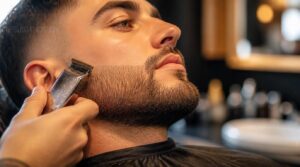
Cheek lines make or break a beard’s polish. Hair grows outward from the jaw, so trim in that direction, keeping length longer near the jaw and gradually shorter toward the cheekbone.
| Tool | Best For | Guard Tip |
|---|---|---|
| Trimmer | Bulk shaping | Same guard both sides |
| Scissors | Fine blending | Point-cut for softness |
| Comb | Lift stray hairs | Guide length checks |
That gradient prevents harsh, drawn-on lines.
Check Symmetry and Flyaways

One crooked side can undo an otherwise sharp beard. Use two mirrors at different angles for a full symmetry check, then step back a few feet to see what coworkers actually see.
Comb against the grain to spot flyaways, and align your jawline as a reference point. Wait 15 minutes post-trim before judging your cheek line or neckline, since hair settles.
Fix Common Beard Problems Before Work

Even a well-trimmed beard can throw you a curveball before a big meeting. Itchiness, patchy spots, and stubborn frizz have a way of showing up at the worst times. Here’s how to handle the most common issues fast, so you walk in looking sharp.
Relieve Beard Itch and Dryness
When your beard itches before a big meeting, dry skin underneath is usually the culprit.
Stick to a gentle cleansing routine, warm water, mild wash, nothing harsh. Follow with beard oil for daily hydration and moisturizing. Exfoliate lightly with a brush to clear dead skin. Skip fragrances and essential oils. Add balm if dryness lingers.
Control Dandruff and Product Buildup
Dry skin isn’t the only flaking culprit. Give your beard a quick shake test: dandruff flakes are uneven and scatter, while product buildup stays sticky and clings.
For real dandruff, try a medicated shampoo with zinc pyrithione, salicylic acid, or ketoconazole, 2-3 times weekly. No luck? Rotate active ingredients. Always cleanse your full scalp, not just patches.
Blend Patchy Beard Growth
Sparse patches don’t mean bad genetics, they usually mean impatience. Patchy growth solutions start with time: give it 1-3 months before judging coverage.
Meanwhile, stubble length tips help now. Keep it short and even for a 5 o’clock shadow that blends thin spots. Exfoliate weekly, support growth with biotin and zinc, and let growth phase care do the rest.
Tame Coarse Hair and Frizz
Coarse strands fight you because they’re naturally dry and less pliable. Moisture retention is your fix: warm (not hot) water, mild cleanser, then a cold rinse to smooth the cuticle.
Apply serum on damp hair before it dries. Brush while wet, not dry, for real frizz reduction and softer, more manageable texture all day.
Set a Consistent Trimming Schedule
Rarely does a great beard happen by accident. Short beards need trimming every 5-7 days, medium lengths every 2-3 weeks. Book a barber every 1.5-2 weeks, then handle weekly trims at home between visits.
If you’re figuring out your trim schedule, it helps to first land on a style — a classic beard style like the ducktail shapes your maintenance routine as much as your face.
Adjust for seasons: shorten intervals in summer, stretch to 10-14 days come winter. Track growth patterns and photos to keep your sharp lines consistent year-round.
Frequently Asked Questions (FAQs)
What is the 3 month rule for beards?
Give your beard 90 days of uninterrupted growth before shaping it. This natural growth assessment reveals patchy spots, true density, and texture. Early weeks bring itchiness and unevenness, but patience pays off. By week 12, you’ll have real material to work with.
What length of beard is considered professional?
Most offices consider half an inch to one inch professional. That covers corporate stubble through short, boxed styles. Trim every 1-2 weeks, define your neckline, and keep edges sharp. Safety and client-facing roles often demand shorter limits.
Are beards in or out in 2026?
Funny how full beards came back right as offices loosened their dress codes. In 2026, beards are firmly in, just more refined: think textured, shaped styles over the old "grow it and hope" approach.
Can a company legally make you shave your beard?
Yes, if tied to safety or a written corporate beard policy. Exceptions apply for religious accommodation or medical documentation. Consistent enforcement matters, since selective policy application weakens your employer’s legal standing on grooming standards.
Can beards affect wearing safety equipment properly?
Absolutely, and it’s about respirator seal integrity. Even light stubble breaks the seal on tight-fitting masks, letting contaminants leak in. If your job requires respirators, check fit testing alternatives or beard covers before trimming decisions.
How do video calls change beard appearance?
Your webcam turns a full beard into a paper cutout. Flat lighting kills natural dimension, camera angle distorts your jawline, and tight framing exposes every flyaway your mirror conveniently hides.
What beard products work best for travel?
Pack TSA compliant containers with travel beard oil and compact balm. A mini USB trimmer keeps edges sharp, while a folding pocket brush tames flyaways. Beard shampoo sachets handle quick washes between meetings, anywhere your trip takes you.
Should beard color match suit colors exactly?
Close enough beats identical. Skip pixel-matching your beard to your suit and aim for color balance instead. Darker beards pair well with navy or charcoal, since lighting shifts how tones actually read anyway.
How often should professionals replace grooming tools?
Trade in your beard trimmer at 12-18 months once motor power fades, scissors yearly, and swap your boar bristle brush or wooden comb every six months, sooner if bristles bend or blades show rust.
How long does it take to grow a professional-looking beard?
Growing a sharp beard is like brewing coffee: rush it and you get something weak. Expect 2 to 6 months, since your beard growth timeline depends on genetics and patience during growth stages.
Conclusion
Some men believe a great beard sells itself. Test that theory in your next client meeting and the truth shows fast: grooming, not growth, earns trust.
Beard grooming for professional settings comes down to consistency, sharp lines, and daily upkeep. Your trimmer matters as much as your resume. Master the routine, and your beard stops being a risk. It becomes your signature, quiet proof you handle details as well as deadlines.