This site is supported by our readers. We may earn a commission, at no cost to you, if you purchase through links. This content is for general informational and educational purposes only and is not a substitute for professional medical, dermatological, or nutritional advice.

That handful of hair on your pillow isn’t a coincidence, and it isn’t "just stress" either. Hair density drops when follicles shrink, shed cycles speed up, or breakage snips strands shorter than they should be, and each cause demands a different fix.
Here’s the good news: once you know whether DHT, low ferritin, or your favorite tight ponytail is the culprit, you can stop guessing and start treating. Think of your scalp like soil, and your hair like a crop that thrives with the right inputs.
Below, you’ll find the ways to improve hair density that actually move the needle, from blood tests worth requesting to treatments with real numbers behind them.
Table Of Contents
- Key Takeaways
- Address The Root Cause of Reduced Hair Density
- Support Hair Density With Nutrition and Healthy Lifestyle Habits
- Improve Scalp Health and Prevent Hair Breakage
- Use Evidence-Based Treatments for Hair Growth
- Track Progress and Explore Non-Surgical Hair Systems
- Frequently Asked Questions (FAQs)
- What are the big 3 for thinning hair?
- Why is Gen Z losing hair?
- At what age is hair thickest?
- Can low density hair be fixed?
- Can certain hairstyles promote better hair density?
- How does scalp health affect hair thickness?
- Are there specific exercises that boost hair growth?
- Do environmental factors contribute to hair thinning?
- What role does gut health play in hair density?
- Can chronic stress permanently affect hair density?
- Conclusion
Key Takeaways
- Identify the root cause first—genetics/DHT, nutrient deficiencies like low ferritin, or styling breakage—since each requires a different treatment, and blood tests can confirm what’s really driving your thinning.
- Support density from the inside with adequate protein, iron, zinc, vitamin D, and omega-3s, while avoiding crash diets, smoking, and tight hairstyles that push follicles into shedding or cause breakage.
- Evidence-based treatments like minoxidil (3–6 months of consistent use), low-level laser therapy (about 16 weeks), microneedling, and PRP (roughly 30 extra hairs per cm²) work only when matched to your specific cause and used patiently.
- Track progress objectively with standardized photos and hair counts in the same marked area, logging shedding separately from regrowth, since shed-rate changes often appear before visible density does.
Address The Root Cause of Reduced Hair Density

Here’s the truth: you can’t fix what you don’t understand! Treating thinning hair without knowing why it’s happening is like patching a leaky roof during a storm. Let’s uncover the three root causes behind reduced density, starting with genetics and hormones.
If you want to get ahead of the problem early, these hair thinning prevention methods can help you protect what you have before genetics and hormones take a bigger toll.
Treating thinning hair without understanding its cause is like patching a leaky roof mid-storm
Genetics and Hormonal Changes
When your genes hand you androgenetic alopecia, DHT slowly shrinks susceptible follicles, shortening the hair growth cycle and thinning density. Estrogen dips after pregnancy or during perimenopause can trigger similar shedding, while thyroid imbalances disrupt cycling too.
You can’t rewrite DNA, but you can support hormonal balance for hair with DHT blockers and hair follicle nutrition, taking back real control!
Nutrient and Medical Triggers
But hormones aren’t the only culprits! Low ferritin, zinc, or vitamin D can starve follicles, so a nutrient-rich diet with biotin, vitamin E, and omega-3 fatty acids matters.
Telogen effluvium, thyroid dysfunction, alopecia areata, celiac-related malabsorption, and medications like retinoids or anticoagulants also trigger shedding.
Blood tests reveal the truth, so ask your doctor and pair answers with DHT blockers!
While you wait for results, watch for these early signs your hair growth serum is working so you can track real progress.
Styling Damage and Breakage
Bloodwork sorted? Now check your hands! Every brush stroke matters.
- Gentle detangling on wet, slippery hair
- Avoid tight hairstyles that strain follicles
- Trim split ends before they climb
- Skip high heat and rough towel drying
- Build a proper hair care routine with slip-rich conditioners
Think of strands like silk ribbon: bend it daily and it snaps. Hair breakage prevention is density protection!
Support Hair Density With Nutrition and Healthy Lifestyle Habits

Now that you’ve identified what’s behind your thinning, let’s feed those follicles! Your hair shaft is mostly keratin, so a nutrient-rich diet with enough protein gives your body the raw materials to build thicker strands. Think of iron, zinc, vitamin D, and omega-3s as the construction crew; without them, the job stalls.
If you want a deeper dive into eating your way to stronger strands, this guide to hair growth from the roots breaks down exactly which foods to pile on your plate.
Wondering where to start? Pair eggs, lentils, and leafy greens with fatty fish twice a week. Watch your ferritin if you have heavy periods, and don’t crash diet, because rapid weight loss pushes follicles into shedding mode.
Beyond the plate, quit smoking, prioritize sleep, manage insulin resistance, and stay on top of hydration. Add scalp massages to boost circulation, and remember: consistent proper hair care routine habits compound into visible hair density gains!
A scalp massager for circulation makes it easy to work those daily massage habits into your shower routine without any extra effort.
Improve Scalp Health and Prevent Hair Breakage

Think of your scalp as soil: healthy soil grows stronger crops! If you’ve got itch, flakes, or tenderness, conditions like seborrheic dermatitis or folliculitis could be quietly sabotaging your hair density. Treat the inflammation first, because chronic scalp drama disrupts follicle cycling faster than any shampoo can fix it.
Then audit your proper hair care routine. Are you raking a brush through soaking-wet strands? That’s when hair is most elastic and snaps like overcooked spaghetti. Blot gently, detangle from the ends up, and drop the flat iron down a notch or two. High-heat styling and repeated bleach lift the cuticle, so hair fractures mid-shaft instead of shedding from the root.
Loosen tight ponytails, cleanse away product buildup weekly, and your hair strength will thank you!
Use Evidence-Based Treatments for Hair Growth
You’ve laid the groundwork, and now it’s time to bring in the big guns! These evidence-based treatments are the ones trichologists actually trust, each backed by real science rather than empty promises. Ready to see which options could transform your hair density? Let’s break them down!
Minoxidil and Prescription Options
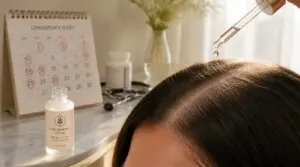
Ready for the big leagues? Topical minoxidil wakes up sleepy follicles, but patience is your price of admission: real hair regrowth takes three to six months, and skipping doses resets the clock.
If hair thinning stems from hormones, ask your doctor about prescription options like finasteride or oral minoxidil, which need monitoring for systemic side effects.
Match the treatment to your cause!
Laser Therapy and Microneedling

Here’s a stat worth knowing: studies show lowlevel laser therapy users saw measurable hair regrowth only after consistent 16-week use. That’s the secret, you can’t dabble!
Think of follicle stimulation like watering a garden, not blasting it with a hose.
Pair red-light sessions (three weekly) with microneedling spaced weeks apart, and your scalp health rewards patience.
PRP and Hair Transplants
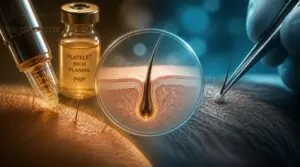
Here’s a stunner: studies show PRP can boost hair counts by roughly 30 hairs per square centimeter after several sessions! Curious what fits you?
- PRP treatment uses your own platelets
- Best for miniaturized hair follicles
- Multiple sessions sustain hair growth cycle support
- Hair transplant relocates donor follicles
- Grafts won’t regrow where follicles are gone
Miniaturized follicles respond to signaling; absent ones need surgical relocation. Which describes your scalp?
Track Progress and Explore Non-Surgical Hair Systems

Here’s the truth: your hair density journey fails without a scoreboard. Would you drive cross-country with no map? Exactly.
Use standardized photos with fixed lighting and camera angle, and track hair count on the same marked scalp region, not your shifting mirror impression. Log shedding separately from regrowth, since shed-rate changes often show up before visible density does.
Keep a simple timeline: install date, attachment type, cleaning cadence, environment. Record system-on and system-off appearances separately so temporary styling doesn’t fool you.
And if hair thinning has you impatient? A nonsurgical hair restoration option like a hair system delivers instant hair volume. Match density and base construction to your wear area, and those edges stay beautifully undetectable! Exploring options like a nonsurgical hair restoration hairpiece can help you find the right density and base match while your natural growth catches up.
Frequently Asked Questions (FAQs)
What are the big 3 for thinning hair?
What are the big 3 for thinning hair? Genetics, hormones, and breakage are your three biggest culprits. They silently shrink follicles, disrupt hair growth cycles, and snap strands before they can ever build real density!
Why is Gen Z losing hair?
Gen Z is losing hair earlier because genetics, chronic stress, and nutritional deficiency are all colliding at once. Poor diet, relentless pressure, and early hormonal shifts are miniaturizing follicles faster than any generation has faced.
At what age is hair thickest?
Like a river surging at full force, your hair density crests during your late teens. Hair thickness peaks around age 23, then hair thinning slowly begins as your hair growth cycles naturally start to shorten.
Can low density hair be fixed?
Can low density hair be fixed? Yes, often! Whether it’s genetics, nutrient gaps, or breakage, identifying your root cause lets you revive hair follicles and restore hair density. Ready to dig deeper?
Can certain hairstyles promote better hair density?
Surprisingly, studies suggest over 30% of women experience styling-related hair loss! Choose loose braids and gentle styles that protect hair follicles, because tight ponytails strain roots and sabotage hair wellness.
How does scalp health affect hair thickness?
How does scalp health affect hair thickness? Think of your scalp as soil: inflammation, buildup, and microbiome imbalance stress hair follicles, disrupting growth cycles. Poor blood circulation and barrier damage quietly shrink strands, lowering hair density.
Are there specific exercises that boost hair growth?
Are there specific exercises that boost hair growth? Honestly, no exercise directly thickens hair. But cardio, yoga, and scalp massage boost blood circulation and lower stress, indirectly supporting hair follicles and hair growth!
Do environmental factors contribute to hair thinning?
Do environmental factors contribute to hair thinning? Absolutely! Pollution, UV rays, smoking, and chemical toxins fuel oxidative stress that damages follicles. Add chronic stress, and your hair density suffers even more. Protect your scalp health daily!
What role does gut health play in hair density?
What role does gut health play in hair density? Your microbiome acts like a nutrient gatekeeper! Poor gut balance blocks iron, zinc, and biotin, fuels inflammation, and disrupts hormonal balance for hair. Probiotics help restore follicle nourishment.
Can chronic stress permanently affect hair density?
Can chronic stress permanently affect hair density? Wonderful news: usually not! Stress-related hair loss usually causes temporary shedding, not destruction. Resolve the trigger, add nutritional support for hair, and watch regrowth return.
Conclusion
Picture your scalp as that garden bed again: fed, watered, and free of weeds, it fills in thick and green. That’s exactly what happens when you apply these ways to improve hair density with patience and precision.
Test first, treat second, and give every fix three to six months to prove itself. Your follicles aren’t gone; they’re waiting. Feed the soil, and the crop will follow. Start today!