This site is supported by our readers. We may earn a commission, at no cost to you, if you purchase through links. This content is for general informational and educational purposes only and is not a substitute for professional medical, dermatological, or nutritional advice.

Finding hair in your brush every morning doesn’t mean your hair is failing. It means it’s working. Each follicle on your scalp cycles through growth, change, rest, and release, and the strands you shed today were scheduled to leave weeks ago.
Most people judge hair health by what they see in the mirror, but the real evidence sits deeper, in how your follicles behave month to month. Learning the signs of a healthy hair growth cycle lets you read those signals with confidence instead of guessing.
Here are seven markers, from steady monthly length gain to calm, flake-free skin at the root, that tell you your follicles are doing their job.
Table Of Contents
- Key Takeaways
- How The Healthy Hair Growth Cycle Works
- Seven Signs of Healthy Hair Cycling
- Normal Shedding Versus Disrupted Hair Loss
- Factors That Affect Follicle Activity
- How to Support Healthy Hair Cycling
- When Hair Changes Need Professional Assessment
- Frequently Asked Questions (FAQs)
- How do I know my hair growth cycle?
- What organ is connected to hair growth?
- What month does hair grow the most?
- What are the first signs of hair regrowth?
- How long does a full hair growth cycle take?
- Does hair grow faster in summer or winter?
- Can hair growth cycle differ by hair color?
- Does cutting hair affect its growth rate?
- How does pregnancy change the hair growth cycle?
- Conclusion
Key Takeaways
- Shedding 50 to 100 strands a day is normal follicle turnover, not hair loss, and shed hairs with a white club-shaped bulb confirm a healthy release phase rather than breakage.
- You can gauge your hair cycle’s health through seven observable markers: steady monthly length gain of 1 to 1.5 cm, consistent density, balanced shedding, visible short regrowth, minimal breakage, a calm flake-free scalp, and stable root-to-tip thickness.
- Hormones, nutrition, stress, sleep, scalp health, genetics, illness, and medications all influence follicle cycling, and disruptions like stress or fever often cause delayed shedding weeks later rather than immediate loss.
- Seek professional evaluation if you notice sudden diffuse shedding lasting months, smooth patches or a receding hairline, or scalp redness and irritation, since early intervention works best for conditions like androgenetic alopecia.
How The Healthy Hair Growth Cycle Works
Your hair moves through four distinct biological phases, each with a specific role in keeping your scalp healthy and productive. Understanding how these phases work gives you a clear framework for recognizing what’s normal and what isn’t. Here’s how each stage operates.
Once you know how these phases unfold, telling the difference between routine shedding and a genuine growth problem becomes much easier — this guide to hair shedding vs. the hair growth phase breaks it all down.
Anagen Active Growth Stage

It’s the phase that determines your hair’s length potential. Keratinocyte proliferation in the follicle matrix drives hair shaft elongation, with the dermal papilla maintaining the signals that keep growth active.
- Your hair follicle anchors deeper during anagen
- Scalp anagen lasts 2 to 7 years
- Microvascular supply fuels matrix cell activity
Most scalp follicles stay in anagen, controlling overall density.
Catagen Short Transition Stage
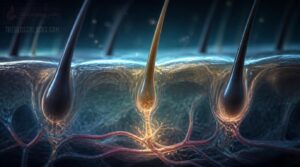
After anagen winds down, the catagen phase takes over. During this brief phase, your follicle shrinks and detaches from its blood supply, cutting off the signals that drove growth. Hair follicle cycling slows sharply here. Since catagen lasts just 2 to 3 weeks, only a small fraction of your follicles are ever in it at once.
Telogen Resting and Renewal

After catagen, your follicle enters the telogen phase, a resting phase lasting 2 to 4 months. The strand stays anchored while a new hair forms beneath it.
Healthy hair follicle cycling keeps roughly 10 to 15% of your follicles in telogen at once, which is why normal hair shedding of 50 to 100 strands per day doesn’t thin your scalp.
This resting stage is also linked to telogen effluvium hair shedding, a condition where an unusually high number of follicles shift into telogen simultaneously, causing more noticeable hair loss.
Exogen Normal Hair Release
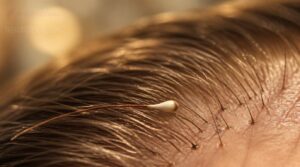
Once the telogen phase ends, the exogen phase begins — your follicle’s regulated shed release.
Staggered exogen drives hair shedding of 50 to 100 hairs per day, keeping density stable across the hair growth cycle.
Watch for these signs it’s working:
- Whole, club-ended shed strands
- Steady daily loss, no sudden spike
- Short new hairs at your roots
- A calm, settled scalp
Seven Signs of Healthy Hair Cycling
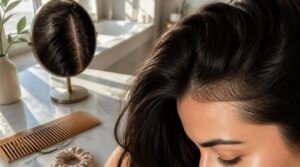
Your hair cycle’s health shows up in measurable, observable ways — if you know what to look for. These seven signs give you a clear framework for reading what’s actually happening at the follicle level. Check how many your hair currently meets.
One of the most telling clues is texture: those soft, fuzzy strands sprouting along your hairline often signal fresh growth, and you can explore how to tell if you can feel your hair growing for more detail.
Steady Monthly Length Gain
Your hair follicles are productive. Each one can add 1 to 1.5 cm per month during healthy hair growth. Track this steadily over two to three months to confirm your baseline.
Steady monthly length gain reflects follicle output minus breakage. Net growth isn’t just elongation; it’s elongation that survives handling intact. Dry, rough strands break before contributing to visible length.
Consistent Scalp Density
While individual follicles cycle at different rates, scalp density should stay relatively uniform across the same regions over months. If you’re seeing a widening part line, it signals a disproportionate telogen shift.
Track your hair density against your own baseline, same lighting and angle each time. Consistent readings confirm your hair follicles are re-entering anagen reliably, maintaining continuous hair coverage.
Balanced Daily Hair Shedding
When your hair shedding cycle is working well, you’ll release roughly 50 to 100 strands daily — a natural part of healthy hair growth. Each hair follicle exits exogen on its own schedule within the hair growth cycle, so daily counts naturally vary.
A longer gap between washes can inflate a single-day total without signaling any real disruption to your cycle.
Visible Short Regrowth Hairs
Short, stubble-like strands near your scalp confirm your hair growth cycle is active. When a hair follicle re-enters growth, it produces new growth at the root. Those fine hairs are proof of healthy cycling, not thinning.
Don’t expect uniformity. Short regrowth hairs appear unevenly because follicles cycle independently. That scattered pattern reflects healthy hair growth working exactly as it should.
Minimal Breakage and Split Ends
Your hair shaft strength tells you a lot about how well you’re protecting growth. During a healthy hair growth cycle, breakage stays minimal and split ends are rare. Common hair breakage causes include:
- Rough towel drying
- High-heat styling
- Aggressive detangling
- Chemical over-processing
- Skipping protective sleep habits
With gentle hair care, your hair elasticity improves and strong length retention becomes possible.
Calm, Flake-free Scalp
Your scalp health shows clearly when shedding stays fine and nearly invisible, a sign that Malassezia activity is low and sebum production is balanced.
Gentle hair care maintains this. Proper shampoo frequency controls oils without stripping the barrier. Prioritize conditioner use on your lengths, and towel dry hair gently. Aggressive rubbing disrupts the stratum corneum and triggers inflammation.
Stable Root-to-tip Thickness
Beyond scalp condition, root-to-tip thickness reflects whether your hair growth cycle is running cleanly. In the anagen phase, the shaft doesn’t taper unless damage accumulates. When the telogen phase turns over normally, most strands hold consistent diameter from root to tip.
If your hair density’s steady but tips look progressively thin, mechanical breakage is the cause.
Normal Shedding Versus Disrupted Hair Loss
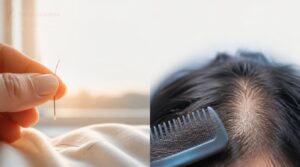
Knowing the seven signs matters. Telling normal shedding apart from disrupted loss sharpens that picture further.
A healthy hair growth cycle releases hairs with a club-shaped telogen root. Four differences:
- Normal shed hairs show a white bulb; breakage leaves short fragments without roots.
- Losing 50–100 hairs daily is typical; sustained increases over weeks signal disruption.
- Telogen effluvium produces diffuse thinning when hair follicles shift into the telogen phase together.
- Normal shedding resolves naturally; disrupted cycling causes persistent density loss.
Factors That Affect Follicle Activity

Your hair cycle doesn’t operate in isolation—several internal and external factors shape how your follicles perform. Understanding what influences follicle activity gives you a clearer picture of why your hair behaves the way it does. Here’s what you need to know.
Hormonal Balance
Because your hormones regulate your hair growth cycle directly, any shift in estrogen, androgens, or thyroid output changes how long your hair follicles stay in the anagen phase. When hormonal balance tips, more follicles don’t complete their active growth and instead move into the telogen phase early, accelerating shedding and reducing visible density.
DHT drives follicle miniaturization through this same mechanism.
Nutritional Status
While hormonal signals control phase timing, nutrition determines whether your follicles can actually complete that work. Protein intake drives keratin synthesis directly, and deficiency shifts follicles toward telogen faster than expected.
- Iron oxygenates matrix cells for active growth
- Vitamin D activates follicular stem cells and extends anagen
- Zinc helps with cell division and scalp health
- Biotin supplementation reinforces your keratin structure
Stress And Sleep
When chronic stress and poor sleep combine, they create a feedback loop that disrupts your hair growth cycle. Elevated cortisol shifts follicle signaling, while sleep loss raises pro-inflammatory activity around your hair follicles, pushing more strands into early telogen.
The result isn’t immediate. You’ll notice increased shedding and slower regrowth weeks later. That delayed hair thinning is the key signal.
Stress-related shedding doesn’t show up right away—it emerges weeks later as delayed thinning, which is the telltale signal
Scalp Health
The scalp is the direct environment your hair follicles depend on. When scalp circulation is compromised, the blood supply to hair follicle stem cells drops, and they can’t deliver the oxygen and nutrients needed to sustain anagen.
Microbial imbalance, excess sebum, and barrier dysfunction generate persistent inflammation that shortens your active growth phases and cuts the hair growth cycle short.
Age And Genetics
Because your genes set the blueprint, age and genetics shape how your hair growth cycle behaves over time. Hair follicle stem cells slow with age, shortening the anagen phase and making regrowth less visible. You may notice:
- Earlier, steadier miniaturization if genetics favor telogen entry
- Uneven regional density across your scalp
- Gradual changes over months, not sudden shedding
Family history matters when choosing any hair thinning treatment.
Medications And Illness
Illness and medication can quietly reset your follicles. Serious infection or fever often triggers shedding weeks to months later, not immediately.
| Trigger | Effect on Cycling |
|---|---|
| Fever/infection | Delayed shedding |
| Chemotherapy | Rapid follicle arrest |
| Thyroid dysfunction | Diffuse thinning |
| Minoxidil, finasteride | Cycle modulation |
Understand this delay and you’ll stop blaming the wrong cause. Unlike hormones or genetics, medication-related shifts often reverse once you stop or adjust treatment. Track timing carefully.
How to Support Healthy Hair Cycling
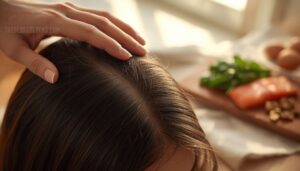
You can’t force follicles to perform, but you can remove what slows them down. Supporting the hair growth cycle comes down to consistent habits, not miracle products.
- Eat adequate protein, iron, zinc, and biotin for nutritional support for hair.
- Protect the anagen phase with balanced hormones and steady sleep.
- Avoid crash diets, which can trigger telogen effluvium.
- Keep your scalp clean, gently massaged, and flake-free.
- Minimize heat and tight styles that stress the shaft.
Small, repeated choices keep follicles cycling on schedule.
When Hair Changes Need Professional Assessment

You’ve learned what healthy cycling looks like. Now recognize when it breaks. Most shedding is temporary telogen effluvium that resolves within three to six months, but certain patterns demand a professional assessment rather than patience.
| What You Notice | What It May Mean | Your Next Step |
|---|---|---|
| Sudden diffuse shedding lasting months | Disrupted growth timing | Seek evaluation |
| Smooth patches or a receding hairline | Follicle miniaturization | Get diagnosed early |
| Redness, itching, scaling, or sores | Inflammatory follicle disorder | Prompt assessment |
Androgenetic alopecia responds best to early intervention, so don’t wait for obvious thinning. Trust your instincts; you know your hair’s baseline better than anyone.
Frequently Asked Questions (FAQs)
How do I know my hair growth cycle?
You can’t see your follicles working, yet your hair reveals everything. Check for steady monthly length gain, visible short regrowth hairs, balanced daily shedding, and a calm scalp. These confirm your growth phase is cycling normally.
What organ is connected to hair growth?
What organ is connected to hair growth? It’s the hair follicle, a mini-organ in your skin. It produces each strand, cycling through growth and rest. Hormones, genetics, nutrition, and stress all influence its activity.
What month does hair grow the most?
What month does hair grow the most? None specifically. Your anagen phase, not the calendar, drives growth. Expect steady gains of roughly 1 to 5 cm per month, since follicles follow their own hair growth timeline year-round.
What are the first signs of hair regrowth?
The first signs of hair regrowth are fine, short hairs appearing at your scalp surface. You’ll notice visible short regrowth along previously thinned areas, often lighter in color, before hair thickness or hair length catches up.
How long does a full hair growth cycle take?
Your hair’s full cycle takes 2 to 7 years, ancient wisdom knew patience. It moves through three distinct phases: the growth phase, change phase, and resting phase. Anagen dominates, lasting roughly 2 to 6 years.
Does hair grow faster in summer or winter?
Does hair grow faster in summer or winter? Research shows no consistent seasonal winner. Your follicles follow their own cycle. What you’re likely noticing is seasonal shedding or reduced breakage, not faster growth.
Can hair growth cycle differ by hair color?
Yes, but mostly in appearance, not biology. Your hair growth cycle runs the same phases regardless of color. Dark strands make shed hairs and regrowth easier to spot, which can skew your perception.
Does cutting hair affect its growth rate?
Like Sampson’s legend suggests, many believe cutting hair weakens or changes it. It doesn’t. Cutting affects only the shaft above your scalp; your hair growth rate stays controlled by the follicle’s anagen phase.
How does pregnancy change the hair growth cycle?
How does pregnancy change the hair growth cycle? Elevated estrogen and progesterone extend anagen, boosting hair density improvement. After delivery, hormonal balance hair shifts trigger synchronized telogen shedding, causing postpartum hair loss. Follicle health usually normalizes within months.
Conclusion
Picture your scalp as a quiet field where every strand follows its own calendar, growing, resting, releasing on schedule. When you understand the signs of a healthy hair growth cycle, you stop fearing the brush and start reading the rhythm.
Watch your length, your regrowth, your roots. Those details tell the truth.
Trust the pattern, support it daily, and your hair will keep its promise.