This site is supported by our readers. We may earn a commission, at no cost to you, if you purchase through links. This content is for general informational and educational purposes only and is not a substitute for professional medical, dermatological, or nutritional advice.

Most eye creams share one thing in common with expensive moisturizers: they’re largely the same product, repackaged and repriced for a two-inch radius of skin. But that doesn’t mean they’re useless. It means the skin beneath your eyes follows different biological rules than the rest of your face, and a well-formulated cream accounts for that.
Under-eye skin is thinner, has fewer oil glands, and sits over a dense network of blood vessels close to the surface. That’s why fatigue shows there first. That’s why dryness settles in faster. And that’s why some ingredients that work brilliantly on your cheeks or forehead can irritate this area badly.
Understanding how under-eye cream works means understanding what those ingredients are actually doing once they absorb. Some hydrate the surface. Others rebuild collagen from within. A few target pigment or reduce morning puffiness. Knowing the difference lets you stop guessing and start choosing products that actually match what your skin needs.
Table Of Contents
Key Takeaways
- Under-eye skin is structurally distinct — thinner, oil-poor, and vessel-rich — which is why it shows fatigue, dryness, and discoloration faster than the rest of your face.
- Each active ingredient targets a different layer and concern: retinoids rebuild collagen over months, caffeine temporarily reduces puffiness, vitamin C addresses pigmentation, and hyaluronic acid hydrates the surface.
- Matching your formula to your specific concern — not price or packaging — determines whether you see real results, since no single ingredient fixes all under-eye issues.
- When the root cause is structural (fat herniation, hollowing, or bone-deep shadow), topical creams reach their limit and clinical options like filler, laser, or surgery are the only effective path forward.
Why Under-Eye Skin Needs Special Care
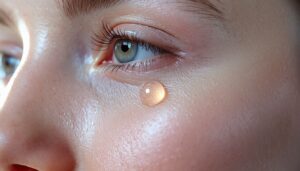
Although your face has several sensitive areas, the under-eye zone is genuinely different. The thin skin here has fewer oil glands, less supportive tissue, and a weaker capacity for moisture retention than most of your face.
This vulnerability makes choosing the right formula especially important—exploring anti-aging eye creams formulated for fine lines can help you find options designed with that delicate, reactive skin in mind.
That reduced barrier function matters. Blood vessels sit close to the surface with limited buffer tissue, so vascular constriction and dilation both register visibly as color shifts. Small fluid fluctuations near the orbit read as puffiness. You can’t hide what this skin barely conceals.
Under-eye skin hides nothing: its thin barrier lets every vessel shift and fluid change show
Repeated blinking and expression add mechanical stress daily, disrupting barrier repair and accelerating fine line formation. UV exposure compounds this by impairing collagen synthesis in tissue that’s already stretched thin. The under-eye area responds quickly to neglect and just as visibly to care.
How Under-Eye Cream Ingredients Work
Because this skin is so reactive, what you put on it needs to work at specific depths. Under-eye formulas aren’t one-size-fits-all. They contain distinct ingredient classes, each targeting a different layer:
- Hyaluronic acid binds water in the outer skin, temporarily reducing the look of fine creases.
- Retinoids penetrate the barrier to alter gene expression in skin cells, building collagen over weeks.
- Vitamin C functions as an antioxidant and helps brighten when the formula keeps it stable.
- Topical caffeine may narrow superficial vessels and reduce puffiness by influencing microcirculation.
Peptides work differently. They mimic cellular signals that prompt collagen-related activity in the dermis, but their effect depends on the specific type and whether it reaches target cells.
What Eye Cream Can Actually Improve
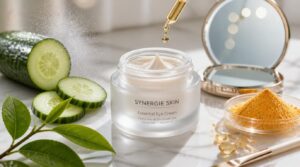
Eye cream works best when you match it to what it can realistically treat. Consistent use with the right formulation can produce visible changes in specific concerns. Here’s what the evidence actually shows.
Fine Lines and Wrinkles
The thinnest skin on your face sits just beneath your eyes. Constant blinking stretches it daily, making fine lines appear here first.
| Ingredient | What It Does for Wrinkles |
|---|---|
| Retinoids | Rebuild collagen over months |
| Peptides | Support skin-matrix protein signals |
| Hyaluronic acid | Hydrates to plump fine lines |
They’re gradual, but retinoids are your most reliable option. Hyaluronic acid softens fine lines faster.
Dark Circles and Discoloration
Dark circles aren’t one problem. They’re often a mix of pigment, visible blood vessels, and structural shadow from thin tissue.
Understanding what triggers dark circles—from genetics to sun damage helps explain why no single fix works for everyone.
Vitamin C helps reduce hyperpigmentation by limiting melanin formation. Niacinamide slows melanosome transfer, evening your tone over weeks. Vitamin K may address vascular discoloration, though evidence remains modest.
If hollowing is the main cause, topicals won’t fully correct it.
Puffiness and Under-Eye Bags
Swelling overnight comes from fluid pooling in loose under-eye tissue, where lymphatic drainage is naturally sluggish. Gently rolling a lymphatic drainage eye massager along the orbital bone each morning can help encourage that sluggish fluid to move.
Caffeine works by triggering vasoconstriction, reducing local blood flow and visible puffiness temporarily.
For true undereye bags caused by fat herniation or skin laxity, topical creams can’t reach the structural cause.
What you’ll realistically get is surface smoothing and reduced fluid, not permanent correction.
When Eye Cream Isn’t Enough
When anatomy drives what you see, eye cream reaches its limit. Some concerns need clinical intervention:
- Tear-trough hollowness works well with dermal filler
- Vascular dark circles may require laser resurfacing
- Excess skin or fat calls for blepharoplasty
- Stubborn pigmentation often needs prescription medication or retinoids
- Irritation-driven redness clears only by removing the trigger
Topicals can’t correct structural causes.
Eye Cream Versus Facial Moisturizer
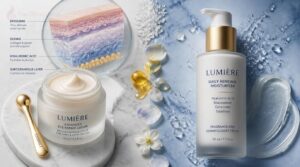
What separates an eye cream from a facial moisturizer isn’t mystery, it’s formulation. Both deliver hydration retention and support skin barrier repair through humectants and occlusives. The functional overlap is real.
What differs is tolerability. The periocular area is more reactive, so irritation risk and texture matter more than category label. Facial moisturizers often contain fragrance or higher concentrations of actives that cause stinging near the eyes. Eye creams are formulated to minimize migration into the lash line and reduce that risk.
For transdermal absorption of active ingredients like retinoids, the label isn’t what counts. Concentration and periocular compatibility determine results. A well-formulated eye cream earns its place by removing the guesswork on safety, not by accessing structures a moisturizer can’t reach.
How to Choose and Apply Eye Cream

The right eye cream only works if you choose it for the right reasons and use it correctly. What you select and how you apply it determines whether you see real results. These six steps cover both.
Match Ingredients to Concerns
The right eye cream starts with knowing your actual concern. For wrinkles, look for retinoids, which drive collagen production over time. For dark circles, vitamin C or niacinamide targets pigment and oxidative pathways. For puffiness, hyaluronic acid temporarily plumps and smooths the surface. A dedicated retinol under-eye cream can accelerate collagen turnover while being gentle enough for the delicate skin around your eyes.
Layering too many actives can backfire, so always pick the ingredient that matches your primary concern first.
Choose Gentle Formulas
Your periocular area reacts to irritants faster than the rest of your face. Look for a fragrance-free noncomedogenic formula with minimal preservatives.
A gentle formula or sensitive skin formulation avoids high-alcohol bases and strong surfactants that disrupt your barrier. Fewer active ingredients mean less cumulative irritation.
When in doubt, choose a dermatologist-recommended product with a short, clean, readable ingredient list.
Patch Test First
Before applying anything new, patch test first. Under-eye skin reacts differently than thicker facial skin.
- Apply to your inner arm and wait 24 hours.
- Check for redness, itching, or swelling.
- Re-test whenever you switch formulas.
Even a fragrance-free formula or sensitive skin formulation that’s dermatologist recommended can still cause irritation. Proper application starts before you open the jar.
Apply a Pea-Sized Amount
Once you’ve confirmed your formula is safe, apply a pea-sized amount for both eyes combined. That small dot is genuinely enough to cover the entire orbital bone. Using more doesn’t improve delivery of antioxidants or improve skin hydration and your moisture barrier; it raises your risk of irritation, milia, and product-driven puffiness.
For best results, use your ring finger to gently tap the product along the orbital bone application technique, moving from inner to outer corner to support lymphatic drainage and minimize puffiness. Proper application starts with knowing less is enough.
Dab Without Tugging
Once you’ve sized your amount, how you apply it matters just as much.
- Dab, don’t rub, letting antioxidants and peptides absorb rather than smear.
- Use light tapping pressure along the orbital bone to avoid shear stress.
- Let your fragrance-free moisturizer settle fully before touching the area.
Tugging disrupts the skin barrier. Proper application means contact, not force.
Use Consistently
Technique gets you started, but consistent use builds real results.
The under-eye skin cycles through cell turnover over weeks, so collagen production and moisture binding improve gradually, not overnight. Apply every day and you reduce transepidermal water loss steadily while oxidative stress protection accumulates. Skip days, and you restart that adaptation window.
Top 3 Under-Eye Care Products
Choosing the right product matters as much as knowing the right ingredients. These three options each target a specific concern—whether that’s pigmentation, hydration, or cell turnover—so you can match what you buy to what your skin actually needs. Here’s what to know before you decide.
1. MooGoo Natural Vitamin C Serum
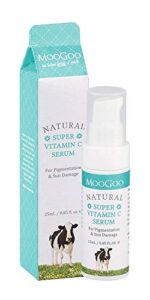
Vitamin C is one of the most researched brightening ingredients in dermatology. MooGoo offers it in a lightweight 0.85 fl oz serum you can apply morning or night.
It’s built to reduce dark circles and hyperpigmentation, but you’ll need 8 to 12 weeks of consistent use to see visible change. A practical caveat: the serum can oxidize and turn yellow-brown within a month, so discard it if the color shifts. It won’t correct darkness tied to hereditary causes or bone structure.
| Best For | People dealing with hyperpigmentation or non-hereditary dark circles who want a lightweight, vitamin C-based serum for daily use. |
|---|---|
| Product Form | Liquid serum |
| Net Weight | 0.85 fl oz |
| Key Ingredient | Vitamin C |
| Dark Circles | Reduces with regular use |
| Eye Puffiness | Not specified |
| Use Frequency | Morning and night |
| Additional Features |
|
- Contains vitamin C, one of the most researched ingredients for brightening and reducing dark circles
- Lightweight serum texture that can be worn morning and night
- Targets hyperpigmentation with consistent use over 8–12 weeks
- Can oxidize and turn yellow-brown within a month, requiring early disposal
- May feel sticky at first and takes time to fully absorb
- Won’t help with dark circles caused by hereditary factors or bone structure
2. Hylamide SubQ Eyes 0.5 Ounce Serum
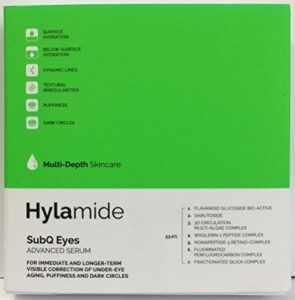
The Hylamide SubQ Eyes serum blends peptides and plant saccharides to rehydrate the under-eye area above and below the skin surface. Its fast-absorbing, lightweight texture means you’ll be makeup-ready within minutes, making it a practical morning choice.
Expect modest improvements in puffiness and fine lines by weeks 6-8 with twice-daily use. Dark circle reduction varies by cause and takes longer. The 0.5 oz airless pump helps preserve formula integrity, but if you notice dryness or flaking with prolonged use, reduce frequency.
| Best For | Those looking for a lightweight daily eye serum to address fine lines, puffiness, and mild dark circles, particularly if they prefer a fast-absorbing formula that fits into a morning routine. |
|---|---|
| Product Form | Cream |
| Net Weight | 0.5 oz |
| Key Ingredient | Peptides & Plant Saccharides |
| Dark Circles | Reduces over time |
| Eye Puffiness | Reduces over time |
| Use Frequency | Consistent use |
| Additional Features |
|
- Combines peptides and plant saccharides to hydrate both the surface and deeper layers of the eye area
- Lightweight texture absorbs quickly, making it easy to layer under makeup
- Airless pump design helps protect the formula and maintain its effectiveness over time
- Results take 6–8 weeks of consistent twice-daily use, and some users see no visible improvement at all
- Will not address hooded eyelids or structural concerns around the eyes
- Prolonged use can cause dryness or flaking in some skin types
3. RoC Retinol Eye Cream 0.50 oz
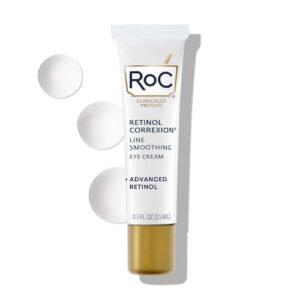
The RoC Retinol Eye Cream pairs RoC Clinical Retinol with an exclusive mineral complex to target crow’s feet and under-eye dark circles. In clinical testing, 90% of users saw reduced dark circles in four weeks, and wrinkles improved by up to 50% over 12 weeks.
It’s hypoallergenic, dermatologist-tested, and non-greasy, so it fits easily into your daily routine. Introduce it every other night to build tolerance, and always apply a broad-spectrum SPF 30+ in the morning since retinol increases photosensitivity.
| Best For | Anyone looking to visibly reduce dark circles, puffiness, and crow’s feet with a clinically tested, dermatologist-approved retinol formula. |
|---|---|
| Product Form | Cream |
| Net Weight | 0.5 oz |
| Key Ingredient | Clinical Retinol |
| Dark Circles | Visible results in 4 weeks |
| Eye Puffiness | Reduces in 4 weeks |
| Use Frequency | Daily use |
| Additional Features |
|
- Clinically shown to reduce dark circles in four weeks, with 90% of users seeing results
- Reduces crow’s feet and wrinkles by up to 50% over 12 weeks
- Hypoallergenic, non-comedogenic, and non-greasy — gentle enough for sensitive skin
- May cause dryness or irritation when first starting out, requiring a slow introduction
- Daily SPF 30 sunscreen is mandatory, adding a step to your routine
- Metal tube packaging can lead to product leakage and make it harder to use every last drop
Frequently Asked Questions (FAQs)
At what age should you start using eye cream?
There’s no single right age to start using eye cream. Visible concerns like early lines, dryness, or discoloration are your clearest signal. For prevention, your late 20s to early 30s is a reasonable starting window.
Can you apply eye cream over contact lenses?
Avoid applying eye cream over contact lenses. Product residue can transfer onto the lens surface, increasing irritation risk. Apply your fragrance-free formula to dry skin before inserting lenses.
Is it safe to use eye cream on eyelids?
Eyelid skin is roughly 5 mm thick, the thinnest on your entire body. Eyelid safety depends on formulation. A dermatologist-recommended, fragrance-free formula labeled for periorbital skin is usually well tolerated. Stinging or redness means stop.
Can eye cream be layered under sunscreen?
Yes. Apply eye cream first and let it fully absorb before SPF. Layering sunscreen over tacky residue causes pilling and uneven coverage, reducing protection.
Does diet or sleep affect under-eye skin appearance?
Both matter. Poor sleep raises cortisol, increasing puffiness. High-salt intake and dehydration worsen fluid retention and dullness. Stronger hydration and consistent rest visibly improve the under-eye area.
Conclusion
The skin around your eyes is roughly four times thinner than anywhere else on your face. That’s not a small margin. That’s a biologically different organ.
The answer to how does under eye cream work comes down to this biology, not clever marketing. Your skin reacts to the right ingredients applied consistently, not to elegant packaging.
Match the formula to your actual concern, patch test first, and commit to regular use. Precision always beats price.