This site is supported by our readers. We may earn a commission, at no cost to you, if you purchase through links. This content is for general informational and educational purposes only and is not a substitute for professional medical, dermatological, or nutritional advice.
On any given day, roughly 10 percent of your scalp hairs aren’t growing at all. They’ve paused, pulled inward, and entered deliberate dormancy that most people mistake for damage or loss.
This is the resting phase of hair follicles, and it’s not a malfunction. It’s a tightly regulated biological process where the follicle shrinks, halts pigment production, and anchors a club-shaped hair near the surface while preparing for the next cycle beneath it.
When this phase extends beyond its normal window, visible thinning follows. Understanding what drives it gives you real control over your hair’s health.
Table Of Contents
- Key Takeaways
- What is The Hair Follicle Resting Phase?
- What Happens During The Telogen Phase?
- How Long Do Hair Follicles Stay Resting?
- How Resting Hair Moves Into Exogen
- How to Identify a Telogen Hair
- Why More Follicles Enter Telogen
- When Resting Triggers Telogen Effluvium
- How to Support Healthy Follicle Reactivation
- Frequently Asked Questions (FAQs)
- Conclusion
Key Takeaways
- At any given moment, 10–15% of your scalp follicles are in a deliberate resting state called telogen, and once that fraction climbs past 20%, visible thinning becomes unavoidable.
- The resting phase isn’t passive — dermal papilla cells keep signaling, Wnt pathways quietly activate, and a new hair shaft begins forming beneath the old one before the club hair even sheds.
- Stress, illness, postpartum hormonal shifts, thyroid dysfunction, and nutritional gaps (especially low ferritin, protein, or vitamin D) are the most common triggers that push too many follicles into telogen simultaneously, causing the delayed mass shedding known as telogen effluvium — typically peaking 2–4 months after the original trigger.
- You can identify a normally shed telogen hair by its white, club-shaped root bulb and clean break — no root sheath — which distinguishes healthy shedding from breakage caused by heat, tension, or mechanical damage.
What is The Hair Follicle Resting Phase?

The telogen phase is the resting stage of your hair’s natural growth cycle, and understanding it explains a lot about why your hair behaves the way it does. It’s more active and structured than the word "resting" suggests. Here’s what you need to know about it.
In fact, the telogen phase sets the stage for what comes next—check out how fast hair grows and what drives each phase to see exactly how rest leads to renewal.
Telogen Phase Definition
The telogen phase is the resting stage of the hair growth cycle, during which your follicle temporarily pauses all hair fiber production. Think of it as a controlled standby mode, not a shutdown.
The follicle shrinks, activity drops to a minimum, and the existing hair shaft simply sits in place, held loosely while the cycle gets ready to renew.
In fact, 5 to 15 percent of scalp hairs are in this resting phase at any given time.
Telogen’s Place in Cycle
Your hair cycle runs in four stages: anagen, catagen, telogen, and exogen.
Anagen is the active growth phase, lasting two to seven years on the scalp. Catagen follows, a brief regression period of roughly two to three weeks.
Telogen comes third, positioned between catagen’s structural breakdown and exogen’s physical shedding, where the follicle quietly gets ready to restart the cycle again.
Resting Follicle Activity
Resting" doesn’t mean inactive. During telogen, dermal papilla cells continue signaling, and secondary hair germ cells express circadian clock genes with roughly 24-hour periodicity, coordinating cellular timing even without visible growth.
Metabolic maintenance keeps blood vessels active, sustaining overall follicle viability. The Wnt pathway activates in late telogen, quietly preparing the follicle for reactivation before the club hair ever sheds.
Percentage of Resting Hairs
At any given moment, roughly 10% to 15% of your scalp follicles occupy the telogen phase, while about 90% remain in active anagen growth and catagen claims just 1% to 2%. Think of it as a standing reserve. When that resting fraction climbs toward 20% or beyond, more club hairs become available to shed at once, and visible thinning follows.
At any moment, 10–15% of scalp follicles rest quietly in telogen — but once that fraction crosses 20%, visible thinning begins
What Happens During The Telogen Phase?

The telogen phase is more active behind the scenes than the word "resting" suggests. Several distinct structural changes unfold inside the follicle during this period, each playing a specific role in preparing the hair for eventual shedding. Here’s what’s actually happening, step by step.
Hair Cell Production Stops
Once the telogen phase begins, hair cell production stops completely. The matrix cells at the follicle base, which previously drove rapid cellular division, simply go quiet. Mitosis ceases, and follicle dormancy sets in. What was an active growth engine is now entirely still.
This growth arrest marks the point where keratinization begins, locking the hair shaft into its resting state.
Lower Follicle Breakdown
What you’re seeing at the lower follicle level isn’t just dormancy. Apoptosis dismantles the lower portion, shrinking it to roughly one-sixth its anagen diameter. Three coordinated changes mark this process:
- Epithelial sheath regression pulls the follicle upward through the dermis
- Dermal papilla detachment ends the nutritional signaling that sustained growth
- Vascular supply reduction starves remaining cells, halting melanocyte activity
Club Hair Formation
As the lower follicle retracts, the remaining hair strand undergoes club hair formation: the root end keratinizes into a firm, bulb-shaped structure. This hardened protein bulb marks where active growth once occurred.
The melanin supply drops sharply here, which is why the club bulb often appears white or translucent, visually distinguishing it from the pigmented shaft above.
Pigment Activity Pauses
The club bulb’s white color points to something deeper. During the telogen phase, melanin synthesis halts completely, because tyrosinase, the enzyme that drives pigment production, goes inactive.
With melanocyte dormancy established, pigment transfer ceases to the shaft entirely. The hair shed from this phase is simply unpigmented, which is why the root end you might notice after washing appears colorless.
Hair Becomes Loosely Anchored
Once the club hair fully forms, your hair sits far less securely in the follicle. Dermal separation from the papilla strips away metabolic support, and only a specialized anchoring complex at the bulge region maintains the loose root grip. During follicle dormancy, minimal force is enough to trigger hair shaft release.
- Club hair anchors without a root sheath during the telogen phase
- The anchoring complex holds position just below the sebaceous gland
- Dermal separation reduces the follicle’s structural grip on the shaft
- Hair becomes loosely anchored, not broken, so it sheds cleanly at the root
- Gentle washing or combing is sufficient to trigger hair shedding
How Long Do Hair Follicles Stay Resting?

The telogen phase doesn’t last the same amount of time for every hair on your body — and that variation tells you a lot about how your follicles actually work. Several factors shape how long a follicle stays in this resting state, from where it’s located to what your body has been through. Here’s what determines telogen duration across different areas and conditions.
Typical Scalp Telogen Duration
On the scalp, the average telogen duration is about 100 days, or roughly three months. During this scalp resting period, the follicle remains dormant and produces no new hair shaft, although the existing club hair usually stays in place.
This telogen phase timeline represents only one part of the hair cycle length. Age, illness, nutrition, and telogen prolongation can extend follicle dormancy.
Resting Time by Body Area
Resting time varies across the body because hair follicle cycling follows regional growth programs. Eyebrow vs eyelash hairs may remain in telogen for about 10 weeks, while beard follicles rest about 12 weeks despite a growth rate near 0.27 mm daily.
Arm hair texture and leg hair shedding reflect short growth phases with proportionally longer resting phases, producing easily released club hairs.
Refractory and Competent Periods
Beyond regional differences in resting time, mouse follicles also pass through functionally distinct telogen states. During the refractory period, strong BMP signaling balance and FGF18 inhibition maintain follicle quiescence, so Wnt activation signals cannot readily trigger growth.
During the competent period, reduced inhibition permits follicle reactivation. This telogen state shift helps coordinate hair follicle cycling, although it remains best defined in mice.
Factors Affecting Telogen Length
Hormones, nutrition, age, illness, and season can alter telogen phase length. Thyroid dysfunction, postpartum estrogen shifts, chronic stress with elevated cortisol, and menopause may prolong the resting phase.
Iron deficiency, low protein intake, zinc deficiency, and vitamin D insufficiency can also delay reactivation. Autoimmune disease, retinoids, anticoagulants, and some psychiatric medications may contribute. When many follicles respond together, telogen effluvium can follow.
How Resting Hair Moves Into Exogen
Telogen ends when the resting club hair enters exogen, the shedding stage of the hair cycle. This change is a normal part of follicle renewal, although it can make hair loss seem more noticeable at times.
The following points explain how release, replacement, and everyday shedding fit together.
Telogen-to-Exogen Transition

At the end of the telogen phase, the follicle enters exogen, the controlled release stage of the hair shedding cycle. The dormant club hair remains in place initially, but its anchoring cells begin to separate. As those anchoring cells break down, the strand loosens and eventually falls away, making room for a new growth cycle—many people notice this shift through the early signs of a healthy hair growth cycle.
This proteolytic shedding process weakens attachment within the exogen root. Follicle reactivation then resets growth, preparing the follicle for the next anagen cycle.
Club Hair Release
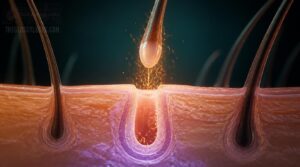
As enzymatic release progresses, proteolytic enzymes weaken the club hair’s attachment within telogen-phase hair follicles.
- MMPs degrade anchoring matrix proteins.
- Washing, brushing, and sleep create mechanical detachment triggers.
- Higher estrogen can delay release.
- Late-summer and autumn shedding often rises.
- Telogen effluvium and inflammatory disorders can accelerate release during the exogen phase of the hair shedding cycle.
New Hair Growing Underneath
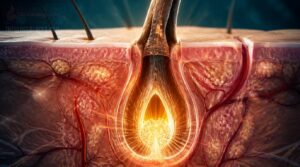
Although the club hair remains in place, follicle reactivation starts beneath it during the telogen phase. Matrix cell activity drives new hair growth, bulb formation process, hair shaft development, pigment production resumption, and structural layer growth, establishing hair regrowth within hair follicles before exogen begins.
| Process | Site | Result |
|---|---|---|
| Matrix proliferation | Bulb | New cells |
| Keratinization | Cortex | Shaft |
| Melanin transfer | Matrix | Color |
| Cuticle formation | Outer shaft | Protection |
Normal Daily Hair Shedding
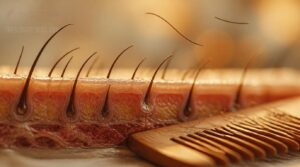
Most people shed 50 to 100 hairs daily as follicles move from the telogen phase into exogen. Independent follicle cycling prevents this turnover from causing obvious hair thinning, even when strand count monitoring shows more loose hairs after combing.
A gentle pull test method may release one or two hairs. Persistent excess shedding, widening parts, bald patches, or scalp discomfort are hair loss signs that can suggest telogen effluvium.
Increased Wash-Day Shedding

More hair in the drain can reflect wash day shedding, not shampoo damage. During the telogen phase, washing releases hairs loosened by follicle cycling.
Track shedding patterns with Wash test monitoring:
- Count post-wash hair loss.
- Note frequency.
- Record hair shedding triggers.
- Inspect telogen shedding signs.
- Seek review if resting phase shedding persists, worsens, or becomes diffuse over time.
How to Identify a Telogen Hair

A shed hair can offer useful clues about where it was in the growth cycle. You can often distinguish a telogen hair from a broken strand by examining its root end. The following features help identify a resting, or telogen, hair.
White Club-Shaped Bulb
A white club-shaped bulb marks a hair that completed the telogen, or resting, phase. During follicle regression, keratinized cells accumulate around the root as matrix-cell division and pigment transfer stop, forming a firm, unpigmented club hair.
This bulb remains attached through exogen, so it helps distinguish natural shedding from breakage, which leaves no bulb. Clinicians also use it as a telogen diagnostic marker.
Dry Keratinized Root
A dry keratinized root confirms that a shed strand completed the telogen phase. During club hair formation, matrix activity stops, the hair bulb loses living cells and pigment production, and the keratinization process seals the root into hard keratin.
Its compact structural composition produces a dry, opaque, brittle tip. This inert structure helps the hair’s functional role as a stable follicular anchor before shedding.
Missing Root Sheath
That opaque tip is without a root sheath. During root sheath degeneration, epithelial sheaths disassemble as the hair follicle enters the telogen phase, leaving the club hair bare around its hair shaft.
Microscopic identification features support trichogram diagnostic criteria:
- Clear, unsheathed bulb
- Keratinized club hair characteristics
- Hair shedding mechanism marker
This helps assess scalp health and hair loss in practice.
Resting Hair Versus Breakage
A telogen hair has a white club-shaped bulb and an intact shaft, whereas breakage shows no bulb because the strand has fractured. Look for tapered, frayed, split, or blunt ends, particularly in dry, damaged hair.
Repeated brushing, heat, and tight styling reduce hair hydration and elasticity, creating shaft fracture patterns. These shorter hairs can cause length stagnation. Gentle detangling helps hair breakage prevention.
Trichogram Hair Cycle Assessment
A trichogram examines plucked hair follicles under a microscope, applying root morphology evaluation to separate anagen from telogen roots. Clinicians pluck 50 or more hairs, mount them on slides, and count the resting phase proportion.
You shouldn’t wash your hair for several days beforehand, as hair pluck timing affects results. That hair cycle assessment distinguishes true telogen shedding from breakage.
Why More Follicles Enter Telogen

Your follicles don’t shift into the resting phase randomly — specific triggers push them there before they’re ready. Some are temporary and resolve on their own, while others need medical attention to correct. Here are the most common reasons more follicles enter telogen than normal.
Illness, Surgery, and Stress
Your body treats serious illness, major surgery, and prolonged stress as physiological emergencies.
High fever triggers a fever-induced hair shift, pushing follicles prematurely into telogen. Systemic inflammation drives a post-illness telogen surge, with visible shedding appearing 2-3 months after recovery.
Elevated cortisol from chronic stress sustains this resting state, and surgical trauma compounds the overall effect through surgical recovery shedding.
Postpartum Hormonal Changes
After delivery, estrogen and progesterone drop sharply, pushing a large proportion of your hair follicles into the telogen phase simultaneously. This postpartum hormonal shift, amplified by a prolactin surge from breastfeeding and subtle thyroid shifts, disrupts hormonal balance across several systems. Oxytocin release sustains this adaptation.
The result is widespread postpartum hair shedding, commonly peaking around 3 months after birth.
Iron or Protein Deficiency
When your ferritin levels fall below ideal, hair follicles shrink and shift prematurely into the telogen phase. Iron helps hemoglobin production and cellular oxygen delivery, both essential to follicle activity.
Protein intake matters equally, since amino acids sustain tissue repair. Diet blockers like calcium can reduce iron absorption. Nutritional screening helps detect these nutritional deficiency patterns early, reducing hair shedding.
Thyroid and Medical Conditions
Your thyroid functions like a metabolic throttle. When TSH level monitoring reveals values outside the 0.5–5.0 mIU/L range, hair follicles shrink and enter resting phase extension. Both conditions drive telogen effluvium and thyroid hair loss through hormonal imbalance effects.
Four thyroid-related triggers that push follicles into the resting phase:
- Iodine deficiency impact reducing hormone synthesis
- Autoimmune thyroiditis generating anti-TPO antibodies
- Excess iodine triggering hyperthyroid episodes
- Undiagnosed hypothyroidism extending follicle rest
Medications Affecting Hair Growth
Some medications trigger drug-induced shedding by shifting follicles toward telogen, causing unexpected hair loss rather than direct follicle damage.
Anticoagulant effects, retinoid impact, and antihyperlipidaemic drugs all contribute.
If you’re experiencing excess shedding, dermatologists review medications from the prior three to four months. Minoxidil usage and finasteride address the root DHT pathway, offering reliable hair regrowth options after telogen effluvium.
When Resting Triggers Telogen Effluvium

Sometimes the body’s response to stress, illness, or hormonal shifts pushes far more follicles into telogen than usual — and that’s when things get complicated.
The hair you lose won’t make itself known right away; it often shows up two to three months after whatever triggered the shift.
Here’s what that process actually looks like, and what it can mean for your hair over time.
Delayed Shedding After Triggers
The delay between a trigger and visible hair shedding often catches you off guard. When a stressor pushes many follicles into telogen simultaneously, they hold there for 2 to 4 months before the exogen phase begins releasing them.
That synchronized follicle exit drives a sudden surge in your hair turnover rate, usually peaking 3 to 4 months after the original trigger.
Acute Telogen Effluvium
Acute telogen effluvium disrupts your hair growth cycle in a predictable pattern. After stress-induced shedding forces hair follicles into telogen, diffuse hair shedding begins roughly 2 to 3 months later. The result:
- Rapid loss across the entire scalp
- Peak shedding around 3 to 4 months post-trigger
- A hair regrowth phase beginning within 6 months
Identifying the trigger early accelerates recovery.
Chronic Telogen Effluvium
When stress-induced shedding continues past six months, it’s classified as chronic. The root stress triggers remain active, keeping more follicles in the telogen phase instead of cycling forward. This slows your hair growth rate, sustains persistent hair shedding, and may worsen diffuse hair loss. Dermatological evaluation identifies the cause, while nutritional deficiency correction and gentle hair care reduce the burden.
| Feature | Acute Telogen Effluvium | Chronic Telogen Effluvium |
|---|---|---|
| Duration | Less than 6 months | More than 6 months |
| Cause | Single identifiable trigger | Ongoing or unresolved stress |
| Hair Shedding | Peaks, then resolves | Persistent and diffuse |
Thinning and Widening Parts
Both acute and chronic forms of telogen effluvium share a visible outcome: part line widening and a diffuse thinning pattern at the crown.
Watch for:
- More scalp visible under bright light
- Ponytail visibly thinner
- Part width measurement widening beyond 2mm
- Heavy clumping during washing
Temporary hair thinning usually resolves within 3-6 months, and hair density loss usually reverses with time.
How to Support Healthy Follicle Reactivation
Supporting healthy follicle reactivation isn’t about one magic fix—it’s a process that works best when you address the right factors in the right order. Your follicles respond to what’s happening inside your body just as much as what you put on your hair. Here’s what you can do to give them the best chance of cycling back into active growth.
Identify The Underlying Trigger
Tracing the cause is what separates temporary shedding from prolonged hair loss. A medical history review examines events 2-6 months before onset, since telogen phase disruption follows triggers by that margin. Laboratory testing evaluates ferritin, TSH, and vitamin D, while medication analysis correlates drug timing with stress-induced shedding or hormonal hair thinning. Stress assessment and nutritional evaluation complete the picture.
| Diagnostic Step | What It Reveals |
|---|---|
| Medical history review | Illness, surgery, hormonal shifts, life stressors |
| Laboratory testing | Iron deficiency, thyroid dysfunction, vitamin D status |
| Medication analysis | Drug-induced telogen phase changes |
| Stress assessment | Physical stressors, emotional triggers, sleep disturbances |
| Nutritional evaluation | Protein gaps, micronutrient shortfalls, absorption issues |
Correct Nutritional Deficiencies
Once your nutritional deficiencies are confirmed, correcting them targets the triggers pushing follicles into telogen. Focus on:
- Iron-rich foods like lentils and spinach (18 mg daily for younger women)
- Protein sources supplying amino acids for follicle rebuilding
- Vitamin D levels, B12 absorption, and zinc intake
Hair growth vitamins paired with proper hair care support healthy hair growth.
Manage Ongoing Stress
Chronic stress pushes follicles prematurely into telogen phase by sustaining elevated cortisol. Mindfulness meditation and deep breathing activate your parasympathetic nervous system, lowering cortisol within minutes.
30 minutes of moderate aerobic exercise daily improves scalp circulation and regulates stress hormones that trigger hair shedding. Prioritizing consistent sleep quality, at 7-9 hours nightly, allows cortisol normalization and helps healthy follicle cycling.
Practice Gentle Hair Care
During the telogen phase, gentle hair care directly helps hair growth by reducing stress on resting follicles.
Protect your scalp hair with these five habits:
- Use scalp-friendly shampooing with sulfate-free products
- Practice detangling without breakage, combing from ends
- Choose heat-free styling tips over hot tools
- Use moisture-retaining washes to preserve scalp oils
- Apply gentle hair handling to reduce hair shedding
Seek Dermatological Evaluation
When scalp thinning persists beyond three months, scheduling a dermatological evaluation gives you clarity no home remedy can provide. Your dermatologist reviews your hair growth stages, asks about timing and triggers, and performs a trichogram to accurately assess how many follicles currently remain in telogen.
Arrive without styling products. That single visit can pinpoint whether your follicles need targeted support.
Frequently Asked Questions (FAQs)
How long do hair follicles stay in resting phase?
On the scalp, follicle resting period lasts roughly three months. Body hair cycles differ, with some follicles resting far longer. During this time, no new shaft grows until the follicle re-enters anagen.
How to get hair follicles out of resting phase?
Getting dormant follicles back into the growth phase requires a layered approach. Minoxidil reactivation, nutrient correction, and stress reduction each target different triggers that keep follicles locked in telogen longer than they should be.
How do I get my hair out of the resting phase?
What actually moves a follicle back into active growth? Nutritional correction, consistent stress management, and daily scalp stimulation all signal resting follicles to exit telogen and re-enter anagen, supporting meaningful, measurable hair regeneration over weeks.
How do you know if your hair is in the resting phase?
You can spot resting hairs by their white club-shaped bulb at the root. A quick hair pull test or daily shedding pattern analysis revealing 50-100 pale-bulbed hairs per day confirms normal telogen turnover.
Can hair follicles permanently stop cycling after telogen?
Telogen looks like an endpoint, but follicle cycling permanence isn’t defined by it. Your follicles retain stem cell reactivation potential after each cycle, meaning permanent follicle shutdown requires structural damage, not simply a resting interval.
Conclusion
Consider a woman who loses handfuls of hair three months after a difficult surgery, alarmed by what looks like sudden damage. Her follicles didn’t fail her. They responded exactly as designed, pushing excess hairs into rest before resetting.
Understanding the resting phase of hair follicles means recognizing that biology operates on a timeline, not a malfunction. Identify the trigger, address what’s correctable, and the cycle restores itself.
Your hair isn’t giving up. It’s just waiting.