This site is supported by our readers. We may earn a commission, at no cost to you, if you purchase through links. This content is for general informational and educational purposes only and is not a substitute for professional medical, dermatological, or nutritional advice.
You’ve bought the same $30 moisturizer three times, hoping the fourth try finally works. But your hair keeps drinking it up in seconds or letting it sit on top like water on a waxed car. That’s not bad luck. That’s porosity, and it’s the missing piece behind most moisture problems.
Your cuticle layer decides how strands absorb and hold onto water, and it works differently for every head of hair. Get hair porosity moisturizer selection wrong, and you’ll fight dryness or buildup for years without knowing why.
Once you know your type, choosing products stops being guesswork and starts making sense.
Table Of Contents
- Key Takeaways
- How Hair Porosity Affects Moisturizer Choice
- Test Your Hair Porosity First
- Choose Low Porosity Hair Moisturizers
- Select Medium Porosity Hair Moisturizers
- Moisturize High Porosity Hair Effectively
- Read Moisturizer Labels by Porosity
- Avoid Porosity Moisturizer Selection Mistakes
- Top 10 Hair Porosity Moisturizers
- 1. Ethnic Gals Low Porosity Leave-In Conditioner
- 2. SheaMoisture Low Porosity Weightless Hydrating Conditioner
- 3. TGIN Sweet Honey Hair Milk Moisturizer
- 4. Mielle Organics Avocado Hair Milk Moisturizer
- 5. Tgin Butter Cream Daily Moisturizer Duo
- 6. SheaMoisture Manuka Honey Yogurt Leave-In Conditioner Mask
- 7. Carol’s Daughter Hair Milk Leave-In Moisturizer
- 8. SheaMoisture Manuka Honey Hair Milk 8 oz
- 9. Eden BodyWorks Coconut Shea Hair Masque
- 10. African Pride Moisture Miracle Leave-In Cream
- Adjust Moisturizers as Porosity Changes
- Frequently Asked Questions (FAQs)
- How to properly moisturize high porosity hair?
- What is the best moisturizer for high porosity hair?
- How to effectively moisturize low porosity hair?
- How to choose products for low porosity hair?
- Can hair have more than one porosity type?
- How often should I retest my hair’s porosity?
- Does porosity affect hair color treatment results?
- Can diet or hydration levels influence hair porosity?
- Is porosity the same across curly and straight hair?
- Conclusion
Key Takeaways
- Your hair’s porosity, not luck or bad products, decides whether moisturizer soaks in or just sits on top, so testing it with a float, spray, or slip test should always come before you buy anything.
- Low porosity hair needs lightweight, water-based formulas plus gentle heat to pry cuticles open, while heavy oils and butters just build up and weigh strands down.
- High porosity hair loses moisture as fast as it takes it in, so layering a leave-in, cream, and sealing oil (the LCO method) is key to locking hydration in place.
- Porosity isn’t fixed for life, since color treatments, heat styling, and even the seasons can shift it, so you’ll want to retest every few months and adjust your routine as your hair changes.
How Hair Porosity Affects Moisturizer Choice

Your hair’s cuticle layer decides how moisturizer behaves once it’s applied. That single detail changes everything about which products actually work for you. Here’s what shapes your hair’s porosity and why it matters for your routine.
If you’re not sure whether your strands are high, low, or somewhere in between, this guide to treating hair based on porosity type walks you through spotting the signs and matching products accordingly.
Cuticles Control Moisture Flow
Think of your cuticle layer like tiny shingles on a roof. When they lay flat, they act as a hydrophobic barrier that blocks water. Cuticle openness decides everything:
- Tightly closed shingles (low porosity hair)
- Balanced, slightly lifted shingles (medium porosity hair)
- Wide-open, damaged shingles (high porosity hair)
- Cuticle layer status shifting from genetics or damage
That’s moisture absorption control in short.
Absorption Versus Moisture Retention
Fast absorption doesn’t guarantee lasting hydration. Low porosity hair soaks up moisture slowly but holds it well. High porosity hair drinks fast, then loses it just as quick.
| Porosity | Retention Pattern |
|---|---|
| Low | Slow in, holds long |
| Medium | Balanced flow |
| High | Fast in, fast out |
| Damaged | Poor retention |
| Healthy | Strong retention |
Hydration balance depends on both, not just one. You can even determine your hair’s category at home by trying simple hair porosity tests like the float or spray method.
Porosity Varies Along Strands
Your roots and ends rarely match. Mechanical stress and sun exposure wear ends harder, causing cuticle lifting and rougher texture there. That’s why one strand can hold mixed porosity levels, absorbing fast at damaged ends while roots resist water.
This root-to-ends difference explains uneven moisturizer results, with ends feeling soft while roots stay thirsty after the same application.
Genetics and Damage Matter
Your porosity isn’t random. Genetic cuticle structure sets your baseline, while bleaching, heat styling, and sun exposure strip the F-layer over time.
- Tight genetic cuticles mean naturally low porosity hair
- Loose cuticle patterns lean toward high porosity hair
- Bleaching removes protective lipids permanently
- Seasonal gene expression shifts porosity slightly
- Hair damage repair needs consistent, targeted care
Test Your Hair Porosity First
Before you buy a single product, you need to know what your hair actually does with moisture. Guessing leads to wasted money and frustrated wash days. Here are five simple ways to test your porosity at home, starting with getting your hair ready.
Prepare Clean, Product-free Strands
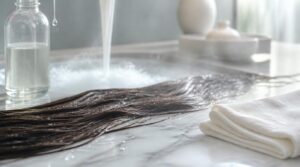
Old product residue skews every result you get. Wash with clarifying shampoo to strip buildup, rinse with clean water, then air dry or blot gently, no towel scrubbing.
| Step | Do This | Why |
|---|---|---|
| 1 | Wash thoroughly | Removes buildup |
| 2 | Rinse fully | Clears residue |
| 3 | Dry gently | Protects cuticle |
Store clean strands flat until testing.
Try The Float Test

Ready for the fun part? Drop a clean strand into room temperature water and just watch it.
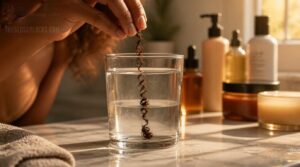
Low porosity hair floats, sometimes past 10 minutes. Medium porosity sinks slowly near the middle. High porosity hair sinks fast, often within a minute. Use room temp water, similar strand lengths, and test multiple sections since mixed porosity patterns are common and results vary along one head.
Perform The Spray Test
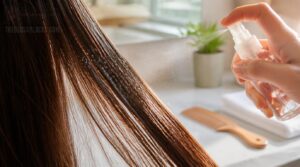
Want a quicker read on your hair? Grab a spray bottle with room temperature water and mist a clean section from six inches away.
- Beading water means low porosity hair
- Slow soak-in signals medium porosity
- Fast absorption points to high porosity hair
- Watch for 10-20 seconds
- Test three sections for accuracy
Keep spray bottle distance and timing consistent for real spray test accuracy.
Check Cuticles by Touch

Your fingers know things your eyes miss. Run them from tip to root in one slow pass, the slip test. Smooth means sealed cuticles. Bumpy means raised ones.
| Feel | Porosity |
|---|---|
| Silky, glassy | Low |
| Mostly smooth | Medium |
| Sandpaper-like | High |
| Mixed texture | Damaged |
| Consistent tip to root | Healthy |
Compare Results Across Sections
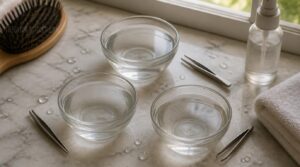
One test alone can fool you. Grab strands from your crown, nape, and sides, then run the float and slip tests on each using the same water and timing.
Section consistency matters since porosity shifts across your head. Strand comparison reveals patterns buildup or damage might hide, guiding smarter product selection before you commit to a full routine.
Choose Low Porosity Hair Moisturizers
Low porosity hair plays by its own rules. Your cuticles stay tightly shut, so heavy products just sit on top and go nowhere. Here’s what actually works to get moisture in and keep it there.
Prioritize Lightweight Water-based Formulas
Low porosity hair shuts moisture out like a closed door, so you need a formula that slips through fast.
Choose lightweight, water-based products for quick absorption and real moisture retention. They won’t clog your scalp, resist humidity without stiffness, and layer well.
For deeper, sulfate-free repair, try an amino acid treatment for natural hair that strengthens strands while keeping your scalp light and breathable.
Add humectant benefits like glycerin to boost your hair care routine without weighing curls down.
Check Water Leads Ingredients
Flip the bottle and read the label. Ingredients get listed by weight, so whatever sits first makes up most of the formula.
For low porosity hair, water should be first or second on the list. Water acts as the main solvent, carrying humectants like glycerin deeper into each strand for real moisture absorption, not surface sitting.
Use Heat for Absorption
Water-first ingredients only get you halfway there. Low porosity cuticles stay shut tight, so warm heat opens them up for real absorption.
- Steam for 5-10 minutes before applying product
- Try a Q-Redew handheld steamer during deep conditioning
- Stick to 120-150°F, cooling water seals cuticles after
Heat-activated moisturizers work even better warmed. Skip anything above 200°F, that just damages strands.
Limit Heavy Oils and Butters
Coconut oil and shea butter feel luxurious, but their molecules run too large to slip past closed cuticles. They just sit on top, causing buildup and weighed-down strands.
Reach for lightweight leave-ins and gentle conditioners instead. If you want oil, try jojoba or argan, both absorb fast without coating your hair or blocking future moisture.
Clarify Every Two Weeks
Even lightweight products build up over time, and low porosity hair holds onto residue fast. Clarify every two weeks with a gentle chelating shampoo, especially in hard water areas where mineral deposits dull curls.
Try an ACV rinse (1 part vinegar, 3 parts water) between washes. Follow up with a hydrating leave-in within 24 hours to lock moisture back in.
Select Medium Porosity Hair Moisturizers
Medium porosity hair sits in a lucky spot, but that doesn’t mean you can grab any product off the shelf. You still need the right balance to keep your cuticles happy and your strands working for you. Here’s what to look for when picking a moisturizer that fits your hair just right.
Balance Moisture and Protein
Medium porosity hair sits in a sweet spot, so your goal is simple: keep moisture and protein working together.
Scan ingredient lists for hydrolyzed keratin or wheat protein paired with humectants like glycerin.
If strands feel rough, cut back protein frequency. If they feel limp, add moisture.
This balance keeps your cuticle layer healthy without tipping toward stiffness or mush.
Choose Light Leave-ins
Look for a lightweight leave-in with water-based formulas listed first on the label. These absorb fast without weighing your strands down.
Humectant benefits shine here too, since glycerin pulls moisture into the shaft. Choose fragrance-free options if your scalp gets irritated easily.
Daily hydration tips: apply leave-in conditioner to damp hair only, keeping application light and even.
Moisturize Dry Ends
While your roots stay balanced, your ends often dry out first since they’re the oldest, most exposed part of your strand.
- Apply a lightweight leave-in to damp ends
- Follow with a small amount of creamy moisturizer
- Try humectant sealing with glycerin for extra hold
- Address split end repair early to stop breakage
This targeted care prevents dryness without weighing down healthy porosity.
Follow Your Hair’s Feel
Your strands talk. Learn to listen.
Track hair softness after each wash. Squeaky or stiff means adjust your gentle conditioners.
| Feel | Action |
|---|---|
| Rough, dry fast | Add moisture |
| Coated, slippery | Cut back product |
| Soft, manageable | Stay the course |
Watch for buildup signs too. If float test results shift, your porosity may be changing.
Avoid Overloading Healthy Cuticles
More product doesn’t mean more moisture, it just means more buildup. Cuticles already balanced don’t need heavy layering.
Stick to a pea-sized amount, applied to damp hair in sections. This keeps formulas lightweight and prevents that stiff, coated feel that signals overload.
If hair starts rejecting moisture like low porosity strands do, buildup is likely the culprit, not your product choice.
Moisturize High Porosity Hair Effectively
High porosity hair asks for a different plan than low or medium porosity. Your cuticles open fast and let moisture slip right back out, so you need a routine built to slow that down. Here’s what actually works to keep your strands hydrated and strong.
Layer Leave-in Cream Oil
High porosity hair loses moisture fast, so layering matters. Try this order:
- Leave-in treatment for hydration
- Light cream to soften strands
- Oil to seal it all in
This method, called LCO, locks water where it belongs and keeps hair soft longer.
Choose Rich Sealing Formulas
That oil step needs the right formula. Look for rich sealing formulas with shea butter, jojoba, or argan oil, these create a barrier that locks moisture in for a full 24 hours.
| Look For | Skip |
|---|---|
| Occlusive plant oils | Mineral oil |
| Fragrance-free seals | Heavy silicones |
| Humectant-oil balance | Water-only sprays |
Warm the product between your palms first. Heat around 40-45°C helps it sink into damp strands evenly.
Add Hydrolyzed Proteins Strategically
Sealing locks moisture in, but gaps in the cuticle still need filling. That’s where hydrolyzed protein comes in, small peptides that patch damaged spots temporarily.
Add it strategically:
- Choose leave-ins listing hydrolyzed keratin or collagen
- Apply after your leave-in, before cream
- Use once or twice weekly, not daily
- Watch for stiffness, a sign of protein sensitivity
- Balance with moisture products to avoid overload
Deep Condition Every Week
Protein fills gaps, but a weekly hair mask is what really rebuilds moisture retention. Wash hair, then apply your mask to damp strands and detangle with a wide-tooth comb.
Cover with a plastic cap and add heat for 15-20 minutes, a steamer or hooded dryer works well. This routine, once or twice weekly, keeps high porosity hair from losing moisture as fast.
Seal Immediately After Hydration
That mask only works if you lock it in fast. Once hair is rinsed and damp, apply castor or olive oil within minutes, before cuticles close back down. This traps moisture in rather than letting it evaporate.
Add a thin second coat after five minutes for extra reinforcement, then reseal nightly to keep high porosity strands hydrated through the week.
Read Moisturizer Labels by Porosity
Ever stare at an ingredient list and have no clue what half of it does? You’re not alone, and it’s easier to figure out than you think. Here’s what to look for on the label, broken down one ingredient type at a time.
Water Supports Initial Hydration
Ever notice water is always listed first on a moisturizer label? That’s not an accident. Initial water wetting softens the strand and opens up cuticle surface contact, letting product spread evenly. Damp hair absorbs faster than dry hair.
Layering water before moisturizer boosts hydration speed and moisture retention, so your hair holds onto softness longer before drying back out.
Humectants Attract Available Moisture
Where does glycerin actually get water from? It pulls moisture straight from the air when humidity is high, and from deeper hair layers when it’s low. That’s humectant effectiveness in action, boosting your outer cortex within minutes.
Pair humectants with a sealant so that moisture doesn’t slip right back out once it’s pulled in.
Emollients Soften Rough Strands
Run your fingers down a rough strand and you’ll feel little raised bumps. Emollients smooth those over, coating each strand so it feels silky instead of straw-like.
Cuticle softening happens fast:
- Fills gaps left by lifted cuticles
- Boosts surface lubrication instantly
- Locks in hair moisture retention
- Reflects light for real shine
- Feels soft after every hair strand test
Oils Slow Moisture Loss
Think of oil as a lid, not a refill. It won’t add moisture, but it seals what’s already there by forming a surface film that slows evaporation.
That’s why oils work best on damp strands, never dry ones. Pair water first, oil second, and you lock in real hydration instead of just adding slip.
Proteins Reinforce Damaged Cuticles
Damaged cuticles have gaps, and proteins fill them. Hydrolyzed keratin sinks into the cortex, boosting moisture by up to 25%. Biomimetic proteins target damaged tips, while heat-activated films guard hair during styling.
Look for these on labels if your hair porosity runs high. Used with protein masks every few weeks, they rebuild strength and support real moisture balance for lasting damage prevention.
Avoid Porosity Moisturizer Selection Mistakes
Even with the right products, a few common missteps can slow your progress. Most of these mistakes come from guessing instead of testing, or from treating every porosity type the same way. Here are the slip-ups to watch for so you can keep your routine on track.
Do Not Diagnose Dryness Alone
Dry hair and high porosity hair can look identical, but they’re not the same problem. Damage mimics dryness when raised cuticles let moisture in fast, then let it escape just as quick.
Dry hair and high porosity hair can look the same, but raised cuticles let moisture rush in only to escape just as fast
Before buying anything, do a moisture retention test. Skipping this step means misinterpreting porosity and wasting money on products that don’t fix the real issue.
Avoid Low Porosity Buildup
Once porosity’s sorted out, low porosity hair care hides its own trap: product buildup. Smooth cuticles let product sit on top instead of soaking in, so dryness after moisturizing often means residue, not lack of moisture.
Stick with lightweight leave-ins, light product application, and a clarifying shampoo every two weeks. Heat-assisted cleansing and water-based moisturizers keep absorption working, preventing residue before it builds.
Prevent High Porosity Moisture Loss
Low porosity hides moisture under buildup. High porosity loses it fast, cuticles lift open and let hydration escape before it does any good.
Fight back with these moisture retention strategies:
- Seal hair after washing with oil, then cream
- Apply a cool water rinse to smooth the cuticle
- Dry hair gently using a cotton t-shirt
- Deep condition weekly for lasting hydration
- Layer products using proven moisture sealing techniques
Limit Unnecessary Protein Treatments
High porosity hair craves protein, but more isn’t always better. Protein overload shows up as stiffness, straw-like texture, and snapping strands that won’t stretch back.
Space treatments every four to six weeks, not every wash. Check labels first: hydrolyzed keratin and wheat protein hide in leave-ins too.
When hair feels brittle, pause protein and restore elasticity with moisture-focused conditioners instead.
Match Texture to Hair Density
Protein isn’t the only thing you can overcorrect. Porosity tells you how your hair controls moisture, but density and texture decide how much product it actually needs.
Fine, coarse, thin, or thick — those variables shape how much product actually reaches your strands, which is why understanding how much henna powder shoulder-length hair needs depends on more than just length alone.
Fine, high-density hair wants lightweight formulas applied at mid-lengths. Coarse, low-density strands need richer creams focused at the roots. Match weight to both, not just porosity, and buildup or dryness stops guessing games.
Top 10 Hair Porosity Moisturizers
Now that you know your porosity type, it’s time to find products that actually work with it. This list covers ten solid picks for low, medium, and high porosity hair. Take a look and see which ones fit your hair’s needs best.
If smoothing frizz is your main goal alongside managing porosity, it’s worth weighing keratin express versus a full keratin treatment before committing to a routine.
1. Ethnic Gals Low Porosity Leave-In Conditioner
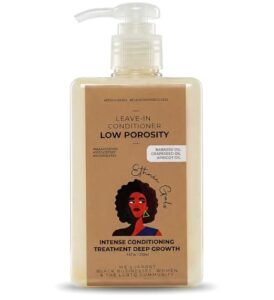
This one’s built specifically for tightly curled, low porosity strands that fight moisture at every turn.
Ethnic Gals uses a water-based formula that slips past sealed cuticles instead of sitting on top. You’ll find shea butter, aloe, babassu, grapeseed, and apricot oils inside, all working to soften without weighing hair down.
Apply it after washing to cut stiffness and boost manageability. Some users find the scent strong, so a patch test helps before committing.
| Best For | People with curly, coily, or tightly coiled low porosity hair who want lightweight, everyday hydration without buildup or heaviness. |
|---|---|
| Shea Butter | Yes |
| Sulfate-Free | Unspecified |
| Paraben-Free | Unspecified |
| Frizz Control | Yes |
| Target Hair Type | Curly/Coily |
| Detangling Support | Yes |
| Additional Features |
|
- Water-based formula absorbs easily into low porosity strands without leaving residue or flakes
- Blend of shea butter, aloe, babassu, grapeseed, and apricot oils softens hair and boosts manageability
- Works well for wash-and-go styles, twist-outs, braids, and other protective styles
- Fragrance is too strong or unpleasant for some users
- No usage instructions on the packaging, leaving frequency and amount unclear
- May feel too heavy for certain hair types
2. SheaMoisture Low Porosity Weightless Hydrating Conditioner
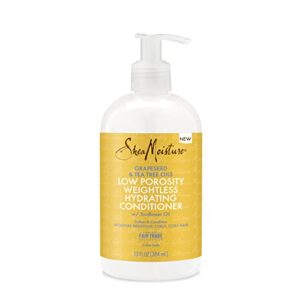
Grapeseed, tea tree, and sunflower oils team up with Fair Trade shea butter in this formula, giving you moisture without the crunch or buildup low porosity hair usually fights off.
It’s sulfate-free, paraben-free, and petrolatum-free, so nothing sits on your strands and blocks hydration.
Glycerin pulls moisture in, while panthenol adds elasticity and shine.
Leave it on for about 3 minutes, rinse well, and pair it with the matching shampoo for the best results.
| Best For | This conditioner is best for people with fine, thick, or 4C low-porosity, protein-sensitive, or moisture-resistant curly and coily hair looking for lightweight hydration. |
|---|---|
| Shea Butter | Yes |
| Sulfate-Free | Yes |
| Paraben-Free | Yes |
| Frizz Control | Yes |
| Target Hair Type | Curly/Coily |
| Detangling Support | Implied |
| Additional Features |
|
- Softens curls and coils while making them easier to manage
- Hydrates deeply without leaving behind buildup or heaviness
- Free of sulfates, parabens, phthalates, mineral oil, and petrolatum
- May feel heavy or build up over time for those with fine or low-density hair
- Some users notice results fading with continued use
- Not a good fit for high-porosity hair that needs richer, protein-based formulas
3. TGIN Sweet Honey Hair Milk Moisturizer
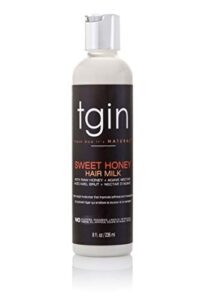
Water sits right at the top of the ingredient list here, which is exactly what low porosity strands want since it absorbs fast without extra effort.
Raw honey and agave nectar pull moisture in, while coconut oil and shea butter round out the nourishment.
You get a lightweight feel that won’t weigh down fine strands, plus it detangles and softens for twist-outs or braid-outs.
Some users find it greasy, so patch test on damp hair first.
| Best For | This moisturizer is best for people with 3c, 4a, or 4c curls and high porosity hair looking to hydrate, define, and detangle without a greasy residue. |
|---|---|
| Shea Butter | Yes |
| Sulfate-Free | Unspecified |
| Paraben-Free | Unspecified |
| Frizz Control | Unspecified |
| Target Hair Type | 3c/4a/4c |
| Detangling Support | Yes |
| Additional Features |
|
- Formulated with raw honey, agave nectar, coconut oil, and shea butter for hydration and nourishment
- Lightweight formula that detangles, smooths, and softens hair, great for refreshing curls, twist-outs, and braid-outs
- Helps reduce breakage and split ends with regular use
- Some users report a greasy or tacky feel depending on hair type
- A few customers say it doesn’t provide long-lasting moisture
- Results can vary based on individual hair texture and porosity
4. Mielle Organics Avocado Hair Milk Moisturizer
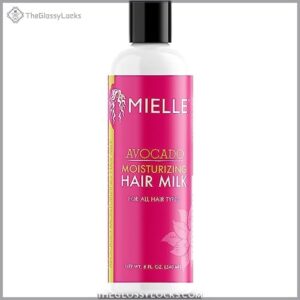
Avocados aren’t just for toast, they bring real fatty acids to the table for hair too.
This hair milk leans on avocado oil and coconut oil for shine and softness, with a water based formula that soaks in fast instead of sitting on strands.
Glycerin and aloe vera juice add extra pull for moisture, while hydrolyzed wheat protein gives light strength without stiffness. Daily use keeps curls refreshed between washes, and it layers well for detangling.
| Best For | People with dry, curly, kinky, or color-treated hair (including low porosity hair) who want a lightweight, daily moisturizer without buildup or heaviness. |
|---|---|
| Shea Butter | Yes |
| Sulfate-Free | Yes |
| Paraben-Free | Yes |
| Frizz Control | Yes |
| Target Hair Type | All Types |
| Detangling Support | Yes |
| Additional Features |
|
- Blends avocado oil, coconut oil, and shea butter for deep moisture without weighing hair down
- Free of sulfates and parabens, with a cruelty-free, vegan formula suitable for all hair types
- Helps reduce frizz while adding shine, softness, and manageability
- Some users find the formula too thick or greasy despite its "lightweight" claims
- Can leave a white residue on certain hair types or with certain application methods
- Fragrance may be too strong for those with scent sensitivities
5. Tgin Butter Cream Daily Moisturizer Duo
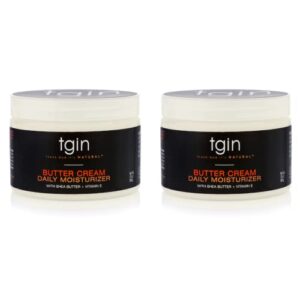
Two bottles, double the staying power. This duo pairs shea butter and cocoa butter to seal moisture from root to tip, with vitamin E thrown in for scalp support and shine.
The thick, creamy texture gives strong slip for detangling and works well on twists or twist-outs. Just know it’s heavy. High porosity or damaged strands soak this up beautifully, but low porosity hair may feel weighed down or waxy without a leave-in underneath first.
| Best For | This duo is best for people with type 3c or 4c curls, especially high-porosity or damaged strands, who want long-lasting moisture and defined twists or twist-outs. |
|---|---|
| Shea Butter | Yes |
| Sulfate-Free | Unspecified |
| Paraben-Free | Unspecified |
| Frizz Control | Yes |
| Target Hair Type | 3c/4c |
| Detangling Support | Implied |
| Additional Features |
|
- Shea and cocoa butter combo seals in moisture for up to two days, even on damp hair
- Vitamin E supports scalp circulation and adds shine without heaviness
- Thick, creamy texture offers great slip for detangling and styling twist-outs or braid-outs
- Can feel waxy or sticky on dry or low-porosity hair
- May cause greasiness or buildup if over-applied, especially on fine hair
- Needs a damp base or leave-in conditioner underneath to absorb properly
6. SheaMoisture Manuka Honey Yogurt Leave-In Conditioner Mask
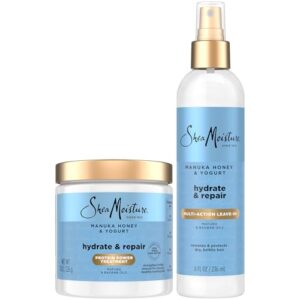
Yogurt in a hair mask sounds strange until you feel what it does. Real yogurt and Manuka honey team up here to add protein and moisture in one step, which helps rebuild strength in brittle strands.
Shea butter, mafura, and baobab oils round out the formula for extra slip and shine. This one’s a solid pick for medium to high porosity hair craving repair, though a few users notice the nozzle can leak.
| Best For | People with dry, damaged, or heat-styled hair (straight, wavy, or curly) looking to rebuild strength and lock in moisture. |
|---|---|
| Shea Butter | Yes |
| Sulfate-Free | Yes |
| Paraben-Free | Yes |
| Frizz Control | Yes |
| Target Hair Type | Straight/Wavy/Curly |
| Detangling Support | Yes |
| Additional Features |
|
- Combines real yogurt and Manuka honey to add protein and moisture, helping reduce breakage
- Enriched with organic Fair Trade shea butter, mafura, and baobab oils for deep nourishment and shine
- Free from silicones, sulfates, parabens, phthalates, mineral oil, and petrolatum
- Some users report the spray nozzle leaking during use
- Fragrance may be too strong for scent-sensitive users
- Breakage reduction and repair results vary, with mixed feedback on effectiveness
7. Carol’s Daughter Hair Milk Leave-In Moisturizer
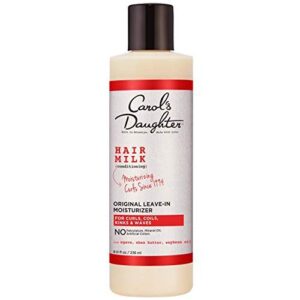
If your last mask felt rich and heavy, this one’s the opposite. Carol’s Daughter Hair Milk leans light, blending water with plant oils so curls soak up moisture without any greasy film.
The 8 ounce bottle works on damp or dry hair, making it easy to slip into a daily routine. It softens strands, calms frizz, and keeps curls manageable all day. A good grab-and-go option for low to medium porosity hair that just needs a quick moisture refresh.
| Best For | People with low to medium porosity curls (1c to 4c) who want a lightweight, daily leave-in that adds moisture without weighing hair down. |
|---|---|
| Shea Butter | Yes |
| Sulfate-Free | Unspecified |
| Paraben-Free | Unspecified |
| Frizz Control | Yes |
| Target Hair Type | 1c-4c |
| Detangling Support | Implied |
| Additional Features |
|
- Absorbs quickly with no greasy residue or crunch
- Versatile enough for all curl types, from loose waves to tight coils
- Great for daily wash-and-go routines, working on both damp and dry hair
- Watery consistency may feel too thin for some users
- Fragrance can be overpowering for those with scent sensitivities
- Fine hair types may experience buildup or greasiness if over-applied
8. SheaMoisture Manuka Honey Hair Milk 8 oz
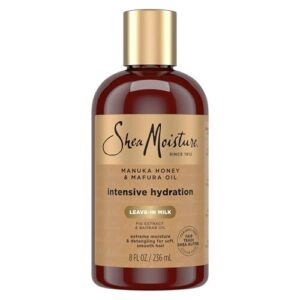
Manuka honey shines here, working as a humectant that pulls moisture straight into the hair shaft. Mafura oil backs it up, smoothing rough cuticles so strands feel softer fast.
This one’s built for low to medium porosity hair that wants lightweight hydration without residue. It defines curls, tames frizz, and leaves a natural sheen, no greasy buildup. Apply to damp hair, comb through, and you’re set for the day.
For extra definition, try pairing it with this step-by-step guide to curling hair, which covers curling irons, flat irons, and no-heat methods.
| Best For | People with dry, brittle, low to medium porosity natural or transitioning hair (3C–4C curls) looking for a lightweight leave-in that detangles and hydrates without heavy residue. |
|---|---|
| Shea Butter | Yes |
| Sulfate-Free | Yes |
| Paraben-Free | Yes |
| Frizz Control | Yes |
| Target Hair Type | 3c/4a/4b/4c |
| Detangling Support | Yes |
| Additional Features |
|
- Manuka honey and Mafura oil deeply moisturize and soften dry strands
- Fair Trade Shea Butter helps detangle hair and reduce frizz for easier styling
- Free from parabens, phthalates, mineral oil, and sulfates
- Thick consistency can make the product hard to dispense from the bottle
- Some users notice stickiness or buildup with frequent use
- Results and value can vary depending on hair type
9. Eden BodyWorks Coconut Shea Hair Masque
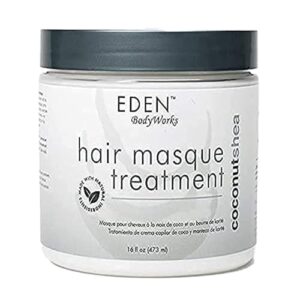
If you need something heavier, this masque steps in where hair milks leave off. Coconut oil and shea butter team up to cut protein loss and breakage, making it a solid pick for thick, curly, or coily strands craving deep hydration.
Apply to clean wet hair, let it sit 15 minutes, then rinse well. Adding heat opens the cuticle further for better penetration. Just know it’s rich, so fine or low porosity hair may feel weighed down.
| Best For | This masque is best for anyone with thick, curly, or coily hair that craves deep hydration and needs extra help fighting breakage. |
|---|---|
| Shea Butter | Yes |
| Sulfate-Free | Yes |
| Paraben-Free | Yes |
| Frizz Control | Yes |
| Target Hair Type | Thick/Curly/Coily |
| Detangling Support | Yes |
| Additional Features |
|
- Coconut oil and shea butter work together to reduce protein loss and breakage
- Sulfate-free and paraben-free formula cleanses gently without stripping hair
- Boosts shine, softness, and overall manageability with regular use
- Rich, thick texture can be tough to rinse out completely
- May weigh down fine or low porosity hair, leading to greasiness or stiffness
- User experiences with frizz control and moisture vary across different hair types
10. African Pride Moisture Miracle Leave-In Cream
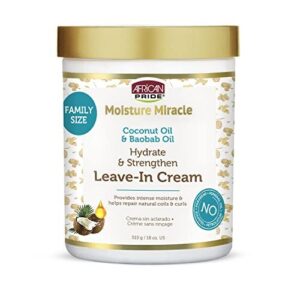
Rounding out the list is a cream built for coily and curly girls who want softness without the heaviness of a masque. Baobab and coconut oils repair damage while reinforcing each strand from within.
It’s paraben, sulfate, and mineral oil free, absorbing fast with zero sticky residue. Great as a daily moisturizer or a pre-swim barrier against chlorine. Just apply light on fine hair since it can feel a bit rich.
| Best For | Coily and curly-haired individuals looking for a lightweight, daily leave-in cream that hydrates and defines without the heaviness of a deep conditioning masque. |
|---|---|
| Shea Butter | Yes |
| Sulfate-Free | Yes |
| Paraben-Free | Yes |
| Frizz Control | Yes |
| Target Hair Type | Coily/Curly |
| Detangling Support | Implied |
| Additional Features |
|
- Infused with baobab and coconut oils to repair damage and reinforce strands
- Free from parabens, sulfates, mineral oil, and petrolatum
- Absorbs quickly with no sticky residue, doubling as a pre-swim barrier against chlorine
- May feel heavy or weigh down finer or thinner hair types
- Some users notice a film-like residue on hair or scalp
- Coconut-derived fragrance may not suit those sensitive to scent
Adjust Moisturizers as Porosity Changes
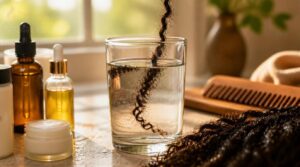
Your hair porosity isn’t set in stone. Treatments, weather, and styling habits can shift it over time, and your moisturizer routine needs to keep up. Here’s what to watch for and adjust along the way.
Reassess After Chemical Treatments
Bleach and color don’t just change your color, they change your hair porosity. That’s why you should retest a few months after any chemical treatment.
Highlighted or blonded strands often turn high porosity in specific spots, so check those areas first.
Track moisture retention and cuticle repair, then adjust your hair regimen and protein balance accordingly.
Monitor Heat Styling Damage
Every time you reach for a flat iron, you’re rolling the dice on porosity. Cuticle lifting shows up as roughness, and moisture loss follows fast.
- Always apply heat protectant first
- Keep tools under safe temperature limits
- Check hair for dryness post-styling
- Watch for reduced elasticity over time
Catching these signs early protects your cuticle damage recovery and keeps moisturizer choices on target.
Adapt to Seasonal Humidity
Your hair porosity doesn’t take a season off. Humid summer air pumps moisture into your strands, while winter heat zaps it right back out.
Humectant ingredients pull less moisture from dry indoor air, so swap them for occlusive moisturizers in winter. Keep indoor humidity between 30-50%, and adjust reapplication timing as the air shifts to keep frizz and dryness in check.
Watch for Product Buildup
Sometimes your moisturizer isn’t the problem, buildup is. Watch for a dull, waxy coating on strands or a scalp that feels tight and itchy soon after washing.
Product buildup mimics low porosity symptoms, blocking moisture and weakening hold. Clarify every two weeks, then retest your hair porosity since results shift once residue clears away.
Track Softness and Moisture Retention
Numbers don’t lie, so let your hair prove its own progress. Run the float test weekly, noting how fast strands sink.
Rate softness after each wash on a simple 1-5 scale, and track results in a notebook or app. Watch moisture retention trends over a month. Faster floating, softer curls, and less frizz all confirm your moisturizer is finally working for your hair porosity.
Frequently Asked Questions (FAQs)
How to properly moisturize high porosity hair?
Ever feel like your curls drink water then dry out an hour later? That’s high porosity hair losing moisture fast. Use product layering with liquid, cream, and oil, then seal immediately for real hair moisture retention.
What is the best moisturizer for high porosity hair?
Look for creamy moisturizers rich in occlusive ingredients like shea butter and castor oil. Pair humectants with sealants using the LCO method, add hydrolyzed protein occasionally, and deep condition weekly to lock in lasting hydration.
How to effectively moisturize low porosity hair?
Think of low porosity hair like a raincoat: water beads and rolls off instead of soaking in. Use water-based products, gentle heat, and clarify every two weeks so moisture can actually get in.
How to choose products for low porosity hair?
Pick lightweight, water-based leave-ins with water listed first, plus glycerin or jojoba oil for slip. Skip heavy butters, apply with gentle heat for absorption, and clarify every two weeks to keep buildup from blocking moisture.
Can hair have more than one porosity type?
Yes. Cuticle condition often varies along one strand, creating mixed porosity zones. Root-to-ends porosity difference is common, with roots low and ends high from damage, so hair strand testing may show different results section by section.
How often should I retest my hair’s porosity?
Your hair tells its own story, shifting like weather with every dye job or humid summer. Do a quick strand test every few months, and always retest after color, heat damage, or new dryness patterns appear.
Does porosity affect hair color treatment results?
Absolutely, yes. High porosity soaks up color fast, risking darker results and quicker fading, while low porosity resists it, causing patchiness. That’s why porosity equalization and pre-color moisturizing matter so much for even, lasting color uptake.
Can diet or hydration levels influence hair porosity?
Your body’s hydration levels shape how hair holds moisture, not the cuticle structure itself. Good water intake and solid nutrient status support elasticity, but dehydration can make low or high porosity hair feel drier and harder to manage.
Is porosity the same across curly and straight hair?
Not quite. Curly hair cuticles sit looser and often lift, raising porosity, while straight cuticles lie flat and tight. Genetics and damage still matter most, so some straight-haired folks show higher hair porosity than curly ones.
Conclusion
What if the right moisturizer was never about the price tag, but about listening to what your strands were already telling you? Your porosity holds the answer. Low, medium, or high, your cuticle sets the rules, and once you test it, guessing ends for good.
Smart hair porosity moisturizer selection tips turn frustration into routine, and routine into results you can actually see. That’s not luck. That’s knowing your hair.