This site is supported by our readers. We may earn a commission, at no cost to you, if you purchase through links. This content is for general informational and educational purposes only and is not a substitute for professional medical, dermatological, or nutritional advice.
Most people blame their hair products when their strands stay dry, frizzy, or limp—but the real culprit is often something they’ve never tested: porosity.
Your hair’s porosity controls how well moisture enters and stays inside each strand.
Low porosity hair repels water like a waxed surface.
High porosity hair drinks it up fast, then loses it just as quickly.
That’s why layering products with the LCO method matters, and this guide to choosing moisturizers for your hair porosity can help you pick products that actually stick around.
Knowing where your hair falls on that spectrum changes everything—from which conditioners actually work to how long your styles hold.
The right hair porosity treatment isn’t one-size-fits-all, and once you identify your type, caring for your hair gets a lot more straightforward.
Table Of Contents
- Key Takeaways
- Hair Porosity Basics
- Determining Hair Porosity
- High Porosity Hair Care
- Low Porosity Hair Care
- Hair Porosity Treatment
- Managing High Porosity Hair
- Caring for Different Porosity
- Maintaining Healthy Hair
- Frequently Asked Questions (FAQs)
- Is Davines good for low porosity hair?
- Can Hair Porosity Change Over Time?
- How Does Diet Affect Hair Porosity?
- Are Professional Treatments Effective for Porosity?
- Can Medications Impact Hair Porosity Levels?
- Does Stress Affect Hair Porosity?
- Can diet affect hair porosity over time?
- Does water quality impact hair moisture retention?
- How does scalp health relate to hair porosity?
- Can stress permanently change your hairs porosity?
- Conclusion
Key Takeaways
- Your hair’s porosity—how open or closed the cuticle is—controls whether moisture gets in and stays there, making it the starting point for any routine that actually works.
- High porosity hair soaks up moisture fast but loses it just as quickly, so sealing with butters, oils, and the LOC method isn’t optional—it’s the whole game.
- Low porosity hair keeps cuticles tightly shut, meaning heavy proteins and oils pile up on the surface instead of helping, so lightweight, humectant-based products are your best move.
- Porosity isn’t fixed—heat styling, chemical treatments, stress, diet, and even your water supply can shift it over time, so testing and adjusting your routine regularly keeps you ahead of the damage.
Hair Porosity Basics
Your hair tells a story — and porosity is the chapter most people skip. Before you can treat it right, you need to understand what’s actually going on beneath the surface.
Digging into common hair porosity issues and how to fix them can be the turning point between a routine that frustrates you and one that actually works.
Here’s what shapes your hair’s porosity from the ground up.
What is Hair Porosity
Hair porosity is your hair’s ability to absorb and hold moisture — and it controls everything. The cuticle function determines what gets in and what escapes, directly affecting your moisture balance and overall hair health. Understanding hair porosity means recognizing three porosity levels:
- Low porosity hair locks moisture out, leaving products sitting on the surface
- Medium porosity hair absorbs and retains water steadily, making it the most manageable
- High porosity hair drinks moisture fast but loses it just as quickly
Knowing where you land changes everything. To better understand your hair type, consider learning about hair porosity tests to determine the best care approach for your specific needs.
Hair Structure and Porosity
Your hair has three layers, and each one plays a different role in how moisture moves through the strand. The cuticle — the outermost layer — controls hair porosity by acting like a gatekeeper. When it lies flat, moisture balance stays stable. When it’s raised or damaged, cortex damage follows, and your hair starts losing what it can’t afford to lose.
That single layer determines whether you’re dealing with low porosity, high porosity, or the more balanced medium porosity. Understanding the concept of hair cuticle structure is essential for effective hair care.
Factors Affecting Hair Porosity
Your cuticle tells the story, but several forces write it. Genetic influence determines where your hair porosity starts — some people are simply born with low porosity or high porosity hair.
From there, outside factors take over:
- Chemical impact — bleaching and color services crack the cuticle open
- Heat styling — flat irons and blow dryers lift and weaken hair structure
- Environmental damage — UV exposure and pollution strip protective surface lipids
- Water quality — hard water deposits minerals that dry out moisture retention
Determining Hair Porosity
Knowing your hair porosity is only useful if you can actually figure out what type you have. Luckily, there are a few straightforward ways to test it at home — and one more clinical option if you want hard data.
Here are three methods worth knowing.
The Float Test
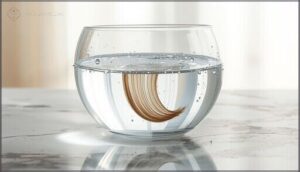
The float test gives you a quick read on your hair porosity — but only if you do it right. Start with hair strand preparation: use clean, product-free strands from your comb, placed gently on room-temperature water. Watch for 2–4 minutes. Low porosity hair stays up top; high porosity sinks fast.
Keep in mind that surface tension and leftover oils affect float test accuracy, so test result variability is real. Always combine this with how your hair actually behaves during washing.
The Spray Bottle Test
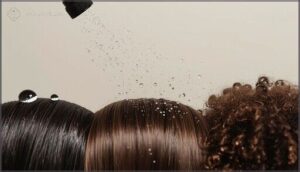
The spray bottle test cuts straight to the truth about your hair’s water absorption. Mist clean, dry strands evenly and watch closely for about one minute.
- High porosity hair soaks up moisture almost instantly
- Low porosity hair shows water beading on the surface
- Medium porosity absorbs gradually and evenly
- Good lighting helps you read the spray technique results clearly
- Hair texture and porosity levels affect how quickly droplets disappear
Dynamic Vapor Sorption

Active Vapor Sorption takes porosity testing further than any home method can. This technique tracks your hair’s exact weight changes as humidity levels shift, revealing how moisture moves in and out of each strand.
That precision matters more than you’d think—hair porosity and drying time are closely connected, and understanding one helps you manage the other.
High porosity hair absorbs water faster, while low porosity resists uptake. Understanding these humidity effects gives you real control over your hair hydration routine.
High Porosity Hair Care
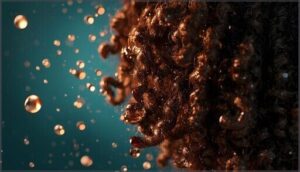
High porosity hair loses moisture fast — the cuticle sits wide open, letting hydration escape almost as quickly as you put it in.
The good news is that the right products can seal things up and give your hair what it needs to thrive. Here’s what actually works.
Using Butters and Oils
High porosity hair loses moisture fast — the cuticle sits open, letting hydration escape before it can do its job. That’s where the right butters and oils change everything. Butter benefits go beyond softness; shea and cocoa butter seal those open gaps, locking moisture in for hours. Oil blends work the same way, with castor and avocado oil forming a protective barrier for real cuticle repair. Apply to damp hair using the LOC method for maximum moisture locking:
- Shea butter seals open cuticles and locks in hydration
- Castor oil creates a heavy seal to prevent evaporation
- Avocado oil penetrates porous strands with deep fatty acids
- Coconut oil reduces protein loss through partial penetration
Leave-in Conditioners and Moisture
Water-based leave-in conditioners are your first line of defense against moisture loss in high porosity hair. These formulas list water or aloe vera first, delivering real hair hydration before anything else.
Humectant benefits come from ingredients like glycerin, which pulls moisture from the air directly into your strands. Product layering a leave-in conditioner over damp hair traps that hydration inside — giving your hair porosity the moisture retention it’s constantly losing.
Heat Protectants and Styling
Heat damage hits high porosity hair harder than any other type — your cuticles are already open, so every degree counts. Keep flat irons between 300°F and 375°F for real hair protection.
Apply a heat protectant serum mid-length to ends before any hair styling. Ingredients like argan oil and glycerin deliver thermal protection, frizz control, and hair sealing — locking moisture in while styling tools do their work.
Low Porosity Hair Care
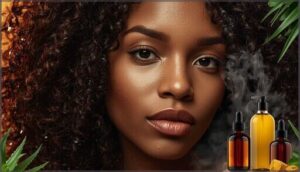
Low porosity hair keeps its cuticles tightly shut, which means moisture struggles to get in — but once it does, it stays put.
Your routine needs to work with that closed structure, not against it. Here’s what actually has an impact on low porosity hair.
Protein-Free Conditioners
Protein-free conditioners are the smart move for low porosity hair care. Your cuticles sit tightly closed, so heavy protein just piles up on the surface instead of getting in. Lightweight products built around humectant benefits — like glycerin and aloe — slip past that barrier and actually raise your moisture balance.
- Gentle formulas with panthenol improve softness without stiffness
- Softening techniques work best on damp hair for better absorption
- Weightless conditioners prevent buildup on resistant cuticles
- Skip keratin and silk proteins — they block, not help
Avoiding Oils and Heat
Your low porosity hair already struggles to let moisture in — heavy oils make it worse, sitting on the cuticle like a locked door. Skip castor and coconut oils; try argan or jojoba instead as lightweight oil alternatives.
Water-based leave-ins with glycerin support hair health and hydration without blockage.
For gentle styling, heat-free methods like braids preserve your cuticle and keep damage prevention on your terms.
Gentle Handling and Trimming
Once you’ve cut out heavy oils, the next step is how you handle your strands day to day. With low porosity hair, the cuticle is tight — and rough handling chips away at that structure fast.
Keep these detangling methods in your routine:
- Finger-detangle on damp hair before reaching for a wide-tooth comb
- Start at the ends, work upward to prevent hair breakage
- Use a satin bonnet nightly for cuticle care and friction reduction
- Trim every 6–8 weeks using sharp shears for clean, damage-free cuts
Hair Porosity Treatment
Knowing your hair’s porosity is one thing — actually treating it is where the real work begins.
The good news is that a few targeted methods can make a serious difference in how your hair holds onto moisture. Here’s what works.
Hydrating Masks and Deep Conditioning
Deep conditioning is one of the most powerful porous hair remedies in your routine. Hydrating products packed with aloe vera, honey, and hyaluronic acid don’t just coat your strands — they penetrate where damage lives. That’s where real moisture retention strategies begin.
| Hair Porosity | Best Hair Mask | Frequency |
|---|---|---|
| High | Honey + castor oil | 1–2x weekly |
| Medium | Aloe vera + silk protein | Weekly |
| Low | Rice water + glycerin | Every 2 weeks |
Follow these mask application tips: section hair into 4–6 parts, apply to ends first, and rinse cool. Deep conditioning benefits build over time — consistency wins.
L.O.C. Method and Silk Protection
After your deep conditioning session, lock that moisture in with the L.O.C. Method — liquid, oil, then cream, applied in that exact order on damp hair. It’s your best tool for hair breakage prevention, especially with high porosity strands that lose hydration fast.
- Liquid: Use a leave-in conditioner with glycerin or aloe vera
- Oil: Choose heavier oils like castor for high porosity hair
- Cream: Seal with a butter-based cream to reduce frizz
Silk accessories and a silk pillowcase cut overnight friction and hold moisture right where it belongs — in your strands.
Managing High Porosity Hair
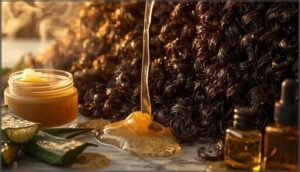
High porosity hair demands a consistent, intentional routine — not just occasional deep conditioning. The good news is that a few targeted habits can make a real difference in how your hair holds up over time. Here’s what to focus on.
Minimizing Styling and Heat
High porosity hair doesn’t forgive heat abuse — and that’s the truth. Every pass above 340°F degrades your hair’s protein structure, widening those already-open cuticles.
For real damage prevention, keep flat irons and wands at 300–325°F, always with a heat protectant applied from mid-length to ends.
When possible, swap hot tools entirely for gentle drying with a microfiber towel or a cool diffuser. These low heat tools and heat styling tips aren’t optional — they’re your hair care foundation.
Avoiding Sulfates and Alcohol
Beyond heat protection, what you wash your hair with matters just as much. Sulfates — like sodium lauryl sulfate — strip your hair’s natural oils and roughen already-lifted cuticles, making porous hair care even harder. Drying alcohols do the same damage. For real moisture retention, switch to sulfate-free shampoo and scan labels for isopropyl or SD alcohol 40.
- Sodium lauryl sulfate pulls moisture out fast
- Drying alcohols leave strands brittle and rough
- Gentle cleansers preserve your hair’s natural oils
- Sulfate-free products support long-term hair porosity health
Regular Trims and Consistency
Trimming is one of the most underrated tools in your hair care routine — especially for high porosity hair. Split ends don’t just sit there; they travel up the shaft and trigger more hair breakage. For high porosity hair, trim every 4 to 6 weeks, removing about a quarter to half an inch each time. Medium porosity? Every 8 to 10 weeks works. Consistent hair maintenance keeps healthy ends intact, improves moisture retention, and gives every hair treatment you apply a real chance to work.
Trim high porosity hair every 4 to 6 weeks — split ends travel, and consistency is what keeps moisture in
- Regular trims reduce split ends by up to 50 percent
- Healthy ends absorb and hold moisture better than damaged ones
- Trim frequency directly affects long-term hair porosity outcomes
Caring for Different Porosity

Not every head of hair plays by the same rules, and that’s actually a good thing. Medium porosity sits in its own lane, and your routine should reflect exactly what your hair needs.
Here’s how to work with your specific porosity type.
Medium Porosity Hair
Medium porosity hair sits right in the sweet spot of all hair porosity types — not too open, not too tight. Your cuticle health stays naturally balanced, which means moisture moves in and out at a steady, manageable rate. That balance makes daily maintenance simpler than you’d expect.
- Your hair absorbs products without heavy buildup
- Moisture balance holds for a full day with basic care
- Hair elasticity stays strong with protein treatments every 4–6 weeks
- Hair treatment masks work best when they combine protein and moisture
- Porosity testing confirms your strands respond evenly to color and styling
Don’t overcomplicate your hair care routine. Light leave-ins and weekly conditioning keep this hair porosity type performing at its best.
Customizing Routines for Hair Type
Your hair care routine should work for your hair — not someone else’s. Start with porosity tests to nail down your hair analysis, then build from there.
High porosity hair needs the LCO method: liquid, cream, oil — in that order. Low porosity hair craves lightweight layers that don’t block moisture entry.
| Hair Type | Routine Adjustments |
|---|---|
| High Porosity Hair | Layer cream before oil |
| Low Porosity | Use steam to open cuticle |
| Medium Porosity | Rotate protein and moisture |
| All Hair Texture Types | Adjust product layering weekly |
| Any Hair Porosity | Monitor, test, adjust consistently |
Hair porosity management isn’t guesswork — it’s hair analysis in action.
Maintaining Healthy Hair
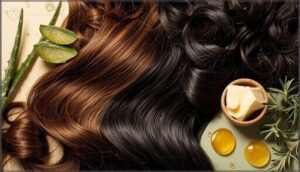
Healthy hair doesn’t happen by accident — it takes the right ingredients, the right products, and a routine that actually works for your hair type.
Once you know your porosity, you can stop guessing and start making smarter choices.
Here’s what to focus on to keep your hair strong and moisturized.
Emollient Ingredients and Warmth
Emollients are hair’s best defense against moisture loss. Think of shea butter, castor oil, and jojoba oil as a sealing team — each one locks hydration into your strands differently. Here’s how to make warmth work for you:
- Use a heat cap deep conditioning treatment with honey or glycerin-based conditioner
- Apply a warm towel steam method to open cuticles before your hair mask
- Seal with castor oil or shea butter while hair is still damp
- Layer jojoba oil moisture last to protect without buildup
Sulfate-Free Shampoos and Locking Moisture
Once you’ve sealed in moisture with emollients, the shampoo you choose either protects that work — or undoes it.
Sulfate shampoos strip sebum retention right off your strands, leaving high porosity hair even more vulnerable.
Sulfate-free formulas preserve Natural Oil Preservation, support pH Balance between 3.5–6.5, and promote Cuticle Sealing for real Frizz Control.
| Feature | Sulfate Shampoo | Sulfate-Free Shampoo |
|---|---|---|
| Sebum Retention | Strips natural oils | Preserves scalp oils |
| Cuticle Effect | Raises and damages | Smooths and seals |
| Best For | Oily scalp only | All porosity types |
Pair your sulfate-free wash with a moisturizing hair mask for lasting sealing benefits.
Protein Treatments and Balanced Routines
Protein treatments are where your routine either levels up — or falls apart.
For high porosity hair, weekly protein applications using hydrolyzed proteins fill open cuticle gaps, locking moisture inside.
Getting your moisture-protein balance right means rotating protein weeks with deep moisture sessions. Think 60% protein, 40% moisture in your weekly rotation.
Hair treatment options like Aphogee or K-18 work best when followed immediately by a moisturizing mask.
Nail your treatment timing and cuticle sealing, and your hair routine and regimen finally starts working with you.
Frequently Asked Questions (FAQs)
Is Davines good for low porosity hair?
Yes, Davines works well for low porosity hair.
Their lightweight formulas, balanced pH, and cuticle‑friendly ingredients support ingredient compatibility without causing buildup — a common struggle with low porosity hair care routines.
Can Hair Porosity Change Over Time?
Your hair porosity can absolutely change over time. Hormonal effects, aging impact, environmental damage, and chemical treatments all shift how your cuticles behave — sometimes gradually, sometimes faster than you’d expect.
How Does Diet Affect Hair Porosity?
What you eat shapes your hair from the inside out.
Pairing a nutrient-rich diet with the right care routine — like the techniques covered in this guide to getting silky, healthy hair for men — gives your strands the best shot at staying strong and smooth.
Protein intake, hydration levels, essential fats, and micronutrient balance all influence cuticle strength, hair moisture, and overall hair health more than most people realize.
Are Professional Treatments Effective for Porosity?
Professional treatments absolutely work.
Keratin smoothing, bond repair systems, protein reconstructors, and deep conditioning masks each target damaged cuticles differently — restoring moisture balance and building resilience back into high porosity hair strands.
Can Medications Impact Hair Porosity Levels?
Medications absolutely can shift hair’s porosity.
Chemotherapy effects damage cuticles during regrowth, while retinoid influence spaces them wider.
Antiepileptic changes, hormonal contraceptive impact, and antidepressant alterations all raise moisture loss over time.
Does Stress Affect Hair Porosity?
Yes, chronic stress raises cortisol levels, which weakens keratin bonds and lifts the cuticle, making your hair more porous. This disrupts moisture retention and leaves strands dry and fragile.
Can diet affect hair porosity over time?
Your diet quietly shapes your hair porosity over time.
Protein intake, omega‑3 fatty acids, biotin‑rich foods, zinc supplementation, and silica sources all support moisture balance, hair health, hair repair, and hair growth.
Does water quality impact hair moisture retention?
water quality absolutely affects moisture retention. hard water effects include mineral buildup that blocks conditioners, while soft water benefits absorption.
chlorine oxidation weakens strands, and a pH balance rinse keeps your cuticle sealed tight.
How does scalp health relate to hair porosity?
Your scalp is the foundation of your hair health. Sebum balance, scalp pH, and microbiome influence directly shape whether your cuticles stay sealed or lift, driving high porosity hair issues.
Can stress permanently change your hairs porosity?
Stress can temporarily raise your hair’s porosity through cortisol impact and oxidative damage, but it won’t permanently alter your hair structure.
Once telogen effluvium resolves and stress drops, new growth restores normal porosity naturally.
Conclusion
Like Goldilocks searching for what’s just right, your hair has been waiting for the routine that actually fits. Now you have the tools to find it.
Understanding your hair porosity treatment needs—whether your strands hoard moisture or lose it fast—cuts through years of guesswork. The right products stop fighting your hair and start working with it. Your hair isn’t difficult; it just needed someone fluent in its language.