This site is supported by our readers. We may earn a commission, at no cost to you, if you purchase through links. This content is for general informational and educational purposes only and is not a substitute for professional medical, dermatological, or nutritional advice.
Most men pick a short haircut and hope the barber figures out the rest. That works until it doesn’t—until the cut grows out wrong, the texture fights back, or the mirror shows something that doesn’t match what you asked for.
Short hair isn’t low-maintenance by default. It’s only low-maintenance when you understand what you’re working with. Your face shape, your hair texture, and the right two or three products make the difference between a cut that holds and one that falls apart by noon.
This hair styling guide for short hair men breaks down exactly what you need to know—starting with the decisions that matter before you ever pick up a comb.
Table Of Contents
- Key Takeaways
- Choosing The Right Short Hairstyle
- Essential Tools and Products for Styling
- Step-by-Step Styling Techniques
- Styling Tips for Different Face Shapes
- Common Mistakes to Avoid
- Maintaining Short Hair Daily
- Frequently Asked Questions (FAQs)
- How to style short hair for men?
- Are men’s short hairstyles easy to maintain?
- How to play up short male haircuts?
- How do you style a short hairstyle?
- What are the best mens short haircuts?
- What is a short to medium-length men’s hairstyle?
- How to make short hair look good for a male?
- What is the 5 rule for short hair?
- What products to use to style short hair for men?
- Is short hair for men attractive?
- Conclusion
Key Takeaways
- Your face shape and hair texture aren’t just factors — they’re the whole decision, and getting them wrong means even a clean fade looks off.
- Short hair isn’t low-maintenance by default; it only stays sharp when you trim every two to four weeks and stick to a consistent routine.
- One product matched to your hair type beats a shelf full of options — matte clay for texture, pomade for shine, and nothing more than a pea-sized amount either way.
- Prep work — towel-drying right, using heat protection, and styling on dry hair — does more for your final look than any product ever will.
Choosing The Right Short Hairstyle
The right short haircut starts with knowing what actually works for you. Your face shape, hair type, and lifestyle all play a role in that decision.
Browsing taper fade haircut styles by face shape and hair type can help you zero in on what’ll actually look good on you.
Here’s what to think about before you sit down in the chair.
Matching Hairstyles to Face Shape
Your face shape is the foundation of every great haircut. Get this wrong, and even the cleanest fade looks off. Use this face shape guide to lock in your haircut selection:
- Oval – Almost anything works. Crew cuts, crops, quiffs.
- Round – Add height on top. Quiffs and high fades create proportional balance.
- Square – Jawline focus is natural. Textured crops soften sharp angles.
- Diamond – Keep forehead impact minimal. Short tapers balance wide cheekbones.
- Rectangular – Avoid extra height. Fuller sides reduce length visually. For more inspiration on oval face options, explore suitable hairstyles for oval faces.
Considering Hair Type and Texture
Your face shape narrows the options — your hair type seals the deal.
Hair Texture Analysis matters because thick hair styling needs clays and thinning shears to kill bulk, while fine hair solutions rely on texture sprays that add lift without collapse.
Curly hair care means moisture first, always. Coarse hair management takes layering.
Know your mens hair, and short haircuts actually work for you. For tips on choosing the best hair product for men’s short haircuts, see expert recommendations.
Popular Short Styles for Men
Once you know your hair type, picking from today’s short haircuts gets easier.
Crew Cut Styles stay clean with minimal effort. Fade Techniques sharpen any outline.
Textured Crops use choppy layers to add movement. Quiff Methods build height on top, while Pompadour Variations go bolder with more lift.
These mens haircuts cover every personality — from the clean-cut professional to the guy who wants his style to do the talking.
Essential Tools and Products for Styling
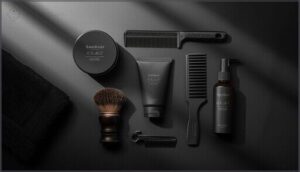
The right tools and products make all the difference between a style that holds and one that falls apart by noon.
A water-based, matte-finish pomade with no scent or tint keeps your style locked in without the stiffness — see our top picks for long-lasting mustache wax to find your perfect match.
Before you touch your hair, you need to know what’s actually worth having in your kit. Here’s what you need to get started.
Must-Have Styling Tools
Your tools decide the outcome before you touch a single product. Every man serious about haircare and grooming needs these five in rotation:
The right technique matters just as much as the products—learning how to fade your beard into a bald head can sharpen your jawline and pull your whole look together.
- Blow dryers with a concentrator nozzle for directing lift and shape
- Hair clippers with adjustable guards for clean home maintenance
- Styling brushes to distribute product and set direction
- Trimming kits for sharp necklines between barber visits
- A handheld mirror to check every angle
Best Hair Products for Short Hair
Products run the show. Narrow it down to what actually works well — hold levels, finish, and how it washes out.
| Product | Hold & Finish | Best For |
|---|---|---|
| Matte Clay | Strong, matte finishes | Textured crops, quiffs |
| Pomade | Medium, slight shine | Side parts, slick backs |
| Sulfate Free Shampoos | Cleansing, no residue | Daily haircare |
Pick one styling product. Own it.
Product Recommendations by Hair Type
Your hair type runs the whole show here. Fine straight hair needs lightweight options — Uppercut Shake and Rake Powder adds grip without drag.
Thick hair demands stronger control, so a high hold clay pomade like Firsthand Supply keeps short styles locked. Wavy hair responds well to sea salt sprays. Match your styling products to your hair texture first, and every grooming tip, product recommendation, and haircare routine starts making sense.
Match your styling products to your hair texture first, and everything else falls into place
Step-by-Step Styling Techniques
Getting your hair to look right comes down to what you do before you ever touch a hair product. Once you nail the basics, the rest falls into place fast.
Here’s exactly how to prep, build texture, and pull off a clean finish every time.
Prepping Short Hair for Styling

Prep work is what separates a sharp haircut from a sloppy one. Start with hair cleansing using a sulfate-free shampoo, and spend 60 to 90 seconds on a scalp massage to lift buildup.
Towel-dry by pressing, not rubbing. Apply heat protection before blow-drying with medium heat. For product application, work on fully dry short hair so your clay or pomade actually grips.
Creating Volume and Texture
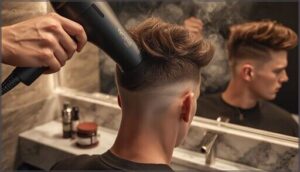
Volume starts at the roots, not the ends. Point your dryer upward from underneath while lifting with your fingers — that’s how lift methods actually build height on a textured crop or pompadour.
Finish with a light matte clay pressed into dry hair for real texture products grip. Hair layering from your barber makes every styling tip easier, and keeps short hair looking intentional with minimal effort in your haircare and grooming routine.
Achieving Sleek and Polished Looks

A sleek, polished finish is all about control — not product overload. Start with slightly damp hair, then work a pea-sized amount of water-based pomade through evenly.
- Blow dry with the nozzle pointing roots to ends
- Comb in clean, even strokes for shine control
- Finish with a light mist of hairspray
That locks the style without stiffness.
Styling Tips for Different Face Shapes
Your face shape changes everything about how a haircut lands.
If you’re weighing options with a strong center part, it’s worth checking whether the eboy haircut suits your particular face shape before committing to that curtain sweep.
The wrong cut can throw off your proportions, while the right one pulls it all together.
Here’s what works best for each face shape.
Styles for Oval Faces
Oval faces have the upper hand — almost any short style works. Your face shape analysis is done before you sit in the chair.
Fades, crops, textured quiffs, a classic pompadour — all fair game. Keep the top moderate in height so your face doesn’t run too long.
| Short Style Tips | Best For Oval Face |
|---|---|
| Textured Crop | Adds casual structure |
| Low Fade | Keeps proportions clean |
| Short Quiff | Moderate height works best |
| Classic Pompadour | Balanced volume |
| Side Part | Tidy, adaptable finish |
Styles for Round Faces
Round faces need height, not width. Your facial structure calls for Angular Looks that stretch the face vertically — that’s where Round Face Cuts earn their name.
- High fade with a textured crop
- Short quiff with tight sides
- Slimming Styles using a mid fade and matte clay
- Pompadour with short, clean edges
- Asymmetrical fringe to break the circular outline
Keep Hair Texture Tips simple: go light on the sides, stack volume on top.
Styles for Square and Angular Faces
Square faces already have strong structure working in their favor. The goal isn’t to fight your Facial Structure — it’s to work with it.
Angular Face Cuts like crew cuts and clean Fades highlight that defined jawline without overdoing it. A slightly textured top softens Sharp Hairlines while keeping the look sharp.
Square Jaw Styles in Mens Hairstyling thrive with controlled volume and a Face Shape that draws the eye.
Common Mistakes to Avoid

Even the right haircut can go sideways when a few bad habits creep in.
Most guys make the same mistakes without realizing it, and they’re all easy to fix once you know what to watch for. Here’s what to stop doing.
Overusing Styling Products
Too much product overload is one of the most common mistakes in mens hairstyling. Product buildup leads to clogs in follicles, causes scalp irritation, and makes styling short hair harder the next morning.
Hair breakage follows when coated strands get brittle. For cleaner grooming tips, start with a pea-sized amount. Less product means better control, less styling issues, and stronger results overall.
Choosing Incompatible Haircuts
Getting the product right matters, but picking the wrong haircut does even more damage. These are the biggest face shape mistakes, hair type conflicts, and lifestyle incompatibility traps to dodge:
- Forcing a pompadour on fine hair — it falls flat by noon.
- Fade styles that fight cowlick challenges and expose swirls.
- Age considerations ignored — aggressive men’s haircuts clash in corporate settings.
- Short hair cuts mismatched to your actual face shape.
Neglecting Maintenance and Trims
Skipping trims is where most men quietly lose control of their look. Overgrown hair blurs your fade, kills your shape, and makes styling short hair twice as hard.
Split ends cause hair damage that no conditioner can fix. Scalp irritation builds when dense growth traps oil and sweat.
| Issue | Fix |
|---|---|
| Hair grows past shape | Trim every 2–3 weeks |
| Split ends and damage | Regular haircare and maintenance |
Maintaining Short Hair Daily

Short hair is easy to manage, but only if you stay on top of it.
Skip the routine and even the cleanest cut starts looking rough within days.
Here’s what actually keeps it sharp.
Washing and Conditioning Tips
Your wash routine is the foundation of every good style. Strip your scalp daily and you’re fighting dryness before you even pick up a product.
- Shampoo frequency: every other day works for most, up to 5-6 times weekly if you sweat hard
- Water temperature: lukewarm to wash, cool rinse to seal the cuticle
- Conditioning tips: pea-sized amount, mid-lengths only, rinse after two minutes
Regular Trimming Schedule
Most short haircuts start losing their edge around week two. Buzz cuts and high fades need a trim every one to three weeks — hair growth is relentless, and even a few millimeters softens the lines.
Textured crops and crew cuts can stretch to four weeks before they look sloppy. Lock in a fixed cut interval now. Consistent styling schedules are the simplest maintenance tip nobody follows.
Quick Styling for Busy Mornings
Most mornings, two minutes is all you’ve got — so make them count. The real time saving move is prepping the night before: set out your product and comb, brush your hair in its natural direction before bed, and sleep on a smooth pillowcase.
Come morning, apply matte clay to 70-percent-dry hair, scrunch or finger-style in seconds. These haircare tips and styling hacks keep your short hair sharp without the scramble.
Frequently Asked Questions (FAQs)
How to style short hair for men?
Less is more — that’s the first barber shop secret most guys ignore. Pick the right product for your hair texture, stay consistent with trims, and short hair practically styles itself.
Are men’s short hairstyles easy to maintain?
Yes, men’s short hairstyles are mostly low effort.
Daily Routine styling takes under 90 seconds, and Styling Products are minimal.
The tradeoff is Haircut Frequency — plan on a trim every two to four weeks.
How to play up short male haircuts?
Want to own your look without overthinking it? Play up mens haircuts by matching the fade to your facial structure, layering texture products, and committing to a haircare routine that keeps short style trends sharp.
How do you style a short hairstyle?
Start with towel-dried hair, work a small amount of matte clay or pomade through from back to front, then shape with your fingers.
Simple product application and the right styling tools make all the difference.
What are the best mens short haircuts?
Crew cuts, textured crops, buzz cuts, and low taper fades are the most dependable mens haircuts and styles right now.
Your face shape and hair texture decide which one actually works for you.
What is a short to medium-length men’s hairstyle?
Short to medium men’s hairstyles hit that sweet spot — hair length from about 5 to 4 inches, covering everything from textured crops to undercuts.
Enough length to style, short enough to keep sharp.
How to make short hair look good for a male?
Pick the right haircut for your facial structure, use a matte clay or pomade suited to your hair texture, and trim every three to four weeks.
Clean edges and the right product make all the difference.
What is the 5 rule for short hair?
The 25 rule is a quick face shape analysis tool. Measure the earlobe distance to your chin — under 25 inches means short hair proportions work. Over that, keep some length.
For a full walkthrough, this guide on how to style short hair for a wedding covers every step, from damp-hair prep to the 60-second dance test.
What products to use to style short hair for men?
Matte clay, pomade, and styling wax each serve a different purpose.
Match the product to your hair type and the finish you want — that’s the real foundation of mens grooming done right.
Is short hair for men attractive?
Yes, short hair is attractive on men. The right fade or crop sharpens your facial structure, signals confidence, and earns respect before you say a word.
Conclusion
Like a well-broken-in tool, great style becomes second nature once you know how to use it.
This hair styling guide for short hair men gives you everything you need—the right cut for your face, the right products for your texture, and the techniques to make it hold.
Stop leaving your look up to chance. You’ve got the knowledge now. Own the chair, own the mirror, own the result.