This site is supported by our readers. We may earn a commission, at no cost to you, if you purchase through links. This content is for general informational and educational purposes only and is not a substitute for professional medical, dermatological, or nutritional advice.
That brown spot on your cheek didn’t show up overnight, even though it feels that way every time you catch it in the mirror. It’s the result of months, sometimes years, of UV exposure, old breakouts, or hormonal shifts quietly telling your melanocytes to work overtime. Tyrosinase, the enzyme behind pigment production, doesn’t care that you’d rather it stayed dormant.
Here’s the good news: dermatology has caught up. Ingredients like vitamin C, niacinamide, and tranexamic acid now target hyperpigmentation at the source, with clinical data to back their claims.
I tested dozens of formulas to find the best skincare products for dark spots, from drugstore heroes to high-end serums that actually earn their price tag. Your clearer skin starts with knowing which ones deliver.
Table Of Contents
- Key Takeaways
- 10 Best Skincare Products for Dark Spots
- 1. RoC Multi Correxion Moisturizer
- 2. La Roche Posay Dark Spot Serum
- 3. Peter Thomas Roth Brightening Treatment Cream
- 4. Palmer’s Tone Correcting Face Cream
- 5. Skinceuticals Metacell Renewal Moisturizer
- 6. Olehenriksen Vitamin C Dark Spot Serum
- 7. Clinique Even Better Dark Spot Clearing Face Serum
- 8. Topicals Faded Brightening Serum
- 9. CeraVe Retinol Skin Serum
- 10. Paula’s Choice Discoloration Repair Serum
- Key Active Ingredients That Fade Dark Spots
- What Causes Dark Spots and Hyperpigmentation
- How to Choose The Right Dark Spot Treatment
- How to Use Dark Spot Correctors for Best Results
- Frequently Asked Questions (FAQs)
- Which products are best for dark spots?
- What is the best product to remove dark spots from skin?
- What is the best skincare routine for dark spots?
- What skincare products are good for dark spots on skin?
- What is the best truly product for dark spots?
- What are the best products for dark spots?
- How to get rid of dark spots on upper back?
- What is a good dark spot remover?
- What is the best serum for dark spots?
- How to get rid of dark spots?
- Conclusion
Key Takeaways
- Dark spots come from different causes—sun damage, acne inflammation, hormones, and genetics—so matching your treatment to the actual cause—so matching your treatment to the actual cause matters more than grabbing any random product.
- Look for proven ingredients like vitamin C, niacinamide, tranexamic acid, kojic acid, and azelaic acid, since these are backed by clinical data showing they actually block melanin production rather than just masking spots.
- Results take real patience—most people need 8 to 12 weeks of consistent use before seeing noticeable fading, so daily commitment matters more than which specific product you pick.
- Daily SPF isn’t optional if you want your treatment to work, since skipping sunscreen lets new dark spots form even while your actives are fading old ones.
10 Best Skincare Products for Dark Spots
I’ve spent years testing dark spot treatments in my practice, watching which ones actually deliver on their promises and which fall flat. The ten products below made the cut because they’ve got the clinical data, the ingredients, and the real-world results to back them up. Here’s what earned a spot on your shelf.
If cystic breakouts are more your concern than surface discoloration, this guide to proven cystic acne spot treatments breaks down what actually calms deep, painful blemishes.
1. RoC Multi Correxion Moisturizer
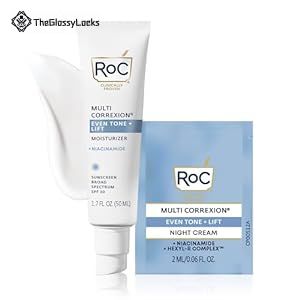
If your morning routine needs one product that pulls double duty, start here. RoC Multi Correxion Moisturizer pairs Hexyl-R Complex with niacinamide to fade discoloration while SPF 30 blocks the UV rays that create new spots in the first place.
Clinical testing found improved elasticity and firmness within just one week — fast enough that you’ll actually stick with it. The lightweight, non-greasy formula absorbs quickly and sits well under makeup, so there’s no pilling or waiting around before your next step.
It’s non-comedogenic, hypoallergenic, and dermatologist-tested, which makes it a safe starting point for sensitive or acne-prone skin. Worth noting: some users report packaging changes affecting scent and pump function, and it’s not water-resistant, so reapply every two hours if you’re sweating or outdoors.
| Best For | Simple daily routines targeting dullness and early dark spots |
| Key Ingredient | Hexyl-R Complex |
| SPF | 30 |
Best For: People who want a simple daily moisturizer that targets dullness, early dark spots, and sun protection all in one step.
| Key Ingredient | Hexyl-R Complex |
|---|---|
| Format | Moisturizer |
| Fragrance Free | No |
| Time To Results | 1 week |
| Sensitive Skin Safe | Yes |
| Sun Protection | SPF 30 |
| Additional Features |
|
- Combines Hexyl-R Complex and niacinamide with SPF 30 for both discoloration treatment and daily sun defense
- Lightweight, fast-absorbing formula that works well under makeup without a greasy or heavy feel
- Gentle enough for sensitive skin, being non-comedogenic, hypoallergenic, and dermatologist-tested
- Not water-resistant, so it needs reapplying every two hours during sweat or sun exposure
- Some users have noticed scent changes and pump issues since the switch to plastic tubes
- May not fully address deep-set age spots or more pronounced wrinkles
2. La Roche Posay Dark Spot Serum
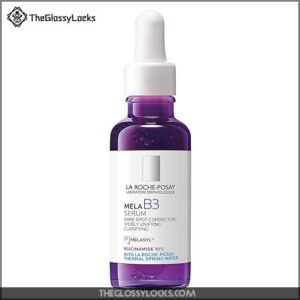
RoC earns its spot with SPF, but what if sun protection isn’t your main problem? La Roche-Posay’s Mela B3 Dark Spot Serum answers that with a different tool entirely: patented Melasyl, paired with 10% niacinamide to block melanin transfer at the source.
Give it 8 weeks, and clinical testing shows real improvement — not overnight, but reliable. The gel texture absorbs fast, layers cleanly under sunscreen, and won’t leave residue.
What sets it apart is tolerability. Sensitive and rosacea-prone skin often reacts to actives, yet this formula holds up, dermatologist-tested for exactly that concern. At $44.99, it’s priced for people who want results without gambling on their barrier.
| Best For | Stubborn dark spots on sensitive or rosacea-prone skin |
| Key Ingredient | Niacinamide 10% + Melasyl |
| Fragrance Free | No |
Best For: Those with stubborn dark spots on sensitive or rosacea-prone skin looking for a gentle yet effective brightening solution.
| Key Ingredient | Melasyl + Niacinamide |
|---|---|
| Format | Serum |
| Fragrance Free | Yes |
| Time To Results | 8 weeks |
| Sensitive Skin Safe | Yes |
| Sun Protection | None |
| Additional Features |
|
- Formulated with Melasyl and 10% Niacinamide to visibly reduce dark spots, sun spots, and post-acne marks
- Fragrance-free, allergy-tested, and gentle enough for sensitive or rosacea-prone skin
- Lightweight, fast-absorbing texture that layers well under moisturizer and sunscreen
- Requires consistent use for 4–8 weeks before visible results appear
- Doesn’t offer sun protection or moisturization, so it must be paired with SPF and moisturizer
- Premium price point may not suit budget-conscious shoppers
3. Peter Thomas Roth Brightening Treatment Cream
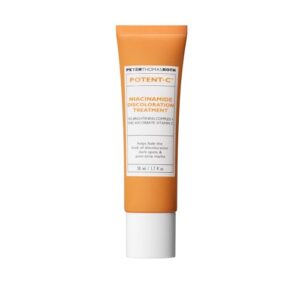
La Roche-Posay bets on one mechanism done well. Peter Thomas Roth takes the opposite approach, stacking five brightening actives into a single gel-cream. Its 15% Brightening Complex blends niacinamide, tranexamic acid, kojic acid, alpha arbutin, and a pentapeptide, hitting discoloration through multiple pathways instead of just one.
Does more ingredients mean better results? In this case, a 12-week study of 34 women showed visible fading in both age spots and post-acne marks. That’s a longer runway than La Roche-Posay’s eight weeks, but the payoff includes THD Ascorbate, a stabilized vitamin C that adds antioxidant support most single-mechanism serums skip.
At $65, it’s pricier — worth it if you want one product doing the work of three, though it’s not formulated for sensitive skin.
| Best For | People dealing with uneven skin tone, dark spots, or discoloration from sun damage, aging, or acne who want a multi-ingredient formula and don’t mind paying a premium price. |
|---|---|
| Key Ingredient | 15% Brightening Complex |
| Format | Gel-Cream |
| Fragrance Free | No |
| Time To Results | 12 weeks |
| Sensitive Skin Safe | No |
| Sun Protection | None |
| Additional Features |
|
- Contains a 15% Brightening Complex that targets discoloration through multiple pathways
- Lightweight gel-cream texture that absorbs easily for many users without heavy residue
- A pea-sized amount goes a long way, making the product last
- Some users experience stickiness or increased oiliness on the skin
- Considered expensive compared to similar brightening products
- Results can vary, with some users seeing little to no improvement even with consistent use
4. Palmer’s Tone Correcting Face Cream
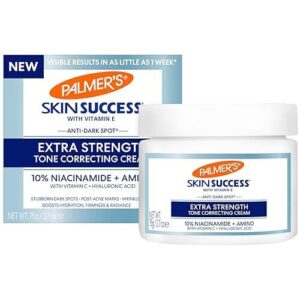
Not every fix needs a designer price tag. Palmer’s Tone Correcting Face Cream proves that with 10% niacinamide, vitamin C, retinol, and hyaluronic acid working together in one jar — a lineup that targets dark spots, post-acne marks, and uneven tone without draining your wallet.
In fact, clinical testing backs it up — 100% of users saw brighter skin within 4 weeks, making it a solid pick among top-rated skin brightening serums worth comparing before you buy.
Palmer’s own testing found that every single participant reported visible lightening with regular use. That’s a strong showing for a drugstore price point, though the texture runs thick, so give it time to sink in before adding sunscreen or makeup.
| Best For | Budget-conscious users targeting dark spots and uneven tone |
| Key Ingredient | Niacinamide 10% |
| Sensitive Skin Safe | Yes |
| Fragrance Free | No |
| Additional Features | Hyaluronic acid, cruelty-free, pore-minimizing |
Best For: Palmer’s Tone Correcting Face Cream is best for anyone with sensitive skin looking to fade dark spots and post-acne marks without spending a fortune.
| Key Ingredient | Niacinamide 10% |
|---|---|
| Format | Face Cream |
| Fragrance Free | No |
| Time To Results | Several months |
| Sensitive Skin Safe | Yes |
| Sun Protection | None |
| Additional Features |
|
- Combines 10% niacinamide with vitamin C, hyaluronic acid, retinol, and amino acids for a well-rounded formula
- Paraben-free and phthalate-free, making it gentle enough for sensitive skin
- Lightweight, fast-absorbing texture that works well under makeup
- Applying too much can leave a thick, white residue on the skin
- Visible improvement in hyperpigmentation may take several months of consistent use
- Some users find it hard to absorb fully, leading to buildup on the skin or hairline
5. Skinceuticals Metacell Renewal Moisturizer
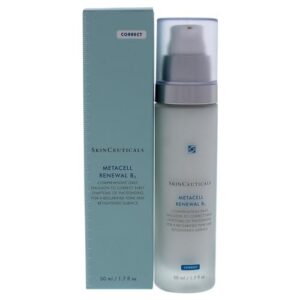
Consider this the splurge pick, the one you save for when you’re ready to commit. SkinCeuticals Metacell Renewal B3 packs 5% niacinamide to slow pigment transfer, a 2.5% tri-peptide concentrate for firmness, and 15% glycerin that hydrates without any greasy residue.
It’s built for early photoaging — think sun spots, blotchy tone, early loss of elasticity — using a patent-pending emulsion that helps actives absorb evenly. Two pumps, morning and night, layered under broad-spectrum sunscreen, is the routine to stick with.
Don’t expect overnight drama. Results build gradually, and the price tag isn’t small, but for anyone chasing science-backed skin tone correction, it’s a formula worth the investment.
| Best For | Anyone dealing with early signs of photoaging—like sun spots, uneven tone, and mild loss of elasticity—who’s ready to invest in a science-backed formula for gradual improvement. |
|---|---|
| Key Ingredient | Niacinamide 5% |
| Format | Serum |
| Fragrance Free | No |
| Time To Results | Gradual |
| Sensitive Skin Safe | Yes |
| Sun Protection | Requires SPF |
| Additional Features |
|
- Combines 5% niacinamide and 2.5% tri-peptide concentrate to target pigment and firmness
- Hydrates with 15% glycerin without leaving a greasy residue, so it layers well under makeup
- Patent-pending emulsion technology helps active ingredients absorb evenly
- Premium price point may not fit every budget
- Requires consistent twice-daily use over time to see results
- Some users notice little to no change in wrinkles or brown spots
6. Olehenriksen Vitamin C Dark Spot Serum
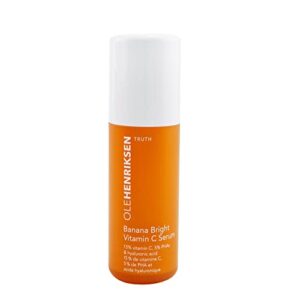
Citrus-scented and unapologetically potent, Ole Henriksen’s Banana Bright serum runs on 15% ethyl ascorbic acid, a stable vitamin C form that fights dark spots while shielding skin from daily environmental stress.
That concentration sits above what’s usually needed for visible brightening. A 5% PHA mix sloughs off dulling cells, while hyaluronic acid keeps things hydrated.
Texture’s lightweight, though some users notice a sticky finish or mild irritation if not fully absorbed. Apply once daily before sunscreen — dark spots fade gradually with consistent use.
| Best For | This serum is best for people with normal, dry, combination, or oily skin who want to brighten their complexion and fade dark spots with a daily vitamin C treatment. |
|---|---|
| Key Ingredient | 15% Vitamin C |
| Format | Serum |
| Fragrance Free | No |
| Time To Results | Gradual |
| Sensitive Skin Safe | Caution |
| Sun Protection | None |
| Additional Features |
|
- Combines 15% vitamin C, 5% PHAs, and hyaluronic acid to brighten skin while hydrating and improving firmness
- Lightweight formula absorbs quickly and works for all skin types
- Citrus scent makes it pleasant for daily morning use
- May leave a sticky residue or noticeable hue if not rubbed in completely
- Some users experience irritation, rashes, or swelling
- Synthetic orange fragrance may not appeal to everyone
7. Clinique Even Better Dark Spot Clearing Face Serum
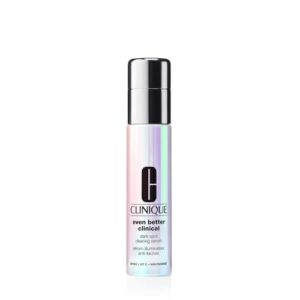
A proprietary molecule sets this one apart. UP302, derived from dianella ensifolia, teams up with two vitamin C forms—magnesium ascorbyl phosphate and ascorbyl glucoside—to fade dark spots while calming oxidative stress.
In clinical testing, 96% of women with lighter skin tones saw visible improvement in sun and age spots after 8 weeks. Deeper skin tones fared even better: 100% showed reduction in post-blemish marks over the same stretch. That’s a rare split-result you don’t see often, and it matters if you’re shopping for something that actually works across tones.
Niacinamide and a gentle dose of salicylic acid round things out, exfoliating just enough to speed brightening without stripping the barrier. It’s fragrance-free, dermatologist-tested, and safe one day after IPL. At $63, it’s not cheap, but the data backs the price tag.
| Best For | Anyone dealing with stubborn sun spots, age spots, or post-blemish marks who wants a dermatologist-tested serum gentle enough for sensitive or post-procedure skin. |
|---|---|
| Key Ingredient | UP302 + Vitamin C |
| Format | Serum |
| Fragrance Free | Yes |
| Time To Results | 8 weeks |
| Sensitive Skin Safe | Yes |
| Sun Protection | None |
| Additional Features |
|
- Clinically shown to visibly improve dark spots across a range of skin tones, with 96–100% of women seeing results after 8 weeks
- Fragrance-free, non-acnegenic, and allergy-tested, making it a safe pick for sensitive skin
- Gentle enough to use just one day after IPL treatment, with niacinamide and salicylic acid to support brightening
- $63 price point may feel steep for budget-conscious shoppers
- Requires consistent daily use for a full 8 weeks before real results show up
- Some users may see little to no visible improvement, especially with shorter-term use
8. Topicals Faded Brightening Serum
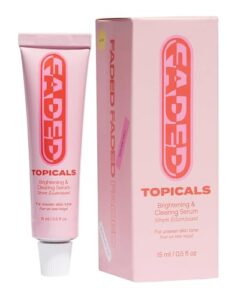
Five actives, one jar — that’s the pitch behind Topicals Faded. Niacinamide, tranexamic acid, azelaic acid, kojic acid, and arbutin all work different angles on discoloration, which makes sense given that dark spots rarely have a single cause.
The formula is dermatologist-tested and built specifically with melanin-rich skin in mind, so tone isn’t a limiting factor here. Ease in slowly: once weekly at first, then build up as your skin adjusts. Most users notice real fading of acne marks and hyperpigmentation between six and eight weeks in.
Texture-wise, it’s a lightweight cream-serum that layers easily under moisturizer. One catch — it’s not fragrance-free, so anyone with reactive or highly sensitive skin should patch test first. Vegan, cruelty-free, and flexible enough for spot treatment or all-over use.
| Best For | Anyone dealing with dark spots, acne marks, or uneven tone from breakouts, especially those with melanin-rich skin looking for a gentle, dermatologist-tested option. |
|---|---|
| Key Ingredient | 5 Active Blend |
| Format | Cream-Serum |
| Fragrance Free | No |
| Time To Results | 6-8 weeks |
| Sensitive Skin Safe | Caution |
| Sun Protection | None |
| Additional Features |
|
- Combines five active ingredients (niacinamide, tranexamic acid, azelaic acid, kojic acid, and arbutin) to target discoloration from multiple angles
- Lightweight cream-serum texture layers easily under moisturizer and works for spot treatment or all-over use
- Vegan, cruelty-free, and safe for all skin tones with daily use
- Contains fragrance, so those with sensitive or reactive skin should patch test before regular use
- Shouldn’t be combined with AHAs, BHAs, retinols, or tretinoin in the same routine
- Results take time, with most people seeing visible fading only after six to eight weeks
9. CeraVe Retinol Skin Serum
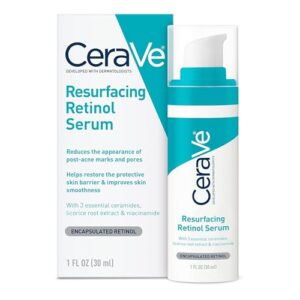
Retinol scares people off — the redness, the peeling, the purge phase nobody warns you about. CeraVe’s Skin Renewing Retinol Serum solves that with encapsulated retinol, which releases slowly so your skin adjusts without the usual freak-out.
Three ceramides rebuild your barrier while niacinamide quietly works on tone underneath. Hyaluronic acid keeps things hydrated, so you’re not choosing between smoother texture and comfortable skin. Use it nightly, start with a pea-sized amount, and always pair it with SPF the next morning — retinol makes skin more sun-sensitive, full stop.
At $18.68, it won’t rival prescription tretinoin. But for fading post-acne marks and evening out rough texture on sensitive or acne-prone skin, it’s a smart, low-risk entry point into retinol without the typical learning curve.
| Best For | Anyone with acne-prone, oily, or sensitive skin who wants to fade post-acne marks and smooth out texture without jumping straight into harsh prescription-strength retinol. |
|---|---|
| Key Ingredient | Encapsulated Retinol |
| Format | Serum |
| Fragrance Free | No |
| Time To Results | Varies |
| Sensitive Skin Safe | Yes |
| Sun Protection | Requires SPF |
| Additional Features |
|
- Encapsulated retinol releases slowly, easing skin into the routine with less irritation
- Ceramides and niacinamide support the skin barrier while calming redness and brightening tone
- Budget-friendly way to target post-acne marks, enlarged pores, and uneven texture
- Initial dryness, redness, or peeling is common when starting out
- A temporary purge phase with more breakouts can happen before things improve
- Requires daily SPF, since retinol increases sun sensitivity
10. Paula’s Choice Discoloration Repair Serum
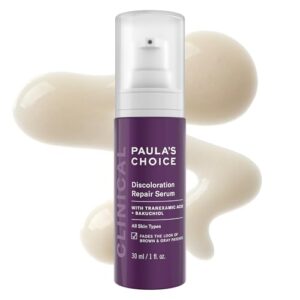
Small bottle, big job — this serum targets brown and gray patches with 3% tranexamic acid, a heavy hitter for stubborn discoloration and melasma. Niacinamide backs it up at 5%, breaking apart existing pigment while blocking new transfer at the cellular level.
Bakuchiol steps in as a gentler retinol alternative, encouraging cell turnover without the redness or peeling that keeps people away from actual retinoids. Milk thistle and vitamin E round things out, calming skin while the actives do their work.
Results take patience: expect 8 to 12 weeks of consistent use, starting three times weekly before building tolerance. Fragrance-free and formulated for all skin tones, it’s a smart pick for melasma-prone or sensitive skin — just don’t expect overnight miracles.
| Best For | Anyone dealing with stubborn brown or gray patches, melasma, or post-acne marks who wants a gentle, fragrance-free option suited to all skin tones. |
|---|---|
| Key Ingredient | Tranexamic Acid 3% |
| Format | Cream |
| Fragrance Free | No |
| Time To Results | 8-12 weeks |
| Sensitive Skin Safe | Yes |
| Sun Protection | None |
| Additional Features |
|
- Combines 3% tranexamic acid and 5% niacinamide to target discoloration from multiple angles
- Includes bakuchiol for gentle cell turnover without the irritation typical of retinoids
- Soothing formula with milk thistle and vitamin E, safe for sensitive and melasma-prone skin
- Requires 8–12 weeks of consistent use before visible results appear
- Needs a gradual introduction (starting at 3x/week), so it’s not a quick fix
- Some users notice a mild natural scent or greasy feel if overapplied
Key Active Ingredients That Fade Dark Spots
Not all dark spot products work the same way, and that comes down to what’s actually in them. Once you know which ingredients target melanin production versus cell turnover, you’ll read labels like a pro. Here’s what to look for, and why each one earns its spot on your shelf.
Vitamin C and Tyrosinase Inhibition
For fading dark spots, vitamin C earns its reputation the old-fashioned way: data. At 10%, L-ascorbic acid cuts tyrosinase activity by 45% within 30 minutes. Pair it with ferulic acid, and inhibition stretches past 24 hours—the logic behind SkinCeuticals C E Ferulic, a dermatologist recommended staple.
Think of it as your skin’s antioxidant shield against future spots.
Niacinamide for Brightening and Tone
Where vitamin C blocks pigment production, niacinamide works downstream—stopping melanosomes from reaching surface cells. At 5% concentration, it calms inflammation, repairs your barrier, and regulates oil, smoothing texture within weeks. Well-tolerated even on sensitive skin, it pairs beautifully with vitamin C, tranexamic acid, kojic acid, or alpha arbutin for layered, compounding results against stubborn tone. Niacinamide’s role in melanosome transfer inhibition is key to its skin-brightening effects.
Retinol and Cell Turnover
Cell turnover is where this ingredient earns its reputation. Epidermal turnover rate jumps to 1.5 layers daily, cutting cycle time from 28 to 14 days. Dark spots surface and shed faster, while melanin transfer reduction hits 30% in vitro.
At 0.3–0.5% concentration, you’ll also see collagen synthesis boost without the irritation higher doses bring, plus steady barrier repair by week four.
Tranexamic and Kojic Acid
Where retinol renews, this duo interrupts pigment at the source. Tranexamic acid blocks plasmin, the enzyme that triggers tyrosinase; kojic acid, fermented from Aspergillus oryzae, suppresses it directly. Together at 2–5% and 1–4%, they cut hyperpigmentation by 30% in eight weeks.
Apply twice daily, moisturize after, and always wear SPF—kojic can sensitize, so patch test first.
Alpha-Arbutin and Azelaic Acid
For dual-action clarity, pair alpha-arbutin with azelaic acid. Bearberry-derived arbutin blocks tyrosinase gently, at 1–2%, fading hyperpigmentation without hydroquinone’s risks. Azelaic acid, 10–15%, calms acne-related redness while inhibiting pigment production.
This dermatologist-recommended combo suits sensitive, acne-prone skin—rosacea included. Layer under sunscreen, moisturize well, and patch test first. You’ll get brightening and anti-inflammatory benefits in one dark spot corrector routine.
What Causes Dark Spots and Hyperpigmentation

Before you pick a product, it helps to know what you’re actually treating. Dark spots don’t all come from the same place, and your skin’s telling a specific story with each one. Here’s what’s really going on underneath.
Sun Damage and Age Spots
Sunbathing in 2006? Your skin’s still cashing that check. UV exposure speeds melanin overproduction, and age spots surface on hands, shoulders, and cheeks years after photodamage begins.
Sun damage from years ago still shows up later, as age spots on hands, shoulders, and cheeks
- Overactive pigment cells cluster, creating tan-to-brown patches
- Damage starts in the dermis, surfacing later
- Backs of hands show heaviest sun exposure
Daily SPF 30 remains your best sun damage repair strategy.
Post-Inflammatory Hyperpigmentation From Acne
Because inflammation drives melanin overdrive, that pimple you picked leaves a souvenir. Post-inflammatory hyperpigmentation can appear even without visible redness, lasting 6-12 months epidermally or years if dermal. Darker skin tones face higher risk.
| Pigment Depth | Fading Time | Best Ingredient |
|---|---|---|
| Epidermal | 6-12 months | Niacinamide |
| Dermal | Years | Tranexamic acid |
Prevention beats correction—every time.
Melasma and Hormonal Triggers
Your hormones might be the real culprit behind those stubborn patches. Pregnancy triggers melasma in up to 70% of women, while estrogen and progesterone ramp up tyrosinase activity and melanin output. Thyroid disorders and PCOS raise your risk too.
Hormonal melasma responds best to niacinamide and tranexamic acid—both calm pigment overdrive without fighting your body’s chemistry.
Genetics and Skin Tone Factors
Ever notice how spots hit some skin tones harder? Blame your genes. Melanin gene variants in OCA2 and TYR set your baseline pigment risk, while UV exposure flips these genes into overdrive.
Ethnic skin differences matter clinically—darker skin tones carry higher hyperpigmentation risk and need gentler, gradual treatment to avoid rebound melanin production.
How to Choose The Right Dark Spot Treatment

Not every dark spot product works the same way on every skin type, and that’s where things get tricky. Your tone, sensitivity level, and budget all play a role in picking the right formula. Here’s what to weigh before you commit to one.
Safe Options for Melanin-Rich Skin
Melanin-rich skin doesn’t play by the same rules—overtreat it, and hyperpigmentation gets worse, not better.
- Vitamin C (10–20%) for antioxidant brightening
- Niacinamide to strengthen your barrier
- Tranexamic acid for stubborn discoloration
- Azelaic acid to calm redness while fading spots
- Mineral sunscreen with zinc oxide daily
Pair these with gentle cleansing, and you’ll fade spots without triggering new ones.
Minimizing Irritation and Sensitivity
Going gentle matters as much as going effective. Start with a patch test on your inner forearm, wait 48 hours, then build tolerance slowly—0.5% retinol, not 2%.
Choose fragrance-free, noncomedogenic formulas labeled dermatologist tested. Apply with gentle tapping, never rubbing, and follow with barrier repair using ceramides. Post-treatment soothing with aloe calms redness before it starts.
Drugstore Versus High-End Formulas
Once your skin tolerates actives, the next question is budget. A $12 drugstore cream and a $130 serum can both fade dark spots—what matters more is ingredient concentration and consistency.
- Vitamin C: drugstore ~5%, high-end up to 20%
- Texture: luxury feels richer, absorbs slower
- Packaging: airless pumps preserve potency longer
- Long-term results: nightly use beats price tag
How to Use Dark Spot Correctors for Best Results
The best formula in the world won’t fix a thing if you’re using it wrong. How, when, and how often you apply these products matters just as much as what’s in the bottle. Here’s exactly how to build your routine so you actually see results.
Building a Morning and Night Routine

Since timing makes or breaks any dark spot corrector, order matters more than most people think. Cleanser application comes first, then serum timing within five minutes—vitamin C in the morning, niacinamide layered in after.
At night, focus on treatment consistency: apply your spot treatment, then moisturizer. Skip the exfoliation schedule on active nights to avoid irritation.
Layering With SPF and Moisturizer
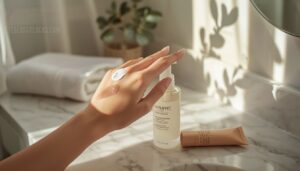
Nailing your routine at night means nothing if morning SPF layering falls apart. Let moisturizer absorb one minute before sunscreen—chemical formulas go under, mineral goes over. Tinted sunscreen fights white cast while still blocking rays.
- Forehead sweep
- Cheek coverage
- Nose and chin
- Don’t forget eyelids
Reapply every two hours outdoors—dermatologist recommended, non-negotiable for fading dark spots.
Tracking Progress and Avoiding Over-Exfoliation

Snap weekly photos, same lighting, same distance, dated folders. Twelve weeks of proof beats guessing.
Cap exfoliation at three sessions weekly, two if you’re acne-prone, on non-consecutive days. Patch test new actives for 48 hours first. Rotate two exfoliants every two weeks, and build tolerance slowly—5% glycolic, increasing gradually. Comfort score under 5? Skip it, repair your barrier instead.
Understanding how whiteheads form and how to clear them naturally can help you time exfoliation sessions more strategically and avoid aggravating congested pores.
Common Mistakes That Slow Results

Five habits quietly sabotage your progress. Inconsistent application wastes actives before they accumulate. Skipping SPF undoes weeks of fading overnight. Layering vitamin C under harsh acids irritates skin. Over-exfoliating past three sessions weekly worsens hyperpigmentation. And expecting dermatologist-tested results before 8–12 weeks? That’s the fastest route to quitting right before skin brightening actually kicks in.
Frequently Asked Questions (FAQs)
Which products are best for dark spots?
Your best bets combine proven actives with real data behind them: SkinCeuticals’ tranexamic acid-niacinamide mix, La Roche Posay’s melasyl formula, and CeraVe’s gentle retinol.
These dark spot correctors pair brightening serums with vitamin C and kojic acid for measurable fading.
What is the best product to remove dark spots from skin?
Your top pick depends on your skin, but a vitamin C and tranexamic acid combo serum delivers the strongest hyperpigmentation results—pairing tyrosinase inhibition with pigment-pathway blocking for faster, more even fading than any single-ingredient dark spot corrector.
What is the best skincare routine for dark spots?
Here’s the routine that actually moves the needle: vitamin C and SPF each morning, retinol at night, and consistent niacinamide layering in between—giving hyperpigmentation nowhere to hide while your skin brightens on schedule.
What skincare products are good for dark spots on skin?
Look for a dark spot corrector blending niacinamide, vitamin C, tranexamic acid, or kojic acid—these ingredients inhibit melanin production, brighten tone, and suit sensitive skin, with clinical trials showing visible fading within 4 to 12 weeks of daily use.
What is the best truly product for dark spots?
Ninety-six percent of users reported lighter post-acne scars in eight weeks, so for body hyperpigmentation, Truly’s Jelly Booster works well—pomegranate extract, vitamin B12, and witch hazel brighten skin, though it lacks proven actives like niacinamide or tranexamic acid.
What are the best products for dark spots?
Your best dark spot corrector pairs proven actives—vitamin C, niacinamide, tranexamic acid, kojic acid—with gentle textures.
RoC, La Roche Posay, and Skinceuticals balance price-performance, absorb fast, suit sensitive skin, and deliver measurable, long-term tone improvement over consistent use.
How to get rid of dark spots on upper back?
Your back’s dark spots respond well to retinol or niacinamide, weekly gentle exfoliation, and daily SPF Stay consistent for eight weeks, and stubborn hyperpigmentation may need a dermatologist-tested laser session for real, lasting fade.
What is a good dark spot remover?
A genuinely effective dark spot remover pairs vitamin C or niacinamide with tranexamic acid to block melanin production. Dermatologist-tested formulas show visible fading within four to twelve weeks, especially applied nightly and paired with daily SPF.
What is the best serum for dark spots?
Olehenriksen’s Banana Bright 15% Vitamin C Serum takes the crown as a top dark spot corrector, pairing tyrosinase-inhibiting vitamin C with fast absorption and lightweight layering — a dermatologist favorite for fading hyperpigmentation while brightening tone within weeks.
How to get rid of dark spots?
Patience beats potions. Fading dark spots means pairing active ingredient selection—vitamin C, niacinamide—with disciplined morning SPF and evening retinol, plus patch testing first.
Combination routines outperform single products, visibly reducing hyperpigmentation within 6–12 weeks of consistent use.
Conclusion
Think of tyrosinase as an old-world scribe, still hand-copying pigment orders your skin no longer needs.
The best skincare products for dark spots don’t silence that scribe overnight, but with consistent vitamin C, niacinamide, or tranexamic acid, you’re editing the manuscript one page at a time.
Pair actives with daily SPF, stay patient through the 8-to-12-week mark, and watch tone even out.
Clearer skin isn’t luck—it’s chemistry, applied consistently, morning and night.