This site is supported by our readers. We may earn a commission, at no cost to you, if you purchase through links. This content is for general informational and educational purposes only and is not a substitute for professional medical, dermatological, or nutritional advice.
That deep, painful bump on your chin isn’t like a regular pimple. Cystic acne forms in the lower dermis, well below where any drugstore dab of cream can reach, which is why your usual spot treatment seems to do nothing while the lesion keeps throbbing for weeks.
You can still shrink surface redness and support healing at home, but you need the right actives and the right way to use them. Benzoyl peroxide kills bacteria on contact, adapalene prevents the clogs that start it all, and sulfur calms angry spots fast.
Below, you’ll find the nine products dermatologists actually recommend, plus how to apply each one safely.
Table Of Contents
- Key Takeaways
- Why Cystic Acne Resists Spot Treatments
- Top 9 Cystic Acne Spot Treatments
- 1. Paulas Choice Benzoyl Peroxide Acne Treatment
- 2. La Roche-Posay Acne Face Wash
- 3. Differin Adapalene Acne Treatment Gel
- 4. Mario Badescu Blemish Treatment Bundle
- 5. Kate Somerville EradiKate Acne Treatment
- 6. Sunday Riley Acne Spot Treatment
- 7. COSRX Centella Blemish Cream
- 8. Murad Rapid Relief Acne Spot Treatment
- 9. Dr. Dennis Gross Clarifying Mask
- Best Ingredients for Cystic Acne
- Choosing an Effective Spot Treatment
- Using Cystic Acne Treatments Safely
- When Cystic Acne Needs Dermatologist Care
- Frequently Asked Questions (FAQs)
- What is the best spot treatment for a cystic pimple?
- What is the most effective over-the-counter treatment for cystic acne?
- How do Koreans get rid of cystic acne?
- How to draw out a cystic spot?
- How do you treat cystic acne?
- What products can help treat cystic acne?
- How do you get rid of acne spots?
- What is the best OTC treatment for cystic acne?
- What is the best acne spot treatment?
- How do dermatologists treat cystic acne?
- Conclusion
Key Takeaways
- Cystic acne forms deep in the lower dermis, so most drugstore spot treatments can’t reach the inflammation—that’s why the bump keeps throbbing for weeks even after surface redness fades.
- Benzoyl peroxide is your strongest OTC option for killing acne bacteria, adapalene (like Differin) prevents the clogged pores that start cysts, and sulfur calms active spots quickly—apply thin layers, moisturize, and give results weeks, not days.
- Never stack strong actives on the same spot, patch test for two days first, and don’t squeeze; benzoyl peroxide also bleaches fabrics and hair, so keep it away from towels and eyebrows.
- If painful cysts persist beyond a few weeks or keep recurring in the same areas, see a dermatologist—prescription options like isotretinoin, spironolactone, or cortisone injections can flatten cysts fast and prevent permanent scarring.
Why Cystic Acne Resists Spot Treatments
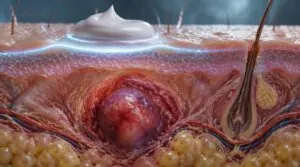
Because cystic acne develops deep under the skin, in the lower dermis rather than at the surface, standard spot treatments simply can’t reach the primary site of inflammation. Over-the-counter formulas absorb into the outer layer of skin and stop there, leaving the clogged follicle and surrounding tissue largely untouched.
That’s also why home remedies like using olive oil for acne treatment tend to fall short on cysts, since they work mostly at the surface too.
That’s the central problem. You might see surface redness fade after patching overnight, but the lesion keeps cycling through its inflammatory stages for days or weeks. A dermatologist would note that cystic lesions involve broader follicular involvement, not a single pore you can unblock or dry out.
Without meaningful penetration, topical treatments address symptoms rather than the root cause, which is why the bump persists long after the surface looks calmer.
That said, surface-level care like a pumpkin enzyme mask for acne still has value, since keeping pores clear supports the skin while deeper inflammation runs its course.
Top 9 Cystic Acne Spot Treatments
Not every spot treatment works the same way on cystic acne, and the formula really does matter.
The nine options below were chosen for their clinically active ingredients and real-world performance on deep, stubborn lesions. If you’re unsure which active ingredient suits your skin type, this guide to choosing acne treatments that work breaks down how to match formulas to your specific breakouts.
Each one brings something specific to the table, so you can match the right treatment to what your skin actually needs.
1. Paulas Choice Benzoyl Peroxide Acne Treatment
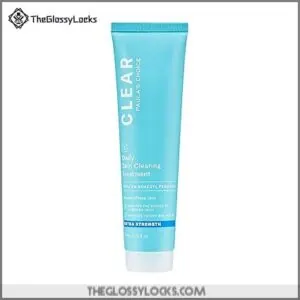
Because benzoyl peroxide releases active oxygen into skin, it kills acne-causing bacteria directly at the lesion site. Paula’s Choice CLEAR Acne Spot Treatment puts that to work in a lightweight gel that sets to an invisible matte finish, making it easy to layer under makeup without any residue.
You can apply it to the face, chest, and shoulders. The formula includes nourishing plant extracts to offset dryness. Just keep it away from eyebrows and towels since benzoyl peroxide bleaches both.
| Best For | People of all skin types dealing with breakouts, oily skin, or cystic acne who want a treatment they can wear under makeup on the face, chest, or shoulders. |
|---|---|
| Active Ingredient | Benzoyl Peroxide |
| Product Form | Leave-on lotion |
| Net Weight | 2.25 oz |
| Fragrance-Free | Yes |
| Application Area | Face, chest, shoulders |
| Skin Type | All skin types |
| Additional Features |
|
- Benzoyl peroxide targets acne-causing bacteria directly at the source, helping clear existing blemishes and prevent new ones.
- Dries to an invisible matte finish with no sticky residue, so it layers easily under makeup.
- Nourishing plant extracts help hydrate and soothe skin while the active ingredient does its work.
- Benzoyl peroxide can bleach fabric, towels, and dark hair like eyebrows, so careful application is a must.
- Daily SPF 30 or higher is required during daytime use, adding a step to your routine.
- Sensitive skin may experience dryness, flaking, or irritation, especially without a moisturizer.
2. La Roche-Posay Acne Face Wash
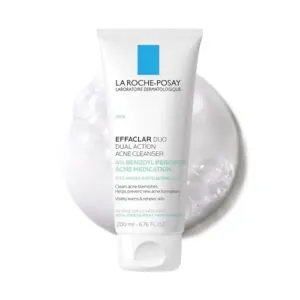
Where Paula’s Choice functions as a leave-on treatment, La Roche-Posay Acne Face Wash works as your cleansing base.
It pairs 4% benzoyl peroxide with 0.1% micro-exfoliating LHA to strip excess oil and impurities before your actives go on. The formula is fragrance-free and works on the face, neck, chest, and back.
Because it rinses off quickly, it prevents new breakouts better than it resolves deep cysts, so pair it with a leave-on treatment. Expect some dryness and plan to moisturize.
| Best For | People with oily, acne-prone skin who want a daily cleansing wash that helps prevent breakouts on the face, neck, chest, and back. |
|---|---|
| Active Ingredient | 4% Benzoyl Peroxide, 0.1% LHA |
| Product Form | Exfoliating wash |
| Net Weight | 8.15 oz |
| Fragrance-Free | Yes |
| Application Area | Face, neck, chest, back |
| Skin Type | N/A |
| Additional Features |
|
- Combines 4% benzoyl peroxide with micro-exfoliating LHA to actively clear and prevent breakouts
- Fragrance-free formula suitable for sensitive skin
- FSA/HSA eligible, making it accessible as a medicated treatment
- Can dry out skin, so a moisturizer is essential
- Better at preventing new breakouts than treating deep or cystic acne
- Mixed reviews on whether the price reflects the value
3. Differin Adapalene Acne Treatment Gel
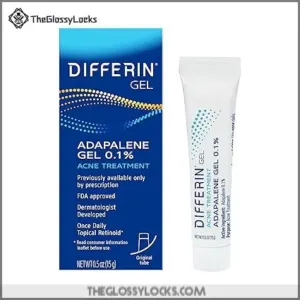
If you want prevention and treatment in one step, Differin Adapalene Gel earns its spot on your shelf. Its 0.1% adapalene normalizes cell turnover deep inside pores, so it targets the follicular root of cysts, not just surface bacteria. That’s why it works where rinsed-off cleansers fall short.
Since razor bumps behave differently than typical breakouts, our guide to the best products for razor bumps breaks down which ingredients actually calm inflamed follicles.
Apply a thin layer daily, expect possible purging for weeks, and wear sunscreen. Clinical data shows up to 87% fewer breakouts after 12 weeks.
| Best For | People dealing with persistent acne, including cystic breakouts, blackheads, and maskne, who want a proven retinoid that both treats and prevents blemishes over the long term. |
|---|---|
| Active Ingredient | 0.1% Adapalene |
| Product Form | Gel |
| Net Weight | 0.48 oz |
| Fragrance-Free | Yes |
| Application Area | Face |
| Skin Type | N/A |
| Additional Features |
|
- Contains 0.1% adapalene, an OTC retinoid that targets clogged pores and inflammation at the root.
- Clinically shown to reduce breakouts by up to 87% after 12 weeks of daily use.
- Gentle, water-based formula that is oil-free, alcohol-free, fragrance-free, and non-comedogenic.
- May trigger a purging phase lasting several weeks to months when first introduced.
- Increases sun sensitivity, so daily sunscreen use is a must.
- Can cause dryness and irritation, requiring gradual introduction and consistent moisturizing.
4. Mario Badescu Blemish Treatment Bundle
Bundles like this one work best for surface blemishes, not deep cysts.
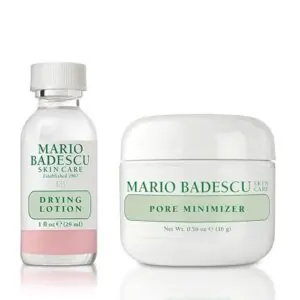
The Mario Badescu Blemish Treatment Bundle pairs the classic Drying Lotion, a bi-phase pink sediment you dip a cotton swab into without shaking, with a Facial Spray and Lip Mask for $20.79.
Calamine, sulfur, and salicylic acid dry whiteheads overnight, often shrinking them within 12 to 24 hours.
Dab it on as your last nighttime step, rinse in the morning, and never use it on broken skin.
| Best For | Anyone dealing with occasional surface blemishes and whiteheads who wants an affordable overnight spot treatment rather than a solution for deep cystic acne. |
|---|---|
| Active Ingredient | Salicylic Acid & Sulfur |
| Product Form | Powder mask & solution |
| Net Weight | N/A |
| Fragrance-Free | Yes |
| Application Area | T-zone |
| Skin Type | All skin types |
| Additional Features |
|
- Dries out whiteheads overnight, often shrinking blemishes within 12 to 24 hours
- Combines calamine, sulfur, and salicylic acid to unclog pores and calm breakouts
- Budget-friendly bundle at $20.79 that includes a Facial Spray and Lip Mask
- Not effective for deep cystic acne, only surface blemishes
- Requires careful application—dip a cotton swab into the pink sediment without shaking the bottle
- Should never be used on broken or picked-at skin
5. Kate Somerville EradiKate Acne Treatment
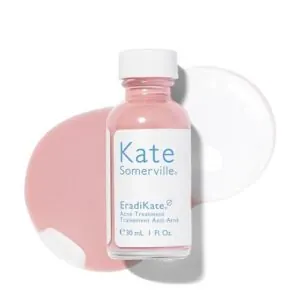
Sulfur does the heavy lifting here. Kate Somerville’s EradiKate pairs 10% sulfur with salicylic acid and zinc oxide, so it dries out active blemishes, unclogs pores, and absorbs excess oil at once. In clinical testing, 94% of users saw visible improvement within an hour.
You’ll notice the signature pink sediment; dip a cotton swab straight to the bottom, dab it directly on the spot, and leave it. Expect a strong sulfur smell, and don’t layer other actives on top, since extended wear can dry or irritate skin.
| Best For | People with oily, pimple-prone skin who want a fast-acting spot treatment to shrink active breakouts and reduce redness. |
|---|---|
| Active Ingredient | 10% Sulfur, Salicylic Acid, Zinc Oxide |
| Product Form | Liquid spot treatment |
| Net Weight | 1.06 oz |
| Fragrance-Free | Yes (no synthetic fragrance) |
| Application Area | Spot treatment |
| Skin Type | Oily, pimple-prone |
| Additional Features |
|
- 10% sulfur combined with salicylic acid and zinc oxide dries blemishes, unclogs pores, and absorbs excess oil in one step
- 94% of users saw visible breakout improvement within one hour in clinical testing
- Free of parabens, phthalates, synthetic fragrance, mineral oil, and SLES
- Strong, unpleasant sulfur smell
- Can cause significant drying, burning, or irritation if left on too long or layered with other actives
- Plastic cap cracks easily, risking the seal on the glass bottle
6. Sunday Riley Acne Spot Treatment
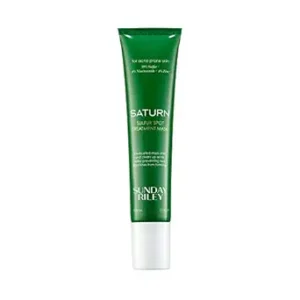
Think of it as a firefighter for your breakout, dousing the flare before it spreads. Sunday Riley’s spot treatment pairs 10% sulfur with 4% niacinamide and 1% zinc PCA, so it dries the blemish without stripping everything around it. Tea tree, manuka oil, and bentonite clay add extra purifying power.
Apply it as a 20-minute mask on cleansed skin, several times a week, then rinse. Expect a distinct sulfur smell, and moisturize after, since sulfur can over-dry sensitive skin.
| Best For | People dealing with deep, hormonal, or stubborn blemishes who want a targeted treatment that dries out flare-ups without harsh sulfates or stripping the surrounding skin. |
|---|---|
| Active Ingredient | Sulfur |
| Product Form | Cream tube |
| Net Weight | 1.9 oz |
| Fragrance-Free | N/A |
| Application Area | Individual blemishes |
| Skin Type | N/A |
| Additional Features |
|
- Combines 10% sulfur with niacinamide and zinc PCA to reduce redness and swelling while purifying the blemish
- Works quickly, with visible improvement by morning when applied at night
- Formulated without sulfates, gluten, soy, or phthalates, making it a cleaner option for spot treating
- Sulfur gives the product a distinct odor some users may find unpleasant
- Can cause excessive dryness if a moisturizer isn’t applied afterward
- May worsen breakouts for those with sensitive skin
7. COSRX Centella Blemish Cream
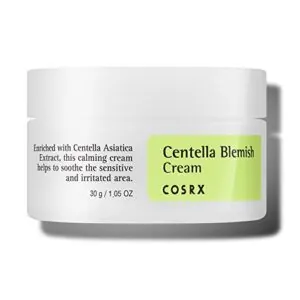
You might assume a Centella cream can’t touch cystic acne, and you’re partly right. The COSRX Centella Blemish Cream works on surface blemishes, not deep, painful cysts, so set expectations accordingly.
Its 50.79% Centella leaf water, 7% zinc oxide, and tea tree oil calm redness and speed healing, often flattening small pimples within a day. Apply a thick dab at night as a spot treatment, not all over.
Note the white cast and Malassezia-feeding oils if you’re prone to fungal acne.
| Best For | People with surface-level blemishes, redness, and post-acne marks on sensitive or oily skin who want a gentle overnight spot treatment rather than a deep cystic acne solution. |
|---|---|
| Active Ingredient | Centella |
| Product Form | Cream jar |
| Net Weight | 1.06 oz |
| Fragrance-Free | No |
| Application Area | Face |
| Skin Type | Sensitive, reactive, mature oily |
| Additional Features |
|
- Calms redness and speeds healing of small pimples, often flattening them within a day.
- Hypoallergenic, vegan, and cruelty-free formula free of parabens, sulfates, and phthalates. If your skin is sensitive, this essential oil and vitamin C facial cleansing wipes review shows how the gentle blend performs in real use.
- Comes with a spatula for hygienic application from the jar.
- Won’t work on deep, painful cystic acne, so expectations should be set accordingly.
- Leaves a noticeable white cast, especially on darker skin tones. If a white cast bothers you, our best tanning sunscreens for protecting your skin while building color include formulas that blend in more easily.
- Thick texture sits on the skin’s surface and has a strong tea tree and menthol scent.
8. Murad Rapid Relief Acne Spot Treatment
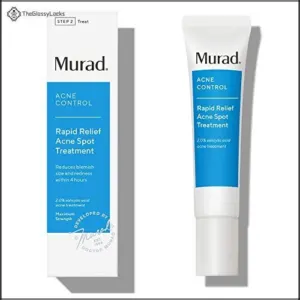
If you want a benzoyl peroxide alternative, this gel earns its spot. It uses 2% salicylic acid to exfoliate inside the pore, plus a pine and thyme extract complex that fights breakout-causing bacteria.
In brand studies, users saw reduced redness in 4 hours, and 97% agreed blemishes looked better after one day. The clear gel dries invisibly, so you can layer concealer over it.
Apply one to three times daily after cleansing, but patch test first, since alcohol and witch hazel can dry sensitive skin.
| Best For | People with oily or combination skin who want a benzoyl peroxide–free spot treatment that works quickly and layers invisibly under makeup. |
|---|---|
| Active Ingredient | 2% Salicylic Acid |
| Product Form | Clear gel |
| Net Weight | 0.01 oz |
| Fragrance-Free | N/A |
| Application Area | Spot treatment |
| Skin Type | Not dry/sensitive |
| Additional Features |
|
- Contains 2% salicylic acid to exfoliate inside the pore and clear breakouts
- Reduces blemish size and redness within 4 hours, per brand studies
- Clear gel dries invisibly, so concealer can be applied over it without peeling or flaking
- May be too strong or drying for dry or sensitive skin
- Patch testing is recommended before use to check compatibility
- Priced at $27.00, which some users find high for the portion size
9. Dr. Dennis Gross Clarifying Mask
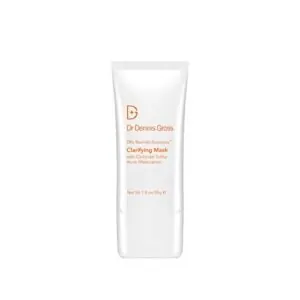
A mask for cystic acne sounds odd, but this one earns its spot as a supporting player. Dr. Dennis Gross Clarifying Mask combines colloidal sulfur with bentonite and kaolin clays to absorb excess oil, plus aloe and safflower oil to calm irritation. It’s vegan, paraben-free, and cruelty-free.
Here’s the catch: a clay mask works on your skin’s surface, not the deep inflammation driving cysts. Expect temporary flattening of angry bumps, not full resolution. Apply it to affected areas overnight, and don’t be surprised by minor surface breakouts as bacteria surface. Pair it with a proven active like adapalene for real results.
| Best For | People with oily skin and occasional cystic flare-ups who want a soothing overnight spot treatment to use alongside a stronger acne active. |
|---|---|
| Active Ingredient | Colloidal Sulfur, Bentonite & Kaolin Clay |
| Product Form | Squeezable cream tube |
| Net Weight | 1 oz |
| Fragrance-Free | N/A |
| Application Area | Spot treatment |
| Skin Type | N/A |
| Additional Features |
|
- Colloidal sulfur and dual clays absorb excess oil and help flatten angry bumps overnight.
- Contains aloe and safflower oil to calm irritation, and the formula is vegan, paraben-free, and cruelty-free.
- Works as a targeted spot treatment, making it easy to apply only where needed.
- Works only on the skin’s surface, so it won’t fully resolve the deep inflammation behind cystic acne.
- Some users report difficulty getting the product out of the tube packaging.
- May cause temporary surface-level breakouts as bacteria are drawn to the surface.
Best Ingredients for Cystic Acne
Not every spot treatment ingredient works on cystic acne, and some you’re already using may do nothing for a deep, painful nodule. Knowing which actives actually reach the problem helps you stop wasting money on the wrong shelf.
Below, we break down the four ingredients worth your attention, starting with benzoyl peroxide and adapalene.
Benzoyl Peroxide

Reach for benzoyl peroxide when a bump turns red and tender. This oxidizing ingredient kills acne-causing bacteria on the surface, so it works best on lesions you catch early, before inflammation fully peaks.
Apply a thin layer once daily, then increase if your skin tolerates it. Expect dryness and peeling, and keep it away from fabrics, since it bleaches towels and pillowcases.
Adapalene
If benzoyl peroxide takes out the bacteria, adapalene works upstream. This topical retinoid prevents the clogged pores that eventually swell into cystic acne, so think prevention, not rescue.
Your dermatologist will tell you it’s a whole-area treatment, not a spot treatment. Still, it earns its place:
- Apply a pea-sized amount nightly.
- Expect dryness early on.
- Results take weeks.
- Moisturize consistently.
Sulfur
works where adapalene can’t reach fast: it dries out surface oil and calms bacteria on contact, making it the classic spot treatment for a pimple you can feel forming.
A sulfur-based cream like EradiKate targets the lesion directly, but keep expectations realistic. Cystic acne starts deep, so sulfur flattens the surface while deeper pimples often need more.
Salicylic Acid
Where sulfur dries the surface, salicylic acid works differently. It’s oil-soluble, so it slips inside the pore and loosens the keratin plug that starts breakouts, unclogging pores before they swell.
As a spot treatment, it shines on shallow, clogged bumps rather than true cystic acne, which sits too deep.
Dermatologist recommended leave-on gels beat rinsing washes for contact time.
Choosing an Effective Spot Treatment
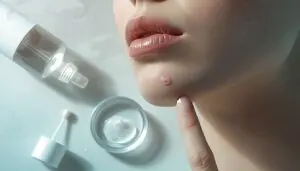
Match the treatment to the lesion, not the label. Cystic acne sits deep in the dermis, so a spot treatment only works if its active can reach that inflammation before it hardens into a nodule.
Run this quick checklist before you buy:
- Feel the bump. If it’s tender and swollen under the skin, skip drying masks and reach for benzoyl peroxide.
- Check the format. Lightweight gels spread thinner than heavy creams, so they won’t trap oil.
- Avoid stacking actives. Salicylic acid plus peroxide on the same spot invites irritation.
- Skip tingly formulas. Alcohol or menthol stings and adds redness, not results.
- Size it to the pimple. Point contact beats broad rubbing that hits healthy skin.
If a nodule persists past a few weeks, a dermatologist can offer options spot products can’t.
Using Cystic Acne Treatments Safely
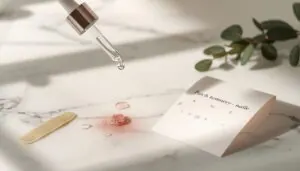
Safety is the difference between a spot treatment that helps and one that leaves you with a dark mark. Start with patch testing: apply a small amount behind your ear or on your inner arm for two days before touching your face. If your skin runs sensitive, keeping a fragrance-free gentle moisturizer on hand makes managing any irritation far easier.
If you tolerate it, use the product only on the blemish, not the surrounding skin. More frequent application doesn’t speed healing; it usually just triggers skin irritation you’ll then need to manage.
| Do | Don’t |
|---|---|
| Apply a thin layer once daily | Layer benzoyl peroxide with a retinoid |
| Moisturize around the spot | Spot-treat large areas |
| Start every other night | Add two new actives the same week |
| Stop if you feel burning | Cover with occlusive patches over strong actives |
| Give skin rest days | Reapply over peeling skin |
A dermatologist can adjust your routine if irritation persists.
When Cystic Acne Needs Dermatologist Care
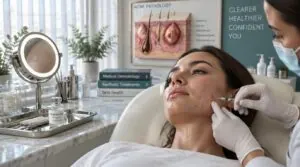
Roughly one in five people with acne develops nodules or cysts, and those deep lesions account for a disproportionate share of scarring. That’s the trade-off you can’t fix with a spot treatment alone.
Deep cystic lesions affect one in five acne sufferers and cause most of the scarring spot treatments alone can’t prevent
See a board-certified dermatologist if you have large, painful cysts that persist beyond a few weeks, or if breakouts keep recurring in the same spot on your cheeks, jawline, or chin. That pattern points to nodulocystic acne, which usually responds better to prescription medications like isotretinoin, spironolactone, or oral antibiotics than to anything you apply at home.
Red flags demand faster action: warmth, expanding tenderness, or drainage from a lesion suggests infection, and fever or feeling unwell alongside facial cysts means you should be seen promptly. Rapidly enlarging nodules, sudden severe acne in adulthood, or pain that interferes with eating and talking also warrant evaluation.
Dermatologists can offer in-office treatments, including cortisone injections that flatten a painful cyst within days, plus early intervention that protects your skin from permanent scars.
Frequently Asked Questions (FAQs)
What is the best spot treatment for a cystic pimple?
Benzoyl peroxide wins. Why? Cystic acne needs sustained inflammation reduction and bacterial control, not a quick surface fix. A leave-on benzoyl peroxide spot treatment (like Paula’s Choice) delivers that better than wash-off masks or salicylic acid.
What is the most effective over-the-counter treatment for cystic acne?
If you can use only one product, choose Differin Gel. Its adapalene 1% works inside the pore, preventing new blockages that fuel cystic acne.
For active cysts, benzoyl peroxide 5% helps, but deep inflammation usually needs a dermatologist.
In fact, adapalene and benzoyl peroxide are among the AAD-recommended OTC ingredients for treating acne effectively.
How do Koreans get rid of cystic acne?
In Korea, you’ll usually see a dermatologist who combines oral isotretinoin or antibiotics with intralesional steroid injections to shrink cysts fast, plus Epiduo, calming cica or mugwort skincare, double cleansing, and hydrocolloid patches.
How to draw out a cystic spot?
Here’s the honest answer: you can’t truly draw out a cystic spot. Deep inflammation sits far below your skin, so spot treatments and pimple patches mainly reduce surface swelling. Apply benzoyl peroxide, stay patient, and never squeeze.
How do you treat cystic acne?
Cystic acne needs more than a spot treatment because inflammation sits deep in the skin. A board-certified dermatologist will usually recommend a topical acne treatment like adapalene or benzoyl peroxide, sometimes paired with prescription-strength options.
What products can help treat cystic acne?
Like a fire under the skin, cystic acne needs more than a dab. Try Paula’s Choice Benzoyl Peroxide, Differin Adapalene Gel, sulfur options like EradiKate, and salicylic acid cleansers.
How do you get rid of acne spots?
Apply a targeted spot treatment with benzoyl peroxide or adapalene, since these work by reducing inflammation below the skin’s surface. Hydrocolloid patches help protect it overnight. For cystic acne, a dermatologist can often do more.
What is the best OTC treatment for cystic acne?
Benzoyl peroxide is your strongest over-the-counter spot treatment option for cystic acne. It kills acne-causing bacteria and reduces inflammation fast, but it can’t penetrate deep enough to fully clear those embedded cysts on its own.
What is the best acne spot treatment?
At just 5%, benzoyl peroxide already matches the strength of 10% formulas without the extra irritation. That’s why board-certified dermatologists rank it as the best cystic acne spot treatment you can buy over the counter.
How do dermatologists treat cystic acne?
Wondering what actually works when a cyst won’t budge? A board-certified dermatologist may inject an intralesional corticosteroid to shrink a painful nodule fast, then prescribe systemic or retinoid-based regimens. Spot treatment alone rarely suffices.
Conclusion
Picture that bump as an iceberg: the part you see is only a fraction of what’s brewing underneath. That’s why an effective cystic acne spot treatment works differently than your old standby.
Benzoyl peroxide kills bacteria, adapalene stops new clogs, and sulfur takes down swelling fast. Pick one or two, apply them thin and consistently, and give them weeks, not days.
If deep, painful cysts keep coming, a dermatologist can treat what you can’t reach.