This site is supported by our readers. We may earn a commission, at no cost to you, if you purchase through links. This content is for general informational and educational purposes only and is not a substitute for professional medical, dermatological, or nutritional advice.

Olive oil sits in nearly every kitchen cabinet, and somewhere along the way, social media decided it belonged on your face too. The claim sounds appealing: an ancient, natural ingredient packed with antioxidants, doing what expensive serums promise. But your skin isn’t a salad, and oleic acid’s heavy molecular structure clogs pores far more readily than lighter oils do.
That doesn’t mean olive oil is off-limits entirely. How to use olive oil for acne treatment comes down to selection, technique, and knowing your skin’s limits, three factors most viral tutorials skip completely. Get those right, and you avoid trading one skin problem for another.
Table Of Contents
- Key Takeaways
- How to Use Olive Oil for Acne Safely
- Best Olive Oil Application Methods for Acne
- Does Olive Oil Help or Worsen Acne?
- Olive Oil Side Effects and Warning Signs
- Safer Olive Oil Alternatives for Acne
- Frequently Asked Questions (FAQs)
- Can I use olive oil on my face for acne?
- Which oil is best for removing pimples?
- Can I leave olive oil on my face overnight?
- How do I apply olive oil to my face?
- How to use olive oil to clear acne?
- How long should I leave olive oil on my face?
- What oil gets rid of acne fast?
- What happens when I apply olive oil on my face?
- Is olive oil good for acne?
- Can one use olive oil on their face?
- Conclusion
Key Takeaways
- Always patch test olive oil on your inner forearm for 24-48 hours before putting it anywhere near your face, since its comedogenic potential can trigger breakouts in people who least expect it.
- Stick to cold-pressed extra virgin oil applied in thin layers just 2-3 times a week, since more frequent or heavier use raises your odds of clogged pores and irritation.
- Olive oil’s antioxidants and moisture-locking properties can support skin health, but there isn’t strong clinical evidence that it actually treats acne, and it won’t touch cystic or hormonal breakouts.
- If your skin reacts poorly to olive oil, non-comedogenic options like jojoba or grapeseed oil offer similar hydration with far less risk of clogging pores.
How to Use Olive Oil for Acne Safely

Olive oil isn’t something you just splash on and hope for the best, especially if your skin already leans acne-prone. Getting a good result depends on the oil you pick, how you prep your skin, and how carefully you apply it. Here’s what you need to get right, step by step.
Just as proper shaving technique for sensitive skin relies on going slow and paying attention to detail, applying olive oil correctly demands the same patience and care.
If you’re applying oil-based treatments before heading outdoors, pairing them with a proper water-resistant SPF for oily skin helps protect acne-prone skin during sweaty days or swims.
If you’re unsure where to start, this guide to making an olive oil face mask breaks down the right pairings for acne-prone skin.
Choose Cold-Pressed Extra Virgin Oil
Since not all olive oil is created equal, your first decision matters most. Pick extra virgin, cold-pressed oil, extracted below 27°C without heat or chemicals. Check the label for a harvest date, not just "best by." Reputable brands note origin and use dark, airtight packaging.
Cold-pressed varieties also retain higher levels of antioxidant compounds like oleuropein and hydroxytyrosol since they aren’t heat-processed. Remember, even quality oil can be comedogenic, so choose carefully.
Cleanse and Dry Your Skin
Once you’ve picked your oil, prep matters just as much. Wash with a gentle cleanser and warm water, ideally clean skin postshower, then pat completely dry with a washcloth.
Oil needs a dry surface to work properly. Skipping this step invites poor emulsification and residue buildup, undermining the cleanse before you even start.
Patch Test for 24–48 Hours
Dry skin doesn’t mean ready skin. Test first: dab a pea-sized amount behind your ear or on your inner forearm, sites that mirror facial sensitivity, then leave it uncovered for 24 to 48 hours.
Once your skin passes the patch test, this guide to how often you should use retinol cream can help you build up a schedule gradually.
- Watch for redness, itching, or burning
- Note any delayed rash
- Rinse immediately if irritation appears
- Skip the area if skin’s already broken
Apply a Very Thin Layer
Passed the patch test? Good. Now measure ½ teaspoon into a teaspoon, not your palm, and dab fingertips into it.
Massage onto clean, slightly damp skin using light circular motions for about 3 minutes. Less is more here: olive oil’s comedogenic rating means a heavy layer invites clogged pores. Stop once fingertips no longer feel oily, and let the thin layer sit before removal.
For more ideas on keeping your routine simple and label-free, this DIY natural skincare routine guide walks through ingredient choices that give you full control over what goes on your skin.
Remove Excess Oil Gently
Once the oil has absorbed, blot with clean tissue paper rather than wiping. Rinse with warm water, never hot, using a gentle cleanser and minimal friction, focusing on oily zones like your T-zone.
Pat dry. If redness, itching, or extra breakouts appear, stop and switch to a noncomedogenic oil instead.
Best Olive Oil Application Methods for Acne
Once you’ve patch-tested and cleared the basics, how you apply olive oil matters just as much as whether you use it. Not every method suits every skin type, and some carry more risk than others. Here’s what to know before you reach for the bottle.
The same caution applies to any new product near healing skin, and our guide on when it’s safe to use beard dye after a beard transplant explains why timing matters.
Target Individual Blemishes

Spot treatment works best when you target only the blemish, not your whole face. Apply 1–2 drops with clean fingertips after cleansing and patting dry. Massage gently, leave 5–15 minutes, or overnight up to 2–3 times weekly.
For daytime, follow up with a lightweight, non-comedogenic formula like these best facial moisturizers for daily office wear to keep skin hydrated without clogging pores.
Skip broken or inflamed pimples entirely, oil traps bacteria beneath the surface and worsens things fast.
Try Full-Face Application Carefully

Once you’ve passed the patch test, full-face use demands more restraint. Start with 2-3 drops only, warmed between palms, then massage in circular motions from forehead downward.
Leave a thin layer, never a glossy coat, and remove excess gently after 5-10 minutes.
- Cleanse skin first
- Use fingertips, not cotton pads
- Watch for irritation
- Avoid oily zones
- Monitor skin response daily
Use The Oil Cleansing Method

Think of it as a makeup remover with skincare benefits built in. Massage extra virgin olive oil onto dry skin for 60-90 seconds using a gentle massage technique, then remove with a warm, damp cloth. This oil cleansing method lifts debris without stripping skin. Always complete patch testing first, and remove excess oil gently to avoid residue clogging pores.
Start Two or Three Times Weekly

Patience beats enthusiasm here. Start with 2-3 applications weekly, roughly half a teaspoon each time, and track your skin for a full week before changing anything.
If you stay breakout-free after passing the patch test, you can gradually increase to every other day. Watch closely for oiliness, since sebum regulation matters more than speed.
Avoid Inflamed or Broken Skin

Broken or actively inflamed skin isn’t the place for oil, period. If you’re dealing with open lesions, cystic nodules, or raw patches, applying olive oil can disrupt the skin barrier further and invite bacteria in.
Wait until healing skin protocols apply, gentle cleansing, patting dry, fragrance-free moisturizer, before reintroducing any oil. Sensitive or reactive skin deserves extra caution and a fresh patch test first.
Does Olive Oil Help or Worsen Acne?
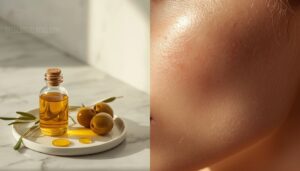
Olive oil isn’t a simple yes-or-no answer for acne. Its effects depend on your skin type, the severity of your breakouts, and what the research actually shows. Here’s a closer look at what olive oil can and can’t do for acne-prone skin.
Potential Antibacterial Properties
Extra virgin olive oil contains oleuropein, a polyphenol with documented antimicrobial effects in lab settings against certain bacteria strains.
Whether that translates to acne bacteria suppression on your skin depends on:
- Oil concentration applied
- Contact time before rinsing
- Phenol content in your specific bottle
These antibacterial compounds work on surface microbes, not bacteria trapped deep in clogged pores, which limits real-world impact.
Antioxidants and Inflammation Support
Antibacterial action aside, olive oil’s real strength may be its polyphenol content. Oleuropein and vitamin E work as antioxidants, neutralizing free radicals and reducing oxidative stress, which can calm inflammatory signaling in irritated skin.
| Compound | Role in Skin |
|---|---|
| Oleuropein | Antioxidant, free radical scavenging |
| Vitamin E | Fat-soluble antioxidant protection |
| Polyphenols | Anti-inflammatory support |
| Free radicals | Neutralized, reducing damage |
| Oxidative stress | Lowered, easing inflammation |
Possible Moisture Barrier Benefits
Beyond antioxidants, olive oil works as an occlusive barrier, sealing moisture into skin cells after cleansing. Squalene and oleic acid mimic your skin’s natural sebum, supporting barrier repair and hydration retention. This moisture-locking action can calm irritated, acne-prone areas and improve skin elasticity, though it won’t replace targeted acne treatment on its own.
Limited Acne Treatment Evidence
So does olive oil actually treat acne? The honest answer: evidence gaps in efficacy remain wide.
Most support comes from lab studies on antibacterial compounds, not placebo-controlled data on human skin.
Inconsistent study results and limited clinical trials mean comparative effectiveness lacking against proven acne treatment options.
Extra virgin olive oil may help some, but patch testing matters given its comedogenic potential.
Cystic and Hormonal Acne Limitations
Deep, painful cysts need more than surface oil. Cystic acne forms below the skin, where inflammation runs too deep for topical fixes.
Hormonal acne follows its own rhythm, driven by androgens and sebum overproduction, not surface bacteria. Oil-based treatment limits become obvious here.
Olive oil’s comedogenic profile risks pore clogging, worsening flares that already need antiandrogens, isotretinoin, or oral contraceptives, not another oil cleansing method.
Olive Oil Side Effects and Warning Signs

Even with careful use, olive oil doesn’t agree with every skin type, and acne-prone skin is often the first to react. Your risk depends on how oily your skin already is, what else you’re applying, and how closely you watch for changes. Here’s what to look out for, and when it’s time to stop.
Clogged Pores and Blackheads
Here’s the problem: olive oil sits high on the comedogenic scale, meaning it’s prone to pore clogging. Sebum and dead skin already trap easily in follicle openings, and heavier oils worsen that buildup. This process drives blackhead formation.
Gentle cleansing and chemical exfoliation with BHAs can help clear debris that oily residue leaves behind.
Increased Oiliness and Breakouts
Your skin can’t tell applied oil from its own sebum. That’s the trouble with oleic acid, roughly 80% of olive oil’s makeup: it disrupts your barrier, spikes water loss, and forces sebum overproduction in response.
Your skin can’t distinguish applied oil from its own sebum, so oleic acid disrupts the barrier and triggers overproduction
Within hours, surface oil can double. Add bacterial growth feeding on those fatty acids, and clogged, comedogenic pores follow fast.
Redness, Itching, or Burning
Not every reaction to olive oil is invisible. Watch for redness, itching, or a stinging heat on application, classic irritation signs pointing to inflammation, not healing.
Burning without visible rash still counts. It signals your skin’s inflammatory markers are flaring, often in sensitive-skin types reacting to triggers they’ve never tolerated well. Patch testing catches this before it spreads across your face.
Ingredients to Avoid Mixing
Combining oils compounds risk. Olive oil mineral oil or olive oil petrolatum blends trap bacteria under an occlusive film. Olive oil coconut oil, cetyl acetate, or beeswax mixes raise pore clogging odds a lot.
Skip layering during oil cleansing method sessions too. These combinations worsen comedogenic buildup and inflammatory acne flares, undermining any benefit olive oil alone might offer your skin barrier.
When to Stop Using It
Your skin will tell you when it’s time to quit. Watch for these signals:
- New breakouts appear in previously clear areas
- No improvement after weeks (two to six) of consistent use
- Skin irritation persists, including burning or greasy texture
If pore clogging, redness, or allergic reaction occurs, discontinue immediately and consult a dermatologist before trying again.
Safer Olive Oil Alternatives for Acne

If olive oil isn’t sitting well with your skin, you’re not out of options. Several oils offer similar hydration without the same comedogenic risk, and some over-the-counter treatments have decades of clinical evidence behind them. Here’s where to turn instead.
Jojoba Oil for Lightweight Moisture
If olive oil clogs your pores, jojoba oil often won’t. Chemically it’s closer to wax than oil, giving skin a lightweight moisture feel without the heaviness. It’s non-comedogenic, so acne-prone skin tolerates it well.
| Property | Detail |
|---|---|
| Texture | Wax-like, lightweight |
| Best use | Damp skin, few drops |
| Comedogenic rating | Low |
| Patch test | 24-48 hrs first |
Grapeseed Oil for Acne-Prone Skin
Grapeseed oil takes a different chemical route than jojoba. It’s rich in linoleic acid (65-75%), the fatty acid most linked to acne-prone skin. Non-comedogenic and lightweight, it delivers antioxidants like vitamin E without clogging pores.
- Patch test 24 hours first
- Apply a thin layer
- Use for post-acne marks
- Skip on active cystic breakouts
Hemp Seed Oil Benefits
Hemp seed oil offers a different fatty acid composition, blending omega-6 linoleic acid with omega-3 alpha-linolenic acid. This balance helps skin barrier repair without the heavy comedogenic load olive oil carries.
Its antioxidant properties, from polyphenols and terpenoids, add anti-inflammatory support. Cold-pressed and low-THC content, it’s a noncomedogenic option worth patch-testing before adding to your acne-prone skin routine.
Rosehip Oil for Post-Acne Marks
Once you’ve addressed active breakouts, your focus shifts to fading the marks left behind. Rosehip oil delivers vitamin C and antioxidants that target postinflammatory hyperpigmentation while supporting skin hydration.
- Apply twice daily directly to scars
- Patch test on your forearm for 24 hours first
- Expect visible change around 6-12 weeks
- Suits most skin types, including acne-prone
Proven Over-the-Counter Acne Treatments
Kitchen oils aren’t your only option.
Salicylic acid unclogs pores for blackheads, while benzoyl peroxide efficacy shines for inflammatory acne, sold as gels or spot treatment. Adapalene targets comedones directly.
Prefer gentler routes? Tea tree oil benefits and azelaic acid offer antibacterial compounds with less skin irritation.
Start low, moisturizes matter, and give any acne treatment several weeks to work.
Frequently Asked Questions (FAQs)
Can I use olive oil on my face for acne?
Like walking a tightrope, using olive oil on acne-prone skin can go either way. Yes, you can try it, but patch test first, since its comedogenic potential varies person to person and could worsen breakouts.
Which oil is best for removing pimples?
For pure pimple removal, tea tree oil wins, nearly six times more effective than placebo. Undiluted spot treatment works within 24-48 hours.
Oregano oil rivals it for cystic breakouts, but always dilute first, unlike tea tree’s unique undiluted application.
Can I leave olive oil on my face overnight?
Technically yes, but it’s risky. Overnight exposure raises comedogenic potential and irritation odds. Patch test first, blot excess oil, and monitor for breakouts. If redness or new blemishes appear, stop overnight use immediately.
How do I apply olive oil to my face?
After patch testing, apply while skin is still damp. Use just a few drops, massage gently for 30 seconds, then blot excess with a warm cloth to limit clogged pores on acne-prone skin.
How to use olive oil to clear acne?
Funny enough, clearing acne with olive oil works best when you resist overdoing it. After patch testing, dab a few drops of extra virgin oil, massage gently, mix with honey if desired, and monitor skin for irritation.
How long should I leave olive oil on my face?
Give it 10 to 15 minutes for absorption, then rinse with lukewarm water. Skip overnight application unless you’ve completed a 24-48 hour patch test, since prolonged contact raises irritation and clogged-pore risk on acne-prone, sensitive skin.
What oil gets rid of acne fast?
Ironic, isn’t it? Extra virgin olive oil sits in your kitchen while tea tree oil wins the speed race. Diluted with jojoba, its antibacterial compounds cut bacteria within hours, a noncomedogenic edge olive oil simply can’t match for spot treatment.
What happens when I apply olive oil on my face?
Your skin absorbs some fatty acids while much of the oil sits as surface residue, raising oiliness. It delivers antioxidants and hydration but its comedogenic nature means clogged pores and breakouts are real risks on acne prone skin.
Is olive oil good for acne?
A double-edged olive branch: soothing yet risky.
Olive oil offers antioxidants and mild antibacterial action, but its high oleic acid content is comedogenic for acne-prone skin.
Always patch test first, since results vary widely between individuals.
Can one use olive oil on their face?
Yes, you can apply olive oil to acne-prone skin. It offers antibacterial and antioxidant benefits, but its comedogenic potential means patch testing first matters, and noncomedogenic oils may suit sensitive skin better.
Conclusion
Olive oil is a scalpel, not a sledgehammer: powerful when used precisely, damaging when used carelessly. Knowing how to use olive oil for acne treatment means respecting your skin’s biology, not fighting it.
Patch test first. Apply thin layers, twice weekly at most, and watch closely for reactions. If redness or new breakouts appear, stop immediately.
For most acne-prone skin, gentler alternatives like jojoba or grapeseed oil deliver moisture without the risk. Choose control over convenience.