This site is supported by our readers. We may earn a commission, at no cost to you, if you purchase through links. This content is for general informational and educational purposes only and is not a substitute for professional medical, dermatological, or nutritional advice.
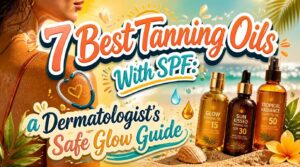
Every summer, I see the same sunburned patient in my clinic: someone who chased a golden glow with baby oil and regret. Here’s the good news. You don’t have to choose between a bronzed look and healthy skin.
The right formula gives you both, pairing broad-spectrum protection with oils like coconut, argan, and grapeseed that keep your skin glowing instead of peeling. That’s the real promise behind best tanning with SPF products: color without the damage.
I tested seven of the top options for texture, protection, and how they hold up in water, so you can pick one that won’t let you down at the beach.
Table Of Contents
- Key Takeaways
- Top 7 Best Tanning Oils With SPF
- How We Compared Tanning Oils With SPF
- How to Choose The Best Tanning Oil With SPF
- Can You Tan Safely While Wearing SPF?
- How to Apply Tanning Oil With SPF
- Frequently Asked Questions (FAQs)
- What is the best tanning oil with SPF?
- How does coconut milk help remove tan?
- What SPF should a tanning lotion have?
- What are tanning oils with SPF called?
- What SPF is best for tanning?
- Can you get a tan with sunscreen on?
- Is there a self tan with SPF?
- Can you still tan with SPF 50?
- Does tanning oil with SPF affect spray tans?
- How long does the tan last with SPF?
- Conclusion
Key Takeaways
- You can get a genuine glow and protect your skin at the same time, as long as you pick a broad-spectrum SPF 30 (or higher) tanning oil instead of plain baby oil.
- SPF 30 and SPF 50 only differ by about 1% in UVB protection, so how much you apply and how often you reapply matters way more than chasing a higher number.
- The best formulas pair real sun protection with skin-loving ingredients like coconut, argan, and grapeseed oils, so you’re nourishing your skin instead of just greasing it up.
- No sunscreen blocks 100% of UV rays, so you’ll still tan gradually even with SPF on, but reapplying every two hours (and right after swimming) is what actually keeps burns and long-term damage at bay.
Top 7 Best Tanning Oils With SPF
Not every "SPF oil" on the shelf actually earns a spot in your beach bag. I’ve narrowed the field down to seven formulas that deliver real broad-spectrum protection without skimping on glow. Here’s how they stack up, one by one.
If shine and breakouts are your main concern, it’s worth checking out this guide to sunscreens for oily skin before picking an SPF oil.
1. Hawaiian Tropic Weightless Dry Oil Sunscreen
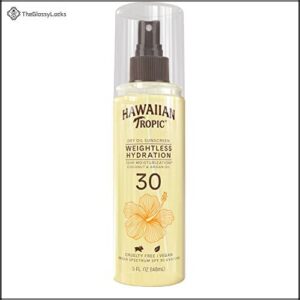
If you’ve ever skipped sunscreen because it felt like wearing a raincoat in summer, this one might change your mind. Hawaiian Tropic Weightless Dry Oil Sunscreen delivers SPF 30 broad-spectrum protection, meaning it guards against both burning UVB rays and the deeper UVA rays tied to premature aging.
The formula blends coconut, argan, grapeseed, and olive oils, aiming for roughly 12 hours of hydration without that greasy film. It absorbs fast and finishes with a matte, non-shiny look, even on darker skin tones where white cast is often a complaint.
It’s water-resistant for 80 minutes, so it can handle a swim or a sweaty walk before you need to reapply. You also won’t find oxybenzone, octinoxate, or added parabens on the label. The tropical scent is a nice bonus, not overpowering, just a little reminder you’re on vacation mode.
If you want a little extra color while you’re protected, check out these best tanning sunscreens that speed up sun-triggered tanning so you need less time outside.
| Best For | People who want everyday sun protection with lightweight hydration, especially for beach days, workouts, or wear under makeup without a greasy feel. |
|---|---|
| SPF | SPF 30 |
| Broad Spectrum | Yes |
| Water Resistance | 80 minutes |
| Key Oils | Coconut, argan, grapeseed, olive |
| Cruelty-Free | Not specified |
| Finish | Matte |
| Additional Features |
|
- Absorbs quickly into skin with a matte, non-greasy finish, even on darker skin tones
- Combines SPF 30 broad-spectrum protection with 12 hours of moisturizing oils
- Free from oxybenzone, octinoxate, and added parabens
- Water resistance only lasts 80 minutes, so reapplication is needed after swimming or sweating
- Oil-based formula may stain certain fabrics if it doesn’t fully absorb
- Tropical fragrance could irritate those with very sensitive or allergy-prone skin
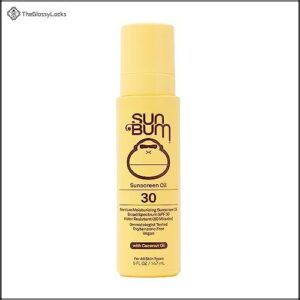
2. Sun Bum SPF 30 Sunscreen Oil
Sun Bum’s SPF 30 Sunscreen Oil trades the matte finish for a genuine glow, and that’s the whole point for beach days built around photos.
The broad-spectrum formula pairs octocrylene and avobenzone, blocking roughly 97% of UVB rays while coconut oil keeps skin from drying out. It goes on lightweight, though expect a few minutes of slight greasiness before it sets.
Water resistance holds for 80 minutes, solid for swimming or a sweaty volleyball game. It’s vegan, cruelty-free, and reef-friendly. Shake it well first, since separated oils won’t protect evenly. Simple habit, real payoff.
| Best For | beachgoers and swimmers who want SPF 30 sun protection along with a glowing, sun-kissed shimmer to their skin. |
|---|---|
| SPF | SPF 30 |
| Broad Spectrum | Yes |
| Water Resistance | 80 minutes |
| Key Oils | Coconut oil |
| Cruelty-Free | Yes |
| Finish | Shimmer glow |
| Additional Features |
|
- Broad-spectrum SPF 30 protection with water resistance for up to 40 minutes
- Lightweight gel-oil texture that absorbs quickly without leaving a sticky residue
- Infused with moisturizing oils and vitamins for added skin nourishment
- Feels slightly greasy right after applying, needing a few minutes to fully set
- Pricier than standard sunscreen lotions or sprays at $41.00
- Shimmer finish won’t suit those who prefer a matte look
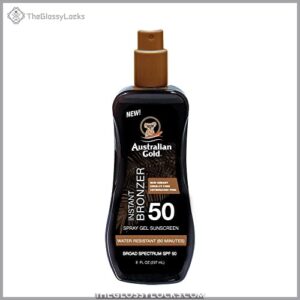
3. Australian Gold Sunscreen Spray Gel SPF 50
If you’d rather skip the glow-versus-glisten debate, Australian Gold’s Spray Gel SPF 50 splits the difference with a gel-oil hybrid that’s genuinely easy to use.
The broad-spectrum formula blocks roughly 98% of UVB rays, backed by avobenzone, homosalate, octisalate, and octocrylene, the same combo most dermatologists reach for. Sunflower seed oil and aloe keep skin from feeling stripped, and the texture spreads fast without leaving that telltale sheen.
Water resistance runs 80 minutes, plenty for a pool afternoon. It’s reef-compliant under Hawaii’s Act 104, oxybenzone-free, and paraben-free too. Shake well, spray from 4 to 6 inches away, and never aim directly at your face.
| Best For | This spray gel is best for active people who need reliable, water-resistant sun protection for the beach, pool, or outdoor sports without a greasy feel. |
|---|---|
| SPF | SPF 50 |
| Broad Spectrum | Yes |
| Water Resistance | 80 minutes |
| Key Oils | Sunflower seed oil |
| Cruelty-Free | Yes |
| Finish | Non-greasy |
| Additional Features |
|
- Lightweight, non-greasy spray gel that applies quickly and evenly
- Water-resistant for up to 80 minutes, great for swimming or sweating
- Free of oxybenzone, octinoxate, gluten, parabens, and cruelty-free
- Needs reapplication every 2 hours or after 80 minutes in water
- Not suitable for broken or irritated skin
- Risk of eye irritation if it comes into contact, requiring thorough rinsing
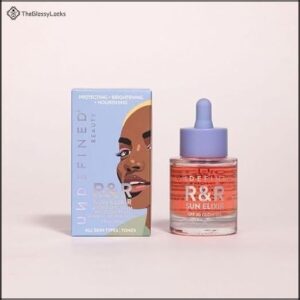
4. Glow Oil SPF 30 Sun Elixir
Want protection and a glow in one bottle? Glow Oil SPF 30 Sun Elixir does both without feeling like a compromise. Sunflower seed oil, olive fruit oil, and aloe soak in fast, leaving skin dewy instead of slick.
Kakadu plum, one of the richest natural sources of vitamin C, adds antioxidant support alongside tea tree oil for a calming finish. The caramel bronzer gives an instant, even tint, no streaks, no patchiness.
At SPF 30, it blocks about 97% of UVB rays, solid protection as long as you apply generously and reapply hourly. Water resistance holds for 80 minutes, so it keeps pace with pool days. Compact and travel-friendly, it’s an easy pick for anyone chasing that golden-hour glow without skipping sun safety.
Pair it with a gentle, fragrance-free cleanser to round out a simple facial care routine for daily use that protects and soothes in equal measure.
| Best For | Anyone who wants sun protection and a subtle bronzed glow in one product, especially those with normal to dry skin heading to the pool or beach. |
|---|---|
| SPF | SPF 30 |
| Broad Spectrum | Not specified |
| Water Resistance | 80 minutes |
| Key Oils | Sunflower seed, olive fruit |
| Cruelty-Free | Not specified |
| Finish | Dewy bronzed |
| Additional Features |
|
- Lightweight, fast-absorbing formula with sunflower seed oil, olive fruit oil, and aloe for hydration without greasiness
- Antioxidant boost from Kakadu plum and tea tree oil, plus an even, streak-free bronzer tint
- Water resistant for 80 minutes and travel-friendly, making it easy to reapply on the go
- SPF 30 offers solid but not maximum protection, so generous, hourly reapplication is a must
- Bronzer tint may transfer onto clothing, towels, or light-colored surfaces
- Requires reapplication after swimming, sweating, or towel drying to stay effective
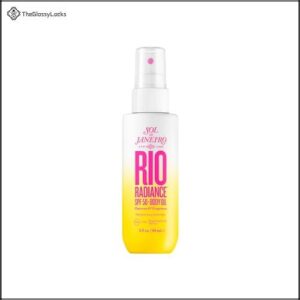
5. Rio Radiance Body Oil SPF 50
That golden shimmer bottle isn’t just for show. Rio Radiance Body Oil SPF 50 pairs broad-spectrum protection with a beachy Cheirosa 87 scent, using octocrylene, homosalate, octisalate, and avobenzone to guard against UVA and UVB rays alike.
Patauá oil and pongamia seed extract do the heavy lifting on hydration, soaking in fast without that heavy, greasy film some oils leave behind. Mica particles add a soft glow to any skin tone, no bronzer needed.
You’ll get 80 minutes of water resistance, so it holds up through a swim or a sweaty afternoon, though reapplication every two hours is still your best defense. Shake it well before each use since the filters and oils need to mix evenly. It’s cruelty-free, vegan-friendly, and comes in 60ml or 200ml sizes, practical for travel or a full season at the beach.
| Best For | This product is best for people who spend a lot of time outdoors and want a multitasking, antioxidant-rich sunscreen that can double as a nourishing oil for their skin, hair, and scalp. |
|---|---|
| SPF | SPF 50 |
| Broad Spectrum | Yes |
| Water Resistance | 80 minutes |
| Key Oils | Patauá, pongamia seed |
| Cruelty-Free | Yes |
| Finish | Glow |
| Additional Features |
|
- Broad spectrum SPF 50 protection with 80 minutes of water resistance for extended outdoor use
- Packed with antioxidant-rich ingredients like Vitamin C, Amla, Rosehip, and Moringa that support skin barrier function and leave a radiant glow
- Versatile enough to use on skin, hair, and scalp, suiting all skin tones without a white cast
- The oil-based formula may leave a greasy residue, requiring blotting or powder for a matte finish
- Not ideal for acne-prone or very oily skin types
- The floral-citrus scent may be too strong for those with fragrance sensitivities
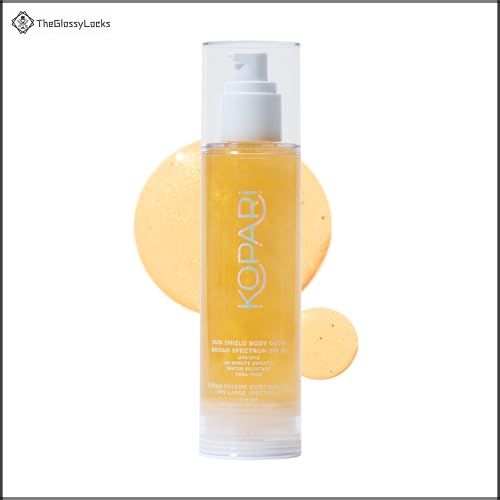
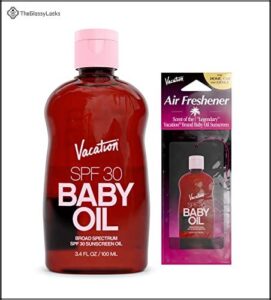
6. Vacation Baby Oil SPF 30 Bundle
Nostalgia sells, and this bundle bottles it well. Vacation’s Baby Oil SPF 30 leans on jojoba oil, rose, jasmine, and chamomile extract for that dreamy, nostalgic scent while vitamin E quietly nourishes skin during sun exposure.
The travel-size 3.4 fl oz bottle slips easily into a carry-on, TSA limits and all, which makes it a smart pick for weekend trips. Broad-spectrum filters like avobenzone, homosalate, and octisalate handle UVA/UVB defense, though this one skips serious water resistance.
That means poolside lounging suits it better than long swims. Reapply often, and you’ll enjoy the glossy finish without sacrificing protection.
| Best For | People who want a nostalgic, beach-scented SPF for casual sun exposure, like lounging by the pool or weekend getaways, rather than serious swimming. |
|---|---|
| SPF | SPF 30 |
| Broad Spectrum | Yes |
| Water Resistance | None specified |
| Key Oils | Jojoba, rose, jasmine, chamomile |
| Cruelty-Free | Not specified |
| Finish | Glossy |
| Additional Features |
|
- Dreamy scent blend of jojoba oil, rose, jasmine, and chamomile extract
- Vitamin E helps nourish skin while you’re out in the sun
- Travel-size 3.4 fl oz bottle is TSA-friendly and easy to pack
- Skips serious water resistance, so it’s not ideal for long swims
- Requires frequent reapplication to stay effective
- Only offers SPF 30, which is lower than some other sun care options
7. Hydrating SPF 30 Body Oil
Squalane, argan, coconut, and meadowfoam seed oils team up in this formula to keep your skin’s moisture barrier intact, even after hours outdoors. That combo matters more than it sounds: dry skin burns faster and peels sooner, so hydration is part of the sun protection story.
At SPF 30, it blocks roughly 97% of UVB rays when applied generously, and the texture absorbs fast without leaving that greasy film some oils are known for. Vanilla and amber notes add a warm, vacation-like scent without overwhelming sensitive noses.
Water resistance holds up for about 40 to 80 minutes, so it’s a solid choice for pool days or beach afternoons. Just don’t skip reapplication, since no oil (however well-formulated) stays put forever.
| Best For | People who want sun protection with a hydrating, luxe-feeling oil for beach days, pool afternoons, or any long stretch outdoors. |
|---|---|
| SPF | SPF 30 |
| Broad Spectrum | Yes |
| Water Resistance | Not specified |
| Key Oils | Jojoba oil, calendula |
| Cruelty-Free | Not specified |
| Finish | Shine |
| Additional Features |
|
- Blocks about 97% of UVB rays at SPF 30 while absorbing quickly without a greasy residue
- Squalane, argan, coconut, and meadowfoam seed oils help keep skin hydrated, which supports healthier, more resilient sun protection
- Water resistant for 40 to 80 minutes, making it reliable for swimming or sweating
- Needs reapplication after swimming, toweling off, or heavy sweating to stay effective
- May not offer enough protection during long, intense sun exposure without regular touch-ups
- Contains fragrance (vanilla and amber notes), which may not suit those with fragrance sensitivities
How We Compared Tanning Oils With SPF
Not every tanning oil with SPF earns its spot on a "best of" list just because it smells good or looks pretty on a shelf. I judged each product on the factors that actually matter for your skin’s safety and comfort, from sun protection to how it feels going on. Here’s exactly what I looked at.
Broad-Spectrum UV Protection
SPF numbers grab attention, but broadspectrum protection is the detail I check first. It confirms UVA UVB Defense, guarding against burning and photoaging alike. This matters because UVA rays make up most of the ultraviolet radiation that reaches your skin, so SPF alone isn’t enough without broad-spectrum coverage.
Look for:
- SPF 30 minimum
- "Broad-spectrum" on the label
- Reef-Safe Formulation
- Water-resistant sunscreen
That combo helps guarantee real SPF Effectiveness and long-term Skin Cancer Prevention, not just a quick glow.
Texture and Absorption
Ever rub on a tanning oil and instantly regret wearing white? That’s transfer risk, and it’s where absorption speed separates good formulas from sticky mistakes. Nongreasy blends dry within one to three minutes, while heavier oils linger four to six.
I favor lightweight formulas with quick dry technology since they cut drag, minimize white cast, and leave that satin finish feel you actually want.
Hydrating Skin Care Ingredients
A tanning oil that skips skincare benefits is just grease with sunscreen. Look for hyaluronic acid for deep hydration, glycerin to pull moisture in, ceramides for barrier repair, and argan oil or vitamin E for nourishment.
- Hyaluronic acid
- Glycerin
- Ceramides
- Aloe vera
Squalane locks it all in without clogging pores. Your skin deserves more than a shine.
Water and Sweat Resistance
Great skincare ingredients mean little if they wash off in the pool. Check labels for water-resistant sunscreen ratings, usually 40 or 80 minutes of swimming or sweating.
Heat and sweat can degrade UV filters fast, so look for formulas maintaining SPF integrity through activity. Even a water-resistant formula needs help: reapply every two hours, or immediately after heavy sweating or a swim.
Value and Product Size
Reapplying every two hours only works if your bottle lasts the season. Check net weight labeling: standard bottles run 3.4 to 6.0 oz, while bundles hit 12 oz or more for real bundle discounts.
Travel-size sunscreen (0.5-1.0 oz) suits carry-ons. For generous application at home, multi-pack savings on SPF 30 or SPF 50 formulas keep affordable sun care realistic, not a luxury.
How to Choose The Best Tanning Oil With SPF
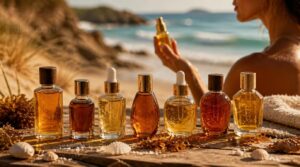
With so many formulas on shelves, picking the right one comes down to a handful of practical factors, not guesswork. Your skin type, your SPF number, and even your beach’s rules on reef safety all play a part in the decision. Here’s what actually matters when you’re comparing your options.
Choose SPF 30 or Higher
When you’re picking a number, don’t settle for less than SPF 30. It’s the baseline dermatologist recommended minimum for real protection.
- Confirm it’s broad spectrum sunscreen (blocks UVA and UVB)
- SPF 30 blocks roughly 97% of UVB rays
- SPF 50 nudges that to about 98%
- Look for water-resistant sunscreen if you’ll swim
Match Your Skin Type
That SPF number only tells half the story. The other half is your skin type.
Oily skin care calls for a nongreasy formula like a spray gel. Dry skin hydration thrives on richer oils. Combination skin balance means lighter coverage on the T-zone. Normal skin routine? Nearly any texture works. Sensitive skin tips: pick a sensitive skin formula free of fragrance, always broad spectrum sunscreen, SPF 30 minimum.
Compare Mineral and Chemical Filters
Once you’ve nailed down texture, there’s a bigger question: what’s actually filtering the UV rays?
Mineral sunscreen (zinc oxide) sits on skin, reflecting rays immediately, gentler for sensitive skin. Chemical sunscreen absorbs into skin, converting UV to heat.
For reef safety, choose oxybenzone-free, octinoxate-free formulas. Mineral options often win here. Ingredient safety matters most if you’re prone to irritation or swimming near coral reefs.
Consider Shimmer and Fragrance
Once function’s settled, the fun part: how it looks and smells on skin. Shimmer intensity levels range from a subtle glow to full sparkle, and fragrance notes like coconut or melon fade within hours. Sensitive skin options skip fragrance entirely.
Worth knowing: shimmer can migrate onto towels and clothing, so keep light-colored fabrics away from freshly oiled skin.
Check Reef-Conscious Claims
Coral reefs can’t read labels, but you can. Look for oxybenzone avoidance and mineral filters like zinc oxide, which sit on skin instead of dissolving into seawater.
True reef-conscious claims mention Hawaii 104 Reef Act Compliance, biodegradable packaging, or third-party testing, not just a vague "reef friendly" stamp with nothing backing it up.
Can You Tan Safely While Wearing SPF?
It’s the question I hear most often in clinic: can you actually get some color while still wearing sunscreen? The honest answer involves a bit of science about how SPF works, not just a yes or no. Here’s what’s really happening to your skin under that oil, and why the numbers on the bottle matter more than you’d think.
How SPF Affects Tanning
Wondering why you still bronze a little even with SPF on? No sunscreen blocks every UV ray, so tanning speed control just means slower, not zero.
- SPF 30 blocks ~97% of UVB
- SPF 50 blocks ~98%
- That gap still lets tanning happen
UVB protection balance favors higher SPF, but consistent reapplication matters more than the number alone for real skin cancer risk reduction.
UVA Versus UVB Rays
Think of UVA and UVB as two different troublemakers. UVA penetration depth goes deep, quietly aging skin over years. UVB stays shallow but causes the burn you feel that afternoon.
Both trigger DNA damage pathways linked to skin cancer. That’s why broad spectrum protection, covering UVA and UVB rays together, matters more than SPF number alone.
SPF 30 Versus SPF 50
SPF 30 blocks about 97% of UVB rays; SPF 50 blocks roughly 98%. That’s a 1% real-world difference, not double the protection people assume.
SPF 30 and SPF 50 differ by just 1% in UVB protection, not the double people assume
What matters more:
- Amount applied (one full ounce)
- Reapplication every two hours
- Broad spectrum SPF coverage
- Water resistant formulas after swimming
Both work well when used correctly, dermatologist recommended either way.
Risks of Unprotected Tanning
Skip the SPF and you’re not just risking a burn. Every unprotected session causes real DNA injury, raising skin cancer risk with each exposure.
| Exposure Type | What Happens | Long-Term Risk |
|---|---|---|
| Sunburn | Skin cell damage | Cancer risk rises |
| Tanning "glow" | DNA injury | Premature aging |
| No SPF 15+ | No broad-spectrum shield | Cumulative sun damage |
Preventing Burns and Premature Aging
The good news? Burns and premature aging are largely preventable. Small habits add up:
- Choose broad spectrum SPF 30-50
- Reapply sunscreen every two hours
- Support your skin barrier with antioxidants
- Prioritize hydration maintenance daily
Consistent UV defense strategies protect collagen and prevent the fine lines unprotected tanning speeds up. Water resistant sunscreen helps, but reapplication still matters most.
How to Apply Tanning Oil With SPF
Even the best SPF tanning oil won’t do its job if you’re not using it right. Application matters just as much as the formula itself, and small habits make a real difference in how well you’re protected. Here’s what you need to know to get it right, step by step.
Just like proper SPF application relies on the right technique, smooth skin underneath benefits from careful prep, so check out this guide on shaving your neck beard the right way before you sunbathe.
Apply Before Sun Exposure
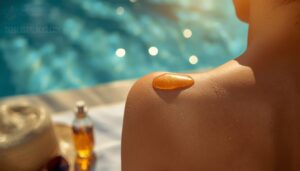
Rushing out the door with bare skin already in the sun means you’re playing catch-up.
Apply 15 to 30 minutes before exposure so the oil fully absorbs first.
Check the UV index; if it hits 3 or higher, that’s your cue.
Sunscreen goes on before makeup or repellent, always.
Pick water-resistant SPF 30, then plan around peak intensity, roughly 10 a.m. to 2 p.m.
Use Enough for Full Coverage
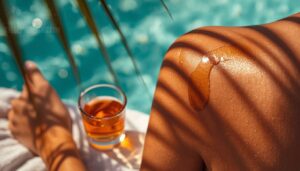
Once you’re absorbed and ready, don’t skimp. Most people apply about a quarter of what they need. Use roughly one ounce, a full shot glass, for your whole body. Thin layers leave gaps; thicker ones (great for dry skin) seal moisture better. Whether it’s a moisturizing tanning oil or broad spectrum SPF 15, even, circular application beats rushed swipes every time.
Reapply Every Two Hours

Set a reapplication reminder on your phone, because two hours passes faster than you’d think. That’s the baseline SPF reapplication schedule, but sweat exposure shortens it. Don’t forget missed areas like ears, scalp, and tops of feet.
Near windows? UVA still gets through glass, so keep going. Toss your oil in the beach bag essential pile and never leave home without it.
Reapply After Swimming
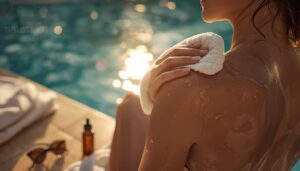
Honestly, water undoes sunscreen faster than most people expect, sometimes in 45 minutes to an hour. Even water-resistant sunscreen only holds up for 80 minutes, not all day.
Towel-drying disturbs coverage unevenly, so:
- Dry off gently
- Reapply immediately
- Cover shoulders, chest, legs
- Check swimsuit edges
- Resume two-hour reapplication
Avoid Common Application Mistakes

Since most sunscreen slip-ups happen from skipping steps, not bad products, watch these:
| Mistake | Fix |
|---|---|
| Oil applied too soon | Wait 20 minutes first |
| Mixing sunscreen and oil | Layer, don’t mix |
| Skipping reapplication | Reset your two-hour timer |
Barriers like lotion or perfume also block absorption, so keep skin clean before layering broad-spectrum SPF 15 or higher.
Frequently Asked Questions (FAQs)
What is the best tanning oil with SPF?
Not every glow comes with real protection. Supergoop! Glow Oil SPF 50 leads the pack, while Coola SPF 30 suits sensitive skin and Bali Body Watermelon SPF 50 delivers hydration, fragrance, and water resistance without skimping on SPF effectiveness.
How does coconut milk help remove tan?
Coconut milk tan removal works through mild lactic acid, which loosens dead, pigmented cells, plus vitamin C and E for natural skin brightening.
Its fats support moisturizing barrier repair, while lauric acid offers anti-inflammatory sun relief and gentle exfoliation.
What SPF should a tanning lotion have?
Aim for SPF 30 broad spectrum at minimum, the point where UVB blocking hits about 97%. SPF 15 is the FDA’s bare floor, not a safe tanning target. Lower SPFs let damaging rays through unchecked.
What are tanning oils with SPF called?
Different bottle, same goal, different name: you’ll see "sunscreen oils," "SPF-infused tanning oils," or "tan perfector oils" on labels. All describe an oil-based sunscreen delivering broad-spectrum UV protection while giving skin a natural, glowing finish.
What SPF is best for tanning?
Broad spectrum SPF 30 is your sweet spot: it blocks 97% of UVB rays, guards against UVA aging, and allows gradual color. Fair skin or long days outdoors call for SPF 50 instead.
Can you get a tan with sunscreen on?
Yes, tanning still happens with sunscreen on. Even SPF 30 lets about 3% of UVB through, enough to trigger melanin production gradually. Higher SPF slows tanning but boosts protection, so reapplication and lower UV exposure matter more than the number alone.
Is there a self tan with SPF?
Self tanners with SPF do exist. These hybrids mix a DHA SPF mix with mineral or chemical UV filters, often as tinted sunscreen offering SPF 15 to SPF 30, gradually darkening skin while providing genuine daily broad spectrum SPF 15 protection.
Can you still tan with SPF 50?
Some color still shows up, since SPF 50 only blocks about 98% of UVB rays. Your skin’s melanin production keeps ticking along, just slower. Oils like Supergoop Glow Oil SPF 50 or Bali Body Watermelon SPF 50 let this happen safely.
Does tanning oil with SPF affect spray tans?
Not chemically, no. Spray tans develop through pigment reacting with skin, not sun exposure. But oil absorption rate matters: oily or shimmer formulas can block pigment uptake or cause shimmer interference, so skip oils right before your spray tan appointment.
How long does the tan last with SPF?
Your skin’s own shedding cycle sets the timeline, not SPF. Expect 7 to 10 days before a natural tan fades, since sunscreen blocks burns from UVB and UVA rays without slowing melanin’s natural turnover underneath.
Conclusion
Icarus flew too close to the sun chasing beauty, and paid for it. Your bottle of oil doesn’t have to end that way.
The best tanning with SPF lets you soak up warmth without the burn, as long as you choose wisely and reapply often. Skin remembers every summer you give it. Protect it now, and years from now, your glow will still look earned, not damaged. That’s the trade worth making.