This site is supported by our readers. We may earn a commission, at no cost to you, if you purchase through links. This content is for general informational and educational purposes only and is not a substitute for professional medical, dermatological, or nutritional advice.

Squeeze a lemon on your face and you’ll feel something happen fast: that tight, tingly sensation that screams "this is working." Your pores might even look smaller staring back at you in the mirror. That’s the citric acid coagulating surface proteins, and it’s gone by dinner.
So does lemon juice help clogged pores, or are you just chasing a mirage? The truth sits somewhere between TikTok hype and dermatology skepticism. Lemon juice can exfoliate a little, but it also carries real risks, from phototoxic burns to lasting dark spots.
Here’s what actually happens to your skin, and what works better.
Table Of Contents
- Key Takeaways
- What Causes Clogged Pores?
- Does Lemon Juice Help Clogged Pores? Not Reliably
- Risks of Applying Lemon Juice
- How to Use Lemon Juice Safely
- Safer Alternatives for Clogged Pores
- Frequently Asked Questions (FAQs)
- What unclogs pores quickly?
- How to draw out a clogged pore?
- How to get rid of clogged pores naturally?
- How to get rid of Blackheads and clogged pores?
- How to get rid of clogged pores with baking soda?
- Is lemon juice good for oily skin?
- Does lemon juice kill pimples?
- Does Greek yogurt help clogged pores?
- Does lemon juice unclog pores?
- What is the fastest way to unclog pores?
- Conclusion
Key Takeaways
- Lemon juice’s citric acid can briefly tighten pores and cut shine, but the effect is purely cosmetic and fades within hours.
- Straight or overused lemon juice risks real damage, including skin barrier breakdown, phototoxic burns, and lasting dark spots, especially in sun exposure.
- If you’re set on trying it, dilute it (1:2 or 1:3 with water), patch test first, limit contact to 2-3 minutes, use it no more than once or twice a week, and always follow with SPF 30+.
- Proven alternatives like salicylic acid, glycolic acid, niacinamide, and clay masks unclog pores more reliably and safely than lemon juice ever will.
What Causes Clogged Pores?

Before you reach for any fix, you need to know what you’re fixing. Clogged pores don’t happen randomly—they build up from a specific combination of habits, products, and skin biology working against you. Here’s what’s actually going on beneath the surface.
When oil, dead skin cells, and bacteria team up inside a pore, they set the stage for breakouts, which is why understanding how to get rid of blackheads starts with knowing their root cause.
Sebum and Dead Skin Buildup
Think of sebum as skin’s natural oil slick, useful until it overstays its welcome. Your sebaceous glands pump out wax esters and triglycerides constantly. Add dead skin cells that haven’t shed properly, and you’ve got trouble.
Pore congestion causes usually include:
- Excess surface oil buildup
- Sluggish exfoliation and cell turnover
- Thickened sebum viscosity trapping debris
That’s follicle blockage in action, and it’s the root of most clogged pores. In fact, sebum makes up 90% of skin surface lipids, which explains why excess production so easily leads to congestion.
Blackheads Versus Whiteheads
Once that oily debris settles in, your pore takes one of two paths. Open pores let it oxidize into a dark blackhead. Closed pores trap it beneath the surface as a flesh-toned whitehead.
Same clogged pore problem, different presentation. Whether lemon juice, with its skin-sensitizing acidity, has any business touching either type is what we’ll unpack next.
Products That Worsen Congestion
Before blaming lemon juice, check your shelf. Certain formulas quietly clog pores over weeks, no acidity required.
- Coconut oil (comedogenic rating 4/5) in moisturizers or hair products
- Isopropyl myristate/palmitate, silky esters in makeup and sunscreen
- Cocoa butter, lanolin balms, and pigmented makeup with red dyes
Skin sensitivity often stems from these culprits, not just what you’re applying topically for oil control.
Habits That Block Pores
Products aren’t the only culprits. Daily habits quietly clog pores too.
Touching your face transfers oil and bacteria. Sleeping with makeup blocks pores overnight. Dirty pillowcases redeposit grime.
| Habit | Fix |
|---|---|
| Touching face | Wash hands first |
| Sleeping in makeup | Remove nightly |
| Dirty pillowcase | Wash weekly |
| Skipping cleanse after sweat | Cleanse promptly |
| Skipping moisturizer | Balance, don’t strip |
Does Lemon Juice Help Clogged Pores? Not Reliably
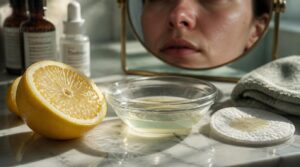
So does that lemon in your fridge actually do anything for clogged pores? Yes, to a point, but the science backing it up is thinner than you’d think. Here’s what’s really happening on your skin, and where the evidence starts to fall apart.
Citric acid can gently exfoliate and brighten, but before you start rubbing wedges on your face, it’s worth understanding the full range of benefits and risks of lemon for skin and hair.
Citric Acid Exfoliation
Squeeze a lemon and you’ve got citric acid, a gentle AHA that loosens dead skin bonds. But strength depends on pH and concentration, not just "it’s acidic":
- Formulated products: controlled 10-20%, pH 3.5-4.0
- Lemon juice: wildly variable citric acid content
- Fruit ripeness changes potency batch to batch
- No dial you can trust for consistent results
That inconsistency is exactly why exfoliation stays unpredictable.
Temporary Oil Reduction
That mattified look after rinsing? It’s real, but fleeting. Citric acid works through a sebum binding effect, chemically grabbing surface oil rather than physically extracting it, which cuts shine within 5-10 minutes.
Don’t get too excited, though. Your skin replenishes oil naturally, so results fade in 2-4 hours, meaning dilute lemon juice offers spot-treatment, not real sebum regulation.
Short-Term Pore Tightening
Here’s the illusion at work: lemon juice’s low pH triggers a protein coagulation effect, tightening skin and shrinking pore depth perception. Light reflects differently off tightened skin, creating a slimming illusion, pores can look up to 40% smaller. Astringent properties also cut sebum flow briefly.
But this pore size reduction? Purely cosmetic, and gone within hours.
Limits of Available Evidence
Here’s the real problem: most "lemon juice cures clogged pores" claims come from blogs and anecdotes, not clinical trials.
"Clogged pores" itself isn’t one fixed condition, blackheads and whiteheads differ, and irritation often gets mistaken for improvement.
Add dose variability (kitchen lemons aren’t standardized skincare), short follow-up windows, and skin type differences, and you’ve got evidence too shaky to trust with your face.
Mixed User Experiences
Here’s the truth: results depend entirely on who’s applying it. One warrior calls it an A+++ miracle; another says it "didn’t really get rid of acne."
- Oily skin: fast, dramatic results
- Sensitive skin or rosacea flare-ups: redness, irritation
- Combination skin: dryness, tightness
- Scars: gradual lightening, active breakouts unchanged
Your skin barrier decides the outcome, not the lemon.
Your skin barrier, not the lemon, ultimately determines whether the results feel like a miracle or a mistake
Risks of Applying Lemon Juice

Before you reach for that lemon, let’s talk about what can actually go wrong. Straight citric acid on your face isn’t as harmless as it looks in a smoothie. Here’s what you’re really risking with each application.
Stinging and Skin Irritation
That sting isn’t your imagination, it’s an acid contact reaction happening in real time. Lemon juice’s low pH irritates skin fast, especially on thinner areas like your cheeks.
Skip a patch test and you’re gambling. Undiluted juice raises concentration sensitivity dramatically.
Persistent burning past a few minutes means stop, rinse, and treat it as irritant dermatitis, not exfoliation working its magic.
Skin Barrier Damage
That irritation can spiral into something bigger: a compromised skin barrier. Lemon juice strips your lipid matrix balance, the ceramide-cholesterol-fatty acid trio your skin needs at a 1:1:1 ratio for repair.
Undiluted or frequent use spikes TEWL, sometimes past 44 g/m²/h, signaling serious damage. Skip proper dilution ratio guidelines and you’re left dry, reactive, and craving real barrier repair methods, not lemon juice.
Sun-Triggered Phototoxic Reactions
Here’s where lemon juice turns risky fast: it’s a photosensitizer. Citric acid activates under UV light, triggering reactions within hours of sun exposure, not days.
Warriors, this isn’t like a slow allergy building. Unprotected skin post-application can react to:
- Brief midday errands
- Reapplication gaps
- Cloudy-day exposure
- Skipped sunscreen
UVA protection matters. Reapply broad-spectrum SPF every two hours.
Post-Inflammatory Hyperpigmentation
Beyond sunburn risk, irritated skin can trigger post-inflammatory hyperpigmentation, dark patches from excess melanin production after inflammation. Deeper skin tones (Fitzpatrick III-VI) face higher risk and severity.
These marks aren’t quick fixes either: they can linger for months or years, especially if the original irritation goes untreated. Your lemon juice experiment could make a lasting souvenir you never wanted.
Dryness and Over-Exfoliation
Dark spots aside, repeated lemon juice sessions can wreck your skin barrier outright. Citric acid is a natural exfoliant, but overuse strips too many dead skin cells too fast.
Watch for:
- Tightness or persistent dryness
- Flaking that won’t quit
- Stinging from products you used to tolerate
That’s over-exfoliation, and it demands barrier repair, not another squeeze of citrus.
How to Use Lemon Juice Safely
Still set on trying lemon juice? Fair enough, but you’re going to do this the smart way, not the reckless way. Here are the five rules that separate safe experimenting from a trip to the dermatologist’s office.
Dilute Before Applying

Straight from the peel, lemon juice is too acidic for skin, always dilute before applying.
| Skin Type | Ratio | Effect |
|---|---|---|
| Normal | 1:2 | Stronger exfoliation |
| Sensitive | 1:3 | Gentler toner |
Mix with water, then aloe or rosewater to buffer pH. Store diluted mixture refrigerated, airtight, up to 7 days.
Patch Test First

Before your diluted lemon juice ever touches your face, test it on your inner forearm for 24–48 hours.
Clean the spot, apply a dime-sized amount, and watch for redness or stinging.
Skin sensitivity varies wildly, and photosensitivity makes this step non-negotiable, not optional.
If irritation appears, rinse immediately.
Skip facial testing entirely, your forearm tells you everything you need to know.
Limit Skin Contact Time

A stopwatch matters here. Once your patch test clears you, keep facial contact to 2 to 3 minutes, tops, using that same 1:2 lemon-to-water ratio.
Apply in the morning, rinse with warm water, then moisturize immediately. Skin sensitivity spikes fast with citric acid, so treat this like a quick uncorking, not a soak. Longer sessions invite irritation and photosensitivity you don’t need.
Avoid Frequent Applications

More isn’t better here, it’s riskier. Cap lemon juice at 1-2 sessions weekly for clogged pores, since citric acid strips your skin barrier fast.
- Oily skin: twice weekly max
- Dry/sensitive: once every 10 days
- Redness appears: drop to monthly
- After 4 weeks: take a break
Watch for irritation signs and photosensitivity. Recovery time matters more than speed.
Apply Broad-Spectrum Sunscreen

Citric acid makes your skin a sunburn magnet, no exceptions here.
Lemon juice triggers photosensitivity, raising phytophotodermatitis risk within 24 hours of UV exposure.
| Sunscreen Trait | Why It Matters | Your Move |
|---|---|---|
| SPF 30 | Filters ~97% UVB | Minimum daily |
| Broad-spectrum | Blocks UVA+UVB | Non-negotiable |
| Water-resistant | Holds up if sweating | Reapply anyway |
Reapply every two hours, more if swimming or sweating.
Safer Alternatives for Clogged Pores

If lemon juice keeps letting you down, it’s time to bring in ingredients that actually earn your trust. The good news is dermatology already has proven answers for clogged pores, no kitchen experiments required. Here are five options worth adding to your routine.
Salicylic Acid Treatments
Think of salicylic acid as the locksmith to lemon juice’s crowbar: precise, not destructive. This beta-hydroxy acid dissolves into oil, clearing clogged pores from within follicles.
Gels run 2-7% used once daily; lotions and solutions at 2% suit 1-3 daily applications. Start low, monitor irritation, and give your skin weeks, not days, to show real results.
Glycolic Acid Exfoliants
If salicylic acid is a locksmith, glycolic acid is a magnifying glass focused on dead skin cells. As the smallest AHA, it penetrates deeper than citric acid ever could.
OTC formulas run 5-10% glycolic acid; peels hit 20-70%. Buffered formulations keep pH near 4, gentler than raw solutions. Choose gels for controlled chemical exfoliation and steadier oil control.
Niacinamide for Oil Control
Where acids exfoliate, niacinamide negotiates. This vitamin B3 ingredient helps regulate oil production at the source instead of stripping it away, balancing sebum secretion while strengthening your skin barrier.
Start with a 2% niacinamide serum, layering it under your daily moisturizer and sunscreen. It’s gentle enough for daily use, well tolerated, and works quietly against clogged pores without irritation risk.
Clay Masks for Sebum
If niacinamide plays the long game, clay masks are your quick reset. Kaolin and bentonite pull excess oil straight from the surface, no lemon juice required.
Leave one on for 10-15 minutes, don’t let it fully harden, then rinse. Pores look tighter for a few hours as sebum control kicks in, though results fade fast.
Noncomedogenic Skin Care Routine
A clay mask fixes today’s shine. A noncomedogenic routine fixes the pattern behind it.
Start with a gentle cleanser (double-cleanse if you wear sunscreen or makeup), treat with salicylic or niacinamide, then layer moisturizer to keep your barrier intact. Finish every morning with SPF 30+.
Patch test new products first. Consistency, not intensity, keeps pores genuinely clear.
Frequently Asked Questions (FAQs)
What unclogs pores quickly?
For fast results, reach for salicylic acid treatments or glycolic acid exfoliation. Both use gentle acids for real chemical exfoliation, dissolving clogged pores faster and more reliably than lemon juice’s citric acid ever could.
How to draw out a clogged pore?
Start with a warm compress to loosen the plug, then follow with gentle exfoliation or a clay mask for deeper pore cleansing. Steam treatment softens dead skin cells too, but skip pore strips on irritated or broken skin.
How to get rid of clogged pores naturally?
Ditch harsh scrubs for gentle cleansing, twice-daily with warm water. Try clay masks to absorb sebum, oil cleansing to dissolve buildup, and mild exfoliation to lift dead skin cells, no lemon juice or DIY acids required.
How to get rid of Blackheads and clogged pores?
You’ll clear blackheads with daily salicylic acid cleansing, weekly clay masks for oil control, gentle exfoliation two to three times weekly, and noncomedogenic products, skipping risky natural remedies like undiluted lemon juice that irritate skin barrier function.
How to get rid of clogged pores with baking soda?
Mix 2 teaspoons baking soda with 1 teaspoon warm water for a smooth paste. Massage gently onto damp skin for 30 seconds, avoiding eyes. Rinse with lukewarm water, then moisturize to offset dryness. Limit use to twice weekly.
Is lemon juice good for oily skin?
Oily skin, warriors: lemon juice offers only a temporary mattifying effect, not real sebum regulation. Its astringent tug tightens pores briefly, but skin irritation risk is real, so patch test, dilute well, and consider gentler natural alternatives for lasting oil production balance.
Does lemon juice kill pimples?
No, lemon juice won’t zap pimples like a magic eraser. Citric acid may irritate skin, spike inflammation, and disrupt pH, worsening acne. Choose proven treatments like salicylic acid instead of risking irritation for questionable results.
Does Greek yogurt help clogged pores?
Yes, mildly. Plain Greek yogurt offers gentle lactic-acid exfoliation that loosens dead skin cells clogging pores, plus probiotics that may calm irritation.
Evidence stays limited and unproven, so treat it as a soothing add-on, not a real acne treatment.
Does lemon juice unclog pores?
Not exactly a magic fix. Citric acid offers real skin exfoliation and temporary oil reduction, with mild astringent properties tightening pores briefly.
But results vary widely between users, and unclogging isn’t guaranteed, especially without proper dilution and skin barrier care.
What is the fastest way to unclog pores?
Think of your face as a locked door: steam is the key that loosens it. Steam for five minutes, gently extract blackheads, then apply a DIY clay mask to pull out leftover debris and tighten pores fast.
Conclusion
Lemon juice is a bit of a fair-weather friend for your skin. So does lemon juice help clogged pores? Only in a fleeting, surface-deep way, and the sunburn risk isn’t worth the gamble.
Your pores deserve a steadier ally. Salicylic acid works like a patient locksmith, gently unsticking what lemon juice merely jostles. Choose proven exfoliants, wear sunscreen daily, and let your skin breathe.
Clear pores come from consistency, not citrus roulette.