This site is supported by our readers. We may earn a commission, at no cost to you, if you purchase through links. This content is for general informational and educational purposes only and is not a substitute for professional medical, dermatological, or nutritional advice.

That leftover coffee grounds in your filter basket aren’t trash. They’re a skincare tool sitting in your kitchen right now.
Estheticians have used coffee scrub benefits skin treatments for years, and the reasons go beyond a nice smell. Caffeine tightens blood vessels, polyphenols fight free radical damage, and the gritty texture buffs away dead cells that make skin look tired and rough.
Your elbows, knees, and legs take the biggest hit from dryness and buildup. A weekly scrub session can change that texture fast, and it won’t cost you anything extra at the grocery store.
Table Of Contents
- Key Takeaways
- Coffee Scrub Benefits for Skin
- How Coffee Scrubs Exfoliate Skin
- Coffee Scrub for Cellulite Appearance
- Coffee Scrubs for Tone and Glow
- Safe Coffee Scrub Usage Tips
- Frequently Asked Questions (FAQs)
- Is a coffee scrub good for your face?
- How often should you use a coffee scrub?
- What are the disadvantages of coffee scrub?
- How long to leave coffee scrub on skin?
- What oils work best for a DIY coffee scrub?
- Can I add sugar or salt to coffee scrubs?
- Does vanilla extract help mask the coffee smell?
- Are oats good to mix into coffee scrubs?
- Can coffee scrubs help with body acne redness?
- Conclusion
Key Takeaways
- Coffee scrubs physically exfoliate dead skin cells while caffeine constricts blood vessels and polyphenols fight free radical damage, improving texture, tone, and glow.
- Using a coffee scrub once or twice weekly, especially right after a warm shower, gives the best results without over-exfoliating your skin.
- Cellulite smoothing, depuffing, and tightening effects from coffee scrubs are temporary, lasting only hours since they come from friction, circulation, and fluid changes rather than fat loss.
- Always patch test a new scrub, skip broken or irritated skin, use gentle pressure, and moisturize immediately after rinsing to protect your skin barrier.
Coffee Scrub Benefits for Skin
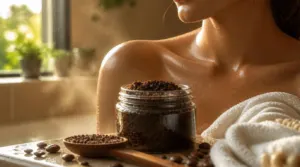
Coffee scrubs do a lot more than smell good in the shower. Your skin gets real benefits, from texture to tone, backed by simple chemistry and physical exfoliation. Here’s what you can expect once you start scrubbing regularly.
If you’re ready to try it yourself, these DIY coffee scrub recipes for face and body make it easy to whip up a batch with ingredients already in your kitchen.
Smoother Skin Texture
Buffing away rough, dry buildup is what a coffee scrub does best. The grounds provide physical exfoliation, and grind size matters: coarse particles work well on the body, but they create real mechanical abrasion risks if you scrub too hard. Go easy.
This process removes dead skin cells, clears follicle debris, and leaves smoothing skin that stays soft until your body’s next natural shedding cycle. Using skin exfoliators once a week can help prevent uneven texture.
Brighter-looking Skin
Once texture improves, tone catches up fast. Coffee grounds lift dull, dead buildup that dims your natural glow, working like a gentler cousin to AHA exfoliation.
Pair scrubbing with brightening habits for real results:
- Apply Vitamin C to fade dark spots
- Use Niacinamide for barrier support
- Wear SPF 30 daily
- Hydrate skin morning and night
- Drink water for glow from within
Antioxidant Skin Support
Coffee isn’t just an exfoliant, it’s loaded with polyphenols that fight oxidative stress at the source. These compounds work alongside skin’s natural defenses, like glutathione and CoQ10, to neutralize free radicals before they cause damage.
Pair your scrub with Vitamin C for brightening and Vitamin E for barrier support. Together, they slow visible skin aging and keep rejuvenation on track.
Reduced Dullness
Dead skin cells pile up and scatter light instead of reflecting it, which is what causes that flat, tired look. Scrubbing lifts this buildup, restoring light reflection and surface clarity.
For a clearer glow without overdoing it, see how facial exfoliation benefits your skin and supports a healthy barrier.
Here’s what changes:
- Less haze on your skin’s surface
- More even skin luminosity
- Smoother texture overall
- Better skin brightening
- A more balanced skin tone
Softer Body Skin
Grab your body scrub right after a warm shower, while skin’s still damp. That’s when humectants like glycerin work best, pulling in moisture instead of sitting on top.
Follow up with an oil-based moisturizer to lock in hydration and prevent lipid loss. Skip fragranced products if your skin’s sensitive. The result: a stronger moisture barrier and skin that actually feels soft, not just scrubbed.
How Coffee Scrubs Exfoliate Skin
Exfoliation is where a coffee scrub really earns its keep. It’s not just one simple action, it works on your skin in several ways at once. Here’s what happens each time you scrub.
The gritty texture buffs away rough, flaky patches while the massaging motion wakes up circulation, a combo that pairs beautifully with other natural remedies for skin tightening for firmer-looking results over time.
Removes Dead Skin Cells

Ever wonder why your skin feels instantly smoother after a good scrub? It’s mechanical particle action at work, not magic. Coffee grounds physically loosen dead-cell bonds and lift buildup that’s clinging to the surface.
This kickstarts cellular shedding and texture refinement, so skin rejuvenation happens naturally.
- Smoother, softer skin
- Fresher, more awake appearance
- Fewer clumped, flaky patches
That’s real exfoliation, no gimmicks.
Unclogs Body Pores

Pores clog when sebum and dead skin mix and sit trapped at the surface. That buildup is exactly what causes comedones, blackheads, whiteheads, body acne.
Coffee grounds work as mechanical debris removal, physically dislodging that plug so pores can breathe again. Gentle pressure matters here. Scrub too hard and you’ll irritate your skin barrier instead of protecting it.
Consistent, careful pore cleansing keeps congestion from building back up.
Improves Moisturizer Absorption
Your moisturizer works harder once dead cells are gone. Scrubbing clears the flaky layer blocking even product distribution, so creams sink in instead of sitting on top.
That’s surface area optimization at work: smoother skin means better humectant contact efficiency and stronger hydration barrier sealing. Apply moisturizing ingredients right after rinsing, while skin’s still receptive, for real skin barrier repair.
Helps Prevent Body Breakouts
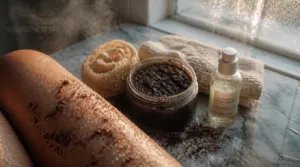
Body breakouts thrive on trapped oil and buildup, and coffee scrub breaks that cycle. Regular exfoliation helps unclog pores before sweat residue and dead skin turn into breakouts.
To keep skin clear:
- Shower soon after sweating
- Choose breathable fabrics
- Apply non-comedogenic moisturizers
- Reduce friction irritation
- Keep your body care routine consistent
This combo strengthens skin texture and reduces body acne over time.
Use Fine Grounds Carefully
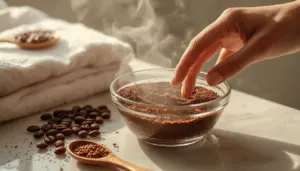
Grind size matters more than people think. Ultra-fine grounds can feel harsher, creating friction that scratches sensitive skin instead of smoothing it. Slightly coarser grounds lower irritation risk while still exfoliating well.
For facial use, keep the mixture texture consistent so scrubbing stays even. Skip broken or irritated skin entirely, and always manage pressure carefully to protect your skin’s barrier.
Coffee Scrub for Cellulite Appearance
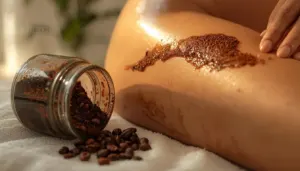
Cellulite is one of those things everyone wants to smooth out, and coffee scrubs have earned a real reputation here. You won’t erase it for good, but you can absolutely soften how it looks. Here’s what’s actually happening under the surface when you scrub.
Temporary Skin Tightening
Rubbing creates real, if brief, results. Friction from the scrub smooths the surface and boosts light reflection, so skin looks tighter fast. Blood flow rises, adding a lifted feel.
- Smoother surface texture
- Better light reflection
- Micro-circulation boost
- Hydration-linked tautness after rinsing
This lasts hours, not days, since skin cells keep replacing themselves and settle back to baseline.
Caffeine and Puffiness
Caffeine works as a vasoconstrictor, narrowing blood vessels wherever it’s applied. That’s why it shows up in eye creams for morning puffiness, not just cellulite scrubs.
Understanding how under-eye cream actually works helps you choose a caffeine formula for puffiness rather than a mislabeled fix for dark circles or fine lines.
Less fluid pools under the skin, so swollen areas depuff faster. Antioxidants add backup support, calming inflammation-related dullness.
Results feel immediate but temporary, tied to fluid retention changes rather than fat loss. Think quick fix, not permanent tightening.
Massage Boosts Circulation
Depuffing is only half the story. The physical act of scrubbing does its own work, pressing and releasing skin to trigger local perfusion changes and warmth.
That rhythmic pressure eases muscle tension, aids vasodilation, and helps improve circulation.
- Warmer, flushed-looking skin
- Smoother texture where tension eases
- Better capillary nutrient exchange
Improved blood flow means healthier-looking, more resilient skin.
Supports Lymphatic Drainage
Warmth and blood flow set the stage, but true depuffing needs lymphatic flow massage too. Gentle rhythmic strokes, applied upward toward lymph nodes, help fluid move out of congested tissue.
| Technique | Body Benefit |
|---|---|
| Light upward strokes | Reduces tissue puffiness |
| Consistent pressure | Improves microcirculation benefits |
| Targeted zones | Depuffs swollen areas |
| Regular sessions | Promotes body wellness |
Short-term Smoothing Effects
Buffing away buildup gives you immediate surface softness, no waiting required. Rapid texture buffing smooths rough patches right after rinsing, and light reflects more evenly off skin, boosting glow. You’ll notice temporary pore refinement and an instant hydration feel from the oils left behind.
It’s real, but it fades — so consistency, not a single scrub, keeps skin looking its best.
Coffee Scrubs for Tone and Glow
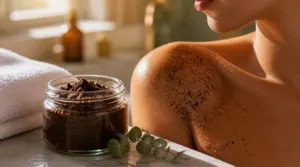
Your skin tone isn’t just about color, it’s about consistency. Coffee scrubs work on both, smoothing out patches and buildup that catch the light the wrong way. Here’s what that evening-out process actually does for you.
Fades Surface Buildup
Ever wonder why skin looks tired even when nothing’s wrong with it? Buildup is usually the culprit. Dead cells pile up and scatter light unevenly, giving skin a flat, grayish look.
A coffee scrub works as a reliable skin exfoliant, lifting that surface debris away fast. This exfoliation reveals fresher skin underneath, restoring surface clarity and smoothness almost immediately after rinsing.
Helps Even Tan Lines
Sharp tan lines happen when UV hits some skin and not others, leaving a visible pigment boundary. Buffing uneven patches with a coffee scrub speeds up surface cell renewal, so that hard edge softens naturally.
You’re not stripping color overnight. It’s gradual pigment fading, smoothing tan boundaries through steady exfoliation. Two sessions weekly keeps skin texture even and reduces color contrast without shocking your skin.
Removes Old Fake Tan
Self-tanner clinging on past its prime? Coffee grounds tackle DHA breakdown through friction, lifting stubborn color your razor left behind.
Pair scrubbing with chemical exfoliation acids like glycolic or lactic for faster fading. Add urea for hydration during removal.
- Breaks down DHA buildup
- Speeds body exfoliation
- Softens residual color
- Preps skin for fresh application
Two weekly sessions clear the way for even, natural tan lines next time.
Reduces Rough Patches
Rough patches on elbows, knees, or feet respond well to mechanical friction. Coffee grounds act as a physical exfoliant, sanding down built-up dead cells until skin feels even.
| Grit Level | Best For |
|---|---|
| Fine | Sensitive spots |
| Coarse | Thick, rough patches |
Follow with a hydrating base to lock in skin softness and support your barrier long after rinsing.
Promotes Radiant-looking Skin
Glow isn’t magic, it’s surface uniformity. Once buildup and environmental debris are gone, light reflection improves instantly.
Glow isn’t magic, it’s surface uniformity, and light reflects instantly once buildup is gone
- Smoother texture reflects natural light radiance
- Helps keep your skin barrier strong
- Boosts overall skin rejuvenation
- Delivers real, visible skin benefits
That’s the payoff of consistent natural skincare: even skin texture that looks radiant-looking, healthy, and alive in everyday light.
Safe Coffee Scrub Usage Tips
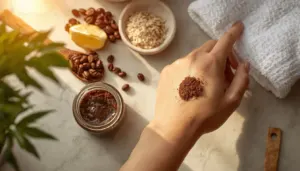
Coffee scrubs work best when you use them the right way. A few simple habits keep your skin safe while you get all the glow-boosting benefits. Here’s what you need to know before you start scrubbing.
If your at-home coffee scrub session ever gets messy near painted surfaces, it helps to know that stains behave differently depending on the wall, and this guide to removing dye stains from textured walls offers useful tips for tackling stubborn marks.
Patch Test First
Before you scrub anywhere near your face or body, test a small patch of skin first. Dab a bit of your mixture on your inner arm and wait 48 hours, checking for redness, itching, or bumps along the way.
No reaction means you’re clear. Any sign of allergic dermatitis means skip that recipe entirely — your skin sensitivity just saved you a much bigger irritation.
Use Once or Twice Weekly
Once your patch test clears, settle into a rhythm. Once or twice weekly is the sweet spot for most body care routines — thicker skin on legs experiences friction well, while sensitive areas need less.
Watch how your skin responds and adjust exfoliation frequency accordingly. Always moisturize after scrubbing to lock in hydration. This pacing also helps with cellulite reduction without tipping into over-exfoliation.
Avoid Irritated Skin
Skip the scrub entirely on broken, wounded, or actively irritated skin—this includes eczema and rosacea flare-ups.
Watch for known triggers: fragrance sensitivity, harsh acids, or hot water can all worsen barrier damage.
Before scrubbing:
- Confirm skin is intact
- Rinse with lukewarm water
- Skip active ingredients that day
- Apply light pressure only
Overexfoliation disrupts your skin barrier. When in doubt, ask a dermatologist.
Moisturize After Scrubbing
Rinse off the grounds, then moisturize while your skin’s still damp—that’s the best time for locking in hydration.
Scrubbing strips barrier lipids, so pick a cream with humectants like hyaluronic acid for real skin barrier repair. Dry skin? Go richer. Oily skin? Try a gel. Either way, don’t skip this step in your skincare routine.
Store DIY Scrubs Safely
Your DIY coffee scrub deserves the same care you’d give any natural skincare ingredients.
Use a glass jar with a tight lid—airtight container selection prevents moisture contamination and clumping. Always scoop with a clean, dry spoon; hygienic scoop usage stops bacteria from spoiling the batch.
Label containers with the make date to track freshness and prevent skin irritation from expired cosmetic ingredients.
Frequently Asked Questions (FAQs)
Is a coffee scrub good for your face?
Yes, but fine ground selection matters most for facial skin sensitivity. Coarse grounds risk irritation and pore clogging, so choose gentle formulas, patch test first, and always follow with post-scrub hydration in your skincare routine.
How often should you use a coffee scrub?
More is not always better, ironically. Once or twice weekly works for most skin types, adjusted by goal and sensitivity. Watch for redness or dryness — those over-exfoliation signs mean it’s time to scale back your routine.
What are the disadvantages of coffee scrub?
Watch for skin irritation, ingrown hairs, and uneven exfoliation patches. Coarse grounds can stain sensitive or hyperpigmented skin, weaken your moisture barrier, and disrupt pH balance, especially with caffeine sensitivity, existing dryness, or dermatology conditions like eczema and rosacea.
How long to leave coffee scrub on skin?
Give your skin a brief coffee kiss, not a long soak. Body scrubs: 5–10 minutes. Face scrubs: 1–3 minutes only. Rinse immediately if you notice stinging or redness, then moisturize to restore hydration.
What oils work best for a DIY coffee scrub?
Coconut oil offers the deepest moisturizing base, while olive or avocado oil work as easy substitutes. Jojoba oil closely matches skin’s natural texture, and grapeseed oil gives a lighter feel—pick based on your skin hydration needs.
Can I add sugar or salt to coffee scrubs?
Yes. Granulated sugar dissolves for gentler slip, while salt boosts exfoliation intensity with sharper particles. Sugar suits sensitive skin; salt fits rough spots like heels. Both are natural skincare ingredients—just watch irritation risk on delicate areas.
Does vanilla extract help mask the coffee smell?
Ever wonder why some scrubs smell like dessert instead of espresso? Vanillin masking potency shifts your olfactory perception, blending sweet vanilla with coffee grounds. Higher vanilla scent concentration and quality strengthen this effect in natural skincare home remedies.
Are oats good to mix into coffee scrubs?
Rolled oats are a smart add-in. They offer gentle exfoliation without harsh sharpness, improve scrub consistency so grounds hold together, and soothe sensitive skin—balancing strength while boosting skin hydration with natural, home-remedy simplicity.
Can coffee scrubs help with body acne redness?
Redness calms down more than you’d expect. Caffeine inflammation relief plus antioxidant protection soothe acne-prone skin, while gentle exfoliation clears pore congestion and removes dead skin cells, supporting skin barrier protection and calmer-looking breakouts over time.
Conclusion
Funny how something you’d normally toss straight into the trash can end up smoothing your skin instead. That’s the quiet irony behind coffee scrub benefits skin routines: kitchen waste becomes a genuine glow tool.
Your elbows soften, your tone evens out, and circulation gets a gentle wake-up call. Two scrubs a week, a little moisturizer after, and rough patches don’t stand a chance.
Grab the grounds. Your skin already knows what to do with them.