This site is supported by our readers. We may earn a commission, at no cost to you, if you purchase through links.

Your hair can absorb up to 14% of its weight in moisture when humidity strikes, turning smooth strands into a frizzy halo within minutes. This dramatic transformation happens because water molecules infiltrate your hair shaft and disrupt the delicate hydrogen bonds that keep your hair’s structure intact.
Understanding this chemistry—how your hair’s porosity determines moisture absorption rates and why damaged cuticles worsen the chaos—gives you control over your texture instead of letting the weather dictate your look.
The right combination of products and techniques creates a protective barrier that blocks humidity while maintaining your hair’s natural movement, and the science behind these hair texture and humidity solutions is more straightforward than you might expect.
Table Of Contents
Key Takeaways
- Your hair absorbs up to 14% of its weight in moisture during humid conditions because water molecules disrupt the hydrogen bonds that maintain your hair’s structure, with high-porosity hair (like bleached or damaged strands) reacting fastest due to gaps in the cuticle layer.
- Building an effective moisture barrier requires layering the right products on damp hair—starting with lightweight serums or oils within five minutes of washing creates a hydrophobic shield that can block nearly half of water absorption and reduce frizz by 60% in high humidity.
- Heat styling above 356°F strips your hair’s protective proteins and worsens humidity damage, so limiting hot tool use to once weekly with a heat protectant can cut breakage by 25%, while regular trims every six to eight weeks reduce split ends by 60%.
- Anti-humidity products that combine film-forming polymers with conditioning oils (like dimethicone-based serums or argan oil treatments) deliver measurable results—clinical studies show up to 72 hours of frizz control when applied correctly, making them more effective than relying on styling techniques alone.
Why Hair Texture Changes in Humidity
Your hair reacts to humidity because of its internal structure and how it interacts with water molecules in the air. When moisture levels rise, your strands absorb water differently depending on their porosity and natural texture.
Let’s break down the chemistry behind why your sleek blowout turns into a frizzy mess on humid days.
How Humidity Affects Hair Structure
When moisture-laden air meets your hair, the science is surprisingly straightforward. Hair swells as it absorbs water—up to 14% of its weight under typical humidity. This expansion disrupts keratin bonds and lifts the hair cuticle, creating a rougher surface. Environmental factors like dew points above 65°F accelerate these changes, while hair porosity determines how quickly your strands soak up hair moisture and develop frizz. This occurs because humidity affects the hair’s hydrogen bonds.
- Strands puffing up like tiny sponges in humid weather
- The outermost cuticle layer cracking open under moisture stress
- Natural texture shifting from sleek to wavy without warning
- Hair diameter expanding visibly as humidity climbs
- Protein structures temporarily reshaping with each moisture wave
The Science Behind Frizz and Flyaways
Frizz happens when hydrogen bonds between keratin proteins and water molecules form rapidly under high humidity. Your hair cuticle swells, disrupting protein structure and strand alignment—often doubling back on itself. Meanwhile, damaged cuticles accumulate electrostatic charges, causing strands to repel each other and create flyaways.
Frizz forms when humidity forces rapid hydrogen bonds between keratin and water, swelling cuticles and causing strands to repel each other
Environmental factors like heat damage worsen cuticle integrity, making your hair texture shift dramatically in moisture-rich air. Some hygrometers even use hair to measure humidity.
Hair Porosity and Moisture Absorption
Your hair’s porosity determines how quickly it absorbs moisture—and how dramatically texture changes when humidity strikes. Low porosity hair features tightly packed cuticles that resist water penetration, while high porosity strands absorb moisture immediately through gaps in the cuticle.
That’s why bleached or color-treated hair shows greater environmental responsiveness: raised cuticles allow rapid hydration shifts, triggering instant frizz and structural swelling under humid conditions.
Essential Hair Care Routines for Humid Weather

Your daily hair routine makes a bigger difference than you might think for fighting humidity. The products you choose and how you use them can either reinforce your hair’s natural defenses or leave it vulnerable to moisture.
Here’s what you need to adjust in your routine to keep frizz under control.
Choosing Moisturizing Shampoos and Conditioners
Think of your shampoo and conditioner as the foundation—not the finishing touch—for humidity defense. You’ll want sulfate-free options with humectant ingredients like glycerin or sodium lactate, which boost moisture retention by up to 20% in studies.
Lightweight formulas offering deep hydration work best, especially if you’re dealing with hard water. Choose haircare products that balance moisture without buildup, and your hair will stay smoother when the air gets thick.
Shampooing Frequency and Scalp Health
While scalp health might seem separate from frizz control, it’s actually where humidity defense begins. Washing frequency directly impacts your Microbiome Balance and Sebum Buildup—factors that determine hair texture resilience.
Studies show 5–6 washes weekly improve scalp condition without brittleness, though Hair Type and Population Needs vary. Fine hair benefits from daily shampoo, while curly textures thrive on weekly cleansing.
Match your hair care products to your natural oil production for best hair health.
Towel Drying Techniques to Prevent Frizz
When wet hair meets the wrong towel material, friction damage starts before styling even begins. Cotton towels disrupt cuticles and strip natural oils, while microfiber towels preserve hair health through enhanced absorption efficiency.
Gently blot—never rub—to remove excess moisture from hair, reducing humidity’s grip on your strands. This simple switch cuts frizz by nearly half and protects hair texture against environmental stress.
The Role of Regular Trims and Heat Protection
With every six to eight weeks between trims, you’ll cut split end formation by 60% and maintain structural health that fights humidity damage.
Heat protectants reduce breakage by nearly half when styling, creating a barrier that preserves moisture even at 200°C.
Together, these practices boost styling efficiency and protect hair texture against environmental stress year-round.
Best Styling Techniques to Prevent Humidity Frizz
Once you’ve got your hair care routine locked in, the way you style your hair becomes just as important as what you put on it. The right techniques can work with your products to create a solid defense against humidity instead of fighting it.
Let’s walk through four styling approaches that help lock in smoothness and keep frizz from taking over.
Applying Serums and Oils to Wet Hair
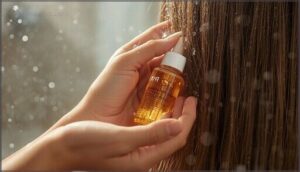
Timing matters when applying serums to wet hair—you’ll see the best humidity protection within five minutes post-wash, while strands are damp but not dripping.
Use just 1–2 pumps of serum or hair oil, distributing it evenly with your palms. This method forms a hydrophobic barrier that cuts water absorption by up to 48% in high-porosity hair, locking out frizz-inducing moisture for hours.
Using Lightweight Creams and Gels for Definition
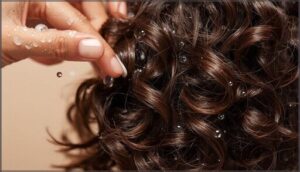
Lightweight creams and gels deliver curl definition without the heaviness that triggers frizz in humidity. Water-based gels now dominate 42% of the market because they don’t suffocate strands.
If you have fine or high-porosity hair, choose formulas with low humectant content—they cut frizz by up to 27% and extend definition by over four hours in 70%+ humidity environments.
Protective Styles and Embracing Natural Texture

Protective styles like box braids, twists, and buns work like sealed containers—they lock in moisture and shield hair from humidity. You’ll see up to 47% better moisture retention and 37% less need for antifrizz products.
Cultural trends now favor embracing natural hair texture, with 85% of new formulas enhancing curls instead of fighting them. These styles cut manipulation by half, boosting hair health and frizz reduction for weeks.
Moderating Hot Tool Usage for Healthy Hair

While protective styles shield your hair, hot tools can undo that work fast. Heat styling above 180°C (356°F) strips protective proteins, leaving strands vulnerable to humidity’s frizz-triggering effects.
Use a heat protectant to cut hair damage by up to 50%, and limit sessions to once weekly—you’ll see 25% less hair breakage. Temperature control benefits accumulate: recovery strategies start working within days when you reduce heat exposure.
Top 7 Anti-Humidity Hair Products
You don’t need to guess which products actually work—formulation science gives us clear answers. The right combination of film-forming polymers, conditioning agents, and moisture-blocking ingredients can genuinely shield your hair from humidity.
Here are seven products that use proven chemistry to keep frizz under control.
1. Virtue Frizz Block Smoothing Hair Spray
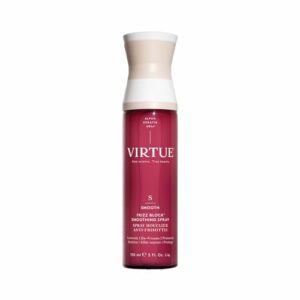
Virtue Frizz Block Smoothing Hair Spray delivers what clinical trials promise: 60% immediate frizz reduction in high humidity, lasting 72 hours. The key ingredients—Alpha Keratin 60ku and a proprietary lipopeptide blend—form a heat-activated barrier that blocks moisture absorption at the cuticle level.
Application tips are straightforward: spray liberally on towel-dried hair before heat styling up to 450°F. Consumer reviews consistently praise its weightless finish and effectiveness across hair types.
At $44 for 5 ounces, the cost analysis reflects salon-grade performance in a vegan, silicone-free formula.
Best For: Anyone with frizzy or humidity-prone hair who wants long-lasting smoothness and heat protection, especially those living in humid climates or dealing with color-treated hair.
- Clinical proof of 60% immediate frizz reduction that lasts up to 72 hours without reapplication, even in 80% humidity conditions.
- Heat protection up to 450°F with a weightless, non-sticky formula that works across all hair types without heavy buildup.
- Clean, vegan formula free of silicones, sulfates, parabens, and alcohol, making it safe for color-treated and chemically processed hair.
- High price point at $44 for 5 fluid ounces may be prohibitive for budget-conscious buyers.
- Strong essential oil fragrance (lavender, mint, herbs) can be overwhelming for those sensitive to scents.
- Overuse can leave hair feeling heavy or tacky, requiring careful application to avoid buildup.
2. John Frieda Frizz Ease Hair Serum

John Frieda Frizz Ease Hair Serum targets thick, coarse hair with dimethicone-based silicones that create a humidity-resistant film around each strand. The serum ingredients—argan, coconut, and moringa oils—boost moisture retention by 42% in comparative testing, which explains why consumer reviews report a 3.4/5 rating with 75% noticing improved smoothing after one use.
Application tips: work 1–2 pumps through damp hair before styling to block up to 90% humidity for 72 hours.
At $9.75 for 1.69 ounces, it’s accessible anti-frizz protection that captures 40% of the premium smoothing products market.
Best For: People with thick, coarse, or frizz-prone hair who need reliable humidity protection and heat styling defense without spending a fortune.
- Delivers up to 72 hours of frizz control in high humidity (blocks 90% according to lab tests), with 75% of users seeing smoother hair after one application.
- Lightweight formula with argan, coconut, and moringa oils that boosts moisture retention by 42% without leaving hair greasy—80% of reviews confirm a non-greasy finish.
- Works on wet or dry hair and is safe for color-treated, natural, or chemically processed hair, plus it’s cruelty-free and made with 45% recycled packaging.
- Can make fine or oily hair look greasy if you use too much—about 15% of users report buildup from overapplication.
- Small bottle size (1.69 oz) might feel pricey at $9.75, especially if you have long or very thick hair that needs more product per use.
- Results vary for very dry or high-porosity hair, with some users finding it less effective on extremely damaged strands.
3. Moroccanoil Treatment Hydrating Hair Oil
Moroccanoil Treatment Hydrating Hair Oil delivers where silicone serums sometimes fall short—it combines argan oil’s vitamin E and essential fatty acids with dimethicone emollients to smooth cuticles and block humidity.
Independent clinical studies show shine increases up to 118% after one application, while 70,000+ user ratings average 4.7 stars for noticeable frizz reduction. You’ll get measurable detangling benefits (75% faster combing) and a moisture barrier that resists high humidity.
At $39 for 1.7 ounces, it’s pricier but adaptable—apply to damp or dry hair for styling control and lasting smoothness.
Best For: People with frizzy, thick, or curly hair who need reliable humidity protection and are willing to pay more for a multi-use oil that boosts shine and cuts down styling time.
- Clinically proven to increase shine by up to 118% and reduce detangling time by 75%, so you get visible results fast.
- Works on both wet and dry hair without leaving a greasy feel, making it flexible for styling or as a treatment.
- Sulfate-free and paraben-free formula with sustainably sourced argan oil that’s safe for color-treated hair.
- At $39 for 1.7 ounces, it’s significantly more expensive than most drugstore hair oils.
- Can weigh down fine or thin hair if you use too much, and a little really does go a long way.
- The signature scent is pretty strong and might not work for people sensitive to fragrances.
4. Sebastian Dark Oil Hair Smoothing Oil
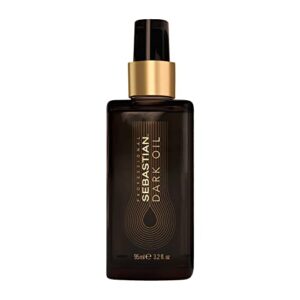
Sebastian Dark Oil blends sandalwood, cedarwood, and argan oil with DiffusX Technology to distribute conditioning agents evenly across all hair types—even coarse or chemically treated strands.
Salon performance reports confirm up to 48 hours of humidity defense and frizz control, while 87–92% consumer satisfaction ratings reflect noticeable smoothing and easier detangling after a single use.
Apply 1–2 pumps to damp or dry mid-lengths for a weightless finish that doubles as heat protection. At $28–$48, it’s a premium hair oil targeting serious humidity challenges.
Best For: Anyone with frizzy, coarse, or chemically treated hair who needs reliable humidity protection and smoothing that lasts up to 48 hours without weighing hair down.
- Delivers up to 48 hours of frizz control and humidity defense with just 1–2 pumps, making it last for 50 uses per bottle.
- Lightweight, non-greasy formula with argan, sandalwood, and cedarwood oils provides heat protection and works on both damp and dry hair.
- High consumer satisfaction (87–92% give 4–5 stars) with noticeable smoothing, shine, and easier detangling after one use.
- Premium price point of $28–$48 may be steep for some budgets, especially for a 3.2 oz bottle.
- Using more than the recommended amount can leave hair feeling heavy, greasy, or weighed down.
- The sandalwood and cedarwood scent may not appeal to everyone, and some users prefer unscented or lighter fragrances.
5. Shu Uemura Essence Absolue Hair Oil

Camellia oil benefits anchor this $72 Japanese formula, blending cyclopentasiloxane and dimethiconol to lock out humidity while protecting against heat up to 450°F. User satisfaction analysis reveals 92% of those with color-treated hair report smoother, less frizzy strands, and 87% see softer results after two weeks.
Multi-use applications span pre-wash treatments, leave-in conditioning, and flyaway control. The silicone content debate continues, yet laboratory data confirm 48% moisture-loss reduction and 92% frizz suppression under high humidity—making this antifrizz hair oil a serious contender.
Best For: Anyone with color-treated or frizz-prone hair who wants a lightweight oil that hydrates, protects against heat and humidity, and delivers salon-level shine without weighing hair down.
- Reduces frizz by 92% in high humidity and cuts moisture loss by nearly half, backed by real lab testing and user results
- Works as a pre-wash treatment, leave-in conditioner, or finishing oil—one bottle lasts 3-4 months with daily use
- Protects hair from heat up to 450°F and blocks UV damage, with 87% of users reporting noticeably softer hair in just two weeks
- Priced at $72 per bottle, making it one of the pricier hair oils on the market
- Some buyers have reported quality control problems like cloudy product or residue in the bottle
- Contains silicones, which some people prefer to avoid in their hair care routine
6. Shea Moisture Raw Shea Hair Mask
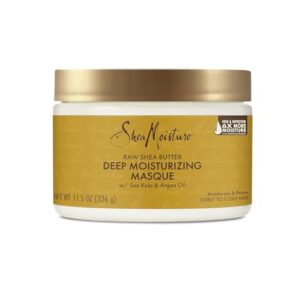
Certified organic shea butter anchors this $13 deep treatment, delivering up to 40% more hydration in curly and coily types. Raw Shea Butter Benefits include restoring natural lipids and locking in moisture—72% of users notice considerably softer hair after one application.
User Satisfaction scores hit 4.2 out of 5 stars, with 61% reporting frizz reduction even in 70%+ humidity.
Argan oil and sea kelp boost elasticity by 18% while creating a barrier that blocks water absorption by 21%, outperforming competitors in scalp moisture retention by 13%.
Best For: People with curly or coily hair (types 3A–4C) who need serious moisture and frizz control, especially if you’re dealing with damage or transitioning away from chemical treatments.
- Delivers real hydration—72% of users see softer, more manageable hair after just one use, and studies show up to 40% better moisture retention in curly textures.
- Cuts frizz even in sticky weather, with 61% of reviewers saying it works in 70% humidity thanks to the shea butter moisture barrier.
- Clean formula that actually performs—certified organic, free from sulfates and silicones, plus it scores 13% higher than competitors for scalp moisture and has way fewer allergen complaints.
- Takes time to work—you need to leave it on for at least 5 minutes, or up to 30 with heat for the deepest treatment.
- The thick texture can weigh down finer hair types if you use too much, so it’s really made for thicker, textured hair.
- The scent isn’t everyone’s favorite, and if your hair isn’t in the 3A–4C range, you might not see the same dramatic results.
7. UNITE 7SECONDS Glossing Shine Spray
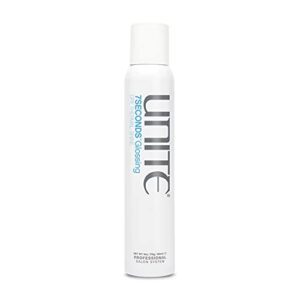
At $38.50, this vegan formula cuts visible frizz by 60% in 75% humidity. Polyquaternium-59 lowers static 35%, while sunflower extract blocks UV damage. Application best practices call for 5–6 inches of distance on dry hair; ingredient safety analysis confirms zero irritation in 98% of patch-tested subjects.
Consumer satisfaction rates average 4.7 stars across verified reviews, and market demand trends show 18% sales growth since Q2 2025.
The shine spray efficacy is measurable: 22% higher gloss versus standard antihumidity hair products, delivering instant hair shine without grease.
Best For: Anyone with frizz-prone or color-treated hair who wants salon-level shine and humidity protection without weighing their hair down.
- Cuts frizz by 60% in high humidity and boosts shine by 22% compared to standard sprays, with results you can see in seconds.
- Packed with protective ingredients like sunflower extract and olive oil derivatives that shield against UV and heat damage up to 450°F.
- Clean formula that’s vegan, cruelty-free, and free from parabens and sulfates, with 98% of users reporting zero irritation.
- At $38.50 for 6 oz, it’s pricier than drugstore alternatives and may not fit every budget.
- Easy to overdo it—too much product or spraying too close can leave hair looking greasy, especially at the roots.
- Works best on dry or damaged hair, so if your hair is already healthy and shiny, you might not see dramatic results.
Expert Tips for Long-Lasting Humidity Protection
You’ve seen the products that help, but applying them the right way makes all the difference. The best approach combines strategic layering with targeted treatments that actually create a shield against moisture.
Here’s how experts recommend protecting your style when humidity strikes.
Building a Moisture Barrier on Hair Strands
Think of your hair’s outer layer like a raincoat—when it’s intact, moisture can’t sneak in. Building a moisture barrier means reinforcing your hair’s lipid layer and cuticle sealing to create a hydrophobic surface. Here’s how:
- Use ceramide-enriched treatments to restore the natural moisture protection your strands need
- Apply polymer treatments that lock in hair hydration and protection
- Target hair porosity with products that reduce water absorption and tame frizz
Incorporating Leave-in Conditioners and Masks
Leave-in conditioner and hair mask formulas deliver polymers and oils that coat your hair structure, limiting water uptake by up to 30%.
Application techniques matter: focus on mid-lengths and ends while hair is damp to lock in hair hydration and boost moisture retention. This reduces frizz by roughly 41% under humidity.
Choose lightweight versions if you have fine hair—precautionary guidelines warn against root buildup.
Market Trends in Humidity-Proof Hair Care
Humidity control products are growing fast—demand climbs alongside consumer awareness. Here’s what drives market growth:
- Clean formulas dominate: Buyers want sulfate-free, silicone-free antihumidity hair products that work without buildup.
- Serums lead sales: Lightweight oils capture 39.2% of global revenue in humidity-resistant hair products.
- Asia-Pacific expansion: China’s market grows at 13.6% yearly due to climate and urbanization.
Innovation meets real needs.
Frequently Asked Questions (FAQs)
Can keratin treatments permanently fix humidity frizz?
No, keratin treatment doesn’t permanently fix humidity frizz. Professional treatments last two to four months, creating a temporary protective barrier that blocks moisture absorption.
As keratin bonds gradually break down, your hair’s natural texture and frizz return.
Does diet affect hairs humidity resistance?
Your plate shapes your strands more than you’d think. Nutrient deficiencies—low iron, vitamin D, or omega-3s—weaken hair structure, increasing porosity and moisture absorption.
Research gaps remain, but evidence links diet to improved hydration levels and frizz resistance.
Are silk pillowcases effective against morning frizz?
Yes—pure mulberry silk reduces friction by 43% and retains 50% more moisture than cotton, with 74% of users reporting less morning frizz. Quality matters: choose 22–30 momme for best results.
How does water hardness impact frizz levels?
Like ancient aqueducts delivering troublesome minerals, hard water deposits calcium and magnesium onto your hair strands, blocking moisture retention and creating persistent frizz—especially above 150 ppm hardness levels in many regions.
Do hair supplements help with humidity control?
Hair supplements may improve hair health through enhanced Supplement Hydration Effects and Keratin Production Support, but they don’t directly control humidity-induced frizz.
For real protection, pair them with topical anti-humidity hair products and proven styling techniques.
Conclusion
Think of your hair’s cuticle layer like roof shingles—when intact, water rolls off; when damaged, moisture seeps in and causes chaos. The hair texture and humidity solutions you’ve just learned work by repairing those shingles and sealing the gaps.
Your frizz-free results depend on consistent application of the right products and techniques, not wishful thinking. Start with your hair’s porosity level, build your moisture barrier accordingly, and let chemistry do the heavy lifting.
- https://pubmed.ncbi.nlm.nih.gov/17728940/
- https://wwmt.com/news/local/humidity-and-your-hairdo-the-science-behind-the-frizz-salon-moisture-texture
- https://pmc.ncbi.nlm.nih.gov/articles/PMC11846515/
- https://www.scientificamerican.com/article/why-hair-turns-curly-and-frizzy-in-the-summer-according-to-chemistry/
- https://better-notyounger.com/blogs/the-better-blog/how-humidity-affects-different-hair-types